

Copenhagen's 14 Best Sights And Attractions You Can't Miss On Your First Trip
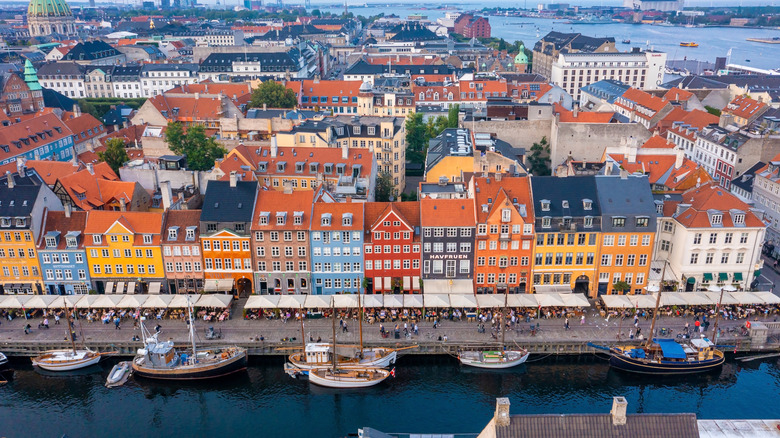
The Danish term "hygge," loosely translated to coziness, has taken the world by storm, but there's still no place that embodies true hygge quite like the Danish capital, Copenhagen. Although the city is metropolitan, diverse, stylish, and modern, the colorful buildings, cozy cafés, and biking culture all make it undeniably, well, cozy. These aspects and more also snagged Copenhagen the top spot on the Global Liveability Index in 2025 as the world's most liveable city, with historic streets and sustainable living.
Using personal experience, review sites, experienced travelers, and tourism boards, we were able to narrow down this list to 14 of Copenhagen's essential sights for first-timers. We also aimed to include the most popular spots, but also a few more offbeat places within the city, so visitors can truly get a feel for the "real" Copenhagen. Copenhagen is a gem, and it's not hard to see why, whether you're exploring its colorful harbor, admiring hip Danish design in an equally hip store, sampling both simple and extravagant tastes, finding a fairy tale statue, cruising the canals, or chasing thrills at one of the world's oldest amusement parks.
Nyhavn
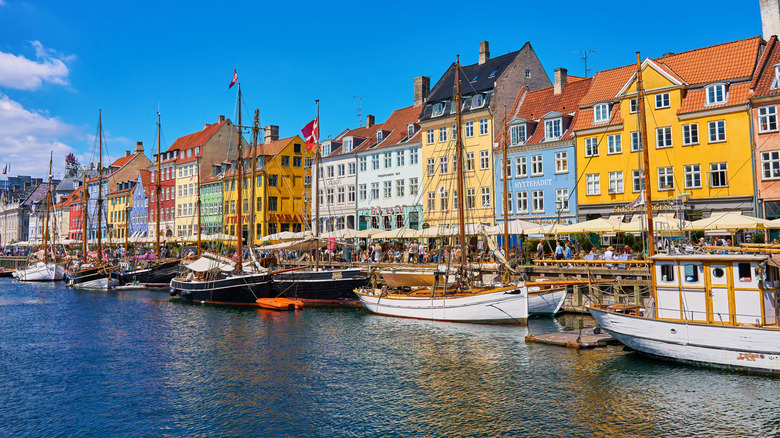
Nyhavn, with its colorful buildings lining a historic canal, is Copenhagen's most iconic sight, seen on many a website and postcard. The well-preserved district connects to both Copenhagen's historic cobbled streets and its picturesque harbor, and while it's now more full of tourists than the salty sailors of yore, it's a Copenhagen icon for good reason. This stunning waterfront canal inspired actual fairytales, as renowned Danish author Hans Christian Andersen lived in several homes along Nyhavn during his life — number 20 is where wrote some of his most famous works.
The main allure of Nyhavn is wandering, getting a closer look at the beautiful facades and noticing tiny details, and admiring the many historic boats that still line the canal. (Also, this activity is free, never something to sniff in pricey CPH). Nyhavn is lined with dozens of overpriced eateries, but they're undeniably atmospheric, featuring outside seating paired with heaters and blankets (often necessary even in a Danish summer) and even the occasional fireplace. Stop for a pint or a coffee and enjoy the views and people-watching. The closest metro stop is Kongens Nytorv, itself a picturesque square home to some of Copenhagen's fanciest facades, and about a five-minute walk (or less) to Nyhavn.
The Little Mermaid & Kastellet
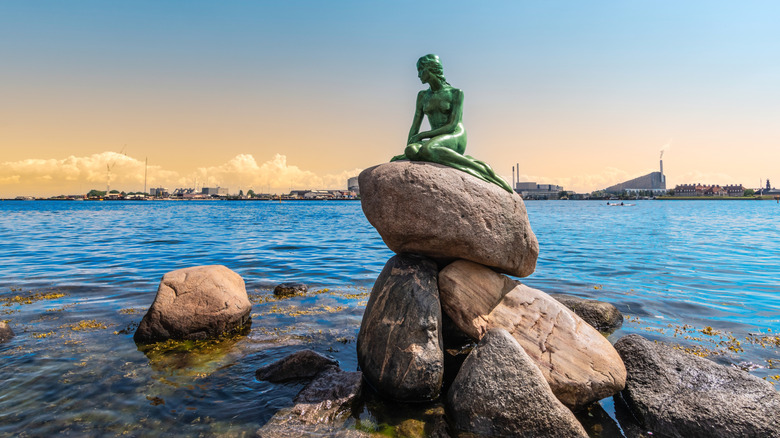
You can see the famous depiction of Hans Christian Anderson's "The Little Mermaid" statue from the water during a harbor cruise, but it's even better to see it by land. However, the tiny green mermaid, perched on a rock near the coastline, truly lives up to its name as "Little." To make the most of your trip to the Langelinie Pier (the Little Mermaid's home), walk into the nearby park to explore Copenhagen's Kastellet, a well-preserved fortress and ancient windmill surrounded by a moat.
To reach the Little Mermaid and Kastellet, consider walking from Amalienborg Palace. You'll pass the pretty Royal Pavilions after about ten minutes, essentially the royal boathouses dating back to 1905, before reaching the 17th-century Kastellet, or "The Citadel." Cross a bridge over the ancient moats to the grassy area, where you can view the historic citadel buildings (now the offices of the Danish defense service, so not open to visitors). Continue around the corner to The Little Mermaid, which may be disappointing to some — but the harbor views certainly won't be. The citadel, the park, and the mermaid are especially gorgeous at dusk, which happens pretty early in this Scandinavian country for a large chunk of the year.
Canal & Harbor Tour
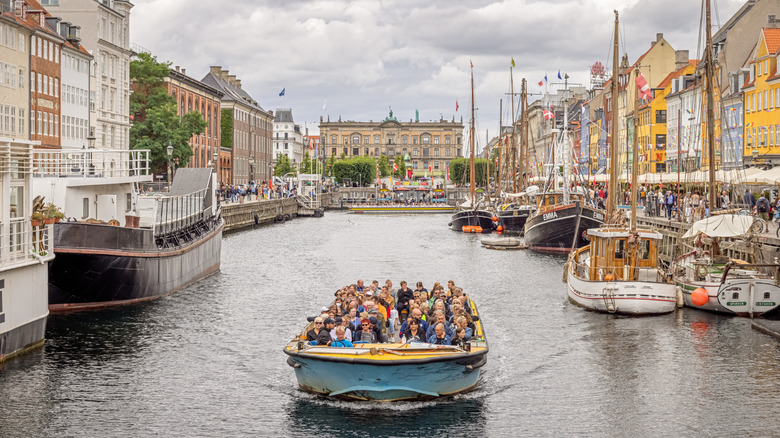
It's essential to get out on the water while in Copenhagen. Hop on a canal and harbor tour in Nyhavn for an overview of the city's history and a peek at some of its most famous sites, from castles to canals to that truly small Little Mermaid. You'll get the best views on a sunnier day, but most boats have covered (and even heated) areas, guaranteeing comfort year-round.
A canal and harbor tour is the best classic introduction to any Copenhagen visit, providing incredible views of the city's best sights from a unique perspective. You'll cruise down Nyhavn, of course, but also out in the harbor past the Amalienborg Palace, through the charming canal neighborhood of Christianshavn, and past modern feats of architecture, including the Opera House and the impressive Black Diamond Library. Most tour boats, often with guides in English and Danish, as well as audio guides in a selection of other languages, leave from the main dock in Nyhavn. Included with your transit pass, however, are Copenhagen's yellow Harbor Buses (ferries), which go along the harbor and up and down the canals, a more budget-friendly option but without the useful guide.
Tivoli Gardens
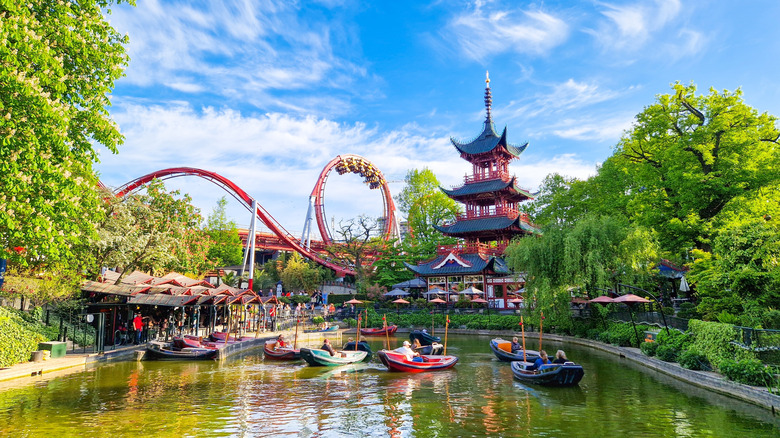
Forget Disneyland: Copenhagen's Tivoli Gardens is the real happiest place on Earth. In fact, it's said that this thrill-filled theme park inspired Walt Disney, who, after seeing one of the world's oldest amusement parks, headed back to California to build Disneyland. Even if you aren't a fan of roller coasters or even Ferris wheels, Tivoli is enchanting, with ornate buildings, lovely gardens, a tree-lined pond complete with a water wheel and a pirate ship, palaces, and more. The park itself dates back to 1843, while its oldest surviving building, the Pantomime Theatre, is a bit newer, having been built in 1874.
Tivoli is open select times throughout the year, notably during the summer, Halloween, and Christmas. Each of Tivoli's "seasons" is spectacularly festooned according to theme, with pumpkins and (live) witches in October, and a beautiful Christmas market along with Santa visits in December. Whatever the season, there's a variety of scheduled events, such as fireworks, ballet recitals, and fish feedings in the on-site aquarium. Tivoli also has some truly amazing dining options, including pop-ups by Michelin-starred chefs in the gorgeous Japanese Pagoda. For the kids (or the kids-at-heart), there are the requisite roller coasters, arcades, games, gentler rides for the little ones, a giant playground, and æbleskivers (pancake balls) around nearly every corner.
Amalienborg Palace & Marble Church (Marmorkirken)
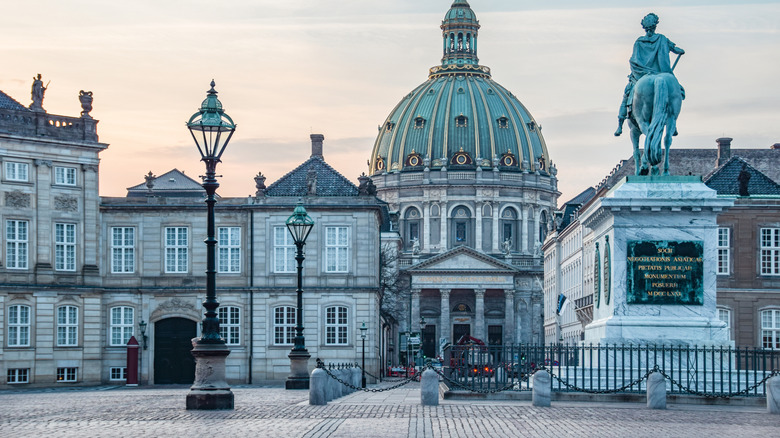
The Amalienborg Palace is home to Denmark's current royal family, one of the oldest monarchies in the world, with a history dating back 1,000 years. Only parts of Amalienborg are open to the public, but visitors can gather daily at noon in the courtyard to witness the Den Kongelige Livgardes (Royal Life Guards) during their ceremonial Changing of the Royal Guard. (Bonus: another free activity in Copenhagen).
Amalienborg is technically four separate palaces connected by an imposing square; one is inhabited by Denmark's former queen, Queen Margrethe II, who abdicated in favor of her son in 2024, while another is occupied by the current king, King Frederik X, along with his family. The other two palaces or "wings" are open to the public, one as a museum, one a recreation of a typical Danish royal residence. You can also visit the peaceful Amaliehaven (Amalie Gardens), a small piece of green between the palace's square and the harbor.
Within sight of Amalienborg is the dramatic green dome of Marmorkirken, or the Marble Church, one of Copenhagen's most beautiful cathedrals. Just steps from Amalienborg, the Marble Church (officially known as Frederik's Church) is open every day, and entry is free.
Strøget
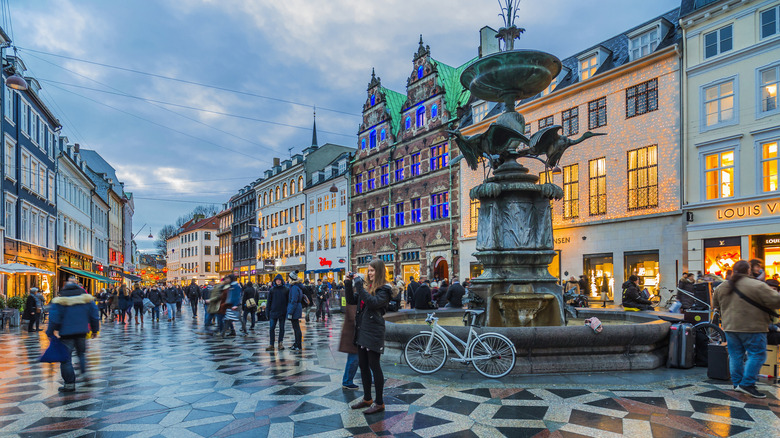
One thing many may not know about Copenhagen is that this vibrant European city has the best pedestrian shopping mall. Yet even on the busy, shop-lined streets of Strøget, Copenhagen's historic pedestrian thoroughfare, you'll feel that undeniable sense of hygge that characterizes the city. You'll see Louis Vuitton and Zara, Royal Copenhagen and endless souvenir shops, but also walk by churches and hidden courtyards, secret alleys and colorful facades, and through broad squares. It's a common misconception that Strøget (from the Danish word "to walk") is just one street, but it actually encompasses multiple streets, including Frederiksberggade and Østergade, along with three large squares: Nytorv, Gammeltorv, and Amagertorv.
Two of Copenhagen's libraries are in the district, as well as landmark stores like LEGO (a Danish invention), Royal Copenhagen porcelain, and the impressive Illums Bolighus department store. There are dozens of small boutiques and icons of Danish fashion, next to Zara and Normal, numerous souvenir shops, and plenty of the signature cozy coffee shops and eateries. The iconic Amagertorv Square is bordered on one side by Slotsholmens Canal, and the cobbled streets hold many events, like Christmas markets, concerts, and plenty of solo street performers. One of the perks of Støget, besides its shopping and excellent people watching, is that it connects many of Copenhagen's main sites, like Nyhavn, the King's Garden (Kongens Have), and Tivoli Gardens.
The National Museum of Denmark (Nationalmuseet)
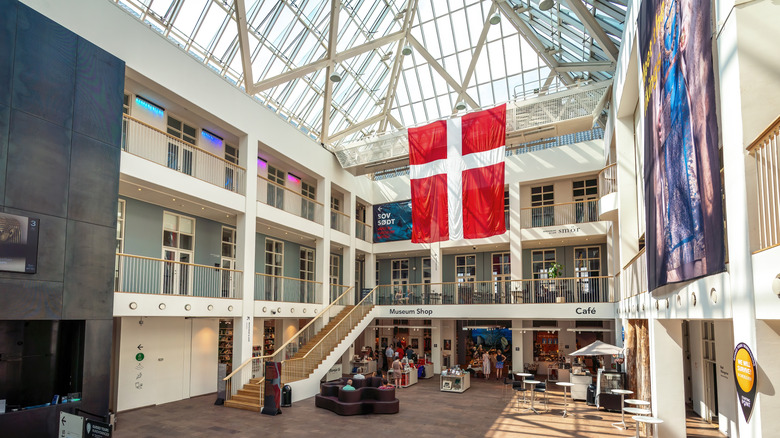
For a thorough understanding of Copenhagen, a visit to the National Museum of Denmark (Nationalmuseet) is a must. Discover Viking lore and important archaeological finds, a Victorian apartment and royal jewels, coins from around the world, and relics from all over Scandinavia and beyond. Covering over 9,000 years of history, there's plenty to explore here — make sure you see the iconic Viking rune stones. A section of the museum is for children, full of hands-on, interactive exhibits designed to immerse them in history, whether that's in a historic classroom or a medieval kitchen.
Among its many treasures and relics, from medieval jewelry to archaeological remains to dollhouses, the building housing the National Museum is a historical gem itself. Originally constructed as the "Prince's Palace" in 1743, the building remains grand enough to be a royal escape, although royals no longer call it home. While there, grab a bite at Restaurant SMÖR, serving some of the best smørrebrød (open-faced sandwiches) in town — an entirely different kind of Danish treasure.
Rosenborg Castle & the King's Garden (Kongens Have)
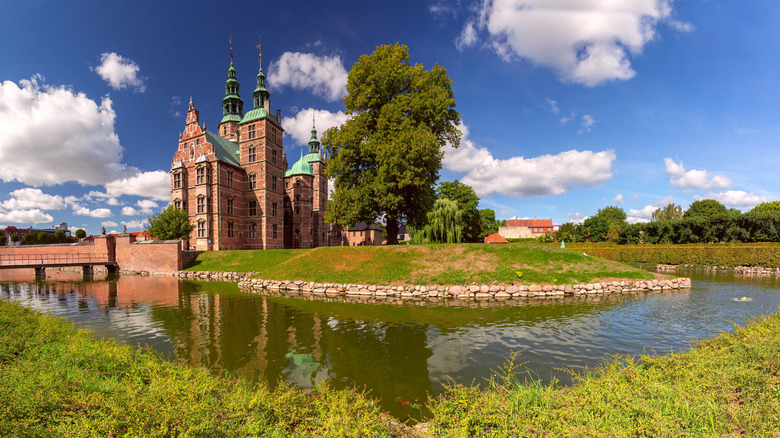
Another royal castle-turned-museum, Rosenborg Castle, has rooms dedicated to each of Denmark's past rulers, and the basement Treasury with sparkly treasure. Completed in 1633 as a summer home for King Christian IV, the king eventually found the 24-room castle too small, and subsequently built a larger summer palace farther outside of the city. The basement was turned into an official Treasury, which to this day holds Denmark's brilliant crown jewels, such as crowns and jeweled swords. The rest of the museum was turned into a museum in 1830, and each room features portraits and preserved furniture and decor, such as coronation thrones, from the respective ruler. With a monarchy dating back 1,000 years, Danish royal history is impressive!
A part of Rosenborg's allure is the setting: the beautiful King's Garden (Kongens Have), the oldest royal gardens in Denmark, a large green space full of trees, pathways, gardens, a playground, and several cafés. Despite the fact that an estimated three million people visit the gardens each year (and probably most in the warmer months), the gardens always seem spacious.
The Round Tower (Rundetårn)
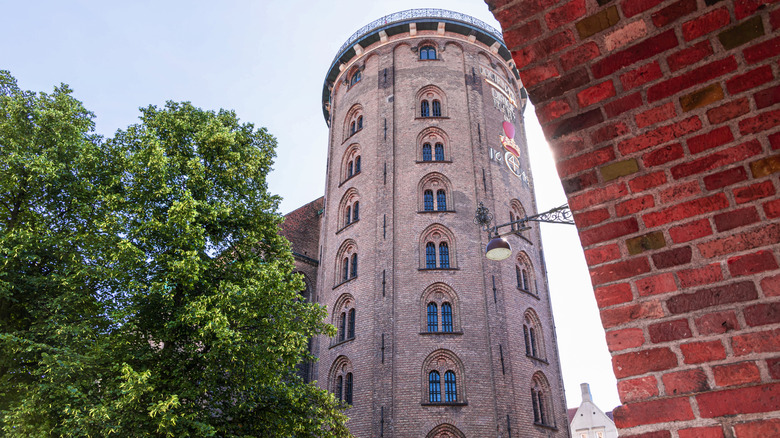
One of the most recognizable monuments in Copenhagen, the 400-year-old Round Tower (Rundetårn) in Strøget, can be climbed via its gently sloping Spiral Ramp(with several short sets of winding stairs at the end). This architectural wonder with panoramic views of Copenhagen is also Europe's oldest (still working) astronomical observatory, often open for visitors (note: The Round Tower Public Observatory is under restoration as of this writing and is expected to be closed until fall 2026).
As you ascend the Round Tower's ramp, which makes 7.5 rotations up to the top, you'll pass the beautiful Trinitatis Church through one opening, and up a level, the expansive Library Hall, once the University Library. Now, the Library Hall features temporary exhibits, as well as a small café and shop. As you continue, you'll pass window seats and niches, and near the top, you'll even be able to look right down through the tower's hollow core to street level. To explore the 17th-century tower, kids can enter for free, but adults will need to purchase a $9 ticket. There's limited capacity in the tower, so you may need to wait in line for your turn.
Christianshavn & Freetown Christiania
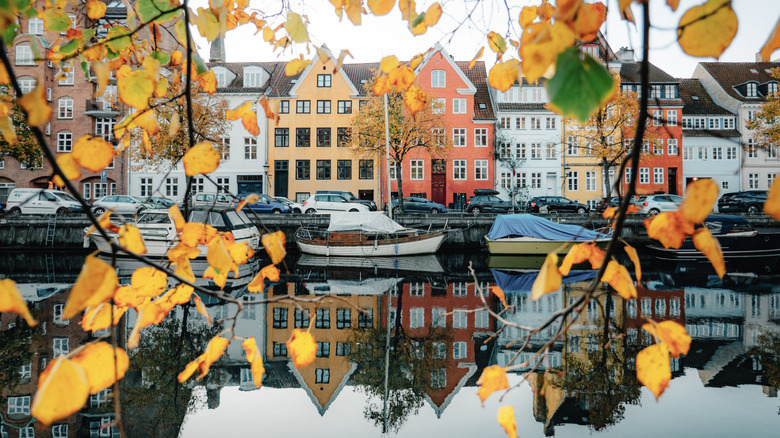
Christianshavn is a favorite of many a visitor (and local). The neighborhood is "quintessential Copenhagen" with canals and cobblestones, and the Copenhagen of your dreams, with brightly colored historic facades lining canals home to houseboats galore, biking lanes, and merchant homes turned into hip boutiques, restaurants, or apartments. Originally established in 1618, Christianshavn, just across the harbor from Nyhavn, was inspired by Amsterdam's canal systems and has distinct maritime vibes to this day, despite the (relative) lack of salty sailors. In addition to a large range of dining options, from the world-renowned Noma to street food, Christianshavn is home to several historical buildings, including the Church of Our Savior, with the spiral staircase winding around the outside of its golden spire (incredible views, but not for the faint of heart or the acrophobic).
And within this graceful yet trendy district is the unique Freetown Christiania. A social experiment started by 1970s counterculturists, Christiania is a "free city," designed to be autonomous, although the land is now leased to the community by Copenhagen. The main drag, Pusher Street, is sometimes known as the Green Light District, thanks to its plethora of marijuana sellers, but outside of the most touristy parts, Christiania seems just like any Copenhagen neighborhood, if a little more ramshackle and communal. Note that recreational marijuana is not legal in Denmark, and Christiania is not exempt from this, despite what it may seem on Pusher Street. In addition, increased caution is recommended when visiting Christiania.
Torvehallerne
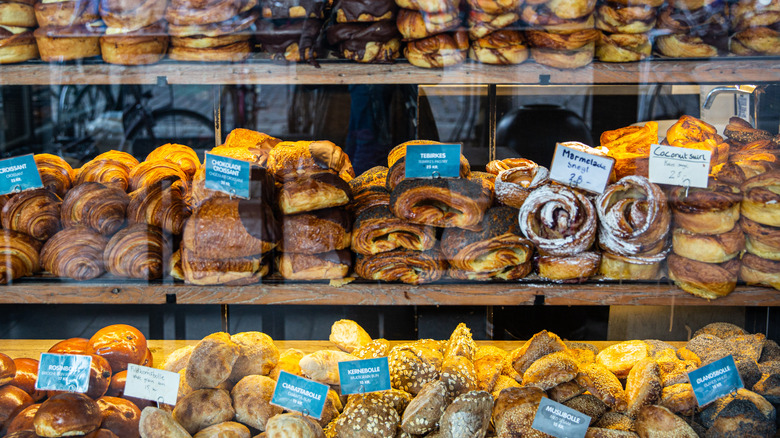
For a comprehensive taste test of Danish cuisine and Copenhagen's best international flavors, head to the beautifully designed Torvehallerne Food Market, which sells everything from gelato to fresh fish, ramen to wine, porridge to tacos, and, of course, smørrebrød. Smørrebrød are usually made on sourdough rye, topped with a variety of fixings, like egg salad, smoked salmon, pickles, and cheese. Sample smørrebrød in Torvehallerne at stands like Hallernes Smørrebrød or for less traditional options, Rørt.
With more than 60 food stands, bakeries, specialty stores, and delis, there's plenty more in Torvehallerne besides smørrebrød. Find a classic "bolle med ost," or BMO, Copenhagen's favorite snack of cheese and butter on a bun (simple but delicious), sample local chocolates and coffee, purchase Danish food gifts, and visit the small farmer's market in between the two main glass buildings of Torvehallerne. The market overflows with gorgeous fresh flowers and a selection of locally grown produce.
Danish design stores and museums
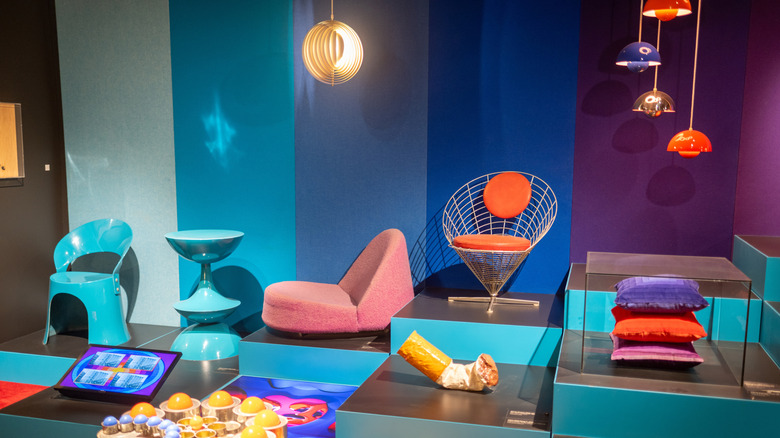
Danish design is world-famous for its clean lines, modern twists, and beautiful shapes. Immerse yourself in Danish design at one of the many design shops, like the famous Hay House and the classic Illums Bolighus, where you can purchase Danish goods from local designers. Head to smaller, specialty design stores, like Royal Copenhagen for porcelain or fashion at Mads Nørgaard or Ganni.For more inexpensive home goods, you must visit the family-run chain of Søstrene Grene.
Discover even more about the world of Danish design at museums like the Designmuseum Danmark or the Danish Architecture Centre in the iconic BLOX building. At the Design Museum, in the former 18th-century Frederiks Hospital, follow the story of Danish design through the years, from cutlery to textiles to fashion to furniture, and explore exhibits focused on famous Danish designers and their work, like Arne Jacobsen (of the iconic Egg chairs). Head to the harbor to the landmark glass BLOX to tour the Danish Architecture Center (Dansk Arkitektur Center), or DAC, filled with interactive exhibits showcasing the best of Danish innovation in architecture.
Refshaleøen
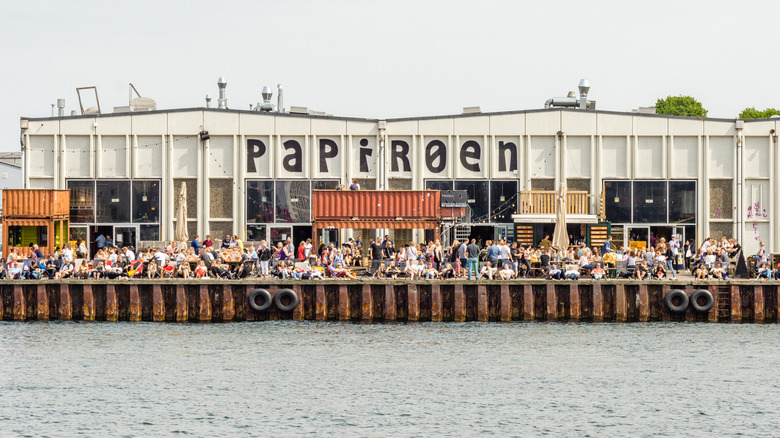
A re-imagined urban space across the harbor from Nyhavn, the former industrial area of Refshaleøen is now home to attractions like CopenHill, a year-round ski area built on top of a waste management center, and Reffen, northern Europe's largest street food marketplace. Once one of the world's largest shipyards, Refshaleøen is a short walk, bike, bus, or boat trip from central Copenhagen, and is considered one of the city's most vibrant and unique cultural scenes. In addition to world cuisine at the waterfront Reffen market, Refshaleøen is home to some of the best pastries in the city at Lille Bakery or La Banchina, and the unique urban garden, Øens Have, serving mostly vegetarian and vegan dishes.
Besides eating, there's plenty to do in Refshaleøen, from CopenHill to CopenHot, a classic Nordic sauna experience. Try local spirits at several small-batch distilleries, sample famous Copenhagen brews, or take part in adrenaline sports at Bungyjump Copenhagen or the Copenhagen Cable Park. Reffen transforms into an ice-skating rink during the winter, where you can skate right along the harbor. In the summer, it's one of the city's best spots for a harbor swim, that classic Danish pastime.
Ny Carlsberg Glyptotek
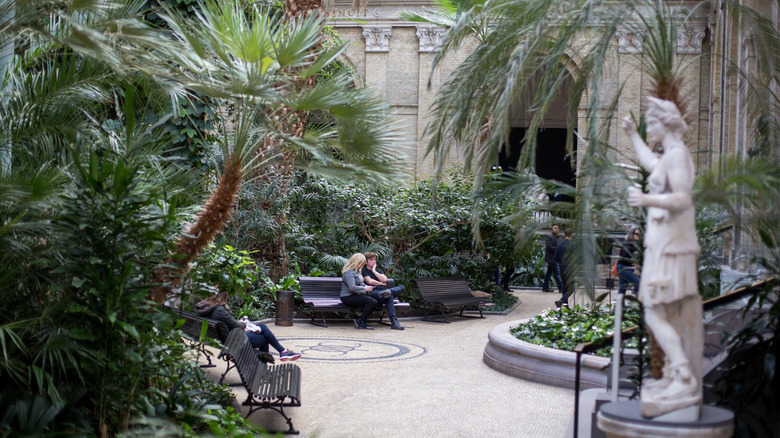
Founded in 1897 by Carl Jacobsen, son of the city's most prolific brewer (their brand, Carlsberg, remains iconic), primarily to showcase his extensive art collection, the Ny Carlsberg Glyptotek features an eclectic mix of sculpture, relics, and paintings, all showcased in a grand hall. The collection features thousands of works of art spanning thousands of years of history, within two main departments: the Department of Antiquity, focusing on art from the ancient world (Egyptian, Greek, etc), and the Modern Department, featuring work from the 19th and 20th centuries, primarily of Danish and French extraction. In addition, the Glyptotek has rotating exhibits that change throughout the year.
Although the veritable treasure trove inside the Glyptotek is undeniably impressive, the inner courtyard, or the Winter Garden, nearly steals the show. With hidden benches amongst exotic palm trees, ornate archways, and the occasional sculpture, the Winter Garden is one of Copenhagen's most idyllic corners. It's also home to the museum restaurant, Picnic, featuring delicious Danish specialities and a fun kids' menu.
Methodology

Combining personal experience, experience from other travelers, and recommendations from local writers, we compiled this list of Copenhagen's 14 top sights, selecting destinations and attractions that showcase the best of Danish history, design, food, and, of course, all with that indefinable air of hygge (coziness) that so characterizes this Scandinavian capital. We also checked facts with official tourism websites to ensure correct visiting information.