13 Top Tourist Attractions in Esbjerg & Easy Day Trips
Esbjerg, the fifth largest town in Denmark, presides over the west coast of Jutland, the country's mainland peninsula, opposite the northern tip of Fanø Island. Denmark's most important North Sea harbor and largest fishing port, Esbjerg is also the base for the country's significant oil and gas exploration in the North Sea.
It's Denmark's most important North Sea harbor and largest fishing port in addition to being the base for Denmark's significant oil and gas exploration in the North Sea.
The huge sculpture Man Meets The Sea proudly marks the fact that this is Denmark's trading gateway to the west. Although Esbjerg is primarily an industrial port, there are plenty of attractions in the city and surroundings to make a visit worthwhile. Take time to explore some unique architecture, impressive museums, and excellent coastal amenities.
You'll be sure to find all the best places to visit in this fascinating region with this handy list of the top tourist attractions in Esbjerg.
- 1. Wadden Sea National Park
- 2. Ribe Viking Museum
- 3. Man Meets the Sea and Fisheries & Maritime Museum
- 4. The Water Tower & Art Museum (Kunstmuseum)
- 5. Esbjerg Museum (West Jutland Amber Exhibition)
- 6. Fanø island
- 7. Marbæk Nature Park
- 8. Ribe Domkirche (Ribe Cathedral)
- 9. Henne Strand
- 10. Day Trip to Mandø Island
- 11. Day Trip to Als
- 12. Day Trip to Silkeborg
- 13. Day Trip to Limfjord
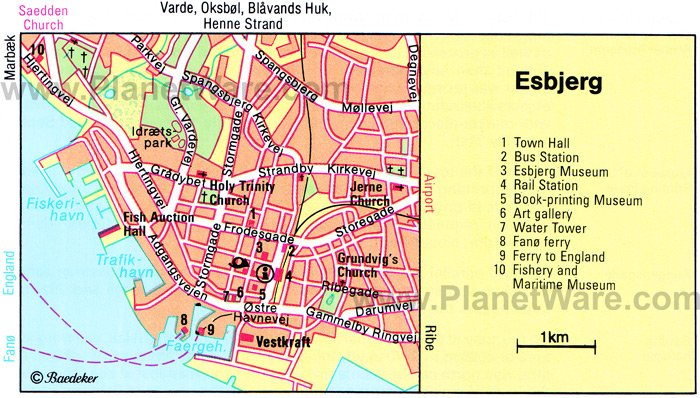
- Map of Tourist Attractions in Esbjerg & Easy Day Trips
- Esbjerg, Denmark - Climate Chart
1. Wadden Sea National Park
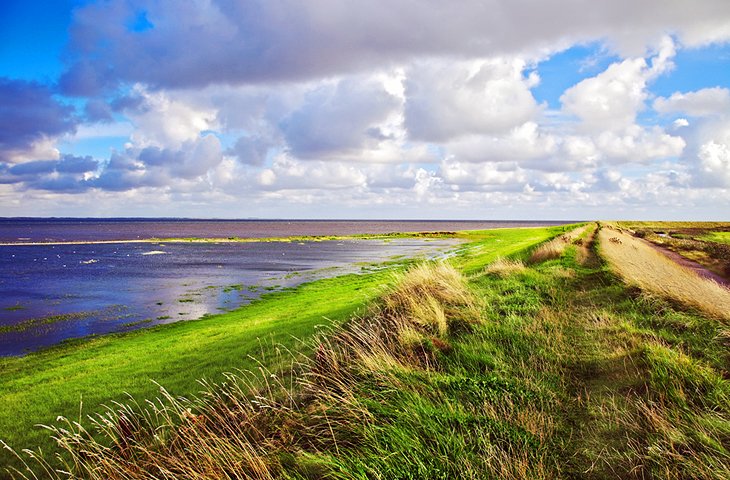
This, the newest and largest national park in Denmark, stretches over four communes and incorporates pristine beaches, wetlands, and nature reserves.
Lying in the center of Eastern Atlantic migratory routes, the Wadden Sea is one of the most important tidal areas in the world. More than ten million migratory birds use the coastline as a stopover each year. In addition to the abundant birdlife, the extensive shoreline hosts Denmark's largest population of spotted seals.
Summer is the best time to see these gentle creatures; hop aboard a Seal and Wadden Sea Safari. Cruises depart from Esbjerg Harbour daily.
Official site: http://danmarksnationalparker.dk/
2. Ribe Viking Museum
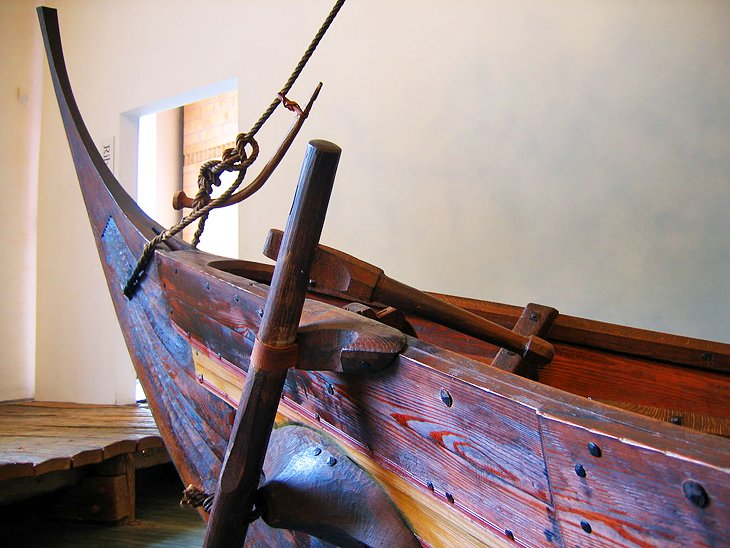
A 30-minute drive south from Esbjerg (Routes 24 & 11) is the Ribe Viking Center, one of the best places to visit in Denmark for fans of ancient Nordic times and Viking history. Ribe has long boasted strong Viking links, and the center was established in 1992 to celebrate the fact and let visitors experience a true taste of life in the Viking Age.
Here, you'll find authentic reconstructions of Viking settlements complete with marketplaces, farmhouses, and homes. Highlights include the International Viking Market, but visitors also flock here from across the world for archery, coin minting, falconry, and a range of hands-on activities. All in all, this is a great day out.
Address: Lustrupvej, Ribe
Official site: www.ribevikingecenter.dk
3. Man Meets the Sea and Fisheries & Maritime Museum
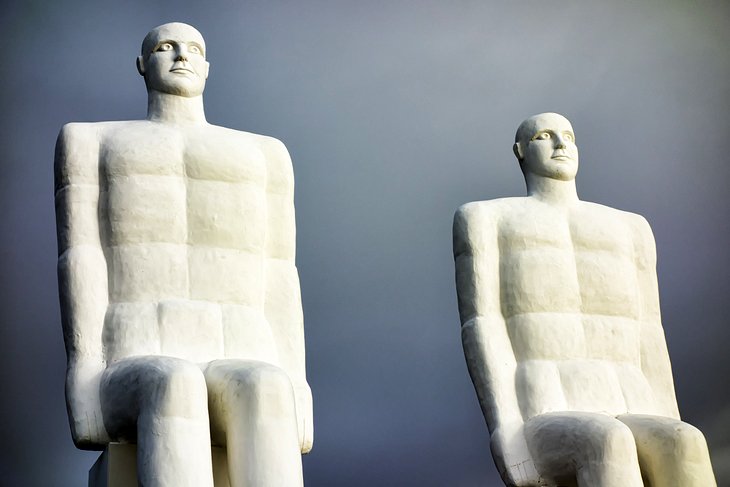
Esbjerg's unmistakable landmark, the nine-meter-high sculpture Man Meets the Sea, imposingly overlooks both the Wadden and North Seas. If arriving by boat, you really can't miss it.
The sculpture was designed by Svend Wiig Hansen and unveiled in 1995 to celebrate Esbjerg's 100th anniversary as an independent municipality. Designed to portray man meeting with nature, it has something of a mystical aura reminiscent of Ancient Egypt's sphinxes. In clear weather, the sculpture can be seen from as far away as 10 kilometers.
Opposite the sculpture is the Fisheries and Maritime Museum, where visitors can explore multimedia exhibits related to the sea.
Some of the favorite things to do for families with young children are watching the seals being fed and trained, meeting the North Sea's large predatory fish in the saltwater aquarium, and patting a small-spotted catshark in the petting pool.
Workshops and hands-on activities in the outdoor area may explore any sea-related subject, such as the science and gastronomy of seaweed.
Address: Saltvandsakvariet -Tarphagevej 2, Esbjerg
Official site: https://fimus.dk/en/
4. The Water Tower & Art Museum (Kunstmuseum)
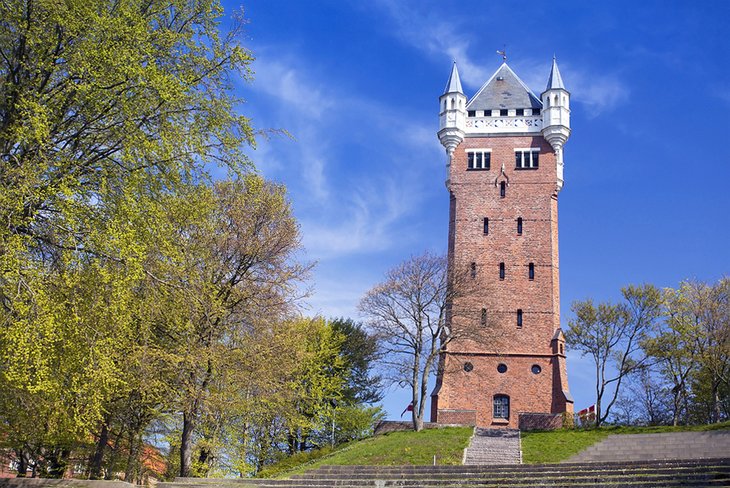
In Esbjerg Municipal Park, at the top of a cliff overlooking the extensive harbor, you'll find the Water Tower, built in 1897 and one of the town's landmarks. The tower is open daily in the summer, and along with sweeping views over the city and harbor, you can see exhibits on other water towers.
Close by, at Havnegade 20, the Art Museum (Kunstmuseum), houses a comprehensive collection of 20th-century Danish paintings and sculpture. Among the renowned exhibits are works by Harald Giersing, Wilhelm Lundstrom, Richard Mortensen, the Jorgen brothers, and Arne Haugen Sorensen.
Special exhibitions and concerts of international repute are regularly held here, too. In the entrance is the ironwork sculpture "Esbjerg" by Robert Jacobsen (1962). This experimental museum is both a creative space for established artists and a platform for the young art scene.
Address: Havnegade, Esbjerg
Official site: www.eskum.dk
5. Esbjerg Museum (West Jutland Amber Exhibition)
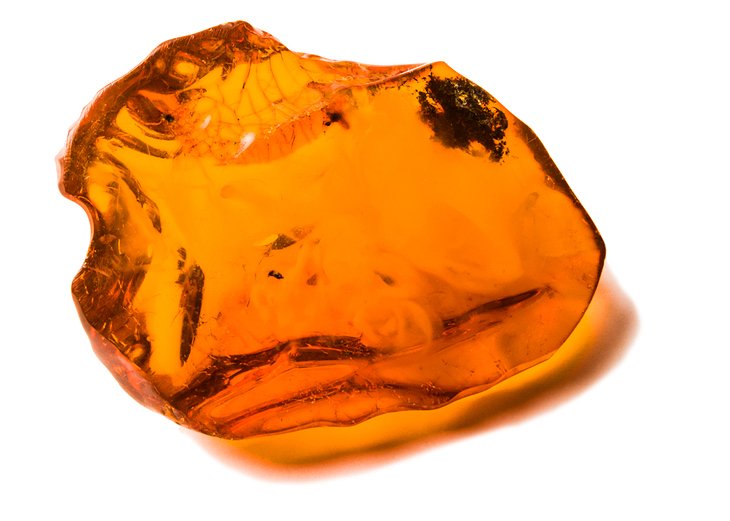
Around 10 minutes' walk from the Water Tower on Torvegade, this worthwhile museum details Esbjerg's history and hosts a fascinating amber exhibition. Amber, known as 'Danish Gold,' has long fascinated humankind, and the west coast of Jutland is famous for large discoveries of the precious fossilized resin.
Several hundred unique amber objects spanning 10,000 years of history are beautifully presented in this impressive collection. Along with its more recent history, you'll also discover the story of Esbjerg, from its earliest beginnings through recreated scenes from both the Iron and Viking Age.
Address: Torvegade 45, Esbjerg
Official site: www.esbjergmuseum.dk
6. Fanø island
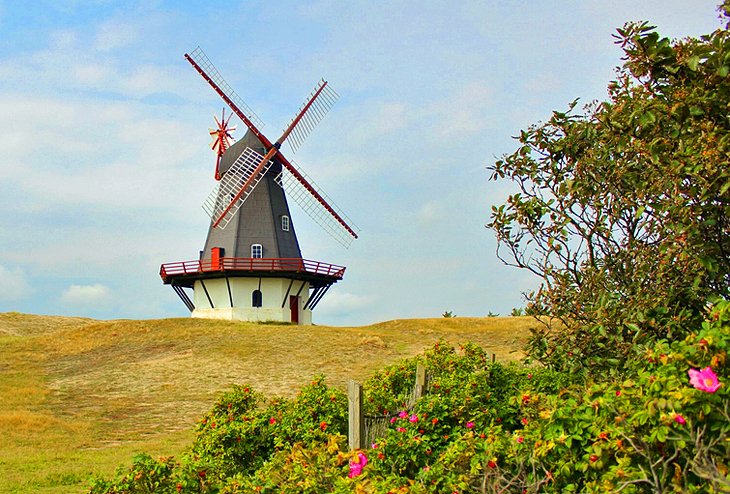
A short 12-minute ferry ride from Esbjerg is the extremely popular island of Fano (Fanø), a must-see attraction if visiting the area. It's around 16 kilometers long and five kilometers wide and an excellent place for a day trip.
This unspoiled, tranquil island has long been a magnet for tourists and Danes alike who enjoy the many things to do here: magnificent beaches, cycling paths, nature walks, and terrific places to eat. For history enthusiasts, Fano also has a number of bunkers from World War II.
The island is famous for its remarkable tidal fluctuation. When the tide is out, you can quite literally walk for several kilometers from the shoreline before reaching the water.
7. Marbæk Nature Park
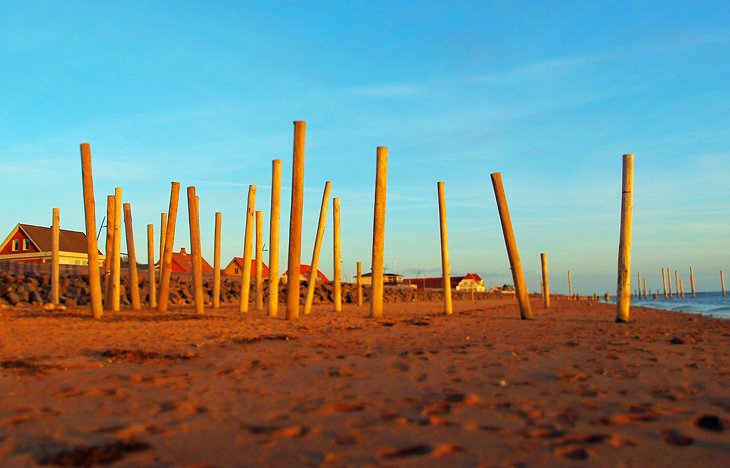
Marbæk Nature Reserve, 12 kilometers northwest of Esbjerg, covers 1,300 hectares and borders Ho Bay and Varde Stream. The varied countryside is excellent for a range of outdoor activities; things to do here include hiking, cycling, and horse riding.
You'll also find some wonderful beaches with pristine sand dunes. The lakes have a profusion of unique bird life. At Marbækgård Farm, you'll find the district's Tourist Information Center, a restaurant, and mini-golf. Close by, the beach area has barbecue facilities and picnic tables.
8. Ribe Domkirche (Ribe Cathedral)
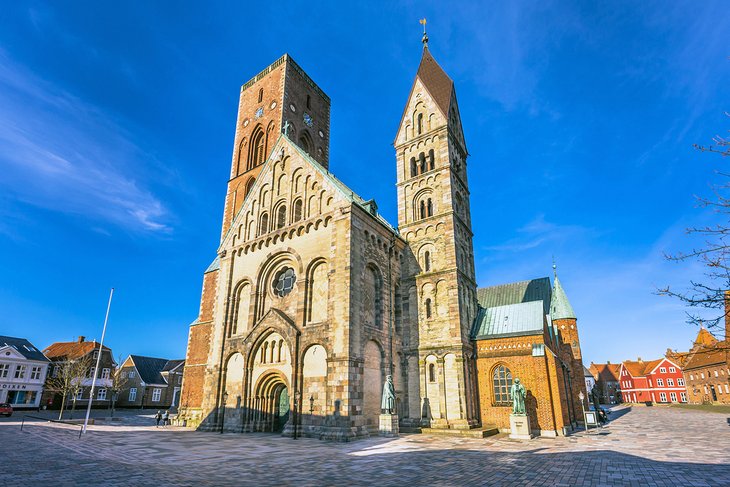
While visiting the Viking Museum in Ribe, be sure to stop in the center of the old town at the Romanesque Cathedral. Built with limestone dug from quarries near Mønsted nearly 1,000 years ago, it was the first Christian church in Denmark, founded by a missionary monk from Hamburg, Germany.
Although badly damaged by fire in the 1100s and restored, enlarged, and redecorated often and incorporating several different architectural and artistic styles, it is essentially Romanesque - and the best-preserved Romanesque building in Denmark.
Highlights to look for include the magnificent 12th-century main doorway, with its carved granite reliefs; the carved pulpit; a bronze fountain from 1375; a ship model suspended above the crossing; and the preserved remnants of medieval frescoes.
The church's bell tower at one time doubled as a watch tower, and in 1644, during the Danish-Swedish Wars, cannons were hauled to its top, where they fired on Swedish ships.
9. Henne Strand
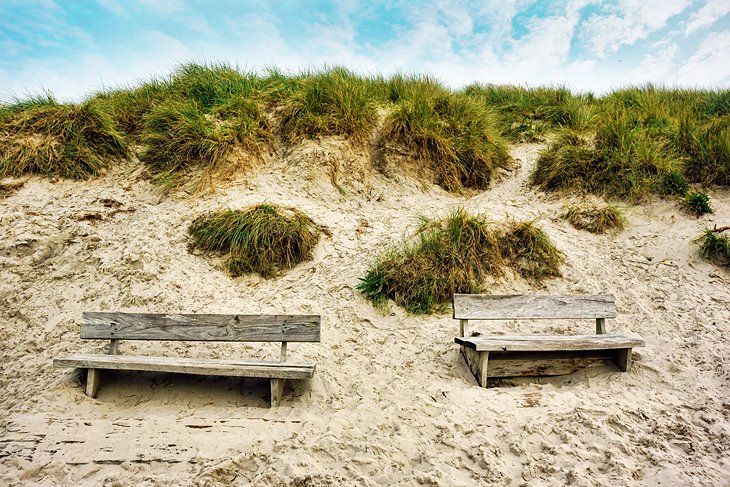
About a 40 kilometers' drive north of Esbjerg (Road 181) are the wonderful white beaches of Henne Strand, famous for glorious sand and long dunes stretching as far as the eye can see. Neighboring Henne is a popular Danish tourist town with all the amenities you'd expect of a beach resort.
The area is a favorite with both Danish and foreign holidaymakers, and with so many things to do, it's not hard to see why. Activities and attractions include an indoor water park, kite-surfing, beach games, restaurants, and a wealth of local arts and crafts to browse.
If you're planning to stay here, you'll find plenty of hotels and campsites.
10. Day Trip to Mandø Island
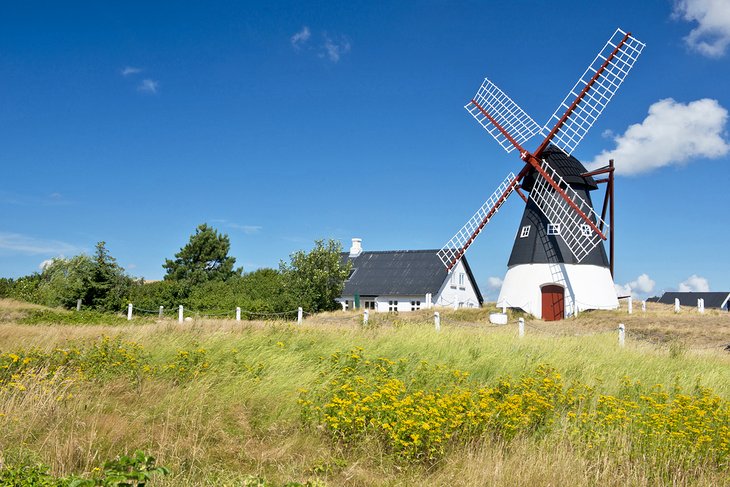
The town of Ribe, one of the oldest in Denmark, lies about 30 kilometers from Esbjerg and is a launching point for a fascinating day trip to the little marsh island of Mandø in Wadden Sea National Park. Rich in birdlife, Mandø Island is only accessible at low tide from Vester Vedsted in a bus drawn by a tractor.
The trip is an adventure in itself. Once here, you can browse interesting exhibits on nature conservancy and ornithology, as well as a mudflats exhibition in the Mandø Centre. Terns, sandpipers, waders, and ducks such as eiders breed on the island.
From Mandø Island, you can also visit Koresand, a sandbank in the mud flats southwest of the island. The trip lasts about three hours and includes a visit to the seal reserve.
11. Day Trip to Als
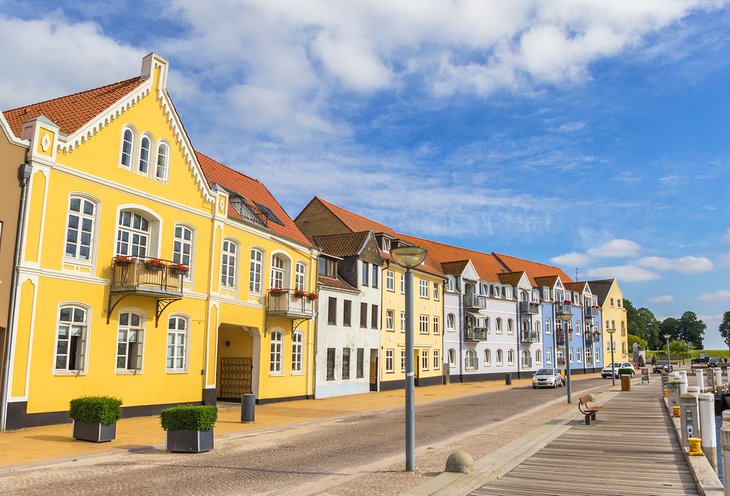
Less than a two-hour drive from Esbjerg, the fertile island of Als nestles between the Jutland Peninsula and the larger island of Funen.
Sparkling bays beckon on the island's west coast, and the beautiful beaches here make Als a popular place for vacations. Sønderborg, the capital, straddles the Als Strait (Alssund), which separates the island from the Danish mainland and is traversed by two bridges.
Highlights of a visit to the island include Sønderborg Castle, with a museum that unveils the region's history; a pretty harbor with cafés and restaurants; and a sprinkling of old churches and mills. In the north of Als,
Nordborg was originally a castle built in the 12th century as defense against the Wends. It was destroyed during the wars against Sweden, and rebuilt between 1665 and 1670.
Today, it houses a college of further education. Besides sightseeing, popular activities in Als include fishing, swimming, and sailing.
12. Day Trip to Silkeborg
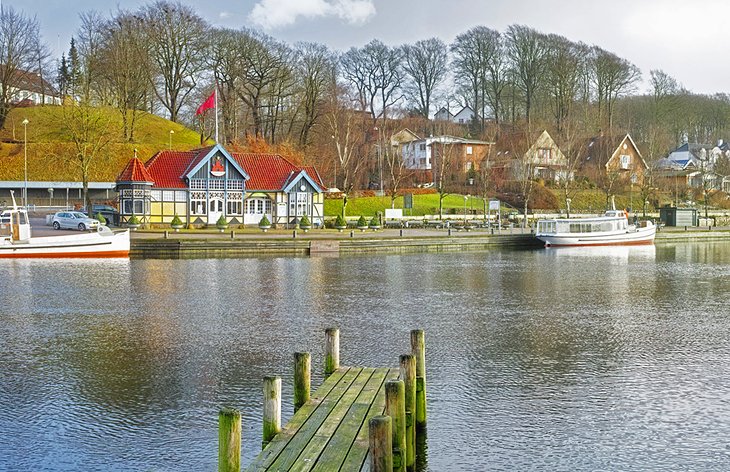
About 90 minutes' drive from Esbjerg, Silkeborg lies on the Langsø ("Long Lake") in an area of Central Jutland cloaked by forests and lakes. These are the Danish Lake Uplands, through which flows the Gudenå river.
During the summer months, colorful fountain-displays illuminate the banks of the Langsø. Other tourist attractions in Silkeborg are the Indelukket, a marina and recreation area; the Museum Jorn displaying the art of Asger Jorn; and the local history exhibits at the Silkeborg Museum.
Also in summer, you can take a trip on the world's oldest paddle-steamer "Hjejlen" through one of the most beautiful parts of Denmark to the 147-meter-high Himmelbjerg (Heaven Mountain). The top of the hill affords splendid views over the surrounding forests and lakes.
13. Day Trip to Limfjord
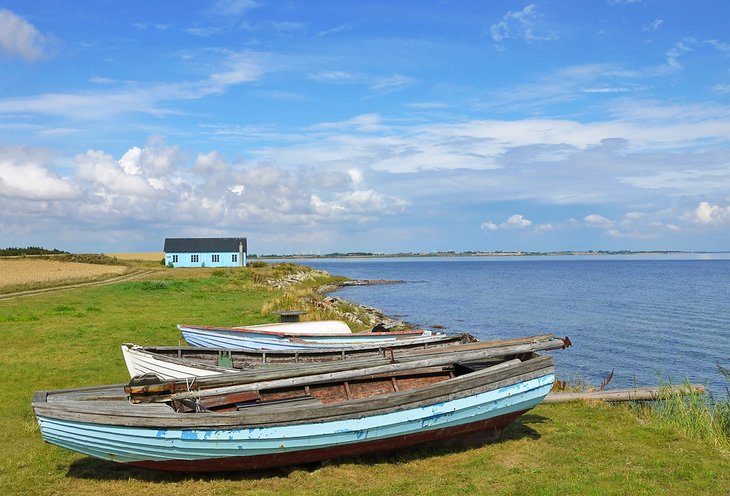
About two and a half hours' drive from Esbjerg, Limfjord is a shallow stretch of water with beautiful scenery and calm waters that have inspired many poets and writers over the centuries. The 180-kilometer-long fjord divides Nørrejyske Ø, the island of north Jutland, from the rest of the peninsula and extends from Thyborøn in the west to Hals in the east.
The shallows make the passage of ships somewhat difficult, however Limfjord offers ideal conditions for sailing, and many of the region's towns beckon with pretty harbors and ample moorings.
The western entrance to the Limfjord from the North Sea is the Thyborøn Canal, which flows into the lagoon known as Nissum Bredning. On the north side of the canal lies the popular holiday area around Agger and Vestervig.
Map of Tourist Attractions in Esbjerg & Easy Day Trips
Esbjerg, Denmark - Climate Chart
| Average minimum and maximum temperatures for Esbjerg, Denmark in °C | |||||||||||
| J | F | M | A | M | J | J | A | S | O | N | D |
| 3 -1 | 3 -2 | 5 0 | 9 3 | 15 7 | 18 11 | 19 13 | 20 13 | 16 11 | 13 8 | 8 4 | 4 0 |
| PlanetWare.com | |||||||||||
| Average minimum and maximum temperatures for Esbjerg, Denmark in °F | |||||||||||
| J | F | M | A | M | J | J | A | S | O | N | D |
| 36 29 | 36 29 | 40 32 | 48 37 | 58 45 | 64 51 | 66 55 | 67 55 | 61 51 | 54 45 | 46 38 | 39 32 |
| PlanetWare.com | |||||||||||