10 Top Highlights of Piazza della Signoria in Florence
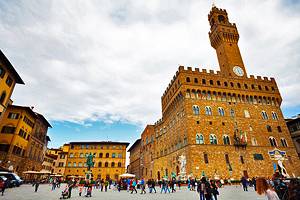
Piazza della Signoria has been the political center of Florence since the 14th century, when houses of prominent families had to make way for the new square. It's been the center for ceremonial events, rallies, and festivals ever since, and here, you'll find several iconic Florence tourist attractions: Palazzo Vecchio, the Neptune Fountain, the Uffizi Gallery, the Loggia dei Lanzi, and copies of statues by Michelangelo and Donatello.
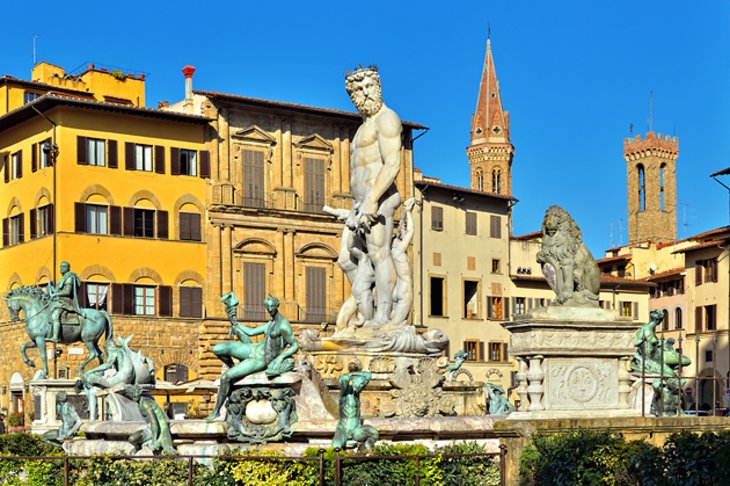
But the square was busy long before the Renaissance palace made it the headquarters for government. Excavations in the 1980s turned up finds from the Roman era and earlier relics from the Etruscan period and even the Bronze Age. This is the heart of the city for Florentines, and although its cafes and restaurants are likely to be filled with tourists, Piazza della Signoria is one of the top places to visit in Florence.
If you've heard of the zealous cleric and political reformer Savonarola, who tried to force Renaissance Florentines into more righteous ways, look for the granite disc near the fountain marking the spot where he and two companions were executed on orders of Pope Alexander VI.
Also near the fountain, a Giambologna statue commemorates the elevation of Cosimo I, shown on horseback, to the Grand Duke of Tuscany in 1569. You'll find plenty of things to see in this list of the top highlights of Piazza della Signoria.
- 1. Palazzo Vecchio (Palazzo della Signoria)
- 2. Neptune Fountain
- 3. Bargello Palace & National Museum
- 4. Loggia dei Lanzi
- 5. Palazzo Gondi
- 6. Badia Fiorentina
- 7. Orsanmichele (San Michele in Orto)
- 8. Casa de Dante (Dante's House)
- 9. San Firenze
- 10. Gucci Garden Galleria (formerly Gucci Museum)
- Map of Highlights of Piazza della Signoria in Florence
1. Palazzo Vecchio (Palazzo della Signoria)
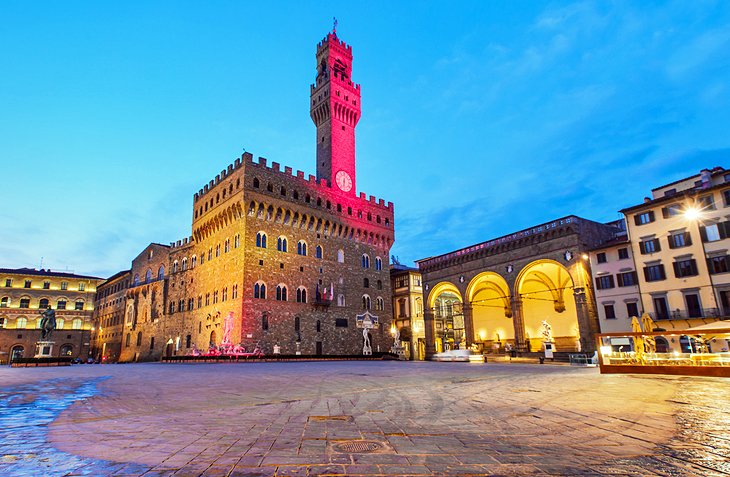
The Palazzo Vecchio, one of the major attractions in Florence, is easy to spot, with its 91-meter tower looking over the piazza. Its fortress-like exterior reflects its past, begun in the late 12th century, a time when powerful families and rulers were targets for attacks by rival states.
Palazzo Vecchio became the seat of the Medici dynasty in 1540 until Cosimo I relocated his court to the Pitti Palace. In the 19th century, it was for a short time the seat of Italian government, then became Florence's city offices. Its dominating presence has always assured that Piazza della Signoria would be the center of life in Florence.
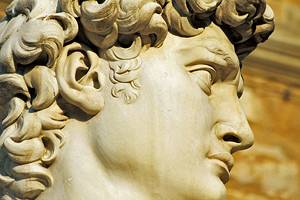
To the left of the palace door, a copy of Michelangelo's David marks its original placement, until it was moved to the Academia in 1873.
2. Neptune Fountain
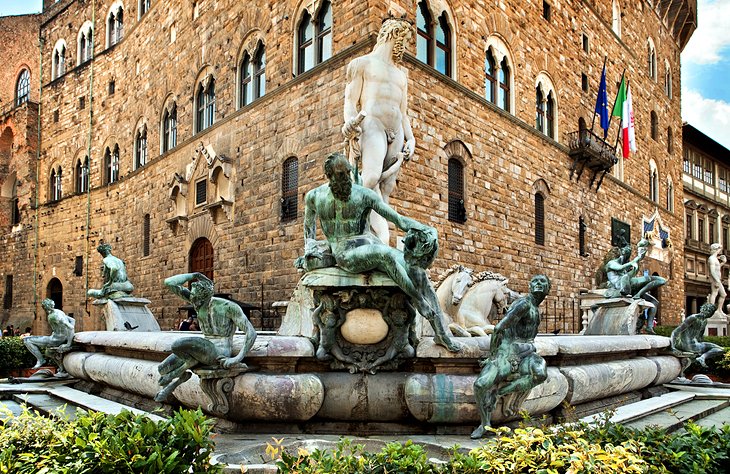
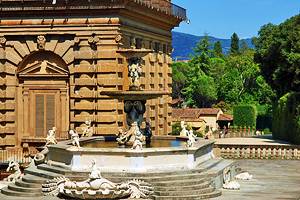
Piazza della Signoria's most impressive monument, and the square's centerpiece, is the Fonte di Piazza, created by Bartolomeo Ammanati to celebrate the wedding of Francesco de' Medici, son of Cosimo I, to Princess Johanna of Austria in 1565.
Because the marriage signified the Medici's rise into the ranks of Europe's great ruling houses - Francesco was to receive the title of Grand Duke - the already begun fountain suddenly became a much larger project and had to be finished in a hurry. So Ammanati and his assistants worked feverishly to make this the largest fountain in Florence, with Neptune surrounded by four horses and three tritons.
They may have been in too much of a hurry, since when it was finished in 1575, the Florentines were heard to jeer "Ammanato, che bel marmo hai rovinato" - what lovely marble you've ruined, Ammanato!
3. Bargello Palace & National Museum
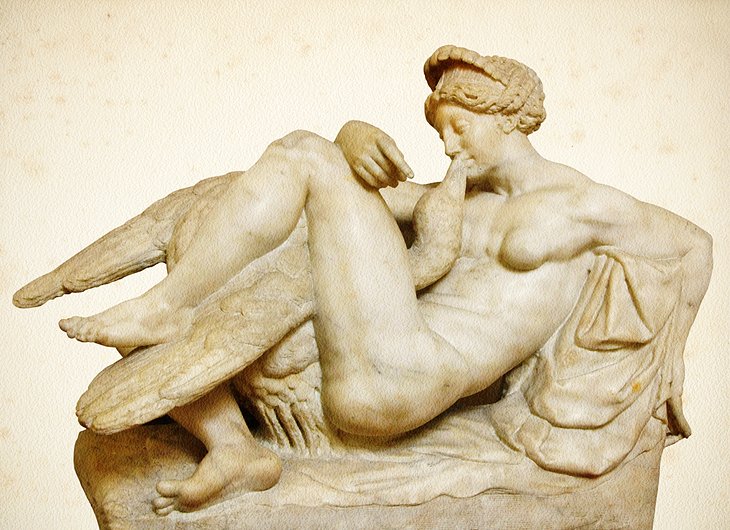
The massive Bargello Palace now houses the National Museum, containing an entire room devoted to Michelangelo and another to the lovely glazed terra cotta reliefs of Giovanni della Robbia.
Donatello's artistry is represented by several of his marble and bronze sculptures, and there are works by other Tuscan greats, including Benvenuto Cellini, as well as models by Brunelleschi and Ghiberti illustrating their proposals for the doors of the baptistery. Goldsmithing, enamels, and other fine Tuscan crafts fill more galleries of the museum.
Address: Via del Proconsolo 4, Florence
4. Loggia dei Lanzi
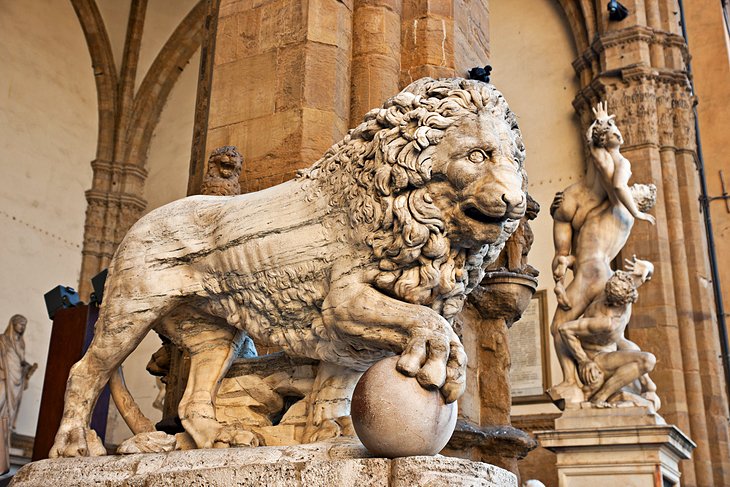
Also known as the Loggia della Signoria, the arcade was built between 1376 and 1382 and although it predates the Palazzo Vecchio, it forms a good counterpoint to its cubic brick lines. One of the finest examples of Florentine Gothic architecture, the loggia served the Republic as a stage for official ceremonies, such as receiving ambassadors and princes and installing public officers.
The Loggia lost this political function with the end of the Republic and took on a purely decorative role, but 19th-century restorations brought it back to public use, and it is once again decked out with banners and garlands on festive occasions.
Flanking the entrance are two lions, one from classical Greece, the other a 16th-century copy, and inside are some important sculptures. The most photographed is the dramatic bronze masterpiece of Perseus by Benvenuto Cellini (1545-1554), impressive for its delicate workmanship and bold composition.
Two outstanding marble groups are by Giambologna, Hercules fighting with Nessus the Centaur (1599) and The Rape of the Sabine (1583). It is likely that this title and interpretation were given to it somewhat later, but that doesn't change its artistry or significance.
5. Palazzo Gondi
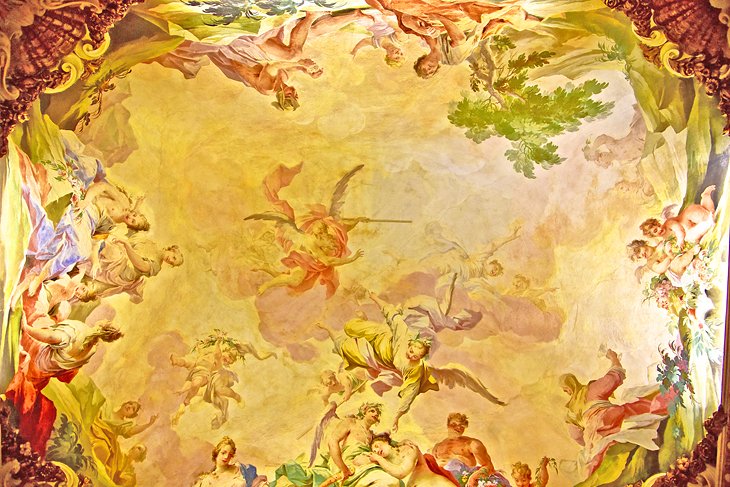
Palazzo Ricardi and other Medici palaces in Florence are thought to have inspired Giuliano da Sangallo in his design for the palace of the prominent Gondi family, bankers, and financial partners of the Medici. Palazzo Gondi follows the same layout that was popular in the late 15th century, with four wings enclosing a cortile, or courtyard.
The interior of the palace befitted the Gondi's wealth and prestige and is beautifully maintained today; the ceilings are especially spectacular, but for many, the highlight of a tour is the chance to climb to the rooftop terrace for exceptional views of Palazzo della Signoria and a full view of the upper Duomo and Brunelleschi's dome.
Address: Piazza San Firenze 3, Florence
6. Badia Fiorentina
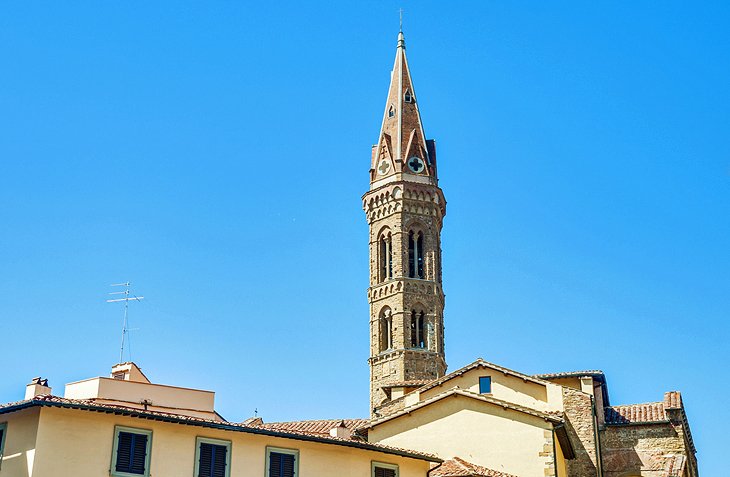
The ornate pointed spire of the Badia, opposite the Palazzo del Bargello, contrasts sharply with the square tower of the Palazzo Vecchio - and with the rest of Florence's skyline. Although the church and Benedictine abbey was founded in 978, it was enlarged in the 13th century, and its interior virtually rebuilt in the 17th century.
In its Gothic façade, look for the 15th-century portal with a Madonna and Child in glazed terra-cotta in the lunette. Inside, be sure to see Filippino Lippi's 1485 masterpiece The Madonna appearing to St. Bernard and go into the choir to reach the beautiful 15th-century cloister, called the "Chiostro degli Aranci" because of its orange trees (if it's open). The fresco scenes from the life of St. Benedict date from the cloister's completion in the 1430s.
Address: Via del Proconsolo, Florence
7. Orsanmichele (San Michele in Orto)
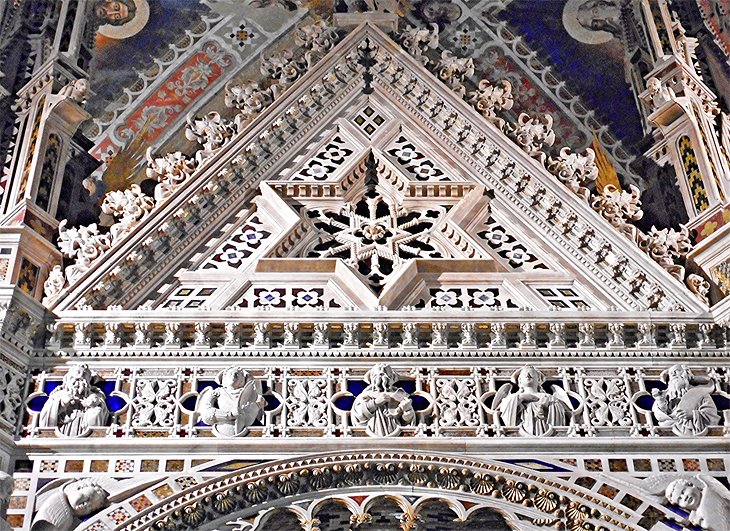
The church of Orsanmichele, also called San Michele in Orto, dates from the 14th century and originated as a trading hall. Its exterior is distinguished by the delicate stone traceries in its window arches, as well as its niches, which contain statues of the patron saints of various Florentine guilds.
These were done by artists that include Ghiberti, Donatello, and Giambologna. A beautiful and delicately carved marble tabernacle inside holds a venerated painting of the Madonna by Bernardo Daddi, dating from 1347.
- Read More: Top-Rated Churches in Florence
8. Casa de Dante (Dante's House)
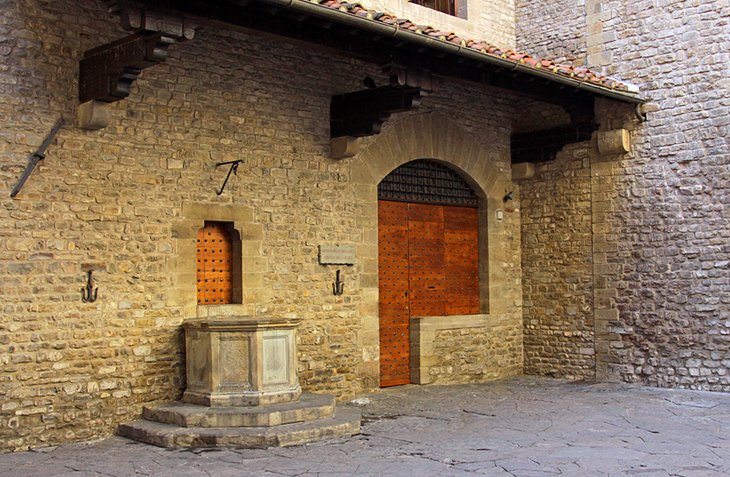
Make no mistake: Dante didn't live here, although the Alighieri family did live on this street and it is likely that he was born close by. Dante himself was exiled from Florence in 1301 for being on the wrong political side and never returned (he died 20 years later in Ravenna, where you can see his tomb).
The house contains no artifacts from Dante or his family, but the museum does contain documents and exhibits relating to his life and work (most labeled in Italian) and is a rare remaining medieval home in the heart of Florence. Stop by if you're fascinated by this 13th-century poet whose works have endured for more than seven centuries and still inspire 21st-century writers (witness Inferno by Dan Brown and Matthew Pearl's The Dante Club).
Address: Via Santa Margherita 1, Florence
9. San Firenze
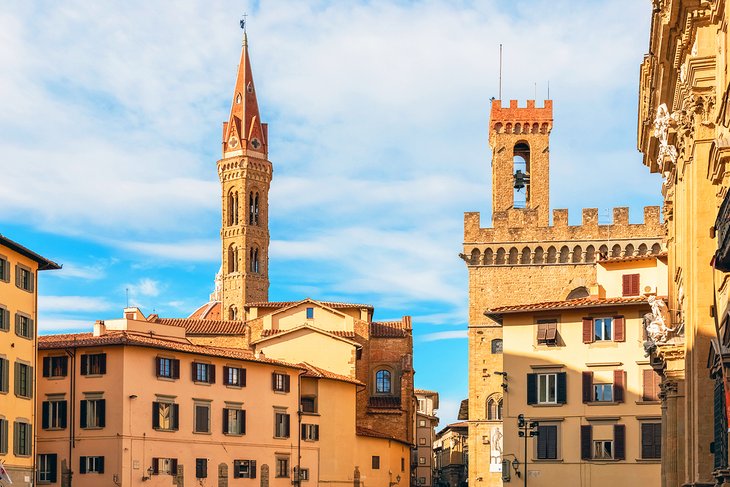
Close to Piazza della Signoria, the Baroque complex of San Firenze includes two church facades with a palace between them, and this odd combination reflects its checkered history. The church of San Filippo Neri was built in the 1600s on the site of an old oratory and its facade was added in 1715 by Ferdinando Ruggieri.
The church of Sant'Apollinare was built nearby between 1772 and 1775, its facade was based on Ruggieri's 1715 designs. At the same time, a palazzo was built between the two churches, incorporating the cloister areas. Today, all three joined buildings house the Tribunale, Florence's judicial authority.
Address: Piazza San Firenze, Florence
10. Gucci Garden Galleria (formerly Gucci Museum)
Fashionistas will want to admire the examples of present and past Gucci designs and inspirations displayed in striking and often surprising ways. The gallery tells the story of Gucci, the Italian fashion brand based in Florence. Displays of the design firm's ground-breaking haute mode creations include gowns worn by famous actresses and an entire wall of Gucci handbags, including the famous "Jackie Bag."
The name "gardens" is metaphorical, referencing the newly opened galleries' kaleidoscope of vivid colors, featuring mirrors and colored lights to enhance the effects to create an immersive, multi-sensory experience.
Mixed with the fashions are collections as diverse as Black Forest cuckoo clocks and colorful butterflies, the latter referring to the fact that many Gucci styles are inspired by the natural world. Gucci Garden Galleria is in the historic Palazzo della Mercanzia, built in 1359, where disputes between merchants and members of the art guilds were settled. On its façade you can see the crests of the various guilds.
Address: P.za della Signoria 10, Florence
Official site: https://www.gucci.com/hk/en_gb/st/capsule/gucci-garden
Map of Highlights of Piazza della Signoria in Florence
More Related Articles on PlanetWare.com
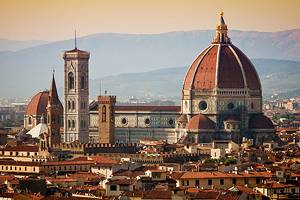
More Places to Visit in Florence: The city's other attraction-packed square is Piazza del Duomo, and more details on its magnificent cathedral complex are in our Visitor's Guide to Exploring Santa Maria del Fiore Cathedral. PlanetWare's article on Top-Rated Tourist Attractions in Florence can help you find even more things to do.
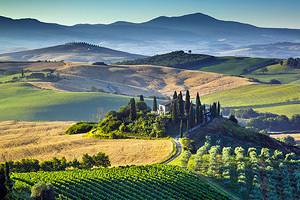
Exploring Tuscany: Not far away - many in fact within easy reach for day trips from Florence - you'll find other fascinating places to visit. The cathedral and its famously leaning tower in Pisa, and the many medieval hill towns are among the top-rated tourist attractions in Tuscany.