13 Top-Rated Tourist Attractions in the Northwest Territories
Almost six times the size of the United Kingdom, the Northwest Territories cover an immense tract of Canada that lies north of the 60th parallel and almost reaches the North Pole. This is the land of towering mountains, mighty rivers, and treeless tundra. It's a harsh land, but one that will make an everlasting impression on you long after your visit. This vast region extends from the high Mackenzie Mountains in the west to the tundra regions of the east (and the border with Nunavut Territory, established in 1999).
During the short summer, which lasts only a few weeks, the region bursts into a frenetic growth spurt with plants and animals (and humans) making the most of every warm day. Fortunately, this undertaking of doing as much as you can in the shortest period of time is aided by the fact that the sun barely sets. These extra long days have given the region its nickname, the "land of the midnight sun." Conversely, in winter it remains dark virtually around the clock, the so-called "polar night." Winter temperatures of -30 degrees Celsius are recorded in virtually all parts of the territories for days and sometimes weeks on end.
To help you get the most out of your visit to this beautiful part of Canada, refer to our list of the top tourist attractions in the Northwest Territories.
- 1. Nahanni National Park Reserve
- 2. Wood Buffalo National Park
- 3. Yellowknife
- 4. Great Slave Lake
- 5. Hay River
- 6. Inuvik
- 7. The Northwest Passage
- 8. Great Bear Lake
- 9. Mackenzie River
- 10. Victoria Island
- 11. Banks Island
- 12. Church of Our Lady of Good Hope, Fort Good Hope
- 13. Norman Wells Historical Centre, Norman Wells
- Map of Tourist Attractions in the Northwest Territories
1. Nahanni National Park Reserve
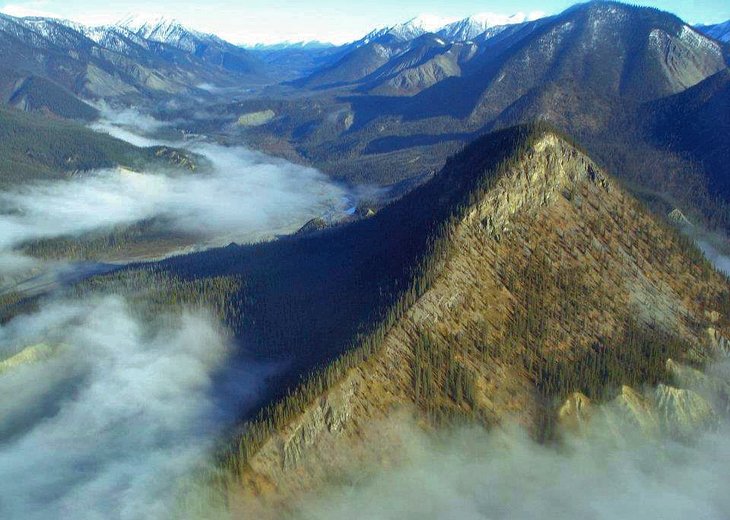
The remote Nahanni National Park Reserve is one of the treasures of northern Canada and one of the best places to visit in the Northwest Territories for outdoor adventurers. Here, the raging Nahanni River flows through the stunning canyon scenery of the Mackenzie Mountains, challenging experienced canoeists and rafters. The South Nahanni River also tumbles over the 90-meter precipice of spectacular Virginia Falls, creating one of the most impressive waterfalls in Canada.
The Rabbitkettle Hot Springs, which give life to a rich landscape of rare plants, are another sightseeing attraction in this immense national park. As tempting as it would be to take a dip in the hot springs, the fragile nature of this beautiful natural attraction means tourists can only visit as part of a guided tour.
2. Wood Buffalo National Park
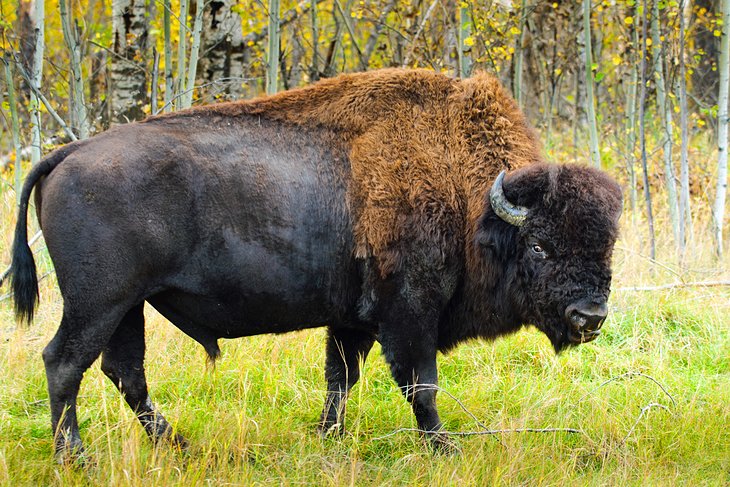
Wood Buffalo National Park is the biggest national park in Canada, and the second largest on the planet. This UNESCO World Heritage Site encompasses vast tracts of land in both Alberta and the Northwest Territories.
While the park was originally intended to protect the herds of wood buffalo that inhabit the area, it has also served as a safe haven for other important species, such as the extremely rare whooping cranes that nest in the delta region. Once a fur-trading post, Fort Smith is now the launching point for exploring the park, and bison are often spotted from the highway near town.
3. Yellowknife
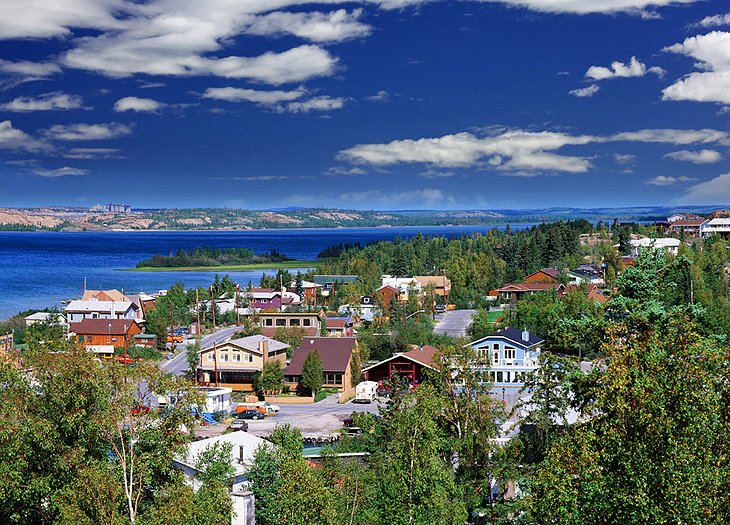
Yellowknife, capital of the Northwest Territories, grew up around a 1930s gold rush. While all of the miners tents of Old Town have long since been replaced, there is now a mix of wooden heritage buildings, arts and cultural institutions like the Prince of Wales Northern Heritage Centre, and a bustling community life fueled by the mining industry.
Popular things to do are the boat tours and houseboating on Great Slave Lake. Other activities and attractions are the impressive falls at Hidden Lake Territorial Park, visiting galleries featuring local artists, and seeing the Bush Pilots Monument.
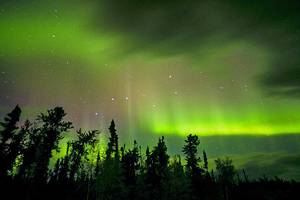
If you find yourself here in the winter, the stunning Aurora Borealis viewing that can be enjoyed here is second to none. The Snow King Festival and its huge snow castle is also something not to be missed. Don't be afraid to join in the fun, as the town lets loose in March.
- Read More: Top-Rated Tourist Attractions in Yellowknife
4. Great Slave Lake
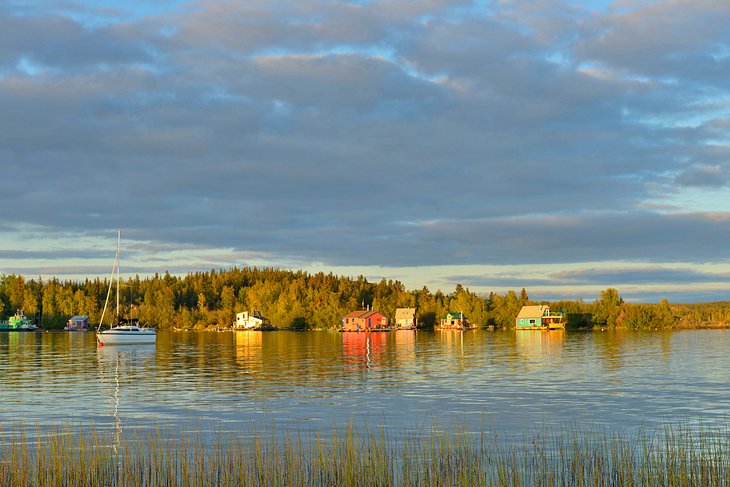
Great Slave Lake is North America's fifth largest lake and reaches depths of more than 600 meters in places. Though it's frozen for eight months of the year, it sees plenty of action. In summer, house boaters and sailors enjoy the freshwater. In fact, the lake is home to the Commissioner's Cup, the world's longest freshwater sailing race.
If you love to fish, don't miss the opportunity to head out onto the water and test your skills against one of the legendary giant trout, (some up to 40 pounds) lurking deep below. Bring your own boat and take your chances or take a charter and ensure success.
Come winter, dog sledders race on the frozen surface. Many of the major communities in the Northwest Territories front the lake, including Yellowknife, Fort Providence, and Hay River.
- Read More: Great Slave Lake: Top Things to Do
5. Hay River
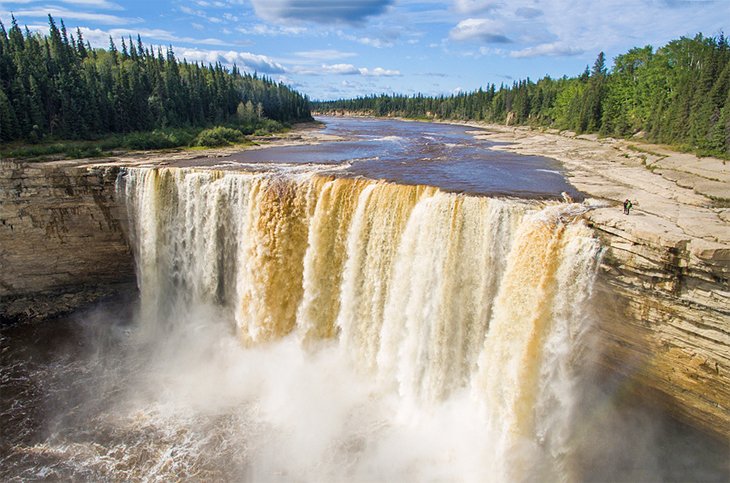
On the southern bank of Great Slave Lake, Hay River is the southernmost port on the Mackenzie River System. Here, freight (mainly building materials and fuel) destined for settlements along the Mackenzie River and in the Arctic is transferred to barges. During the four- to five-month summer season, the port is chock-a-block with barges, fishing boats, and coast guard launches.
Long a home to First Nations people, Hay River became the first Hudson's Bay Company trading post in the area in 1868. The little wooden houses of the old town lie at the mouth of the Hay River. This is also where the fishermen live, often returning home with rich catches from Great Slave Lake, or the Hay and Mackenzie rivers.
In the newer area of town, Diamond Jenness School is an outstanding example of northern architecture. Named after an anthropologist who, around 1910, was the first to study northern native culture, the school boasts a purple color that makes it the landmark of Hay River. Southwest of town, Twin Falls Gorge Territorial Park features Hay River canyon and the Alexandra and Louise Falls, with trails and a viewing area.
6. Inuvik
"Place of Man" is the Inuit meaning of Inuvik, a modern settlement in the Arctic Circle and on the Mackenzie River. Built between 1955 and 1961 during the exploration for oil and gas, it replaced Aklavik, which was prone to flooding.
Today, Inuvik is the trading, administrative, and supply center for the western Arctic. It has an airfield, several schools, and a hospital. From here, the many supply planes set off for the exploration bases in the far north to destinations such as the Mackenzie delta and Beaufort Sea. Sightseeing flights over the Arctic also take off from here.
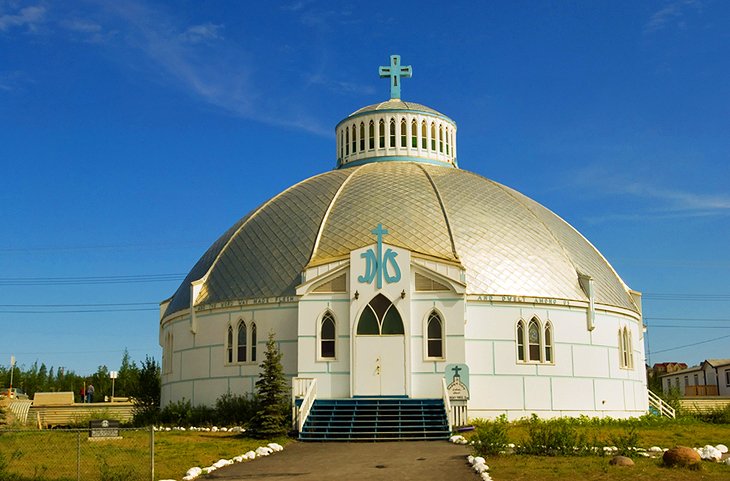
Our Lady of Victory Roman Catholic Church, with its distinctive igloo shape, has become a landmark building of Inuvik. It contains a tabernacle (also igloo-shaped) and a remarkable "Way of the Cross" by Inuit artist Mona Thrasher. Aklavik, Inuit for "home of the polar bears" is west of Inuvik. The Hudson's Bay Company founded it in 1912 in the middle of the Mackenzie delta, an area prone to flooding. It is only accessible by a winter ice road.
Tuktut Nogait National Park, to the east of Inuvik was established in 1996, boasting some truly overwhelming arctic rock scenery with spectacular canyons and cliffs. Finds made at literally dozens of archaeological sites within the conservation area show that this now-inhospitable region was inhabited thousands of years ago. Access to the park is by air only, but well worth it if you can make it happen.
7. The Northwest Passage
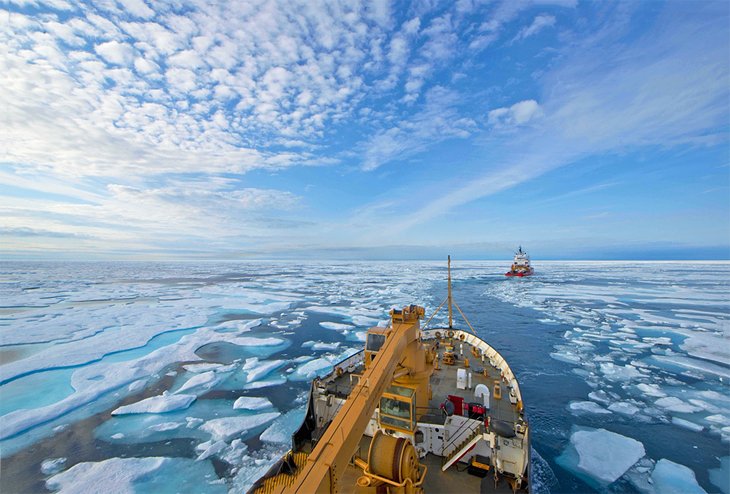
The Northwest Passage provides waterway access from the Atlantic Ocean through the Arctic to the Pacific Ocean. The search for the Northwest Passage began in the 16th century by Dutch and English navigators who hoped to find a favorable sea route for trade with the Far East and thus circumvent the Portuguese monopoly on trade round the Horn of Africa.
Martin Frobisher made the first attempt in 1576. He assumed that since saltwater never froze, this could not be the legendary sea of ice but just a frozen lake. In 1585-87 John Davis penetrated through the strait (later to bear his name) as far as Baffin Bay. Henry Hudson was looking for the Northwest Passage when he discovered Hudson Bay in 1609/1610. In 1616, William Baffin got as far as Lancaster Sound, but since he concluded that the Northwest Passage simply did not exist, there was no more exploration for another 200 years.
It was 1818 before John Ross resumed the search at the head of an English expedition, although the motive this time was scientific rather than commercial. In 1829, he discovered the magnetic north pole on the Boothia-Felix Peninsula.
The doomed expedition of John Franklin followed in 1845. After last being seen in July of that year in the Lancaster Sound, the members of the expedition were finally found dead on King Williams Island. They had succeeded in exploring much of the Arctic coast of North America.
McClure was the first, in 1850 to 1853, to be able to trace the passage on foot, coming over the iced up straits from the west. But the first person to finally manage to navigate the Northwest Passage from east to west was actually Roald Amundsen, the Norwegian polar explorer in 1900-03.
8. Great Bear Lake
The eighth largest lake in the world, Great Bear Lake is 240 kilometers long and 400 kilometers across. It is covered with ice for eight months of the year, often as late as July. Its Great Bear River flows into the Mackenzie River. The shores of Great Bear Lake are rich in wildlife, with martens being particularly numerous. Grizzly bears roam the shores in summer, and the pinewoods are the haunt of elk in winter.
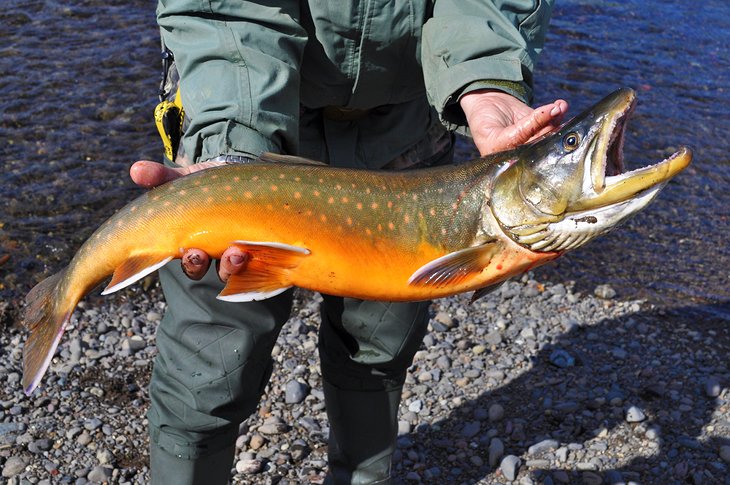
Great Bear Lake has achieved more angling records than any other lake in North America. It is especially famous for its trout, and some of the world's biggest (weighing up to 65 pounds) have been caught here, as well as top-weight grayling and whitefish. Arctic char can be found in the nearby Tree River. For a fishing tour of Great Bear Lake, hire a guide in Fort Franklin, now known as Deline.
9. Mackenzie River
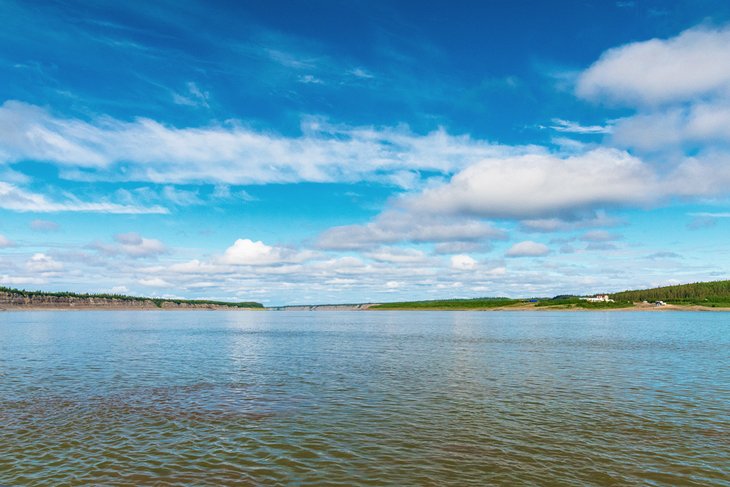
With a length of 4,250 kilometers, the Mackenzie River is the second longest river in North America, and its catchment area covers a fifth of Canada. The river was already an important artery for the canoes of the fur trade in the 18th century, and is navigable today in summer by steamers as far upriver as Fort Smith.
The Mackenzie Highway was built shortly after the Second World War and is an all-weather road covering the 600 kilometers from Peace River in Alberta to Great Slave Lake and the territorial capital Yellowknife.
Fort Simpson is situated where the Liard runs into the Mackenzie River, west of Great Slave Lake. It is the oldest settlement on the Mackenzie River, founded by the North West Company in 1804 for the trans-shipment of skins and furs at this strategic junction. In the 19th century, trade came from the few trappers and fishermen who lived here from time to time, but in the first half of the 20th century the forests in the Mackenzie Valley attracted the attention of the paper industry.
This was followed by the discovery of oil at Norman Wells in the 1920s, pitchblende at Port Radium, and gold at Yellowknife in the 1930s, with mining becoming a thriving industry after the Second World War. It is possible to catch planes from Fort Simpson to Nahanni National Park Reserve.
The vegetation of this delta landscape is mostly low bushes and shrubs, juniper, lichens, and mosses, with magnificent displays of color from flowers and mosses during the brief but intensive summer (from June to late July this is the land of the midnight sun). To complete the picture, this very special environment also has a great variety of wildlife on water as well as on land.
10. Victoria Island
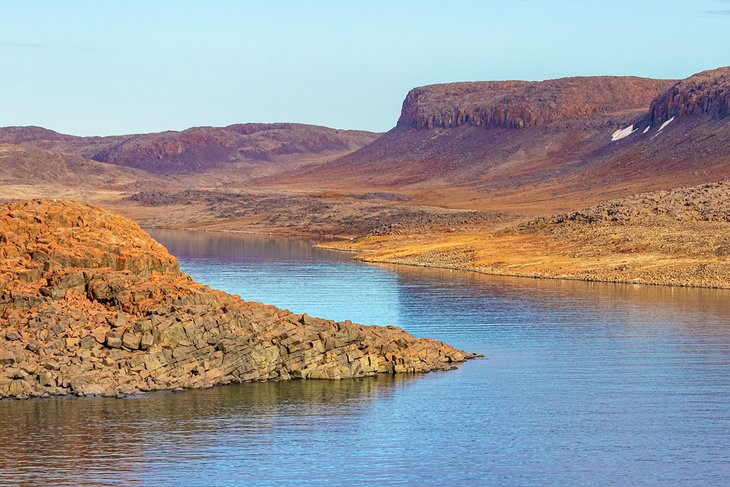
Situated directly off the northern coast of mainland Canada, Victoria Island is the third largest island in the Canadian Archipelago. It lies well north of the Arctic Circle, where Ice-Age glaciers flattened everything into a rather monotonous terrain of moraines, drumlins, and glacial lakes. The creation of the new Territory of Nunavut in 1999 divided the island administratively into two.
Canada's central Arctic region is administered and supplied from Iqaluktuutiak (Cambridge Bay) on the island's southeast coast. Sir John Franklin (1786-1847) "discovered" Victoria Island in 1826, and European seafarers searching for the Northwest Passage, missionaries, and fur traders were among the earliest to call in at this remote spot. Until the 1950s, the Copper Inuit used the area mainly as a summer camp; "Iqaluktuutiak," as it was called in Inuktitut, meaning "good place to fish."
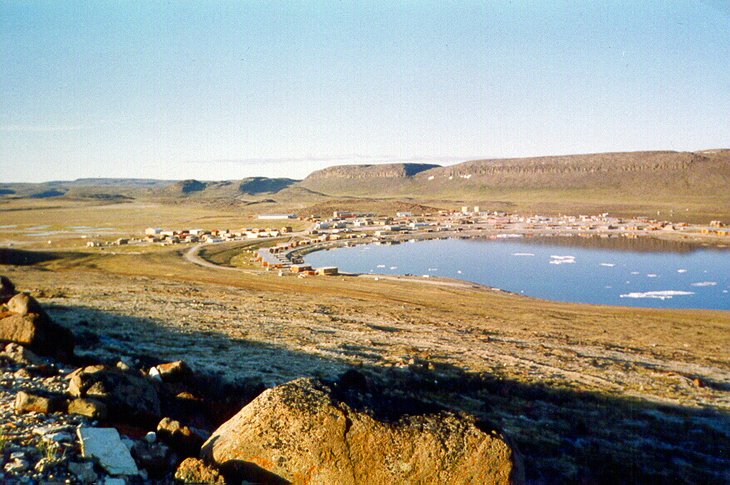
Iqaluktuutiak's main modern features are its stone-built Catholic church and modern wind-generation plant. The second place of any significance on Victoria Island is Ulukhaktok (formerly Holman) on the west coast. Located at the tip of the Diamond Jenness Peninsula, this small community is already quite well prepared for the burgeoning numbers of tourists attracted to the North. There is even a golf course with views of the Beaufort Sea.
11. Banks Island
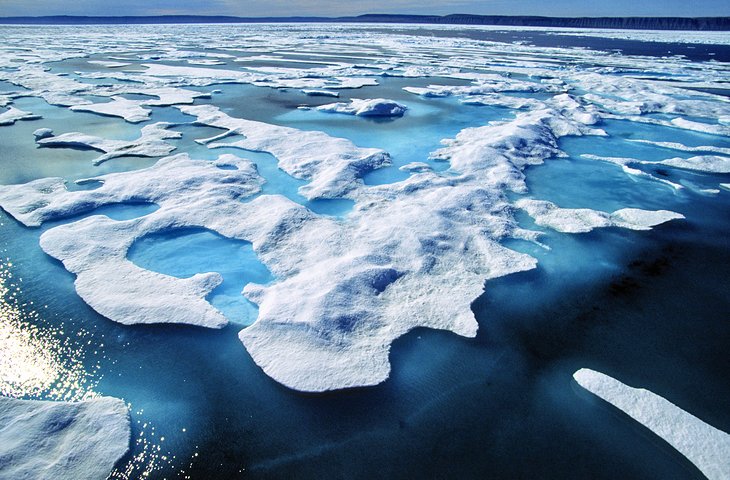
Banks Island possesses rich tundra vegetation and is home to many animals, especially the more than 65,000 musk-oxen (Ovibus moschatus), the largest population anywhere in the world. The southwestern part of Banks Island, equal to about one-third of the whole land mass, is a bird sanctuary.
Although it had been used for hunting for perhaps 3,500 years, it was not until 1929 that Banks Island had a permanent settlement, when three Inuit families put down roots in Ikaahuk (Sachs Harbor) on the northwestern tip of the island. Its "European" name derives from the Canadian Arctic expedition of 1913-15 led by Vilhjalmur Stefansson, whose ship was called Mary Sachs.
Situated in the north of Banks Island, Aulavik National Park is home to numerous musk-oxen. During the summer months, it is also home to a large proportion of Canada's snow geese. A completely intact tundra flora is still to be found here. This extremely remote park attracts adventurers looking to hike, backpack, or paddle the Thomsen River.
There are no services in Aulavik National Park, so visitors are expected to be experienced in the outdoors and self-sufficient. Visitors get to the park by chartering aircraft, usually from Inuvik.
12. Church of Our Lady of Good Hope, Fort Good Hope
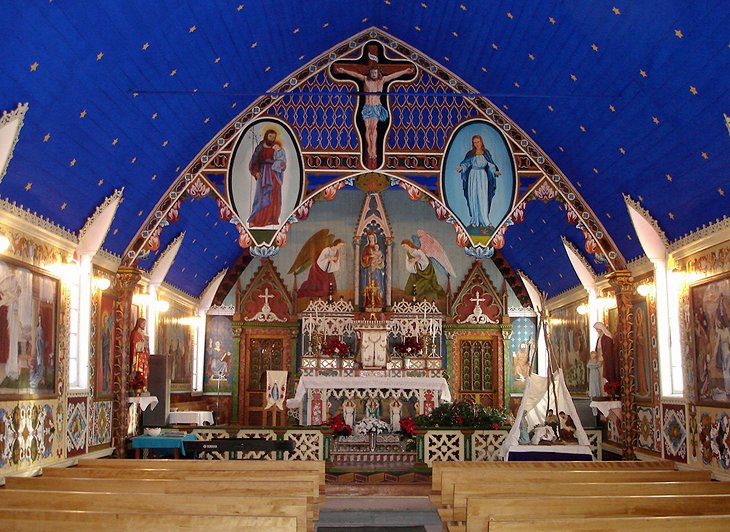
The Church of Our Lady of Good Hope in Fort Hope is a national historic site that was built in the mid 1880s. It is one of the oldest surviving buildings of this type with much of the spectacular interior decoration designed and carried out by Father Émile Petitot. The mission church was built in the Gothic Revival Style.
Around the left side of the church is a historical graveyard with interesting headstones, some dating from the turn of the century.
13. Norman Wells Historical Centre, Norman Wells
The Norman Wells Historical Centre is within twenty minutes drive of McKinnon Territorial Park. The center offers detailed information about the history of the area and the current condition of the CANOL Trail, including shipping and transportation on the Mackenzie River. Artifacts and photographs depict Dene history. Two highlights include a replica log cabin decorated in traditional Dene style and a salvaged WWII Quonset hut, which is now used for movie screenings.
The historical center also has extensive displays related to the industries of the region, including mining, oilfields, and aviation among others.
Official site: http://www.normanwellsmuseum.com/
Map of Tourist Attractions in the Northwest Territories
More Related Articles on PlanetWare.com
Exploring Canada's North: Canada's north is a vast region and encompasses many excellent things to do. Topping our list is visiting Nunavut, a vast region encompassing 1.9 million square kilometers (a fifth of the country) and home to vast stretches of treeless tundra and dramatic fiords. Begin your adventures in the gold rush city of Whitehorse, a great base from which to experience attractions such as the sternwheeler, the SS Klondike, and magnificent Miles Canyon. Farther to the east is Hudson Bay, an area famed for its stunning scenery and wildlife, including polar bears.