Wood Buffalo National Park: 6 Top Things to Do
With a total area of about 45,000 square kilometers, Wood Buffalo National Park is the largest national park in Canada, spanning the border between Alberta and the Northwest Territories.
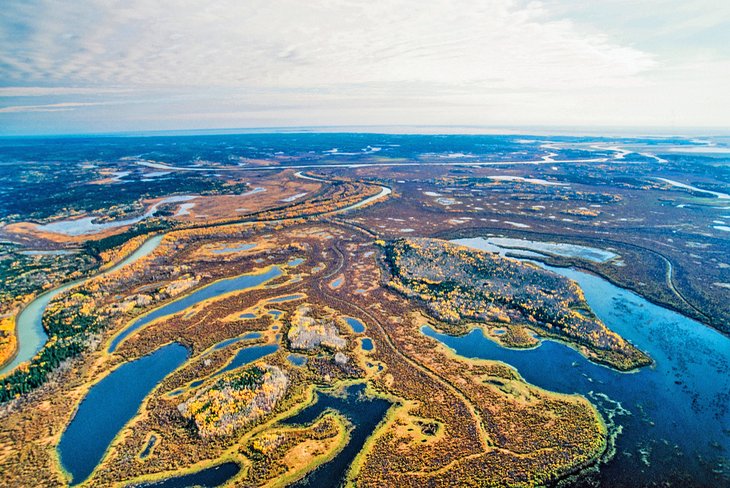
A World Heritage Site, this vast conservation area extends across one of the world's largest inland deltas (the Peace-Athabasca Delta), an immense wilderness of dried-out salt plains, and a wild landscape dotted with lakes and swamps. It is habitat for numerous, now-rare species of wildlife, including wood buffalo and whooping cranes.
The park was established in 1922 with the purpose of saving from extinction the last free-roaming herds of wood buffalo. Today, thousands of these animals graze the park, together with moose, black bear, caribou, beaver, and a great variety of smaller mammals.
Huge flocks of migratory birds visit the Peace-Athabasca Delta on their annual pilgrimage south. Every year, whooping cranes arrive from Texas to breed and rear their young. Wood Buffalo National Park is one of the last, if not the very last, refuges for this extremely rare species of crane, now in desperate need of protection.
Near the Slave River Rapids, white pelicans breed and feed from the park's many lakes.
Official site: http://www.pc.gc.ca/pn-np/nt/woodbuffalo/index.aspx
1. Walk the Salt Plains
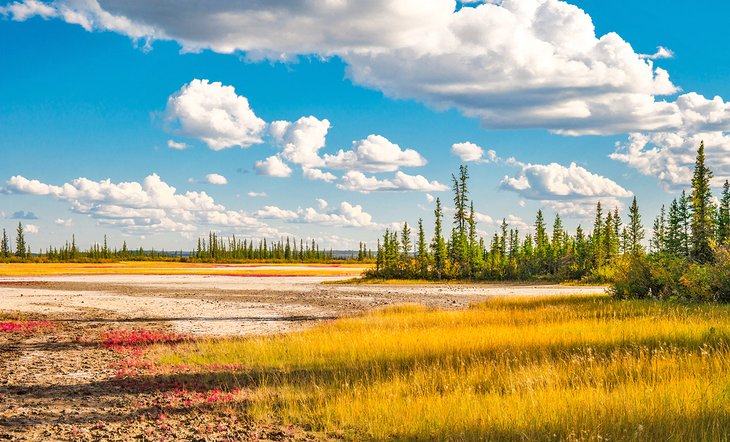
Walking across the salt plains of Wood Buffalo National Park is like walking across the floor of an ancient sea. Sparkling salt crystals are pushed up through the soil to provide a crunchy carpet of white for you to explore.
Hiking trails are available on Salt Pan Lake and Grosbeak Lake, and from the Salt Plains Overlook.
Stunning photos can be captured here if you arrive at the right time to see the red flowering plants juxtaposed against the brilliant white of the salt.
2. Camp and Swim at Pine Lake
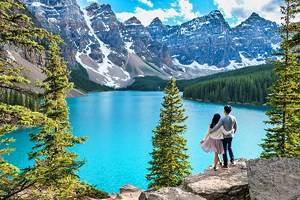
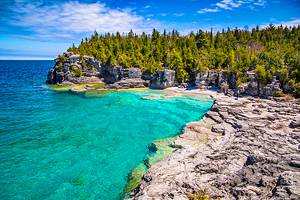
The campground at Pine Lake is just steps from one of the main attractions in the park - a series of giant sinkholes filled with crystal-clear water. Seen from the shore and from the air, the water is an unbelievable Caribbean blue. At night, you'll be under a carpet of a billion stars.
This campground is the only one in the entire park that is accessible via road. Nineteen rustic sites are set in the forest, all with fire rings and picnic tables.
Other amenities are flush toilets and running water and free firewood. The campground has recently installed a new children's playground.
If you'd rather sleep off the ground, log cabin rentals are available.
Campsites are first-come, first-served and are self registration. Cabins can be prebooked.
3. Canoe the Lakes and River
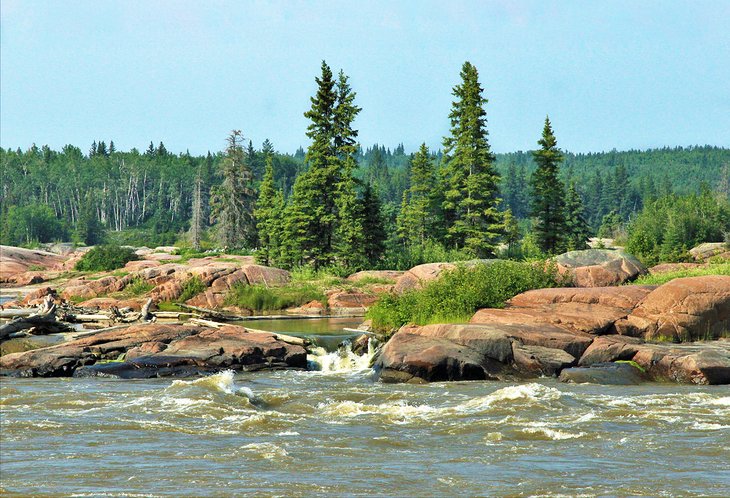
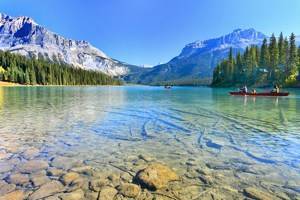
Canoeing in the park can range from a peaceful paddle on the incredibly blue Pine Lake to multi-day adventures on the Slave, Athabasca, and Peace Rivers.
Depending on the water levels, the Salt, Buffalo, and Little Buffalo rivers are also options. These rivers are ideal in the spring.
One of the most impressive routes is the 21-day trip in the Peace-Athabasca-Birch River delta. Here, the four major migratory routes of North America merge, and millions of birds come together to create and raise their young.
This is true wilderness canoeing, and you should be well prepared for any eventuality. Park permits are required and can be obtained from the park office in Fort Smith.
4. Hit the Hiking Trails
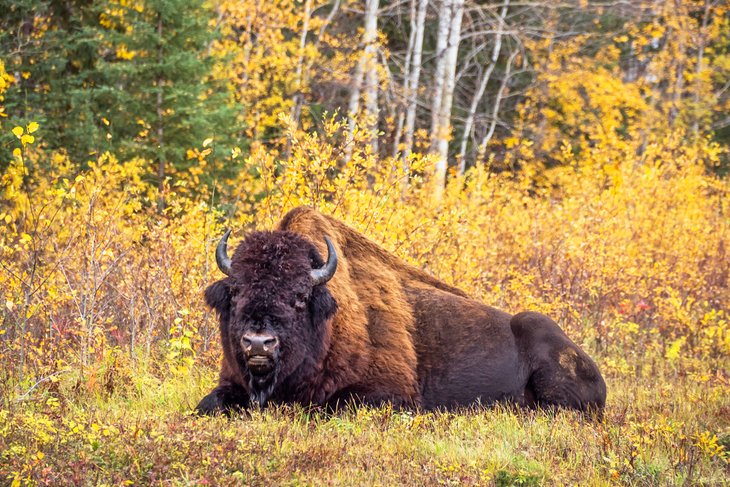
The park is spread out over a massive 44,741 square kilometers and covers a variety of terrain and ecosystems. The best way to experience these areas is to lace up your hiking boots and head out on one, or several, of the nine established hiking trails.
Trails range in distance from a 350-meter stroll to a 14-kilometer adventure deep into the forest to an abandoned station.
Depending on the trail, you'll see karst formations, meadows, rivers, and salt flats. No matter what trail you choose, you will almost certainly see an abundance of wildlife, including buffalo, deer, foxes, songbirds, beavers, and cranes.
5. Go Mountain Biking
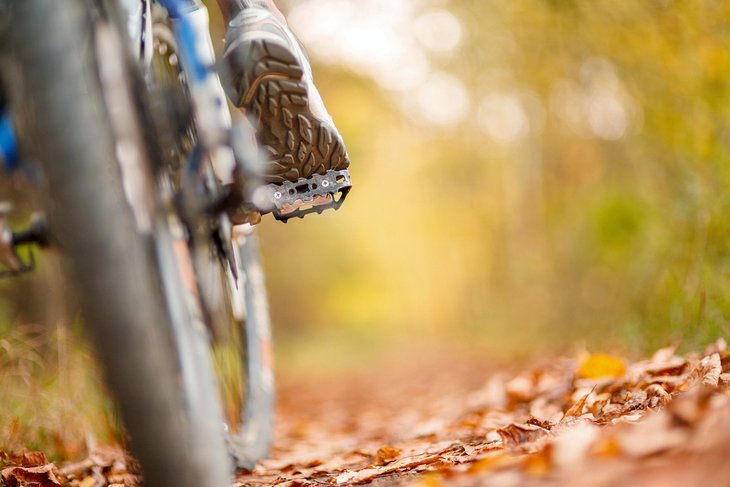
Fortunately for mountain bikers, a majority of the trails in the park allow mountain bikes. The trails are primarily designed for hiking, but experienced mountain bikers will enjoy the challenge.
One of the more popular routes is the Pine Lake to Lane Lakes trail. This is a 16.9-kilometer trail that is a mix of single track with roots and wider sections with small hills. It's an ideal choice if you are camping at Pine Lake.
6. Visit Fort Smith
Fort Smith is the headquarters for the Wood Buffalo National Park and where the park's visitor center is located.
Fort Smith evolved from a one-time fur-trading post on the Mackenzie River route, to a multicultural community in the far north of Canada. From 1911 to 1967, it was the administrative capital of the Northwest Territories, a role later assumed by Yellowknife.
A number of NWT government departments are still located in Fort Smith, and the town's schools and training colleges have a national reputation.
The Northern Life Museum in Fort Smith concentrates on the human history of the region and has an Aboriginal Cultural Centre. Exhibits include everyday First Nations and Inuit artifacts and handiwork, photographs and other documents relating to the pioneering days and early settlers, and detailed craftwork.