Tourist Attractions in Beijing
Beijing plays an important role in the nation's cultural, economic, scientific, and academic life. Located in the northwest of the North China Plain, not far from the western slopes of the Yanshan mountains, Beijing is still sometimes referred to as Peking and is a great place from which to explore this dynamic country due to its dense network of roads, railways, and airline connections with other major cities.
Beijing itself has no shortage of unique sightseeing opportunities. It is home to some of the country's best-known tourist attractions, including a section of the famous Great Wall of China at Badaling Pass. Among the city's many historical and cultural points of interest are the Imperial Palace, Beihai Park, Coal Hill Park, and the Heavenly Temple, most of them within the well-preserved historic city center.
Other things to do include exploring the mammoth Tiananmen Square and numerous important temples, as well as the new construction brought about by the city's increased prosperity and major events such as the 2008 Beijing Olympics. When you've had your fill of sightseeing, enjoy the city's great shopping and dining.
Plan your trip to the Far East with our list of the top tourist attractions in Beijing, China.
The Palace Museum and the Forbidden City
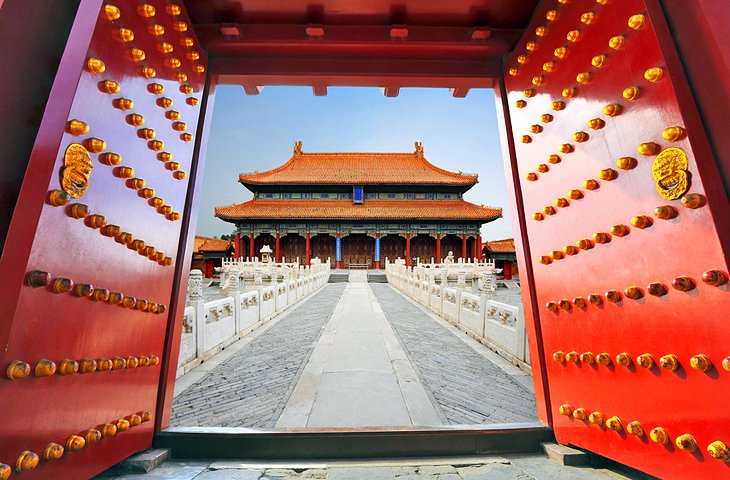
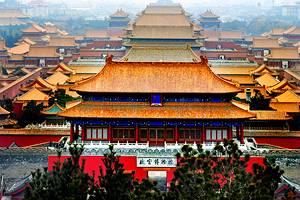
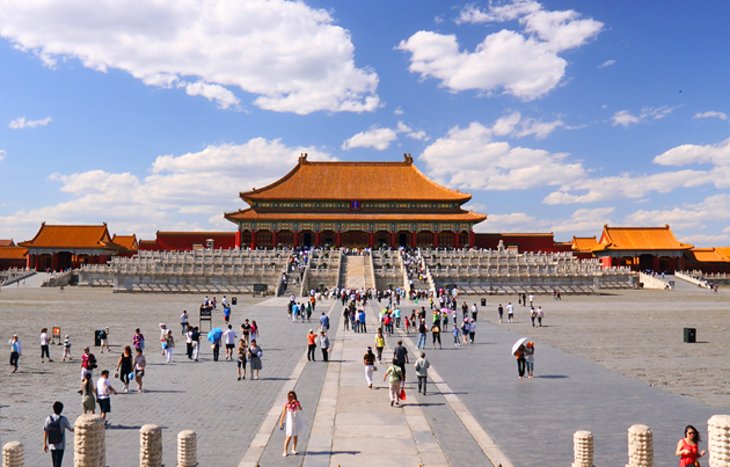
The Imperial Palace, also known as the Forbidden City, is China's most significant attraction and can trace its origins back to the Yuan Dynasty of the 13th century. Its immense size is the result of enlargements made during the Ming Dynasty between 1406 and 1420 after the capital was transferred here from Nanking.
All told this beautiful palace has been home to 24 Ming and Qing Emperors, earning its nickname of the Forbidden City due to the fact ordinary citizens weren't allowed access. The complex covers 720,000 square meters, all of it surrounded by a 10-meter-high wall with towers in the four corners and a 50-meter-wide moat. It's divided into an area used for ceremonial and administrative purposes, as well as the private quarters once used by the Emperor and his concubines.
Highlights include the Meridian Gate, built in 1420; the Golden River Bridges, a network of five richly decorated white marble bridges; and the Hall of Preserving Harmony, which functioned as the Emperor's banquet hall.
Other places to visit include the Palace of Heavenly Purity, the largest hall in the Inner Court, and the Hall of Military Courage, a permanent residence and private audience hall for the emperors. The impressive 35-meter-high Hall of Supreme Harmony is notable as the country's largest surviving wooden building and for its splendidly decorated gilded imperial throne.
Located just a short walk away from The Palace Museum stands the historic Imperial College (Guozijian). Founded in 1287 by Kublai Khan and only closed in 1900, this beautiful structure served as the country's national university, and often saw the Emperors of old visit to further their education and knowledge. The complex covers more than 10,000 square meters, much of which can be explored.
Address: 4 Jingshan Front Street, Dongcheng, Beijing
The Great Wall of China
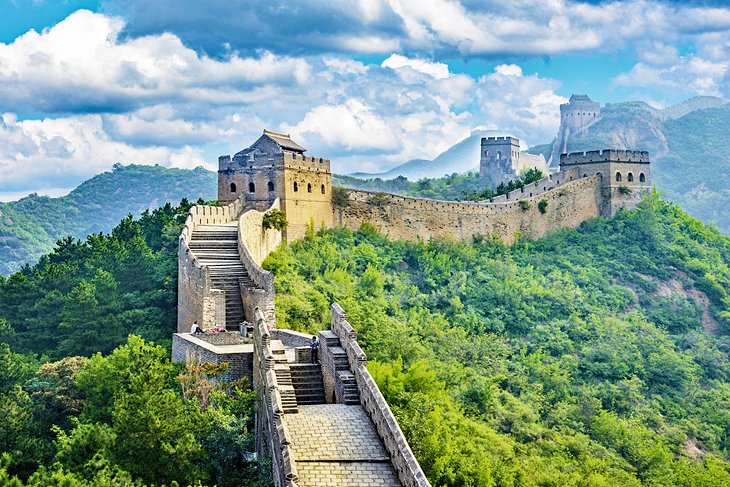
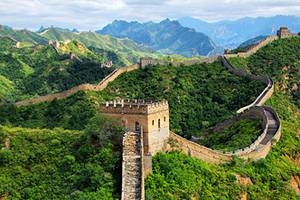
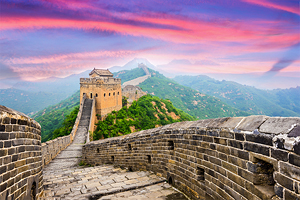
Beijing is only an hour away from what is undoubtedly one of the country's most famous historic structures: the Great Wall of China. Here at Badaling Pass, the first part of the Wall to be opened to tourists in the 1950s, you can enjoy a walk along an impressive section of the Great Wall dating from the 16th century and standing up to eight meters high.
Along the way, you'll be able to enjoy numerous towers and parapets offering superb views over the surrounding dramatic scenery. While a hilly walk, you can in fact take a pleasant cable car ride up to the wall. This much-visited section of the Great Wall can get busy, so if possible try to plan your trip for an early arrival.
Another popular spot to experience the Great Wall is Mutianyu, parts of which date back to the 6th century. Rebuilt and expanded over the centuries, it is becoming increasingly popular for its magnificent views, which are particularly beautiful during spring and autumn.
A visit to Gubeai Water Town is a fun add-on to your Great Wall visit. Located adjacent to the Simatai section of China's best-known landmark, Gubeai is undeniably picturesque. In addition to the beautiful surrounding mountain scenery, there are many quiet canal-side pedestrian-only streets to explore, making it a very welcome break after bustling Beijing.
Tiananmen Square
Tiananmen Square, also known as the Square of Heavenly Peace, is the world's largest inner-city square. Designed to hold a million people, it was built to celebrate the 10th anniversary of the Chinese Republic in 1958. Considered the center of communist China, the square's symbolic importance dates back to May 4th, 1919, when students demonstrated against the Chinese provisions of the Treaty of Versailles.
Highlights of a visit include the Monument to the People's Heroes (Rénmín Yingxióng Jìniànbei), a 38-meter tall obelisk consisting of 17,000 pieces of granite and marble, and the splendid Tiananmen Gate, known as the Gate of Heavenly Peace. It was completed in 1417 and was once the main entrance to the Imperial City.
Another important gateway is Zhengyangmen, or Qianmen, the southernmost gate into Tiananmen Square. Tracing its roots back to the early 15th century and restored in the early 1900s, this imposing structure is considered one of the most important landmarks in the city.
Other features of note are the Military Museum of the Chinese People's Revolution with its exhibits illustrating the various stages of the Chinese Revolution from 1919 and the development of the Communist Party; and the Mausoleum of Mao Zedong. Also known as the Chairman Mao Memorial Hall, it's here that the body of Mao rests in a crystal sarcophagus.
Address: Dongcheng, Beijing
Beihai Park
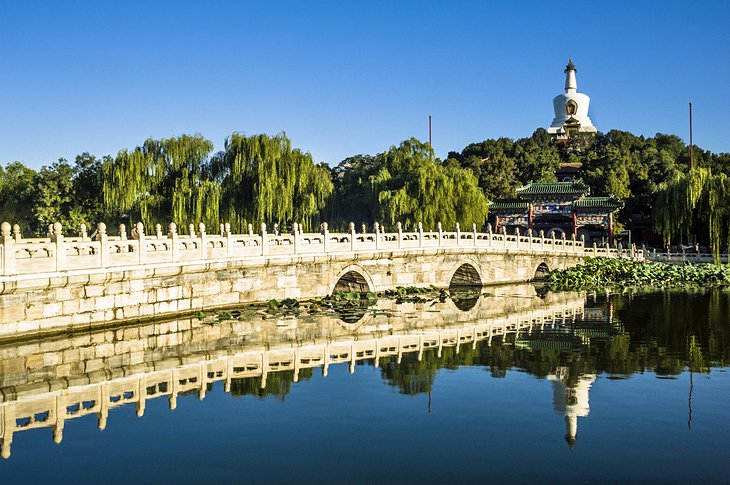
Just a short distance from the Imperial Palace, Beihai Park is one of the oldest surviving imperial gardens in Beijing. Laid out at the beginning of the 10th century, this beautiful open space takes its name from nearby Lake Beihai (North Lake) and offers many good reasons to visit.
Among the park's most important structures are the Round Fort, dating from the Yuan period of 1271-1368, and the spectacular Hall of Enlightenment. Built in 1690, the hall is home to a one-and-a-half-meter-tall Buddha carved from a single block of white jade, and a large black jade vase from the early 12th century.
Another notable feature is the opulent residence of Song Qingling in which the widow of the founder of the Republic, Sun Yat-sen, lived for 18 years until her death (it's now a museum). You'll also want to see the Living Quarters of Mei Lanfang (Mei Lanfang Guju), a famous male star of the Peking Opera who specialized in playing the role of a woman.
Try to include the Guo Moruo Residence on your Beijing itinerary. It was here, in a home built in traditional Chinese courtyard style, that the famous writer and historian lived from 1963 until his death in 1978. Also, include the beautiful 17th-century White Pagoda on the Island of Exquisite Jade on your list.
Address: 1 Wenjin St, Xicheng, Beijing
The Temple of Heaven
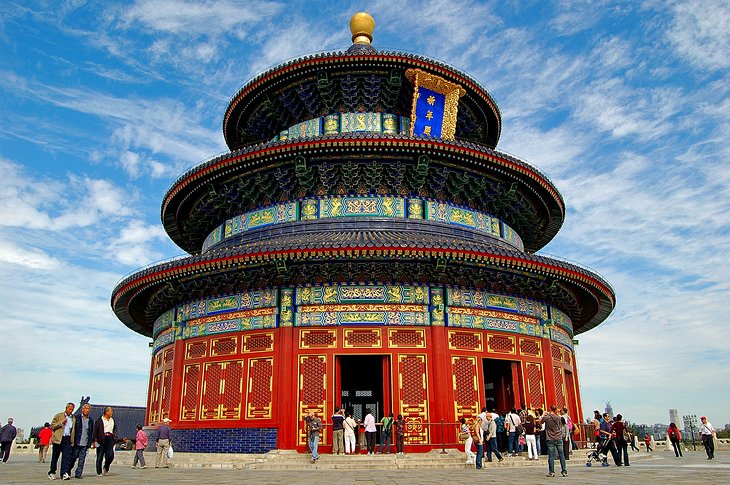
The Temple of Heaven (Tiantán) dates back to 1420 and incorporates a group of some of Beijing's most sacred buildings. Surrounded by lush vegetation, these lovely old temples and shrines are set out in two sections, one rectangular, the other semi-circular. Together, they symbolize Heaven and Earth.
It was here that, on the day of the winter solstice, the Emperor would ascend the Heavenly Altar in a solemn ceremony to pray for a good harvest and offer sacrifices in the brightly decorated Hall of Prayer for Good Harvests (Qinian Dian). Built in 1420 in customary Chinese fashion of wood and entirely without nails, the hall sits on a three-tier marble terrace with balustrades and a roof covered with 50,000 blue glazed tiles. A marble plaque on the floor represents the dragon and the phoenix stone, symbols of the emperor.
Another highlight is the Hall of the Vault of Heaven (Huangqiong Yu). Erected in 153, it boasts a blue-tiled conical roof and was used to store the ceremonial plaques of Heaven and the Officials. Be sure to also visit the temple's Echo Wall, which echoes to even the quietest of voices, an effect exaggerated by three unusual echoing stones.
Address: 1 Tiantan E Road, Dongcheng Beijing
The Summer Palace
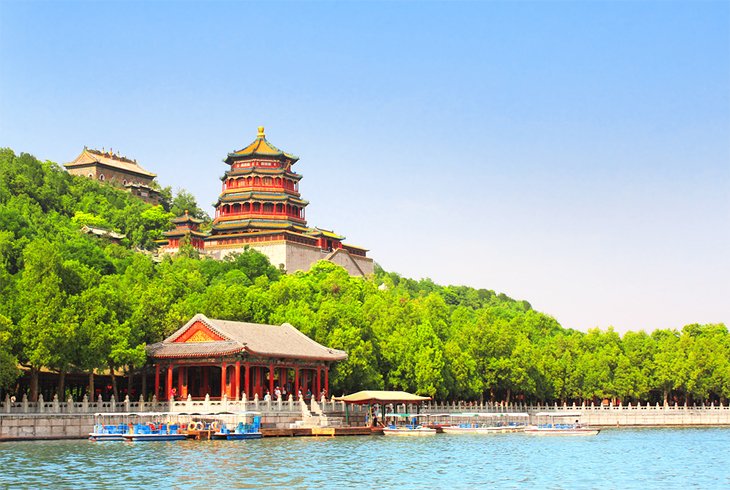
Located an easy 30-minute journey by car, bus, or taxi from the center of Beijing, the city's Summer Palace (Yíhé Yuán) is a must-visit. Dating back to the 12th century and more than 700 acres in size, it's a picture-perfect setting, which certainly befits its royal status, boasting a large 700-year-old man-made lake and beautiful gardens.
Often included on organized tours, the top things to see here are the western-styled "Marble Ship" (Shifang), the Hall of Well-being and Longevity (Renshou Dian) with its elaborate throne, and the beautiful courtyard adjoining the Hall of Happiness and Longevity (Leshou Tang Hall). You'll also want to see the impressive 19th-century Great Theatre, where you can catch performances of traditional Chinese plays and music.
One of the more popular things to do, if time permits, is to take a ride aboard the small pleasure craft that ferry tourists to the palace's temples; kids especially love the dragon-themed vessels. You'll also want to take a stroll past the traditional riverside shops on Suzhou Market Street.
Address: 19 Xinjiangongmen Road, Haidian District, Beijing
Beijing National Stadium
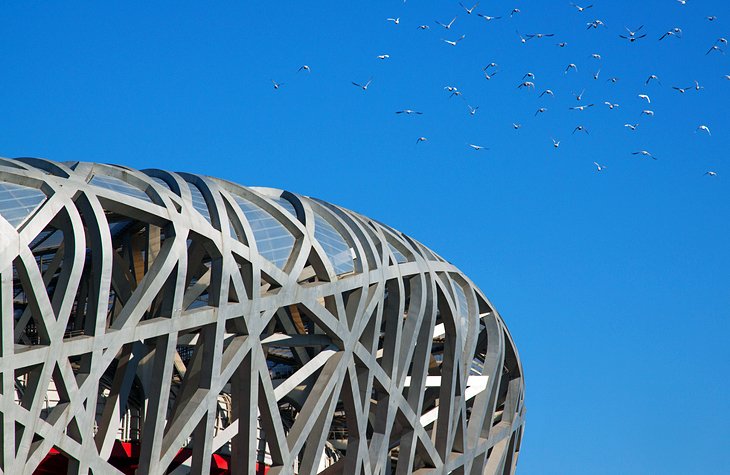
Recognized the world over for its role in the spectacular Summer Olympics held in Beijing in 2008, the National Stadium (Guójia tiyùchang), also affectionately nicknamed the Bird's Nest, is well worth a visit.
Built with a hefty price tag, this remarkable structure owes its unique design to the influences of traditional Chinese ceramics and has, since the Olympics, been used to host large cultural events and performances including opera, pop concerts, and football matches. In winter, it's turned into the world's largest manmade indoor ski slope. English language and self-guided tours are available.
Another nearby attraction is the Beijing National Aquatics Center. It's also known as the Water Cube for its attractive night-time display, which sees it lit up and looking like a giant ice cube. In addition to being the site of Olympic swimming events, part of the building has been turned into the fun Watercube Waterpark.
Afterward, be sure to stroll along the lovely Olympic Green. This pleasant parkland and green space will take you past many of the most significant buildings from the 2008 Olympics.
Address: 1 National Stadium S Road, Chaoyang
The Lama Temple (Yonghe)
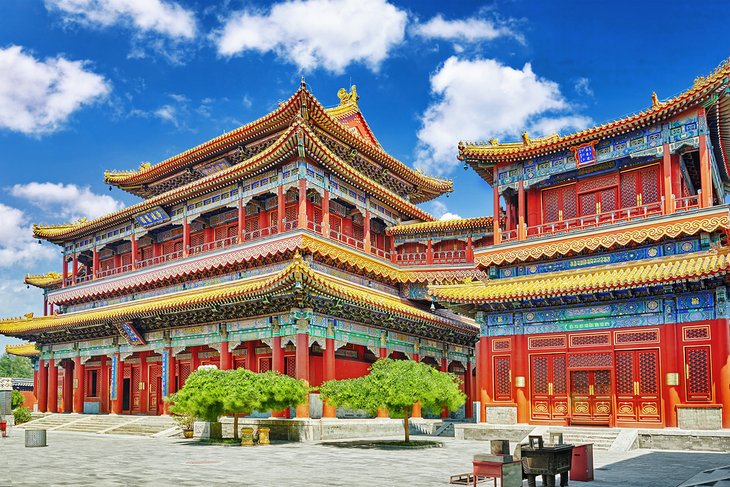
Also known as the Yonghe Temple, the Lama Temple is one of Beijing's most attractive and best-preserved temples. Completed in 1745, the building served a political purpose by giving Lamaism, the religion of the then-just annexed Tibet, an official seat in the capital. It was built to generous proportions and equipped with many valuable works of art.
Its most important feature is the Hall of the Kings of Heaven (Tian Wang Dian) with its statue of Buddha surrounded by the four kings who are provided with symbolic objects (a toad, sword, snake, and shield). Also noteworthy is the statue of Weituo, the protector of Buddhism, holding an iron staff.
Other important buildings include the Pavilion of the Four-tongued Stele (Yubi Ting), which houses a stele dating back to 1792 that contains the history of the Lama religion written in Chinese, Manchurian, Tibetan, and Mongolian; and the Hall of the Buddhist Wheel (Falun Dian), the teaching and assembly hall of the monastery, its interior dominated by a six-meter-tall statue, two thrones, and numerous sacred manuscripts.
Be sure to also see the largest building at the Lama Temple, the Pavilion of Four Thousand Fortunes (Wangfu Ge), with its enormous 18-meter-high sandalwood statue.
Address: 12 Yonghegong Street, Dongcheng, Beijing
Beijing Capital Museum & the National Centre for the Performing Arts
Arts and culture buffs are extremely well catered to in Beijing. Of particular interest is the excellent Beijing Capital Museum, one of the country's leading art museums. Opened in 1981, the museum boasts a vast collection of artifacts, including ancient items of porcelain and bronze, traditional calligraphy and artwork, along with many fine statues from Chinese and other Asian cultures.
Other highlights of its collection of more than 200,000 important cultural artifacts, many originating from in and around Beijing. These include the huge gravestone of Emperor Qian Long. Weighing more than 40 tons, it stands nearly seven meters in height and contains ancient scripts and writings.
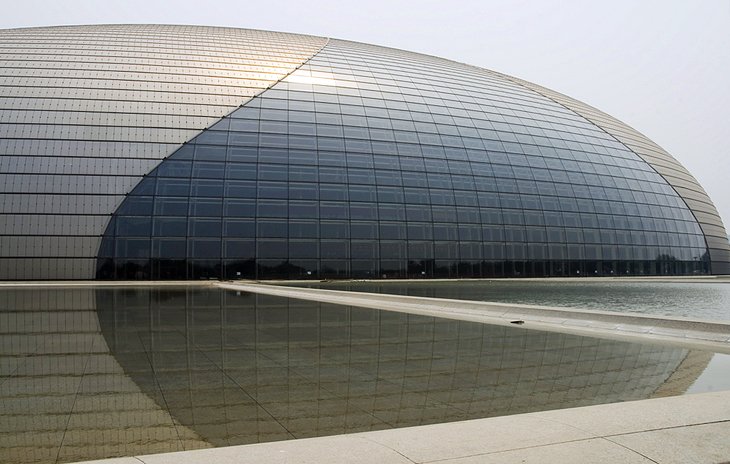
Another modern Beijing landmark worth visiting is the National Centre for the Performing Arts (Guójia dà jùyuàn), also nicknamed the Giant Egg. Considered one of the best opera houses in Asia, the building opened in 2001 and has since hosted many of the world's leading operatic performers. It's particularly worth visiting if you're able to take in a performance.
Address: 16 Fuxingmen Outer St, Xicheng, Beijing
Beijing Ancient Observatory
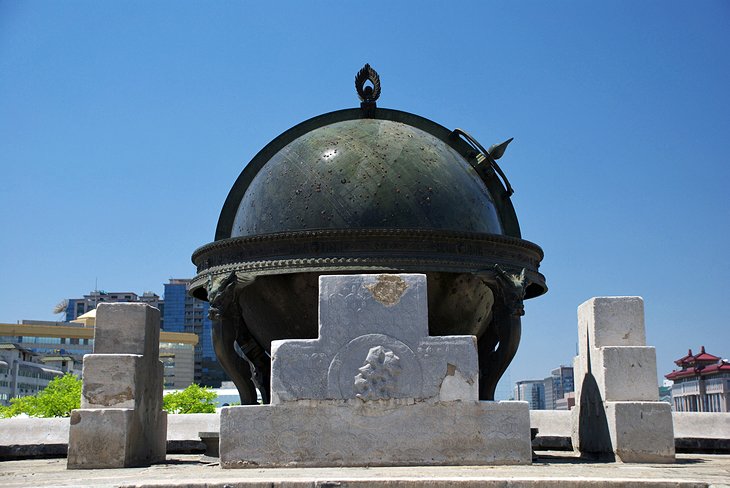
Completed in 1442, the fortress-like Beijing Ancient Observatory (Beijing Gu Guanxiàngtái) lies in the east of the city near the station quarter and was continuously in use right up until 1929. It is widely considered one of the oldest such observatories in the world.
Among the 10,000-square-meter facility's many fascinating old pre-telescopic instruments are a celestial globe dating from 1673 and an 18th-century armillary globe depicting the planets, at least those that were known at the time. There are also a number of large bronze instruments designed by the Jesuit missionary Ferdinand Verbiest.
Once part of the old city walls, this tall brick tower serves as a museum offering a glimpse into the surprising amount of knowledge of the stars and planets that existed at the time.
Address: 2 Dongbiaobei Hutong, Jian Wai Da Jie, Dongcheng, Beijing
The Fayuan Temple
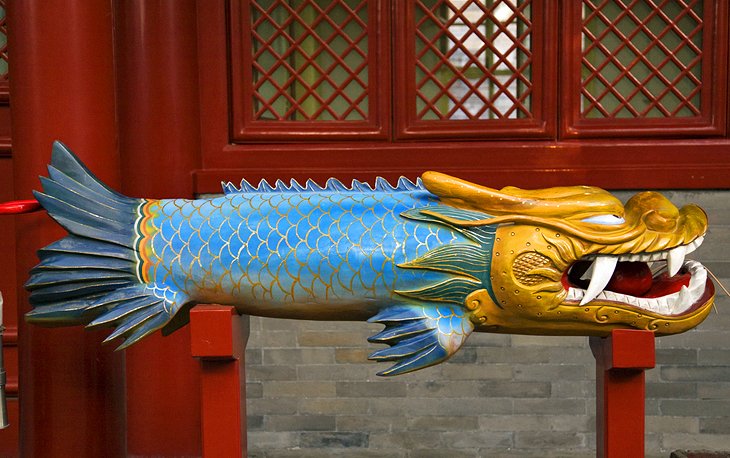
Fayuan Temple (Fayuán Sì), also known as the Source of Law Temple, dates back to the year AD 645 and consists of several halls where many ancient stone inscriptions are kept, the oldest dating from the 7th century. The temple has witnessed many of Beijing's most important historic events, including serving as a prison for Emperor Huizong in the 12th century, a place of examination for the highest offices of state, as well as a botanical garden.
Today, the temple is a place of worship and the seat of the Buddhist Academy, the most important educational establishment in China. Other highlights include the bell and drum towers in the first courtyard; the Hall of the Kings of Heaven with its fine statues; the Mahavira Hall housing Buddhas of the present, past, and future represented in 18 Luohan figures; and, one of the temple's most precious objects, a Han Dynasty (AD 25-220) ceramic statue in the Dabianjue Tang Hall.
Another Buddhist site worth visiting is the Zhihua Temple. Dating from 1444, it's one of the most important original Ming period complexes in Beijing's old town. Of particular note is the two-story Tathagata Hall (Rulai Dian), named after its statue of the transcendental Buddha. It's also known as 10,000 Buddha Hall for the many small Buddha figurines adorning the walls.
Address: 7 Fayuansi Front St, Xicheng, Beijing
Coal Hill Park (Jingshan)
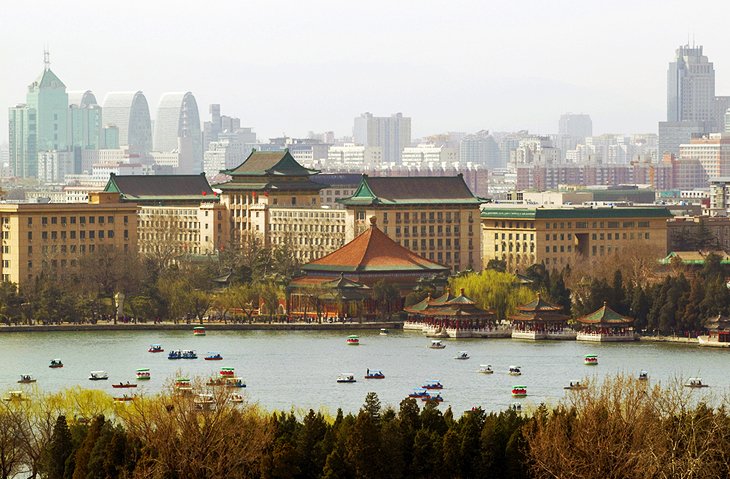
Located directly opposite the North Gate of the Imperial Palace, Coal Hill Park (Jingshan) offers some of the best views in Beijing, particularly over Beihai Park Lake and the Forbidden Palace. Taking its name from the coal that was once stored here for the Ming Emperors, this largely man-made hill, one of just a handful in Beijing, was started around 1416 during the construction of the Imperial Palace.
After years of receiving rubble from the old city wall and large quantities of soil from the excavation of the moat surrounding the palace, the once-low natural mound soared to its current height. A highlight of a visit, in addition to the many splendid gardens and walkways, is an old acacia tree from which the last Ming emperor was supposed to have hung himself in 1644.
Address: 44 Jingshan W St, Xicheng District, Beijing
The Beijing Temple of Confucius
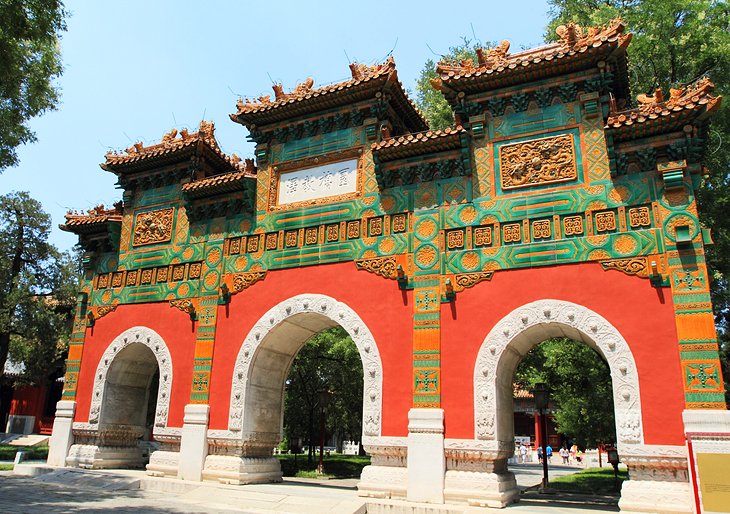
A short walk from the Lama Temple in a pleasant side alley spanned by ornamental gates is the Beijing Temple of Confucius. Built in 1302, it's dedicated to the great philosopher and teacher, Confucius, whose teachings dominated public and private life for centuries.
One of China's best-known Confucius temples, the Beijing Temple once hosted many elaborate ceremonies honoring its namesake under the leadership of the emperor. The forecourt harbors 198 steles with inscriptions naming all 51,624 Confucian scholars who, after 1416, successfully passed the highest examinations of the state until abolished in 1904.
A highlight is the Hall of Great Achievements (Dacheng Dian). It's home to numerous shrines dedicated to Confucius, his students, and other Confucian philosophers, as well as many old musical instruments and other ritual items used in the celebrations, which take place on the large terrace in front of the hall.
Another religious site worth a visit for its fine exterior is Niu Jie Qingzhen Si Mosque, built in AD 995. Beijing's oldest and largest mosque, it's in the Muslim quarter and includes a minaret, a six-cornered moon observatory tower, and two pavilions featuring numerous steles with Chinese and Arabic inscriptions. Only Muslims are permitted to enter.
Address: 15 Guozijian Street, Dongcheng, Beijing
Beijing Zoo
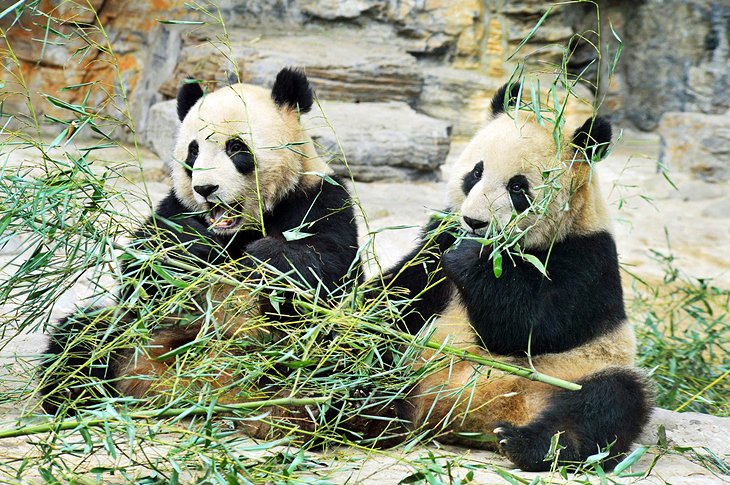
Located in the northwest area of the city, the Beijing Zoo (Bei jing dòng wù yuán) covers an area of more than 220 acres and was established in 1906, making it one of the oldest zoos in China.
Boasting an impressive collection of close to 15,000 animals from 950 species, the largest in the country, the zoo includes many rare native species. Notable examples include South China tigers, snow leopards, golden snub-nosed monkeys, and pandas. Not-so-rare species include the red-crowned crane and Pere David's deer.
Species from across the world are also well represented and include elephants, lions, and jaguars, all spread around grounds that closely resemble classical Chinese gardens. These beautiful areas come complete with dense woods, meadows, rivers, streams, and ponds, along with a number of pleasant gazebos and terraces. The zoo also has a well-stocked aquarium.
Address: 137 Xizhimen Outer St, Xicheng, Beijing
The Old Summer Palace at Yuanmingyuan Park
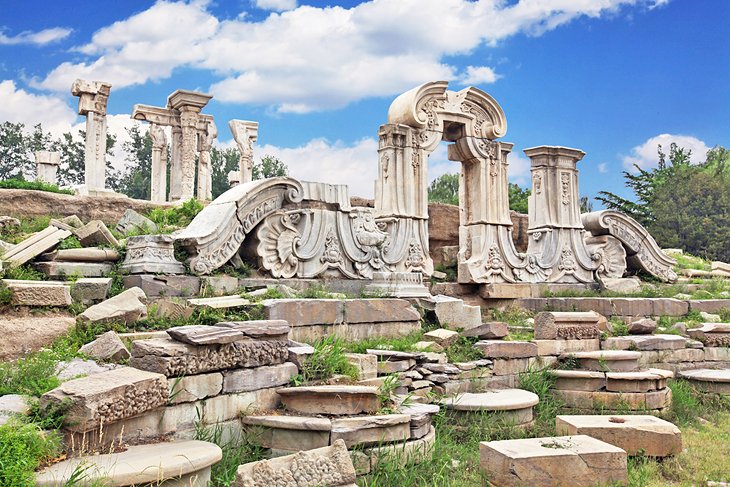
Although now mostly just ruins, the Old Summer Palace (Yuanmingyuan) is located in Yuanmingyuan Park in northwestern Beijing and is well worth a visit. Once the imperial residence of the Qianlong Emperor, it was considered one of the most spectacular achievements of Chinese architecture and garden design when constructed in the 1700s, and was for a time known as the "Garden of Gardens."
The palace was home to a vast and important collection of art and antiquities and was looted and destroyed by the British and French during the Second Opium War in 1860. It took hundreds of troops three days to burn and demolish the site.
These days, the grounds serve as a popular public park, and the old ruins are a delight to explore. To gain a picture of just how spectacular the old palace once was, be sure to pop into the small on-site museum with its reconstructions and models.
798 Art Zone
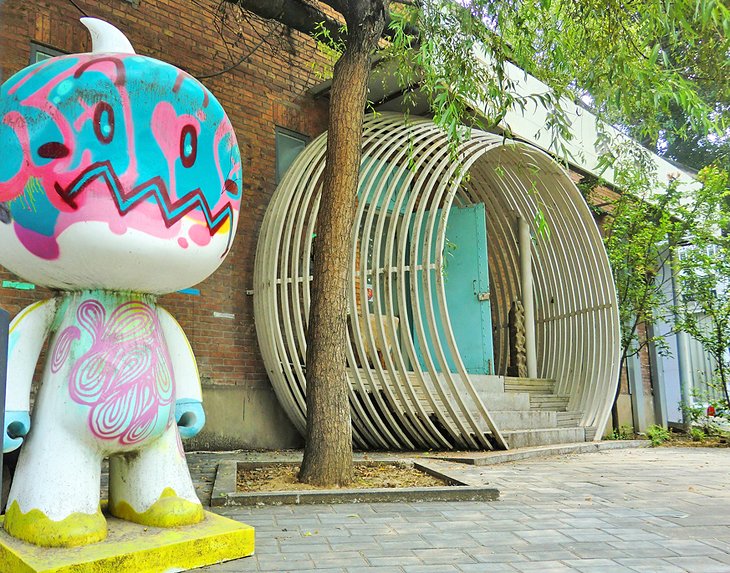
Also known as Dashanzi Art District, 798 Art Zone is a unique art community, and one of the more unusual things to do in Beijing. This vibrant cultural district grew up in and around a former military manufacturing complex in Beijing. Now dedicated entirely to more peaceful pursuits, these interesting old factories and warehouses are home to everything from galleries to studios and exhibition spaces hosting events dedicated to the arts.
It's a delightful area to explore, with at every turn some interesting and sometimes challenging art on display or performed by artists from across China and from around the world. While still very much a hub of artistic endeavors, in recent years 798 Art Zone has also become increasingly gentrified and is now as much a draw for its hip shopping opportunities.
There's everything here from bookstores and galleries to designer fashion boutiques, along with many cafés and restaurants.
Address: 2 Jiuxianqiao Road, Chaoyang, Beijing
National Museum of China
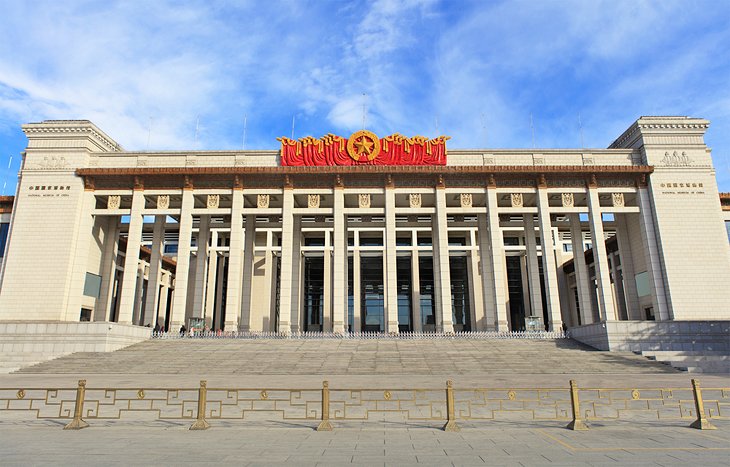
Occupying a large chunk of the east section of Tiananmen Square, the impressive National Museum of China is the second most visited art museum in the world after the Louvre in Paris, and also one of the largest.
Opened in 2003 and completely renovated in 2011, the museum serves as a place of education regarding the country's rich history, with a particular focus on exhibits related to culture and art. Expect to spend many an hour here as there is so much to see in each of the museum's 48 exhibition halls.
Especially interesting among the museum's more than one million artifacts is the huge Simuwu Ding, the world's heaviest ancient bronzeware, as well as collections of rare gold, jade, and ceramic artifacts from various dynasties through the ages. Other interesting exhibits deal with the first human settlements in the country, as well as the founding of the communist state.
If you're planning a lengthy visit, note there's a café and teahouse serving refreshments. Also, a strict "no-selfie stick" policy is in place, so if you have one, be prepared to leave it back at your hotel or at the coat check.
Address: 16 E Chang'an Ave, Dongcheng, Beijing
Universal Beijing Resort
The city's newest attraction, Universal Beijing Resort, is also one of the best places to visit in China for those traveling with kids. Construction of this multi-billion dollar, 990-acre project started in 2016 and the first "districts" within the park opened in 2021.
Usually referred to simply as Universal Beijing and one of the largest of the country's theme parks, you'll notice plenty of similarities with other destinations in the brand's portfolio. The focal point, Universal Citywalk, features food and shopping experiences, along with an array of entertainment options and accommodations.
The real fun, though, is to be found in Universal Studios. In addition to thrilling rides and fun experiences based around such characters as the Minions, Transformers, and Harry Potter. Kids will love exploring the world of Kung Fu Panda: Land of Awesomeness. A second theme park and ride area, along with a waterpark, are also planned.
Map of Tourist Attractions in Beijing
Beijing, China - Climate Chart
| Average minimum and maximum temperatures for Beijing, China in °C | |||||||||||
| J | F | M | A | M | J | J | A | S | O | N | D |
| 2 -9 | 4 -7 | 11 -1 | 20 7 | 26 13 | 30 18 | 31 22 | 30 20 | 26 14 | 19 7 | 10 0 | 3 -7 |
| PlanetWare.com | |||||||||||
| Average monthly precipitation totals for Beijing, China in mm. | |||||||||||
| 3 | 5 | 10 | 25 | 28 | 71 | 175 | 183 | 48 | 18 | 5 | 3 |
| Average minimum and maximum temperatures for Beijing, China in °F | |||||||||||
| J | F | M | A | M | J | J | A | S | O | N | D |
| 34 15 | 39 19 | 52 30 | 67 45 | 79 55 | 86 64 | 87 70 | 85 68 | 78 57 | 66 45 | 50 31 | 37 19 |
| PlanetWare.com | |||||||||||
| Average monthly precipitation totals for Beijing, China in inches. | |||||||||||
| 0.1 | 0.2 | 0.4 | 1.0 | 1.1 | 2.8 | 6.9 | 7.2 | 1.9 | 0.7 | 0.2 | 0.1 |
More Related Articles on PlanetWare.com
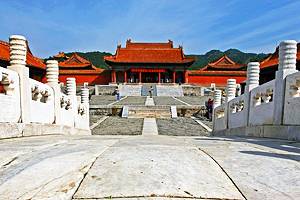
Beijing Day Trips: While there are plenty of fun things to see and do in Beijing, try to find time in your China travel itinerary to see the sights surrounding the country's capital. day trips from Beijing include a visit to the Great Wall, naturally. But be sure to visit other points of interest, too, such as the scenic Fragrant Hills Park, a fun mountain area named after the fact that its peak looks like an incense burner; the Caves of Zhoukoudian and the Peking Man Museum; and the Marco Polo Bridge, named after the famed explorer who traveled the area extensively.
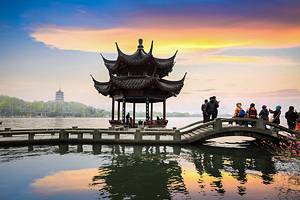
Other Great Cities: Thanks to the many easy connecting flights available from Beijing's modern international airport, some of the most interesting of China's cities are not much more than a couple of hours away. Popular destinations to fly to from Beijing include Shanghai, where you can explore the city's historic Bund promenade; Chengdu, the home of the famous Research Base of Giant Panda Breeding (check out their unique panda experiences!); and Hangzhou, perhaps best known for beautiful West Lake, making this city one of the most picturesque in the country.
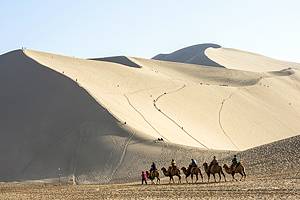
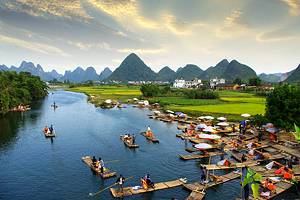
China Outdoor Adventures: Adventure seekers are also well-catered to in China. Some of the best experiences are in the northwesternmost part of the country, where you'll find Dunhuang, famous throughout the ages for its prominent location on the historic Silk Road trade route. Here, you can enjoy such outdoor adventures as camel trekking through the rugged Gobi Desert, as well as exploring some of the most remote sections of the Great Wall. There's also plenty of outdoor fun to be had enjoying a cruise on the Li River between Guilin and Yangshuo. Highlights include a chance to drift past some of the most dramatic, breathtaking scenery in the country, and afterward embark on a smaller river aboard a traditional bamboo canoe.