

China's 12 Major Tourist Attractions For Your First Visit

In the late 13th century, Venetian merchant and explorer Marco Polo traveled to China and spent nearly two decades in the court of Mongol ruler Kublai Khan. He published his observations in "The Travels of Marco Polo," which illustrated for the European public a vision of a place brimming with wealth and unbelievable customs. "I have not told the half of what I saw," he famously wrote (via eNotes), and to this day, China continues to inspire wonder.
China is an enormous nation — practically the size of the whole European continent — with a remarkably rich and layered history. The country's population is an estimated 1.146 billion, which sits only slightly ahead of India's population of around 1.409 billion. For comparison, the U.S. sits at around 342 million. China is also a country with natural diversity, from snow-capped mountains to expansive grasslands to riverine expanses intersected with rice paddies. And its food traditions are second to none, with regional flavors and iconic dishes that simply can't be beat. From imperial palaces in Beijing to Buddhist temples in Tibet to the soaring pinnacles of Zhangjiajie National Forest Park in Hunan — and everything in between — here are 12 unbeatable places to visit on your first trip to China. It might be a good time to brush up on some essential words and phrases to know before your trip!
The Great Wall of China
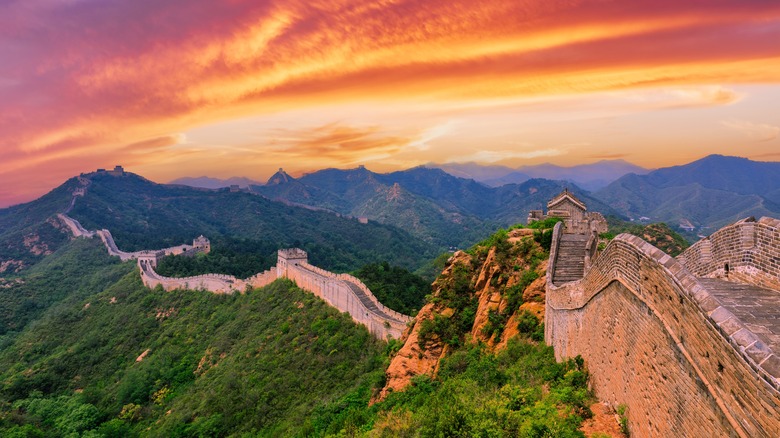
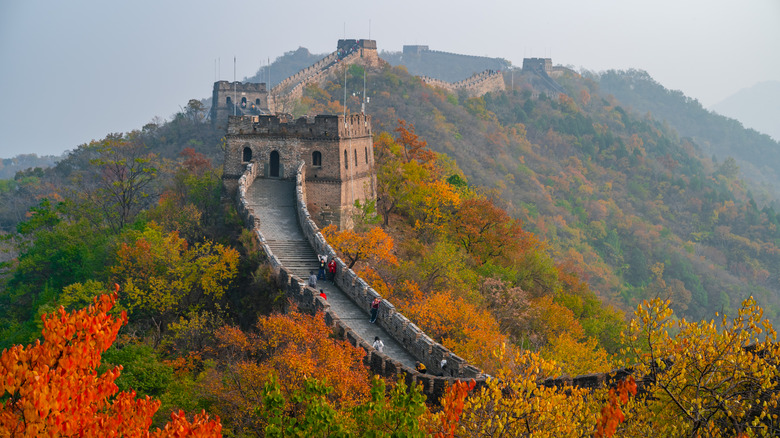
At 13,171 miles long, the Great Wall of China is an epic feat of human planning, engineering, and preservation. Spanning east to west, the wall is one epic and continuous fortification made predominantly from brick and stone. Some parts date back as far as the 7th century B.C.E., eventually combined and strengthened into a program of beacon towers, barracks, garrisons, and fortresses that demonstrated China's military control. While some parts of the wall haven't survived the millennia, much of the remaining structure is from the Ming Dynasty, which lasted from 1368 to 1644. There are numerous areas where you can visit the wall, and you can even experience a one-of-a-kind camping adventure.
As a first-time visitor, the Badaling section may be a good choice, as it's only a little more than 40 miles from Beijing, and you'll find easy public transportation connections. That said, it can get very crowded, especially during weekends. Mutianyu is also popular, especially in the spring when flowering trees explode with color on the hillsides. Check out the Jinshanling section for amazing photo ops of the mountains, about 80 miles from Beijing. There's a cable car here — like you'll also find at Badaling and Mutianyu — although you'll run into fewer crowds because public transportation options aren't as readily available. But the extra effort is worth it! Another fantastic option is the Simatai section, which provides access to the strategic Gubeikou pass and is one of the few areas of the wall offering nighttime visits.
The Forbidden City and Imperial Palace, Beijing
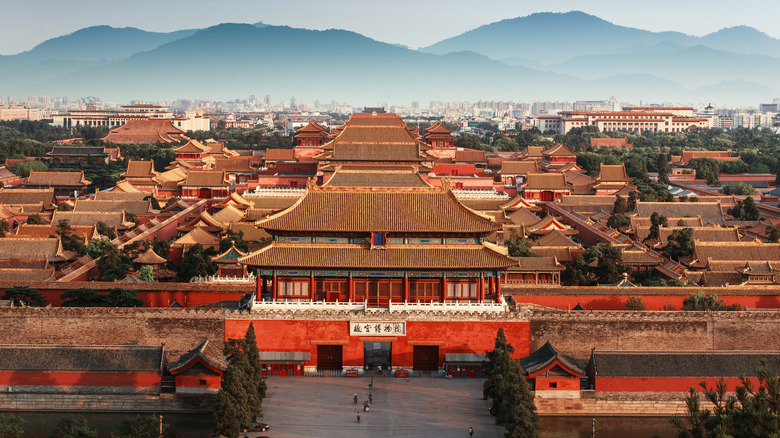
At the heart of Beijing, the Forbidden City is a top tourist destination in China for history buffs. Its name reflects its status as an imperial palace, where no one was allowed access unless granted explicit permission. The complex contains more than 9,000 rooms and covers more than 250 acres, consisting of extravagant and imposing gates, halls, courtyards, religious spaces, administrative centers, and numerous residences. Today, it continues as the Palace Museum, which houses artworks and artifacts that trace the history of the 24 emperors who called it home between the 15th and 20th centuries.
The marvelous Meridian Gate, located on the south side, is one of the earliest structures of the Forbidden City, built in 1420. The palace is also protected by a moat and a wall that encircles the entire site. Inside, you'll find the serpentine Golden Water River and a series of beautiful white bridges. Through another portico known as the Gate of Supreme Harmony, you reach the Palace of Supreme Harmony — the beating heart of the palace complex, where the emperor sat on his throne.
Give yourself a few hours to explore the Forbidden City's numerous gardens, halls, and museum displays. "Really need full day, as (it's) mega busy," one visitor suggested in a Tripadvisor review after feeling that half a day wasn't quite enough. "A must see, though, if in Beijing." During the high season from April 1 to October 31, admission is CNY 60 (around $8.40), and during the rest of the year, it'll run you CNY 40 (about $5.60).
The Terracotta Army, Xi'an
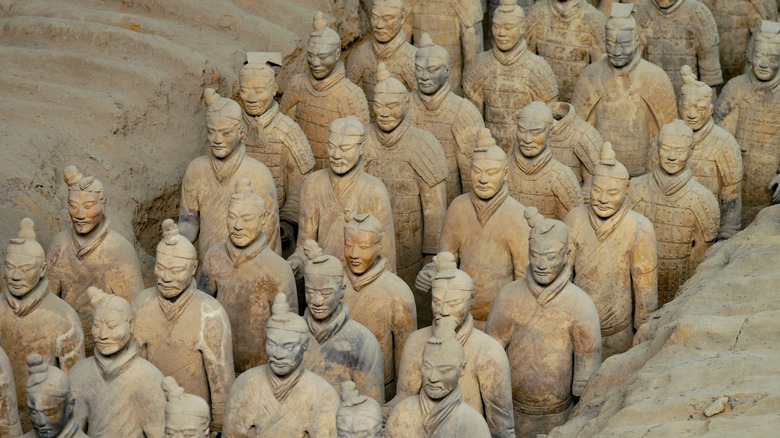
When Emperor Qin Shi Huang died 210 B.C.E., he was interred in a grand mausoleum. But he wasn't alone on his way to the afterlife. Near his tomb, an army of an estimated 8,000 life-size, terracotta warriors walk in formation, accompanied by horses and bronze chariots. It wasn't until 1974, though, when some unusual shards of terracotta were dug up in a field, that Qin Shi Huang's Terracotta Army emerged as one of the most extraordinary archaeological discoveries of our time. For more than 2,200 years, no one knew it was there. Today, you can tour three substantial pits containing thousands of statues, plus an exhibition hall showcasing the chariots.
Emperor Qin Shi Huang's Mausoleum Site Museum is located about 25 miles northeast of the city of Xi'an, which is itself about a four to six-hour bullet train ride from Beijing. Admission is CNY 120 (around $16.80) as of this writing, and you'll probably want at least two to three hours to wander around this expansive so-called "eighth wonder of the world." It's accessible by public transportation, although a guided tour like one provided by Catherine Lu Tours Xi'an or Ping's Tours, among others, offers an affordable way to visit the Terracotta Army with easy pick-up and drop-off, along with the option to see additional sites around Xi'an. If you have some time in the city, don't miss the immense Xi'an City Wall, dating to the Ming Dynasty, or the bustling Muslim Quarter, which is a must for foodies. It's home to numerous cafes, restaurants, and the sometimes crowded but totally tasty Beiyuanmen Night Market.
Summer Palace, Beijing
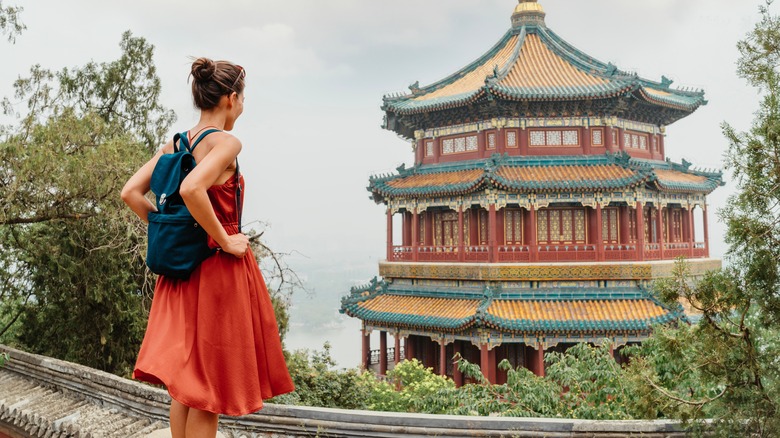
Just about 35 minutes by car from central Beijing is the opulent Summer Palace, which sits in a beautiful parkland covering more than one square mile. The sprawling, aqueous landscape is inspired by the West Lake area in Hangzhou, situating elegant pagodas, gardens, and residences amid rolling hills. The Summer Palace was built in 1750 but was destroyed almost entirely in 1860 during the Second Opium War. It was restored to its former glory in 1886 and continues as a testament to Chinese architecture and garden design. Here, the star is Kunming Lake, overlooked by Longevity Hill. You can also visit the ruins and gardens of the Old Summer Palace, which at one time was an elaborate palace complex but was never rebuilt after it was ransacked by opposing armies during the Second Opium War.
There's a lot of walking involved on a visit to the Summer Palace, and it's advisable to give yourself a whole day to visit, if possible. There aren't any restaurants inside the park, so it's a good idea to pack a lunch. Audio guides are available in 19 languages and can be found at a number of gates, or you can hire a tour guide to lead the way. Don't miss a visit to Empress Dowager Cixi's residence, the Hall of Benevolence and Longevity, which is accessible via the East Palace Gate. There's also the Long Gallery, which connects Kunming Lake to Longevity Hill via the world's longest covered wooden corridor. You'll also admire the elaborate, three-tiered Grand Theater at the heart of the Garden of Virtue and Harmony.
Li River, Guilin
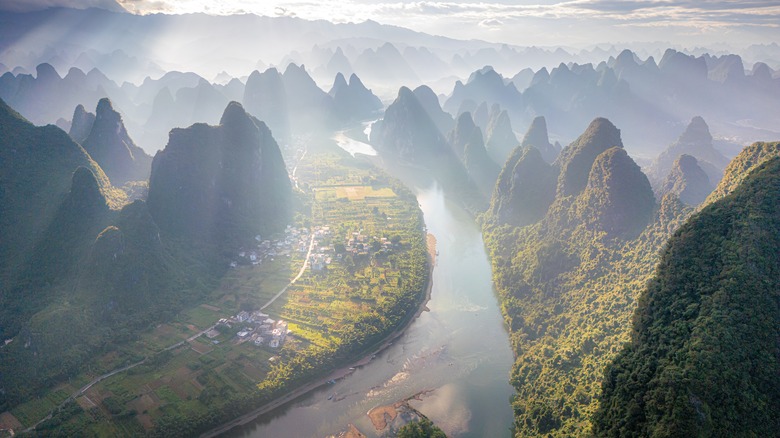
Lined with dramatically beautiful limestone karst formations, the Li River is a spectacular part of southern China to explore. Seeking a couples destination in Asia that you'll swoon over? Look no further. Flowing from the city center of Guilin, in Guangxi Province, to Yangshuo County, the Li River meanders about 51.5 miles through an awe-inspiring landscape. It's been the source of inspiration for poets and artists for centuries, with clear waters that reflect the surrounding mountains and greenery.
The best way to experience the Li River is via a scenic boat tour, offered by companies like Li River Cruises or Charles Guilin Tours, among others. Options typically include hotel pick-up and drop-off in Guilin and, the star of the show, a vessel with viewing decks that offer panoramic views of the surrounding mountains. The three-star "superior" cruise option from Li River Cruises, for example, includes reserved seats on the upper deck of the boat and a box lunch. There's a four-star option with options for lower or upper deck seating in more comfy chairs and a buffet lunch. And the five-star option offers private suites, a social upper viewing deck, a buffet lunch, and the opportunity to experience a tea ceremony and a cormorant fishing demonstration.
The Classical Gardens of Suzhou, Jiangsu
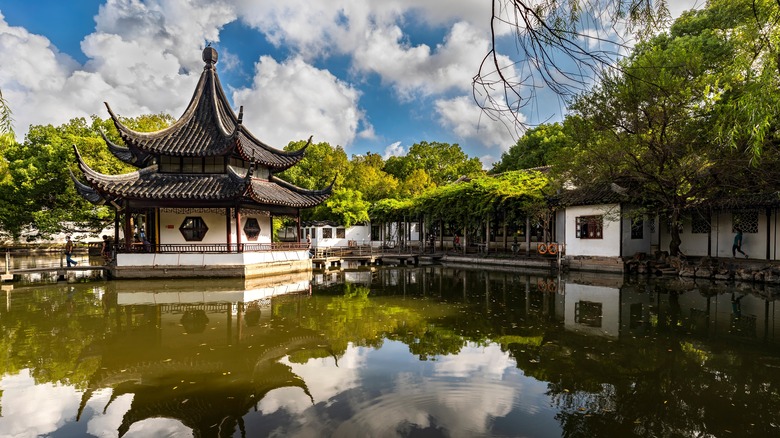
Located just about an hour and 15 minutes west of central Shanghai sit the otherworldly Classical Gardens of Suzhou in Jiangsu Province. The oldest gardens date back to the 11th century, while the most recent are from the 19th century, and they're considered to be some of the most impressive examples of traditional Chinese landscape design in existence. Their stories go back much further, though, with the very first being royal hunting gardens planted in the sixth century B.C.E.! Local well-to-do residents thought the royal versions looked quite nice, and over the centuries, they began replicating the concept in their own gardens throughout the city. There may have been more than 200 at one time. Today, around 50 still exist, and nine are considered particularly spectacular. They're well worth a visit, not only for a step back in time but also for the timeless opportunity to pause and reflect within stunning, tranquil surroundings.
One of the most well-known is Garden to Linger In, a nearly seven-and-a-half-acre plot designed by a doctor as a place for quietude and healing. The largest — and busiest — is the Humble Administrator's Garden, which originally dates to 1509 and contains 10 stunning pavilions. And the Lion Grove Garden, built in 1342, contains unique rock formations that nod to the protective lions of Buddhist tradition. The key to finding the most peaceful gardens is seeking the smaller ones, which tend to draw fewer crowds, like the Couple's Retreat Garden or the Tuisi Garden.
Potala Palace, Tibet
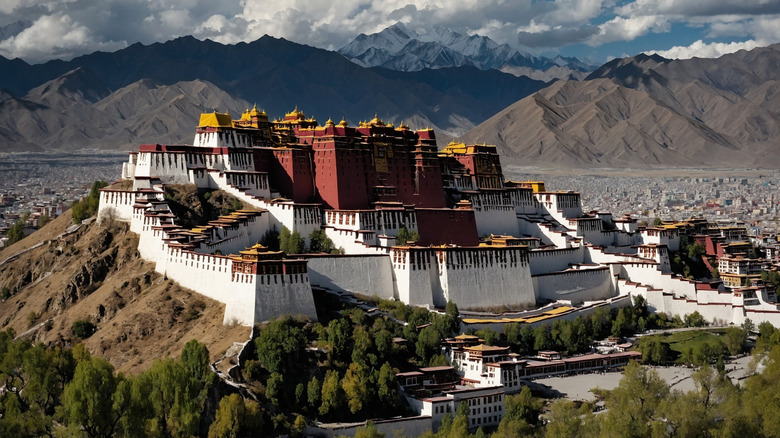
Since the seventh century, a giant edifice built atop the sacred Red Mountain in Lhasa, Tibet, has served as a monumental symbol of the Buddhist faith. The fifth Dalai Lama conceived of Potala Palace as a citadel and a monastery, as well as a winter home. Potala's 32-acre complex consists of the White Palace, which was constructed in the 1640s, and the Red Palace, which was built a little more than 40 years later. It has more than 1,000 rooms and is considered the best preserved example of traditional Tibetan architecture today. The Red Palace contains some of the oldest meditation caves — sacred spaces within the mountain itself — along with the gem of Potala, the Buddha of Compassion with his thousand arms.
Potala was used by successive Dalai Lamas until 1959, when the current, 14th Dalai Lama was exiled as a result of a revolt that the Chinese government promptly quashed. Tibet and the Dalai Lama are touchy subjects, so it's good practice to remember the "three T's" to avoid bringing up during a trip to China.
It's important to research current travel requirements for Tibet, which is often referred to as the Tibet Autonomous Region (TAR). Visits are only possible with a Tibet Travel Permit, which must be secured in advance via a licensed travel agency. Tourists are also not allowed to use buses in TAR, so you must have a prearranged driver. And it's imperative to reserve a guide, too, as they're required to accompany visitors to all sites. Travel agencies that specialize in Tibet travel are able to assist with applying for the permit, organizing transportation, and providing a guide. Visitor numbers are limited to Potala, so timed entry is required, and visits are limited to one hour inside.
Leshan Giant Buddha, Sichuan
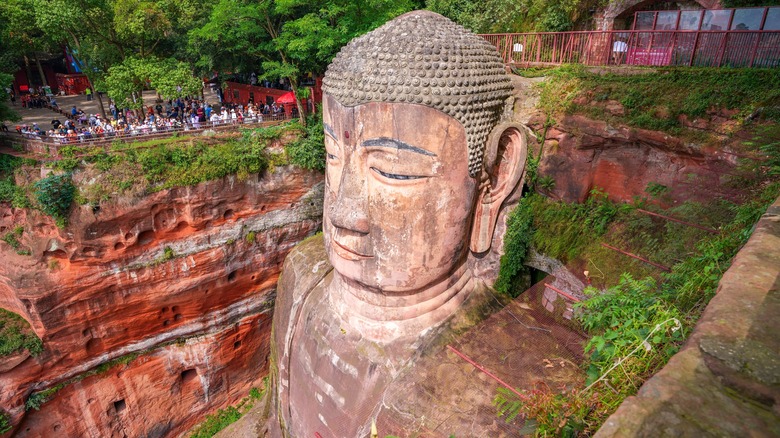
Where the Min River, Qingyi River, and Dadu River meet just outside of Leshan City in Sichuan Province, an ancient figure keeps watch. Known as the Leshan Giant Buddha, this enormous and ancient stone carving was begun in 713 and completed in 803. At 233 feet tall — with fingers that are 27 feet long — it also clocks in as the world's most colossal carved Buddha.
Since the sculpture looks over the water, there are two ways to take in the spectacular view, depending on how much effort and time you'd like to put in. Hop aboard a 30-minute boat tour that takes you directly in front of its contemplative and imposing presence, or plan for a two-hour hike that brings you face-to-face with the Buddha.
The Leshan Giant Buddha is worthwhile to visit any time of year, but to avoid crowded boats and stairwells, aim for March to May or September to November, as the summertime months (June to August) are often the busiest. If you have some time and happen to love pandas, a popular local day trip option provided by Panda China Go includes a two-hour stop at the Chengdu Research Base of Giant Panda Breeding, plus a two-hour visit to the Leshan Giant Buddha before heading back to Chengdu.
Zhangjiajie National Forest Park, Hunan
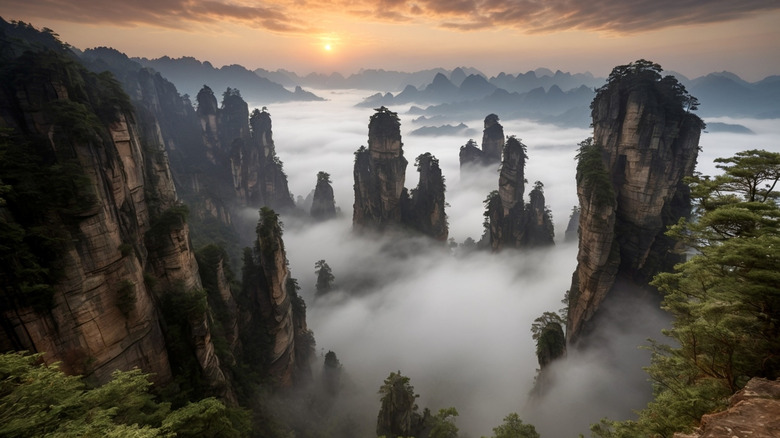
If otherworldly landscapes are your cup of tea — the kind so immense and stunning that the mountains helped inspire James Cameron's "Avatar" — then Zhangjiajie National Forest Park is a must for your China itinerary. Located in the northwestern region of Hunan Province, Zhangjiajie features towering quartz-sandstone pinnacles complemented by lush greenery, canyons, and views over the clouds. The park is part of the greater Wulingyuan Scenic Area, which is a designated UNESCO World Heritage site, and it's ideal for stunning views from the tops of cliffs. Popular with tourists, this place can get pretty busy, so don't expect a serene hike through the wilderness. But you will find numerous ways to experience the area, like riding the huge Bailong Elevator or peering through the floor of the Zhangjiajie Grand Canyon Glass Bridge.
While there are numerous ways to get around Zhangjiajie, you may find a guide helpful to make your visit more seamless. "I'd suggest non-Chinese speakers consider getting a guide to maximize your visit," recommends one visitor in a Tripadvisor review. "There's nothing worse than standing in line to realize you were waiting to get on the wrong bus. The park is generally very crowded, so you don't want to waste time figuring out how to get from point A to B."
The Hong Kong Skyline from Victoria Peak
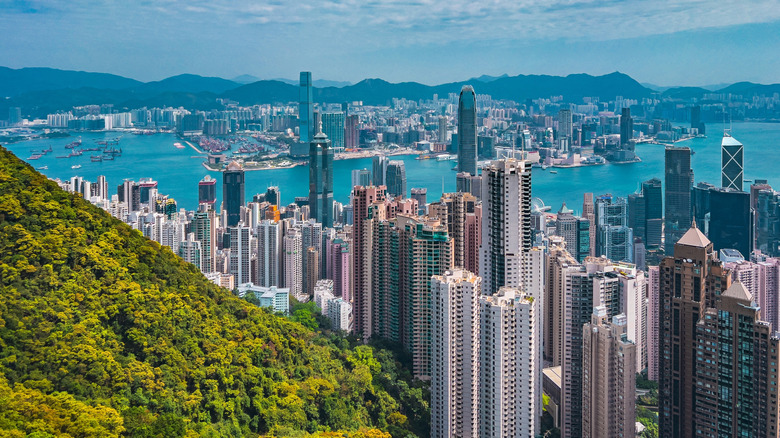
Consisting of more than 250 islands and peninsulas, Hong Kong is a unique and densely populated city on the southern coast of China. It's a special administrative region (SAR), which means it has its own judicial and economic system that's separate from the rest of China. Hong Kong is home to a historic district known as the world's "second coolest street" with destination shopping, and its reputation as a major financial capital is clear in its contemporary skyscrapers and bustling city culture. The city's towering buildings are rivaled only by the islands' natural hilly terrain and water, which make for amazing photo ops across Victoria Harbour or from a height, like at Victoria Peak on northwest Hong Kong island.
Often referred to simply as The Peak, this picturesque vantage point above the city is an amazing place to take in the skyline below and across the harbor. Begin with a tram ride up the incline, then set out on a picture-perfect stroll along the Peak Circle Walk, an easy two-mile loop that offers great views of both the north and south sides of Hong Kong. You'll also find all sorts of snacks and treats at the Peak Tower, in case you get a hankering. If you arrive about an hour and a half before sunset, you can walk the path in reverse and arrive at the Victoria Harbour overlook just in time for the show.
The Bund, Shanghai
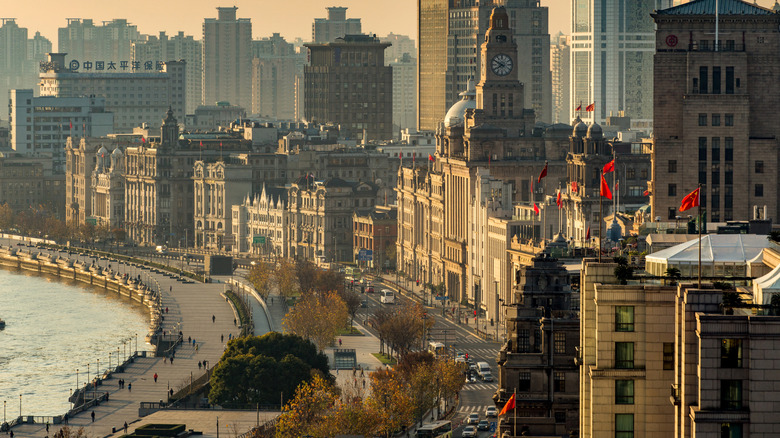
Stretching along the Shanghai waterfront for about a mile, a famously historic part of the city is a must-stop if you're in this major financial hub. Along The Bund, facades sport neoclassical details redolent of historic European buildings along a wide promenade that offers stunning views across the water. This area brims with lights and energy that make it an amazing visit either during the day or night — perfect for capturing photos of the iconic skyline across the way, including the Oriental Pearl Tower, which is worth a visit in its own right for stunning views from within its elevated spheres.
Along with Shanghai's hundreds of skyscrapers are pockets of fantastic history and tranquil escapes. One such destination, about an hour's drive from the nucleus of Shanghai, is the so-called "Venice of Shanghai," or Zhujiajiao Water Town. A delight to explore via boat, you can cruise under historic Ming and Qing Dynasty-era stone bridges, gaze upon gorgeous Buddhist temples, and pop into quaint shops and delightful places to eat. If you're short on time, book an action-packed day tour from a provider like Amazing Shanghai Trip, which offers excursions to The Bund, Zhujiajiao, the classical Yu Garden, and even the Shanghai Tower — China's tallest building.
Methodology
To share information about the top destinations and attractions to visit in China, we referenced tourism sites like TopChinaTravel.com, TravelChinaGuide.com, TibetTravel.org, TibetTour.org, DiscoverHongKong.com, HelloHongKong.com.hk, and others. We also consulted organizations like UNESCO, the Palace Museum, and National-Parks.org for data and history about specific locations. And to make sure we're providing up-to-date tour information and suggesting the best experiences, we focused on visitor reviews and ratings on Tripadvisor and Google.