

Japan's 11 Best Tourist Attractions For First-Time Visitors
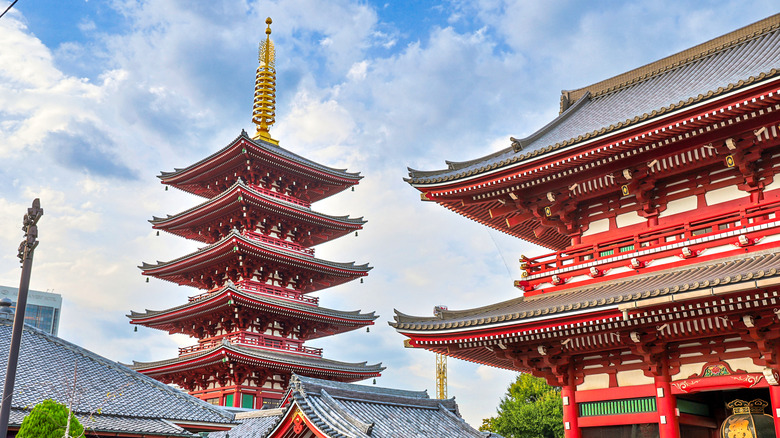
Japan has exploded with tourism in recent years, seeing more than 36 million visitors in 2024 — which is nearly triple the number of tourists that it saw ten years prior. That's for more reasons than we would have time to explain on an intercontinental flight — including layovers. I would know. I visited this wow-worthy country on a bucket list trip recently, exploring some of its many UNESCO World Heritage Sites, undisturbed natural landscapes, cutting-edge cities, ancient shrines, and — my favorite — eats that I'm still dreaming about today.
With so much to see and do — especially considering how clean and safe this beautiful country is — it's overwhelming to plan an itinerary here. Frankly, no time is enough time to get your fill of sushi, castles, and anime. Plus, you need to plan ahead and get these requirements that tourists need to know about before traveling to Japan. So we rounded up the best Japanese tourist attractions for first-time visitors, considering which sites have the most and best reviews on Tripadvisor, the most accolades, and are the most unique.
Arashiyama, Kyoto
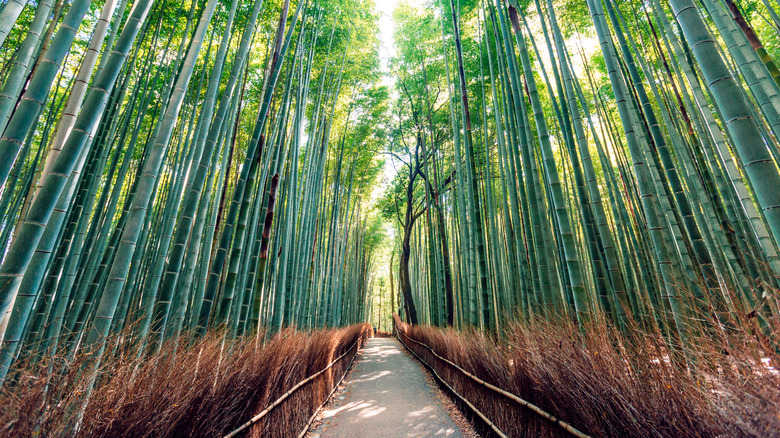
With its temples, red lanterns, and historic sites, Kyoto offers a look into Japan's storied past. However, it's still one of the biggest cities in the country. That's why I couldn't believe that just a 20-minute train ride from Kyoto's epicenter is Arashiyama, a natural respite with a UNESCO World Heritage-recognized temple, a monkey park, and a bamboo grove. The bamboo grove was the most impressive to me, a sentiment shared by many Arashiyama visitors. "We started our day by exploring the famous Bamboo Grove — walking through those towering bamboo stalks was like stepping into another world," wrote one visitor on Tripadvisor. "It was peaceful and awe-inspiring, with a sense of tranquility that left us all in awe."
The soaring bamboo is so all-encompassing that it blocks some of the sunlight and is difficult to capture in photos due to its height. Regardless, the grove is one of the most photographed sites in Japan. For centuries, it has been a spot to the connection between humans and Mother Nature.
Another hotspot in Arashiyama is Tenryu-ji, which has been a staple of the district since the 1300s when it and its garden were constructed in the Zen style to honor Emperor Go-Daigo. A UNESCO World Heritage Site, it's also known as the Temple of the Heavenly Dragon. However, since it gets busy — especially when the fall leaves change and when the cherry blossoms bloom — plan to visit early in the day.
Fushimi Inari Taisha Shrine, Kyoto
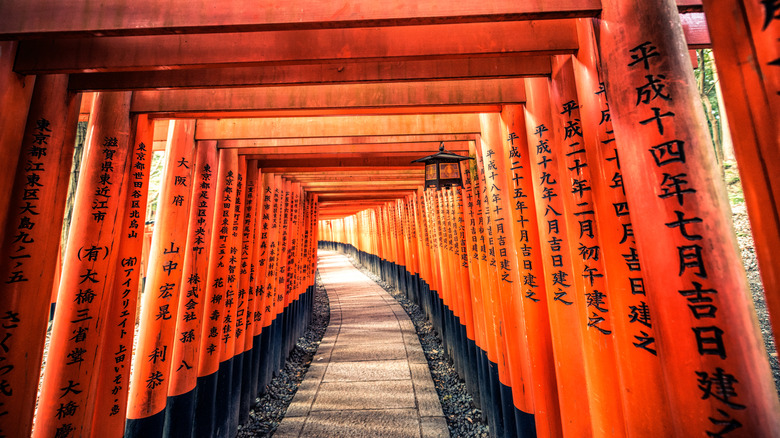
Red wood torii gates — which are part of the Shinto religion — can be found throughout Japan. At Fushimi Inari Taisha Shrine in Kyoto, thousands of these gates form a tunnel in the Mount Inari forest, a sight that was featured in "Memoirs of a Geisha." The number of gates here is always growing, as anyone can make a donation of around $10,000 to have a gate built (although a smaller one may cost less). The shrine dates back to 711 C.E. and was constructed to honor Inari, the Shinto rice god.
The free admission shrine is visited by tourists and locals alike, making it Japan's most visited landmark for years on Tripadvisor. "The shrine beautifully blends history, culture, and nature, inviting every visitor to reflect and connect with something greater," wrote a visitor on Tripadvisor. "For us, Fushimi Inari-taisha was more than a landmark — it was a journey of inspiration, harmony, and unforgettable memories."
Since the line of gates can get crowded — especially on New Year's Day, when as many as 500,000 people visit — visitors should avoid the crowds by visiting very early or late, as the gates are open 24/7. However, don't walk through the path's middle; stick to the sides as the middle is traditionally believed to be where the gods walk. Throughout your visit, look out for the fox statues and wood fox heads, which are respected as the Shinto rice god's envoys, perhaps because these predators eat the rats that feast on rice crops.
Golden Gai, Tokyo
Each Tokyo neighborhood feels like its own realm. Staying in Shinjuku, I was used to towering skyscrapers, massive department stores, people hurrying to work, and exacting cleanliness. But Shibuya — which is just a 25-minute train ride from Shinjuku — feels like Shinjuku's naughty younger sibling. Here, young people drink everywhere from bars to 7-Eleven stoops, decked out in colorful outfits underneath equally colorful facades. The air feels electric, chaotic, and ready to wreak havoc.
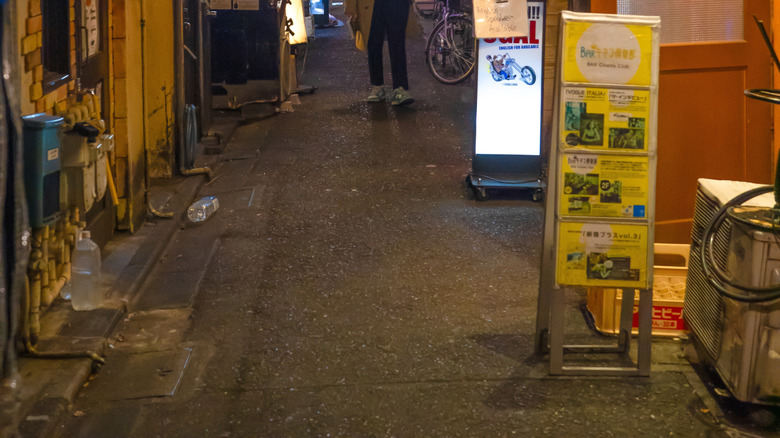
In no area of Shibuya is that ambiance more exciting than in Golden Gai, which translates to Golden District. Within its jam-packed six alleys are an estimated 100 to 200 izakaya, which are laid-back Japanese-style drinking hangouts that also serve small dishes meant for sharing, such as sashimi and yakitori. So many izakaya fit within this small space because they're tiny — usually less than 150 square feet — with as few as four seats.
For those eager to indulge in Tokyo's boisterous nightlife, a visit to Golden Gai makes for an unmatched night of barhopping — and tablehopping — at establishments that feel more like a neighbor's cool garage bar than a strobe-lit club. Around every dark corner is the scent of a new delicacy, which is included as part of the izakaya's cover charge, such as kushiage, which are deep-fried meat and vegetable skewers. "Quite an adventure, it was tiny and so steep to get up into!" wrote one visitor on Tripadvisor. "Felt like entering a different world."
Hiroshima Peace Memorial Park, Hiroshima
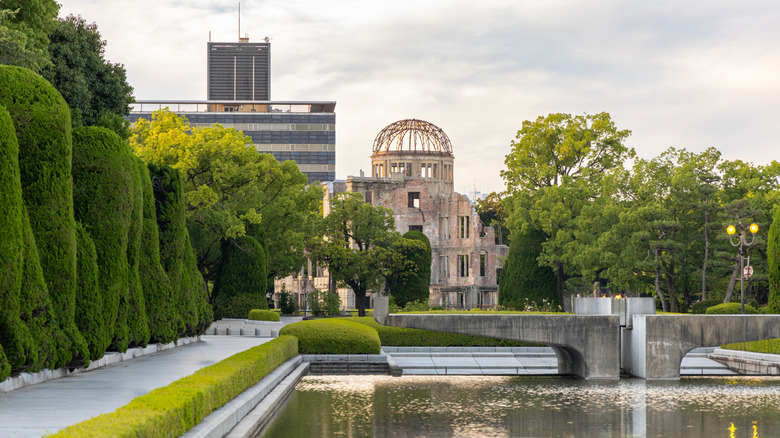
Prior to August 6, 1945, what is now the Hiroshima Peace Memorial Park was the city's political and business epicenter, home to the Prefectural Industrial Promotion Hall and more. But in the years after the infamous dropping of the first atomic bomb, it was transformed into the nearly 30-acre Hiroshima Peace Memorial Park, consisting of several buildings that honor the thousands of people lost in the attack and its aftermath.
People can start their visit to the park at the two-structure Peace Memorial Museum, which tells the story of the bomb and its catastrophic effects. Try to arrive before 8:15 a.m. to hear the Peace Clock chime to mark the time that the bomb struck, after which visitors observe a moment of silence. One of the most jarring parts of the park is the ruins of the Prefectural Industrial Promotion Hall — now called the A-Bomb Dome, the Hiroshima Peace Memorial, or the Genbaku Dome — which remains a skeleton of the former building, just as it was after the bomb hit decades ago.
An earthquake-resistant building and now a UNESCO World Heritage Site, it was one of the few buildings to survive the bomb. "The serene atmosphere and thoughtful design of the park encourage deep reflection," wrote someone on Tripadvisor. "The A-Bomb Dome stands as a powerful reminder of the past, while the museum provides an insightful and emotional narrative." After seeing the park's powerful sites that witnessed so much destruction, visitors can walk the grounds to contemplate the park's dedication to peace.
Kenrokuen Garden, Ishikawa
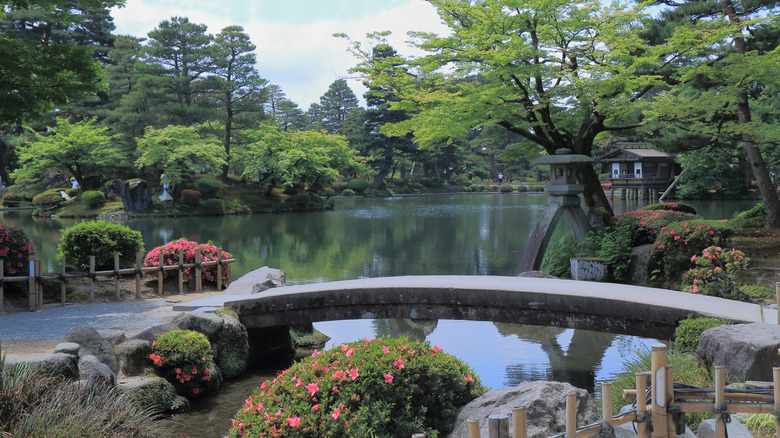
Japan is full of gardens that look straight out of fairy tales. But not many can call themselves perfect. Since the Edo Period (which lasted from the early 17th to the mid-19th centuries), one garden in Ishikawa that's known as one of the best in Japan has been able to do just that. Kenrokuen Garden translates to "Garden of the Six Sublimities" and is so named as it encompasses the half-dozen factors that characterize an ideal Japanese garden: views, water works, artistry, spaciousness, seclusion, and antiquity. After beginning as a private garden owned by the reigning Maeda family, it can now be visited by the masses year-round. "We saw this garden in sunshine and heavy showers," wrote one past visitor on Tripadvisor. "It is a beautiful curated park with fantastic views over Kanazawa beyond. Well worth a couple of hours."
A few of the features to look out for in this serene garden that dates back to the 1600s include pink-and-white cherry blossom trees that come to life every spring around Kasumigaike Pond. Visitors can see these vibrant colors reflected in the reflective surface of the pond, as well as the surrounding rocks, statues, pine trees, mossy plants, and famed Flower Viewing Bridge. But even if you don't visit in the springtime, you'll be able to revel in the enormity of the garden's pine trees, especially the otherworldly raised roots pine trees.
Matsumoto Castle, Nagano
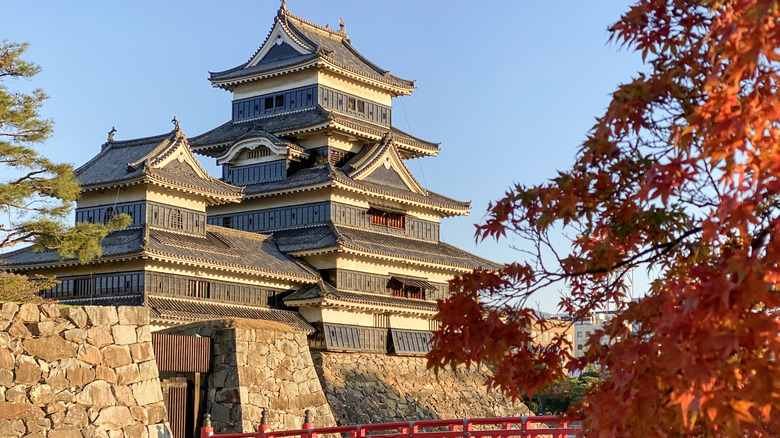
Age doesn't come before beauty at Matsumoto Castle in Nagano, which is a hidden gem city in Japan that you need to add to your bucket list. This elegant castle, surrounded by a foreboding moat in front of the Northern Alps, is not only the oldest castle in Japan, but it's also one of the most striking castles in the country. Featuring five ornate tiers that reflect onto the water below, which is filled with bright orange carp, the castle has long been a popular spot for both history buffs and tourists looking for a photo op. "Most beautiful castle. ... You can admire it during the day, but also when it's getting dark till 9pm," wrote a visitor on Tripadvisor, noting that the visit was "worth it."
Visitors can also step inside this castle set upon stone that dates back to the late 1500s. Inside, people will see ancient weapons like swords and rifles on display, as the castle was a former fort, before they climb steep steps to the hidden sixth floor for panoramic views. Despite the displayed artifacts, visitors will be surprised to learn that Matsumoto Castle — now a Japanese National Treasure — was never actually part of a conflict. Instead, it was where nobility lived.
Miyajima, Seto Inland Sea
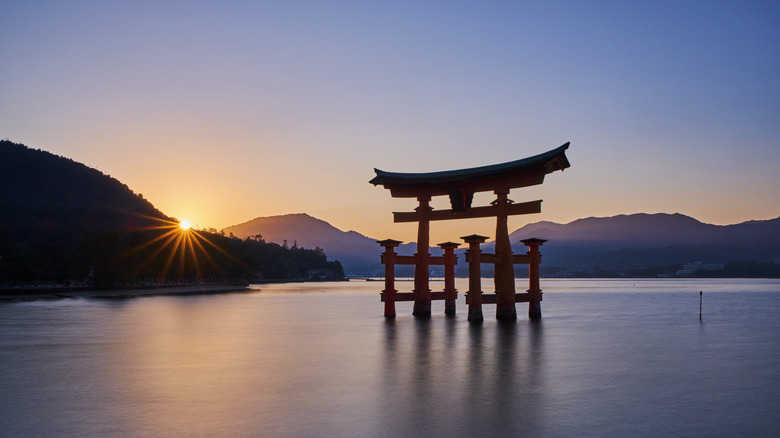
Although Miyajima is officially named Itsukushima, it has the nickname of Miyajima for good reason. With a name that translates to Shrine Island, this island in the Seto Island Sea features a bright red torii gate that stretches 50 feet high as well as a Shinto shrine emerging from the water. The sacred shrine called the Itsukushima Shrine, a UNESCO World Heritage Site, was built over the water and upon boardwalks and columns because, at one time, the public was not allowed to access it.
These days, however, Miyajima is a beloved tourist destination and is known as one of the most scenic spots in the country. "The temple is not one of the most beautiful in Japan, but it is also worth it just for the famous and iconic Tori symbol of Japan featured in all the photos," wrote a visitor on Tripadvisor. "Beautiful to see it lit up at night at high tide." The tide is an important aspect to keep in mind for your visit, as photos are best during high tide — especially at night when the gate is lit until 11 p.m. — but you can walk up to the gate during low tide.
The Itsukushima Shrine — a National Treasure of Japan — was built during the twelfth century to honor seafarers, three gods that protect Japan, and the nobility. It includes a prayer hall and a stage. All of the elements are connected by floating walkways.
Mount Fuji
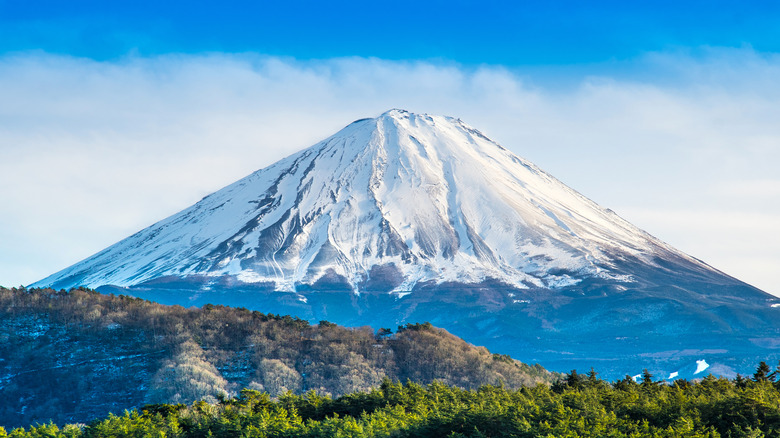
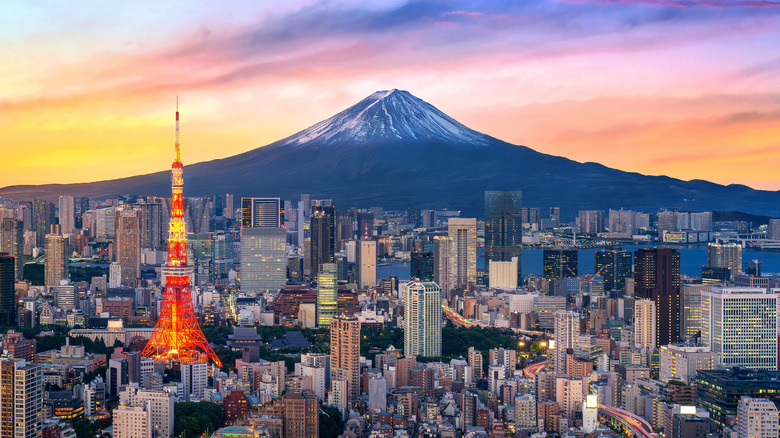
If you have even a passing familiarity with Japanese art, chances are you've seen a depiction of Mount Fuji. That's because this mountain, which is the tallest in Japan, is the icon of the country — which means you can't visit Japan without seeing it. If you want to try your boots at climbing Mount Fuji, you don't need to be a Mount Everest-level climber, which is why hundreds of thousands of people do it every year. A trek to the top is more of a hike than a climb, and it'll take you about five to seven hours from the fifth station to the summit and three to five hours to get back down. An overnight stay in a mountain hut — which must be reserved in advance — is recommended to break up the trip. The hardest part about climbing Mt. Fuji is scheduling your journey, since trails are only open from early July through mid-September.
If climbing a mountain wasn't on your Japan bingo card, you can gaze at — or from — this UNESCO-listed site instead. I took a bus tour from Tokyo to the fifth station of Mount Fuji and looked out at the scenery beyond for an unforgettable view. You can also see the views of Mount Fuji that have inspired so many at a plethora of sites, including Akakurayama Sengen Park, which features a piercing-red pagoda and seasonal cherry blossoms framing Mount Fuji making for a jaw-dropping sight.
Osaka Castle, Osaka
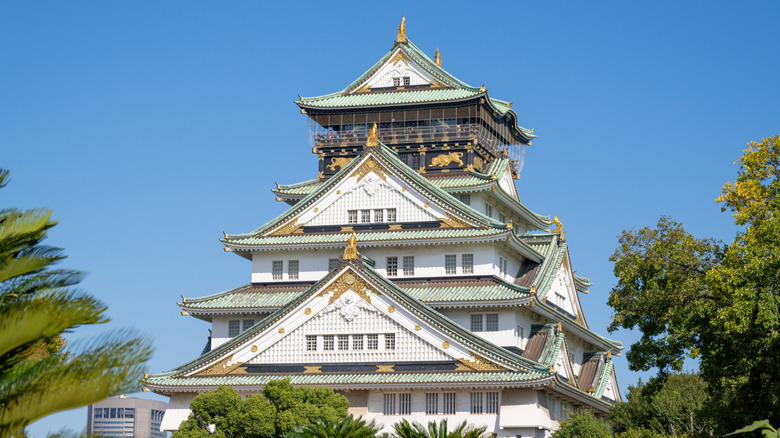
When Osaka Castle was built in the 1500s, it was the biggest castle in Japan. Although that isn't the case anymore — that title now belongs to Himeji Castle — Osaka Castle is still one of the most beautiful castles in the country. With green-and-gold tiered roofs and a white façade surrounded by a moat, Osaka Castle looks like a grand cloud floating above the lush, cherry blossom-filled Osaka Castle Park. "Osaka Castle and park is a lovely place to spend time," wrote a person on Tripadvisor. "The grounds that you walk, to reach the castle are lovely, and the exterior of the castle is picturesque."
But its looks are just one reason why 2.5 million people head to Osaka Castle every year. Visitors can climb the castle's eight floors (which also have an elevator) and check out over 10,000 historic artifacts on their way to the top. A few of the castle museum's standout items include a gold tiger, real samurai swords, and a diorama of the Siege of Osaka. Finally, visitors will reach the top and be rewarded with an all-encompassing view of Osaka, as well as the view of a gold statue of a mythical creature that supposedly watches over the castle.
Owakudani
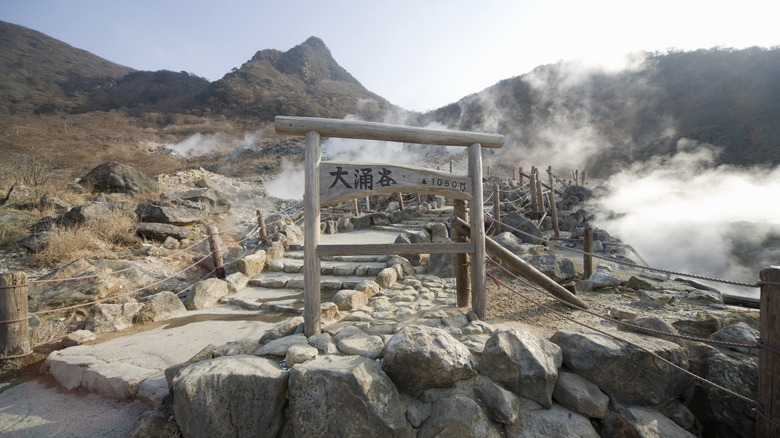
One of the places to get a magnificent view of Mount Fuji is Owakudani, an active volcanic valley that was formed by an eruption 3,000 years ago. However, there are a lot more reasons to visit this area formerly known as Hell Valley than a sight of Mount Fuji. With steam rising from the desolate, rocky grounds, a visit to Owakudani is a one-of-a-kind sight with one-of-a-kind experiences that make for a great break from the busy cities of Japan. The best way to reach the valley — and see it and Mount Fuji from above — is to take the Hakone Ropeway, especially on a day trip from Tokyo.
"It is a unique tourist destination where you can experience the volcanic activity of Hakone up close," wrote one past visitor on Tripadvisor. "The dynamic sight of the fumes rising is so powerful that you can feel the energy of the earth firsthand." Those experiences also include trying a black egg — a local delicacy cooked with the valley's geothermal heat — which, according to legend, will extend your life by seven years. You can learn more about the black eggs as well as the area's volcanic activity at the on-site Hakone Geomuseum.
Tsukiji Fish Market, Tokyo
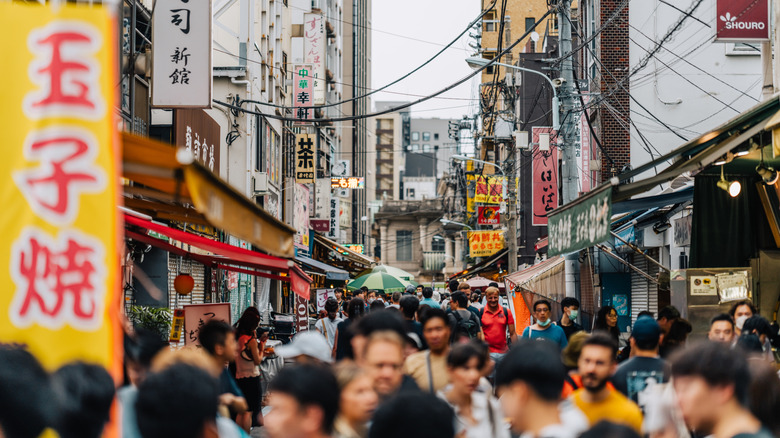
As a major foodie and sushi fan more than ready to gorge on sushi every day of my Japan visit, I couldn't wait to check out Tsukiji Fish Market in Tokyo, a bustling fish market that offers giant oysters and other unique delights. Dating back to 1935, this fish market was the biggest on the planet — once selling 2,000 tons of seafood every day — before its wholesale operation and tuna auction moved to another Tokyo market. But even without the bustle of the auction, a visit to Tsukiji Fish Market is still an action-packed culinary adventure that will have you wishing you had more room in your stomach.
Since endless small restaurants and stands fill the pedestrian-only streets that make up this market, I recommend getting small bites from many. Look out for everything from ultra-fresh seafood to Japanese omelets to high-end knives that you can take home as a souvenir — much more useful than a magnet. "The market is well worth a visit — so many vendors selling all sorts of fish — an eye opener and all we tried was super tasty!" wrote a tourist on Tripadvisor. A few of the must-visit spots include Nippon Gyoko Shokudo, which is known for its top-quality wild bluefin tuna, and Maguro no Miyako, a modest spot known for its heaping platters of seafood served atop a massive scallop shell.
Methodology
With so much to see in Japan — the country has nearly two dozen UNESCO World Heritage Sites – planning a trip here can seem more difficult than climbing the more than 12,000 feet to the top of Mount Fuji. So, we at Explore tried to make it a little easier for you to kick back with an Asahi by mapping out the 11 best Japanese sites you need to hit as a first-time visitor — while keeping in mind these things tourists should never do when visiting Japan.
To do so, we first evaluated which sites had the most and best reviews on Tripadvisor and were praised by the thousands of tourists who trekked there. Then, we determined which destinations had the most accolades, such as Matsumoto Castle, the oldest castle in Japan, and the Arashiyama Bamboo Grove, one of the most photographed sites in Japan. Finally, we considered which spots were the most one-of-a-kind, because where else besides Japan will you find a tunnel made up of thousands of bright red gates and a volcanic valley where people eat sulfur-cooked eggs for longevity?