Visiting Dunhuang & Jiayuguan: Mogao Caves, Western End of the Great Wall of China & Camel Trekking
The northwestern part of China is a region that requires a little more effort to access but it rewards you with an adventurous experience that is exclusive to this part of the country. What you find in the cities of Dunhuang and Jiayuguan in Gansu Province are unique to their locations along the Silk Road, the world's oldest trading route that runs through northern China connecting Central Asia and Europe.
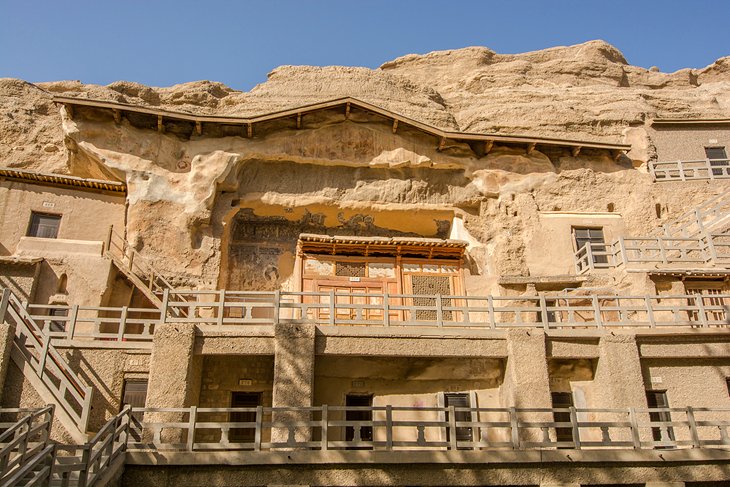
Historically, Dunhuang was the last city before travelers set out into the vast Gobi desert and the first oasis upon re-entering China. The Mogao Grotto Caves are a stunning result of these journeys. The rare hidden caves intricately carved into the side of the mountain have been preserved for visitors to witness with their own eyes.
Since Dunhuang sits on the edge of the Gobi desert, you can experience what it must have been like to set out on the long journey on part of the Silk Road with a camel trek along the towering sand dunes at sunset.
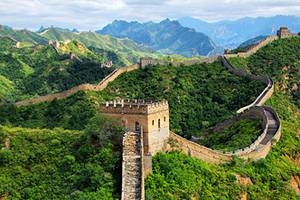
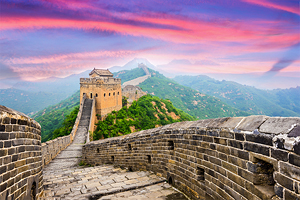
If you are visiting Dunhuang, it makes sense to work in a round-trip visit to Jiayuguan, a city that is 386 kilometers to the east. There, you can visit the magnificent Jiayuguan Pass, which includes a fort complex, lookout, and the western end of the Great Wall. With fewer tourists in the region, this section of the wall does not have the masses of visitors like other sections that are open to the public in China.
Incorporating both cities into one visit maximizes your experiences in northwest China. This is a region that is on the bucket list of even many Chinese people. A day in each city gives you ample time to travel between them and enjoy the highlights at a leisurely pace.
Mogao Caves
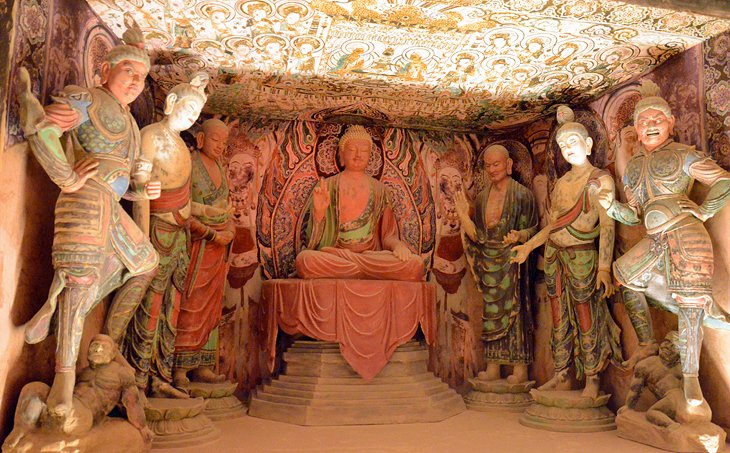
One of the top things to do in Dunhuang is visit the Mogao Caves. Dunhuang sits at the crossroads of the Silk Road trading route on the edge of the Gobi desert. The Mogao Caves have religious, historical, and cultural significance in China. They served as places of meditation for Buddhist monks and worship sites for people who were setting out into the desert and praying for a safe journey and for those returning to give thanks for surviving.
This UNESCO World Heritage site preserves 492 caves that were carved beginning in AD 366 and still house thousands of years of Buddhist art and statues. The caves range in size from small closets with relics and paintings on the stone walls to the nine-story "Cave 096," which is the most prominent on the site. The towering Buddha statue inside is 35 meters tall surrounded by intricate paintings.
To aid in preserving the caves, only 6,000 visitors are allowed per day. It is a guided visit, and each group gets access to approximately eight caves. The caves that are open to the public rotate each year. Due to the limited access to this attraction, you will need to plan ahead and purchase tickets prior to your visit. No photographs are allowed inside the caves, but books detailing many of them are available in the gift shop. It is wise to take a small flashlight on your tour, as the caves are dark inside.
Camel Treks
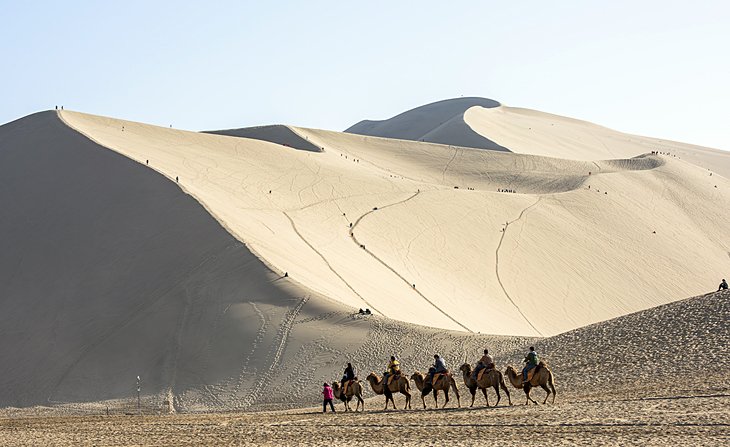
One of the most memorable experiences in Dunhuang is taking a sunset camel trek at the Mingsha Sand Dunes. Each day, camels are brought to the dunes by private owners and then taken home at night. In the high season, you may see more than 1,000 camels resting or trekking the dunes with visitors. Your guided trek will take you along the dunes as you get a sense of what it was like for people making the long trek across the Gobi desert.
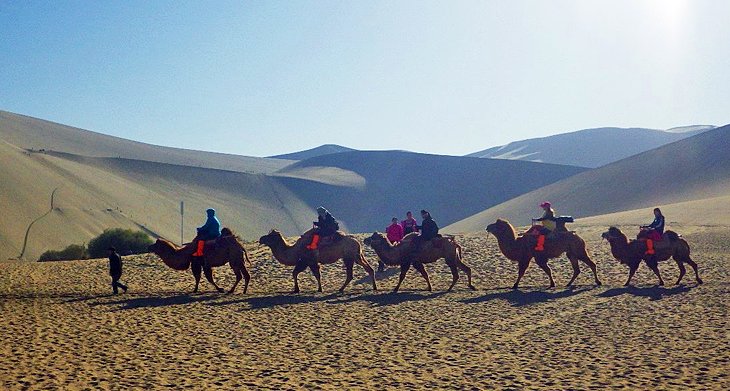
During part of your trek, your camel will rest, and you have the option to pay the equivalent of a few dollars to try dune sledding. The locals call this grass skating. While there is no grass, and it is sledding, not skating, do not let the interpretation deter you. As you walk up 300 sand-covered wooden stairs to the top of a sand dune, you get the best panoramic view of the area. The dune sleds are small wooden crates that you ride to the bottom before walking back to your camel.
You are in the desert; so do not underestimate the need for lip balm, sunglasses, sunscreen, and a scarf or neck gaiter to cover your face and protect you from the blowing wind and sand.
Great Wall in Jiayuguan Pass
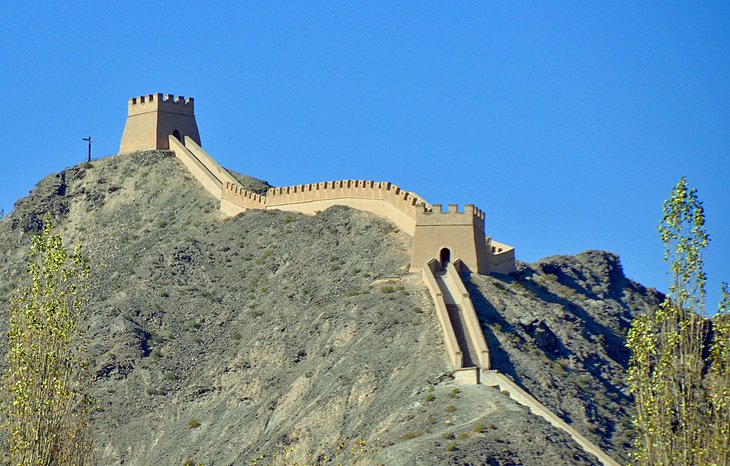
If you base your visit in Dunhuang, it is worth making an overnight trip to Jiayuguan, which is approximately a four-hour drive away. Jiayuguan Pass is in Jiayuguan city at the western end of the Ming Dynasty Great Wall in northwest Gansu Province. A day visit to the area should start at the Jiayuguan Pass, which consists of a military defense fort and the Jiayuguan Great Wall. The sprawling complex was built over a 168-year period, beginning in 1372. The structure was essential for communications and military strategy and protecting China from Mongolian invaders.
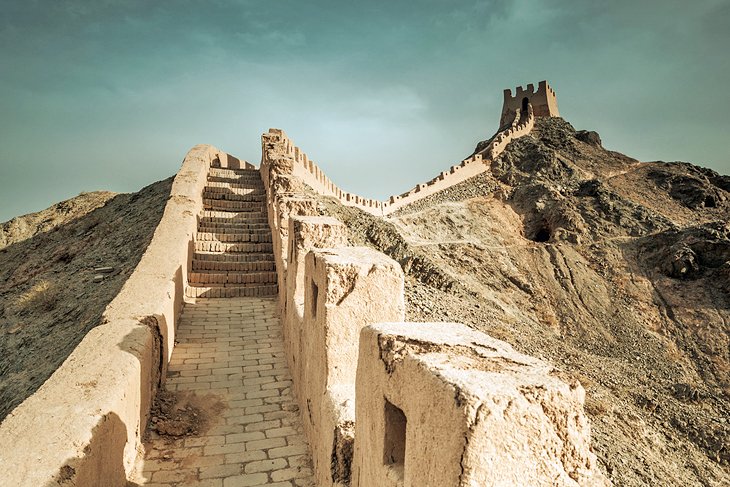
You will need several hours to walk through the various sections of the fort that include the inner city, outer city, lookout towers, and other buildings. Be sure to spend time on the top level of the fort for the most scenic view. As you walk to the entrance of the fort, you will find a few vendors selling locally made coats, scarves, and painted rocks. If you see something you like, buy it, as you will not find these locally influenced items in other parts of China.
When you leave the fort, head four miles northwest to the Overhang Great Wall. The 700-foot section of wall built in the Ming Dynasty (1368-1644) is the only section left in this area and one of the least populated sections of the wall that you can visit. There are fewer tourists to this area, so unlike the crowded Badaling Great Wall in Beijing, your photos are likely to have few other visitors in them.