Tourist Attractions in Alaska
It is hard to write about Alaska without sounding cliché. The state is simply that magnificent. A place where the landscapes and wildlife, climate, and seasonal shifts are larger, and at times more extreme, than anywhere else in the U.S. A largely roadless, uninhabited, and still very wild section of the planet, Alaska's nickname of The Last Frontier rings oh so true.
Where else can you find a state capital (Juneau) with no road access? Or a town, (Utqiaġvik, formerly Barrow), where the sun won't rise for 67 days in winter, but during summer, doesn't set for more than 80 days? Even Alaska's largest city, Anchorage, exudes a small-town charm and is the kind of place where moose often wander downtown streets.
Alaska is home to North America's highest peak, 20,310-foot-high Denali, as well as the four largest national parks in the country (Wrangell-St. Elias, Gates of the Arctic, Denali, and Katmai). As such, it serves as a grandiose outdoor playground. Hiking, paddling, fishing, and whale spotting are a few of the many ways to enjoy these wilderness treasures. Other everyday adventures include bear watching, rainforest exploring, and taking a boat ride through the Inside Passage.
Cities and towns in Alaska offer unique cultural appeal. These basecamps for adventure have museums and other tourist attractions. And with places like the Alaska Native Heritage Center in Anchorage, they also offer insight into the communities that have called Alaska home for thousands of years.
Discover the best places to visit in this ruggedly beautiful state with our list of the top attractions in Alaska.
Denali National Park
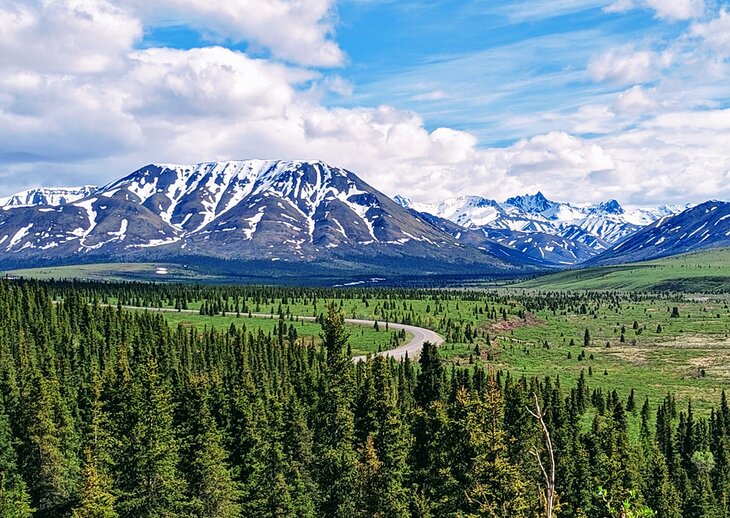
From big bears and moose to towering mountains and so much open space, Denali National Park is spectacularly beautiful and blissfully wild. If you enjoy leaving the beep of cell phone notifications behind and just getting lost in nature for a little while, this is the park to visit.
Drive to Savage River, where the 15 miles of pavement open to passenger vehicles in Denali National Park end, and you'll really feel you are indeed in the Last Frontier. While most U.S. national parks are relatively developed, Denali, like much of Alaska itself, remains a roadless wilderness. Only one road runs through the entire park, and after Savage River, you'll need to hop into a park shuttle bus to go further on anything other than your own two feet.
The third largest national park in the U.S., located about halfway between Anchorage and Fairbanks, Denali is mostly a trail-less wilderness. Except for marked trails around the Denali Visitor Center at the entrance, hiking the park's six million acres means using a GPS device to head out in one direction and see what you encounter.
You'll need to be prepared for a backcountry experience and will want to check in at the visitor's center and leave your planned route and length of stay with a ranger, then check in again when you return.
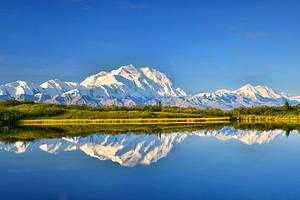
The park, which is easily accessible via the Alaska Railroad, is home to North America's highest mountain, the 20,320-foot Denali. If you remember the peak by another name, it was officially referred to as Mount McKinley until 2015, when its traditional name replaced the one that modern explorers dubbed it.
The park is extremely photogenic, and the landscape here runs the gamut from wide river valleys to high alpine lakes, low-elevation taiga forest, and craggy, glacier-draped peaks.
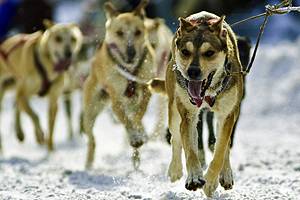
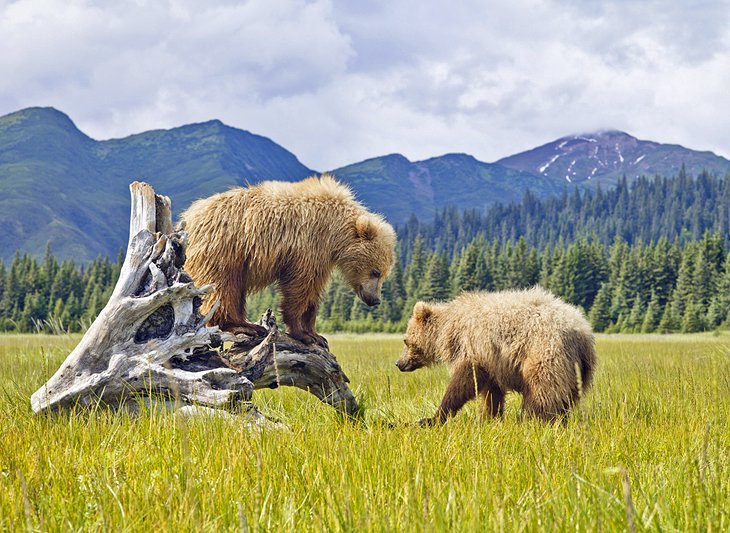
Wild creatures abound in Denali, and it is not uncommon to see moose and even grizzly bears near the visitor center or on the side of the road. Always carry bear spray when hiking. Other animals that call this park home include wolves, reindeer, and more than 167 species of birds. Another favorite among the park's many things to do is the Sled Dog Kennels, which offer demonstrations and are home to dozens of energetic huskies.
If you plan on driving here, have a read through my article, Alaska Road Trip: Driving from Anchorage to Denali National Park.
Address: Milepost 240, George Parks Hwy, Denali National Park, Alaska
Official site: http://www.nps.gov/dena/index.htm
Tracy Arm Fjord
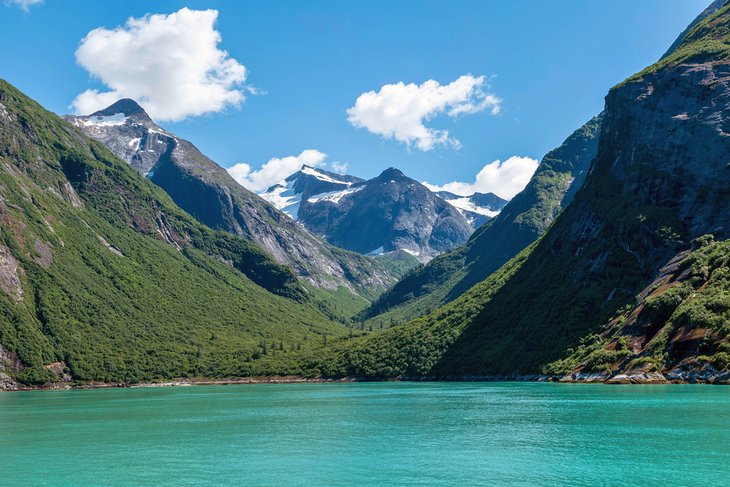
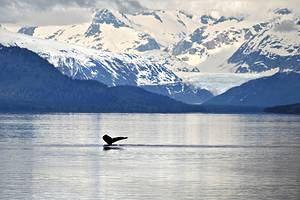
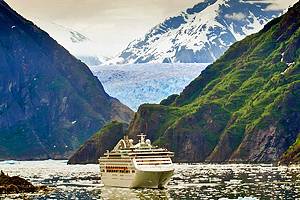
Tracy Arm is a fjord edged with glaciers, located south of Juneau. Waterfalls tumble down the sharp rock walls, and glaciers calve, creating small icebergs. It's a popular destination for cruise ships and boat tours.
The fjord lies within the Tracy Arm-Fords Terror Wilderness of Tongass National Forest. At the head of the fjord sit the twin Sawyer Glaciers. Wildlife sightings are common on tours, whether it's a brown bear or moose on land, or the whales and seals that inhabit these waters.
Tracy Arm offers just a small slice of glacier viewing in Alaska. Other tourist favorites include Glacier Bay National Park, northwest of Juneau, and Prince William Sound, near Anchorage. Several guiding companies in Juneau, like Adventure Bound Alaska, offer affordable day trips and unobstructed views of the beauty.
- Read More: Tourist Attractions in Juneau
Kenai Fjords National Park
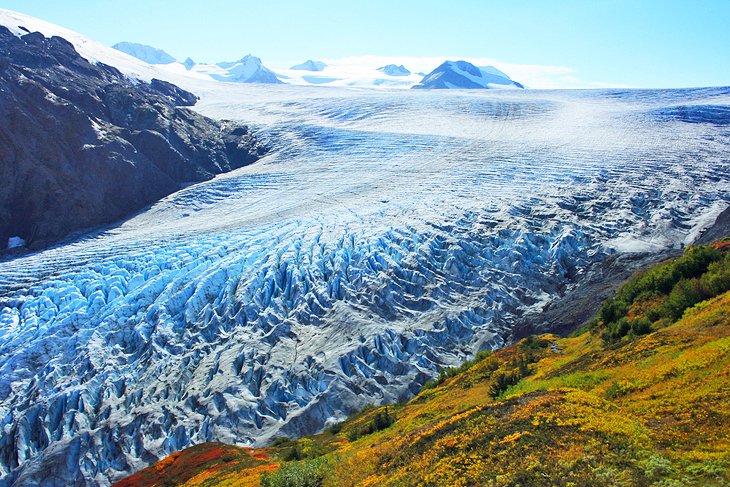
Protecting much of the fjord-riddled coastline of the Kenai Peninsula (south of Anchorage), this national park offers some of the best sightseeing in Alaska. Panoramic landscapes in the park take in the many glaciers of the 700-square-mile Harding Icefield and an uninhabited coastline. And the national park is home to monstrously large brown bears that feed on the fat-rich salmon.
Many tourist options converge in the surrounding areas, including the end of Highway 1 in Homer. A popular means of entry into the park is the Alaska Railroad and the Seward Highway, both ending in Seward, near the park's northern boundary. The only area in the park accessible by vehicle is Exit Glacier, where several trails offer closer views at the end of the icefield.
Official site: http://www.nps.gov/kefj/index.htm
- Read More: Tourist Attractions in Anchorage, Alaska
Anchorage
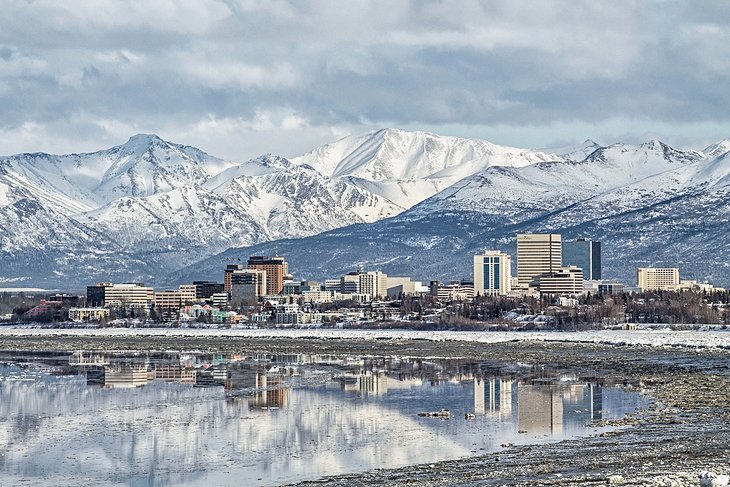
Anchorage may be Alaska's biggest city, with a population of around 300,000 residents, but it feels a lot like a small town. The compact downtown is very walkable and feels like it hasn't changed much in the last 50 years.
It's a quirky little place, completely void of skyscrapers, that's still home to mom-and-pop shops and down-home restaurants. The kind of city where moose and even bears are known to wander down central streets. Anchorage summers are wonderful. Temperatures are mild, and the sun doesn't set until close to midnight, and even then, it never really gets dark.
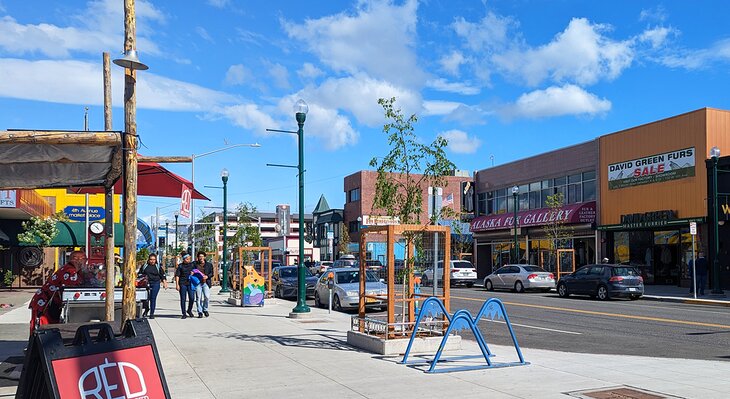
Most travelers arrive and depart Alaska via Anchorage International Airport, before heading on to other parts of the state. But the city makes a great base for day trip adventures. The outstanding Chugach State Park, encompassing nearly a half-million acres, is within easy reach of this city. For further adventures, a popular way to travel from Anchorage into the wild landscapes is via the 470-mile Alaska Railroad, which is headquartered in Anchorage.
And it's not even required to leave the city's core for adventure. A few popular city attractions include the Alaska Native Heritage Center and the Anchorage Museum. And for outdoor exploration without traveling far, head to the Tony Knowles Coastal Trail for a stunning 11-mile bike ride. Bicycle rentals are available throughout town.
Alaska Highway
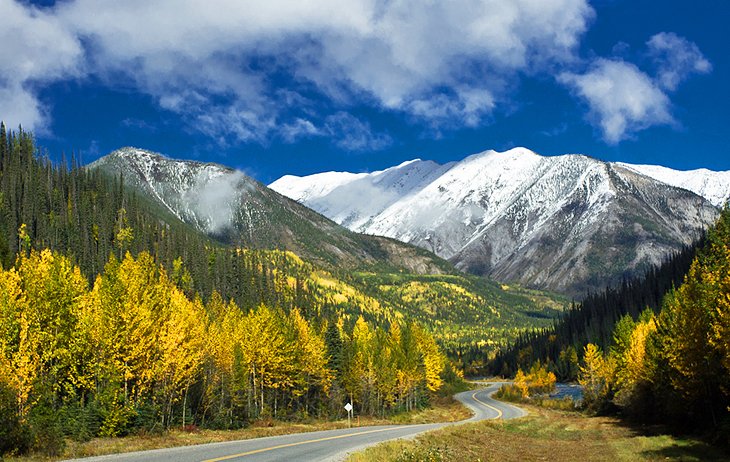
Also known as the Alaska-Canada Highway, or Alcan Highway, the Alaska Highway runs from Dawson Creek in British Columbia (Canada) through the Yukon Territory to Delta Junction near Fairbanks. It was built for military purposes in 1942, during WWII, in the record time of only eight months.
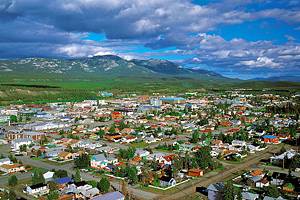
Since the end of the war, the route has been the most important means of access by land to the Yukon Territory and southern Alaska. It's also a favorite with recreational vehicle travelers. The highway passes through Whitehorse, Canada before crossing the international border into Alaska and ending in Delta Junction.
Motels, shops, and gas stations lie at intervals of 30 to 50 miles. Traveling along the Alcan Highway is generally straightforward, though commuters need to pack accordingly, as much of the route traverses through remote landscapes.
Downhill Skiing in Alaska
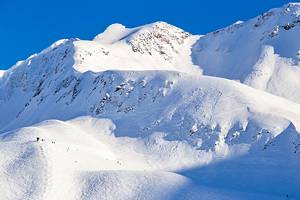
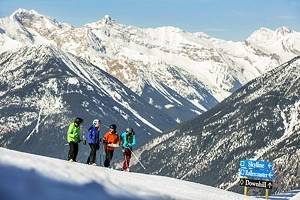
Any skier who has ever watched a Warren Miller ski film, showing huge mountains conquered by daredevil skiers dropped from hovering helicopters, has dreamed of skiing in Alaska. And while that kind of skiing is undoubtedly available in the Chugach Mountains through several famous companies, it's the lift-serviced kind of skiing that most people generally visit. They're also much more affordable.
Fortunately, Alaska has six ski resorts, ranging from the big and easily accessible ones like Alyeska Resort, near Anchorage, right through to Moose Mountain near Fairbanks, a ski hill where the runs are serviced by a turbo-charged school bus. For something even more obscure, try the single-chair chairlift dating from 1936 at Mount Eyak near Cordova (accessible only by air or sea).
If the Chugach Mountains and their endless powder snow are truly what you want, book your flight to Anchorage and get ready to go on an adventure. Over one million acres of white fluffy fun await you and your powder fat skis. The best time to book a trip is in March or April, when the days are longer and the weather is more consistent for flying.
Talkeetna
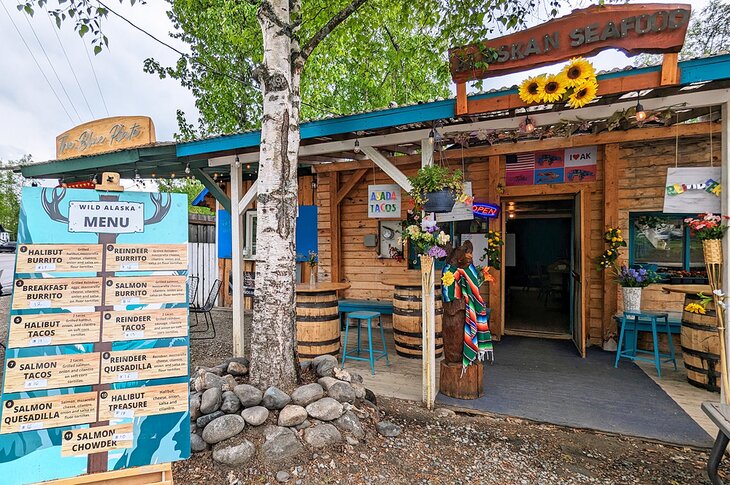
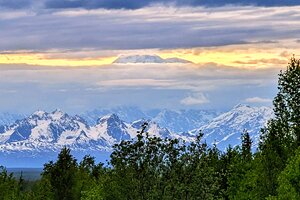
With some of the best views of Mount Denali from vistas around it, Talkeetna is a charming, eccentric little town. It is well worth a visit if you are driving or taking the train between Anchorage and Denali National Park.
If you want to have a meeting with Talkeetna's mayor, you'll need to head to Nagley's General Store and ask for Aurora. She can be quite moody, although she's always open to food bribes. Just don't bring a dog along when you visit, she snarled and hissed and threw this writer's Chihuahua right out of her domain. If you are getting lost with the plot at this point, we'll fill you in: Aurora is a cat.
Talkeetna doesn't have a human mayor but is on its third feline leader. The town's original, and most famous, kitty mayor was Stubbs, who ruled with an iron paw from 1997 to 2017 when he passed away.
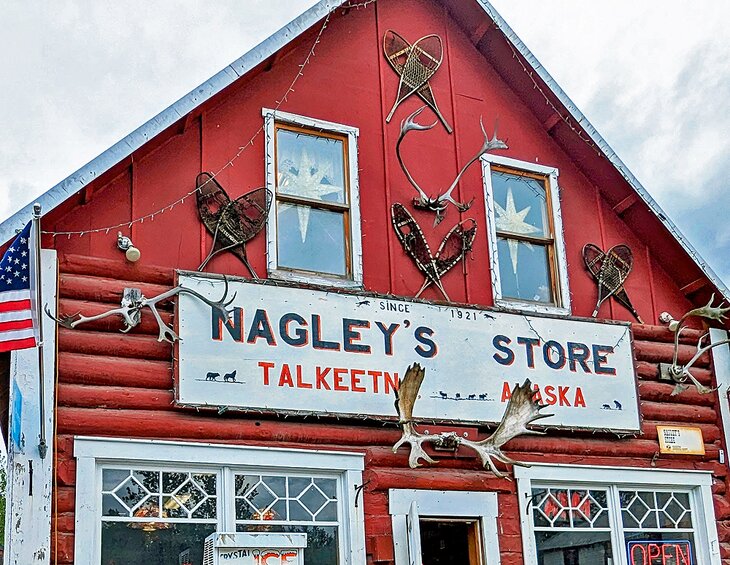
Rumor also has it that Talkeetna was the inspiration behind the 90s TV show, Northern Exposure, although the series itself was filmed in Washington. It is a mostly seasonal destination with most of the dozens of restaurants and shops lining its two-street downtown open only between mid-May and mid-September.
Talkeetna is also a popular place to book flightseeing tours. These take place in small planes that fly you around or over the summit of Denali, depending on the weather. Some tours even land on a glacier. Check out K2 Aviation Talkeetna or Talkeetna Air Taxi, both in town, to arrange a trip.
University of Alaska Museum of the North
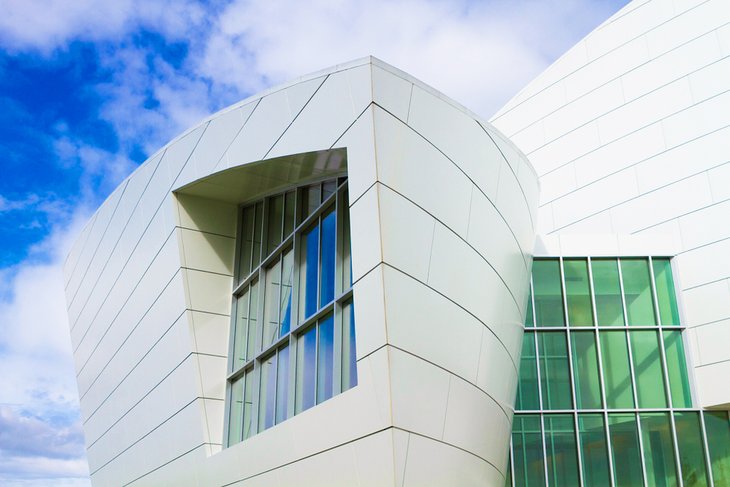
Located in Fairbanks, the University of Alaska Museum of the North claims to have 2.5 million artifacts and specimens in its permanent collection. Items include ethnological artifacts made and used by indigenous groups, as well as a fine arts collection that focuses mainly on Alaskan art.
The collection also features archaeological finds from prehistoric cultures, an assemblage of birds, and several paleontology specimens. The building that houses the museum is also noteworthy. It was designed by Joan Soranno, and the white structure has interesting lines and curves intended to resemble the Alaskan landscape.
The museum is free for university students and faculty, and the public is welcome with a paid admission. Visitors are encouraged to explore the museum at their own pace, and larger groups can call ahead to book a customizable tour experience.
Address: 1962 Yukon Drive, Fairbanks, Alaska
Official site: http://www.uaf.edu/museum/
Inside Passage
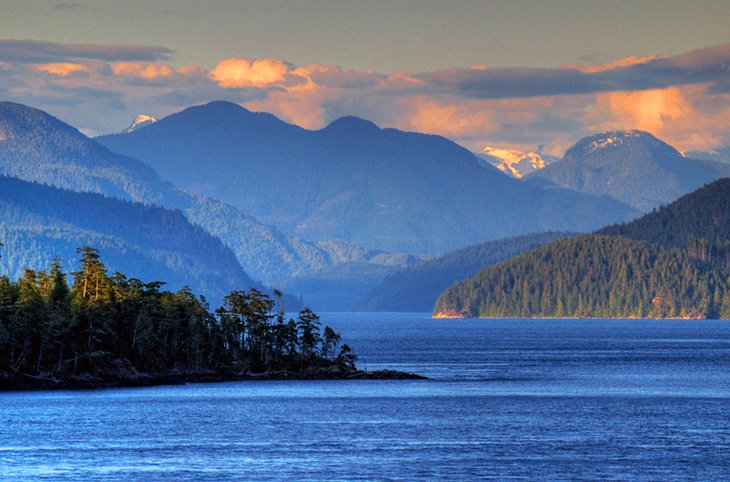
The Inside Passage is a collection of sheltered channels and straits in Southeast Alaska. The most popular way to visit is to cruise through the fjords on large ships, charter boats, and private yachts. Another option is to stop off the highway at Haines, Skagway, or Hyder.
Along the coastal passage, the Tongass National Forest covers 17 million acres and includes islands, mountains, glaciers, ice fields, fjords, and waterfalls. Included in the forest is Prince of Wales Island, one of the largest islands in the US. The area is also inhabited by the Tlingit, Haida, and Tsimshian peoples.
Major towns along the route include Skagway, with its Klondike Gold Rush National Historical Park; the once-chief town of Russian America Sitka; and Ketchikan, where stoic totems are on display at both Totem Bight State Historic Park and the Totem Heritage Center.
Official site: http://www.fs.usda.gov/tongass/
Alaska Railroad
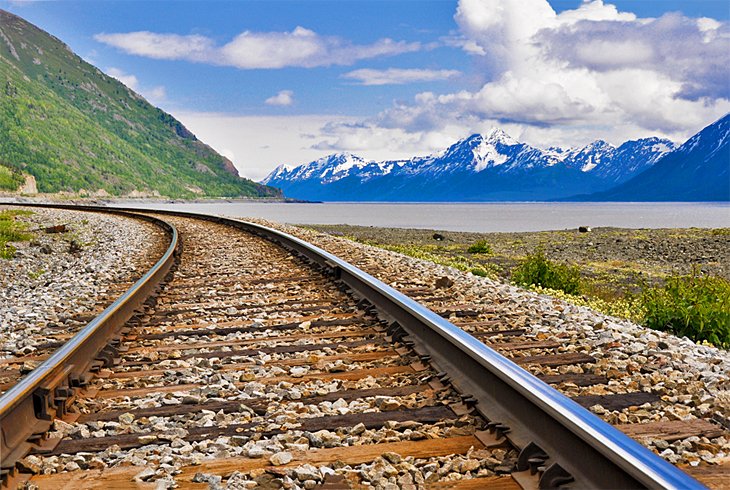
Noted as the "Backbone of the Last Frontier," the Alaska Railroad is a prominent part of Alaska's history and is still a vital transportation option. Extending from Seward to Fairbanks, this railroad helped develop Anchorage from a tent town into what it is today, and the line played an important shipping role in World War II.
Today, the Alaska Railroad is owned by the state and shuttles more than 500,000 passengers each year. Popular destinations along the route include the Chugach National Forest, Anchorage, and Denali National Park & Preserve. The Alaska Railroad offers a variety of routes, services, and special event rides, including backcountry ski packages and a kids' Halloween Train.
Official site: https://www.alaskarailroad.com/
Dalton Highway
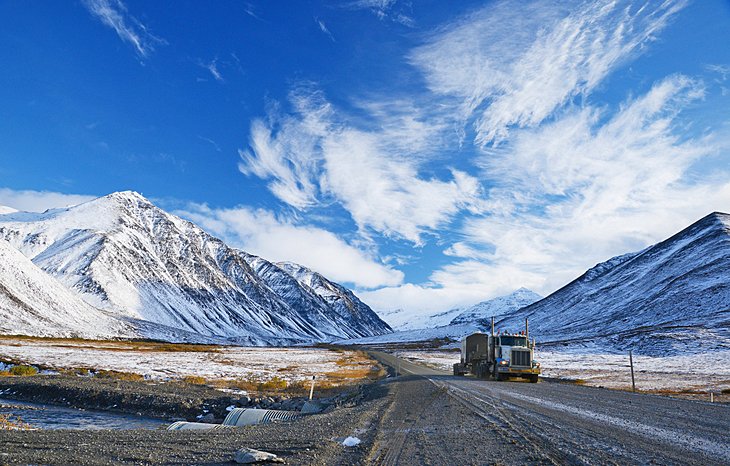
The Dalton Highway stretches over 400 miles into Alaska's Far North region, eventually reaching the outpost of Prudhoe Bay. It's accessible from Fairbanks and Anchorage and built adjacent to and in conjunction with the Trans-Alaska Pipeline. The road is extremely remote, rugged, and not well-traveled outside of oil-field workers.
Well-prepared sightseers have an incentive to navigate the lonely highway, though, with both Gates of the Arctic National Park & Preserve and the Arctic National Wildlife Refuge lining the roadside.
At the northern end of the route, the Dalton Highway crosses into the Arctic Circle, where the summer solstice brings 24 hours of daylight and the winter means 24 hours of darkness. Driving a personal vehicle isn't the only choice to experience the Arctic Circle, and frequent bus and plane tours depart from Fairbanks and Anchorage.
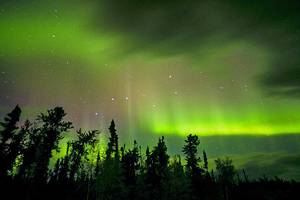
A popular reason to visit this northern latitude is the Aurora Borealis, or Northern Lights, which appear on many nights from September to mid-April. Joining an aurora tour can help keep sightseers warm in this frigid season.
Alaska Native Heritage Center
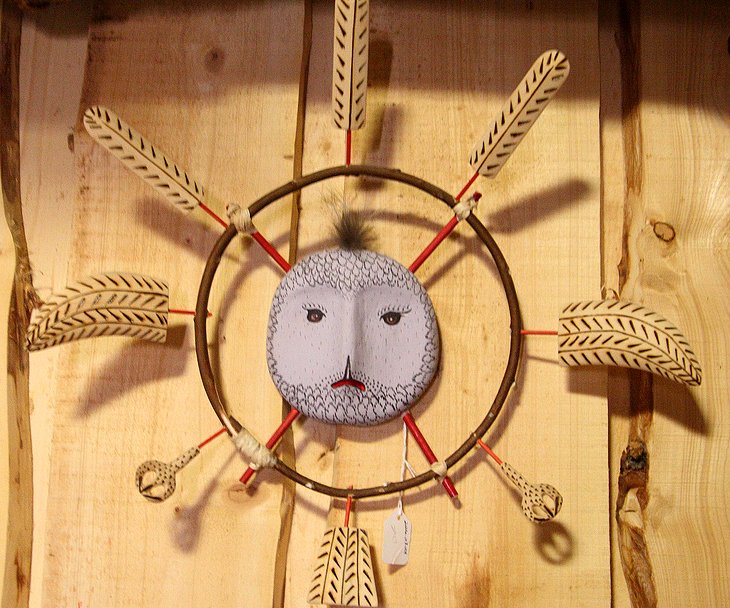
Offering more than just a look into the lives and values of Alaska's 11 major cultural groups, the Alaska Native Heritage Center provides hands-on interaction with music, people, and art. Alongside interpretive information, the Heritage Center is a place to visit to connect with the community and participate in programs and events.
The Heritage Center is just outside Anchorage. It includes The Gathering Place for Alaska Native dancing and storytelling and the Hall of Cultures, filled with exhibits and local vendors displaying handmade crafts and works of art.
The scenic Lake Tiulana is also on the grounds, surrounded by traditional dwellings of Alaska Natives. Though this sightseeing attraction is located outside downtown, there is a summer-season shuttle from the modern Anchorage Museum at Rasmuson Center.
Address: 8800 Heritage Center Drive, Anchorage
Official site: http://www.alaskanative.net/
- Read More: Tourist Attractions in Anchorage, Alaska
Mendenhall Glacier
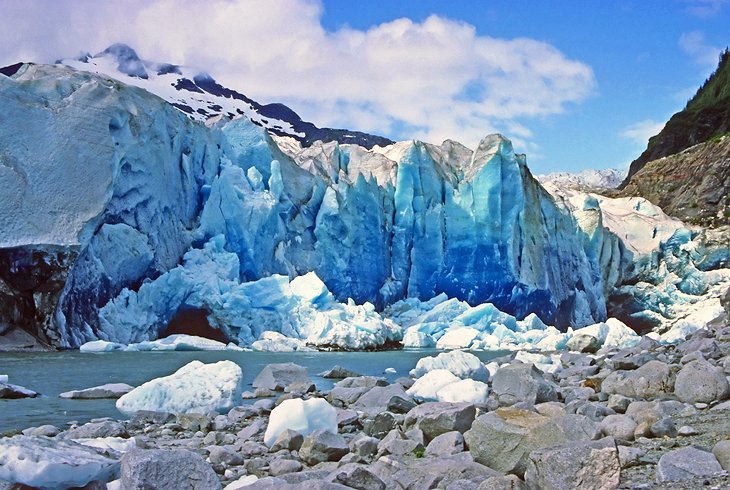
Twelve miles northwest of the state capital and accessible by road, the Mendenhall Glacier snakes down from the 1,500-square-mile Juneau Icefield to touch the shores of a small lake. The Mendenhall Glacier Visitor Center looks out over both the glacier and the iceberg-dotted waters, while trails venture along the shore to roaring Nugget Falls, as well as the impressive ice mass.
Rafting and kayaking trips allow visitors to float among the bergs. Wildlife such as black bears, porcupines, and beavers are commonly spotted while exploring this dazzling blue landscape. Arguably, the best season to visit is between May and October, when sunshine is more likely to be in the forecast. However, the glacier is also fun to visit on rainy days, as the ice takes on a different hue of blue.
Official site: http://www.fs.usda.gov/tongass/
- Read More: Tourist Attractions in Juneau
Wrangell-St. Elias National Park & Preserve
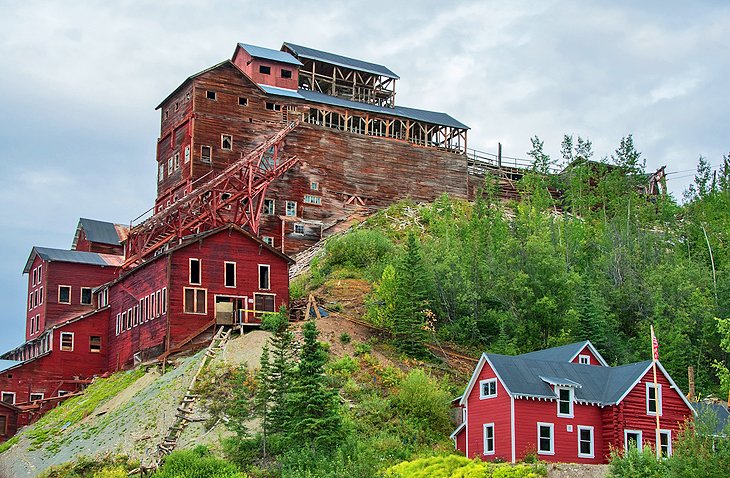
Wrangell-St. Elias National Park & Preserve is the largest and most magnificent of Alaska's sprawling national parks -- it is also the largest national park in the U.S. This grandiose mountain region has nine of the 16 highest peaks in the United States. Other defining features of this park bordering Canada, include glaciers, lakes, mountain streams, and a rich variety of wildlife.
Wrangell-St. Elias is a superb country for climbers, walkers, and water sports enthusiasts. And the park's Kennecott Mines National Historic Landmark gives insight into the one-time mill town with barely preserved heritage buildings and abandoned mines.
Other points of interest include a selection of 14 backcountry cabins, many of which are only accessible by flying into remote airstrips.
Address: Mile 106.8 Old Richardson Highway, Copper Center, Alaska
Official site: http://www.nps.gov/wrst/index.htm
Iditarod National Historic Trail
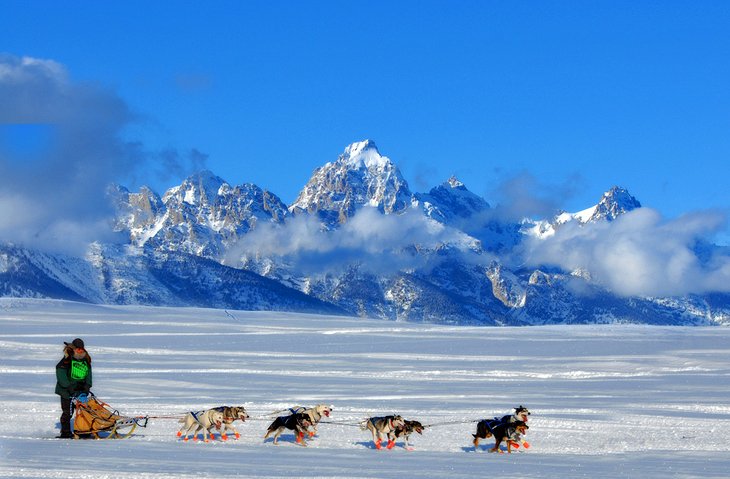
The Iditarod National Historic Trail is Alaska's only National Scenic Trail. It consists of a network of trails totaling more than 2,300 miles between Nome, on the Bering Strait, and Seward, near Anchorage. Originally used by ancient hunters and later by gold prospectors, the trail is now used, and best known, for the Iditarod Trail Sled Dog Race.
Extensive landscapes surround the entire route, offering beautiful views of mountains, glaciers, and wildlife. Although it is primarily a winter trail, hikers do use sections during the summer months, including the popular Crow Pass Trail within Chugach State Park.
Official site: https://www.blm.gov/programs/national-conservation-lands/national-scenic-and-historic-trails/iditarod
Brooks Falls, Katmai National Park
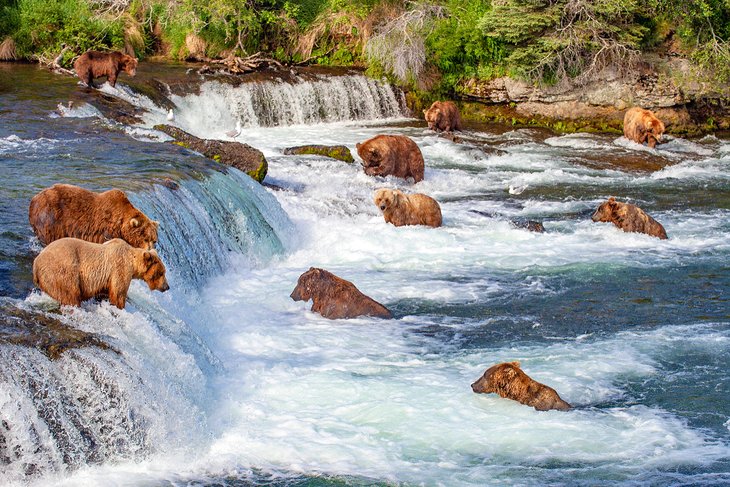
Brooks Falls, in Katmai National Park, is synonymous with brown bears. That's because starting in June and peaking in July, spawning salmon travel the Brooks River and attract the park's largest mammals in droves. Today, elevated platforms around the falls enable some of the best wildlife viewings in the country.
Brooks Falls and Katmai National Park are on the Alaska Peninsula, which extends from the southwest mainland. The only two feasible ways to reach the park are by plane or by boat. Often, visitors book an all-in-one vacation package to experience the falls, but it's not required. Several aviation companies also offer simple shuttle services to the park.
Seward, Alaska
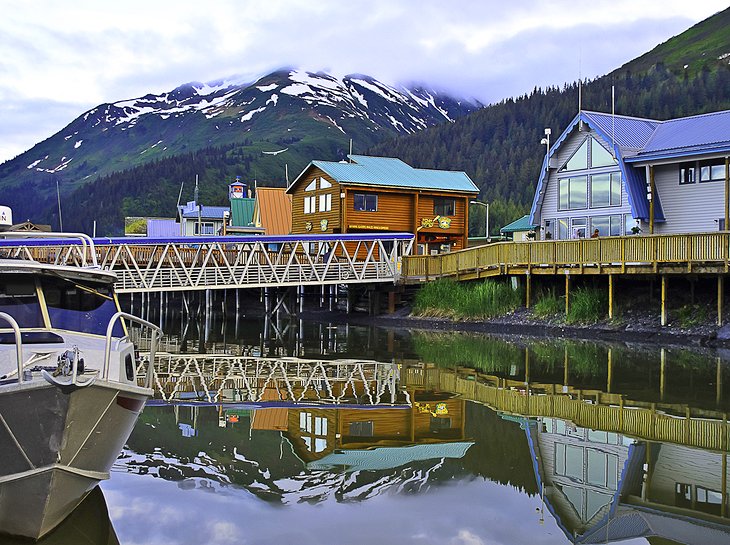
The journey to Seward is equally as alluring as the small town itself. To reach the community from Anchorage, visitors travel by way of the Seward Highway. This All-American Road spans 127 miles through pristine Alaska landscapes. The first 50 miles from Anchorage traverse along Turnagain Arm and the southern boundary of Chugach State Park. Here, roadside views include mountains, glaciers, and the occasional beluga whale surfacing.
Tourists can also take the scenic Alaska Railroad, which follows the same route from Anchorage to Seward. The Alaska Railroad also continues much farther north than Anchorage, ending its line in Fairbanks.
Besides a beautiful commute, Seward also has several appealing cultural attractions like the Alaska Sealife Center. The city is also a home base for exploring the Kenai Peninsula, including nearby landscapes like Exit Glacier. Departing from Kenai Peninsula, avid wildlife watchers head to the Kodiak National Wildlife Refuge, established to protect the Kodiak bear and other rare animals.
Official site: http://www.seward.com/
Totem Bight State Historic Park
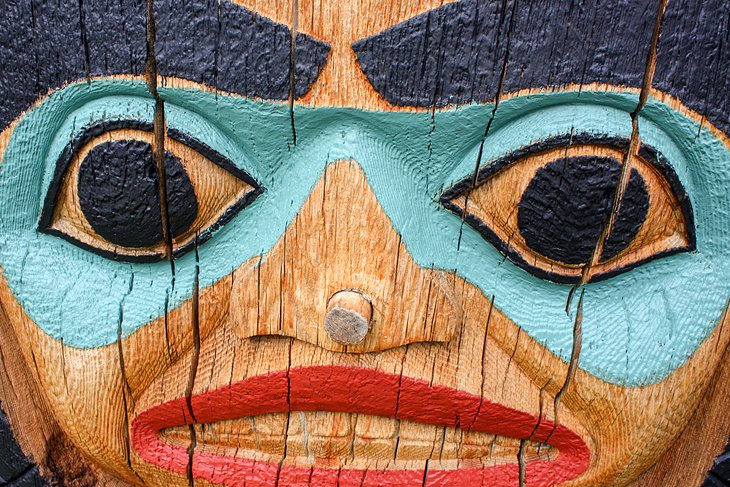
In 1938, the US Forest Service began a project to salvage, reconstruct, and create totem poles - a tradition that was dying out. Funds were used to hire carvers from among the older generations, and abandoned totem poles were restored or recreated by these craftsmen. In the process of this work, they were able to pass on their skills to younger community members.
Fifteen poles were erected in Ketchikan's Totem Bight State Historic Park, now listed on the National Register of Historic Places. Also on the site is a recreated clan house from the early 19th century. There are more heritage totem poles and local details available at the town's Totem Heritage Center.
Address: Ketchikan Ranger Station, 9883 North Tongass Hwy, Ketchikan, Alaska
Official site: http://dnr.alaska.gov/parks/units/totembgh.htm
Klondike Gold Rush National Historical Park
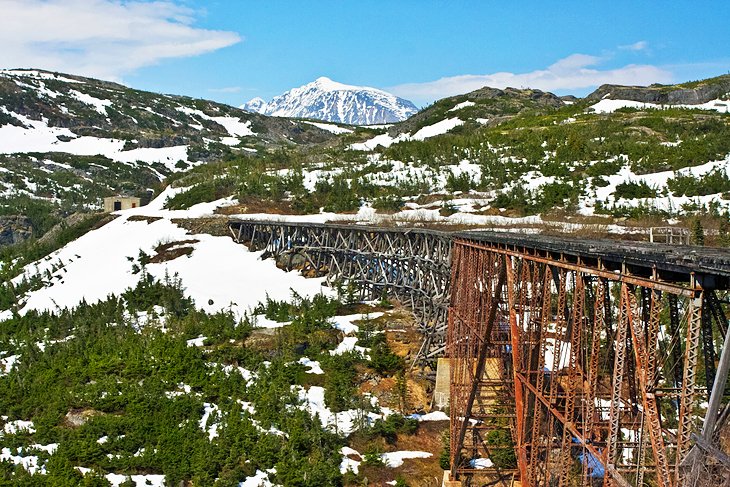
Klondike Gold Rush National Historical Park maintains lovely, restored buildings in the Skagway historic district to commemorate the 1897-98 Gold Rush. Visitors can attempt to hike the 33-mile-long Chilkoot Trail, which begins at Taiya River Bridge and pays homage to the path and struggles of past gold seekers. Visitors can also spend time exploring the on-site museum and visitor center.
The White Pass & Yukon Route Railway leaves from Skagway, climbing up to White Pass at a 2,865-foot elevation. The depot, one of Alaska's oldest, houses the visitor center.
Official site: http://www.nps.gov/klgo/index.htm
Alaska Rainforest Sanctuary, Ketchikan
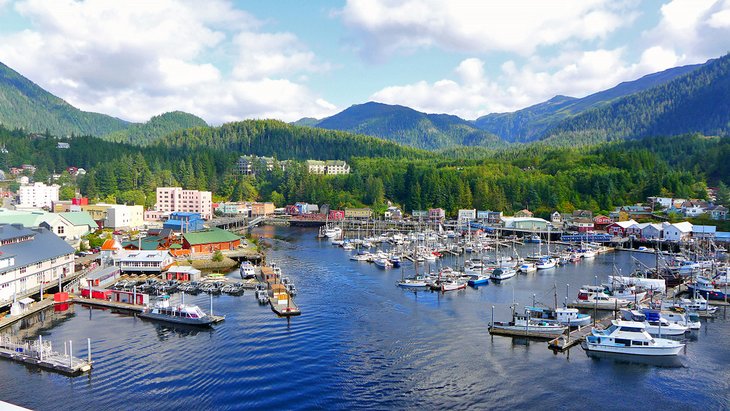
Ketchikan is a wild city bordering Tongass National Forest and facing the famous Inside Passage. The city is perhaps best known for its many Native American totem poles throughout the town and at places like Totem Bight State Historical Park. But it's also a city surrounded by dense, unaltered Alaska landscapes.
A lush temperate rainforest defines much of the natural landscape around Ketchikan. This includes rushing waterways, miles of verdant mountainsides, and an array of weather conditions that often require boots. One of the easiest ways to experience this dense environment is with a guided tour at the Alaska Rainforest Sanctuary.
Kawanti Adventures oversees the 40 acres of this forest sanctuary just outside of town and offers guided tours. These approximately three-hour tours go beyond the usual hiking experience and include a narrative guide with interesting tidbits about the local history and culture. These tours also include stops at interpretive exhibits, like a historic sawmill and totem park.
Best Time to Visit Alaska
From the snowy winter months to the more temperate summer months, each one of Alaska's unique seasons has its own particular draw. But the best time to visit Alaska is between mid-June and mid-August. If you wanted to push it a bit on either end of that span, most tourist resorts, tours, and cruises begin operations mid-May and end mid-September, so you'll find some good weather then as well - it just won't be as reliable.
The high tourist season, which runs from June to August, is when most attractions and parks open up to the public. If you have an Alaskan bucket list - such as wildlife viewing in Denali National Park or witnessing the salmon runs - this is the best time to visit Alaska.
If you plan to visit in the winter for skiing, the season typically runs from December to April, with possibly May included. The later you arrive in the spring, the deeper the snow will be, the longer the days will be, and the warmer the temperatures will become.
Tip: Even if you visit during the summer months, weather systems can blow in on a moment's notice, so be prepared to dress in layers and have a raincoat handy. With that said, summer temperatures can also reach highs of 100 degrees Fahrenheit, so be sure to pack hot-weather clothing as well.