Attractions & Things to Do in Cappadocia
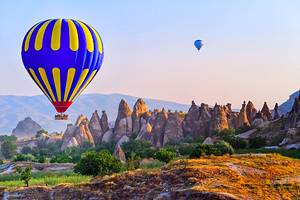
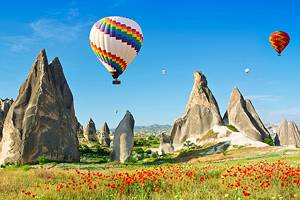
High on every tourist's Turkey hit list, Cappadocia is a region of swirling volcanic-rock landscapes so otherworldly, they look like they have been fashioned by mischievous elves.
These days, the region's star tourist attraction is hot air ballooning, but don't make the mistake of thinking that's all there is for you to do.

Humans settled this area since at least the Bronze Age and have left their own mark on this wacky moonscape by burrowing into the soft volcanic rock to live, leaving behind villages carved out of hillsides, Byzantine-era rock-cut churches holding dazzling frescoes, and labyrinthine underground cities where Cappadocians once huddled from invading armies.
If you want to split your time here between both the historic sites and the area's natural beauty, I recommend making sure you give yourself enough time. Plenty of visitors arrive in Cappadocia thinking they can knock it off in two days and leave frustrated at how little they've managed to see.
While those Instagram aerial shots showcasing the sinewy contours of Cappadocia's valleys may have made this one of the most popular places in the world to take a hot-air balloon tour, this region is brimming with other things to do.
So loosen up your itinerary a bit and read on to plan your Cappadocia trip.
Attractions around Göreme
Göreme is the little village right at the heart of the Cappadocia tourism scene, and in high summer it heaves with visitors.
The village is half burrowed into the hill, with its stone house facades hiding a maze of cave rooms below. Many of these traditional houses have been turned into boutique cave hotels, and despite its full-gear tourism vibe, if you want to be able to access the most famous valleys and sights easily on foot, it's still my top recommendation as a base for your stay.
If you're ready to put in the hours, you can complete these five top attractions in one long day but be prepared for an early start because you'll be up at the crack of dawn for your hot air balloon tour.
Soar over the Valleys in a Hot Air Balloon

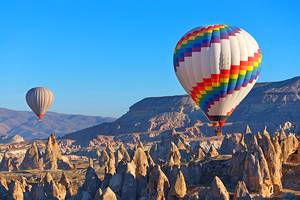
For many visitors, going for an early morning hot-air balloon ride in Cappadocia is one of Turkey's highlights.
In the summer high season, over 100 hot-air balloons take to the skies just after sunrise and supply passengers with bird's-eye views of the central valley area and its rock formations.
Balloons fly daily throughout the year unless they're canceled due to inclement weather. The typical flight plan flies over the area containing Red, Rose, and Meskendir Valleys, though sometimes the wind conditions mean you fly over other surrounding areas.
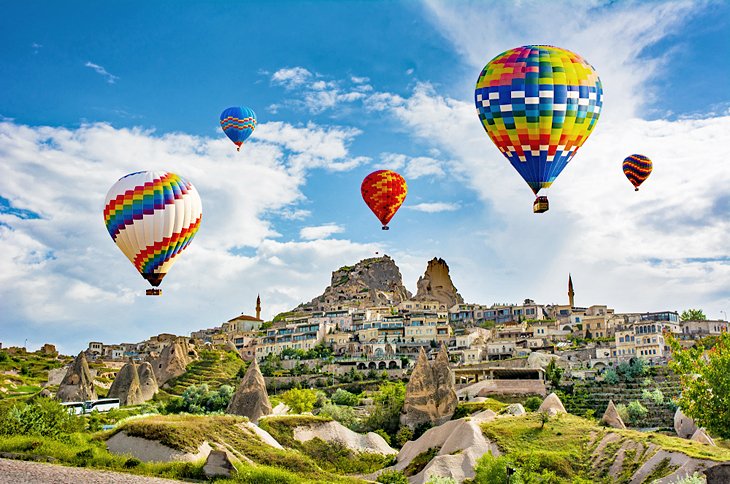
Hot-air balloon rides take around one hour (with deluxe packages lasting around 90 minutes). All tours include pickup and drop-off from your hotel and normally also include a breakfast buffet.
Note that if you are visiting Cappadocia from Istanbul specifically just to go hot-air ballooning, you have to stay at least one night due to the early morning start of the balloon tours.
Visit the Churches of Göreme Open-Air Museum
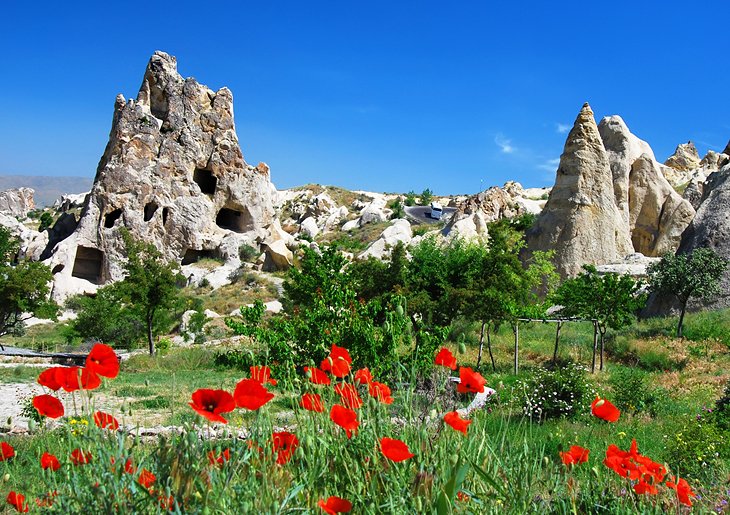
Just outside the village of Göreme is the UNESCO World Heritage Site of Göreme Open-Air Museum, a monastery cluster of rock-cut churches and monk cells that hold fabulous frescoes, and first launched Göreme onto the tourism map.
The complex frescoes date from the 10th to 12th centuries, when Cappadocia was an important Byzantine religious center.
There are several churches and chapels to explore within the complex, but make sure you don't miss the Elmalı (Apple) Church (note its Ascension fresco above the door); the Azize Barbara (St. Barbara) Chapel with its red-ochre interior decoration; and the Yılanlı (Snake) Church, with its frescoes of St. George, and of the hermetic hermaphrodite St. Onuphrius.

Göreme Open-Air Museum's two highlights are the cavernous Tokalı (Buckle) Church, with its barrel-vaulted chamber completely covered in frescoes, and the Karanlık (Dark) Church.
The superbly restored, colorful frescoes within the Karanlık (Dark) Church are regarded as among the best surviving examples of mid-Byzantine art in the world.
Unsurprisingly, being Cappadocia's most well-known historic sight, Göreme Open-Air Museum tends to be busy for much of the day. I recommend trying to visit immediately on opening time at 8am and, if possible, avoiding weekends.
Hike or Horse Ride in Red and Rose Valleys

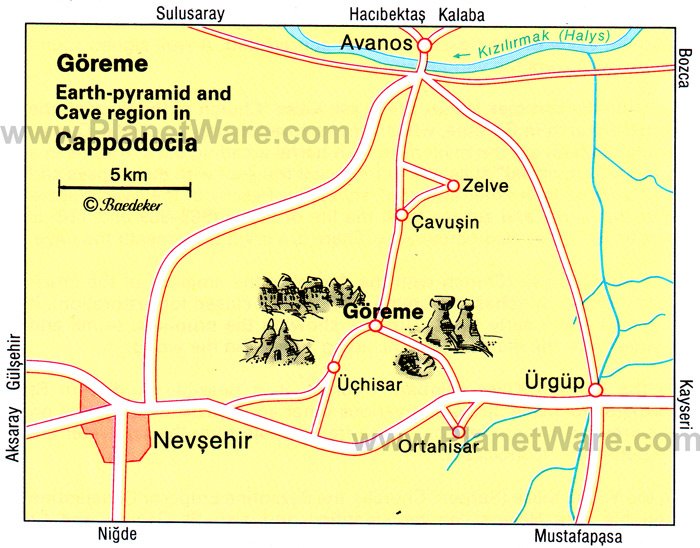
Cappadocia's most beautiful intertwining valleys stretch north and east of Göreme in a triangle that connects Çavusin village (north) and Ortahisar village (east).
Here, the rolling and rippling rock faces arc out across the countryside in a palette of pastel pink, yellow, and orange cliffs, formed by volcanic explosion and then hewn into shape by millennia of wind and water erosion whittling away the rock.
Between the cliffs are lush orchards and vegetable plots still tended by local farmers, while carved into the rock are hidden churches and hermit hideouts, which date back to the Byzantine era.
Hot-air ballooning over the valleys gets all the glory, but in my opinion, the best way to experience the valleys is up-close and on foot.
Even better, despite the fact that Cappadocia's sweeping landscapes are one of its major highlights, only a smidge of the region's visitors ever bother heading out for a hike. Once you're away from the outskirt areas where the ATVs buzz around (kicking up so much dust that they end up obscuring the landscapes their passengers have paid to see) you'll often have the vistas of accordion rippled cliffs and deep valleys punctured by rock cones all to yourself.
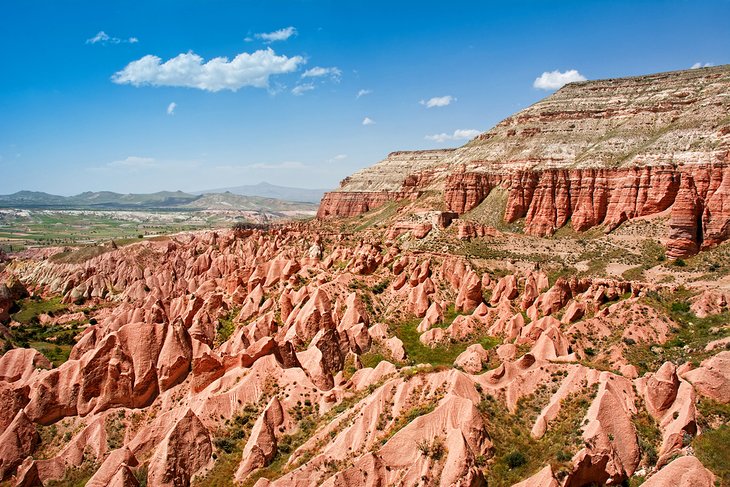
There are dozens of hiking trails to choose from and hikes range from a couple of hours to all-day treks.
If you only have time for one hike, center your attention on Rose Valley, where you can walk between three of the valley area's prettiest little cave churches.
My favorite is the Kolonlu (Column) Church, with its columns hewn out of the rock. From there you can take the rock steps up onto the ridge and hike to the Haçlı (Cross) Church, with its mammoth cross carved into the cave ceiling, before heading north to the Üç Haçlı (Three Cross) Church, with its well-preserved ceiling carvings and interesting (though severely damaged) frescoes.
Horse riding through this valley area is also very popular. Most rides are more suitable for intermediate riders rather than beginners due to the rocky terrain.
Explore the Village of Göreme

Sticking closer to the village, the fresco-adorned El Nazar (Evil Eye) Church and the Saklı (Hidden) Church are both accessed off Müze Caddesi, a short walk from the center on the way east to Göreme Open-Air Museum.
If you explore the valley of stubby hoodoos on the village's southern rim, make sure to look out for the Durmuş Kadir Church, carved out of a low hill.
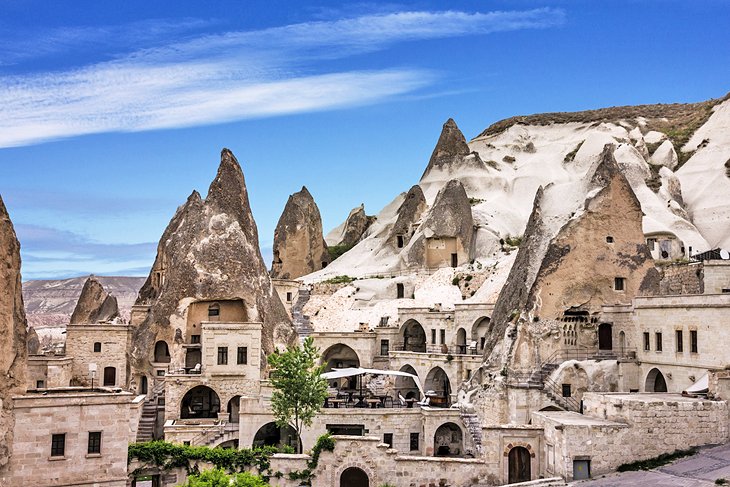
There are no frescoes to see inside, but the basilica with its nine-meter high barrel-vaulted ceiling and two aisles of chunky square columns is one of the best places to appreciate the architectural ambition of this region's Byzantine church builders.
Bed Down in a Cave

In many destinations, your hotel only features as a practical necessity in vacation plans, but Cappadocia's accommodation choices are an attraction of a visit in themselves. Göreme's cave hotels host rooms burrowed into the village's hills, and many have been refurbished and restored from traditional village homes.
There is a vast selection of hotel choices here, so my top tips for booking are:
First, if you decide you definitely want to sleep in a cave, remember this means you most likely won't get a view from your room. Cave rooms are - by their nature - situated on the lower floors, while the accommodation referred to as stone-cut rooms (built from local stone) sit on upper levels.
Many of the cave hotels are boutique style with a choice of between five and twelve rooms in total, of which only a few will be caves. If you find somewhere you really like the look of, it's a good idea to book as early as possible.
Due to Göreme's burgeoning popularity, many of the cave hotels are pricey in comparison with hotel prices elsewhere in Turkey. This is a place to treat yourself when it comes to your accommodation budget.
If your budget can't stretch that far though, there are still a scatter of places in town holding on to Göreme's backpacker roots, offering beds in dorm caves and usually also with a couple of tiny private cave rooms.
Exploring the Central Villages Area
All of these next attractions sit in, or around, Cappadocia's central villages; a roughly triangular-shaped area with Uçhisar at the southwest point, Ürgüp at the southeast, Avanos to the north, and Göreme in the middle.
Many of these feature as stops on Cappadocia day tours but, if you're like me and enjoy hopping about on public transport, and don't want to be constricted in your exploring by a tour's itinerary, all of these following attractions are easily accessed by local dolmuş (minibus) services.
The hourly Ürgüp-Avanos dolmuş is particularly helpful if you're an independent traveler, and is my favorite easy - and cheap - way to explore this area.
It leaves on the hour and, running from Ürgüp, passes by Ortahisar, Göreme, Çavusin, Paşabağı, and Zelve Open-Air Museum on its way to Avanos. From Avanos, it runs the same route in reverse.
Climb Uçhisar's Rock Citadel

The village of Uçhisar is dominated by a mammoth rock-cut fortress riddled with tunnels and caves.
Just like the region's underground cities, this rocky outcrop provided villagers with protection from invaders during the Roman and Byzantine eras.
This is the highest point in the central Cappadocia villages area, so you'll want to climb to the top, to be rewarded with sweeping panoramas over the undulating valleys that surround the village.
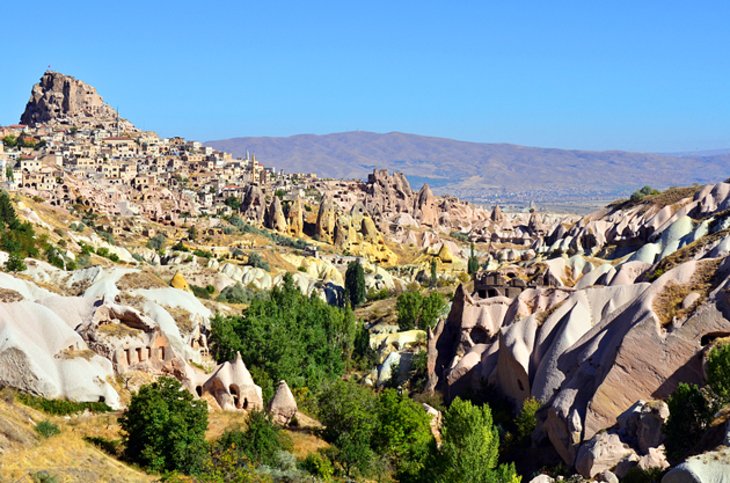
Uçhisar is also a popular base for visitors, with plenty of boutique cave hotel accommodations.
The village is a good starting point for valley walks. For a full morning or afternoon exploring around Uçhisar, I like to take the Pigeon Valley trailhead, which runs from the southwest edge of Göreme. The trail route is lined with rock cones, many of which have colorful, decorated dovecotes.
To access Uçhisar minus the sweat, the half-hourly dolmuş (local bus) service between Göreme and Nevşehir (the nearest city) runs past the village and Uçhisar also has its own separate half-hourly dolmuş service to Nevşehir.
Explore Around Ürgüp
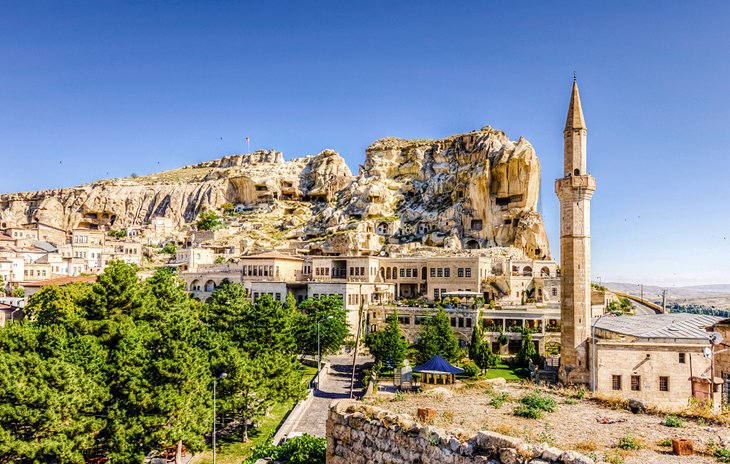
Ürgüp doesn't have many of its own actual sights, but it's a popular place to visit because of its boutique hotels and good restaurant scene.
Wherever you're staying in Cappadocia, you'll probably come here at least once in your visit to dine out. My top pick is Ziggy's, where you can feast on the best meze (small-plates) spread in the region on a chic rooftop terrace with vistas of Ürgüp town, hemmed in by cliffs, below.
Ürgüp town center is thoroughly modern with a few relics from the Seljuk period including a 13th-century mosque and a scatter of Seljuk-period tombs.

To capture a sense of the town's history, take a stroll through the alleys of the old neighborhood, which are home to some distinctive examples of Ottoman-Greek stone house architecture. These are remnants of Cappadocia's once thriving Ottoman-Greek community, which was forced to leave under the 1923 Population Exchange conditions of the Treaty of Lausanne.
For more Ottoman-Greek architecture, make a trip to the nearby village of Mustafapaşa, six kilometers to the south. The Agios Konstantinos-Elini Church is right in the center of the village, while some earlier, Byzantine era cave churches are also just out of town in the aptly named Monastery Valley.

If you head six kilometers west of Ürgüp, you'll arrive in the village of Ortahisar which radiates out around a rock citadel, similar to Uçhisar's. It's smaller but much more of an adventure to climb, with some precariously steep staircases to tackle on your way to the summit (wear solid walking shoes). Those without a head for heights may prefer to simply admire it from the base.
There are half-hourly dolmuşes (local minibuses) between Ürgüp and Mustafapaşa and hourly dolmuşes between Ürgüp and Ortahisar, as well as the hourly Ürgüp-Avanos dolmuş.
View the Churches at Çavusin
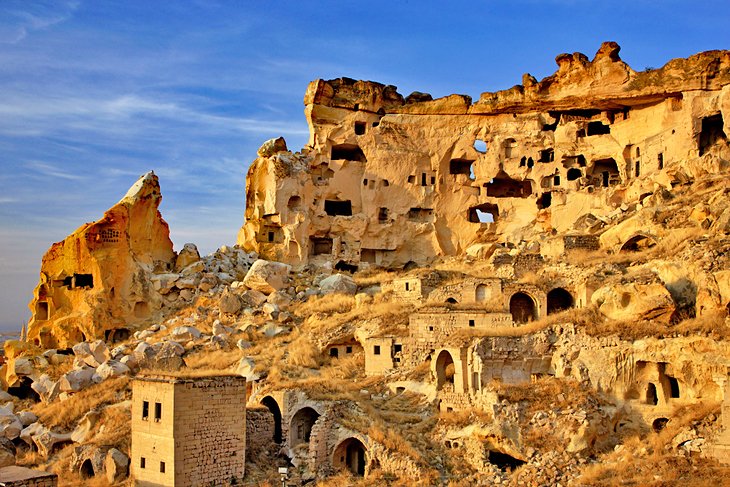
Çavusin is a short three-kilometer hop north from Göreme and the best way to arrive, in my opinion, is to walk through the northern section of Rose Valley between the villages.
The main attraction, once here, is to hike up onto the ridge, from Çavusin's old village center, above the tumble of derelict houses, to the Church of Saint John the Baptist at the summit which is believed to be one of the oldest churches in the area.

The church's basilica-like proportions and fat columns are an impressive sight, and there are sweeping views across the countryside from its cave entrance.
There is a clutch of courtyard cafes at the base of the ridge to relax with a freshly squeezed pomegranate or orange juice. My top pick for a rest stop though, is Keyif Cafe right at the top of the ridge.
View the Fairy Chimneys of Paşabağı
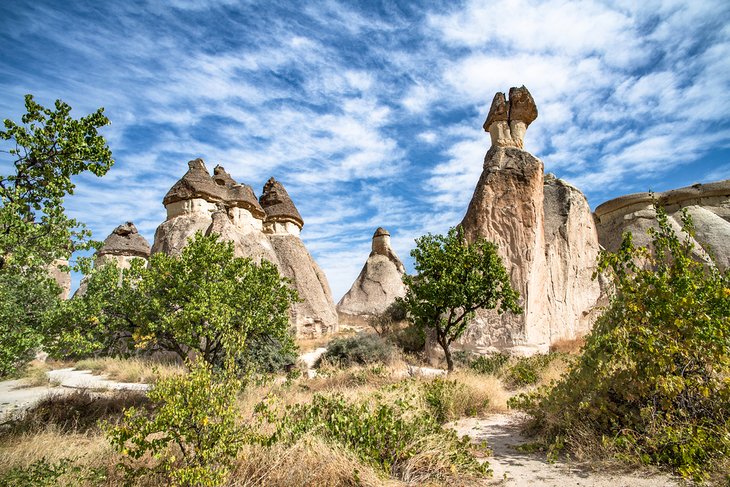
The hoodoos (known as fairy chimneys in Cappadocia) of Paşabağı valley have made it one of Cappadocia's most famous landmarks.
In the early Byzantine period, a religious community who were disciples of Saint Simeon Stylites (a 4th-century monk, who spent his life on top of a pillar in northern Syria) devoted their lives to their own stylite practices here.
Instead of pillars, though, they carved monk cells high up in the rock pinnacles to lead a hermetic life of prayer. Visitors here can still scramble up into one of these ancient monk cells.
A trip to Paşabağı valley is easily combined as part of a do-it-yourself day trip with visits to Çavusin, Zelve Open-Air Museum, and Avanos as they're all stops along the route of the hourly Ürgüp-Avanos dolmuş.
It's also a flat, easy two-kilometer walk between Paşabağı and Zelve Open-Air Museum.
Note that Paşabağı is a very popular stop for large tour groups so, if you can, plan to visit before 10am and try to avoid weekends.
Visit Zelve Open-Air Museum
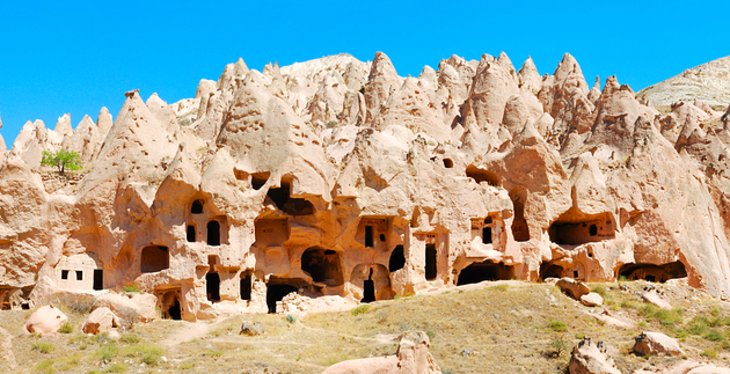
With its knobbly-topped rock cliffs speckled with cave dwellings, walking through Zelve Open-Air Museum is an experience of the Cappadocia of old.
The settlement began life as a monastery in the 9th century, and by the 20th century was a thriving village.
Due to erosion and rockfall dangers, the village had to be abandoned in 1952. Now the entire valley is a museum.
There are a couple of interesting chapels to see – the Üzümlü (Grape) Church being the most intact – and a rather picturesque rock-cut mosque. But the real joy of this site is meandering down the cliffside paths, exploring the fire-blackened interiors of the cave dwellings, and staring out at the magnificent vistas over the surrounding countryside.
Zelve receives far fewer visitors than the more famous Göreme Open-Air Museum though I still recommend trying to avoid visiting on weekends if possible.
Shop for Local Ceramics in Avanos
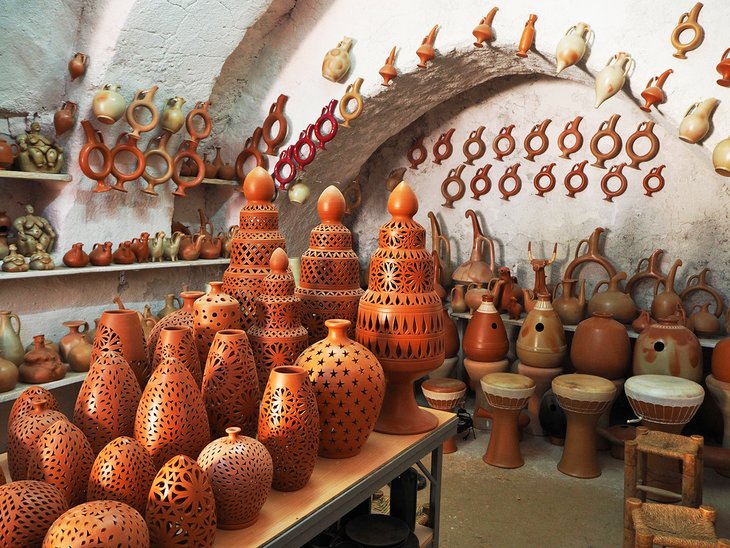
Avanos is a bustling provincial town beside the Kizilirmak River. The older part of the town winds up the hillside in a maze of cobblestone roads lined by dilapidated Ottoman mansions, which makes for an interesting stroll, but Avanos' main attraction is its pottery.
This town has a pottery industry history that stretches back to the Hittite period and now, like then, local artisans utilize the distinctive red clay of the Kizilirmak River for their craft.
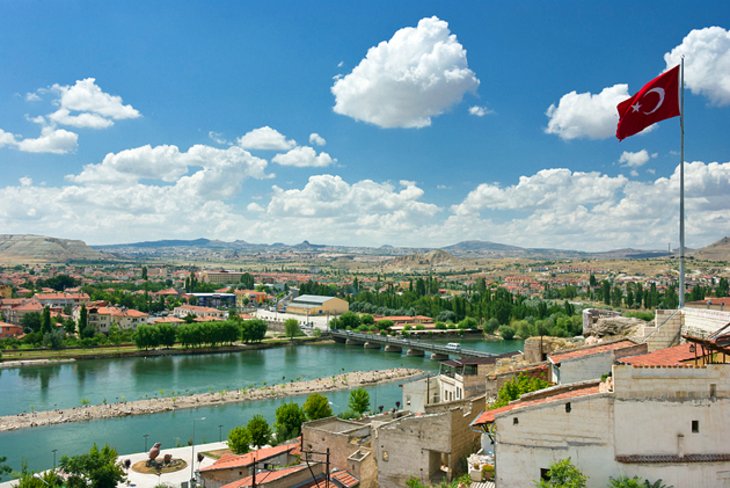
Potter workshops and shops are along the main road in the town center, beside the river, and many of their owners are happy to let you watch them work or have a go at creating a simple pot yourself.
The town's Guray Ceramic Museum celebrates this pottery heritage with an astonishing collection of ceramics from across Turkey.
The museum is worth a visit simply for its location – a series of caves carved underneath the Guray Pottery Workshop.
Day Tripping & Further Afield
Although there's plenty to keep you busy in the central villages area, some of the most interesting heritage attractions in Cappadocia lie further afield and make for great day trip destinations.
Getting to most of these via public transport requires changing transport at least once, and so most travelers elect to visit either on an organized guided tour or by private transport to save time.
There is no shortage of day tour options available in Cappadocia. For the best experience, book your tour with a local, Cappadocia-based operator rather than through a tour company in Istanbul, and don't scrimp on costs; some of the very cheap tours whiz through the sights at hurricane speed and offer little in information.
Head Underground at Kaymaklı and Derinkuyu
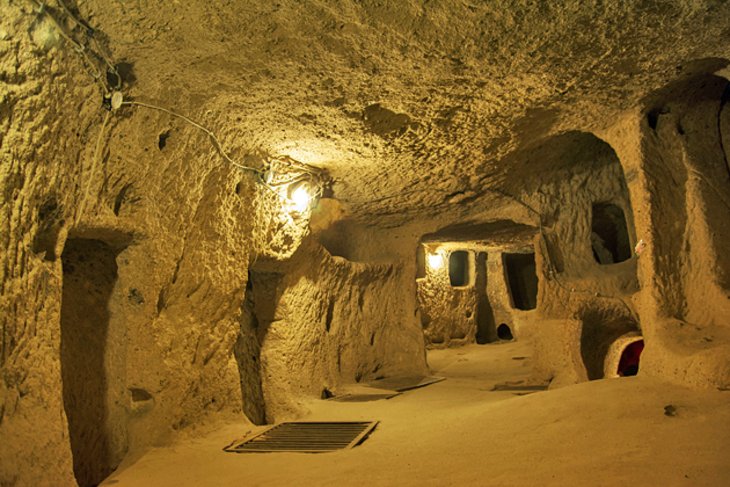
Cappadocia's underground cities first began to be chiseled out of the ground in the Bronze Age Hittite era, but they are most famous for their early Byzantine history (6th and 7th centuries), when the region's Christians took to living underground for long periods to escape from Arab and Persian invaders.
Kaymaklı Underground City is Cappadocia's largest example, with a labyrinth of rooms connected by tunnels that extend for eight levels. Four of these levels can be explored by visitors.
Derinkuyu Underground City is Cappadocia's deepest underground shelter. The tunnels here are quite claustrophobic in places, as they travel deeper and deeper into the ground. There is a cavernous chapel area, and many living and storage areas to explore in this below-ground maze. The ingenious ventilation shaft system used by Derinkuyu's inhabitants can also be seen.
Derinkuyu and Kaymaklı Underground Cities are close enough together to see both on a day trip if you have private transport or have arrived by public transport. If you're on an organized day tour, you'll be visiting one.
If there's time for only one, my pick is Kaymaklı as it tends to be less popular with large tourist coach loads, so you're more likely to be able to explore the tunnels here unhindered by crowds.
Heading underground into the network maze of tunnels is a fascinating experience, but those with claustrophobia should be aware that some of the tunnels are exceedingly narrow, so it may be best to give these sites a miss.
Keen do-it-yourself day trippers can get here easily on public transport. First, take the dolmuş (local bus) service to Nevşehir from whichever central Cappadocia village or town you're based in. From Nevşehir's central village bus stop, domuşes head half-hourly to both Kaymaklı and Derinkuyu.
Hike Ihlara Valley
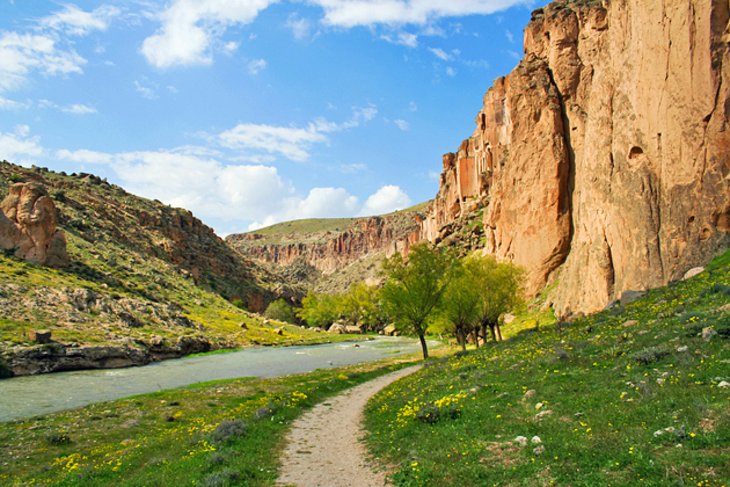
The narrow, verdant valley at the bottom of this deep (100 meters) gorge in southwest Cappadocia is a nature lover's delight.
Hemmed in by rugged, steep cliffs, Ihlara Valley is a lush Eden of tall poplar trees and fertile farming plots beside the babbling Melendiz River, which runs for 14 kilometers from Selime village to Ihlara village.
During the Byzantine period, this was a favored retreat for hermetic monk communities, who carved churches and monastery complexes into the cliff face.
The Kokar (Fragrant) Church, Yılanlı (Snake) Church, and Kırk Dam Altı Church (also known as St. George Church) are three of the best, but there are plenty of others to see along the way.
At Selime village, the craggy rock pinnacle of Selime Monastery, hewn with cave cells and churches, provides a dramatic start or end point to an Ihlara Valley hike.
Typical Ihlara Valley day tours include a visit to one of the underground cities, Selime Monastery, and a short hike in the mid-section of Ihlara Valley, where the main cliff-hewn churches are.
If you are a keen walker, it's worthwhile organizing private transport here, rather than opting for a tour, so you have time to walk the entire length of the valley.
My favorite section of the hike is the northern stretch from Selime village to Belisırma village. Here, where for much of the way, you're walking along a trail that winds mid-way up the cliff with the lush valley below, you'll rarely encounter another hiker.
Explore Soğanlı Open-Air Museum
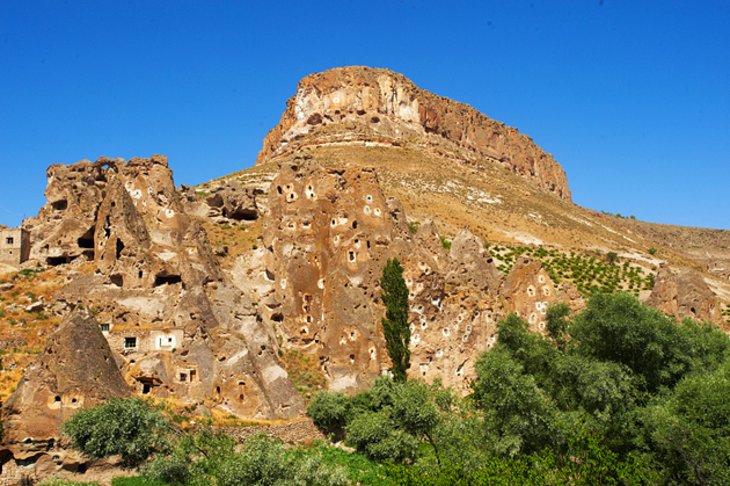
The twin valleys of Soğanlı are scattered with pyramid-shaped rock pinnacles that were first hollowed out in the Roman era.
By the time the Byzantine period was in full bloom, Soğanlı had become a major monastic center, its rock pinnacles home to chapels and monk cells.
The Karabaş (Black Hat) Church, Yılanlı (Snake) Church, and Saklı (Hidden) Church have the best preserved frescoes in this chapel cluster.
Soğanlı is an excellent place for a day trip, with the road leading here scattered with tranquil villages and interesting historic sites.
Two of the best attractions are the Byzantine-era Keşlik Monastery and the ancient ruins of Roman Sobesos so if you've booked an organized day trip, make sure it includes visits to these two.
There are a couple of simple restaurants in, and around, the Soğanlı archaeological site which make excellent lunch break options. My top pick is Hidden Apple Garden Restaurant, just before the Soğanlı ticket office. Pitch up here after your Soğanlı visit to dine on wholesome, traditional Anatolian dishes beside a trickling stream, and shaded by apple trees.
Take a Day Trip to Eski Gümüşler Monastery
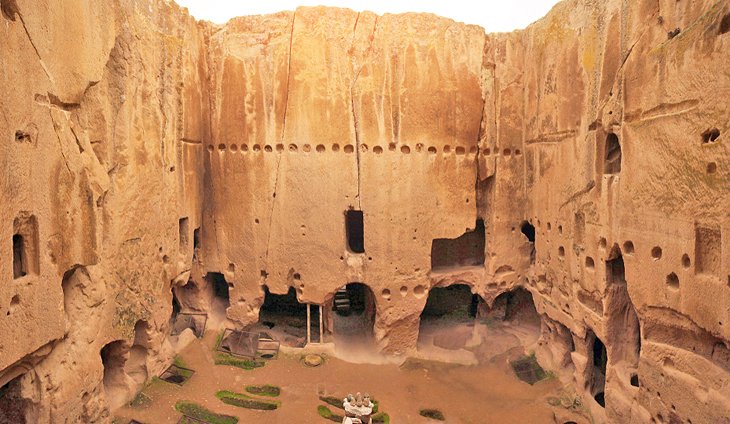
The southern section of Cappadocia only receives a handful of the visitors the more famous central Cappadocian village area sees, which I think is a shame because it's home to one of the region's most interesting Byzantine monasteries.
Barely 10 kilometers northeast of the town of Niğde, the rock-hewn Eski Gümüşler Monastery in the blink-and-you-miss-it village of Gümüşler is home to some of the most impressive Byzantine frescoes you'll see in Cappadocia.
The paintings date from the 11th century and include the Annunciation and the Virgin Mary, with baby Jesus flanked by the Archangels Gabriel and Michael.
Just as interesting as the frescoes is the maze of tunnels you can explore within the complex that have been recently restored and opened up for tourism. They are a bit of a squeeze in parts but great fun to scramble through.
There are no organized group tours for this area, so you'll have to either hire a car or book a private tour or driver if you want to do this as a day trip.
Alternatively, if you've got a bit of time up your sleeve, you could take a bus from Nevşehir to Niğde, then head to Gümüşler by dolmuş or taxi, and spend the night in Niğde. If you're on your way south in Turkey, to Adana, this is an interesting diversion along the route.
Explore the Sights along the Road to Hacıbektaş
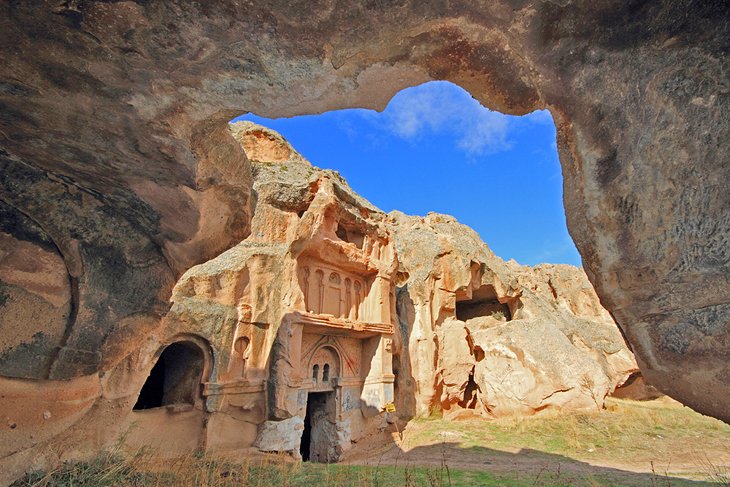
Hacıbektaş is a pilgrimage center for the followers of the Bektaşi order of dervishes, founded by the Iranian philosopher and Sufi Hacı Bektaş Veli.
The town's dervish lodge is now the Hacıbektaş Museum and a place of great devotional worship, including Hacı Bektaş Veli's tomb, as well as many interesting exhibits about the faith.
On the road between the city of Nevşehir and Hacıbektaş is the village of Gülşehir, which is home to two interesting attractions that are worth stopping off at along the way.
The rock-cut monastery of Açık Saray was probably used by monks in the 6th and 7th centuries and contains a number of interesting cave-cut rooms.
A little farther down the highway is the 13th-century Saint Jean Church, which is rarely visited. It's a tiny, single rock-cone church, but don't be deceived by this modest facade. The upper-floor interior is absolutely covered in gloriously colorful and well-restored frescoes.
If you've hired a car and are driving between Ankara and Cappadocia, all three of these sites are easily visited along the way.
Visit Kayseri
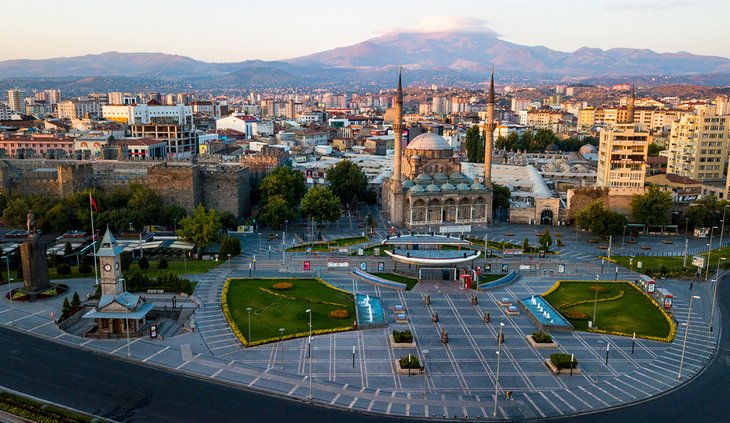
Most visitors only see Kayseri on their way to and from the airport, but this bustling city has a handful of interesting Seljuk and Ottoman monuments for those with some spare time.
The remnants of Kayseri Castle are right in the center of town, squeezed between modern shops and busy roads.
Nearby is the well-preserved Çifte Medrese in Mimar Sinan Park, which was one of the world's first medical schools and is now home to the Museum of Seljuk Civilization with a beautifully curated collection of artifacts that ranges from textiles and jewelry to ceramics and stonework.
Kayseri's Archaeological Museum is also worth a visit for its exhibits from the Hittite excavation site of Kültepe.
If you're lucky, and the caretaker is onsite, you might also be able to access the Church of St Gregory the Illuminator, on the southwest edge of the central city. This Armenian church is one of only a handful that has survived, fully intact, in Turkey.
For lunch (or dinner, if you're staying the night), don't miss feasting at Elmacıoğlu İskender. This Kayseri institution serves up regional specialties as well as a full range of classic kebab dishes.
Mount Erciyes glares down at you from wherever you are in the city. The town is only a short drive from the mountain (Cappadocia's highest) and its winter ski slopes.
Just to the southeast of Kayseri is the Seljuk caravanserai of Sultanhanı, a good stop if you're driving onwards to Sivas.
There are hourly dolmuşes from Ürgüp to Kayseri, so you can easily visit as a day trip from the central Cappadocia villages.
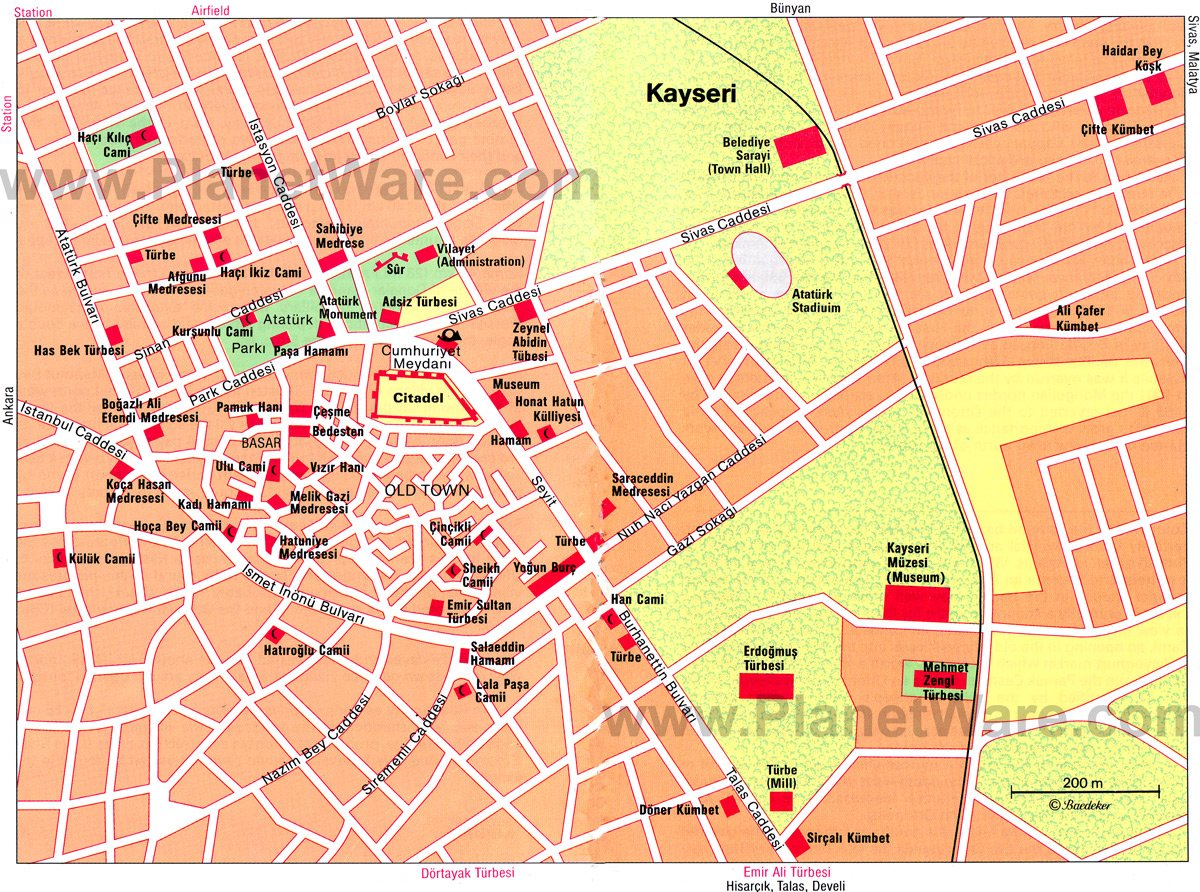
Map of Attractions & Things to Do in Cappadocia
More Related Articles on PlanetWare.com
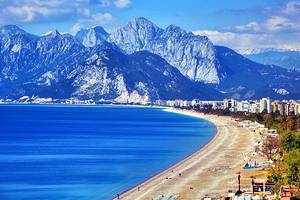
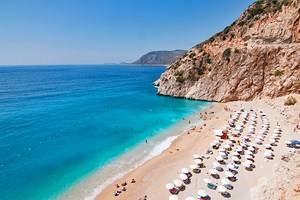
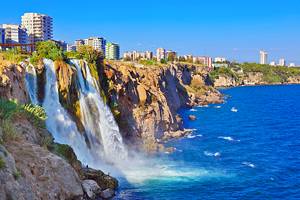
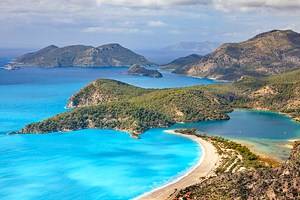
Head to the Beach: After exploring the Anatolian heartland, head to the coast. Fethiye is a major center for boat trips and a base for exploring Turkey's major Lycian ruins, and both Antalya and Side are famed for their beaches and Roman ruins.
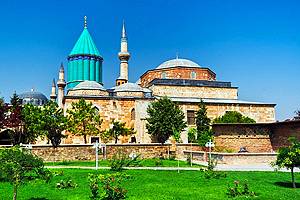
City Exploring: After spending time in this rural district, check out some of Turkey's city life. Konya with its glut of gorgeous Ottoman architecture and home to the Mevlana Museum, is a good next stop from Cappadocia, as it's an easy bus ride away.