Tourist Attractions in the Loire Valley
Author Lisa Alexander spent two years living in France and has traveled the country extensively.
The Loire Valley invites you to step into the scene of a fairy tale, complete with stunning castles and an enchanting countryside. The area is called the "Garden of France," and because of its beauty, as well as the opportunities for hunting, the Loire Valley was frequently visited by the French kings.
During the 15th and 16th centuries, French kings built extravagant country retreats amid the Loire's woodlands and rivers. These lavish royal castles became legendary, and rich nobles followed suit by creating their own grand homes in the area. Today, they are among the Loire Valley's most visited sights and some of the top attractions in France.
The sumptuous Renaissance châteaux were designed purely for enjoyment and entertaining, an extension of court life outside Paris. The grandiose Chambord Castle is the most opulent château, while Chenonceau is the most elegant.
The UNESCO-listed Loire Valley is one of the most fascinating places to visit in France. Find the best things to do and see in the region with our list of the top tourist attractions in the Loire Valley.
Château de Chambord
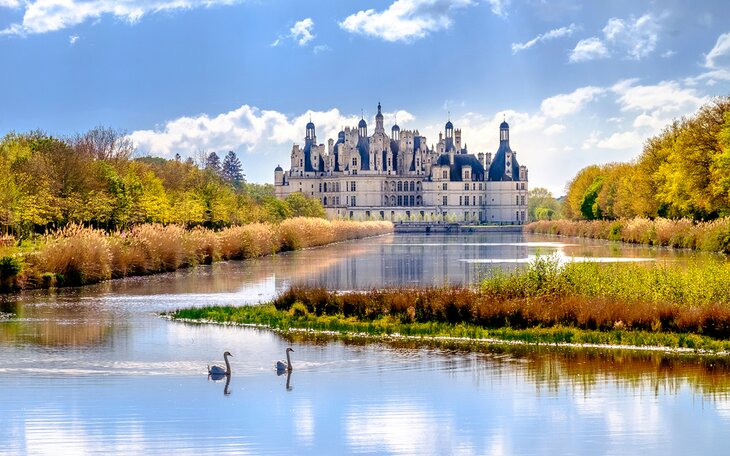
In a majestic location on the left bank of the Loire River, the Château de Chambord is the most symbolic Renaissance monument in France. A breathtaking sight to behold, this magnificent royal castle provided inspiration for the building of the Château de Versailles.
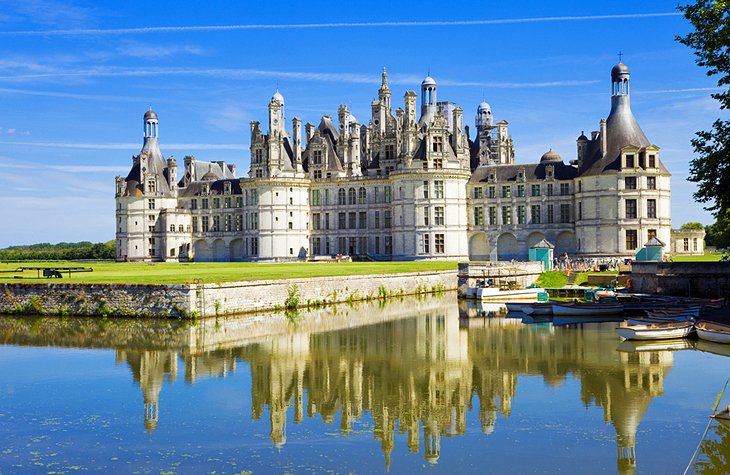
The estate was created in the early 16th century (at the height of the French Renaissance) for François I, who spared no expense. The building was constructed on a scale of immense proportions, measuring 117 meters by 156 meters.
With turreted towers, impressive vaulted ceilings, 440 rooms, and a gigantic double-helix staircase at the entry hall, the Château de Chambord is definitely fit for a king.
Louis XIV frequently resided here, hosting gala balls, hunting parties, and amusing soirées. The celebrated playwright Molière presented his comedy Le Bourgeois Gentilhomme while he was staying at the château as a guest of Louis XIV.
The extensive property of Chambord is encircled by a 32-kilometer wall (the longest in France), with six gates that allow access to the grounds. Of the property's 5,500 hectares of parkland, four-fifths is pristine forests.
Gardens: The French formal gardens are landscaped in geometric patterns with perfectly manicured shrubs and tidy flowerbeds. The garden's Italianate terrace was a central feature of court life when the king was in residence.
Getting to Chambord: Chambord is about a two-hour drive from Paris and is a must-see destination in the Loire Valley. You can take an 80-minute train ride from Paris Austerlitz station to the Blois Chambord station, which is a 25-minute shuttle or taxi ride away from the château.
Dining: The Château de Chambord estate includes several dining areas. The Café d'Orléans within the château offers a gourmet menu for lunch. In the estate's parkland, the Autour du Puits is a snack bar with outdoor seating. Just across from the château, the Place Saint-Louis has many restaurants and casual eateries.
Address: Château, 41250 Chambord
Château de Chenonceau
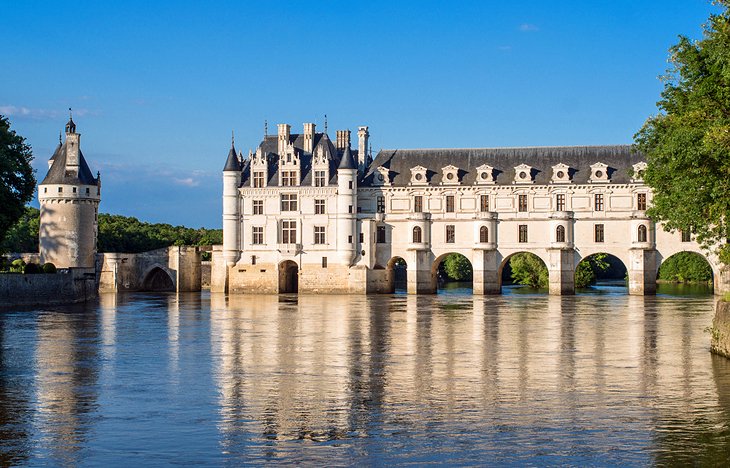
In 1535, the Château de Chenonceau became the property of Henry II, who presented the château to his mistress, Diane de Poitiers, in 1547. Henry's widow Catherine de Médicis, who took over the royal residence in 1533, was responsible for creating the most unique feature of the château, the Corps de Logis.
The Corps de Logis is a two-story gallery on an arched bridge that crosses the Cher River, giving the impression that the château is floating on water. Inside, the Corps de Logis gallery displays fine paintings and antique tapestries.
Equalling the beauty of the architecture are the exquisitely landscaped gardens. The Jardin de Diane de Poitiers was the creative vision of Diane de Poitiers. In orderly Renaissance style, this formal French garden features geometrically shaped lawns dotted with flower beds. The entire garden is encircled by raised terraces draped in climbing roses.
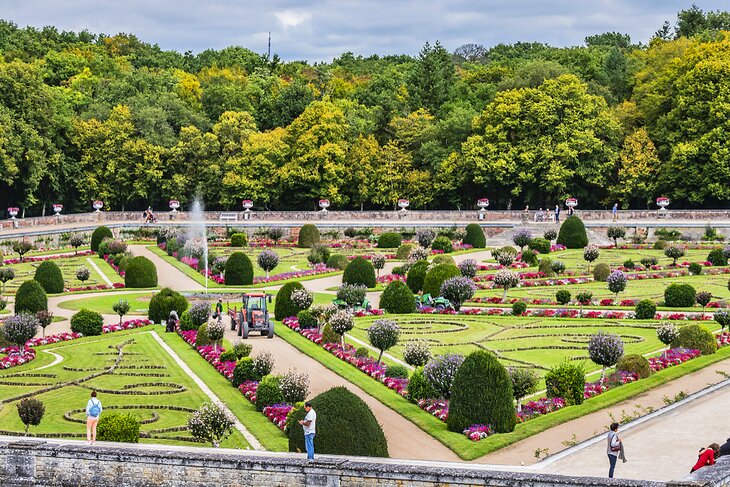
In the Jardin de Catherine de Médicis, roses flourish on trellises of a walking path, which overlooks the castle moat, a sublime scene sure to inspire leisurely strolls.
A new contemporary-style garden, the Jardin Russell Page, was created in 2018. This picturesque walled garden was inspired by the drawings of contemporary landscape designer Russell Page.
On summer weekend evenings, the gardens take on a magical glow, illuminated by hundreds of lanterns for Promenades Nocturnes. Musical accompaniment (including the works of renowned Italian Renaissance composers) adds to the enchantment.
Gardening enthusiasts will want to sign up for the Visites Botaniques. These special guided sessions allow participants to learn more about the vegetable gardens and the flowers gardens created by Catherine de Médicis and Diane de Poitiers. Visites Botaniques are available by reservation on certain Sundays between June and September.
For those who love flower arrangements, the Château de Chenonceau offers the Masterclass Art Floral. This class is led by a floral artist who has earned the title of Meilleur Ouvrier de France. During this two-hour class (reservations required), participants will learn about the daily life, the techniques, and the assortment of gorgeous flowers used by the florists who embellish the Château de Chenonceau. Class participants may access the château and gardens.
It's worth staying late for the special event, Chenonceau, La Vie à la Renaissance, which is held on various evenings in June, July, and August. The event begins at 8pm or 9pm and includes a walk through the illuminated gardens, music, and a guided tour that helps visitors imagine that château during the Renaissance era.
Dining: Another reason to linger at the château is the property's fine-dining restaurant, L'Orangerie, which serves gastronomic cuisine prepared from local seasonal ingredients. The château also has a crêperie in the former horse stables, as well as several picnic areas.
Château de Chenonceau is accessible by the rapid-speed TGV train (a one-hour ride) from the Paris Montparnasse station to the Tours station. By car, it takes about two hours to reach Chenonceau from Paris.
Address: Château de Chenonceau, 37150 Chenonceaux
Cathédrale Notre-Dame de Chartres
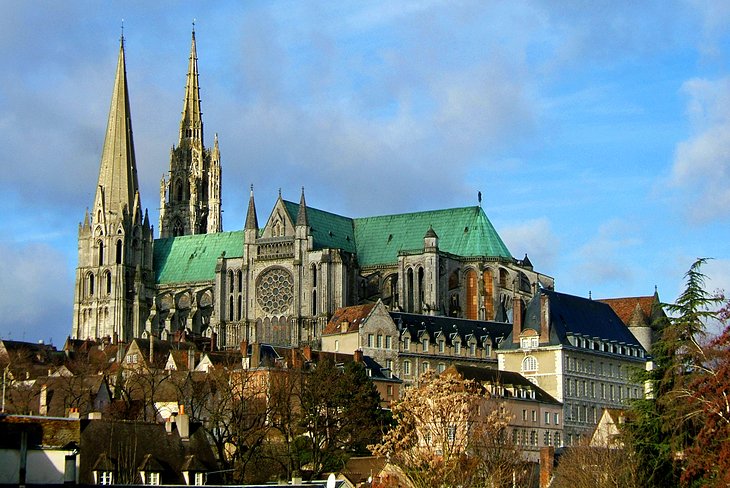
The charming old town of Chartres is crowned by the UNESCO-listed Cathédrale Notre-Dame de Chartres, an important pilgrimage destination during the Middle Ages. This awe-inspiring French Gothic church stands in an elevated position, with its soaring spires visible from a distance.
Built in the 12th and 13th centuries, Chartres Cathedral is one of the finest and best-preserved medieval churches in France.
The Cathédrale Notre-Dame de Chartres is most renowned for its abundance of intricately detailed medieval stained-glass windows (nearly 3,000 square meters) that are perfectly conserved; most of the windows date from 1210 to 1260, an exceptional rarity in existence. Particularly breathtaking are the three immense rose windows.
Other notable features in the cathedral are the Late Gothic choir screens with scenes from the life of the Virgin and the Gospels, and the terrace with a panoramic view of the lower town.
On Sunday afternoons during summertime, the cathedral hosts concerts as part of the Chartres International Organ Festival. In keeping with the cathedral's tradition of sacred music, choirs perform on Sunday afternoons in July and August.
Chartres is an easy day trip from Paris, approximately a 90-minute car ride from the city center or a one-hour train ride from the Gare Montparnasse station.
Address: 16 Cloître Notre Dame, 28000 Chartres

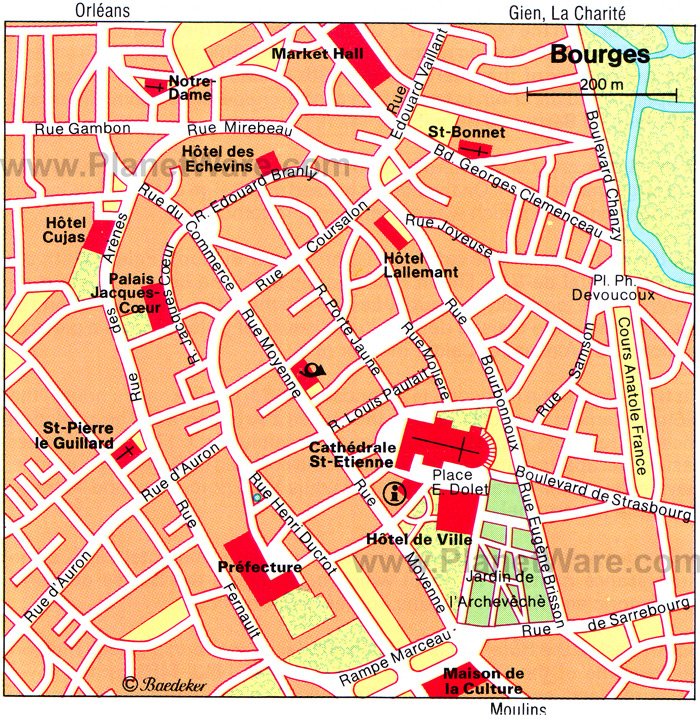
Bourges
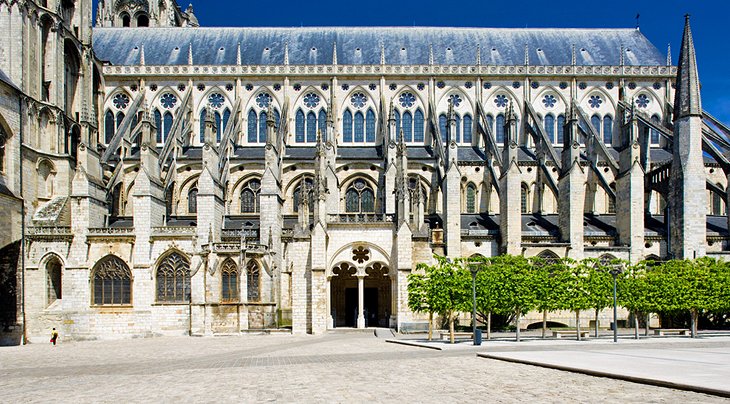
Boasting many old palaces and burghers' houses, the old ducal city of Bourges enjoys a picturesque setting on the Yèvre and Aveyron Rivers in the historic province of Berry.
The town's top attraction, the UNESCO-listed Cathédrale Saint-Etienne ranks among the most splendid of French cathedrals built during the 12th and 13th centuries. The ornate west front, flanked by massive towers, has five doorways with rich sculptural decoration and an exquisite 14th-century rose window.
The cathedral is entered through the Romanesque south doorway, over which is a figure of Christ in Majesty, surrounded by the symbols of the four Evangelists. The interior is stunning with its gorgeous sanctuary illuminated by 13th-century stained-glass windows.
Another noteworthy building is the Palais Jacques Côur, a palace built in 1443-1453 by the royal treasurer Jacques Côur, exemplifying secular Gothic architecture.
About a 30 minutes' drive southwest of Bourges is the 12th-century Cistercian Abbey of Noirlac, a fantastic example of Cistercian architecture with an arcaded cloister dating from the 13th and 14th centuries.
Château de Cheverny
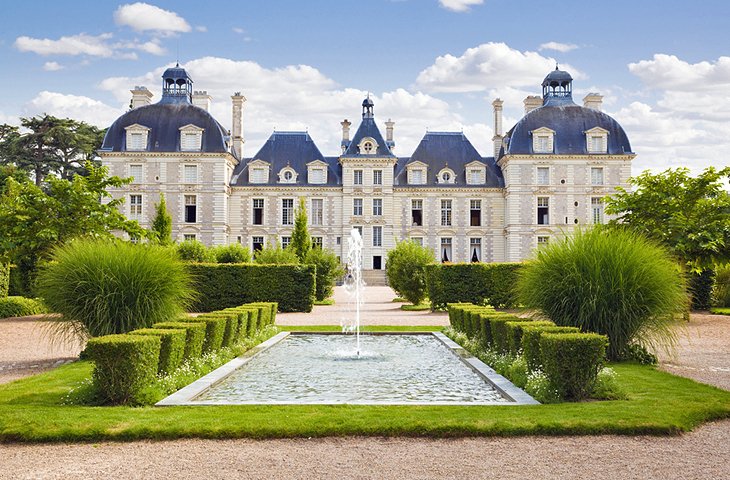
A private estate surrounded by woodlands, the Château de Cheverny is one of the most enchanting Loire Valley castles. This exceptional 17th-century manor house has been home to the same family for more than six centuries and opened its doors to the public in 1922.
The grand halls and remarkably well-maintained apartments of the château are graced with the original furniture and décor, such as a 17th-century Gobelin tapestry and a Louis XIV chest, which provide an insight into the aristocratic lifestyle centuries ago.
A favorite attraction for children at the château is Les Secrets de Moulinsart (The Secrets of Marlinspike Hall), an interactive exposition that depicts scenes from Les Aventures de Tintin (The Adventures of Tintin). The exhibits immerse you into the charming world of Tintin and his friends.
You will see Tintin's bedroom, the crypt where Tintin was held prisoner, and the laboratory where Professor Tournesol invented new technologies. The author Hergé was inspired by the Château de Cheverny when he wrote the storyline about Tintin at the Château de Moulinsart.
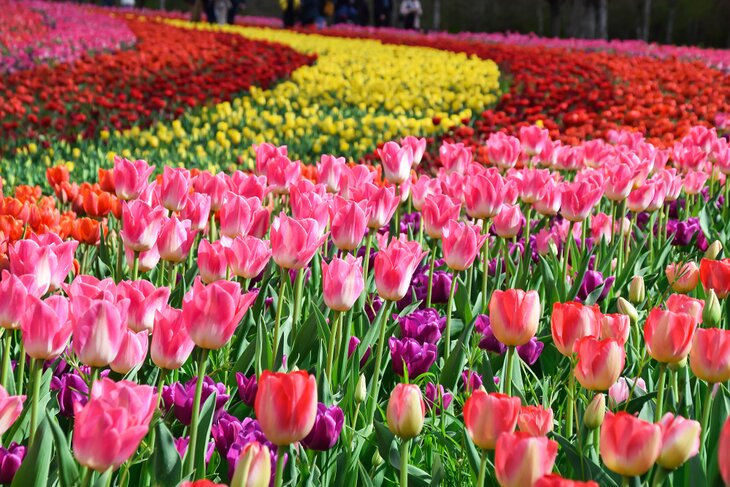
Gardens: The Château of Cheverny is renowned for its themed gardens, including a vegetable garden, a fruit-tree orchard, the Jardin de Tulipes (Tulip Garden) planted with more than 250,000 bulbs that bloom in the early spring. It is also home to the Jardin de l'Amour (Garden of Love) that features six bronze statues created by the contemporary Swedish sculptor Gudmar Olovson.
The fountain-adorned Jardin des Apprentis has a shaded pergola and many well-placed benches for relaxation. The labyrinth garden is especially popular among kids.
Much of the grounds (100 hectares) at the Château de Cheverny are blanketed with woodlands, which surround an English Garden. This bucolic expanse of tidily manicured green lawns is shaded by giant redwoods and cedar trees. The more adventurous can rent an electric car to take a spin through the property's forest path or go boating on the lake.
Dining: Housed in an 18th-century orangery within the Jardin des Apprentis (The Apprentice's Garden), the Café de L'Orangerie offers casual lunch options: sandwiches, salads, and a small assortment of other savory dishes. The café also serves artisanal ice-cream, pâtisserie, snacks, fresh-squeezed juice, coffee, tea, and other refreshing beverages. Guests may dine inside or on the outdoor terrace.
On sunny days, the château's shaded picnic area next to the estate's canal is another favorite spot.
Getting to Château de Cheverny: The trip is an easy (approximately two-hour) car ride or train ride from Paris. The best option by train is from the Paris Austerlitz station to the Blois-Chambord station and then a short (16-kilometer) taxi or shuttle ride to the château.
Address: Avenue du Château, 41700 Cheverny
Azay-le-Rideau
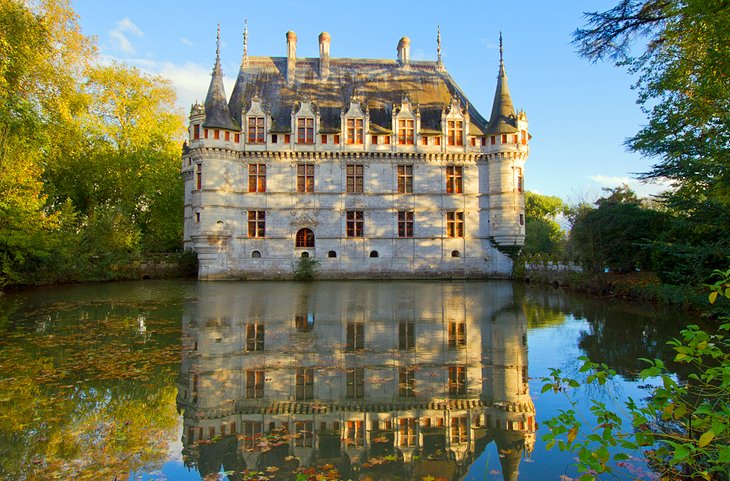
Standing on an island in the Indre River, the Château d'Azay-le-Rideau has the appearance of a storybook castle. The façade's reflection in the placid waters creates a dreamy impression.
The château was built in the 16th century by a wealthy financier. The design was greatly influenced by Italian Renaissance architecture. The most notable features on the ground floor are the rib-vaulted kitchen and the dining room with a richly decorated chimney and numerous tapestries.
In the town of Azay-le-Rideau, there is an interesting church, the Eglise Saint-Symphorien, that blends Romanesque and Gothic styles. The façade of the south aisle reveals remains of Carolingian reliefs.
In the nearby Château de Saché, the famous author Honoré de Balzac (1799-1850) wrote some of his novels. The room where Balzac worked has been preserved as it was.
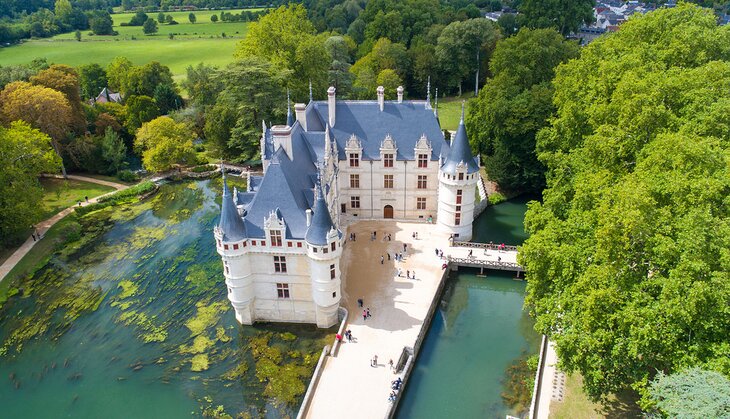
Only 10 kilometers away from Azay-le-Rideau, right in the heart of the Langeais town center, the Château de Langeais was rebuilt by Louis XI in 1465, and this striking landmark has remained unchanged for centuries. Original decorations and wall-hangings reveal the lifestyle of the late Middle Ages.
Travelers visiting this area can spend the night in regal style at the nearby Château de Rochecotte, about 20 kilometers away from the Château d'Azay-le-Rideau. This 4-star hotel was formerly the residence of the Prince de Talleyrand and the Duchesse de Dino.
Ensuring a luxurious experience, the spacious guest rooms feature cheerful traditional décor and sensational views of the gardens, while the château's elegant dining room serves lunch and dinner, as well as afternoon tea, with desserts prepared by the restaurant's pastry chef.
The property's 24 hectares of wooded parkland includes romantic gardens, an Italianate terrace, and a heated swimming pool.
Château de Valençay
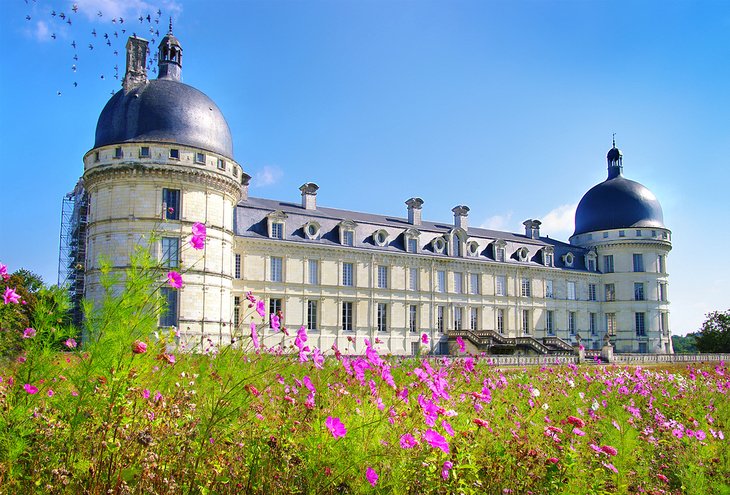
The Château de Valençay was built in stages from the medieval era through the Renaissance period, and for this reason, the building blends a variety of architectural styles. The main wing reveals design elements inspired by the Italian Renaissance, while the two-story side wing is Baroque.
The side wing also shows the influence of Charles-Maurice de Talleyrand-Périgord (Prince de Talleyrand), Napoleon's foreign minister, who was known for his diplomatic talents and art of living. Talleyrand acquired the château in 1803 and resided here in rooms outfitted with Louis XV and Empire-style furniture.
One of the highlights of the château is the Family Portraits Gallery, adorned with paintings that depict Talleyrand's ancestors. As a tribute to Prince Talleyrand, the château's Salle des Trésors (Hall of Treasures) displays a collection of personal items that belonged to Talleyrand.
Set in a 53-hectare park including lush forests, the property features the immaculately manicured Jardin Français and Jardin de la Duchesse (Formal Gardens) with a profusion of flowerbeds, sculptures, decorative pools, and fountains.
The woodland portion of the grounds features a four-kilometer path that traverses the forest for taking invigorating nature walks (alternatively, electric golf carts are available). Ideal for relaxing, some of the grassy spaces of the park are designated as picnic areas.
Another exceptional estate nearby is the Domaine de Poulaines in the town of Berry (only seven kilometers away from the Château de Valençay). The domaine boasts 25 hectares of woodlands and 4.5 hectares of themed gardens that have been awarded the "Jardin Remarquable" ("Remarkable Garden") label in 2014.
The gardens are open to the public from April through October. The Domaine de Poulaines salon de thé (tea salon) serves apple juice, homemade cakes, pies, and jams prepared from fruits grown on the estate.
Address: Château de Valençay, 2 Rue de Blois, 36600 Valençay
Orléans
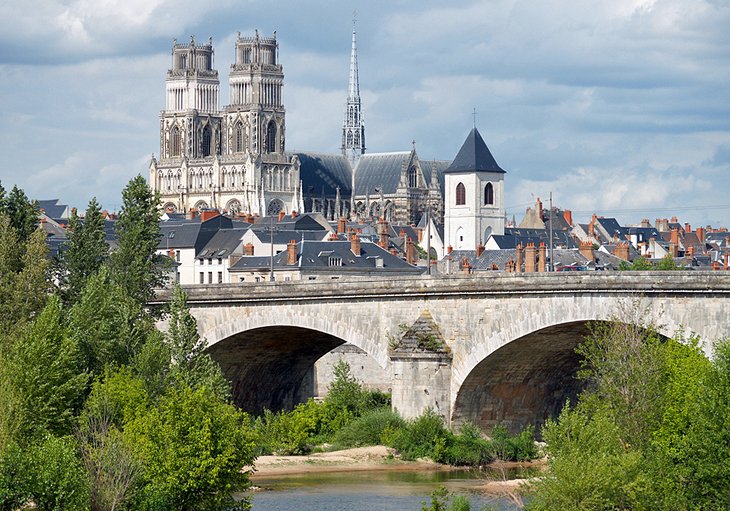
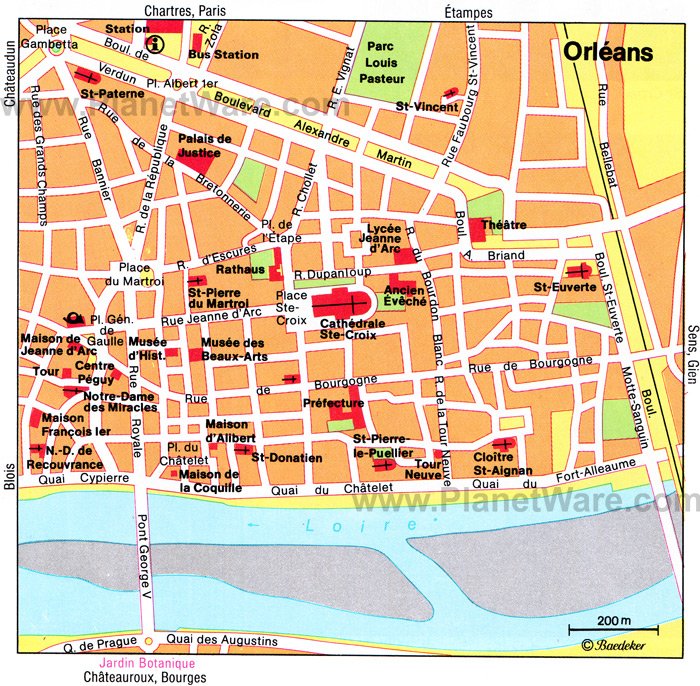
The largest town in the Loire Valley after Tours, Orléans is a good base to begin exploring the region. Inseparably bound with the history of Joan of Arc, the city owes its survival to the 17-year-old "Maid of Orléans," who helped lead the French to victory against the English when Orléans was besieged in 1429.
A small museum in a restored 15th-century house, the Maison de Jeanne d'Arc (3 Place du Général de Gaulle) is devoted to Joan of Arc, who is now recognized as a saint by the Catholic Church.
Another landmark associated with Joan of Arc, where she spent time in silent prayer, is the 13th-century Cathédrale Sainte-Croix. The cathedral's monumental exterior features twin towers (81 meters high), five doorways, and elaborate Baroque decoration. The sheer size of the interior leaves a lasting impression, while colorful stained-glass windows display the history of Joan of Arc.
For a further immersion into the city's culture, tourists can peruse the art collection at the Musée des Beaux-Arts (1 Rue Fernand Rabier), which displays around 700 artworks (paintings, sculptures and decorative objects) from the 15th to the 20th century, such as pieces by Correggio, Tintoretto, Delacroix, Gauguin, and Picasso.
About 27 kilometers away from Orléans is the Château de Meung-sur-Loire, one of the oldest castles in the Loire Valley. Set in expansive parklands, the château reveals the evolution of French architecture with its variety of architectural details, from 12th-century towers to the 18th-century façade. The castle also played a strategic role for Joan of Arc in 1429 at a crucial moment during the Hundred Years' War.
Amboise
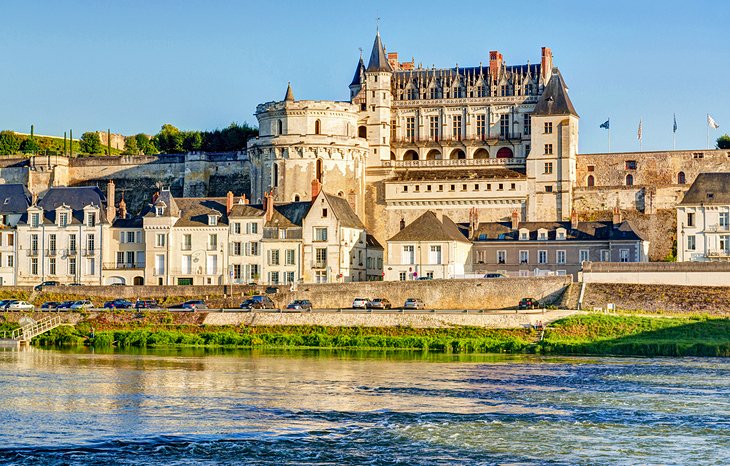
The medieval town of Amboise was built up along the left bank of the Loire River (about 25 kilometers east of Tours) with dense forest in the background.
The city's most fascinating attraction is the Château Royal d'Amboise, where French kings resided for five centuries. Standing proudly on a rocky cliff at nearly 40 meters high, the château offers a fantastic vantage point of the Loire Valley landscape.
Mostly built during the reign of Charles VIII in the 15th century, the castle exemplifies late Gothic architecture with its richly articulated façade and imposing round towers.
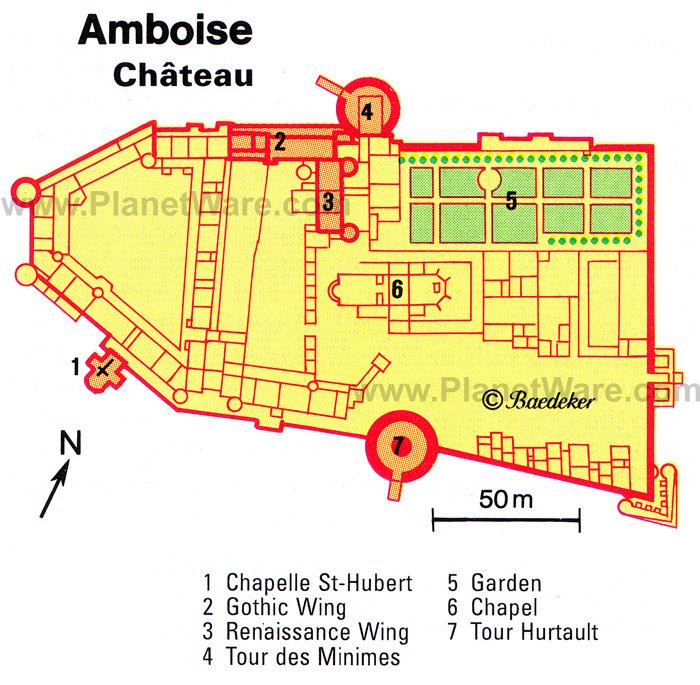
Within the Château Royal d'Amboise is the Chapelle Saint-Hubert, built around 1491 for King Charles VIII and his wife Anne de Bretagne who was the Duchess of Brittany. The chapel is a fine example of Flamboyant Gothic architecture, with intricate sculptures and gargoyles on the façade and a jewel-box interior illuminated by brilliant stained-glass windows.
Another top attraction in Amboise is the Château du Clos Lucé, where Leonardo da Vinci spent the last three years of his life. At this splendid property, you can learn all about the great Renaissance man.
Throughout the year, the Château du Clos Lucé presents permanent exhibitions about Leonardo da Vinci's life story and accomplishments. Temporary exhibits focus on more specific topics related to Leonardo da Vinci, such as his artistic style or his original vision for creating a flying vehicle.
Throughout the year the Château du Clos Lucé hosts cultural events such as nighttime candlelit visits, classical music concerts, and theater performances. Leave time to wander around Leonardo's Garden, which is designed as an open-air museum to explain Leonardo da Vinci's scientific research on topics of geology and botany.
Blois
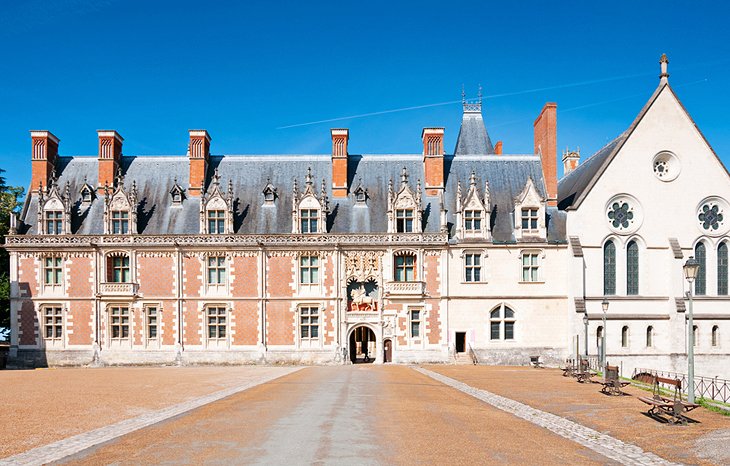
Perched on two hills above the Loire River, the historic city of Blois is full of old-world ambience. The typical characteristics of a medieval town are all found here: narrow medieval streets, half-timbered buildings, a monumental château, and a soaring cathedral.
Boasting a regal pedigree, Blois was a royal residence for seven French kings. During the King Louis XII and King Francis I reigns, the town played a similar role to that of the Château de Versailles for Louis XIV.
The town of Blois has many cultural attractions including the Château Royal de Blois. Originally a fortified citadel, the château reflects changing architectural styles of the eras during which it was built (13th through 17th centuries). For instance, the Francis I wing is a masterpiece of Renaissance architecture with a grandiose octagonal staircase.
A short walk from the château is a former Benedictine church, the 12th- to 13th-century Eglise Saint-Nicolas, renowned for its stained-glass windows that brighten the harmonious sanctuary.
Standing on high ground in the old town, the Cathédrale Saint-Louis displays simple, unadorned vaulted interior and contemporary stained-glass windows. After taking a look at the cathedral, take time to admire the handsome old burghers' houses nearby.
History buffs will also appreciate the town's Centre de la Résistance, de la Déportation et de la Mémoire (6 Place Victor-Hugo), which chronicles the French resistance efforts, the Occupation period, and the Liberation at the end of the Second World War.
Domaine de Chaumont-sur-Loire
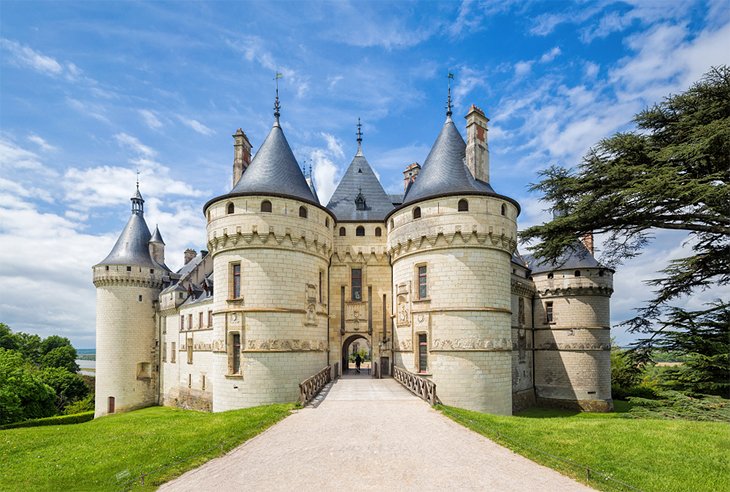
About 18 kilometers away from Blois, the Château de Chaumont-sur-Loire appears as if it's straight from the page of a fairy tale. This multi-towered and turreted fortress-like château was founded in the year 1000, rebuilt by King Louis XI around 1465 and acquired by Catherine de Médicis in 1550.
The château's apartments, including the Catherine de Médicis room, are beautifully appointed with historic tapestries and works of art. Many of the rooms have been recently embellished with renovated furnishings and decor, allowing visitors to appreciate the château in all its original glory. Both the château and its English-style gardens are open to the public.
Adding to its tourist appeal, the Domaine de Chaumont-sur-Loire has a Center for Arts and Nature that presents contemporary "Art Season" exhibits, changing annually to showcase the work of emerging artists, with artworks, sculptures, and creative installations displayed throughout the château and gardens.
The château also hosts the "Festival International des Jardins," a garden landscape design festival that draws inspiration from concepts in literature and poetry.
Address: 41150 Chaumont-sur-Loire
Tours
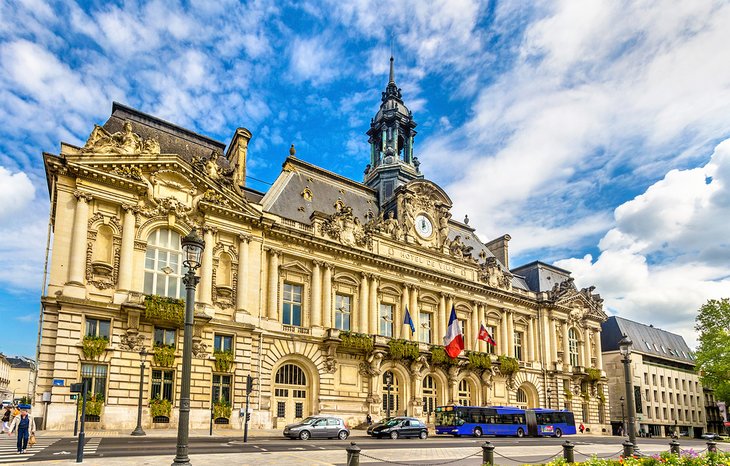
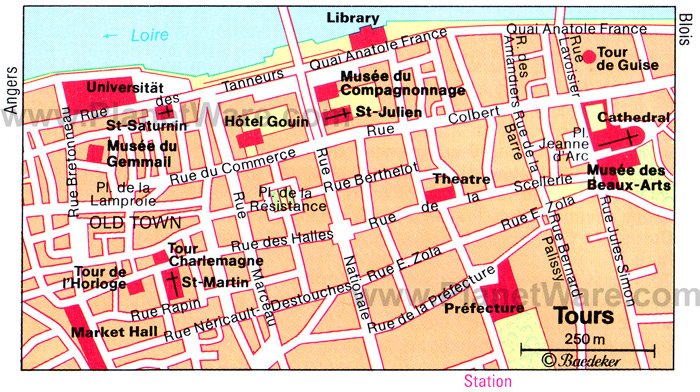
This historic city is a pleasure to discover by taking a leisurely stroll. A walk through the cobblestone streets between Place Plumereau and the Place du Grand-Marché will give an impression of the character of Vieux Tours (the old town).
With its tree-lined courtyard space, bustling outdoor cafés, and handsome half-timbered houses, the Place Plumereau is a particularly inviting place to stop.
Tourists should plan to spend some time at the Cathédrale Saint-Gatien to admire the Flamboyant Gothic façade, as well as the glorious vaulted sanctuary, illuminated by 13th-century stained-glass windows.
Steps away from the cathedral is the Musée des Beaux-Arts de Tours, which showcases masterpieces of fine art from the 14th to the 20th century, including paintings by Rubens, Rembrandt, Delacroix, Degas, and Monet.
To the north of the cathedral, the medieval Château de Tours has witnessed important historical events such as the marriage of Marie d'Anjou to future king Charles VII and Joan of Arc's return after leading the French to defeat the English army at Orléans. The château now hosts contemporary art expositions.
For another dose of culture, tourists can continue walking (about 15 minutes west of the Château de Tours) to the Hôtel Goüin, a Renaissance mansion that hosts cultural events and temporary exhibitions.
Angers
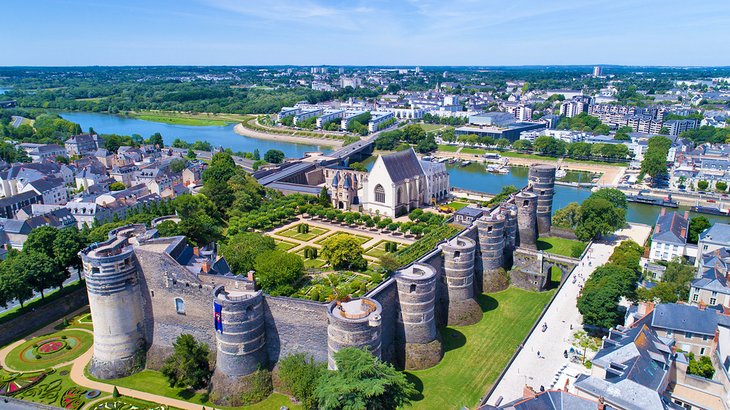
Once the capital of Anjou county, Angers is dominated by the Château d'Angers, perched majestically on a 32-meter-high crag above the Maine River.
Built in the 13th century as a fortress, this vast citadel is enclosed by stout defensive walls, with 17 round towers. In the 14th and 15th centuries, court life flourished here under the Dukes of Anjou, patrons of the arts.
The château is known for its tapestry collection, most notably the Tapestry of the Apocalypse, an important work of medieval art. One of the fun things to do while visiting the castle is to take a walk along the ramparts, which afford panoramic views of the surrounding landscape.
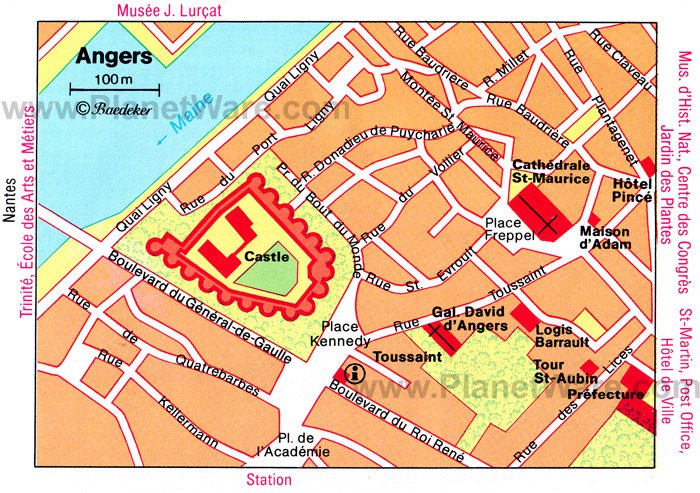
In the old town of Angers, the Cathédrale Saint-Maurice d'Angers has unusual architectural details. The spacious interior features three large 12th-century domes, known as "Angevin Gothic" or "Plantagenêt" vaulting. Not to be missed are the medieval stained-glass windows, in particular the "Glorification de la Vierge" window.
A short walk south of the cathedral, the Musée des Beaux-Arts has a superb collection of fine art housed in a stately 15th-century hôtel particulier (mansion) that is listed as a Historic Monument. A 15th-century vaulted hall and a 17th-century refectory building are also used to display some of the museum's collection.
Another must-see landmark is the Collégiale Saint-Martin, a Romanesque church with elements dating to the Merovingian (5th and 6th centuries) and Carolingian (10th century) eras, as well as the Gothic period.
Other cultural attractions include the Galerie David d'Angers, which displays the sculptures of Pierre-Jean David in a renovated 13th-century abbey church; the Musée Jean-Lurçat et de la Tapisserie Contemporaine, which showcases contemporary tapestries; and the Musée Pincé, devoted to Greek, Egyptian, Roman (and other) antiquities.
For families with kids, it's well worth taking the 10-minute drive outside of Angers' city center to visit the Terra Botanica. This unique amusement park is found within extraordinary gardens where thousands of plant species flourish. All the rides and exhibits at the park feature a botanical theme.
Chinon and Château d'Ussé
With its ruined castle looming from above on a steep ridge of a hill, the town of Chinon has a romantic ambience. The Forteresse Royale de Chinon dates back to the 10th century and is a masterpiece of medieval architecture.
On March 9, 1429, Joan of Arc had an important meeting with the Dauphin Charles at the fortress. During this meeting, Charles was convinced to send his army to end the siege of Orléans (a pivotal event during the Hundred Years War) and to become king (he was later crowned Charles VII at Reims).
The old town lies between the fortress and the Vienne River. The Rue Voltaire, with its 15th- and 16th-century houses and the 12th-century Eglise Saint-Maurice, are particularly worth seeing.
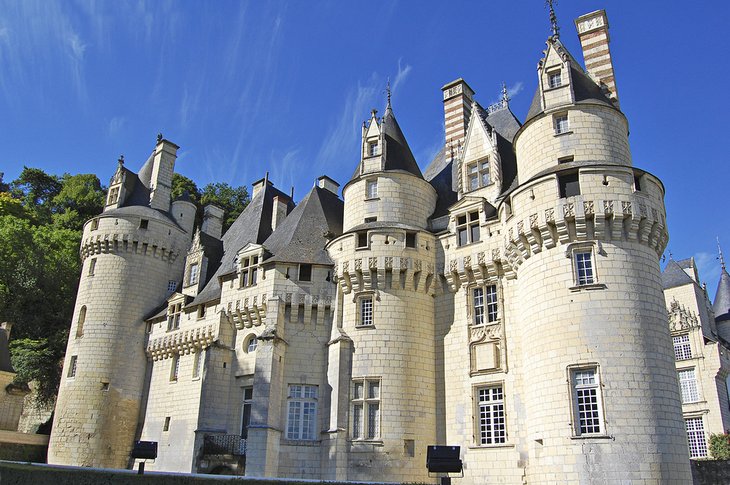
A vision of a fairy-tale fantasy is 12 kilometers from Chinon at the Château d'Ussé, the castle that inspired Charles Perrault to write Sleeping Beauty. This privately owned château is home to the Duke of Blacas and his family.
The Château d'Ussé boasts a grand staircase designed by Jules Hardouin-Mansart, one of the architects of the Château de Versailles. On the lovely grounds of the Château d'Ussé, the French formal garden was created by André Le Nôtre who landscaped Versailles.
Le Mans
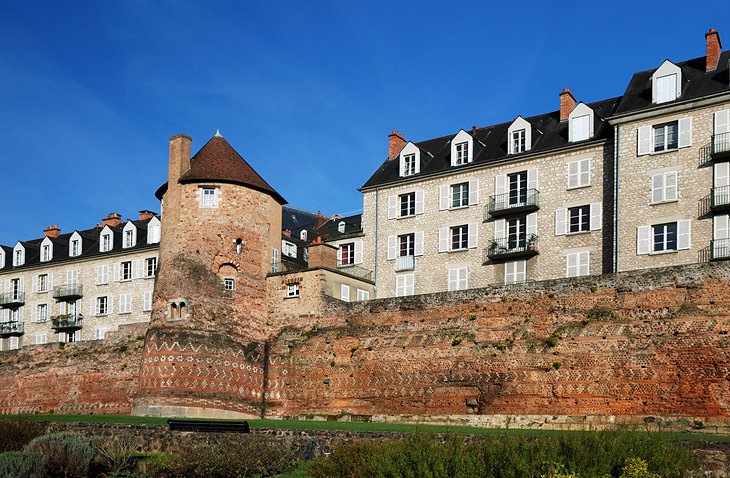
Surrounded by remnants of ancient Gallo-Roman walls and brimming with old-world charm, the historic section of Le Mans known as the "Cité Plantagenêt" is a delightful escape from the modern world. This gem of an old town covers 20 hectares, filled with cobblestone streets, half-timbered houses, and Renaissance mansions.
The main thoroughfare of the Cité Plantagenêt is the Grande Rue. Tourists should stop to notice the Renaissance mansion, Maison d'Adam et d'Eve (69 Grand Rue at the crossing of Rue du Bouquet), before ambling along the Rue de la Reine Bérengère until reaching the Cathédrale Saint-Julien, renowned for its flying buttresses and medieval stained-glass windows.
Also within the Cité Plantagenêt are two pleasant green spaces, the Bicentenary Square on the Rue de la Verrerie, which has a rose garden and benches for relaxing, and the Robert Triger Square, with a view of the cathedral and a small garden of aromatic plants.
Just outside the Cité Plantagenêt is the Musée de Tessé, a fine arts museum that displays paintings, sculptures, and decorative objects from the 14th to 20th centuries, as well as Egyptian antiquities, including a reproduction of Nefertari's tomb.
Also beyond the Cité Plantagenêt is the Eglise Notre-Dame-de-la-Couture, a former Benedictine abbey church with a Virgin and Child statue sculpted by renowned Renaissance artist Germain Pilon.
On the right bank of the Sarthe River, the Eglise Notre-Dame-du-Pré offers the chance to experience a serene Romanesque sanctuary.
Of course, car-racing enthusiasts will want to visit the Musée des 24 Heures du Mans near the Circuit des 24 Heures race track. This museum presents the story of the Le Mans automobile race and exhibits Ferrari, Porsche, Jaguar, and other race cars, including actual winning vehicles.
Saumur
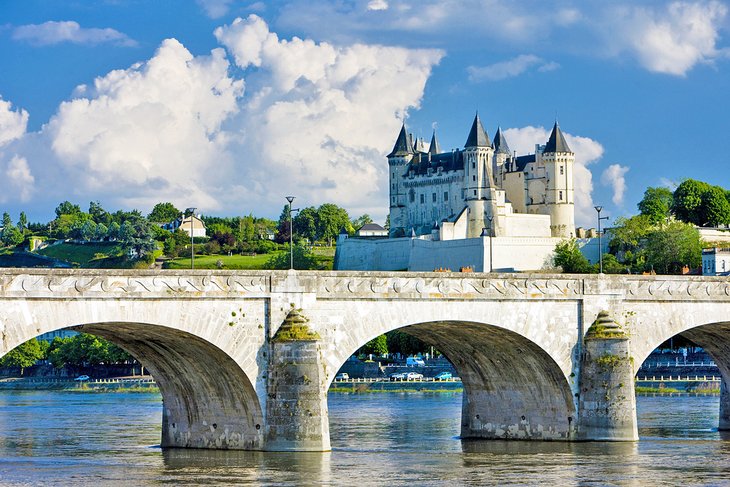
Halfway between Angers and Tours, the medieval town of Saumur is at the heart of the historic Anjou region where the pastoral landscape is dotted with woodlands, vine-covered hills, flower fields, and small farms.
Saumur has one of the most impressive of the Loire Valley châteaux, built in the 14th century on a hill high above the Loire River, creating a striking impression from far in the distance. Originally, the Château de Saumur was the property of the Counts of Anjou. Later, it was converted into a royal residence by Louis IX (Saint Louis) in the early 13th century. Today the château is classified as a Historic Monument.
The Château de Saumur contains the Musée des Arts Décoratifs et du Cheval (Museum of Decorative Arts and Horses), which has a collection of decorative works of art, furniture, tapestry, and ceramics from the 14th to 18th centuries, along with exhibits related to horses. Also not to be missed are the castle's gardens and the outdoor terrace overlooking the Loire Valley landscape.
Those interested in French gastronomy can discover an important culinary ingredient that's cultivated in the area around Saumur: "Champignons de Paris" (known as "button mushrooms"). The prized culinary ingredient is destined for use in Coq au Vin (chicken in wine sauce), Boeuf Bourguignon (Beef Burgundy), traditional quiches, and other recipes.
The Musée du Champignon offers a peak into the intriguing world of mushrooms. Within the museum's chilly caves are over 250 species of wild mushrooms along with educational displays about how mushrooms grow. Every year, the museum harvests 10 tons of mushrooms, including oyster, shiitake, and button mushrooms.
Château de Montreuil-Bellay
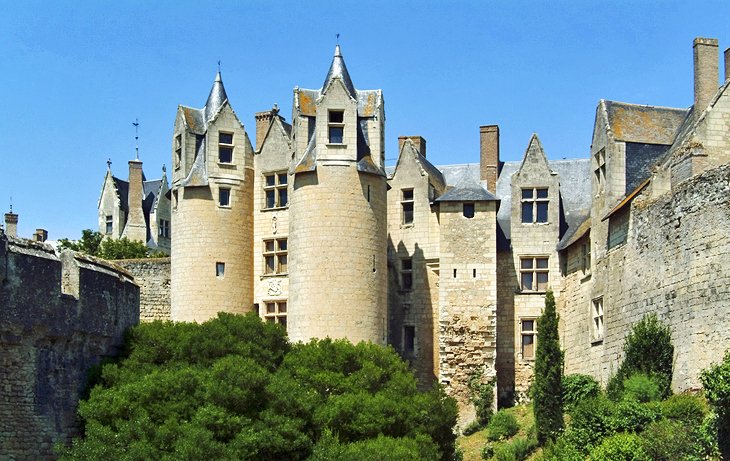
The 11th-century Château de Montreuil-Bellay was designed as an impregnable citadel by Foulques Nerra, the Count of Anjou.
By the late 15th century, the château served as a country manor estate instead of a fortress. The austere building, with its 600 meters of ramparts and 13 defense towers, was transformed into a luxurious palace.
Open to the public for independent visits and guided tours, the Château de Montreuil-Bellay gives tourists access to view two levels of the building: the cellars and the fully furnished rooms of the ground floor, including the Duchess of Longueville's bedroom; a well-preserved medieval kitchen; a dining room with traditional beamed ceiling; and a small music room.
Listed as a Historic Monument, the privately owned château offers accommodations and a spa. It's a relaxing place to stay, with the estate nestled in verdant gardens, full of shady lime trees and fragrant roses. Also on the property is the 15th-century Collégiale Notre-Dame church, decorated with the coats of arms of the château's Lords.
Address: Château de Montreuil-Bellay, 49260 Montreuil-Bellay
Château de Villandry
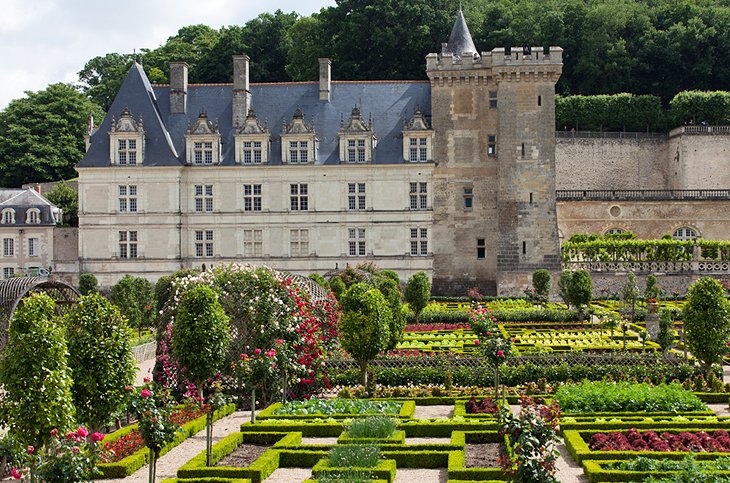
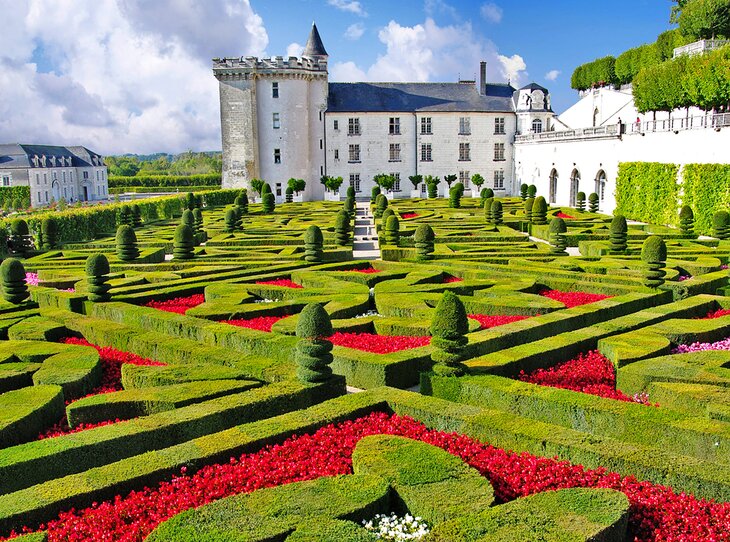
The Château de Villandry is renowned for its gorgeous grounds, created during the Renaissance era. The formal Ornamental Garden was created in the 16th century. Orderly rows of manicured shrubbery and tidy flower beds distinguish the landscaping.
The grounds also include a Kitchen Garden, with vegetables laid out in decorative geometric forms, and an Herb Garden with 30 varieties of culinary and medicinal herbs, planted in circular beds to symbolize eternity. Other highlights include a maze and the view of the village of Villandry and its Romanesque church in the distance.
The château's eagerly awaited Nuits des Mille Feux (Nights of a Thousand Lights) take place on several weekend evenings in July and August, when the gardens are illuminated with 2,000 candles. During these special nighttime openings, you can take a magical stroll through the gardens while enjoying entertainment and fireworks.
Address: 3 Rue Principale, 37510 Villandry
Official site: https://www.chateauvillandry.fr/en/
Loches
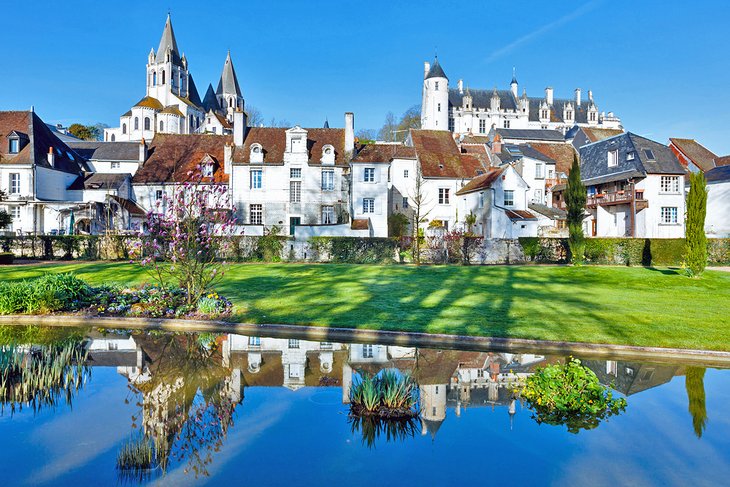
Listed as one of the "Plus Beaux Détours de France" (Most Beautiful Detours of France), the historic town of Loches offers old-world charm, alluring gardens, and picture-perfect scenery alongside the Indre River, a left-bank tributary of the Loire.
On the hill above the modern section of Loches is the Cité Médiévale, the medieval city, fortified by a two-kilometer circuit of ramparts. Tourists enter the Cité Médiévale through the 14th- to 15th-century Porte Royale. Within the walls is a captivating medieval world of winding cobblestone streets, quiet pedestrian lanes, and ancient Tuffeau stone buildings.
Built on a rocky spur (inside the Cité Médiévale) is the Collégiale Saint-Ours, a Romanesque church originally founded in 962 but mostly dating to the 12th century, and the Château de Loches, dating from the 15th to 16th centuries.
A delightful 18-kilometer detour from Loches (or 30 kilometers from Chenonceaux), Montrésor is one of France's "Most Beautiful Villages." This village is perched above the Indre River and crowned by the Château de Montrésor. Wander the quaint medieval streets and visit the château and the 16th-century Collégiale Saint Jean-Baptiste.
Abbaye Royale de Fontevraud
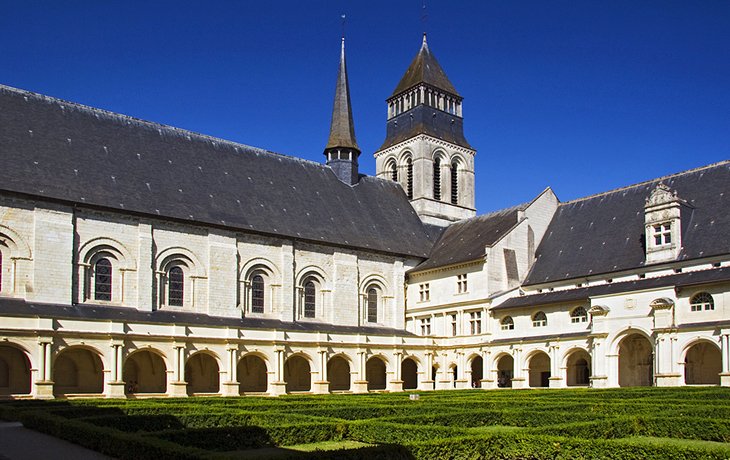
One of the largest surviving medieval monasteries in Europe, the Abbaye Royale de Fontevraud is nestled in a verdant valley near the Loire River.
This Benedictine abbey was founded in 1099 by an eclectic and iconoclastic preacher named Robert d'Arbrissel, considered a radical because he created a community for people of diverse social backgrounds.
The abbey was always run by an abbess, who governed both male monks and female nuns. A succession of 36 abbesses ran the abbey over the course of seven centuries.
Queen Eleanor of Aquitaine, wife of King Henry II of England, had strong ties to the abbey, which was her favorite place of worship. During the last years of her life, Queen Eleanor lived at the abbey.
The Fontevraud Abbey is open to the public for self-guided and guided tours. You can see the 12th-century Romanesque abbey church; the cloister; the kitchen, complete with the original fish smokehouse used to make smoked salmon; and a lush garden planted with vegetables, herbs, and fruit trees.
Another highlight of visiting the abbey is its haute-cuisine restaurant, Fontevraud Le Restaurant. For those who would like to spend the night at a spiritually inspiring retreat, the Fontevraud L'Hôtel on the property pampers guests with luxurious, contemporary-style rooms in the former Saint-Lazare priory, once the residence for a community of nuns.
The Royal Abbey of Fontevraud could be a good addition to a sightseeing itinerary with Saumur (14 kilometers way) and Chinon (16 kilometers away).
Address: Abbaye Royale de Fontevraud, 49590 Fontevraud-l'Abbaye
Château de Beauregard
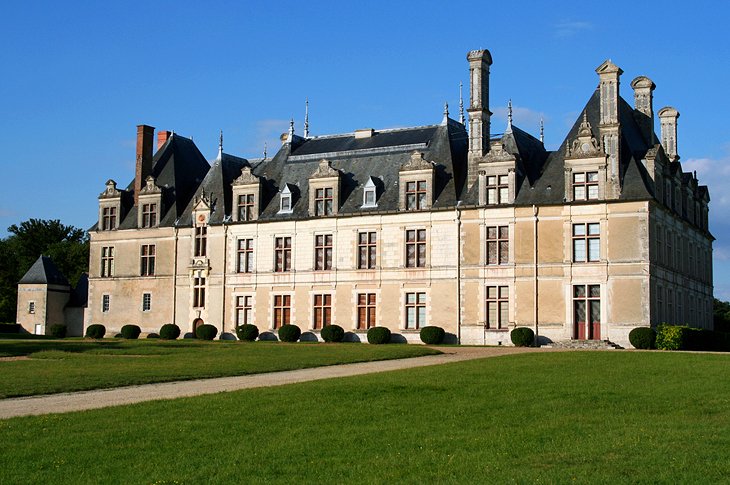
This picture-perfect Renaissance château is in the heart of the Loire Valley, just 10 kilometers from Blois and 20 kilometers from Chambord. Originally a manor house, the Château de Beauregard became the hunting lodge for Francis I, who reigned during the first half of the 16th century.
During the 16th and 17th centuries, the castle served as a residence for the king's ministers. This stately building reflects the grandeur of its rich heritage. Three centuries of France's history are represented in the château's Portraits Gallery, with 327 portraits of kings and important political figures.
An expansive parkland surrounds the castle, including gardens planted with ancient cedars, cherry blossom trees, and flowering plants. Depending on the season, vibrant azaleas, camellias, rhododendrons, and a hundred variety of fragrant heirloom roses enliven the grounds.
Those who spend more time wandering will come across the ruins of a 14th-century chapel, a landmark on the Chemin de Saint-Jacques medieval pilgrimage trail.
Address: 12 Chemin de la Fontaine, 41120 Cellettes
Vendôme
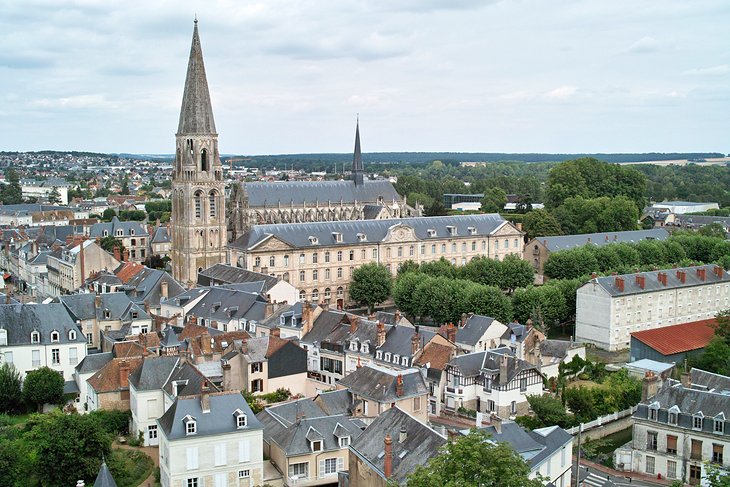
This historic town was an important medieval pilgrimage destination. The Abbaye de la Trinité, was a stopover, close to Saint Martin's tomb in Tours, along the pilgrims' road to Santiago de Compostela.
At the center of Vendôme is the Place Saint-Martin, and nearby is the Tour Saint-Martin, all that remains of a Renaissance church. Other noteworthy churches in Vendôme include the Chapelle Saint-Jacques, a Gothic chapel now used for cultural expositions, and the 15th-century Eglise Sainte-Marie-Madeleine, with lovely stained-glass windows.
One of France's "Most Beautiful Villages," Lavardin is 18 kilometers away from Vendôme amid the rolling hills and cliffs of the Loire Valley. Lending an element of romance to the village are the ruins of an old fortified castle that withstood an attack by Richard the Lionheart but was overtaken by King Henry IV's troops.
Châteaudun
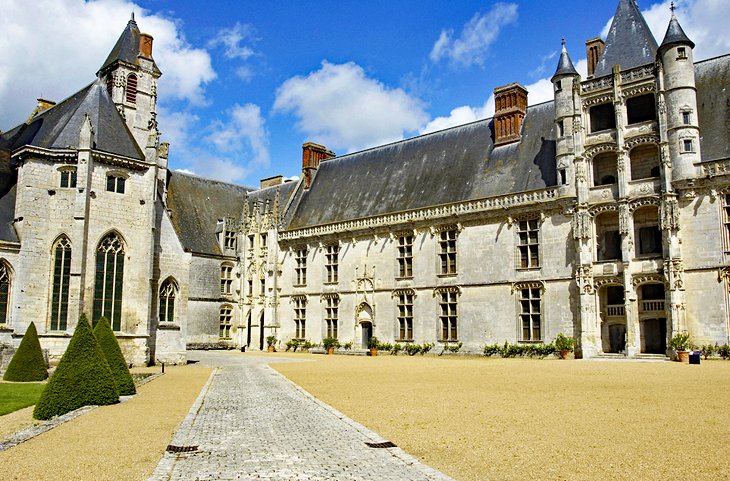
Châteaudun is perched high on a rocky outcrop, the perfect defensive location during the Middle Ages.
In the 12th century, the Count of Blois chose this lofty, difficult-to-access spot to build a fortress featuring a massive 31-meter tower, and that feudal castle is considered the first château of the Loire Valley.
In the mid-15th century, the Château de Châteaudun became the property of comrade-in-arms and close friend of Joan of Arc, Jean de Dunois, who tore down the old wing of the castle to construct the Sainte-Chapelle (a Holy Chapel designed to hold a relic, the Cross of Christ).
After the Hundred Years' War, the château was enhanced in Renaissance style to suit a more leisurely and luxurious way of life. The room décor became more refined, and large kitchens were added to prepare princely meals.
On the castle's attractive grounds, the unique hanging garden reflects a taste for the lavish. From the château's outdoor terrace are stunning views of the Loire landscape.
Near the château is the old town of Châteaudun, a jumble of cobblestone pedestrian streets enclosed within ancient ramparts. While strolling atmospheric lanes, discover quaint half-timbered houses (mainly on Rue Saint-Lubin and Rue des Huileries) and historic churches, including the Eglise de la the Madeleine with a Romanesque façade.
Tourists will also enjoy the town's pleasant parks and the wide selection of shops and restaurants. An excellent choice is Aux Trois Pastoureaux, a traditional restaurant that offers seasonal cuisine made from scratch and a "medieval menu" that's fun for tourists.
Outside the old town, in the more modern area of Châteaudun (at 3 Rue Toufaire), is the Musée des Beaux-Arts et d'Histoire Naturelle (Museum of Fine Arts and Natural History), which displays a diverse collection of archaeological objects, paintings, fine porcelain, and interior decor.
Abbaye de Fleury
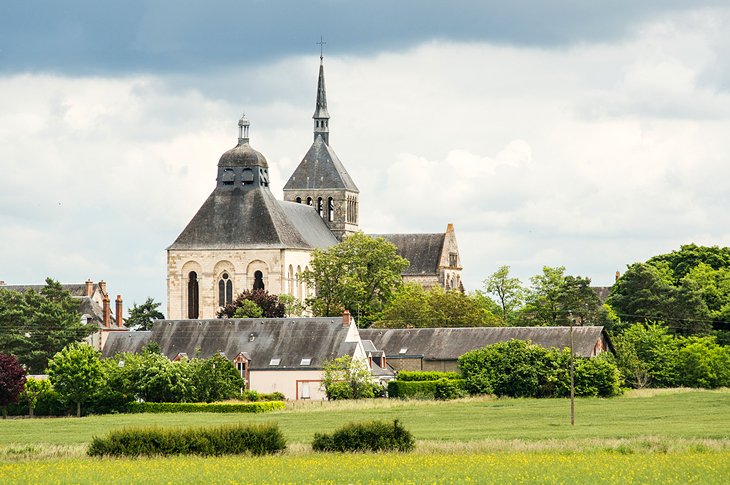
In the little village of Saint-Benoît-sur-Loire, the Abbaye de Fleury is an oasis of peace and spirituality. The architecture and the rural setting create a sense of tranquility that is ideal for meditation.
This Benedictine abbey was founded in the 7th century and its basilica, built between 1067 and 1218, is one of the finest Romanesque churches in France. The most outstanding feature of the church is the porch tower, with its ornately carved capitals.
Inside the 12th-century crypt are the relics of Saint Benedict, brought here from the Abbey of Monte Cassino (near Naples in Italy) in the late 7th century.
The monastic community of the Abbaye de Fleury was dissolved at the time of the French Revolution but was re-established in 1944 by a group of Benedictine monks. Today this working monastery is home to a community of 27 monks.
In order for residents to fulfill the monastic ideal of creative work, the Abbaye de Fleury has an Atelier de Porcelaine, where monks handcraft porcelain plates, mugs, and bowls, and an Atelier de Confiserie, where specialty confections such as fruit candies, caramels, and honey bonbons are created. These artisanal products are available at the abbey's boutique.
Although much of the abbey is reserved for use by the monastic community, the basilica is open to the public; visitors may spend time in prayer or attend Mass, which is celebrated daily. The abbey also welcomes visitors for spiritual retreats and pilgrims who arrive here to venerate the relics of Saint Benoît.
Address: Place de l'Abbaye, 45730 Saint-Benoît-sur-Loire
Château de Villesavin
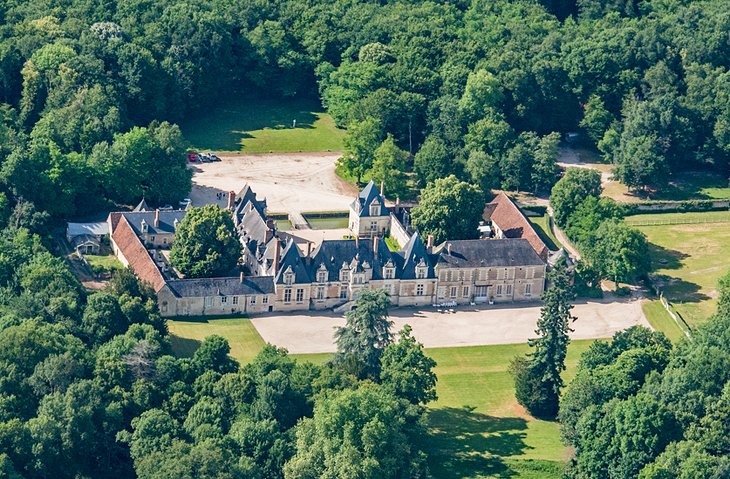
The Château de Villesavin was created by French and Italian master craftsmen and builders who had constructed grand royal palaces such as Chambord.
Unlike many castles of the Loire Valley, this 16th-century manor house has been well maintained in its original state for four centuries and today is still a private home, owned by the Sparre family.
The château's 27-hectare property includes tranquil green space and pristine forests filled with many animals. You can often see deer, rabbits, and squirrels. Kids will have fun at the castle's Ferme des Petits, a miniature farm where chickens, cows, goats, rabbits, and sheep are raised.
The property includes the Musée du Mariage, with a collection of vintage wedding dresses, and trousseau à la chambre nuptiale (bridal trousseau) items, and the Musée de Voitures Hippomobiles et d'Enfants, which displays 19th-century horse-drawn vehicles and children's cars that were pulled by dogs, goats, or sheep.
The Château de Villesavin is in the small village of Tour-en-Sologne, which is just 10 kilometers away from the Château de Chambord.
Address: Château de Villesavin, 41250 Tour-en-Sologne
Château de Sully-sur-Loire
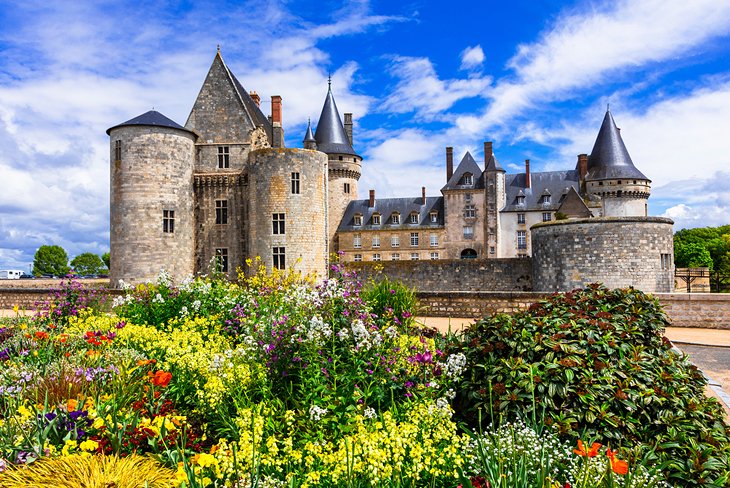
Like the castles of fairy-tale imagination, the Château de Sully-sur-Loire is encircled by wide moats that are filled with water. Multiple turreted towers add to the storybook impression.
The imposing appearance reflects the original military purpose of the medieval château. When Maximilien de Béthune (the Duke of Sully) bought the property in the early 17th century, he added an artillery tower and defensive walls reinforced by canons to ensure an impenetrable fortress.
The interior has been updated throughout the centuries, but has retained much of its medieval character. Especially interesting are the apartments of the Duke of Sully and his wife, and the Salle d'Honneur family portrait gallery. The château also has a large park, offering a peaceful retreat in nature.
Address: Chemin de la Salle Verte, 45600 Sully-sur-Loire
Château de Brissac
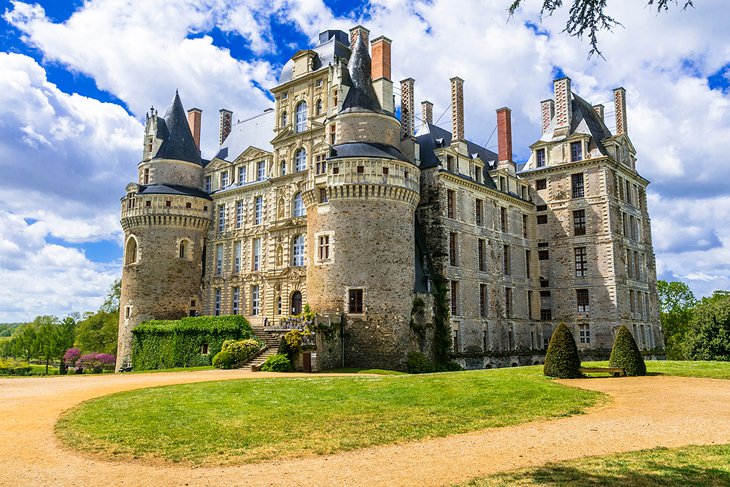
A remarkable piece of living French history, the Château de Brissac has been in the same family for more than twenty generations.
It is currently owned by the 13th Duke of Brissac, descendants of Lord René de Cossé, who purchased the castle in 1502. The Marquis Charles-André and the Marquise Larissa de Brissac reside in the château along with their four children.
Besides its prestigious heritage, the Château de Brissac has the distinction of being the tallest château in the Loire Valley, thanks to its seven stories and 204 rooms.
This majestic castle is set in a bucolic parkland with many benches, and walking paths. The palatial interior features rooms with gilded ceilings, exquisite furniture, and Venetian chandeliers. One of the most delightful rooms is the castle's 200-seat Belle Époque Opera House.
For those who'd like to feel like landed gentry for a few nights, the castle offers bed-and-breakfast accommodations. Guest rooms are decorated with authentic antique-style furnishings and have views of the park's woodlands and meadows.
Throughout the year, the château hosts events such as a Venetian Carnival, an Easter egg hunt on Easter Sunday, and a four-day Flower Arrangement Festival.
Address: Château de Brissac, 49320 Brissac en Val de Loire