Attractions & Places to Visit in Nova Scotia
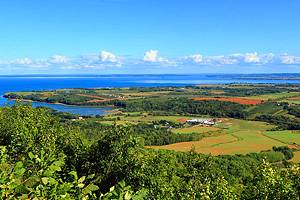
Pretty and peaceful, Nova Scotia is Canada's second smallest province, a peninsula on the eastern edge of the Canadian mainland. But its lengthy coastline is dotted with fishing harbors, sandy beaches, plump islands, and other beautiful places to visit. The scenery varies greatly, from the foggy Atlantic Ocean in the southeast to the tidal salt marshes of the Bay of Fundy in the west and Gaelic highlands of Cape Breton to the north.
In these maritime latitudes, Nova Scotia has a pleasantly breezy if rather damp climate. Summer is bright and sunny, but weather conditions can often cause fog, with snow in winter.
Halifax is the capital and largest city. In 1604, the French, including Samuel de Champlain, settled the Annapolis Valley, founding Port-Royal, the first lasting European settlement north of Florida. They called it Acadia, a name that is now used to refer to all French settlement in the Maritimes.
Find the best places to visit in this fascinating province with our list of the top attractions in Nova Scotia.
- Cabot Trail
- Peggy's Cove
- Fortress of Louisbourg National Historic Site
- Cape Breton Highlands National Park
- Halifax Citadel National Historic Site
- Maritime Museum of the Atlantic
- Kejimkujik National Park
- Halifax Harbour
- Lunenburg
- Canadian Museum of Immigration at Pier 21
- Annapolis Royal Historic Gardens
- Halifax Public Gardens
- Shubenacadie Provincial Wildlife Park
- Grand Pre National Historic Site
- Port-Royal National Historic Site
- Hall's Harbour
- Ross Farm Museum
- Map of Attractions & Places to Visit in Nova Scotia
Cabot Trail
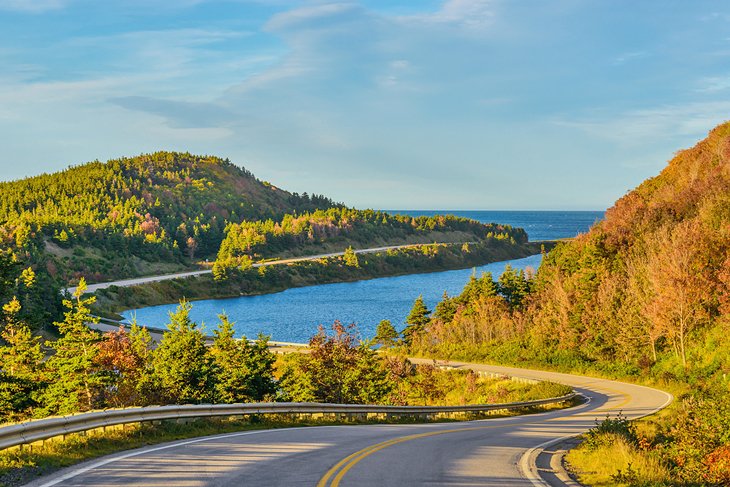
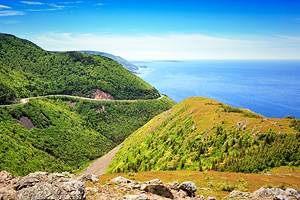
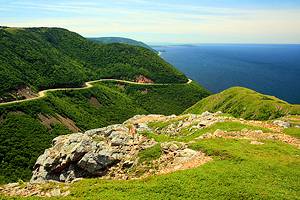
A 300-kilometer scenic drive rings the northwest coast of Cape Breton Island and Cape Breton Highlands National Park. It is a coastal route, where the highest mountains in Nova Scotia dramatically meet the Gulf of St. Lawrence. Cliffs, beaches, viewpoints, and a twisting road give countless photo opportunities, and this is a very popular motorcycle tour route.
Many small communities and tourist attractions line the route, including a variety of local artisans and unique shops. Hiking is one of the popular things to do. There are also many excellent hiking trails, and tourists can either hike on their own or hire a local guide to show them the best spots.
Cabot Trail unofficially begins and ends in Baddeck, home to the father of the telephone, Alexander Graham Bell. Autumn is a favorite time to drive the Cabot Trail owing to the region's vibrant fall colors.
Location: Cape Breton Island, Nova Scotia
Peggy's Cove
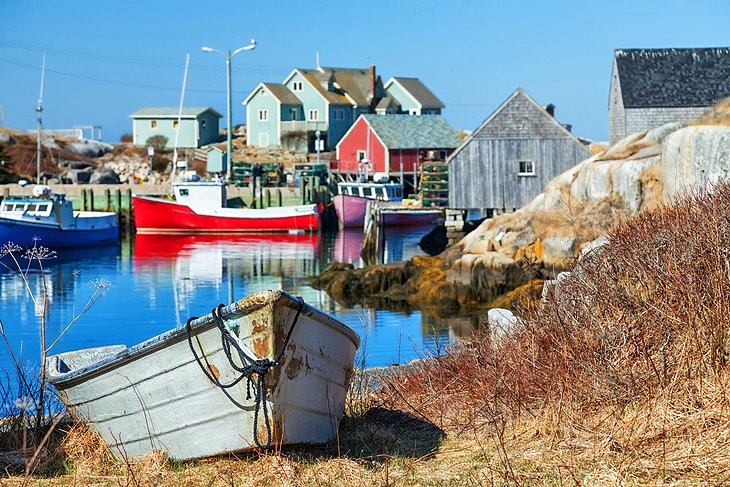
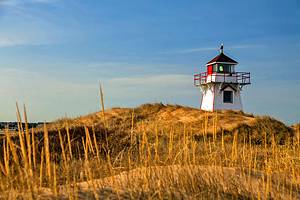
About 43 kilometers southwest of Halifax, the fishing village of Peggy's Cove has a back-in-time feel. Peggy's Point Lighthouse, one of Canada's most photographed lighthouses, sits on the foggy Atlantic Coast marking a perilous point. Stark, wave-battered granite bluffs surround the lighthouse, and tourists should exercise extreme caution if exploring the rocky shoreline.
Fishing wharves and boathouses line the shore of this active fishing community, and colorful heritage homes and art galleries line the winding road. Among these is the deGarthe Gallery and Museum, home to a fine collection of the work of local artist William E. deGarthe, a Finnish immigrant who was inspired by Peggy's Cove and its fishermen at a young age.
Tourists with some time to spend exploring the area can take a self-guided sightseeing tour of the Coastal Heritage Trail, which has been described as a "museum without walls." Top destinations include the Peggy's Cove Preservation Area, Pioneer Cemetery, Bishop's Park, and many other historically significant sites like the SS Atlantic Heritage Park.
The park includes a museum with many artifacts and information about the tragic demise of the ship and its crew, as well as a nice boardwalk and a memorial.
This is an extremely popular day-trip destination from Halifax, so be prepared for crowds of tourists, especially near the lighthouse.
Fortress of Louisbourg National Historic Site
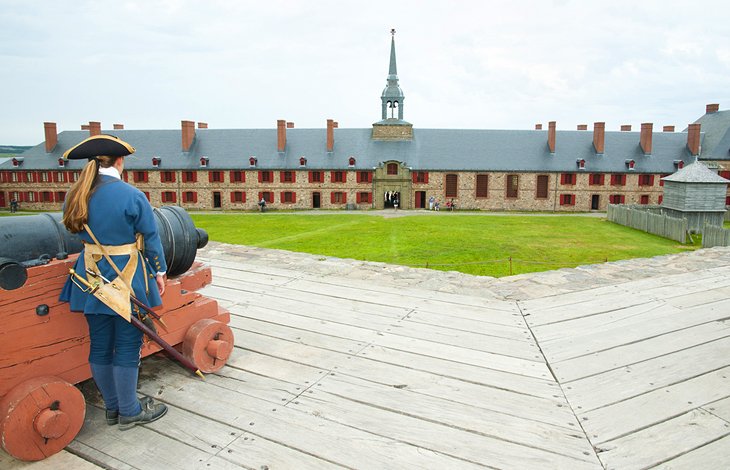
The Fortress of Louisburg National Historic Site is a living history museum, which recreates mid-18th century fort life with more than forty historic buildings, costumed guides, and working establishments. Rebuilt on the site of a 1713 French fort, enormous defensive walls surround the town, some of which were up to 35 feet thick when constructed.
The reconstructed site is now filled with a cast of costumed interpreters who go about daily life, from domestic to military. Visitors can watch servants cook and taste authentic hot chocolate and fresh baked bread, see the merchants hawk their wares, and feel the ground shake as soldiers fire the cannon and their muskets.
Tourists looking for a more immersive experience can choose to spend the night here in a reproduction tent or period home - a truly unique experience for couples looking for a memorable romantic getaway.
Address: 259 Park Service Road, Louisbourg, Nova Scotia
Official site: www.pc.gc.ca/en/lhn-nhs/ns/louisbourg
Cape Breton Highlands National Park
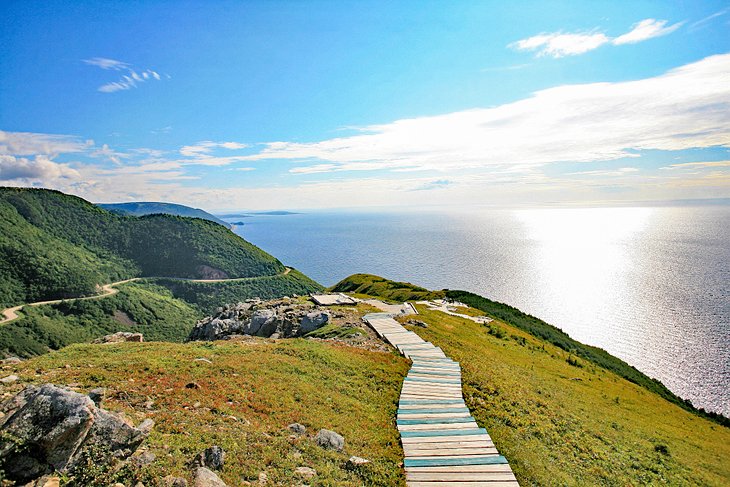
The highest peaks in Nova Scotia are in Cape Breton Highlands National Park, which covers more than 950 square kilometers at the northern tip of Cape Breton Island. Both the coastline of beaches and cliffs and the inland forests and rivers tempt hikers, campers, and families to explore the park.
Wildlife watching is excellent in the national park, with moose, beaver, eagles, and deer often visible from the Cabot Trail scenic drive, which partially cuts through the park.
The park is also home to Skyline Trail, a scenic route laid out in an easy-to-walk wooden boardwalk path. Overlooking the Gulf of St. Lawrence, visitors can spot whales below while enjoying panoramic views of the rugged coastline.
The small Acadian town of Chéticamp lies just outside park boundaries. It is well worth a stop for its small shops and galleries and dining establishments. It is also home to Les Trois Pignons, a unique museum and visitor center that houses a good collection of antiquities and traditional hooked rugs.
Location: Cape Breton Island, Nova Scotia
Official site: www.pc.gc.ca/en/pn-np/ns/cbreton/
Halifax Citadel National Historic Site
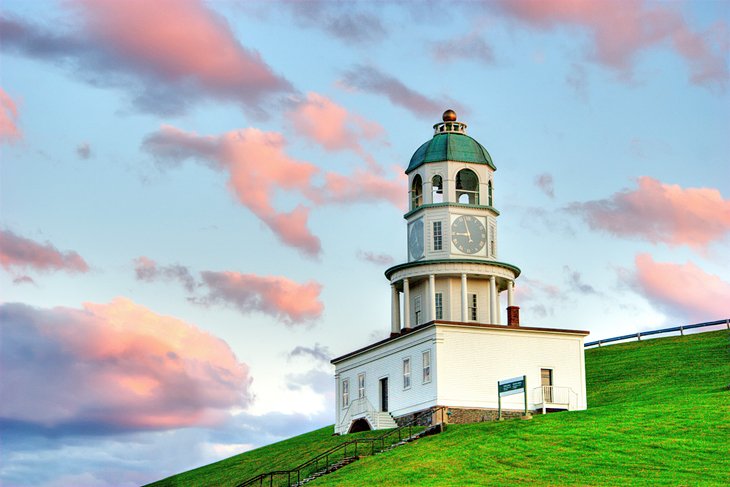
Overlooking downtown Halifax, this hilltop fortress is the remnant of a British garrison that was first established in the 18th-century. Halifax Citadel National Historic Site, which itself was built in 1856, never saw a battle.
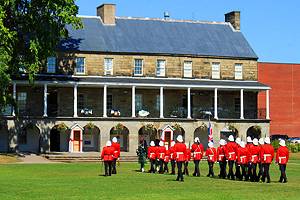
Today, the warren-like tunnels, powder magazine, and barracks have been preserved, and living-history guides give tours. There are reenactments and fortress guards with interpreters dressed in British reds, complete with musket salutes and the sound of bagpipes.
The road leading up Citadel Hill is popular for its city and harbor views, and it passes the Old Town Clock, which Prince Edward commissioned in 1803.
Address: 5425 Sackville Street, Halifax, Nova Scotia
Official site: www.pc.gc.ca/en/lhn-nhs/ns/halifax
Maritime Museum of the Atlantic
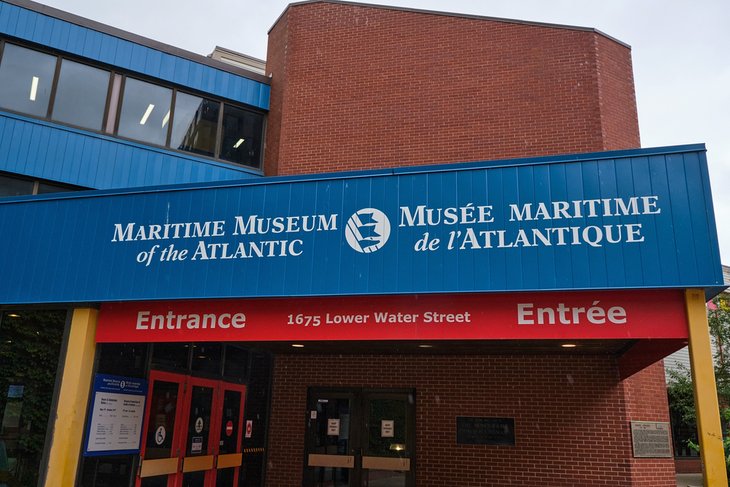
The exhibits and displays at this museum bring the maritime history of the province and the North Atlantic to life, showing visitors the role the sea has played in all facets of local life. Using photographs and personal tales of survivors, excellent multi-media exhibits chronicle the 1917 collision of two ships in the harbor, which caused the Halifax explosion.
Museum collections include more than two hundred model ships, from old sailing craft to ocean liners, freighters, and naval ships. Another part of the museum is in an old ship chandlery, where items were bought to outfit ships for sea.
There is also an extensive exhibit on the recovery efforts after the Titanic sank, Halifax being instrumental in rescue operations. On display are items found on the sea during rescue and later recovered, telling the tale of the ship and the people on board.
Also part of the museum are several craft moored in Halifax Harbour, including Queen Victoria's Royal Barge, a gift to the museum by Queen Elizabeth II. Another historically significant ship is the HMCS Sackville, a corvette class known for bouncing around like a cork in heavy seas, which saw duty during the Battle of the Atlantic in the convoys that kept Britain alive.
CSS Acadia is also open for touring as part of museum admission; it's now retired after long years of service in the Arctic and North Atlantic, charting the ocean floor.
Address: 1675 Lower Water Street, Halifax, Nova Scotia
Official site: https://maritimemuseum.novascotia.ca
Kejimkujik National Park
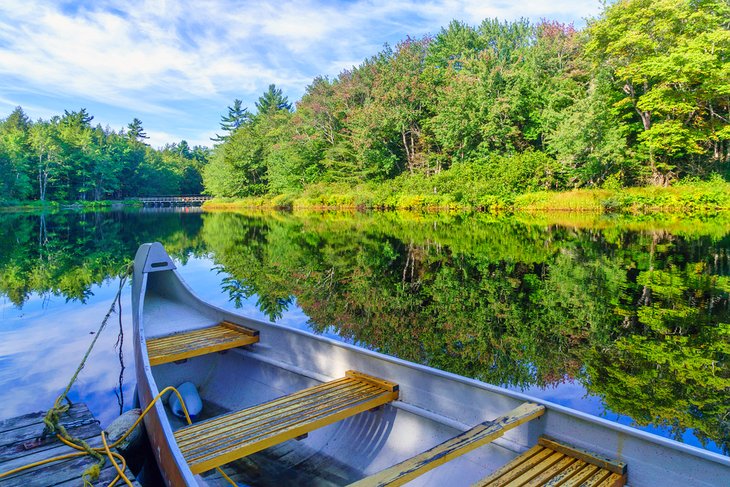
Kejimkujik National Park occupies nearly 400 square kilometers of inland Nova Scotia, with a small seaside adjunct that has a stunning white-sand beach.
One of the biggest draws to this peaceful space is the rich history of the Mi'kmaw people who occupied the land for millennia. Visitors can still see evidence of Mi'kmaw life in the numerous petroglyphs, and learn more about native culture by watching Mi'kmaw craftsman Todd Labrador build birchbark canoes using traditional methods.
The majority of the park is only accessible by hiking or by canoe, making it an excellent place to truly get away. Campsites are located throughout the park for those who want to be completely immersed in nature, or visitors can enjoy the area during the day by hiking or paddling traditional Mi'kmaw routes.
Address: 1188 Saint Catherines River Road, Port Joli, Nova Scotia
Official site: www.pc.gc.ca/en/pn-np/ns/kejimkujik
Halifax Harbour
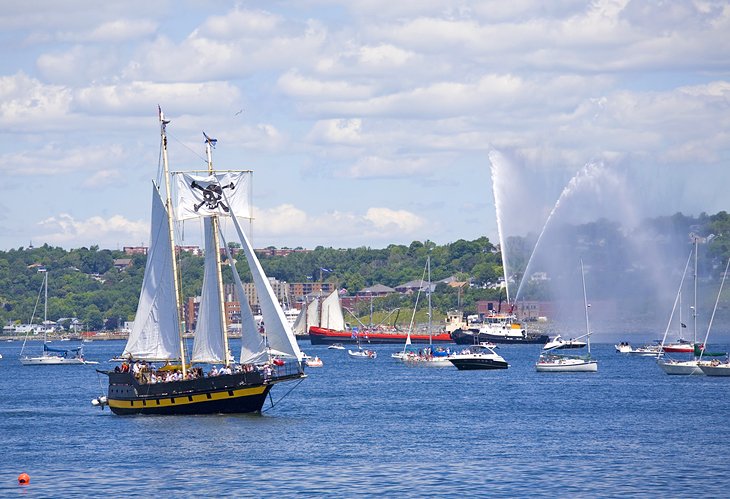
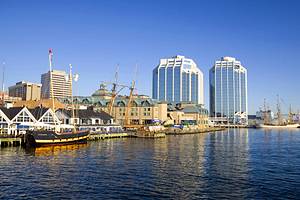
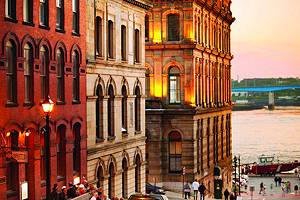
A boardwalk lines the Halifax Harbour, leading from the Canadian Museum of Immigration at Pier 21 to the Maritime Museum of the Atlantic and restaurants. Tugs, sailboats, and navy vessels come and go, and the views look out to Dartmouth across the harbor and Georges Island mid-channel.
This is where you will find the ferry to Dartmouth, as well as plentiful choices if you want to take a sightseeing cruise in the harbor or go whale-watching. Near the ferry terminal, you can find a group of restored heritage buildings and a pedestrian area, which is lively both day and night, full of restaurants that often feature live maritime bands and always offer the freshest of seafood.
Tourists will find more shopping and plenty of goodies to snack on at the Halifax Seaport Farmer's Market, founded in 1750, making it the oldest farmers market in the Americas. The market is open daily and features locally grown, caught, and hand-made items including prepared food.
Lunenburg
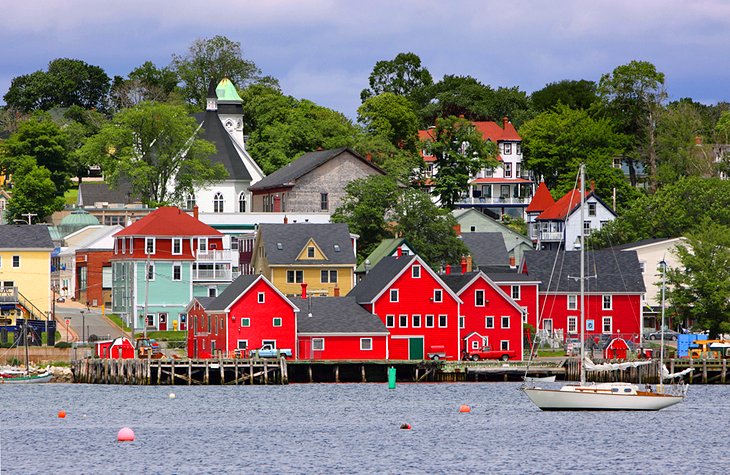
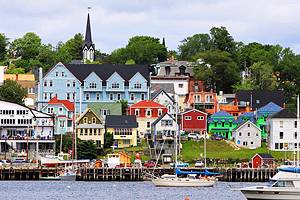
Brightly colored heritage buildings dot the hilly Lunenburg townscape, nearly three-quarters of which are the original structures from the 18th and 19th centuries. Many of these have been turned into inns and bed-and-breakfasts, and the community is a UNESCO World Heritage Site.
Lunenburg's legacy was established when it became an early shipbuilding center. The town's most famous craft is the Bluenose schooner. Built here in 1921, the boat won many international races before sinking off the coast of Haiti. A replica, Bluenose II, is often in port, while other fishing vessels and a schooner can be seen at the Fisheries Museum of the Atlantic.
Along the waterfront, the port is still alive with vessels docking at the wharves and fishermen unloading the catch of the day.
- Read More: Things to Do in Lunenburg & Mahone Bay, NS
Canadian Museum of Immigration at Pier 21

At one time, Pier 21 was the Canadian equivalent to Ellis Island, welcoming twenty percent of the nation's immigrants from 1928 through 1971. Through permanent and changing exhibits, visitors can find out what it was like to travel across the ocean and arrive in a new country.
Many of the exhibits are hands-on, including the chance to actually dress in period costumes, go inside a replica ship, and explore the contents of trunks and crates to learn more about the lives of the immigrants who packed up their most valued possessions.
The museum also has extensive genealogical resources at the Scotiabank Family History Centre, where anyone can go to trace their own family's immigration history free of charge.
Address: 1055 Marginal Road, Halifax, Nova Scotia
Official site: https://pier21.ca/
Annapolis Royal Historic Gardens
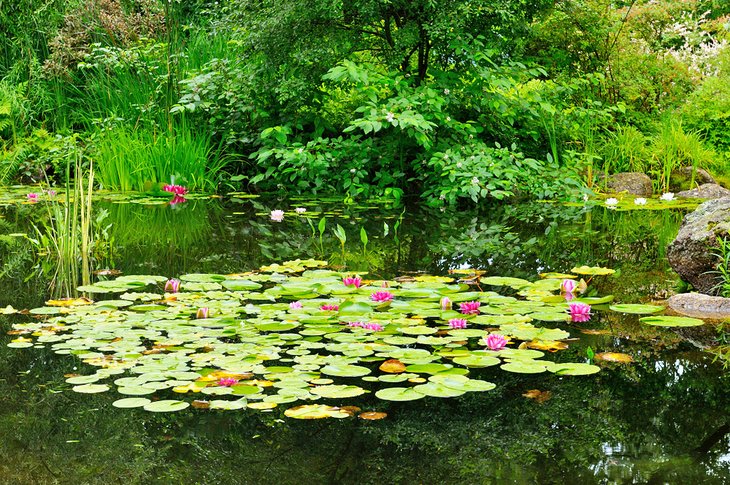
The Annapolis Royal Historic Gardens is one of the finest show gardens in North America, with 10 acres of beautifully planned and expertly executed historical and horticultural beds. The Rose Garden has two thousand bushes set among paths with green lawns, and the Governor's Garden is planted in the style and with the plants of the 1740s.
In a separate section are demonstration plots for current techniques and plants, and there is a winter garden where the plants are chosen for a bark, stem shape, or form that makes them attractive in the winter.
On the back side of the garden, the path looks out over the banks of the river. The gardens are a popular place for weddings, so you may have to sidestep around a happy couple and beaming parents.
Another top historic attraction in Annapolis Royal is the Fort Anne National Historic Site, originally built by the French in 1643 and taken over by the British in the 1750s. While the only remaining buildings are an 18th-century gunpowder magazine and officers barracks, the impressive walls and ramparts are substantially intact.
Address: 441 St. George Street, Annapolis Royal, Nova Scotia
Official site: www.historicgardens.com
Halifax Public Gardens
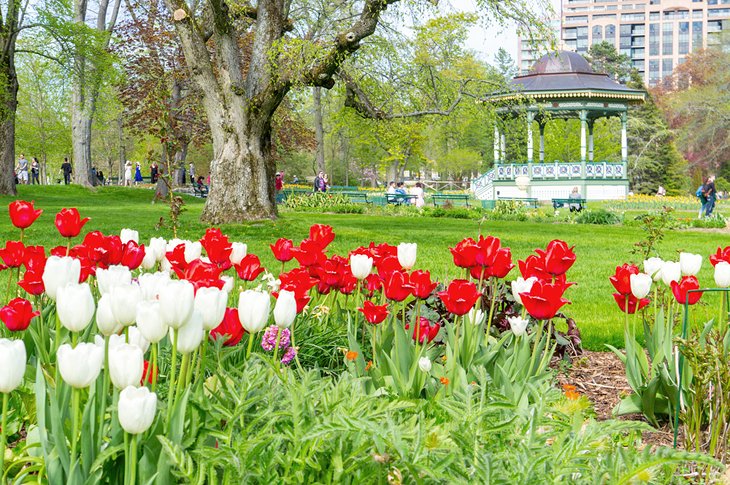
The Halifax Public Gardens are the oldest Victorian gardens in North America, created in 1867 and now an official National Historic Site. Tourists can enjoy an hour-long guided tour of the gardens, which reveals its historic and horticultural significance. The gardens are free to visit and often host both public and private events.
In the spring, the gardens are bright with beds of tulips, daffodils, and irises, and the magnolia and cherry trees are in full bloom. June brings azaleas and rhododendrons, and later in the summer, dahlias, peonies, and roses line the artfully laid-out paths.
Even into November, you will find a variety of color, although the Friends of the Public Gardens Information Desk and park café close at the end of October.
Address: 5665 Spring Garden Road, Halifax, Nova Scotia
Official site: www.halifaxpublicgardens.ca
Shubenacadie Provincial Wildlife Park
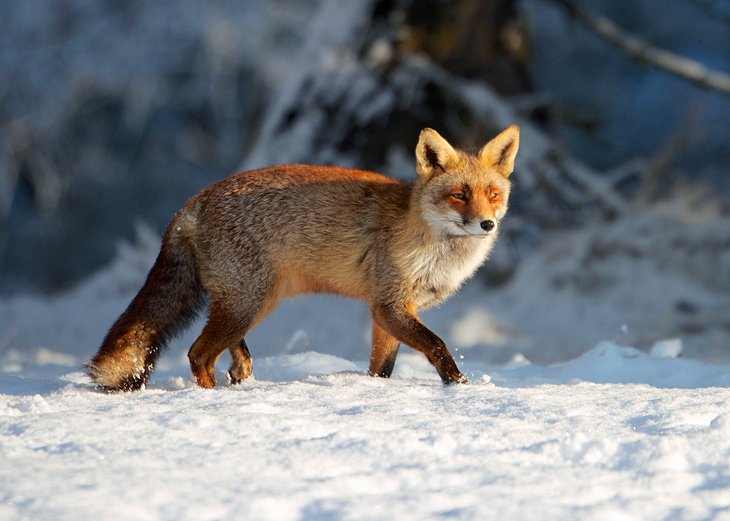
Located 40 kilometers from Halifax, Shubenacadie Provincial Wildlife Park makes an excellent day trip. The park is spread over 40 hectares and is home to a wide variety of native and exotic animal species, including moose, foxes, beavers, wolves, black bears, and cougars. Visitors can interact with many of the park residents by feeding the animals grains provided in dispensers throughout the park.
Horse fanciers take note: the park is the only wildlife park in the world with Sable Island horses.
The park is also home to a variety of birds, including over a dozen species of pheasant and fowl, raptors including the bald eagle, peregrine falcon, and great horned owl, and even emu.
Address: 149 Creighton Road, Lake Egmont, Nova Scotia
Official site: https://wildlifepark.novascotia.ca/
Grand Pre National Historic Site
Acadians settled in Grand Pre in the early 18th century, reclaiming Bay of Fundy salt marshes for agricultural land through a series of dykes. But as Nova Scotia changed hands between the French and British, it brought unrest to the region. When the French-speaking Acadians refused to swear allegiance to England in 1755, the British deported about 10,000 people and destroyed their farms.
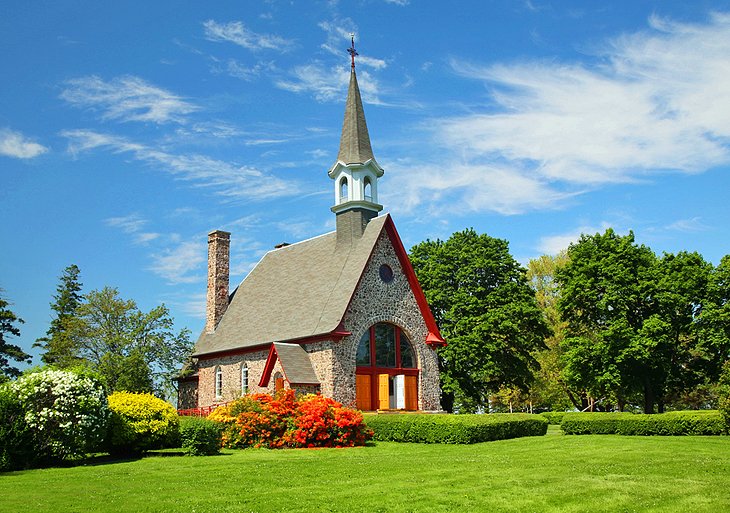
Grand Pre National Historic Site is a memorial to this injustice. Pretty gardens, a small chapel, and a statue of Henry Longfellow's fictional heroine Evangéline are part of the picturesque grounds at the historic site.
Official site: https://www.pc.gc.ca/en/lhn-nhs/ns/grandpre
Port-Royal National Historic Site
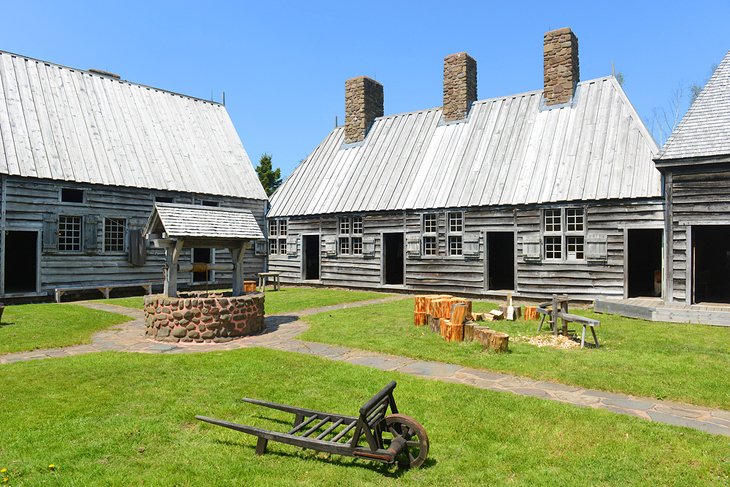
Port-Royal National Historic Site in the Annapolis Valley is where, in 1605, Sieur des Monts founded one of the first permanent settlements in North America and established a fur-trading center.
Though the British later destroyed the fort, it has now been rebuilt using authentic 17th-century building techniques. The complex includes a Governor's Residence, a fur trading post, and priest's quarters, as well as a reproduction of the original quadrangle named the Habitation.
Living-history interpreters give insight into the settlers' struggle to survive, including how the native Mi'kmaq helped the Europeans through their first hard winters. Visitors can interact with the interpreters and ask questions, and there is also a special hands-on learning program for kids ages 6-11.
Address: 53 Historic Lane, Port Royal, Nova Scotia
Official site: www.pc.gc.ca/en/lhn-nhs/ns/portroyal
Hall's Harbour
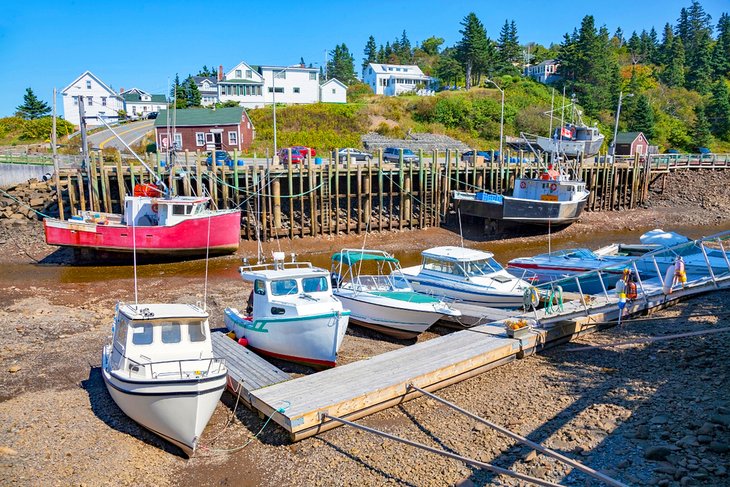
Though it's lesser publicized than New Brunswick, the Nova Scotia side of the Bay of Fundy shares claim to the highest tides in the world. Hall's Harbour is not the pinnacle of that tidal range (head instead to the Minas Basin), but it is one of the prettiest, with a wide sandy beach and wharves where docked fishing boats act as tidal markers. At low tide, the vessel sits on the harbor bottom.
A seafood restaurant is the main destination in the tiny village. From Hall's Harbour, other Annapolis Valley attractions are nearby, including The Lookoff viewpoint near Canning, Cape Split hiking trails, and Blomidon Provincial Park.
Ross Farm Museum
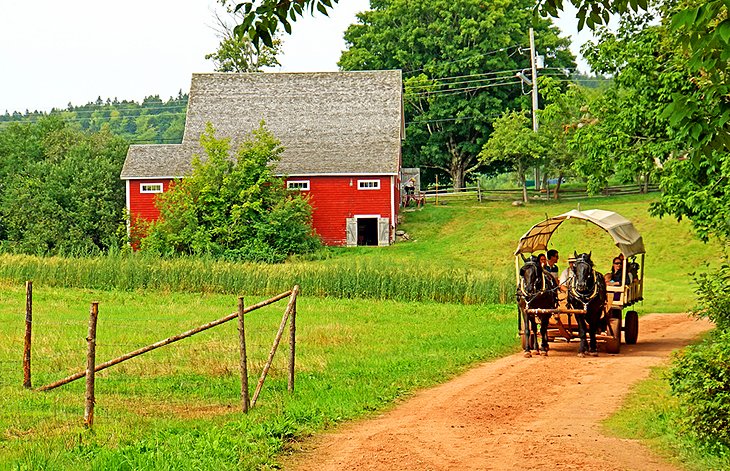
Ross Farm Museum does an excellent job of representing a working farm from more than 150 years ago. Numerous displays and buildings take visitors through a time warp to a bygone era. The 60-acre farm is, in fact, a real working operation, with a dairy barn, oxen pulls, and wagon rides.
Visitors can see a variety of animals including Canadian horses, oxen, various types of poultry, Southdown and Cotswold sheep, along with Berkshire Pigs. There is a nature trail that allows visitors to stroll throughout the property, along with a blacksmith's shop, cooper's shop, barn, schoolhouse, and the original Ross cottage.
Address: 4568 Highway 12, New Ross, Nova Scotia
Official site: http://rossfarm.novascotia.ca/