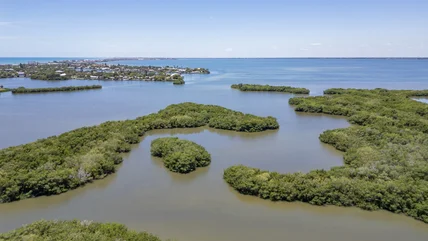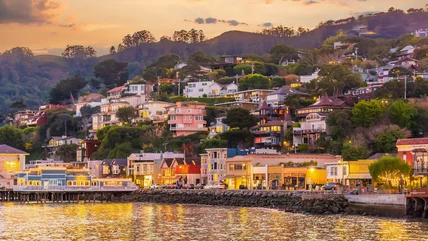
Charlottetown, capital of Prince Edward Island, is centrally situated, on sheltered Hillsborough Bay. Smallest of the country's provincial capitals, historically speaking it is perhaps the most significant. Despite having grown considerably in the past two decades, it remains essentially a quiet rural town, hub of the island's administration and schools. In the little town center, easily explored on foot, there are some pretty Victorian buildings. Most of the old buildings have been painstakingly restored down to the last detail. The old harbor quarter has also been nicely restored and is particularly popular with visitors.
Jacques Cartier took possession of the island for the French in 1534, when it was called the Île-St-Jean. The harbor settlement of Port la Joye grew up on the site now covered by Charlottetown. In the first half of the 18th c. the French-Arcadian influence still held sway on the island. In 1758 however the British took over and the Arcadians were deported. A few years later Charlottetown was founded, named after the wife of King George III. In September 1864 Charlottetown was the venue of the famous conference which led to the unification of Canada.
Province House National Historic Site was the government building between 1843 and 1847, during colonial times, and is today the provincial seat of Parliament.
Ardgowan National Historic Site of Canada is the historic home of William Henry Pope, known as one PEI's Fathers of Confederation. The Victorian era home has been restored and the grounds are beautifully maintained.
Address: Ardgowan National Historic Site, 2 Palmer's Lane, Charlottetown, PE C1A5V8, Canada
Phone: 1 (902) 566-7050, Fax: 1 (902) 566-7226
Also in Victoria Park in Charlottetown and looking down on the harbor stands Fort Edward, built in 1805. It is one of the fortifications along the harbor entrance and from it there is a view over the said entrance to Fort Amherst.
Founders' Hall, known as Canada's Birthplace Pavilion, was the site of the Charlottetown Conference in 1864. The hall focuses on the meeting of the Fathers of Confederation.
The white edifice of Government House in Charlottetown built in Colonial style on the top of a hill, can still be seen. After 1835 it became the official seat of the Governor of the island.
Address: Government House, Box 846, Charlottetown, PE C1A7L9, Canada
Phone: 1 (902) 368-5480, Fax: 1 (902) 368-5481
Tips: Government House is not open to the public during off-season. Visit the website for dates.
Admission by donation.
St James Presbyterian Church in Charlottetown, better known as simply "The Kirk", has some impressive stained glass windows and old relics from the island of Iona, the first part of Scotland to become converted to Christianity. A granite block standing on a marble slab in the north wall comes from St Mary's Cathedral on Iona.
St Peter's Cathedral in the north-west corner of Rochford Square was built in 1869. The 1888 chapel was designed by W. C. Harris and is decorated with murals by his famous brother Robert Harris.
Tips: Worship: each Sunday at 8 a.m. and 10:30 a.m. (10 a.m. in the summer months).
From Charlottetown take Highway 2 to Marshfield then Highway 25 to York. Jewells Gardens & Pioneer Village is a restored early 19th c. village surrounded by gardens, with a shop, smithy, school and chapel. There is also a glass museum.