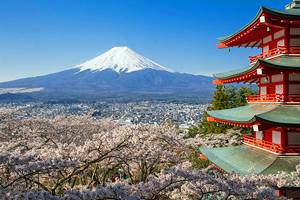
Tourist Attractions in Hiroshima
Located on the Inland Sea in western Honshu, Hiroshima will forever have its name associated with the dropping of the first atomic bomb on August 6th, 1945. Yet despite this devastating event - a tragedy that destroyed much of the city, killing an estimated 260,000 people and injuring more than 160,000 others - Hiroshima and its resilient people bounced back.
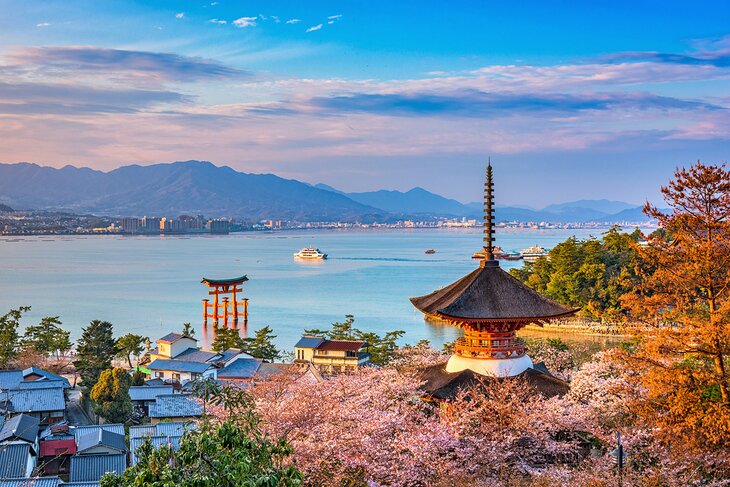
In fact, this remarkable city, which so many believed would be uninhabitable for decades had, by 1974, doubled its pre-war population. Hiroshima today is regarded as the world's "peace capital" and is home to such notable attractions as the Hiroshima Peace Institute, as well as a number of important structures that survived the bombing, if only as ruins, and which provide a sobering reminder of that fateful day.
Despite this association, the city remains a vibrant, exciting tourist destination with plenty of fun things to do day and night. It's home to great museums, galleries, and gardens, as well as important cultural events such as the Hiroshima Flower Festival, held each May since 1977 and attracting a million visitors.
Learn more about the best places to visit in the city with our list of the top tourist attractions in Hiroshima.
Hiroshima Peace Memorial Park
Highlights: A place of peace and remembrance to honor the victims of the world's first nuclear attack in 1945
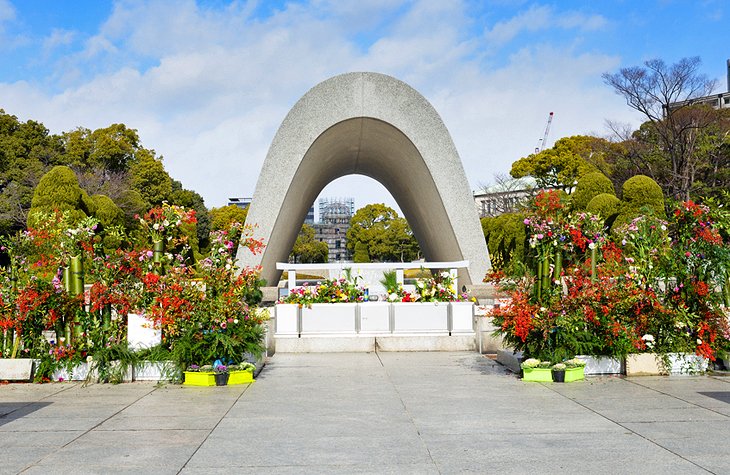
Created to symbolize the need for everlasting peace, Hiroshima Peace Memorial Park (Hiroshima Heiwa Kinen Kōen) commemorates the many victims of the world's first nuclear attack in August 1945. Located at the epicenter of the blast in what was once a bustling part of the city, the park includes a variety of important monuments, memorials, and museums relating to the events of that fateful day and its aftermath, and attracts more than a million visitors each year.
In addition to the grounds and gardens, with their colorful cherry blossoms, highlights include the Peace Memorial Museum, the Memorial Cenotaph, and the Flame of Peace, as well as perhaps the site's best-known landmark, the Atom Bomb Dome. This much-photographed landmark comprises the ruins of the old Chamber of Industry and Commerce, which lay at the epicenter of the explosion.
Also of interest are the Children's Peace Monument with its sculptures of a young girl holding a paper bird, and the Monument to the Victims of the Atomic Bomb, a concrete arch through which the Atom Bomb Dome can be seen.
Address: 1 Chome-1 Nakajimacho, Naka Ward, Hiroshima, 730-0811

The Island Shrine of Itsukushima
Highlights: One of Japan's most important shrines that rises out of the water like an illusion, dating back more than 1,000 years
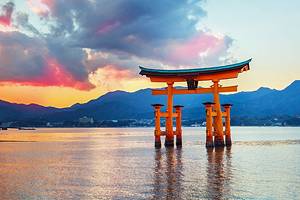
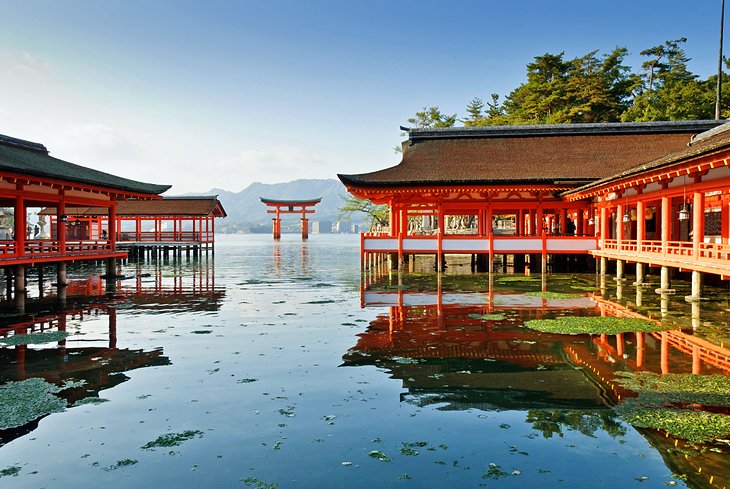
Miyajima, aka "Shrine Island," is one of Japan's most important (and most visited) coastal sites. Covering some 30 square kilometers of Hiroshima Bay, the island is famous for the spectacular Itsukushima shrine, dedicated to the Princesses Ichikishimahime, Tagorihime and Tagitsu-hime, daughters of the Shinto wind god Susanoo.
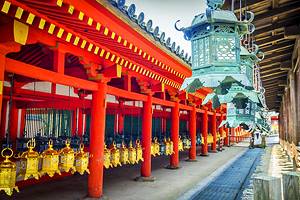
First mentioned in 811 CE, the shrine's buildings rise out of the waters of a small bay supported on piles and, at high tide, appear to float on water, presenting a picturesque and colorful spectacle with their red timber framing and white walls (the buildings are linked by covered gangways). It's a particularly attractive sight at nighttime.
Highlights of a visit include the Main Hall (Honden) the Offerings Hall (Heiden), the Prayer Hall (Haiden), and the Hall of a Thousand Mats (Senjokaku). You'll also want to see, at the far end and flanked by two music pavilions, the stage (Takabutai) used for cult dances (Bugaku, Kagura). Dances are performed here during festivals.
Be sure to spend time exploring the island itself. It's quite lovely to see and is famous for its exquisite gardens and wild, yet friendly deer.
Address: 1-1 Miyajimacho, Hatsukaichi, Hiroshima 739-0588

Hiroshima Peace Memorial Museum
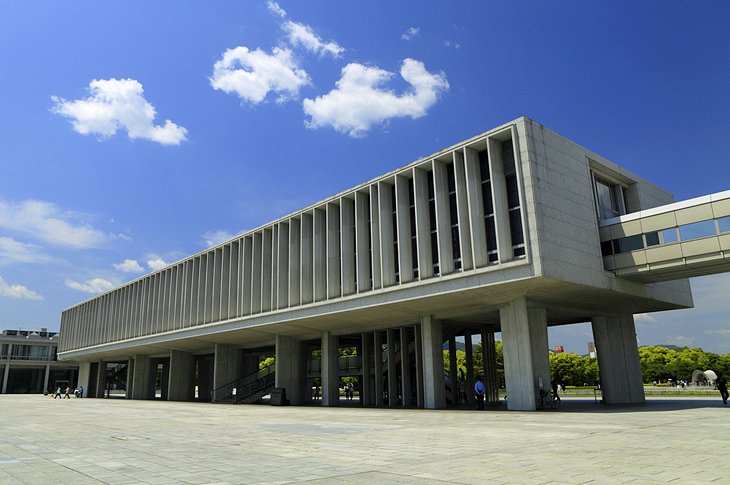
Highlights: An important memorial museum with many exhibits that detail the horrific reality of the aftermath of the atomic bombs
A must-see when visiting Hiroshima Peace Memorial Park is the Peace Memorial Museum with its many chilling displays focusing on the atomic bombing of the city, as well as numerous exhibits dealing with the issue of world peace. Comprised of two rather starkly designed modern buildings, the museum contains numerous graphic exhibits conveying the terrible reality of the atomic bombing and takes about two hours to see in its entirety.
The east building tells of Hiroshima before and after the bombing, while the west building concentrates on the events of that fateful August day. One of the most popular of Hiroshima's tourist attractions, the Peace Memorial Museum draws more than a million visits a year from those wishing to learn about the city's destruction, the causes of the war, and its results.
Address: 1-2 Nakajima-cho, Naku-ku, Hiroshima, Chugoku 7300811
Hiroshima Castle
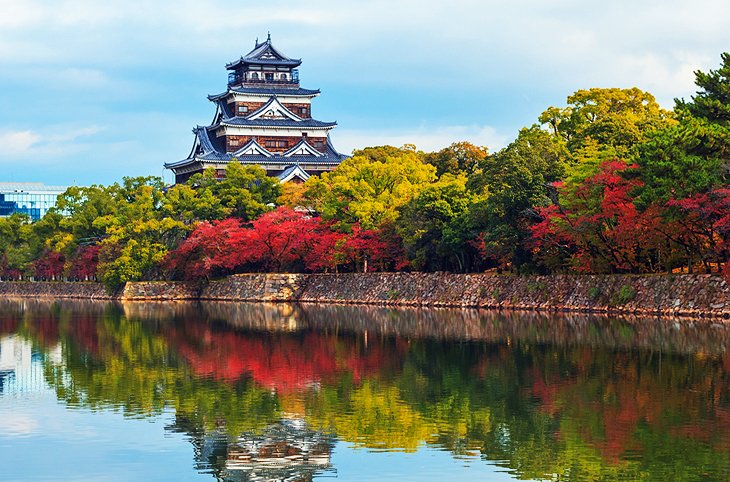
Highlights: A 16th-century castle-turned-museum dedicated to the history of Hiroshima and the castle itself
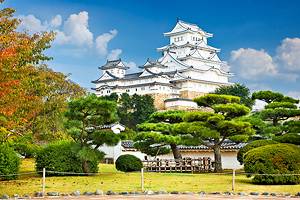
Also known as the "Castle of Carp," Hiroshima Castle (Rijō) was built in 1593 as the residence of local nobleman Fukushima Masanori before passing into the possession of famous samurai Asano Nagaakira in 1619.
The castle's lovely five-story main tower, fully reconstructed in 1958, contains an informative museum dealing with both the history of the city as well as the castle itself. From here, you'll also enjoy fine views over Hiroshima, the harbor, and the island of Miyakojima on the top floor.
Of interest within the castle grounds are three trees that famously survived the atomic blast - a willow, holly, and eucalyptus - as well as a concrete bunker used for radio broadcasts after the bombing. Be sure to also view the castle at night, when it is lit up in colorful displays that change with the season.
Address: 21-1 Motomachi, Naka Ward, Hiroshima, Hiroshima Prefecture 730-0011
Shukkei-en Garden
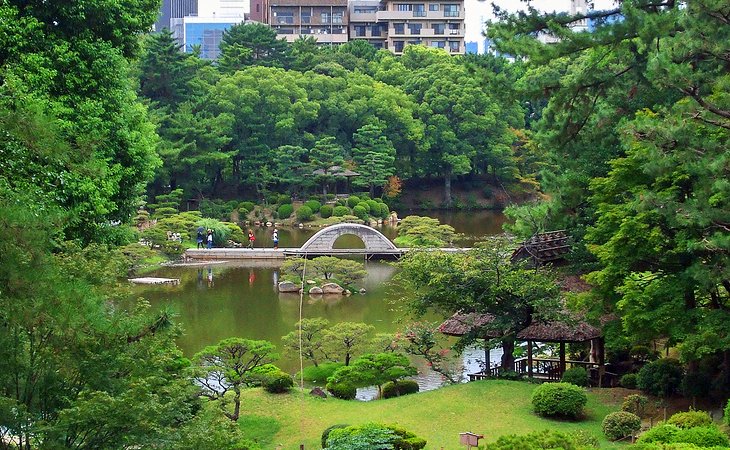
Highlights: Beautifully landscaped gardens and trails that were once on the grounds of the home of Emperor Meiji
Located on the banks of the Ōta River sits the beautiful Shukkei-en Garden. This oasis of peace and tranquility was splendidly laid out by Asano Nagaakira of Kyoto in 1620 in imitation of the famous landscaped garden on the Western Lake of the old South Chinese Sung Dynasty capital of Hangzhou.
Once the home of Emperor Meiji, the gardens opened to the public after being donated to the city in 1940. Despite heavy damage from the nuclear attack of 1945, the gardens reopened in all their former glory in 1951.
A highlight of a visit is simply walking its many garden trails and traversing its bridges while enjoying the abundance of pools and streams, which draw their water from the Ōta.
For a truly memorable experience, opt to join in one of the authentic tea ceremonies offered at the on-site teahouses. Alternatively, drop into the Sensui-tei teashop for a soothing tea (or coffee) and sweet treat - an even better experience during the spring blossoms or fall colors.
Address: 2-11 Kaminoboricho, Naka Ward, Hiroshima, Hiroshima Prefecture 730-0014
Memorial Cathedral of World Peace
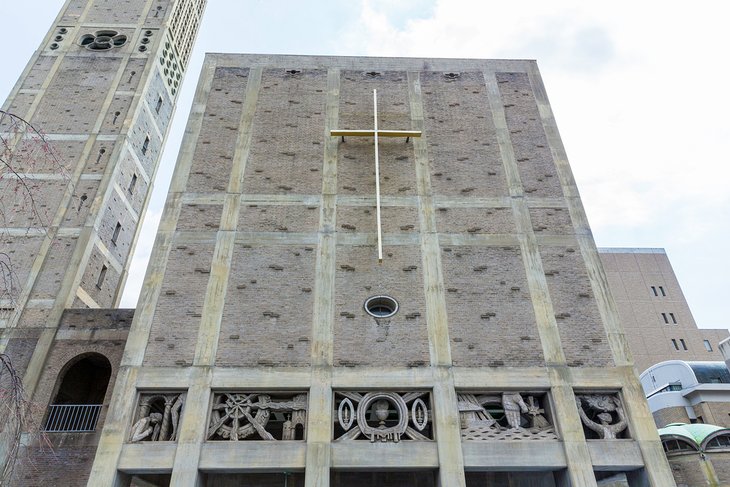
Highlights: An impressive Roman Catholic Church with a 46-meter-high tower, an organ, and beautiful bronze doors
One of the largest Roman Catholic churches in Asia, the huge grey Memorial Cathedral of World Peace was built in 1954 on the initiative of a German Jesuit priest named Hugo Lassalle, who had experienced the explosion of the atomic bomb firsthand.
Officially designated as the Assumption of Mary Cathedral, it was designed by leading Japanese architect Murano Togo. The building was largely paid for by contributions made by numerous countries and stands as a testament to the ability of nations to work together when necessary.
A highlight of a visit includes seeing the cathedral's four bells in the 46-meter-high tower, presented by the German town of Bochum. Other notable features include the splendid organ provided by the city of Cologne, the bronze doors from Düsseldorf, and the altar presented by Belgium. If time allows, consider popping in during daily mass.
Address: 4-42 Noboricho, Naka Ward, Hiroshima, 730-0016
Mitaki-dera Temple
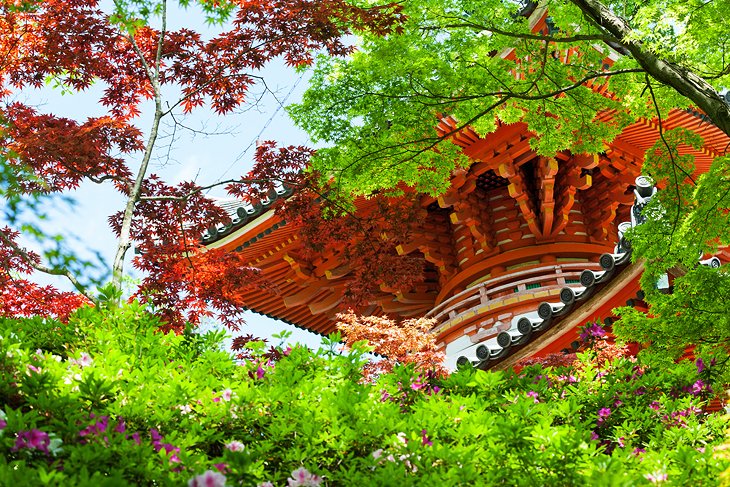
Highlights: One of the oldest temples in Hiroshima, with gorgeous grounds and views of Mount Mitaki
Of Hiroshima's many fine historic temples, one of the most attractive is Mitaki-dera. Originally built in 809 CE and reconstructed after the war, the site is as famous for its splendid temple as it is for its beautiful grounds. Come autumn, the trees here burst into an array of vibrant reds and golds as the maples change color.
Also known as the "Three Falls Temple" for its location at the foot of Mount Mitaki, the temple is notable for its red-lacquered pagoda, Tahoto, and nearby waterfalls.
Address: 411 Mitakiyama, Nishi Ward, Hiroshima, Hiroshima Prefecture 733-0805
Fudoin Temple
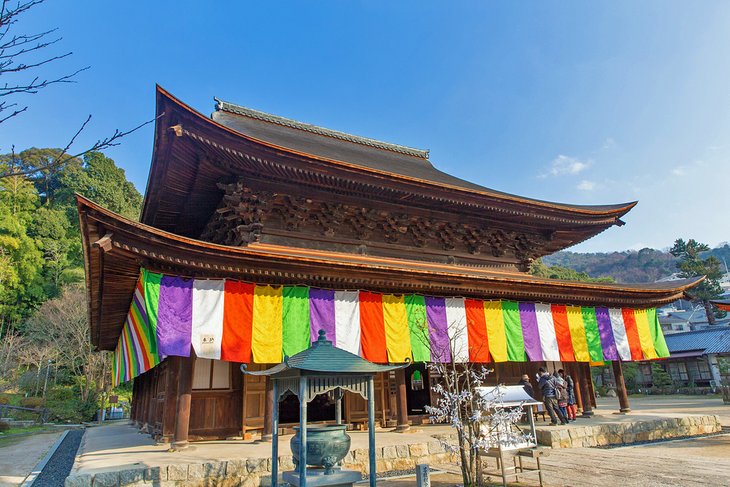
Highlights: A centuries-old temple that was one of the only survivors of the atomic blast
The city's Fudoin Temple is also worth visiting. This popular attraction is a fine example of the architecture of the Muromachi period between the 14th and 16th centuries. Although only four kilometers from the epicenter of the atom bomb blast, the main building survived intact, apart from some damage to its roof.
Highlights of a visit include seeing the temple's Main Hall, which is famous for its elegantly carved statue, and is now designated as a national treasure. There are also numerous important statues sprinkled among the temple's other buildings, as well as a bell tower dating from the 15th century.
Address: 3 Chome-4-9 Ushitashinmachi, Higashi Ward, Hiroshima, 732-0068
Hiroshima Museum of Art and Other Galleries
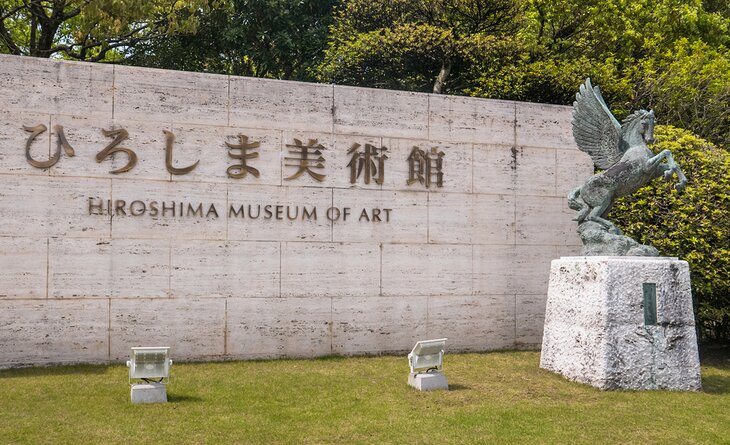
Highlights: A spectacular collection of world-class art, including European masters and Japanese artists
Consisting of eight galleries, the Hiroshima Museum of Art (Hiroshima Bijutsukan) is just one of a number of world-class art galleries worth visiting.
Highlights include a collection of paintings by European Masters such as Monet, Renoir, Degas, Maillol, and Picasso, representing key movements such as Romanticism and Impressionism. There are also numerous works by leading Japanese artists such as Ryohei Koiso and Yuzo Saeki.
Be sure to also visit the Hiroshima Prefectural Art Museum (Hiroshima Kenritsu Bijutsukan). Opened in 1968, it focuses on the work of local artists, including collections of art related to the atomic bombing, as well as a children's gallery.
The Hiroshima City Museum of Contemporary Art (Hiroshima-shi Gendai Bijutsukan) is also worthwhile with its many permanent and temporary exhibits.
Address: 3-2 Motomachi, Naka Ward, Hiroshima, 730-0011
Hiroshima City Transportation Museum and Other Museums
Highlights: Hiroshima has a slew of fascinating museums, including a transportation museum; a children's museum; and museums on meteorology, history, and crafts.
In addition to its many fine museums dealing with war and peace, Hiroshima boasts numerous other such attractions. One of the most popular is the Hiroshima City Transportation Museum (Hiroshima-shi Kōtsū Kagakukan) with its collection of old trams and streetcars, including the famous "A-Bomb Tram" that survived the devastation of 1945.
For kids, a visit to the Hiroshima Children's Museum (Hiroshima-shi Kodomo Bunka Kagakukan) will entertain for hours with its many hands-on, interactive science displays and exhibits, as well as an excellent Planetarium.
Also worth checking out are the Hiroshima City Ebayama Museum of Meteorology (Hiroshima-shi Ebayama Kishōkan), a fun place to visit to explore weather and its effects, and the Hiroshima City Museum of History and Traditional Crafts, with its displays related to local industry and agriculture.
Address: 2 Chome-12-2 Chorakuji, Asaminami Ward, Hiroshima, 731-0143
Hiroshima City Asa Zoological Park
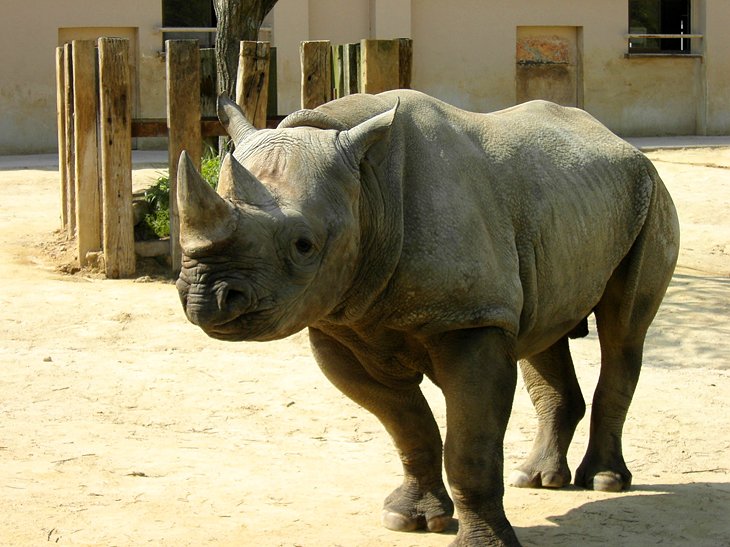
Highlights: A sprawling 124 acres of 170 different animal species from around the world
Owned and operated by the city since it opened in 1971, the Hiroshima City Asa Zoological Park (Hiroshima-shi Asa Dōbutsukōen) is a fun (and certainly less intense) diversion from the many sometimes somber, yet vitally important, museums and monuments in the area.
Covering an area of close to 124 acres, the zoo is home to 170 species of animals, including native species such as lesser pandas and Japanese giant salamanders, along with African animals including lions, giraffes, and rhinos.
A fun children's petting zoo is also on site. Located in the city's suburbs, the zoo is easily accessible from the city center by public transport. Hot Tip: If possible, take advantage of the special evening safaris held throughout the summer.
Address: Asacho Oaza Dobutsuen, Asakita Ward, Hiroshima, Hiroshima Prefecture 731-3355
Mazda Museum
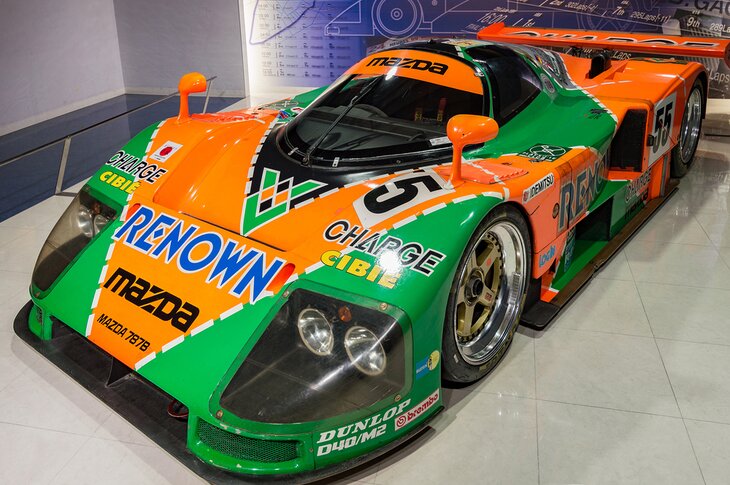
Highlight: An observation deck where you can watch vehicles become assembled right in front of you
Car enthusiasts won't want to miss the Mazda Museum, which pays homage to one of Japan's oldest car manufacturers (the company switched from machine tools to automobiles in 1930). While enjoying an up-close look at some fine-looking cars is reason enough to visit, the real excitement takes place with the tour of the adjoining manufacturing plant.
From the comfort of the observation deck situated directly above the production line in Plant 1, you'll watch in amazement as these great-looking vehicles are put together before your eyes.
Afterward, you have the chance to learn about Mazda's future vehicle plans and can pay a visit to a store selling branded goods and toys.
Reservations for the one-hour-long plant tour need to be made in advance and can be done via the company's website (see official site link below).
Tips for Visiting Hiroshima
- Hiroshima at Night: Try to allow a little time during the evening to peek at some of the top attractions you've visited in Hiroshima from a distance. Many of them, such as the Island Shrine of Itsukushima and Hiroshima Castle, are illuminated at night, creating quite spectacular displays that are well worth seeing. Nighttime is also great for shopping, whether in the historic corners of the city or along the more modern Peace Boulevard.
- Fun for the Kids: Hiroshima's Children's Museum is a great place to take the kids. Highlights include numerous fun interactive installations and displays dealing with things such as technology and science, and a planetarium. Another option is the seaside Marina Hop shopping mall, which has a kids' zone with fun things to do.
- Take a Day Trip: Just 90 minutes east of Hiroshima by bus or car, the Preserved District of Takehara makes for a superb day trip. Here, you'll find a magnificently preserved area of the city, which includes many original structures such as merchant's homes, shrines, and temples, as well as many first-rate cafés and restaurants. For those seeking a little adventure, Sandankyo Valley consists of a series of cliffs, pools, and rapids, which can be explored as part of guided boat tours lasting anywhere up to three hours.
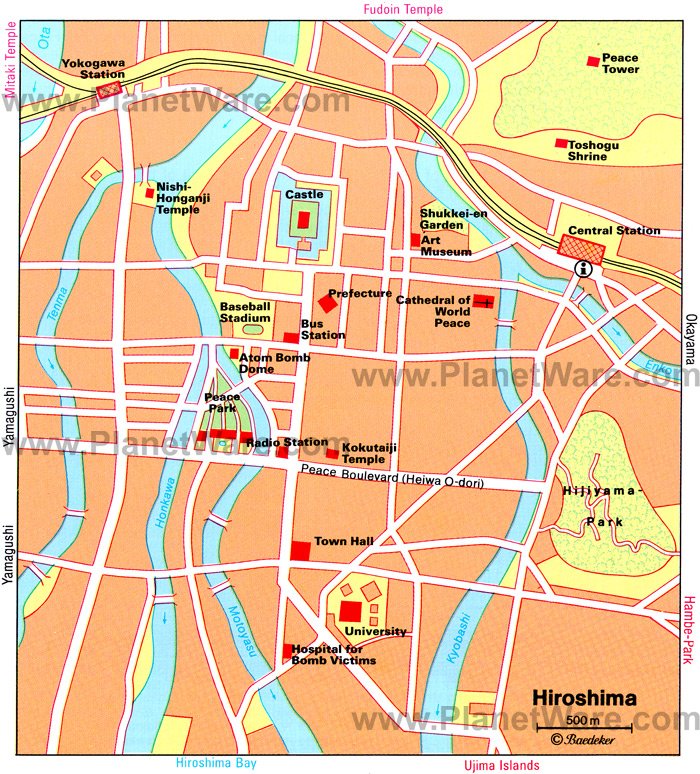
Map of Tourist Attractions in Hiroshima
Hiroshima, Japan - Climate Chart
| Average minimum and maximum temperatures for Hiroshima, Japan in °C | |||||||||||
| J | F | M | A | M | J | J | A | S | O | N | D |
| 8 0 | 9 1 | 13 3 | 18 9 | 23 13 | 25 18 | 29 23 | 31 24 | 27 19 | 22 13 | 16 7 | 11 3 |
| PlanetWare.com | |||||||||||
| Average monthly precipitation totals for Hiroshima, Japan in mm. | |||||||||||
| 46 | 58 | 109 | 165 | 155 | 226 | 246 | 117 | 175 | 104 | 74 | 38 |
| Average monthly snowfall totals for Hiroshima, Japan in cm. | |||||||||||
| 7 | 5 | 1 | 0 | 0 | 0 | 0 | 0 | 0 | 0 | 0 | 2 |
| Average minimum and maximum temperatures for Hiroshima, Japan in °F | |||||||||||
| J | F | M | A | M | J | J | A | S | O | N | D |
| 46 32 | 48 33 | 54 37 | 64 48 | 72 56 | 77 64 | 84 72 | 87 74 | 80 66 | 71 54 | 61 45 | 52 36 |
| PlanetWare.com | |||||||||||
| Average monthly precipitation totals for Hiroshima, Japan in inches. | |||||||||||
| 1.8 | 2.3 | 4.3 | 6.5 | 6.1 | 8.9 | 9.7 | 4.6 | 6.9 | 4.1 | 2.9 | 1.5 |
| Average monthly snowfall totals for Hiroshima, Japan in inches. | |||||||||||
| 2.8 | 2.0 | 0.4 | 0 | 0 | 0 | 0 | 0 | 0 | 0 | 0 | 0.8 |
Hiroshima, Japan, has a moderate climate year-round. However, the best time to visit Hiroshima is in the spring and fall. Spring in Hiroshima is March, April, and May, while fall is October and November.
March in Hiroshima is the beginning of spring, when temperatures warm to an average of 14 degrees Celsius. This is the time of year when plum and cherry blossoms start to appear, so the trees are usually awash in pale pink.
In April, Hiroshima warms to 20 degrees Celsius, on average, with cherry blossoms in full bloom. This is one of the most beautiful times to be in Hiroshima, so expect crowds.
By May, temperatures are around 24 degrees Celsius, everything is in full bloom, and the crowds have started to thin out.
October is still very warm, with average highs of 24 degrees Celsius. The leaves start to turn colors at the end of October, as well. By November, the leaf-peeping season is in full swing, and temperatures average 17 degrees Celsius.
More Related Articles on PlanetWare.com
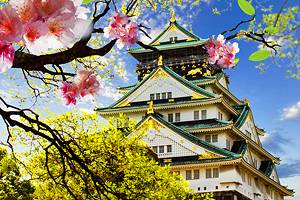
Ride the Bullet: Thanks to the country's famous high-speed Bullet trains, Hiroshima is a great place from which to access other destinations in Japan. Less than two hours away by train is the city of Fukuoka, where you can enjoy everything from great museums and art galleries, to festivals such as Hakata Gion Yamakasa, a 700-year-old celebration held each July. And just over two hours east of Hiroshima is Osaka, known affectionately as the "Venice of the East" for its fun-to-explore network of canals and waterways.
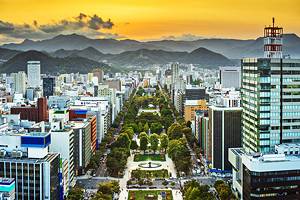
Japan Vacation Ideas: Other great destinations to consider when planning your next trip to Japan include the large city of Sapporo, on the northernmost island of Hokkaido. A popular destination for its rich culture, here, you'll find everything from fine traditional cuisine to theatrical and musical events, plus the country's largest winter festival, the Sapporo Snow Festival. Also worth exploring are the attractions of Kyoto, the country's best-preserved and most-visited historic city, and Nagoya, the country's busiest port and popular for its museums and art collections.