13 Top-Rated Tourist Attractions in the Mount Nemrut Region
For most visitors, heading to Turkey's southeast Anatolia region means one thing: a trip to the mighty stone heads on the summit of Mount Nemrut.
The Nemrut summit statues of King Antiochus may be the main tourist attraction, but the raw landscapes of steep plateau and peaks in the Mount Nemrut region are home to plenty more sightseeing opportunities and things to do for those interested in Turkey's history and stark mountain landscapes.
On Mount Nemrut's slope are many cult and burial sites from the Commagene era, while nearby cities, such as Malatya to the north, provide a wealth of historical riches to explore.
Find the best places to visit with our list of the top attractions in the Mount Nemrut region.
- 1. Mount Nemrut Summit (Nemrut Dağı)
- 2. Arsameia (Eski Kale)
- 3. Cendere Bridge
- 4. Karakus
- 5. Perre Ruins
- 6. Around Adıyaman and Kahta
- 7. Malatya
- 8. Aslantepe
- 9. Old Malatya (Battalgazi)
- 10. Darende
- 11. Elbistan
- 12. Afsin
- 13. Çermik & Egil
- Map of Tourist Attractions in the Mount Nemrut Region
- Diyarbakir, Turkey - Climate Chart
1. Mount Nemrut Summit (Nemrut Dağı)
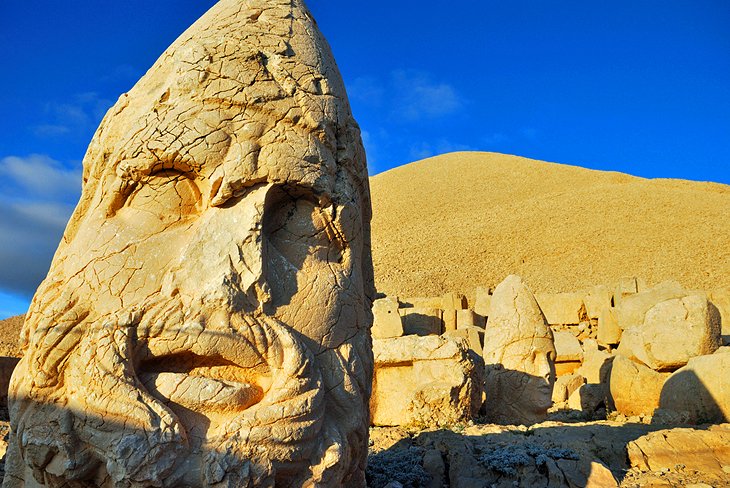
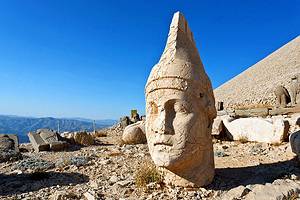
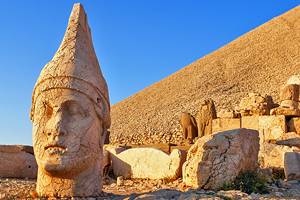
The most famous of southeast Turkey's tourist attractions are the stately stone heads and statues upon the peak of Mount Nemrut.
Discovered in 1881 by a German engineer, the statues mark the funerary mound of King Antiochus of Commagene (64-34 BCE), who had shrewdly turned this tiny portion of Anatolia into an independent kingdom between Rome and Persia.
Later, earthquakes knocked the two-meter-high heads from the towering statues and they now sit upon the ground.
Most visitors come at sunrise or sunset, when the stone heads glow in the golden light.
- Read More: Exploring Mount Nemrut: A Visitor's Guide
2. Arsameia (Eski Kale)
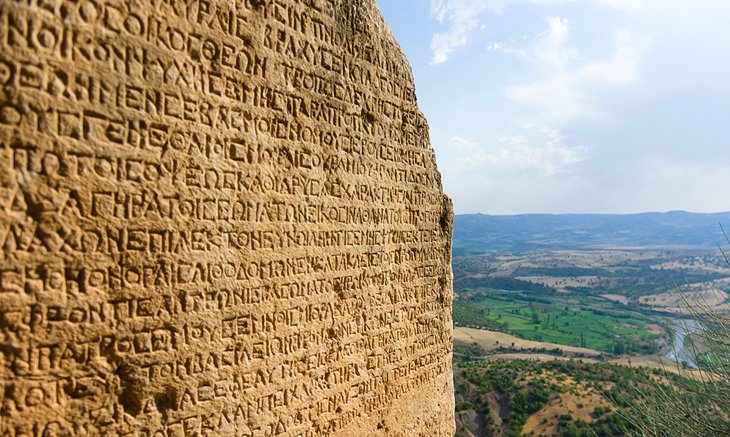
Founded in the 3rd century BC, this cult and burial site in Mt. Nemrut National Park (on the mountain's slope) was the summer residence of the Commagene rulers.
In addition to the remains of steps and buildings on the plateau (with mosaics from the 2nd century BCE), there are a number of reliefs and rock chambers on the way up to the top.
The first large stele relief depicts the god Mithras-Helios, while the middle relief shows the Commagene King Mithridates and his son Antiochus I.
From here, there is a rock tunnel leading to a burial chamber. A further relief depicts Mithridates shaking hands with the demigod Hercules.
3. Cendere Bridge
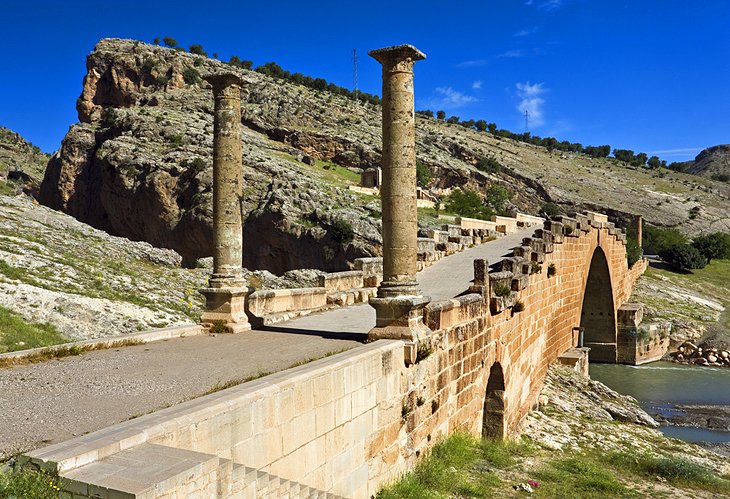
This well-preserved Roman bridge crosses the Cendere River (the ancient Chabinas River) at a point where the river emerges from an impressive gorge in the wide Kahta Valley.
It was built between CE 198 and 200 by a Roman general stationed in Samsat (ancient Samosata) and dedicated to Septimius Severus, his wife Julia Domna, and their sons Caracalla and Geta. According to an inscription, four Commagene towns financed the building.
If you're on a full tour of the Mount Nemrut National Park attractions, rather than just a trip to the summit, the Cendere Bridge is usually included as one of the stops, along with Arsameia and Karakus.
4. Karakus
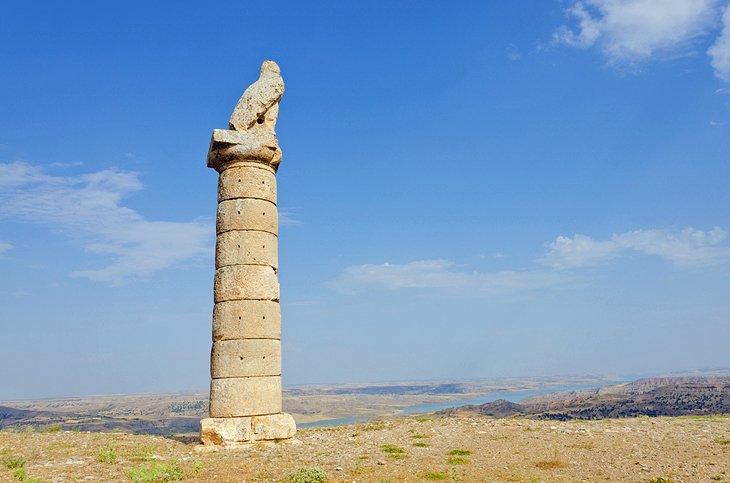
For history fans wanting to poke about a bit deeper into the Commagene kingdom, a trip to this Commagene tumulus (burial mound) in Mt. Nemrut National Park is well worth the time.
It was erected by Mithridates II (36-20 BC) in memorial for his mother Isias, sister Laodice, and niece Aka.
Out of the original three pairs of columns that once graced this spot, only four columns still survive. Check out the southernmost column to see the eagle crowning the top and the northeast column, with its preserved bull sculpture on top.
You can get great photos of both the tumulus, with Mount Nemrut's summit in the background, and the surrounding landscape rolling down to the Atatürk Dam from here.
5. Perre Ruins
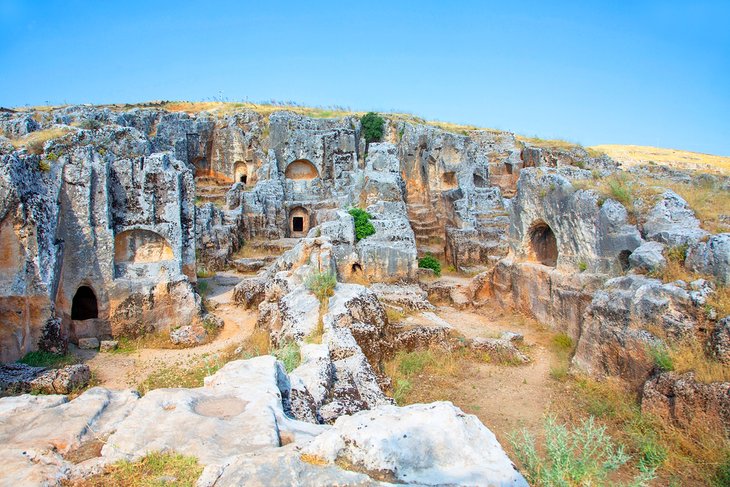
On the outskirts of Adıyaman, the ruins of Perre (Ancient Perrhe) are the remnants of a once important city for the Commagene Kingdom. Today what remains is the necropolis, with a maze of large stone-slab tombs, multi-roomed catacombs, and sarcophagi cut into the hillside to explore. Fragments of the city walls can also be seen.
Perre's heyday was during its time under both Commagene Kingdom rule and the later Roman rule, though it was still active during the Byzantine era, after which it was abandoned.
Perre is easily visited from either Adıyaman or Kahta and is easily tagged onto a Mount Nemrut itinerary. The site is four kilometers northwest from central Adıyaman in the tiny village of Örenli.
6. Around Adıyaman and Kahta
Adiyaman is a bustling provincial center that makes a good base for trips to Mount Nemrut's summit and to the surrounding historic sites of Mt. Nemrut National Park.
In the central city, there's not much to see, but make sure to pop into the tiny museum, which holds some interesting finds from excavations in the local region. Also in the central city is an interesting Islamic tomb, the Ebu-Zer Gaffer Türbesi.
Kahta (35 kilometers east) is a scruffy little town, but it's the closest town to the tourist attractions of Mt. Nemrut National Park, so many visitors choose to stay here.
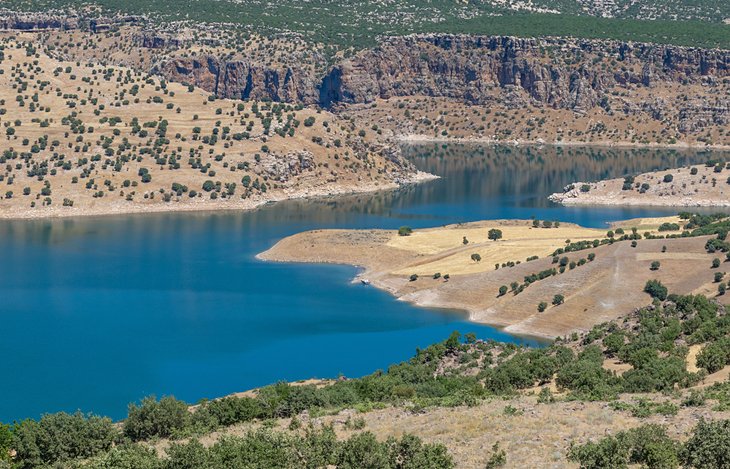
As a bonus, just five kilometers out of central Kahta a couple of excellent fish restaurants are strung out along the shore of the Atatürk Dam, which are relaxing and scenic places to hang out after a long day of sightseeing on the slopes of Mount Nemrut.
The dam extends over an area of 817 square kilometers and is a key element in a series of Tigris and Euphrates River dams known as the GAP Project.
7. Malatya
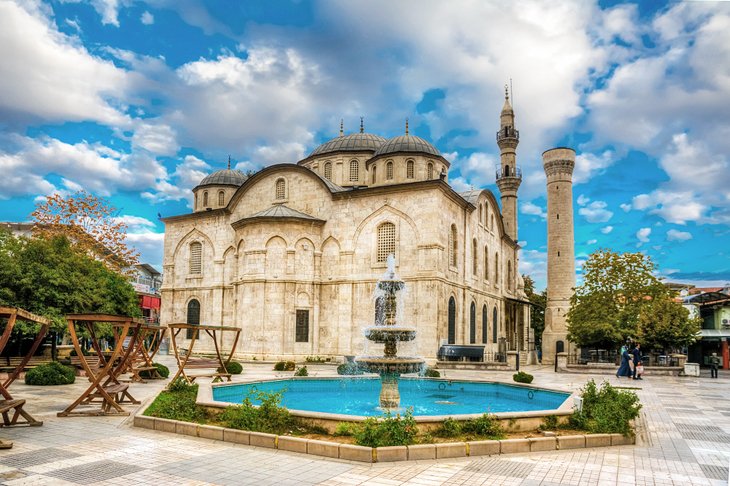
As Turkish history goes, Malatya is a new town with its center only 150 years old. For centuries, this site was simply the garden suburb of Aspuzu, which serviced the population of Old Malatya nearby.
In the winter of 1838, Ottoman troops were billeted in Old Malatya and left it in ruins. When the population returned, they moved to Aspuzu, and modern Malatya was born.
Most people come here to explore the sites of Old Malatya and Aslantepe, which are only a few kilometers out of town. In the central city, though, there is an interesting Ethnography Museum on Simena Caddesi, and the Malatya Museum (Fuzuli Caddesi) is worthwhile popping into for its exhibits from the Aslantepe excavations.
8. Aslantepe
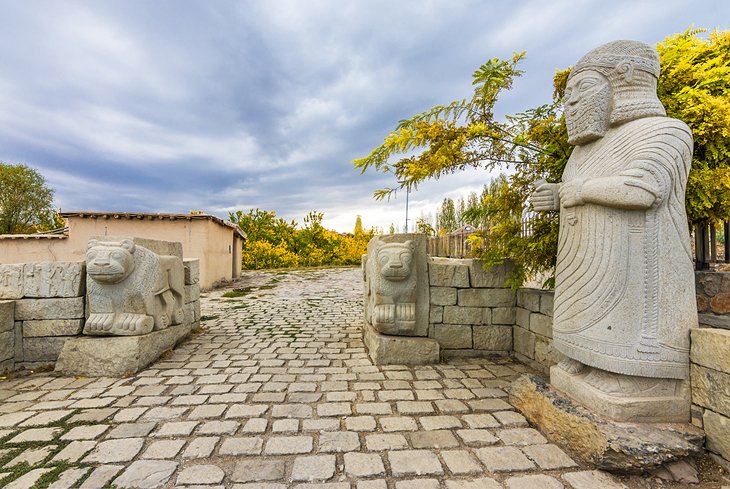
Until recently, Aslantepe (also known as Arslantepe) was little known outside of archaeological circles, but that all changed in 2021, when Aslantepe was inscribed on UNESCO's World Heritage list.
Excavations at this settlement mound, five kilometers northeast from central Malatya, uncovered a town settled since the Late Chalcolithic era, and the site is particularly important for our understanding of world history, as it shows how city-states emerged.
The most important ruins unearthed amid the multiple strata of the mound are the remnants of a palace with preserved frescoes, as well as the world's earliest swords, large stone slabs inscribed with relief carvings, and monumental lion portals.
Excellent information panels, and an in-depth audio guide at the site, explain its importance to archaeological knowledge and really aid your understanding.
9. Old Malatya (Battalgazi)
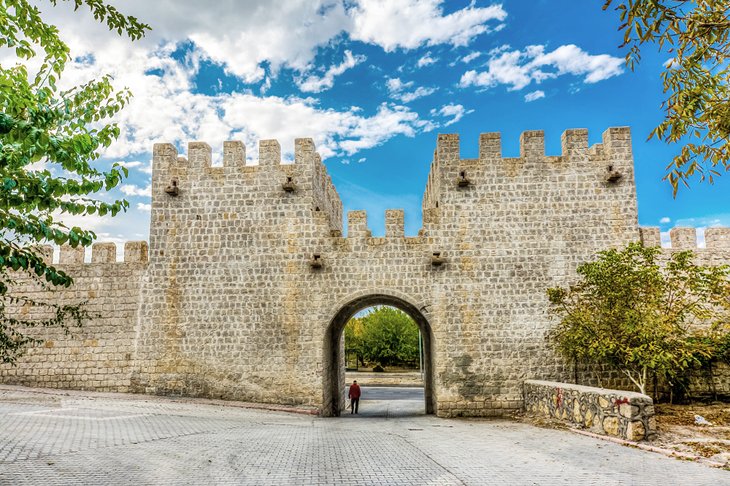
The ruins of Old Malatya, about 12 kilometers from Malatya, lie on the old road to Erzincan and Sivas.
Surrounded by poplar trees and fruit orchards, this old walled city is highly atmospheric.
You can still see the remnants of the Byzantine walls on the southern side, with defensive ditches, tower bastions, and four gates still standing.
The Ulu Cami (Grand Mosque) was built in 1247 on the foundations of an older 7th-century mosque. Inside, you can pass through the galleried inner courtyard and the divan, decorated with glazed tiles, into the domed prayer room.
The Yeni Cami nearby dates from the Seljuk era.
In the northeast of the town stands Mustafa Paşa Hanı, a well-preserved caravanserai founded between 1623 and 1640.
10. Darende
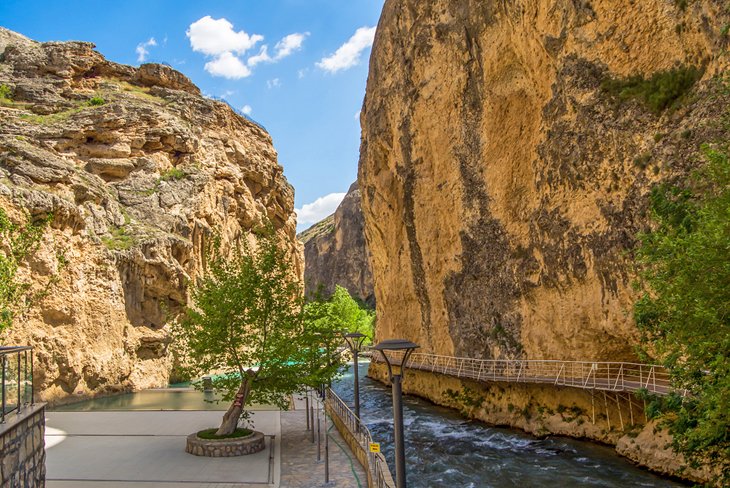
Dominated by the medieval Zengibar Castle, the rather charming and traditional village of Darende (100 kilometers west of Malatya) is set along a river in a beautiful gorge.
As recently as 1840, the castle was still occupied by at least 40 houses, but locals abandoned their hilltop perch in 1890. A Hittite stele of the god Sarruma has been found within the castle site.
Today, on summer weekends, locals flock to walk within the gorge's high cliffs, and picnic beside the river, which can give the place something of a carnival atmosphere. For a quieter experience, come on a weekday.
If you have your own transport, Darende is a good spot to break the journey for an hour on a drive between Kayseri and Malatya.
11. Elbistan
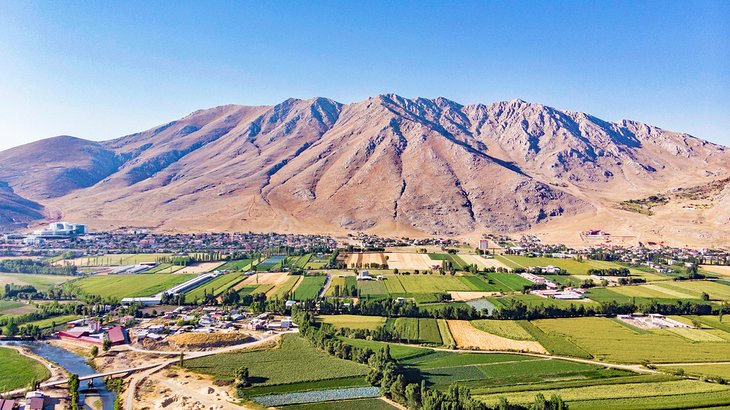
About 126 kilometers west of Malatya, the provincial town of Elbistan, surrounded by farming fields, is a good stopover on itineraries running west from Malatya.
Five kilometers to the west of Elbistan are the hilltop remnants of Kiz Kalesi (Maiden's Castle), with excellent views across the plains from the top.
The castle marks the position of former Elbistan-Kara (or Secret Elbistan). Finds here include a stone bowl belonging to a cult of sun-worshipers and Hittite-era figurines of the goddess Anahita.
Just five kilometers northwest of town, upon the Elbistan plain, is the Karahüyük archaeological site. Archaeologists working at this Hittite settlement have unearthed many interesting finds including a memorial stele to a Hittite prince, which is now on display at Ankara's Museum of Anatolian Civilizations.
12. Afsin
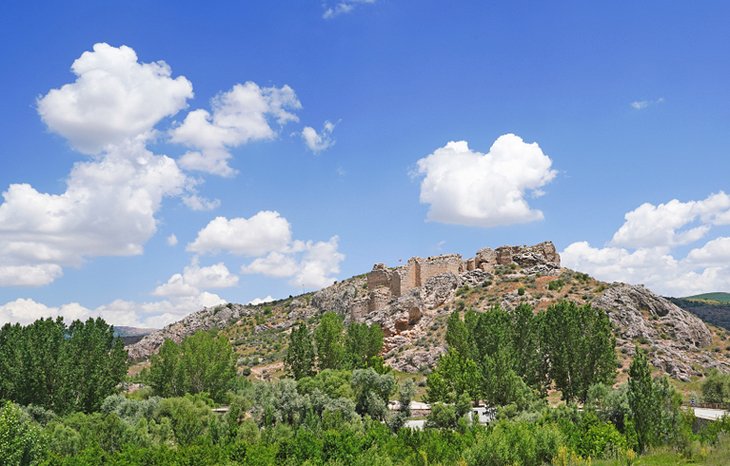
Just to the west of the town of Afsin are the ancient ruins of Arabissos, which developed as the crossroads for two main trading routes from east to west.
Also of interest here are the Seljuk period ruins, which consist of a mosque, caravanserai, and ribat.
The ruined caravanserai is made up of an asymmetrical four-aisled winter hall with two separate sections. The mosque has a three-aisled prayer hall and flat roof, while the attached ribat has a maze of rooms and a typical Seljuk pointed-arch portal.
The Roman ruins of Castaballa are 15 kilometers to the northeast.
Due north of Afsin, on the old route to Kayseri, stands the Seljuk era Kuruhan (caravanserai), and another five kilometers along the road, the Seljuk castle of Hurman Kalesi, which simultaneously controlled three mountain passes.
13. Çermik & Egil
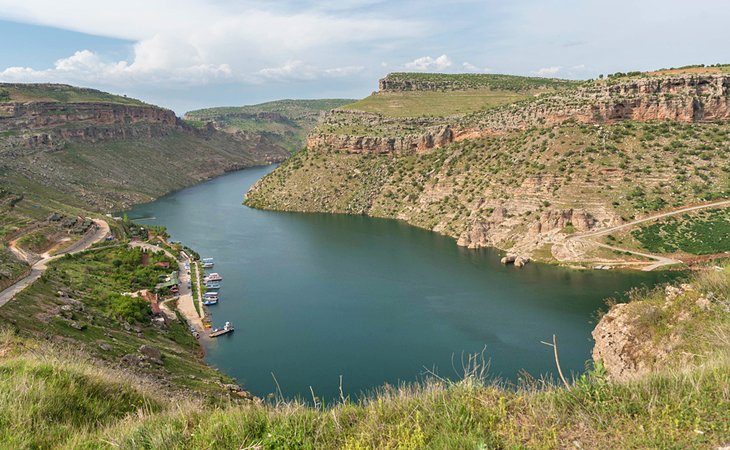
The area around the city of Diyarbakir has plenty to see for history lovers.
Some 60 kilometers northwest of Diyarbakir, you'll find the medieval fortress of Çermik Kalesi which stands guard over the town of Çermik.
Just to the south of town there are some very impressive rock formations in the limestone uplands of Devkan Tepesi.
Around 50 kilometers north of Diyarbakir is the town of Egil. Southeast of town, an ancient fort perches upon a steep rock high above the gorge of the upper Tigris River. It's thought to have been built some time in the first millennium BCE. There are also remains of rock tombs in the cliffs here.
If conditions are right, late in the day, it is possible to make out a relief of Assyrian origin (dating to about 720 BCE) on the fortress rock, depicting a god armed with an axe and sword.
Map of Tourist Attractions in the Mount Nemrut Region
Diyarbakir, Turkey - Climate Chart
| Average minimum and maximum temperatures for Diyarbakir, Turkey in °C | |||||||||||
| J | F | M | A | M | J | J | A | S | O | N | D |
| 6 -2 | 9 -1 | 14 3 | 20 8 | 26 12 | 33 17 | 38 22 | 38 21 | 33 16 | 25 10 | 16 4 | 9 1 |
| PlanetWare.com | |||||||||||
| Average monthly precipitation totals for Diyarbakir, Turkey in mm. | |||||||||||
| 71 | 69 | 71 | 74 | 41 | 5 | 0 | 0 | 3 | 33 | 53 | 76 |
| Average minimum and maximum temperatures for Diyarbakir, Turkey in °F | |||||||||||
| J | F | M | A | M | J | J | A | S | O | N | D |
| 43 28 | 47 30 | 57 37 | 68 45 | 79 53 | 91 63 | 100 71 | 100 70 | 91 61 | 76 50 | 60 39 | 48 33 |
| PlanetWare.com | |||||||||||
| Average monthly precipitation totals for Diyarbakir, Turkey in inches. | |||||||||||
| 2.8 | 2.7 | 2.8 | 2.9 | 1.6 | 0.2 | 0 | 0 | 0.1 | 1.3 | 2.1 | 3.0 |
More Related Articles on PlanetWare.com
In the Region: After Mount Nemrut, head to Mardin for its fine stone buildings and churches, clinging to a hillside, then feast on baklava and view mosaics in Gaziantep. If you're heading farther east, Sanliurfa is a top stop for its castle remains looming above the minaret-studded city and the archaeological site of Göbeklitepe just out of town.
More Historic Sites: The Mount Nemrut region is crammed full of historic sites. For more, check out the lonely Hellenistic ruins of Laodikeia, with its columns spread out over the plains; the archaeological site of Çatalhöyük, one of the most important Neolithic sites in the world; and the North Aegean region, home to the magnificent remnants of Pergamum.