Exploring the Top Attractions of Ancient Harran
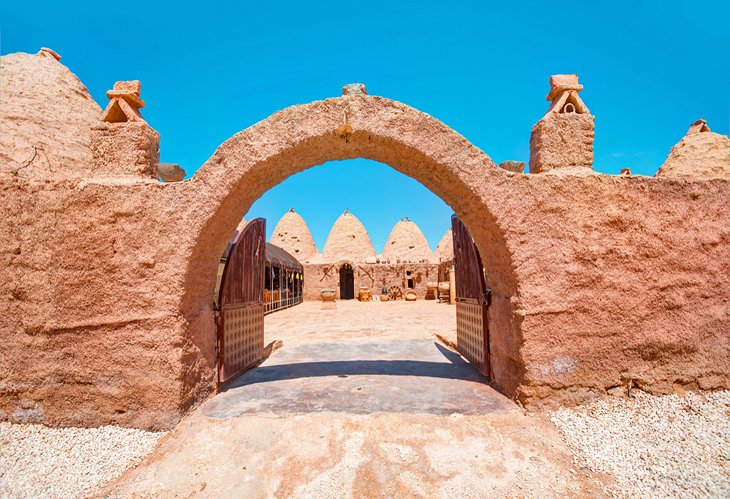
Harran, about 50 kilometers south of Sanliurfa, is famous for its traditional mud-brick beehive style of housing, but this small town offers plenty of other attractions for visitors. Its long history of settlement has left the town with a glut of fascinating historic architecture, and the entire place is imbued with an ancient atmosphere.
Due to its position, near the border with Syria, Harran is also home to a distinct culture that takes more of its influence from Syrian Arab traditions.
Locals here speak Arabic, as well as Turkish, and their mud-brick architecture can also be found across the border in Syria's northeast.
History of Ancient Harran
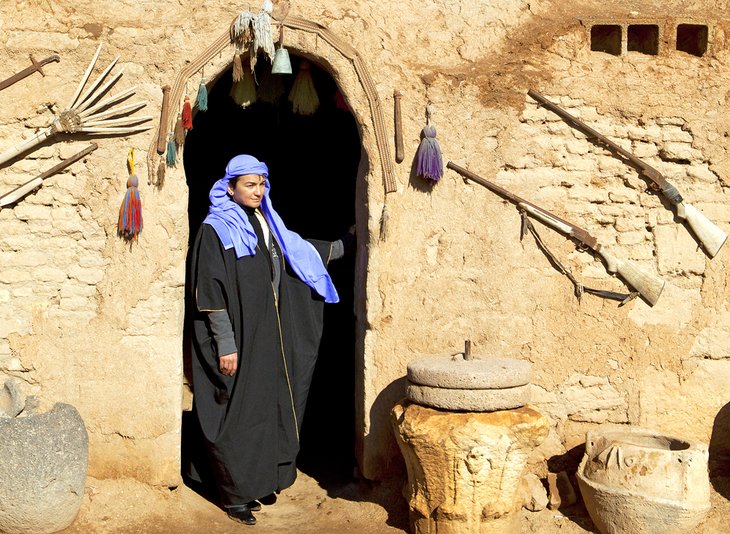
Harran is most famous for its links to the story of the Prophet Abraham and receives a mention in the Old Testament (Genesis 11:31 and 12) as the place where Abraham and his tribe stayed for several years on his journey from Ur to Canaan.
Harran must have existed as a settlement from around the 18th century BCE. Excavations have confirmed that the site was settled in the 3rd millennium BCE, and clay tablets dating from the 18th century BCE mention the town and other neighboring settlements, which frequently bear the names of Abraham's relatives.
In subsequent years, Harran became a center for sun and moon worshipers. The remnants of a double temple to Sin (moon) and Shamash (sun) found here date from the 16th century BCE.
Domination by different nations (such as the 13th-century Assyrian Empire) did little to change Harran's status as a sky-worshiping center, and when the Babylonians arrived (556-539 BCE), they also encouraged the Sin cult. Even the successors to Alexander the Great and the Romans revered the moon god.
The town was known in those days as Karrai, and later Carrhae, and was much fought over by competing empires.
In 53 BCE the Parthian Orodes II annihilated the army of Crassus here. While in Harran, in 217 CE, Caracalla was murdered on the way from the temple to the ruler's palace.
It was 382 CE before all heathen shrines were destroyed by the Byzantine Emperor Theodosius the Great and that included the Sin Temple at Harran.
Interestingly, despite the flux of various rulers, some towns in the hinterland escaped the religious changeovers that swept through Harran. In nearby Soğmatar, the Sabian cult continued worshiping astral bodies at their shrines and temples up until the early Middle Ages.
The Umayyad caliph Marwan II resided in Harran from 744 to 750 CE, and he is thought to have established Harran's Ulu Cami and the oldest Islamic university here.
A Mongol invasion in 1260 destroyed the town, and it did not recover until the Ottomans gained control in 1516.
The Site
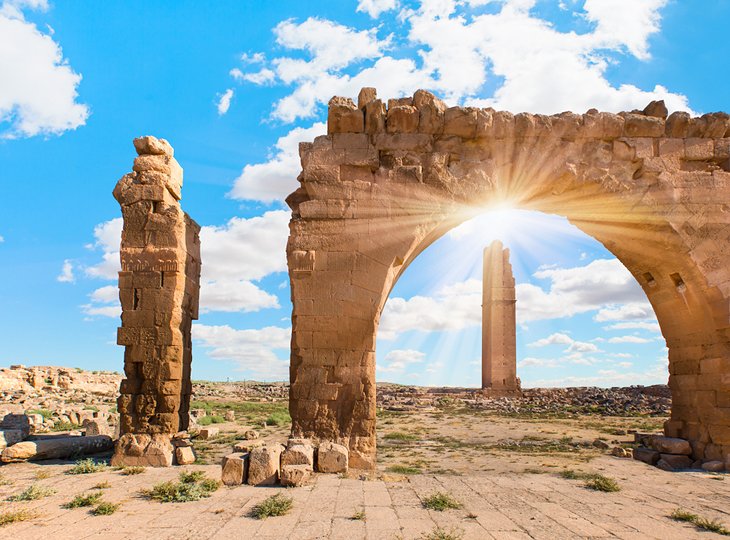
The area around the old center of ancient Harran, where Abraham is said to have lived, is the major point for sightseeing.
Archaeological excavations in and around the settlement mound here has produced evidence of habitation from the 3rd millennium BCE onward.
The actual sights in this area, though, are much younger. The major attraction is the large square, which holds the remnants of the Ulu Cami (Grand Mosque), which was built by the last Umayyad caliph Marwan II. Not much at all remains except for the distinctive minaret.
The mosque was extended and restored twice, first in 830 CE and again under the rule of Saladin' between 1174 and 1184.
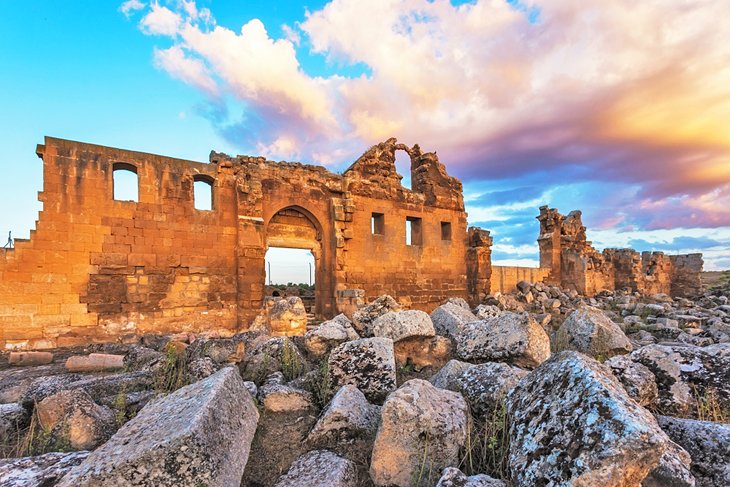
Visitors can also trace the course of Harran's badly decayed town walls, which encompassed the major part of the old town. The cratered and undulating terrain here is typical of an abandoned town; a similar landscape is evident in the abandoned old town district of Van (behind Van Castle) in eastern Turkey.
The ring of walls is broken by seven gates of which five can still be identified: the Aleppo Gate in the west, which according to an inscription was restored by Saladin in 1192; the Lion's Gate in the north; the Mosul Gate in the east; the Raqqa Gate in the south; and the Roman Gate (Bab ar-Rum).
The southeast of the old town district is overlooked by the impressive remains of Harran's citadel. Once a three-story structure, it was restored by the Fatimids in 1032.
On the citadel, three polygonal fortified towers can still be identified, and it is assumed that they occupy the site of the moon temple for which Harran was once so famous. Others have suggested that this shrine was situated near or even under the Ulu Cami site just to the northeast.
For years, the citadel has been closed to visitors due to ongoing excavation work and restoration, so you can only admire the facade.
Beehive Houses
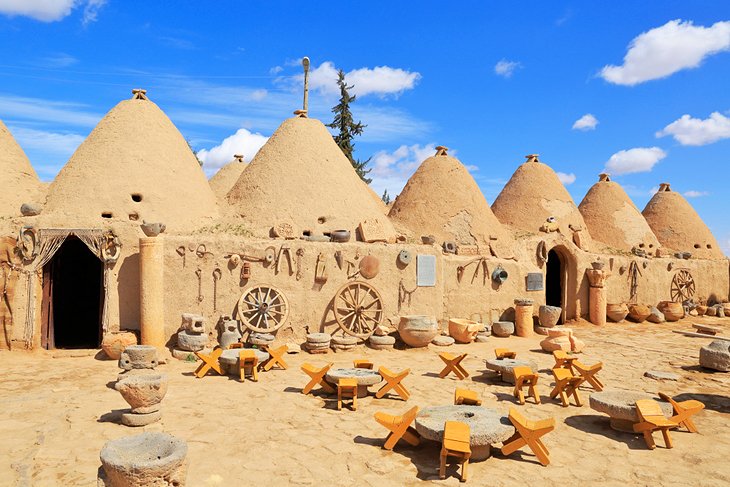
A short walk from the area holding all the village's ancient ruins are Harran village's beehive houses. This is the only place in Turkey where you can see this distinctive style of conical building, which was once the vernacular architecture of this region.
Thought to have become the popular form of housing here due to the region's lack of timber, the mud-brick cone buildings have no windows, so they stay as cool as possible in the searing summer heat.
Today examples of this architecture are becoming few and far between to see in Harran. Most visitors head straight to the Kultur Evi (Culture House), where a traditional beehive house setup, with a series of beehive houses rimming a courtyard, operates as both Harran's local museum and a restaurant.
The Kultur Evi's individual beehive houses are decorated in traditional style and have exhibits of local dress, farming implements, and other household products that would have been typically used in Harran.
Afterward, take a wander around the lanes, where you'll spot the last remaining (often quite dilapidated) examples of old beehive houses, mainly being used these days for livestock and chickens.
More Related Articles on PlanetWare.com
In the Region: Harran is often visited as a day trip from Sanliurfa, which is one of Turkey's most important pilgrimage cities and is also the closest town to the Neolithic remains of Göbeklitepe. Head west from here to visit the gorgeous hillside town of Mardin, with its well preserved stone buildings and churches and then head to Gaziantep to feast on baklava and view its mosaic museum.
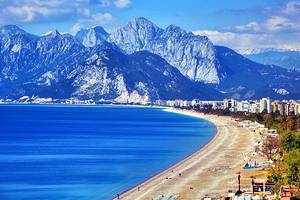
More Historic Towns: Safranbolu is where you go to stroll cobblestone alleys lined with beautifully preserved Ottoman houses. For more Ottoman architecture, don't miss Antalya, with its old town district crammed full of timber-lined mansions. Konya is another city to put on your itinerary if you like historic architecture, with its central city full of preserved and restored fine mosques.