Visiting Lake Como & Como Town: Top Attractions, Hotels & Tours
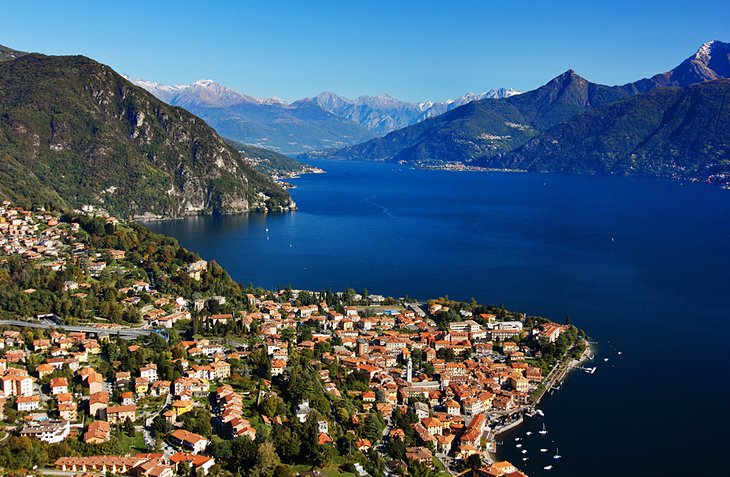
Only 48 kilometers north of Italy's commercial capital of Milan, Como's leafy lakeside and stone-paved streets seem a world away. You can see its Roman origins in the orderly grid of streets of its historic center and the remains of the Roman gate, Porta Pretoria. It's more evident in walled medieval Como, a rare example of Romanesque fortifications, with the imposing Porta Torre (tower gate) at Piazza Vittoria.
If your taste runs to something more modern, Como was a hotbed of Rationalist architects, who laid the foundation of Modernism. The poster-child building of this movement is Como's Casa del Fascio, designed in the early 1930s by Giuseppe Terragni.
Como is easy to walk around, and its tourist attractions are within walking distance of the train station and boat landing. Como revolves around its lakefront promenade and the adjacent Piazza Cavour, from which you can follow the short Via Plinio to Piazza del Duomo.
As you stroll past shops, you can't help notice the abundance of silk; Como has a long history as the center of Italy's silk manufacture, so it's a good place to do some shopping. Bookending the harbor are the beautiful gardens of Villa Olmo on the west and the funicular to Brunate on the east, two of the most popular things to do in Como.
Explore this beautiful region with our list of the top attractions, hotels, and tours in Como Town and around Lake Como.
- 1. Duomo (Cathedral)
- 2. Museo Civico
- 3. Basilica di Sant'Abbondio
- 4. Brunate
- 5. Tempio Voltiano (Alessandro Volta Museum)
- Exploring Lake Como's Towns and Villas
- Lake Como
- Boat Trips
- Cernobbio
- Villa Balbianello
- Villa Carlotta
- Abbazia di Piona (Abbey of Piona)
- Villa Monastero
- Bellagio
- Villa Serbelloni
- Villa Melzi
- How to Make the Most of Your Visit to Lake Como
- Como, Italy - Climate Chart
1. Duomo (Cathedral)
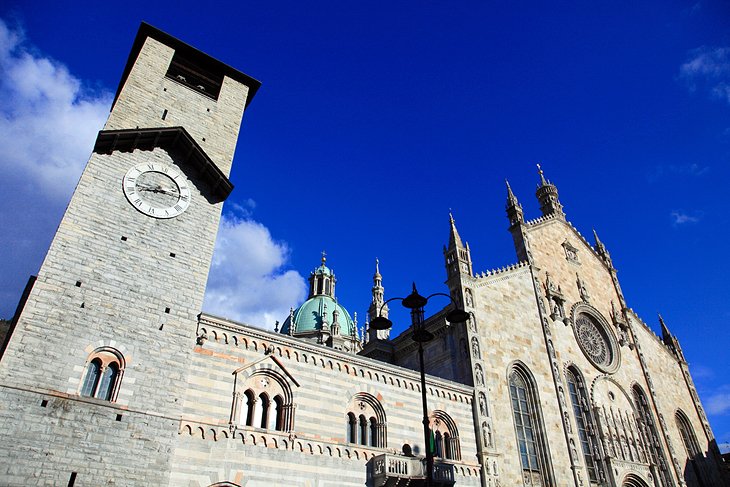
The 14th-century façade of Como's cathedral, which nearly fills one side of Piazza Duomo, is pure Gothic, a marble face highlighted by detailed stone carving and statues around a rose window, edged with delicate carved pinnacles. (Oddly, instead of the expected saints, the statues at either side of the main door are of Pliny the Elder and Younger, Roman residents of the lake who were far from friendly to early Christians.)
It isn't until you enter that you'll see why this church is hailed as Italy's finest example of the 14th-century transition from Gothic to Renaissance styles. Polychrome painting and gilding on the side altars "update" the older look of the rose window and deeply carved main altar, but the mix is harmonious. If you're energetic, climb to the 18th-century dome.
Address: Piazza Duomo 6, Como
2. Museo Civico
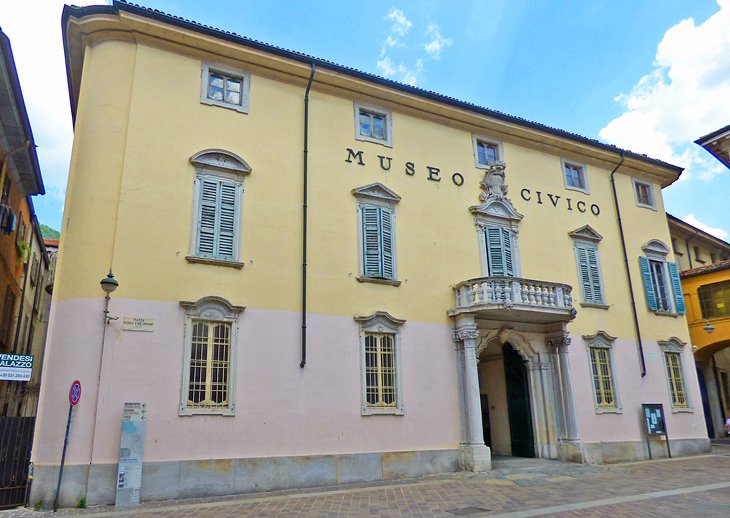
Near the cathedral, two adjoining palaces house the museums of archaeology and history. The Museo Archeologico is filled with an exceptional collection of Neolithic and Roman artifacts unearthed in local excavations, offering glimpses into the lives of the earliest human inhabitants and the Romans who later settled here.
The Museo Storico Giuseppe Garibaldi features the decisive battle of the Risorgiamento (when Italy gained liberation from Austria) that took place in the hills overlooking Como. The former palazzo includes furnished period rooms and exhibits showing local traditions and history. Especially fine and well-displayed is the collection of handmade lace.
Address: Piazza Medaglie d'Oro 1, Como
3. Basilica di Sant'Abbondio
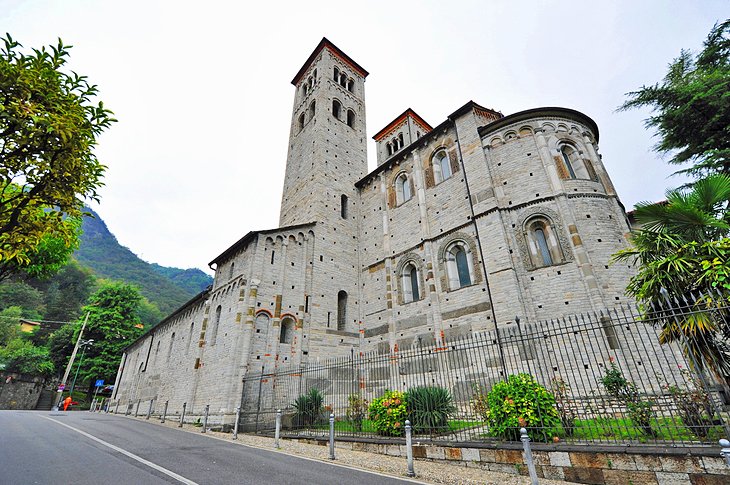
It's worth the walk from the center to see this exceptional example of an early 11th-century basilica built in the Lombard Romanesque style. The tall, narrow interior seems more like the earliest Christian basilicas and is decorated in 13th-century Gothic fresco cycles, in quite good condition.
The church is the work of the 11th-century master stoneworkers respected across medieval Europe as the Maestri Comacini-the Como Masters. You can see most of their intricate stone carving from the exterior of Sant'Abbondio in the Museo Civico, where it was taken to protect it from weather and environmental damage.
Address: Via Regina 35, Como
4. Brunate
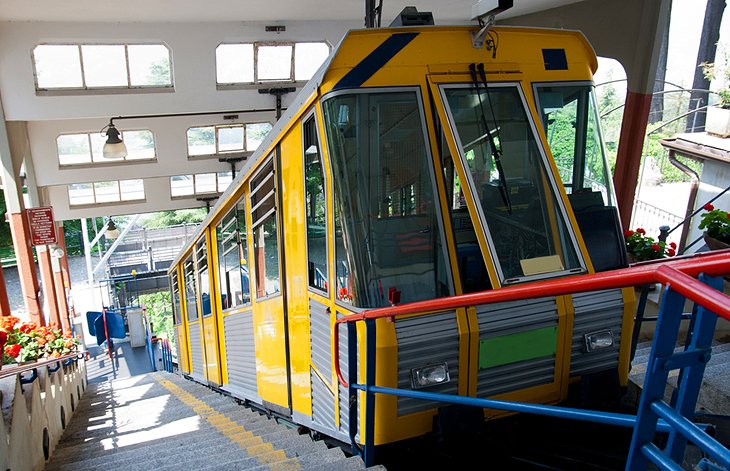
A funicular from the east end of the lakefront saves the steep climb up to the terrace settlement of Brunate, almost directly above Como. The views encompass the town and southern lake, backed by mountains. Climb higher to reach a terrace (with a conveniently placed café) looking to the north, across a different panorama of lake and mountain views.
Another monument to native son Alessandro Volta, the Volta Lighthouse, stands atop a hill, and when it's open you can climb to the top for even more sweeping views. A two-hour climb from Brunate brings you to the summit of Monte Boletto.
5. Tempio Voltiano (Alessandro Volta Museum)
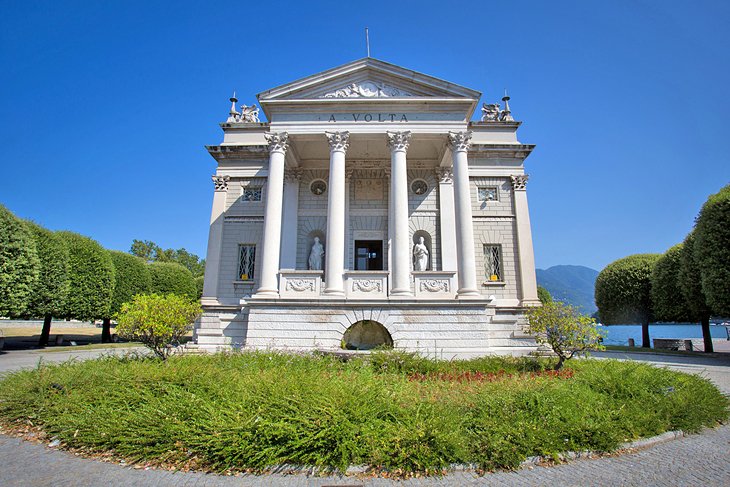
The prominent, white Neoclassical building on the lake is the Tempio Voltiano, a museum commemorating Alessandro Volta, the local resident whose name is given to the electric volt. His invention of the electric battery in 1800 created the first source of continuous electrical current. Built in 1927 to commemorate the centennial of Volta's death, the museum contains equipment used in his research.
Close to the temple is the beautiful and moving monument commemorating the victims of World War II and the resistance movement. Created by Milan sculptor Gianni Colombo, it incorporates stones from Nazi concentration camps and inscriptions of quotes from those who were victims of the Nazis.
Exploring Lake Como's Towns and Villas
Lake Como
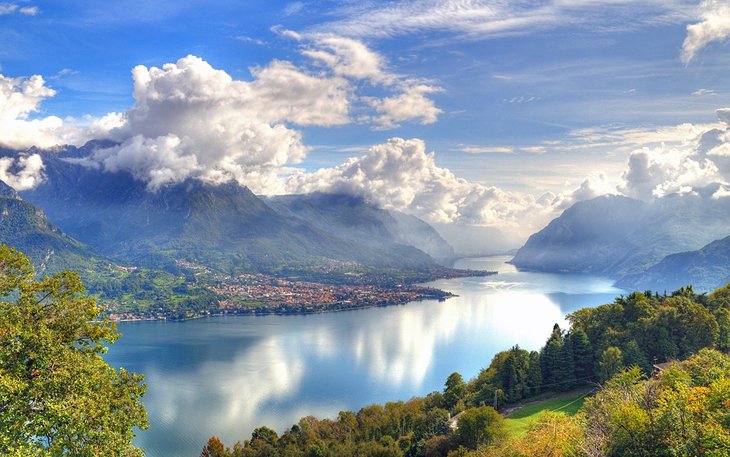
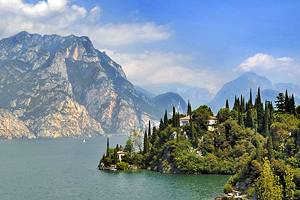
The narrow and fjord-like Lake Como (Lago di Como in Italian) is 50 kilometers long and shaped like an inverted Y. But there is little of interest in the southeastern arm, and a ferry conveniently shuttles cars across from the eastern shore to Bellagio, the lake's most beautiful town, sitting at the point of the peninsula where the arms converge.
Como is no stranger to tourists, having been a favorite of upper-crust Romans, whose villas predated those of royalty, and Hollywood stars who have favored it more recently. The lake between its steep, wooded shores is beautiful enough, but on either side rise mountains, and to the north, the Alps, making the views even better.
You can tour the lake on a day excursion for the scenery, with a stop or two at towns. Or if you have a bit more time, you can see the major attractions around the lake by hopping on and off the frequent boats and ferries. To tour at leisure and on your own schedule, take two or three days and drive the 249-kilometer perimeter, crossing on the ferry between Varenna and Bellagio.
Boat Trips
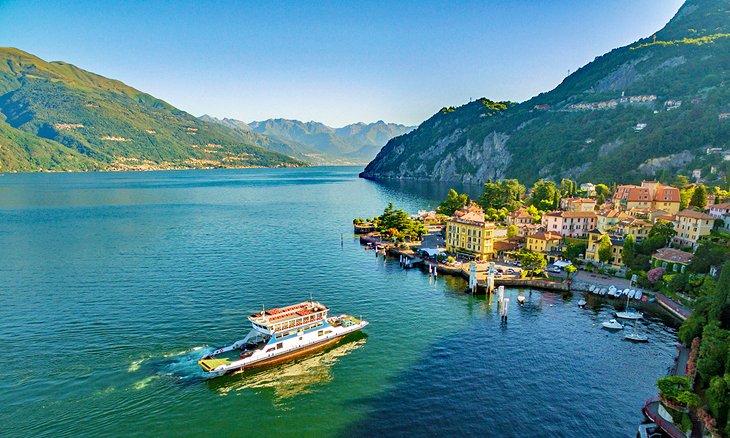
Regular boat services connect most towns from early spring through fall, but not all routes stop at the smaller towns. The frequent ferry (car and passenger) across the lake makes getting from Menaggio or Tremezzo, on the west shore, to Bellagio and Varenna easy. These are among the best places to visit on Lake Como.
Before setting out by boat, check the day's schedules carefully, so you'll know when the latest one returns and from what town. Summer hydrofoil service is fast, but don't expect to see anything en route.
Cernobbio
Palatial Villa d'Este, built for an English queen and now a luxury hotel, sets a high standard for lake villas, with terraced gardens climbing the steep hill behind it. The rest of the town isn't quite so grand, but it has a nice holiday air, some chic shops (look especially for Como silks), and several outstanding Art Nouveau villas.
The most ornate of these is Villa Bernasconi, a short walk from the boat landing. The exterior is covered in intricate decorations representing mulberry leaves, silkworms, and other motifs related to silk production. The villa was built in the early 1900s for the leading silk manufacturer, Davide Bernasconi. Inside, an interactive museum tells the story of the house and those who lived there.
Il Giardino della Valle is a free botanical garden along a stream, with pools and sculptures. Cernobbio is the starting point for a narrow, winding road up 1,310-meter Monte Bisbino to a pilgrimage church and panoramic views.
Villa Balbianello
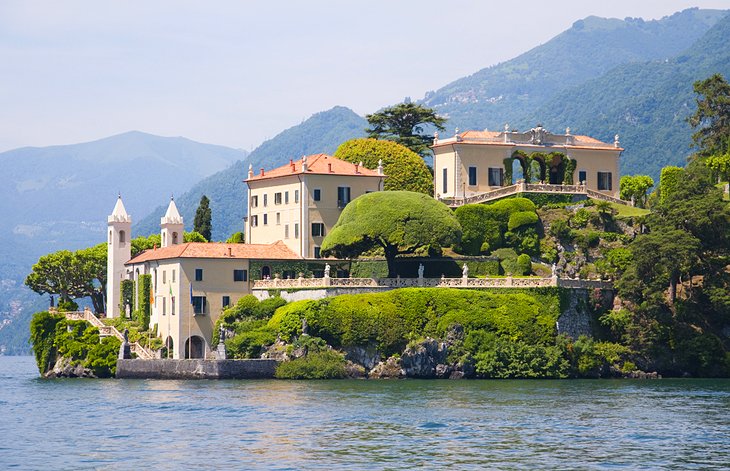
On the lake shore underneath steep Monte Crocione, Lenno is best known for the villa and gardens that cover Punta di Balbianello, a long peninsula that curves out into the lake. The Baroque villa, built for an 18th-century Cardinal, is surrounded by terraced gardens, where lake views are framed by columns and balustrades.
The best way to get there is by boat from Lenno, or on certain days, you can walk the trail to the villa. You can see the interior, but only on guided hour-long tours, which fill quickly in busy tourist seasons. The highlight is the garden, though, so don't be too disappointed if you miss a house tour.
Address: Via Comoedia 5, Lenno
Villa Carlotta
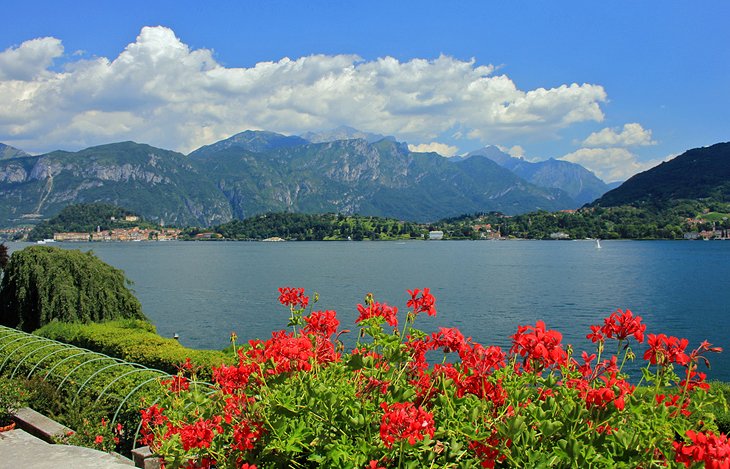
In Lake Como's mildest spot, the Tremezzina Riviera, foliage remains green all winter, so it's no wonder one of Italy's most famous gardens is here. Although the 18th-century palace of Villa Carlotta is filled with sculpture and paintings, most tourists come to see its fabulous hillside of gardens. At their best in May, when the camellias and 12-meter-tall banks of massed rhododendrons are in bloom, the gardens are filled with colorful flowers throughout the season.
Set in its own beautiful gardens that rise up the hillside through groves of rare trees to a scenic belvedere, the nearby luxury Grand Hotel Tremezzo has incomparable lake and mountain views.
Address: Via Regina 2, Tremezzo, Como
Official site: www.villacarlotta.it
Abbazia di Piona (Abbey of Piona)
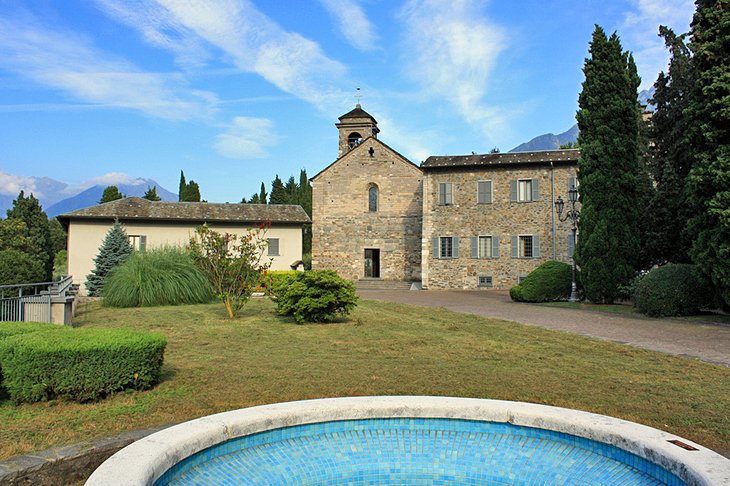
The 13th-century Cluniac monastery of Piona surrounds the 11th-century church of San Nicola and its beautiful Romanesque cloister. This small enclosure is surrounded by delicate, graceful columns, each with a different stone capital carved in motifs that include plants and animals.
The cloister walls are covered in 14th- and 15th-century frescoes. In a shop near the gate, the Cistercian monks sell herbal lotions, honey, and candies made with products from the abbey gardens.
Address: Via Abbazia di Piona 57, Colico
Villa Monastero
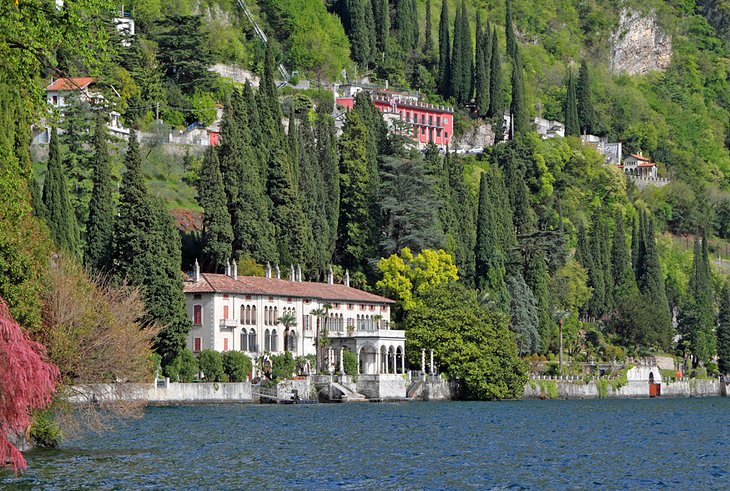
A long flight of stone stairs leads down into the terraced gardens of Villa Monastero. The formal beds of native and exotic plants that stretch along the shore have their share of statues, colonnades, and miniature temples, but with a relaxed and unfussy air.
The villa is now a conference center, open for tours when it's not in use. The gardens are a short walk south of the town (where you should park, if driving), a charming cluster of pastel houses along steep streets. Look for the parish church, with a giant fresco of St. Christopher on its façade.
Address: Viale Giovanni Polvani, Varenna
Official site: www.villamonastero.eu
Bellagio
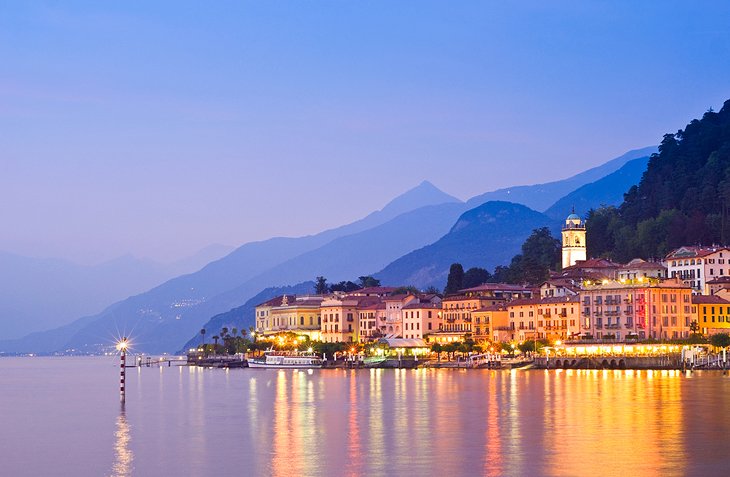
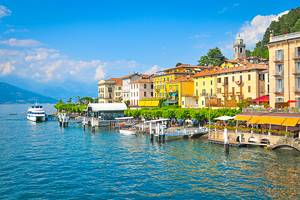
There's no question that Bellagio knows it's the prettiest town on the lake, with its setting on the long point where the lake's three arms meet. No matter which way you look, the views are superb and usually framed by gardens or carefully maintained buildings.
Pricey shops line its few streets, one of which is a long flight of stone stairs connecting the upper town with the boat landing. Two gardens, one stretching along the lake and the other high above town, are the main tourist attractions – apart from the picture-perfect town itself.
You can save some climbing and get a good overview of the town and lake on the Bellagio Express, a miniature tourist train. The 25-minute circuit includes panoramic views, and you can get off at various places, such as the Melzi Park.
The elegant Grand Hotel Villa Serbelloni sits at the tip of the peninsula, overlooking the lake and mountains.
Villa Serbelloni
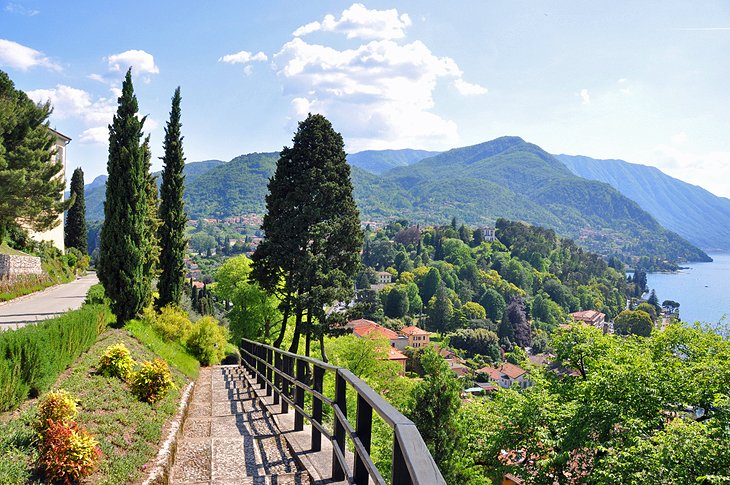
High above town, the terraced gardens are spread around the historic Villa Serbelloni, which was clearly built to maximize the views of Lake Como and the Alps beyond. The highlight of the gardens, which are carefully landscaped in the 19th-century Italianate style, are the rose gardens set in boxwood hedges.
The villa is not open to the public, but the park is open for 90-minute guided tours (except during bad weather), which you must reserve at the Promo Bellagio office in Piazza San Giacomo.
Address: Piazza della Chiesa 14, Bellagio
Villa Melzi
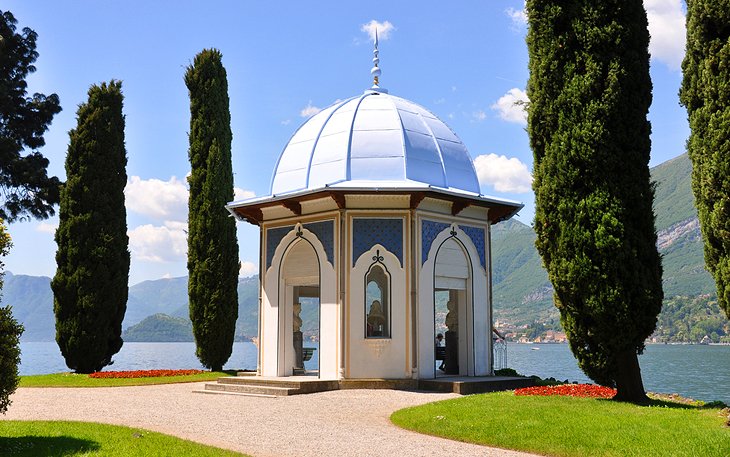
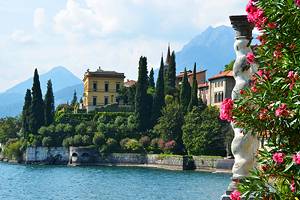
As the lake steamer approaches Bellagio, you'll see a swath of green bordering the shore. Those are the gardens of Villa Melzi d'Eril, and a favorite place to stroll. The perfectly landscaped terraces and gardens surrounding the villa are all original to their early-1800s design to frame lake views with cypresses and statues.
Highlights are the water garden, a neo-Moorish pavilion, and the Orangerie. Although the Neoclassical villa is not open to the public, there are often changing art exhibits in the Orangerie.
Address: Lungo Lario Manzoni, Bellagio
Official site: http://www.giardinidivillamelzi.it/GIARDINI_DI_VILLA_MELZI/HOME_PAGE_ENG.html
How to Make the Most of Your Visit to Lake Como
The town of Como, at the southern end of Lake Como, is an hour from Milan. You can get here by train, then board one of the regular boats that stop at towns around the lake. A convenient way to see both the town and lake from Milan is to take a tour with a professional guide who can point out the highlights.
- Full-Day Tour to Lake Como from Milan: A Lake Como Day Trip from Milan includes transport to Como by air-conditioned coach, a boat tour of Lake Como, free time for shopping in Como, and visits to the town's highlights. From April to October, tours include time to explore picturesque Bellagio, while tours from November through March include a funicular ride up to the village of Brunate for views of the lake and surrounding mountains.
- Touring Lake Como and the Swiss Alps from Milan: Combine a visit to Lake Como with one of the world's great train rides and magnificent Alpine scenery, on the 12 ¾-hour Bernina Scenic Train & Lake Como tour. Travel along Como's eastern shore, stopping to visit Varenna, one of its prettiest little towns, then ride along the valley of the Adda River to Tirano, where you board the Bernina Express to travel over the spectacular Bernina Pass in Switzerland.
- Visiting Lake Como on Your Own: Two different train lines leave Milan for Como, arriving at different stations, both within walking distance of the boat landing for lake ferries. These boats have varying routes, some stopping at more towns than others, but all offer unparalleled views of the lake, lakeside towns and villas, and mountains. You can ride the whole circuit or hop off to explore or stay overnight in lakeside towns.
Como, Italy - Climate Chart
| Average minimum and maximum temperatures for Como, Italy in °C | |||||||||||
| J | F | M | A | M | J | J | A | S | O | N | D |
| 13 -4 | 14 -3 | 18 -1 | 22 3 | 25 7 | 28 10 | 30 12 | 29 12 | 26 9 | 21 4 | 17 0 | 14 -3 |
| PlanetWare.com | |||||||||||
| Average monthly precipitation totals for Como, Italy in mm. | |||||||||||
| 79 | 74 | 109 | 158 | 201 | 175 | 137 | 173 | 160 | 147 | 127 | 66 |
| Average minimum and maximum temperatures for Como, Italy in °F | |||||||||||
| J | F | M | A | M | J | J | A | S | O | N | D |
| 55 25 | 56 27 | 64 30 | 70 37 | 76 44 | 82 49 | 85 54 | 83 53 | 77 48 | 69 39 | 61 31 | 56 27 |
| PlanetWare.com | |||||||||||
| Average monthly precipitation totals for Como, Italy in inches. | |||||||||||
| 3.1 | 2.9 | 4.3 | 6.2 | 7.9 | 6.9 | 5.4 | 6.8 | 6.3 | 5.8 | 5.0 | 2.6 |
More Related Articles on PlanetWare.com
Exploring Italy's Lakes Region: To see more lake scenery, and several more of the most beautiful gardens in Italy, travel west to visit the attractions of Lake Maggiore. Between the two larger lakes is lovely Lake Lugano, which you can explore in the Swiss Ticino region.
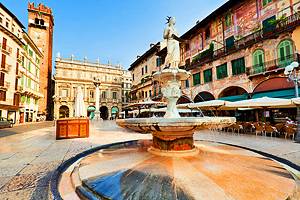
Where to Go from Lake Como: Lake Como is within easy reach of many of the best places to visit in Italy. The Duomo and other top attractions in Milan are a short train ride away, and from here, you can take a direct train to visit romantic Verona, perhaps stopping to explore the towns around Lake Garda.