24 Top-Rated Attractions & Places to Visit in Auvergne
Experience the beauty of France without the crowds by visiting the off-the-beaten-path Auvergne region. This spectacular rural landscape is distinguished by its impressive volcanic mountains, idyllic valleys, and unspoiled forests.
If you love the great outdoors, the Auvergne region is the place for you. Regional nature parks offer opportunities for fishing, hiking, mountain biking, horseback riding, skiing, and other active sports.
Cultural attractions are another draw. This region is dotted with old castles, Romanesque churches, and quaint historic villages. The local gastronomy is also a highlight of visiting this region. Several towns are famous for making special varieties of cheese.
Auvergne also boasts the fashionable spa towns of Vichy and Le Mont-Dore, thanks to the area's thermal springs. The bustling capital of Auvergne, Clermont-Ferrand is an elegant city with a heritage dating back to the Crusades.
Learn about the best places to visit and things to do in this undiscovered region of France. Our list of the top attractions in Auvergne will help you plan your adventures.
See also: Where to Stay in Auvergne
- 1. Parc Naturel Régional des Volcans d'Auvergne
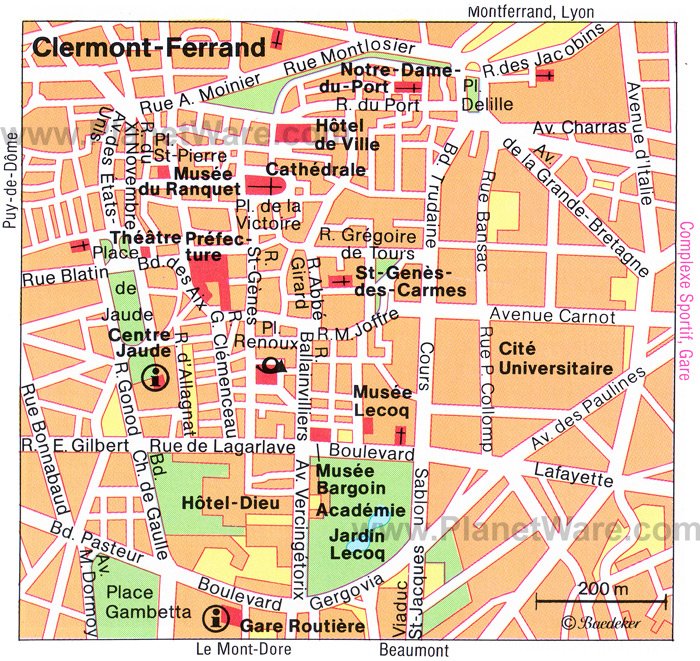
- 2. Clermont-Ferrand
- 3. Le Puy-en-Velay
- 4. Vichy
- 5. Riom
- 6. Saint-Flour
- 7. La Chaise-Dieu
- 8. Orcival
- 9. Salers
- 10. Moulins
- 11. Brioude
- 12. Saint-Nectaire
- 13. Aurillac
- 14. Abbatiale Saint-Austremoine in Issoire
- 15. Roquefort Village and Cheese
- 16. Village of Bort-les-Orgues and Château de Val
- 17. Arboretum de Balaine
- 18. Le Mont-Dore
- 19. Saint-Saturnin
- 20. Viaduc de Garabit
- 21. Vulcania Amusement Park
- 22. Summertime Concerts and Festivals
- 23. Parc Naturel Régional du Livradois-Forez
- 24. Musée des Manufactures de Dentelles (Lace Museum)
- Where to Stay in Auvergne for Sightseeing
1. Parc Naturel Régional des Volcans d'Auvergne
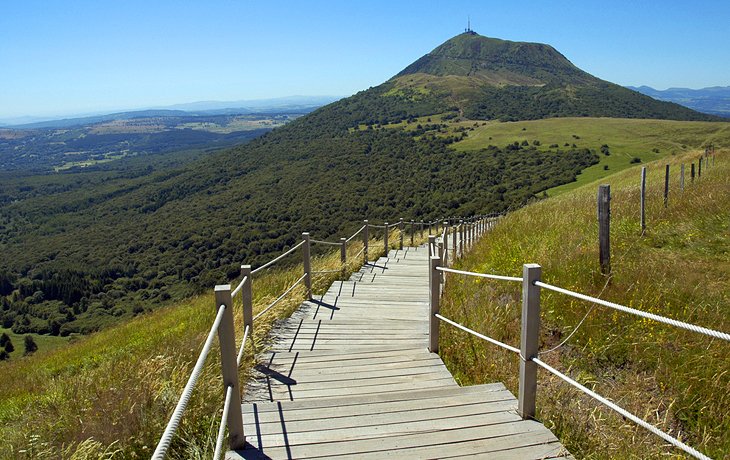
One of the largest regional parks in France, this expansive nature reserve features volcanoes, crater lakes, forests, rivers, and thermal springs. The most magnificent of the volcanoes, the Puy de Dôme rises dramatically from the verdant valleys.
By hiking up to the peak of the Puy de Dôme, you can take in views of the Chaîne des Puys, with their ancient craters now covered by pastures of rolling grass. Another impressive volcano is the Puy de Sancy, the highest peak in the Massif Central at an elevation of 1,886 meters.
The Parc Naturel Régional des Volcans d'Auvergne is a place to appreciate vast open space and to participate in adventure sports. With its well-groomed trails, this regional park is a hiker's paradise. Other outdoorsy things to do include mountain biking, horseback riding, rock climbing, river rafting, kayaking, and canoeing.
Address: Château de Montlosier, Aydat, France
Read More: Top-Rated Things to Do in France
2. Clermont-Ferrand
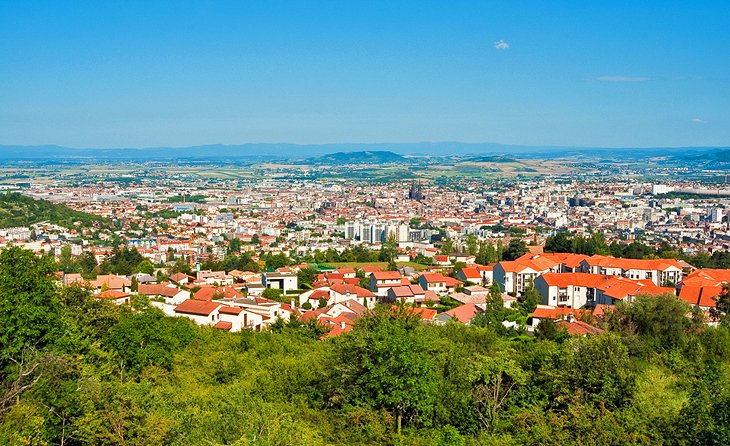
Auvergne's atmospheric capital city is actually two historic towns combined in one. Clermont-Ferrand encompasses Le Vieux Montferrand (the old hilltop village of Montferrand) and the medieval town of Clermont, which was incorporated with Montferrand in 1630. Both areas of Clermont-Ferrand reveal a fascinating heritage.
The First Crusades began in Clermont, proclaimed by Pôe Urban II in 1095. The skyline of Clermont-Ferrand reveals 50 towers, which represent the medieval town's churches.
Majestic and awe-inspiring, the Cathédrale Notre-Dame de l'Assomption stands on a hilltop in the historic center of Clermont. This 13th-century cathedral has a striking appearance, thanks to its construction from dark volcanic stone. Beautiful stained-glass windows are another distinguishing feature of the cathedral.
The UNESCO-listed 12th-century Basilique Notre-Dame-du-Port (also in the Clermont historic center) was a stop on the Chemin de Saint-Jacques medieval pilgrimage route to Santiago de Compostela in Spain. The basilica's crypt contains a copy of a Black Virgin figurine that was venerated by pilgrims in the 13th century. Intricately carved Romanesque capitals, over 250 in total, decorate the nave.
To switch gears and experience Clermont-Ferrand's modern city center, spend time at the happening Place de Jaude. The monumental buildings of this fountain-adorned square are filled with shops, cafés, and restaurants. For a taste of local culture, pick one of the square's many outdoor cafés and enjoy a coffee break on the terrace. There's also a cinema on the square, and steps away is the Opéra-Théâtre de Clermont-Ferrand (Opera House).
A short walk from the Place de Jaude or the cathedral is the Henri-Lecoq Museum, a collection of natural history plus an educational botanic garden.
The Vieux Montferrand historic district is home to the Musee d'Art Roger Quilliot (Museum of Fine Arts) with over 1,500 artworks, from medieval to modern.
From the end of January through early February, the town hosts the International Short Film Festival.
3. Le Puy-en-Velay
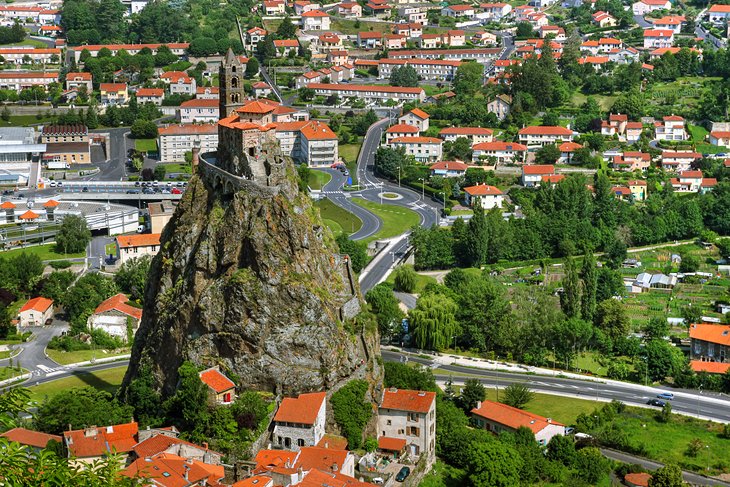
In this one-of-a-kind town, striking volcanic formations provide stunning sites for medieval pilgrimage churches.
Marvel over the Chapelle Saint-Michel d'Aiguilhe, crowning a mount of lava rock, and try to fathom how it was built in the 10th century. It requires a climb of 268 steps to reach the chapel.
The UNESCO-listed 12th-century Romanesque Cathédrale Notre-Dame du Puy is not to be missed. This church was one of the stops on the Chemin de Saint-Jacques pilgrimage route to Santiago de Compostela. For centuries, pilgrims came to venerate a Vierge Noire (Black Madonna) figure. Unfortunately, the figure was destroyed during the French Revolution. A copy now graces the Baroque high altar.
Every year in mid-August, the Fêtes Mariales (Feast of the Assumption) is held to commemorate the Assumption of the Virgin Mary. This traditional Catholic celebration features a procession of the famous Black Madonna.
One of the most iconic sites in Le Puy-en-Velay is the statue of the Notre-Dame de France (Virgin Mary). This impressive statue stands on top of the Rocher Corneille, a 132-meter-high volcanic chimney overlooking the historic center of town. You may visit the site, which offers sweeping vistas of Le Puy-en-Velay's cityscape and surrounding countryside.
Five kilometers from Le Puy-en-Velay, the breathtaking Forteresse de Polignac perches above steep cliff sides. Much of the original impregnable fortress is now in ruins (except for the old dungeon, ramparts, and defense system), but the panoramic views merit a visit. The Forteresse de Polignac is open from April through mid-November for self-guided and guided visits.

4. Vichy
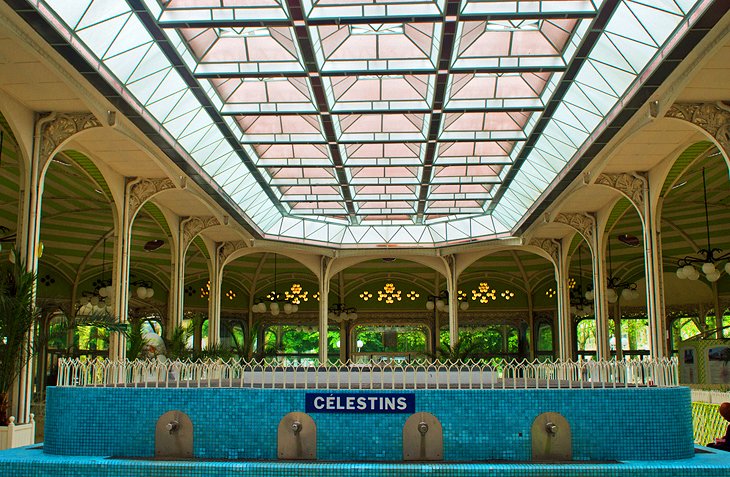
This Belle Epoque town was a fashionable spa resort in the 19th century, when visitors came to "take the waters" for their health benefits. Thermal baths and spa treatments were popular, as well as leisure activities such as golf and tennis.
Right in the center of town is Les Thermes de Vichy spa, which was founded in 1903. This spa offers a chance to bathe in the mineral-rich Vichy waters, said to cure illnesses. Les Thermes de Vichy offers treatments for various health issues and provides programs for three-day, six-day, and three-week stays.
Other attractions in Vichy are the lush parks such as Le Parc Napoléon III and the Opéra de Vichy, a glittering Art Nouveau monument that hosts opera, theater, and classical music performances.
A 30-minute drive from Vichy is the Château de Chareil-Cintrat, a splendid Renaissance castle classified as a Historic Monument. The castle is open Tuesday through Sunday, from mid-June through mid-September. During your visit, you can admire the sumptuous interior, including murals created from 1560 to 1570 depicting mythological and astrological themes.
5. Riom
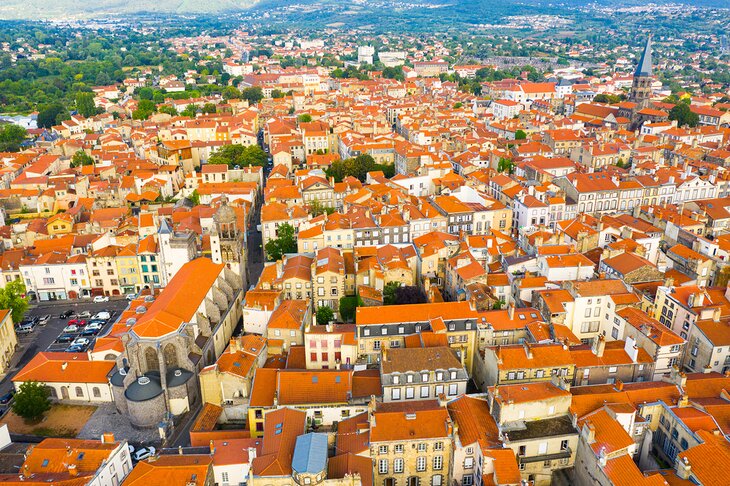
Riom is a historic capital city with grand boulevards and elegant old mansions. On the main street, the Rue de l'Hôtel-de-Ville, is the 16th-century Hôtel de Ville (Town Hall) and the Musée Mandet, a museum of fine arts and decorative arts.
To learn about the regional culture, visit the Musée Régional d'Auvergne, which focuses on traditional rural life and folk art in Auvergne.
Inside the Palais de Justice (Law Courts) is the chapel of the old château, Sainte-Chapelle, a gem of Gothic architecture illuminated by three exquisite 15th-century stained-glass windows.
For those seeking spa and mineral bath treatments, Châtel-Guyon is worth a detour, about five kilometers from Riom. This Belle Epoque spa town now has a modern spa facility with views of the Parc Thermal, a luxuriant three-hectare park with walking paths, and a rose garden that features thousands of blooms.
Châtel-Guyon is also known for its cultural events, including a springtime jazz festival, Jazz aux Sources; summertime outdoor music concerts; and year-round theater performances.
6. Saint-Flour
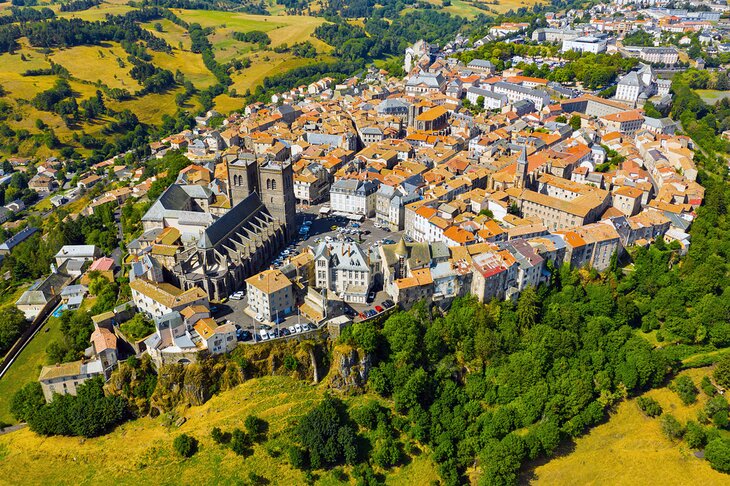
Perched on a volcanic rock promontory, Saint-Flour has a charm all its own. Medieval walls still partially enclose the town's historic center, which is a delight to explore on foot.
Saint-Flour's quaint pedestrian streets are lined with boutiques, restaurants, and cafés. At the Tourism Office near the cathedral, you can pick up maps of walking circuits through the historic center or along the ramparts.
Saint-Flour flourished as a religious capital during the Middle Ages; the Musée de la Haute Auvergne displays the region's archaeological and religious art treasures.
Further evidence of the town's incredible heritage is the Cathédrale Saint-Pierre-et-Saint-Flour, an amazing Gothic cathedral built out of black basalt (lava stone).
A short (20-minute) drive south of Saint-Flour is the ruined 13th-century Château d'Alleuze, once the base for the bishops in the area of Saint-Flour. The castle is in ruins, but this hilltop site has an air of romance and provides superb views of the surrounding valley.
7. La Chaise-Dieu
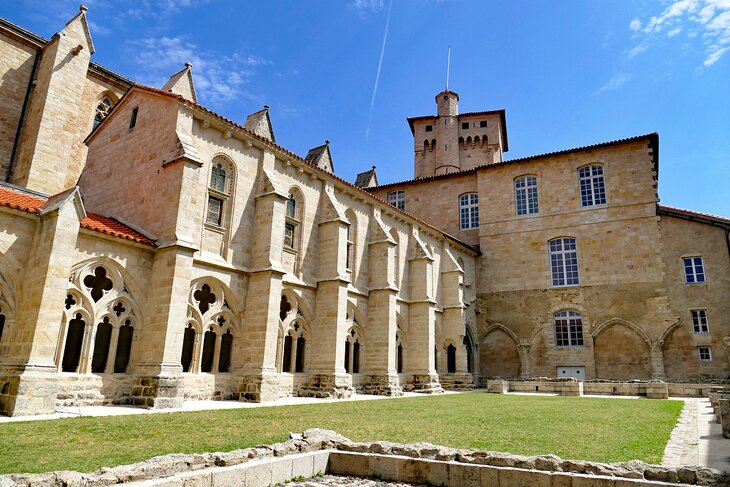
This little village is renowned for its Benedictine abbey. The abbey's celebrated 14th-century Church of Saint-Robert has an awe-inspiring, high-vaulted Gothic interior.
The choir contains the tomb of Pope Clement VI, as well as an exquisite set of 16th-century tapestries listed as Monuments Historiques.
Also on display is the three-panel wall painting Danse Macabre, created in the 15th century at a time when plagues and wars had reduced the European population by half.
In August, the Festival de Musique (classical music festival) presents concerts at various venues in La Chaise-Dieu, as well as in nearby villages.
8. Orcival
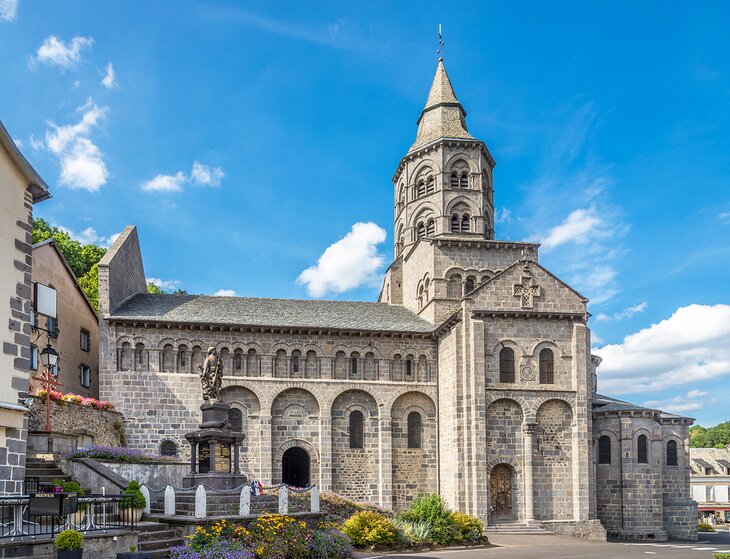
The village of Orcival enjoys a picture-perfect backdrop of the Monts Dômes and the Monts Dore mountain ranges. And the cultural attractions rival the natural scenery.
An exceptional monument, the Basilique Notre-Dame d'Orcival was founded by the abbey of La Chaise-Dieu in the 12th century and is considered one of the finest Romanesque churches in Auvergne. The basilica contains relics that have been venerated by pilgrims since the 6th century, and the choir holds a revered 12th-century statue of the Virgin Enthroned.
Near Orcival (three kilometers away) is the Château de Cordès, which has three elements classified as Monuments Historiques: the façade, the chapel, and the formal gardens. Other unique features include the dining room constructed out of Volvic stone and decorated with Aubusson tapestries.
The Château de Cordès is especially renowned for its French formal gardens designed in 1695 by André Le Nôtre. The Château de Cordès is open on Sundays in June and every day in July and August.
9. Salers
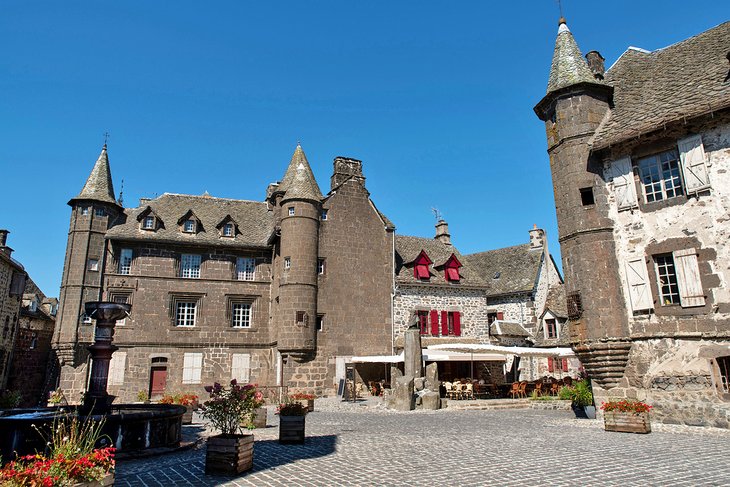
The little medieval hilltop town of Salers is listed as one of the Plus Beaux Villages de France. Tucked away in the Parc Naturel Régional des Volcans d'Auvergne, the town stands at an altitude of more than 914 meters and is still surrounded by its ancient walls.
Salers is distinguished by its houses built from dark lava stone and topped with turrets. Top attractions are the town's central square and the Romanesque and Gothic-style Eglise Saint-Mathieu decorated with 17th-century Aubusson tapestries.
History buffs will want to visit the town's Maison des Templiers, which houses the Musée de Salers. This museum is dedicated to the history of Salers, as well as the folk art and traditions of the region.
Salers is well known for its farming heritage, as well as its hearty cuisine made from ingredients of the terroir. Local specialties include the high-quality beef from Aubrac-breed cattle raised on nearby ranches and the AOP (Appellation d'Origine Protégée) Salers cheese.
10. Moulins
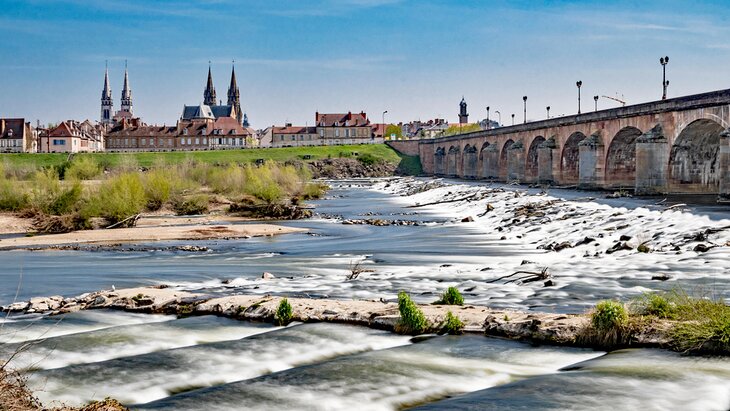
The town of Moulins takes its name from the many mills that once lined the Allier River. In the 14th century, Moulins became the capital of the Bourbonnais duchy, and the medieval Château des Ducs de Bourbon still stands at the center of town.
Also known as "la Mal-Coiffée" ("the Bad Hairdo"), the château (open every day in July and August) now houses a museum devoted to the heritage of the Dukes of Bourbon. From the top of the castle, you can take in panoramic views of the surrounding countryside.
Opposite the château is the 15th-century Cathédrale Notre-Dame-de-l'Annonciation, designed in the Flamboyant Gothic style with exquisite stained-glass windows. The sacristy displays the Triptyque due Maître de Moulins, a well-preserved late-15th- to early-16th-century triptych.
Other tourist attractions are the Musee du Bâtiment, a museum dedicated to the history of building construction techniques, and the Maison Mantin, a lavishly decorated 19th-century bourgeois home, which is open to the public and displays an eclectic assortment of antiquities, historical items, and collector's items.
11. Brioude
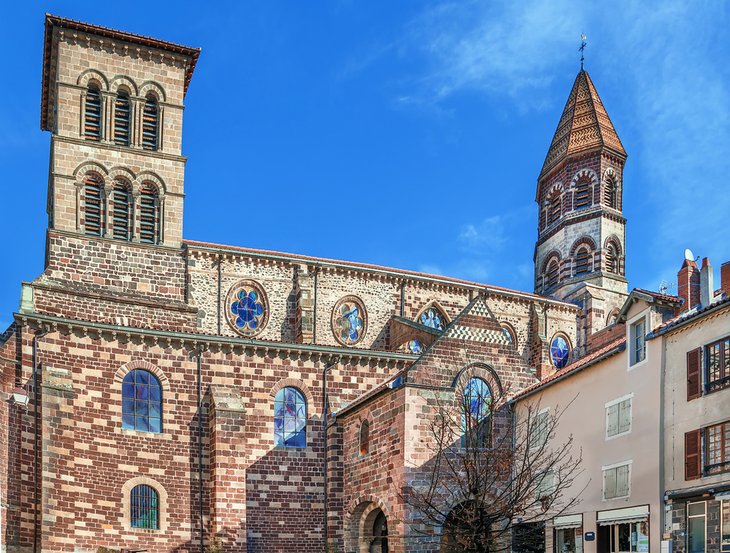
The small village of Brioude boasts the largest Romanesque church in Auvergne, which was a medieval pilgrimage destination on the Chemin de Saint-Jacques route to Santiago de Compostela.
The town's most important monument, the Basilique Saint-Julien was built in the 11th to 12th century using multicolored masonry. The dazzling interior features 300 richly carved Romanesque capitals and Gothic-style vaulting added in the 13th century. The nave is adorned with intricate 12th-century frescoes depicting biblical stories, while contemporary stained-glass windows illuminate the space.
Another interesting attraction in Brioude is the Aquarium La Maison du Saumon et de la Rivière, located in a beautiful setting on the Allier River. Here, a salmon aquarium houses 800 fish of 35 different salmon species. The museum also educates visitors about the biology of salmon and the history of salmon fishermen.
12. Saint-Nectaire
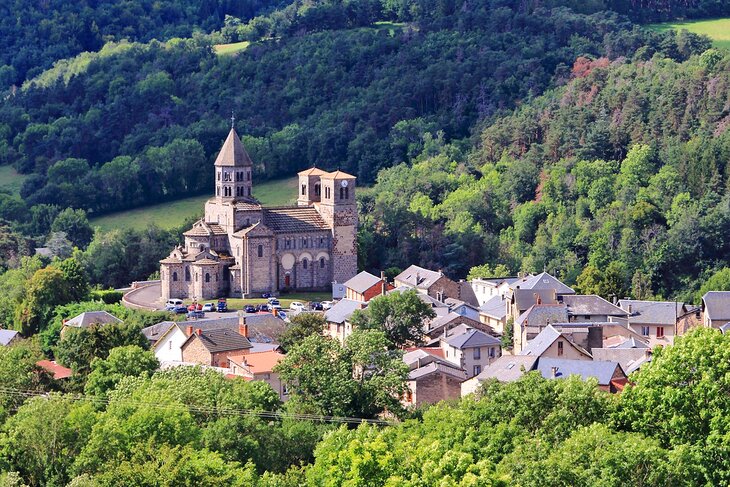
A tour of Romanesque churches continues in Saint-Nectaire, a small hilltop village surrounded by a picturesque landscape. The area is a popular spa and hiking destination.
Perched on the highest point in the town is the 12th-century Eglise de Saint-Nectaire. The harmonious interior features a 20-meter-high cupola. More than a hundred capitals depict Old and New Testament scenes. The church treasury contains a 12th-century gilded copper bust of Saint Baudine.
Besides its church, the town is also known for its Saint-Nectaire cheese, which has a special designation of AOP (Appellation d'Origine Protégée).
13. Aurillac
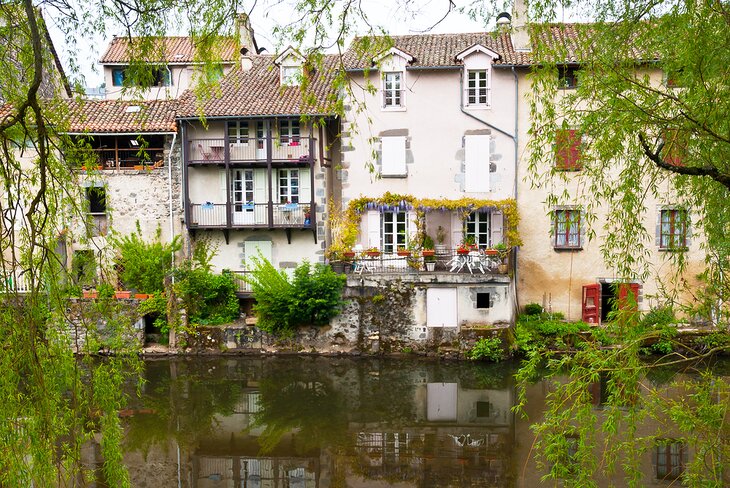
Aurillac is the old capital of Auvergne and the current capital of the Cantal département. This attractive town grew up around the Abbaye de Saint-Géraud, founded in the 10th century.
Listed as a Monument Historique, the Église Abbatiale dates to the 12th and 13th centuries. However, the church was completely rebuilt in the 15th century.
Another noteworthy church in Aurillac is the 14th-century Église Notre-Dame-des-Neiges, also a Monument Historique. The church shelters a fine 17th-century Black Virgin.
In the town is Château Saint-Étienne, an ancient fortress dating to the 9th century that is listed as a Monument Historique. The château was renovated in later centuries (12th, 13th, and 19th). One wing of the château now houses the Musée des Sciences. This engaging museum features multimedia exhibits, interactive models, and videos about the science of volcanoes.
14. Abbatiale Saint-Austremoine in Issoire
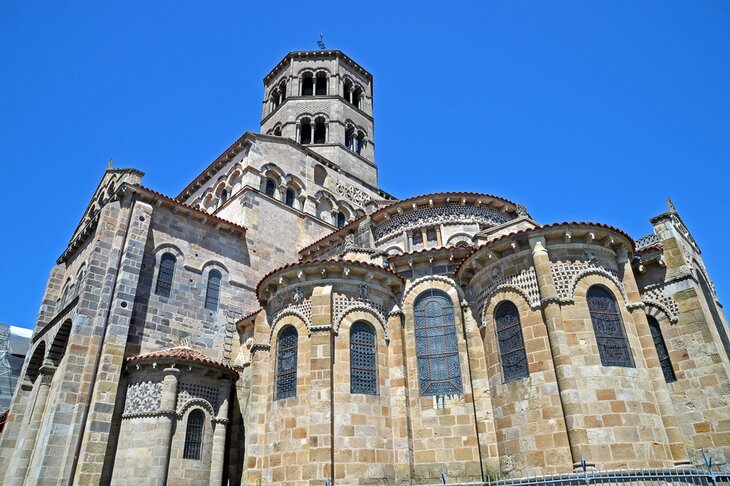
Visit the town of Issoire to admire the second-largest Romanesque church in Auvergne after the Basilique Saint-Julien in Brioude. Built in the 11th and 12th centuries, the Abbatiale Saint-Austremoine is a masterpiece of Auvergnese Romanesque art and is classified as a Monument Historique.
Stepping into the sanctuary gives the impression of entering a jewelry box. The brilliant and ornately decorated interior sparkles with vibrant stained-glass windows, colorful polychrome mosaics, and intricate sculptural decoration.
15. Roquefort Village and Cheese
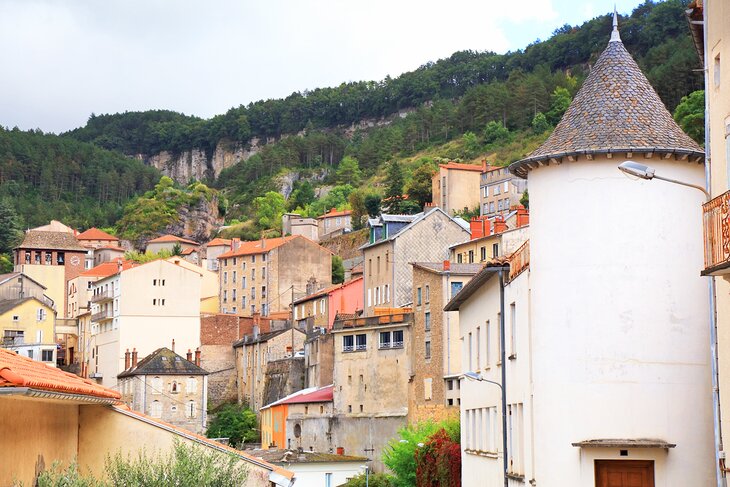
Famous for its cheese, Roquefort-sur-Soulzon is registered as a Site Remarquable du Goût (awarded to sites with exceptional food products of the French terroir). The tiny village is found near the Grands Causses Regional Natural Park, at the base of the Combalou Rock. This area falls within L'Occitane region, which borders Auvergne.
Natural caves of Combalou Rock offer the perfect conditions for ripening the Roquefort cheese, which has been crafted in the same way for a thousand years. Roquefort is an intensely flavored blue cheese made from the milk of Lacaune sheep that graze on verdant pastures surrounding the village. Some of the local Roquefort producers offer tours of their cellars.
16. Village of Bort-les-Orgues and Château de Val
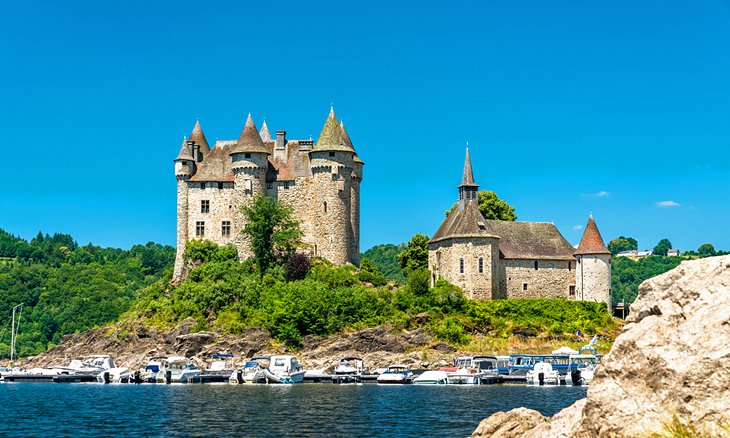
The picturesque town of Bort-les-Orgues is a good starting point to explore the natural landscape of the Dordogne Valley. The most important monument is its church, the Eglise de Bort, which dates back to the 13th century.
Bort-les-Orgues is listed as a Ville Fleurie because of the abundance of flowers adorning its public spaces and parks.
A 10-minute drive away in Lanobre, the turreted 15th-century Château de Val dazzles visitors with its fairy-tale appearance and idyllic lakeside setting. The lavish rooms have been refurbished with outstanding attention to detail. Within the castle is the Chapelle Saint-Blaise, which is listed as a Monument Historique.
The Château de Val is open from February through November. The castle also offers overnight accommodations and has an interesting program of cultural events held throughout the year. During summertime (July and August), the château hosts music concerts on Wednesday evenings.
17. Arboretum de Balaine
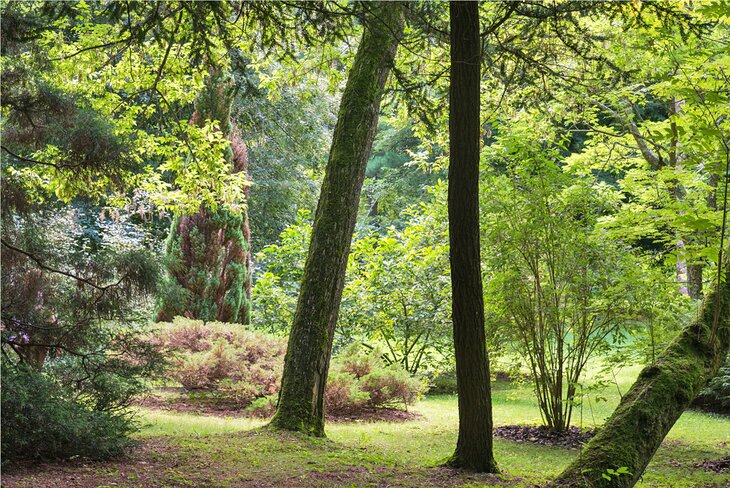
Created in 1804, the Arboretum de Balaine is the oldest botanical garden in France and is classified as a Jardin Remarquable. Formerly the grounds of a Bourbonnais castle (still located on the property), the site encompasses around 20 hectares with 3,500 varieties of plants.
The arboretum blends classic English garden style with areas devoted to exotic plants. Highlights are the heirloom rose garden, a vegetable and aromatic plant garden, and untamed woodlands.
Take a stroll along a meandering walking path that weaves its way through the garden's shrubs and leafy trees and across streams. You may also enjoy a picnic at various spots in the garden.
From early March through mid-November, the Arboretum de Balaine is open every day. Hours are from 9am until 7pm in spring and summer and from 9am until 5pm during autumn. The garden is closed during wintertime.
Address: Château de Balaine, 03460 Villeneuve-sur-Allier
18. Le Mont-Dore
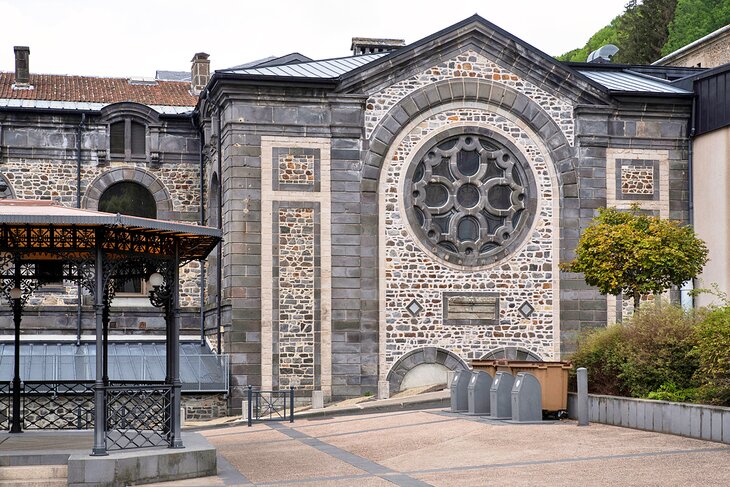
This lovely spa resort town nestles along the Dordogne River at the foot of the Puy de Sancy mountain. Le Mont-Dore has several upscale spa facilities.
The most prestigious establishment, the Spa Thermal du Mont-Dore is a classified Monument Historique. This Art Deco spa establishment was inspired by the Caracalla baths in Rome, as well as Byzantine-style Turkish baths. Spa facilities include a thermal pool and a variety of spaces for thermal bath treatments, mineral water hydrotherapy, massages, yoga classes, and beauty rituals.
Le Mont-Dore is part of a protected nature reserve, the Parc Naturel Régional des Volcans d'Auvergne. During summertime, the area is popular for outdoor activities such as hiking, horseback riding, mountain biking, and golfing.
Popular cultural events in the area include the Sancy Snow Jazz festival dedicated to hot jazz, swing, and New Orleans jazz music; Le Très Court International Film Festival in June; and for fans of traditional blues music, the Mont-Dore Volcanic Blues Festival in September to early October.
In wintertime, the Parc Naturel Régional des Volcans d'Auvergne is a winter sports destination for alpine skiing and cross-country skiing.
Read More: Best Waterfalls in France
19. Saint-Saturnin
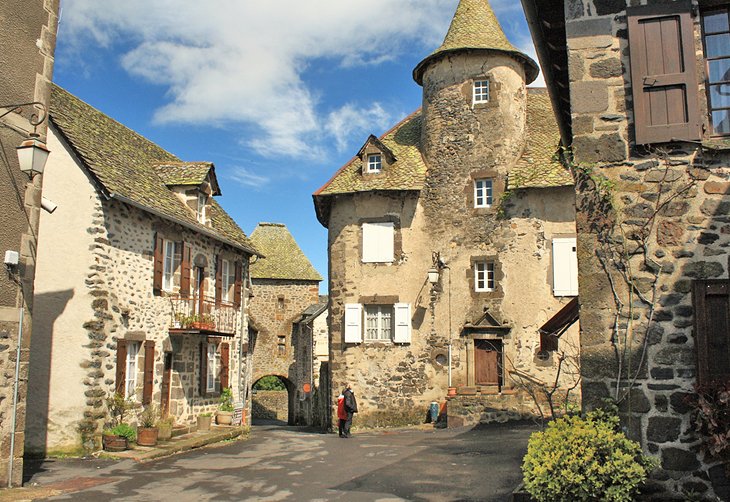
The fortified medieval village of Saint-Saturnin delights visitors with its country charm and tranquil environment. Saint-Saturnin is about 20 kilometers from the village of Saint-Nectaire.
A must-see sight, the 12th-century Eglise de Saint-Saturnin is considered one of the most important Romanesque monuments of Auvergne. This church reveals a marvelous architectural unity. The somber interior inspires solemn prayer and spirituality.
The town also boasts a 13th-century château, where Catherine de Médicis once held court.
20. Viaduc de Garabit
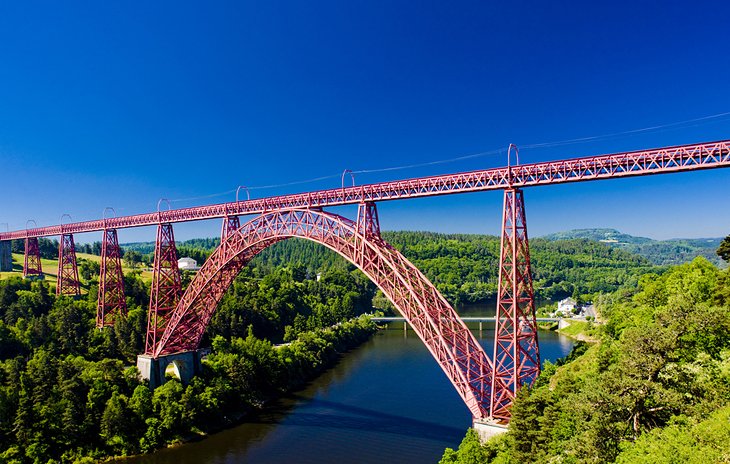
Gustave Eiffel designed this 565-meter-long viaduct, with an arch spanning the Truyère River to the south of Saint-Flour. The Viaduc de Garabit was built between 1880 and 1884, before the Eiffel Tower was constructed.
Held together by 600,000 rivets, the massive steel structure is a remarkable feat of engineering. The Viaduc de Garabit is classified as a Monument Historique and is considered among the finest achievements of Gustave Eiffel.
The Viaduc de Garabit is illuminated in the evenings year-round. On Christmas and New Year's Eve, the lights stay on all night long.
The area around the viaduct has several walking paths to take in the scenery.
21. Vulcania Amusement Park
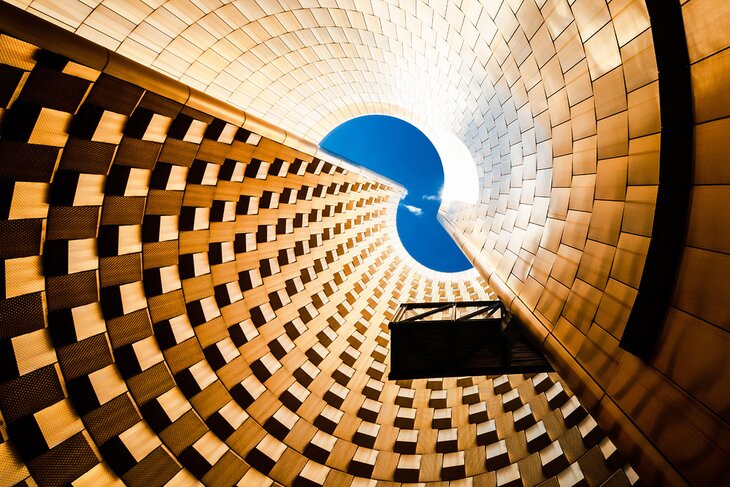
Get ready to be amazed at this innovative amusement park. You'll learn fascinating details about volcanoes, through animated movies, documentary films, and interactive science exhibits.
Families love the kid-friendly attractions: dragon-themed amusement park rides, a children's exploration lab, an outdoor playground, and a play area just for toddlers.
The Vulcania amusement park is just a short drive away (20 minutes) from Clermont-Ferrand.
Address: Route de Mazayes, Saint-Ours les Roches
22. Summertime Concerts and Festivals
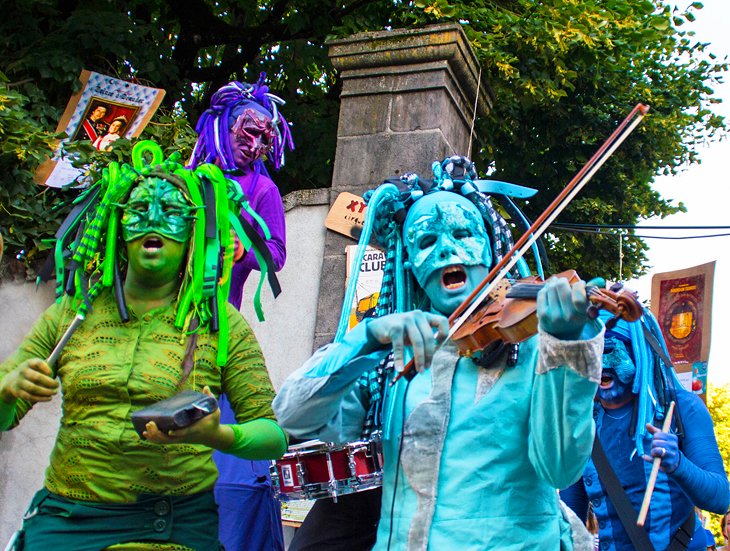
Auvergne is among the best places to visit in France to enjoy summertime concerts and festivals. Music lovers can choose from many wonderful events.
The Festival de Musique en Bourbonnais presents Baroque music performances at the 12th-century Eglise Saint-Pierre de Châteloy in Hérisson and other Romanesque churches nearby.
The Concerts de Vollore series of classical music concerts takes place at various venues in the village and at the Château de Vollore. This summertime festival includes a wide variety of performances, from classical music to jazz.
La Chaise-Dieu Festival de Musique in August presents classical piano, symphony, and sacred music concerts at the Abbey Church of Saint-Robert and in nearby villages.
On the third weekend of September, the Roi de l'Oiseau Renaissance Festival in Puy-en-Velay entertains crowds with its "Tir de l'Oiseau" archery competition, circus performances, and an authentic Renaissance market.
In mid-July, Issoire hosts the highly acclaimed Festival International Danses et Musiques du Monde, which brings together musicians, dancers, and singers from all over the world.
In August, Aurillac transforms its streets and squares into entertainment venues for the International Street Theater Festival (Festival International de Théâtre de Rue).
The town of Gannat (near Vichy) holds a Festival of World Cultures that takes place over several days in July.
23. Parc Naturel Régional du Livradois-Forez
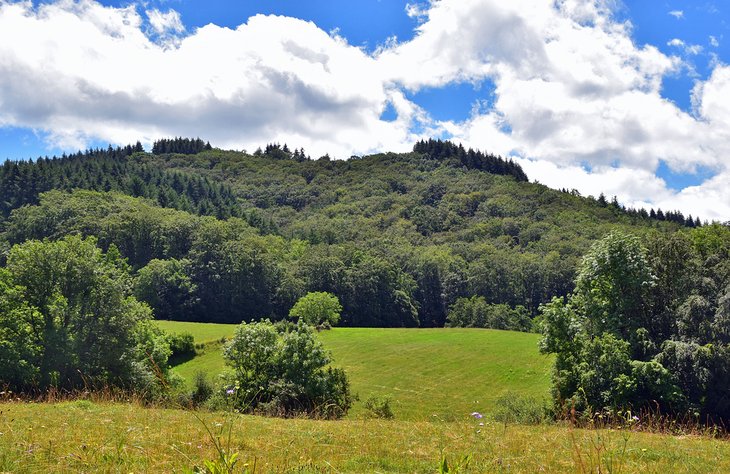
The Parc Naturel Régional du Livradois-Forez is known for its contrasting landscapes: mountains, woodlands, heather moors, plains, and wetlands.
The forests are home to amazing bird species, including grouse and owls. The diverse scenery and abundance of birdlife make this natural park a great place for hiking and bird watching.
Address: Maison du Parc, 63880 Saint-Gervais-Sous-Meymont, France
24. Musée des Manufactures de Dentelles (Lace Museum)
The Musée des Manufactures de Dentelles allows you to discover the fabulous world of lace, through its extensive collection of around 450,000 pieces representing 100,000 different lace designs. The museum also explains the history of lace manufacturing in the region.
This museum explains the history of European lace and shows how women of the region have created lace since the early 20th century. A Decorative Arts exhibit focuses on the wide range of lace designs, along with the sources of inspiration.
This museum is found in the small country village of Retournac.
Address: 14 Avenue de la Gare, Retournac
Where to Stay in Auvergne for Sightseeing
Although Auvergne's tourism industry is less developed than other areas of France, the region still offers a wide variety of lodging options. The most luxurious accommodations are found in historic castles in the countryside, while more affordable options are located in the towns. We recommend these hotels in and around Clermont-Ferrand, Vichy, Moulins, Le Mont-Dore, and Le Puy-en-Velay.
Luxury Hotels:
- The five-star Château de Codignat occupies a medieval castle on a hilltop above the village of Bort l'Etang (30 kilometers from Clermont-Ferrand). The location affords panoramic views of the countryside. This Relais & Châteaux property offers sumptuous accommodations on a 15-hectare parkland with a romantic garden. Amenities include a scenic walking trail, outdoor swimming pool, tennis court, and a gourmet restaurant that serves regional cuisine.
- The peaceful Napoleon III Park at the center of Vichy provides a relaxing setting for the Vichy Célestins Spa Hôtel. This luxurious five-star hotel is designed in 1930s Art Deco style. The spacious, bright guest rooms feature modern decor and sleek marble-accented bathrooms. The hotel has a fine-dining restaurant, fitness center, wellness programs, and a prestigious thermal spa (the largest medical spa in Europe) with indoor and outdoor swimming pools, a hammam, and saunas.
- In the village of Saint-Saturnin (20 kilometers from Clermont-Ferrand), the Château Royal de Saint-Saturnin is a small boutique bed-and-breakfast hotel, which occupies a renovated medieval castle. The charming guest rooms are outfitted in traditional French style, while the wood-beamed library and a cozy dining room offer inviting spaces for guests to enjoy. The Château Royal de Saint-Saturnin is surrounded by a lovely garden.
Mid-Range Hotels:
- For a magical French country experience, travelers can choose the Château d'Ygrande (about 30 kilometers from Moulins). Set on expansive grounds with vibrant gardens and sweeping views of the Bourbonnais landscape, this four-star hotel offers the refinement of a 19th-century manor house. Guest rooms are exquisitely decorated in old-fashioned French style. Amenities include a gastronomic restaurant, wellness area, outdoor swimming pool, walking trails, and a lake for fishing and boating.
- The Hôtel Mercure Clermont Ferrand Centre Jaude is located at the heart of Clermont-Ferrand near the bustling Place de Jaude. This modern four-star hotel offers contemporary-style rooms with modern amenities, such as flat-screen televisions and Nespresso coffee machines. The hotel also has a fitness center and an outdoor terrace with breathtaking views.
- Located near the center of Le Mont-Dore in a gorgeous natural environment, the Gran Carlina Hotel caters to guests seeking comfortable lodging and a rejuvenating ambience. This four-star hotel has a gourmet restaurant, fitness center, sauna, and spa, as well as indoor and outdoor swimming pools. Nearby are many hiking trails, as well as ski slopes.
Budget Hotels:
- For those seeking an affordable hotel in Vichy, the three-star Hôtel de Grignan hits the mark for both location and price. Ideally situated on a quiet street near the center of town, this hotel is within easy walking distance of the Opéra de Vichy and the Napoleon III Park. The stylish modern rooms have refrigerators and updated bathrooms; some rooms have kitchenettes. Other selling points are the fitness center and hot tub.
- A good value for the price, the three-star ibis Styles Moulins Centre is ideally situated in the city's historic center, just a short walk away from the cathedral. The recently renovated hotel provides a 24-hour front desk, and the rooms are decorated in a minimalistic, contemporary style. A continental breakfast buffet is included. When the weather is nice, guests can bask in the sun on the outdoor terrace and take in the views of town.
- The ibis budget Le Puy-en-Velay is a two-star hotel, which offers comfortable accommodations at budget rates. The rooms are very basic but do have private bathrooms and feature simple modern decor. Conveniently located near the SNCF train station, the hotel is about a 15-minute walk from the historic center of Le Puy-en-Velay. The hotel also has a 24-hour front desk and a buffet breakfast option.
More Related Articles on PlanetWare.com
Other Beautiful Regions in France: If you enjoy the great outdoors, you should consider visiting other regions of France such as the French Alps and the Pyrenees. These are fantastic areas for nature appreciation and hiking. Take a look at our article on the top hiking trails in France for inspiration.