17 Top-Rated Tourist Attractions in Sweden
With its rich history and varied landscapes, Sweden is a traveler's paradise and a photographer's dream. If you love outdoor attractions, it's certainly hard to beat. The air and water are crystal clean, and there are thousands of acres of unspoiled forests and majestic lakes to explore, not to mention vast archipelagos along its coasts.
The roads and public transport are excellent; the citizens are invariably friendly and helpful; and in recent years, Swedish cuisine has undergone what can only be described as a revolution. Throw in a mind-boggling history, from notorious Viking invaders to royal dynasties and imperial intrigue, and one thing is certain: you'll never be bored.
Sweden's tourist attractions range from opulent palaces and ancient towns to vast Arctic landscapes and the famed Ice Hotel. There are so many things to do that you'll want to allow plenty of time to enjoy all its outdoor adventures and historic treasures.
To help you pinpoint the best places to visit in this much-loved Scandinavian country, we've pulled together our list of the top attractions in Sweden.
- 1. Gamla Stan, Stockholm
- 2. Vasa Museum, Stockholm
- 3. Drottningholm Palace, Lovö
- 4. The Göta Canal, Gothenburg to Stockholm
- 5. Kiruna and the Ice Hotel, Lapland
- 6. Skansen and Djurgården, Stockholm
- 7. Visby, Gotland
- 8. Stockholm City Hall
- 9. Liseberg Theme Park, Gothenburg
- 10. Kärnan & the Fredriksdal Open-Air Museum, Helsingborg
- 11. Oresund Bridge, Malmö
- 12. Domkyrka (Uppsala Cathedral), Uppsala
- 13. Sigtuna
- 14. Stockholm Archipelago, Stromma Boat Tours
- 15. Abisko National Park, Lapland
- 16. Lund Cathedral
- 17. ABBA The Museum
- Map of Tourist Attractions in Sweden
1. Gamla Stan, Stockholm
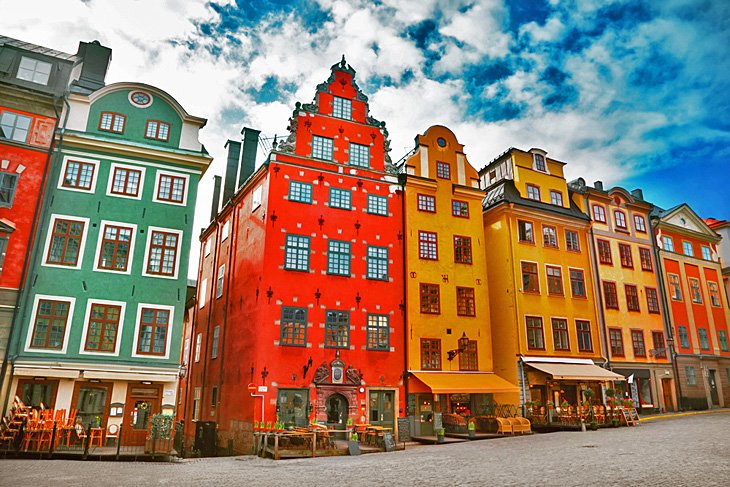
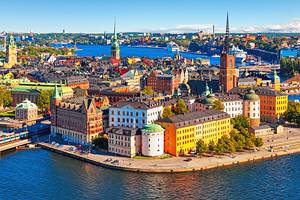
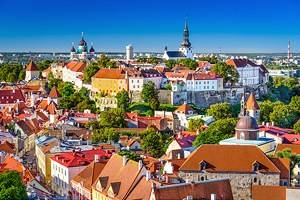
Stockholm's Old Town, known as Gamla Stan, is a small concentrated area where the city began in the middle of the 13th century.
Much of the medieval enclave remains, although in typical Scandinavian style, it is freshly brushed and painted regularly. Its charm is in the architecture along its narrow stone-paved lanes and cobbled streets around its squares, especially the main one, Stortorget, surrounded by old merchants' houses.
In this neighborhood, along with plenty of shops, restaurants, and cafés, you'll find the Nobel Museum, the Post Museum, the Royal Coin Cabinet, and several churches. It's also a good area to stay if you can find suitable accommodations, with options including luxury boutique hotels, guesthouses, and even affordable inns and hostels.
Read More: Top-Rated Attractions & Things to Do in Stockholm
2. Vasa Museum, Stockholm
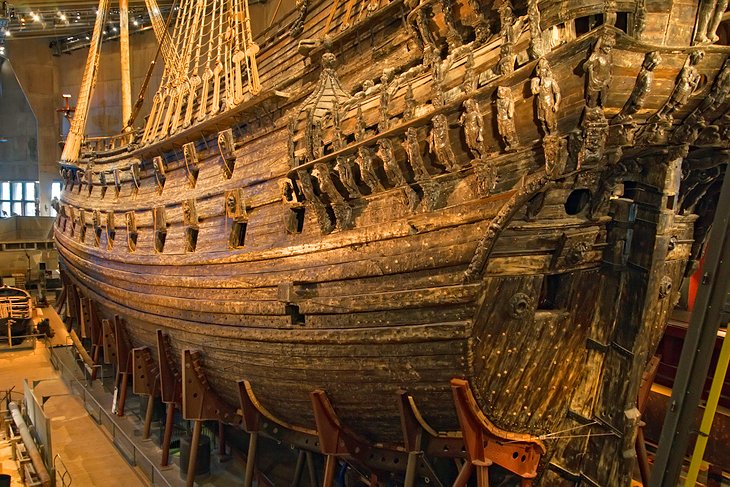
The Vasa Museum (Vasamuseet) in Stockholm is Sweden's most popular museum, attracting around a million visitors annually. The museum caters to tourists of all nationalities, and English-language guided tours and audio guides are available.
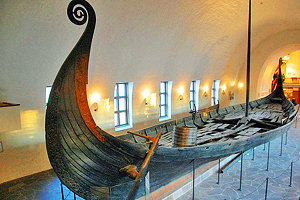
A visit to the Vasa, which houses 10 separate exhibitions and a further four museum ships, is a day out in itself. In 1628, the pride of the Swedish Imperial fleet, the 64-gun warship Vasa, sank on its maiden voyage. The ship lay below the icy waters for more than three centuries until, in 1961, an incredibly ambitious salvage operation took place. Now, visitors from across the world come to see this fascinating time capsule.
A shop and a restaurant are located on-site for those wanting to make a full day of it.
Another Stockholm museum worth visiting is Fotografiska, an innovative gallery of changing exhibits celebrating the art of photography. It is also known for its entertainment venue and restaurant, which features sustainably grown organic produce. The museum has been so successful that there is also a newer branch of this museum in New York City.
Address: Galärvarvsvägen 14, 115 21, Stockholm
3. Drottningholm Palace, Lovö

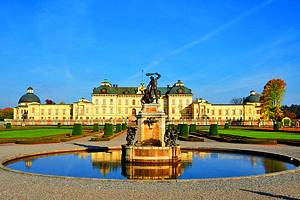
Fairy-tale Drottningholm Palace (Drottningholms slott), on the island of Lovö, is a UNESCO World Heritage Site. It lies about 11 kilometers west of Stockholm city center (45 minutes by ferry), making this an excellent day trip from Stockholm. Dating from the 17th century, the palace is now the official residence of the Swedish Royal Family.
In the picturesque terraced park are bronze sculptures from Bohemia and Denmark, brought back as trophies of war. Be sure to take in the Chinese Pavilion, which dates from the late 1700s. The 18th-century Palace Theatre (Drottningholms Slottsteater) is still used for performances during the summer months. In the Theatre Museum, you can see period stage costumes and stage scenery.
Guided tours are available (in English), and a variety of fun programs and workshops are available for kids and adults alike.
Address: 178 93 Drottningholm
4. The Göta Canal, Gothenburg to Stockholm
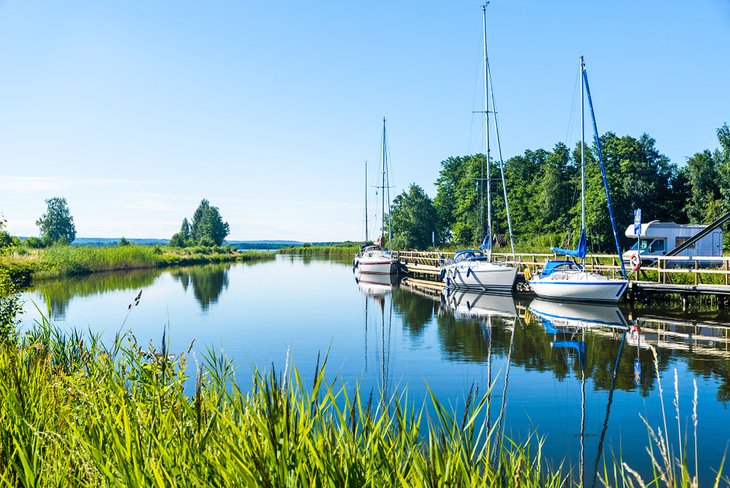
Often described as Sweden's greatest feat of engineering, the Göta Canal (Göta kanal) dates from the early 19th century and is 190 kilometers in length. It's now one of the country's premier tourist attractions and offers a unique perspective on Sweden's heartland.
In addition, by connecting with lakes Vänern and Vättern and the Trollhätte Canal, it forms part of a water link all the way from Stockholm, in the northeast, to Gothenburg, in the southwest.
Featuring 47 bridges and 58 locks the canal stretches from Sjötorp at Lake Vänern to Söderköping on the Baltic Sea. There's a choice of passenger cruise vessels or you can hire a boat and experience the canal in your own way.
Read More: Top-Rated Attractions & Things to Do in Gothenburg
5. Kiruna and the Ice Hotel, Lapland
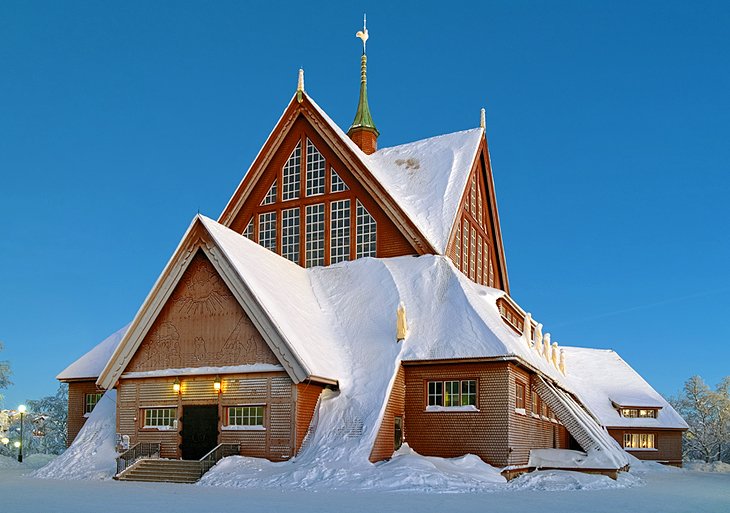
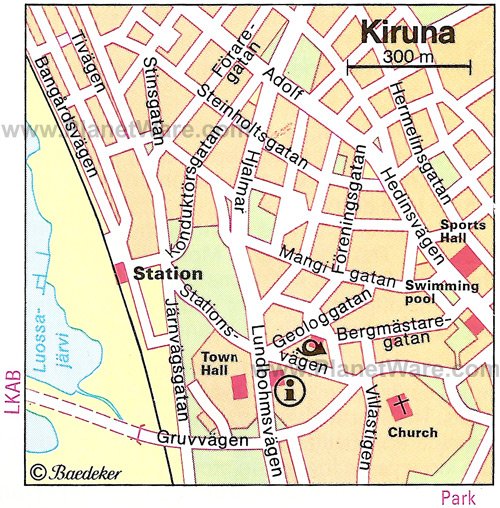
Sharing the same latitude as central Greenland, Kiruna in Lapland is Sweden's northernmost town. It's also the chief town of the largest commune in the country, which borders both Norway and Finland. The midnight sun is visible here from mid-May to mid-July.
Originally a Lapp settlement, the town began to develop when the mining of iron ore started around 1900. Incredibly, due to subsidence caused by mining, the entire city is being slowly moved northwest to the foot of the Luossavaara Mountain.
The world's first-ever Ice Hotel at Jukkasjärvi is about 17 kilometers outside the city. The ICEHOTEL, with its stunning rooms and furnishings, is re-created each year in a new design, built from ice in the river Torne.
In the summer, this is a center for river rafting, stand up paddleboarding, fishing, and canoeing. Sweden's highest mountain, Kebnekaise, is 90 kilometers west of Kiruna. Abisko National Park is located 95 kilometers northwest, where the Lapland Railroad runs west to Narvik on the Norwegian coast.
Address: Marknadsvägen 63, 981 91 Jukkasjärvi
6. Skansen and Djurgården, Stockholm
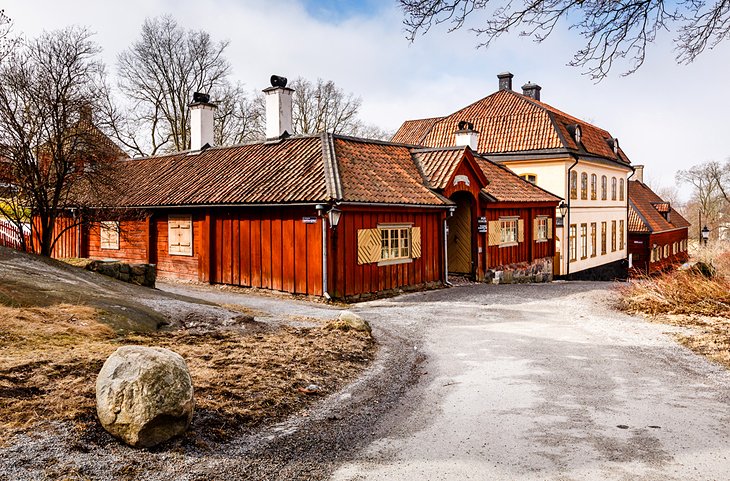
Skansen, the world's oldest open-air museum (and one of the world's largest), is a historic village made up of houses and farmsteads from all over Sweden. Together, these impressively preserved buildings represent both rural and urban culture at various periods from 1720 to the 1960s.
Gathered here are churches, schoolhouses, manor houses, shops, mills, workers' homes, artisan's shops (including a book bindery, print shop, shoemaker, tinsmith, comb maker, and glassworks), a bakery, a funicular railroad, a Sami camp with reindeer, and a number of complete farmsteads.
These homes, farms, and workshops are inhabited by costumed interpreters who carry on the everyday work, demonstrating the crafts and skills as well as doing household and farm tasks. A zoo includes animals native to Sweden, as well as sections for exotic animals and a children's zoo.
Skansen is located in the huge urban Djurgården Park, a favorite place for locals, especially in the summer. Throughout are traditional cafés, restaurants, snack bars, and even hotels. Canoe and bicycle hire are also available if you're feeling energetic. You will also find Abba the Museum here, along with the Gröna Lund amusement park.
To get here, you can catch a ferry from Gamla Stan or Slussen or take a tram or bus from Norrmalmstorg. Alternatively, the park is a pleasant 15-minute walk from the city center. Stop by the Djurgården Visitors' Center for more information.
Address: Djurgårdsslätten 49-51, 115 21 Stockholm
7. Visby, Gotland
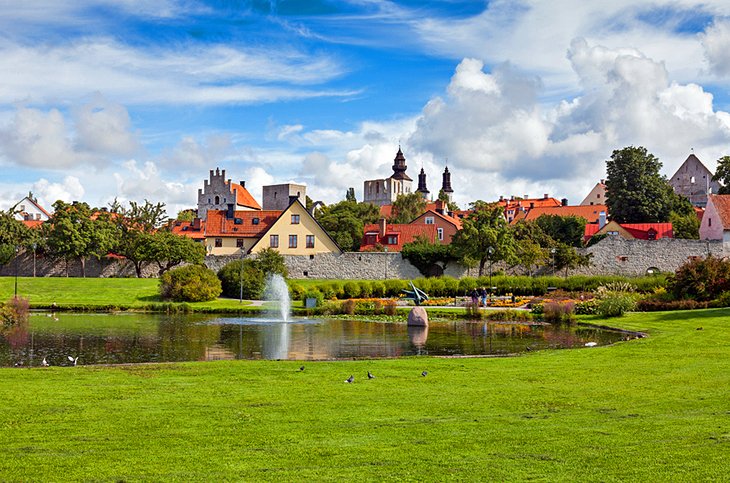
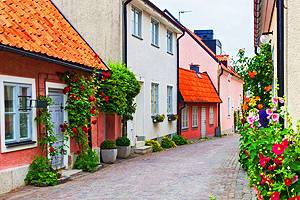
Steeped in medieval history and brimming with ruined churches, the rose-entwined, walled town of Visby, on the island of Gotland, is a huge draw for visitors from around the world.
Quaint cobblestone streets snake about the town, and when exploring, it's all too easy to lose your sense of being in the modern world. Adorned with stepped gables, many medieval trading houses remain, as well as some timber buildings from the 17th and 18th centuries.
Clearly, Visby's reputation as 'the pearl of the Baltic' and UNESCO World Heritage Site status are both well deserved. A self-guided or guided sightseeing tour of the magnificent walls, which date back some 700 years, is a must. Built into the structure are some 44 defensive towers, and the walls still bear the scars of attack in the form of two breaches.
Direct flights are available from Stockholm and several other Swedish cities, as well as excellent ferry links.
8. Stockholm City Hall
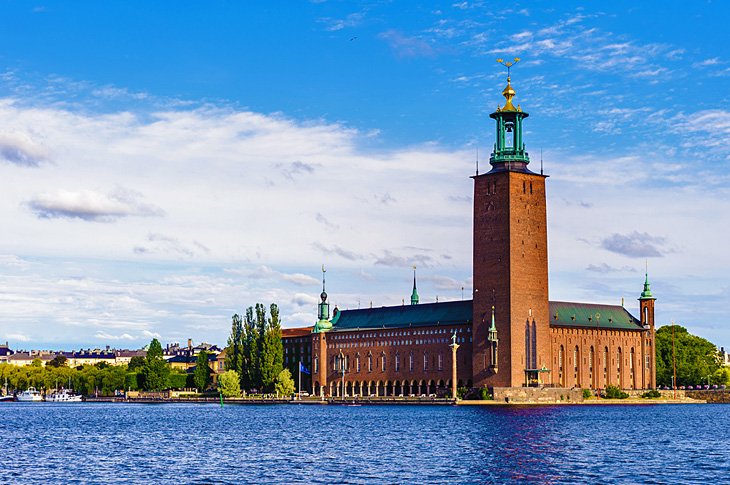
One of Sweden's most famous buildings, Stockholm City Hall (Stockholms stadshus) was built between 1911 and 1923, using an astonishing eight million bricks. It is considered one of the finest examples of National Romanticism, designed by the architect Ragnar Östberg. The 106-meter-tall tower is topped by three crowns.
A very informative tour recounts some of its history, as well as information about the Nobel Prize, which is presented here each year. On the tour, you'll see the Blå Hallen, the Blue Hall, where the Nobel dinner is held, and the Gyllene Salen, the Golden Hall, lined by 18 million gold mosaic tiles.
Those who want to travel even farther back in history can visit the Royal Palace (Sveriges Kungahus), located on Queen's Island (Drottningholm). After a scenic ferry ride, tourists can explore this 18th-century Baroque palace, which has more than 600 rooms. It is also home to several museums, including the Tre Kronor (Three Crowns) Museum, the Museum of Antiquities, the Armoury, and the Treasury. Be sure to time your visit to catch the daily changing of the guard.
Address: Hantverkargatan 1, Stockholm
9. Liseberg Theme Park, Gothenburg
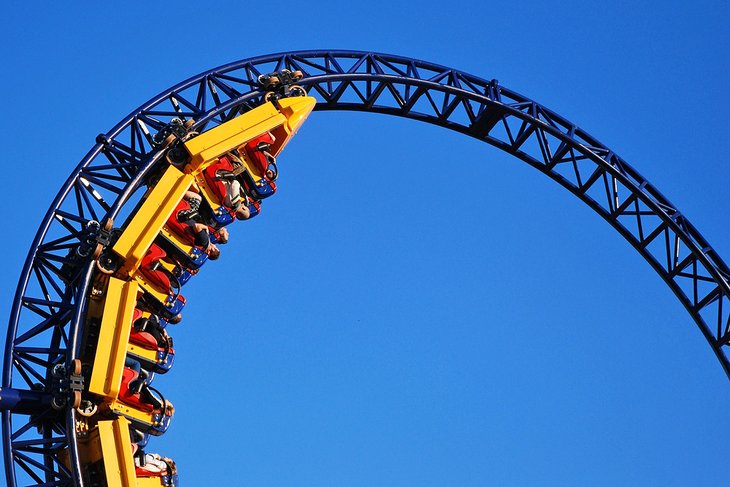
Liseberg is one of the most popular places to visit in Sweden, and each year, the park lures more than three million visitors. It has a huge range of attractions, from children's carousels and a fairy-tale castle to adrenalin-pumping rides for speed demons, bumper cars, and four roller coasters.
The park stages concerts in summer, too, and it's a real favorite with both Swedish families and visitors from abroad. At Christmas, the park hosts an excellent market. There are plenty of places to eat and beautiful flowers in bloom during the summer. For the best views in Gothenburg take a ride on the Big Wheel.
Address: Örgrytevägen 5, 402 22 Göteborg
10. Kärnan & the Fredriksdal Open-Air Museum, Helsingborg
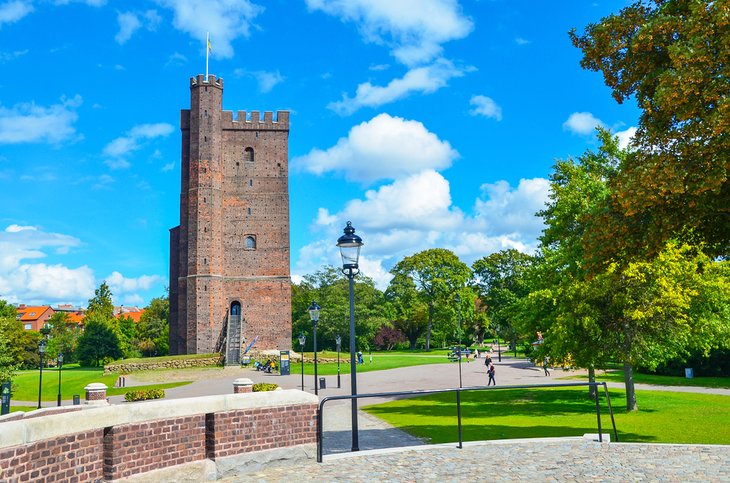
Located across the Oresund strait from Denmark's Helsingor (Elsinore), the town of Helsingborg is full of historic sites.
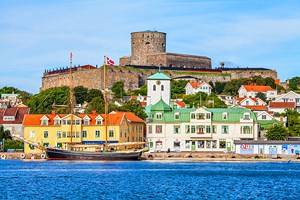
Its most prominent feature and famous landmark is a massive brick tower called Kärnan (The Kernel), originally built in the 14th century as a lookout turret for the town's fortress. It stands at the head of the market square (Stortorget), looming 35 meters above. Ambitious tourists can climb its 190 steps to get stunning views of the town below, as well as the Oresund Bridge and Denmark.
After exploring the city's historic center, head to the Fredriksdal Open-Air Museum & Botanical Garden (Friluftsmuseum) for an authentic look at Swedish daily life in centuries past. In addition to visiting the living history at a working Skåne farm, visitors can tour the Fredriksdal Mansion, a beautiful Botanic Garden, and visit the Grafiska Print Museum and a Music Museum.
Read More: Top-Rated Attractions & Things to Do in Helsingborg
11. Oresund Bridge, Malmö
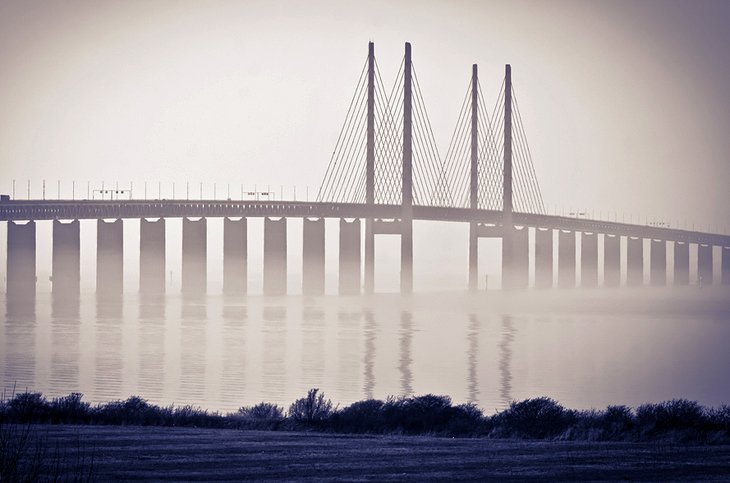
From Malmö city center, a 15-minute drive takes visitors to the magnificent Oresund Bridge. Famous throughout the world since opening in 1999 and several decades in the planning, the structure has gained further notoriety through the hit Danish/Swedish TV drama 'The Bridge."
This incredible engineering feat now links Sweden to Denmark, and in turn, the continent of Europe. The bridge is both rail and road, and on the Danish side, merges into a tunnel so as not to impact aircraft at Copenhagen airport.
Take a trip across the bridge and through the tunnel to neighboring Denmark, and if you like, spend some time exploring the attractions of Copenhagen.
12. Domkyrka (Uppsala Cathedral), Uppsala
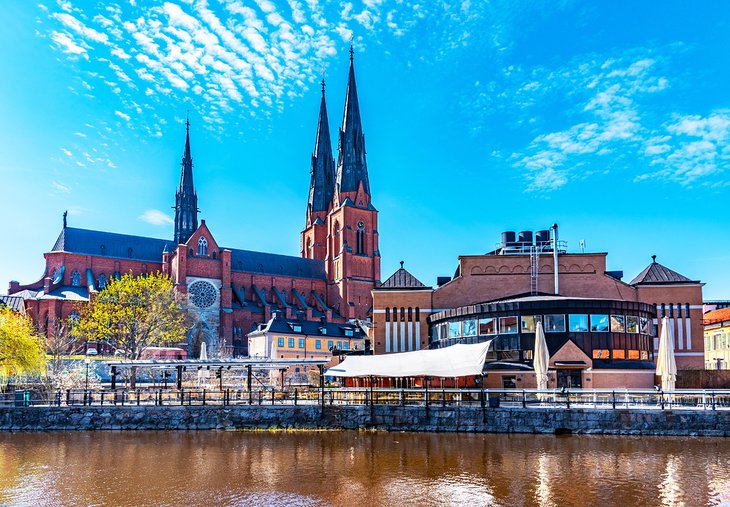
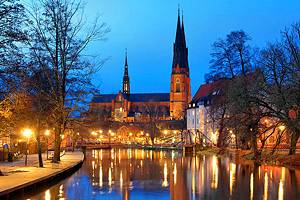
The Uppsala Cathedral is the crowning jewel of this city, originally built around 1270. Over the centuries, it has acquired additions, each era leaving its own influence. Its most striking exterior features are neo-Gothic spires added in the late 19th century, as well as stained-glass windows from the same remodel period.
Inside, take note of the details in the Baroque pulpit, which was carved in 1707, and be sure to visit the north tower's Silver Chamber, home to a gold brocade robe worn by Queen Margaret (circa 1400), as well as the final resting place of King Eric IX (St. Eric) whose rule ended in 1160.
Uppsala's medieval university, Uppsala Universitet, operates a museum (Gustavianum), which sits just across from the cathedral. It houses a wide variety of artifacts, ranging from Viking weapons and jewelry to Egyptian relics, including several mummies. It also has exhibits about Sweden's cultural history and an art collection.
13. Sigtuna
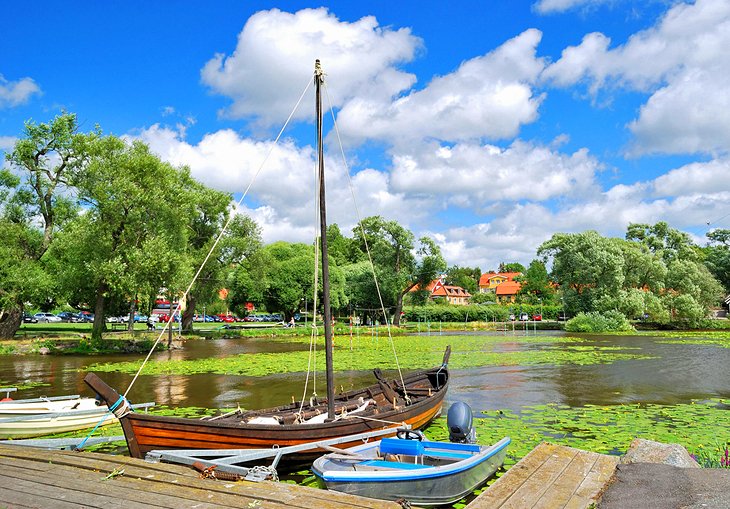
Famous as being Sweden's first-ever town and founded in 980 CE, the last century of the Viking era, the idyllic village of Sigtuna nestles alongside Lake Mälaren in the lush green landscape of Uppland, north of Stockholm. Sigtuna's amazing history is to be found in the medieval churches, ruins, rune stones, and buildings that remain to this day.
Along Storgatan, which has stood for more than a thousand years, are clusters of interesting little boutique shops selling fashion, designer items, and handicrafts. By car, Sigtuna is just 45 minutes from Stockholm, 30 minutes from the medieval university town of Uppsala, and just 20 minutes from Arlanda airport.
- Read More: Top-Rated Tourist Attractions in Uppsala
14. Stockholm Archipelago, Stromma Boat Tours
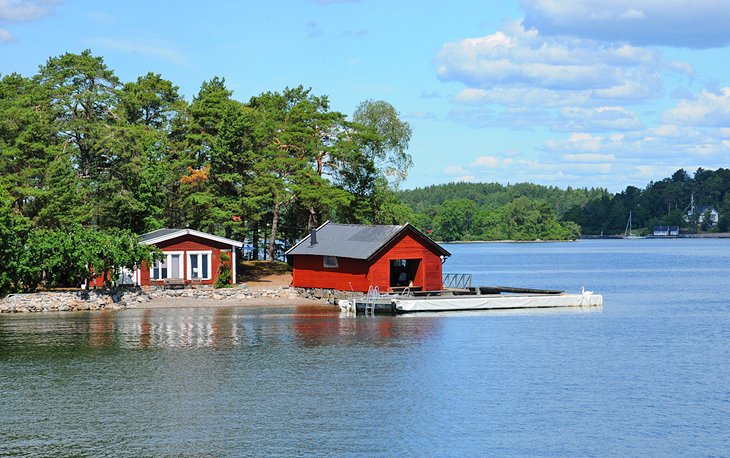
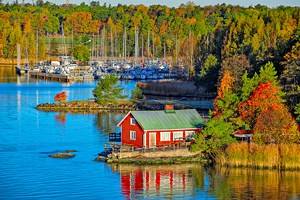
Stockholm is often referred to as the "Venice of the North." Water is everywhere, and around 30,000 islands lie in Stockholm's wondrous archipelago (skärgården). Distinctive red and yellow timber summerhouses occupy some islands, while others remain totally unspoiled.
A trip on the water, either in and around the city or to one of the islands, should be top on your list, whatever time of year you visit (cruises operate year-round). Many tours include lunch or dinner, and all give a unique vantage point of the city. Hop-on, hop-off options are available, too. When downtown, the distinctive Stromma boats are impossible to miss.
15. Abisko National Park, Lapland
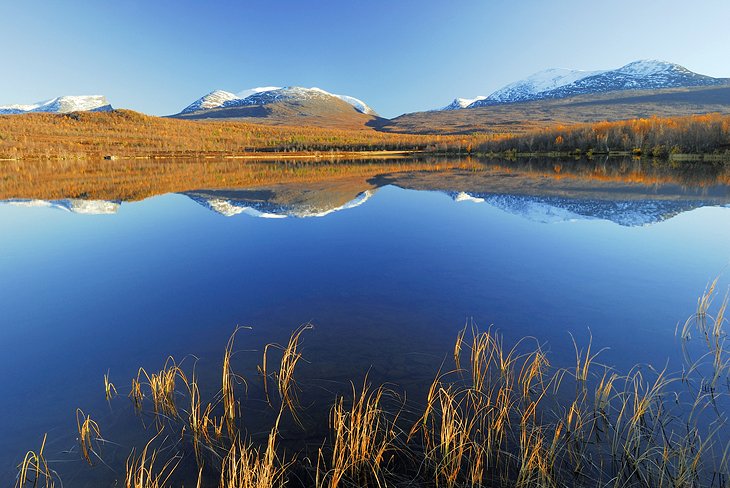
In summer, this is the Land of the Midnight Sun with 24-hour daylight lasting several weeks. Abisko National Park is some 77 square kilometers in size and is famous for its pristine natural beauty and Nordic wildlife. It's a great place to visit for Scandinavian winter adventures and long summer hikes.
Abisko is situated approximately 100 kilometers west of the town of Kiruna and is more than 200 kilometers inside the Arctic Circle within the auroral oval, an area that is considered to be one of the best places in the world to see the northern lights.
Regular flights operate to Kiruna from Stockholm, and bus, train, or taxi transfers are available to the park. Weather permitting, make sure you visit the spectacular Aurora Sky Station.
16. Lund Cathedral
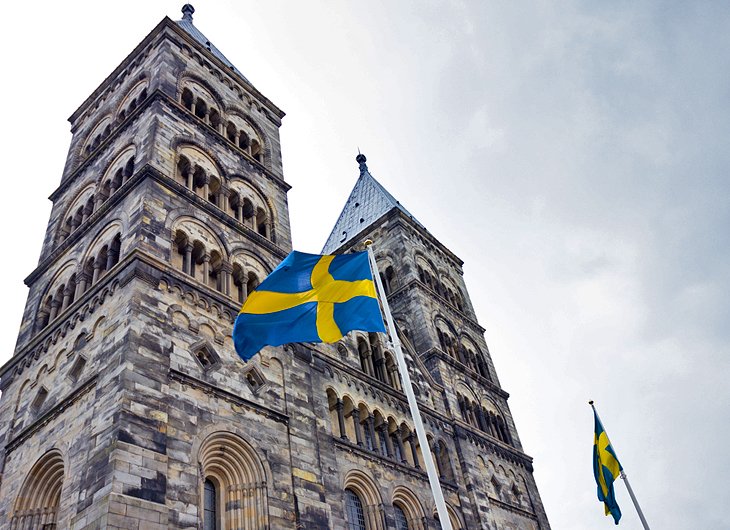
This is Sweden's most visited cathedral and one of the most visited sites in the southern province of Skåne. You'll understand why when you stand in front of the imposing Roman structure with its magnificent twin towers. Lund Cathedral (Lunds domkyrka) was founded around 1080 by the Danish King Canute IV and is the oldest and finest Romanesque church in Sweden.
The present building dates from the 12th century. Over the altar is a magnificent 14th-century carved reredos, the work of a north German master.
The crypt is the oldest part of the cathedral. Its roof is borne on carved stone pillars, with figures that are traditionally believed to represent a mythical giant, Finn, who is said to have built the cathedral.
In the aisle is the famous 14th-century astronomical clock with figures of the Three Kings, which emerge twice daily at noon and 3pm on weekdays and 1pm and 3pm on Sundays.
Address: Kyrkogatan 6, Lund
Read More: Top-Rated Day Trips from Copenhagen
17. ABBA The Museum
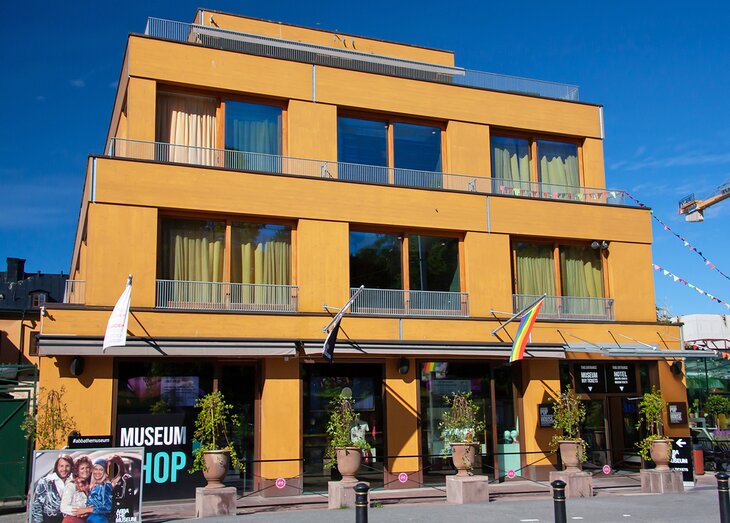
If you simply enjoy the upbeat and carefree tones of Mama Mia or are an Adam-Whitely-level super-fan, the ABBA The Museum in Stockholm is an exciting place to visit.
Exhibits begin with a look at the personal histories of each member, complete with letters, costumes, and instruments, most of which are displayed in re-creations of the actual settings they frequented.
One of the neatest exhibits is the museum's replica of the Polar Studio, complete with almost entirely original equipment, where you can feel, see, and hear what it was like to be in the studio with them. Tourists can also see a full range of ABBA memorabilia, from trinkets to gold record awards.
If you really want to be immersed in the experience, take advantage of the museum's virtual performance space, where you can "try on" costumes and even perform onstage alongside holograms of Agnetha, Benny, Björn, and Frida.
Address: Djurgårdsvägen 68, 115 21 Stockholm, Sweden