Tourist Attractions in the Red Sea Region
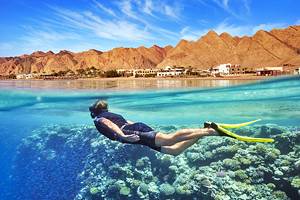
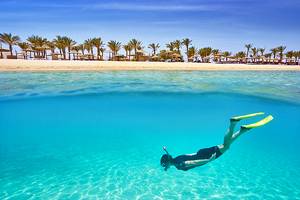
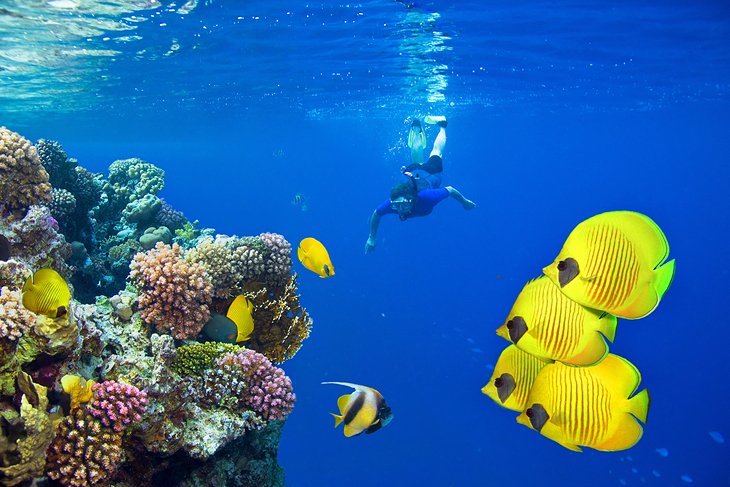
The Red Sea is one of the world's best places to visit for scuba diving, and for decades dive enthusiasts have headed here specifically for a holiday spent mostly underwater.
Today, this coastline has become a major sun-and-sea holiday destination favored as much by families looking for an easygoing beach break at a full-service resort hotel as divers here for the coral and fish life.
Away from the beach, though, there's more to explore. Diving may still be on the top of the things to do list, but the Red Sea has also become a major windsurfing and kitesurfing spot in recent years.
The Eastern Desert stretches across this region, scattered with remnants of Egypt's Roman and early Christian eras. These historic tourist attractions are a great opportunity to get off the beach for a day and discover some of Egypt's history.
Learn more about the best places to visit with our list of the top attractions and things to do in the Red Sea region.
Diving or Snorkeling the Red Sea's Famed Sites
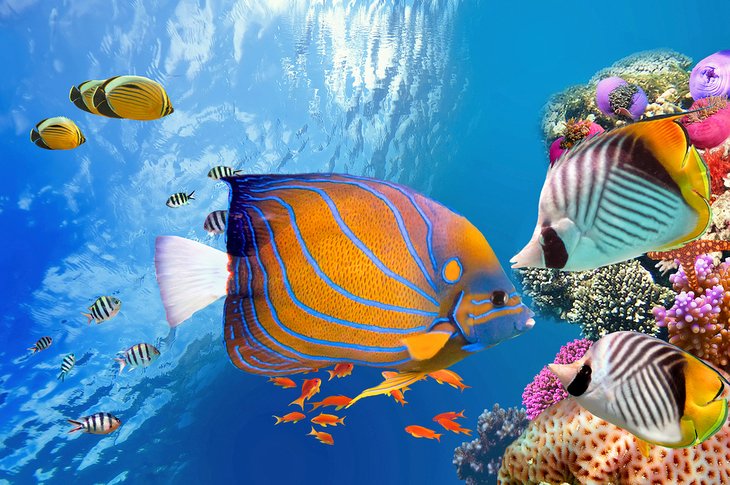
Diving and snorkeling are the Red Sea region's most popular activities.
For experienced divers, the best dive sites are found off the southern stretch of coast, with the easiest access from Marsa Alam. These "deep south" sites are renowned for their sea life and are your best chance of sighting one of the Red Sea's dugongs.
The dive sites just offshore from Hurghada are among Egypt's most popular, but as well as being overcrowded, their coral reefs have unfortunately suffered damage by both divers and disreputable dive operators.
If you're based in Hurghada, forgo those sites to head farther north on your dive trips into the Straits of Gubal, where you'll find the wreck of the Thistlegorm, one of the world's top wreck dives. Or south, to the dive sites offshore from Safaga, Al-Quseir, or just north of Marsa Alam.
Sunbathe & Swim on Resort Beaches
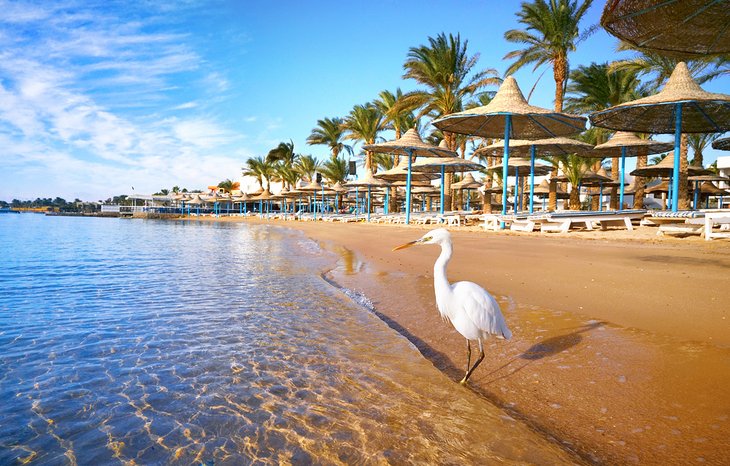
Some of Egypt's best resort life is strung out along the country's long Red Sea coast, north and south of Hurghada.
For many visitors looking for a vacation all about the sun, sand, and sea, this is the number one destination to head during the Northern Hemisphere's winter, when Egypt's Red Sea offers plenty of blue skies and balmy temperatures.
The Red Sea's best beaches are owned (or shared) by resorts and are outside of the major Red Sea towns.
Just 21 kilometers south of Hurghada International Airport, Sahl Hasheesh Bay is one of the top beach destinations in the country. There is a range of resorts strung along the long curve of sand here, including The Oberoi Beach Resort Sahl Hasheesh, with its opulent Arabesque decorated suites within 48 acres of manicured gardens. It's one of the most romantic destination hotels in Egypt.
Closer to Hurghada town, sitting in the resort strip area just south of the center, the Steigenberger ALDAU Beach Hotel is a popular choice for families due to its long strip of beachfront, massive swimming pool covering 5,000 square meters plus a lazy river, water sports center, and spa.
Learn to Windsurf or Kitesurf
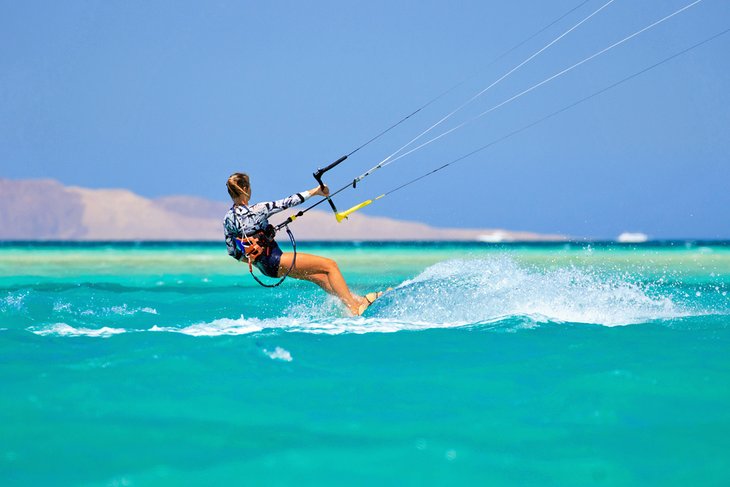
From October through May, the Red Sea's reliable offshore winds have made it a major kitesurfing and windsurfing destination.
The main center for kitesurfing is El Gouna, with several specialist kitesurfing operators in town offering weeklong vacation packages for experienced and beginner kitesurfers.
All operators also offer kitesurfing lessons for travelers who want to try the sport out but don't want to focus their entire vacation on it. A full introductory course generally covers two to three hours of instruction per day for three or four days.
The other Red Sea town known for its water sports is Safaga, 62 kilometers south from Hurghada.
Safaga itself is a rather industrial port town, but the shore just to the north of town has a small resort area dedicated to water sports thanks to the excellent wind conditions. There are windsurfing and kitesurfing operators here, and the small resorts are all centered around these sports.
Explore St. Anthony's Monastery
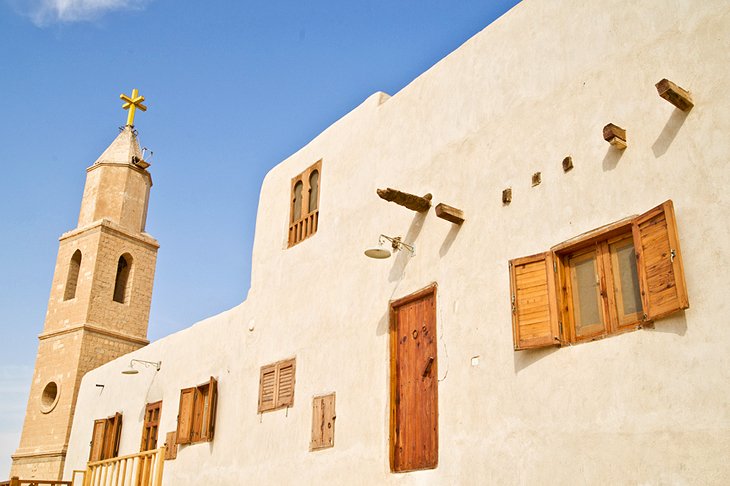
Founded by devotees of St. Anthony, the father of monasticism, it's claimed that St. Anthony's Monastery is the oldest monastery in the world.
It sits amid barren cliffs, 254 kilometers north of Hurghada. The monastery is situated just below the cave where St. Anthony retreated to follow an ascetic life of prayer and solitude.
Probably starting off life as a small clutch of humble dwellings, the monastery today is surrounded by thick fortified walls erected in the 10th century when monks found themselves frequently under attack from Bedouin raiders.
Inside, vast palm-tree-shaded gardens spread out between caramel-toned mud-brick buildings, where the monastery's monks still live.
The real highlights of a visit here, though, are the wall paintings inside the 6th-century Church of St. Anthony. The interior is covered with vibrantly colored and incredibly well-preserved frescoes of Coptic saints, which are renowned for being among the finest examples of Egyptian Coptic Christian artistry.
For those on a religious pilgrimage, St. Anthony's Cave sits 270 meters up the cliffside above the monastery. This is where the saint spent the last 20 years of his life.
Today, the cave is accessed via a steep staircase that winds up the cliff with glorious panoramas of the monastery and desert setting below.
Visit St. Paul's Monastery
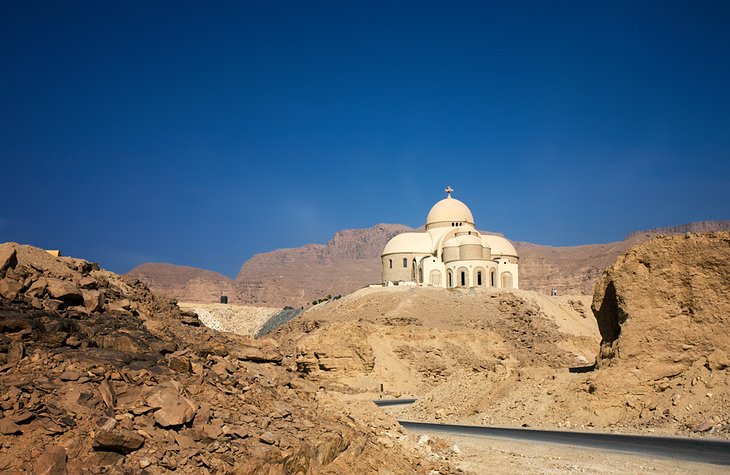
St. Paul's Monastery (241 kilometers north of Hurghada) is much smaller than St. Anthony's and honors St. Paul the Hermit, who is thought to be the first monk to take up the hermetic life.
The monastery has been functioning since at least the 6th century, when devotees of St. Paul began to flock here on pilgrimages.
Inside the thick medieval fortress walls, neat mud-brick buildings imbue the monastery with a sense of serenity.
Three churches are the main points of interest for visitors here: St. Paul's Church is thought to have been built exactly over the spot where St. Paul led his ascetic life of solitude.
A day trip here is usually combined with a visit to the Monastery of St. Anthony.
Day Trip to Al-Quseir
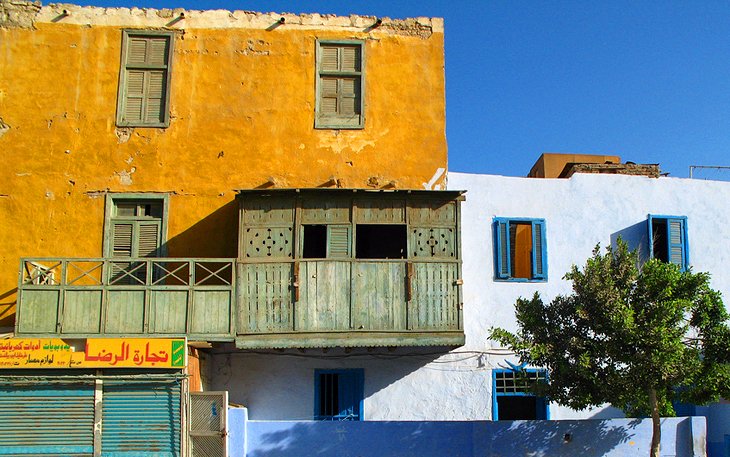
Just 146 kilometers south of Hurghada, Al-Quseir is a place apart from the resort-centered towns that dominate the Red Sea region.
Once an important port town in the medieval period, Al-Quseir has managed to preserve its unique coral-block architecture with narrow squiggles of lanes rimmed by colorful crumbling buildings boasting mashrabiya (lattice) windows and painted doors.
A fort sits just behind the old town area, but the real joy of a visit here is simply meandering through the alleyways; checking out the creaky, dilapidated architecture; and enjoying the charming sense that time somehow forgot this jewel of a place.
Hurghada's Souq & Marina
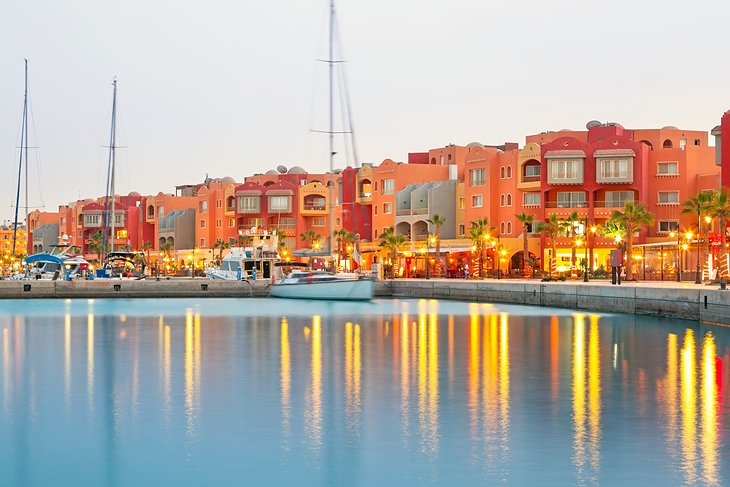
Egypt's oldest resort center, Hurghada rose to fame for its proximity to the fantastic dive sites just offshore, and what had been a tiny Bedouin settlement has long ago morphed into a bustling city that sprawls across the Red Sea coastline.
Although diving is still central to Hurghada's prominence, this is Egypt's major package-holiday destination, and thousands of European tourists decamp here every winter to escape the cold weather and soak up the sun on one- and two-week cheap package deals.
In central Hurghada town itself, the modern marina area has become a major dining center with plenty of restaurant and café choice.
For shopping, head to Ad Dahar Souq in the evening. This is where you'll find the widest range of local handicrafts and souvenirs in Hurghada. There are also plenty of local cafés offering shisha (water pipe), tea, and thick Arabic coffee in this area.
- Read More: Tourist Attractions in Hurghada
El-Gouna's Resort Life
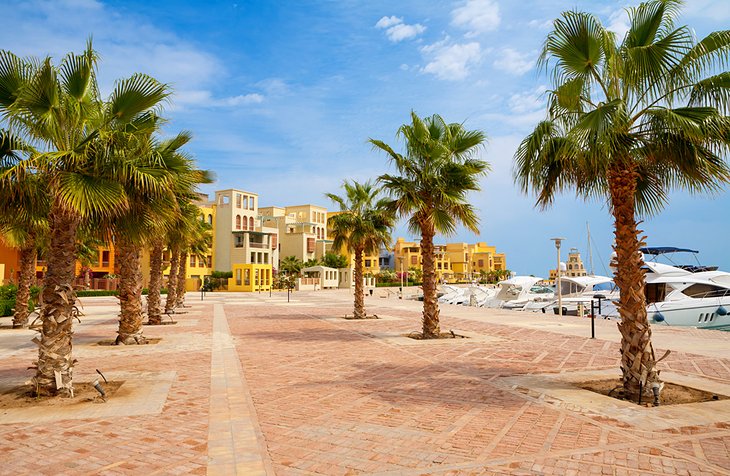
Just 30 kilometers north of Hurghada, El-Gouna plays the role of swish little sister to its aging sibling down the road.
El-Gouna is a completely planned, modern resort town focused on luxury resort living and holiday villa complexes.
There's a golf course, two marinas, and a dozen high-end and mid-range hotels that are fully kitted out to offer water sports and sun-soaked relaxation galore.
El-Gouna is also home to Egypt's only outdoor cinema (which screens movies for free) and the Culturama, which is twinned with Alexandria's Bibliotheca Alexandrina, and offers a multimedia display of Egyptian history, as well as access to the library's vast wealth of ancient manuscripts via the internet.
4WD Desert Safari to Wadi al-Gimel
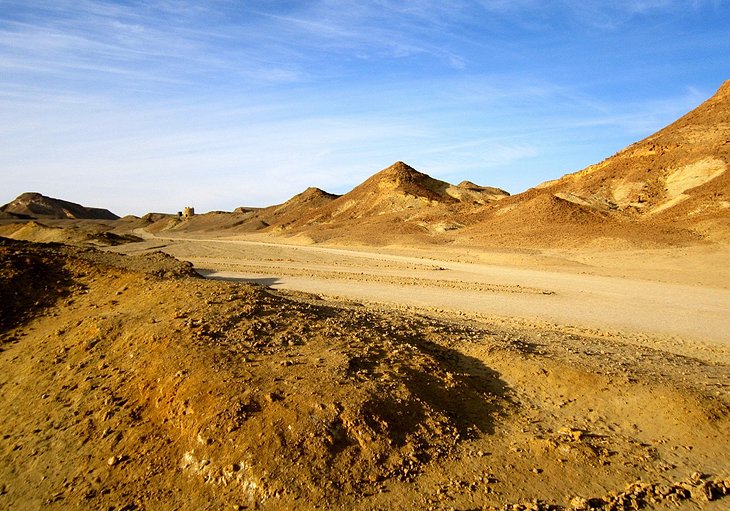
Deep in the southern reaches of the Red Sea's Eastern Desert, around 336 kilometers south of Hurghada, the Wadi al-Gimel Protectorate is a starkly beautiful landscape that hides the remains of Rome's emerald mines.
The main archaeological site here is Sikait, which was the settlement for the miners sent to extract the precious green stone from the arid mountains.
A small temple dedicated to the goddess Isis sits carved into the rock face surrounded by the crumbling remains of simple stone houses.
Nearby are the ruins of Nugrus, where the actual mine was located, while another two small settlement remains (named Apollonia and Gelil) lie just a couple of kilometers away and once acted as trading stations.
For those not so interested in the history here, the landscapes are phenomenally beautiful, and a trip into this barren desert of scattered acacia trees and looming, jagged mountains is just as worthwhile for the views as for the archaeological remnants.
Marsa Alam's Resort Life
The Marsa Alam area is Egypt's most southerly resort destination, stretching down into the isolated south of the country. Marsa Alam is 284 kilometers south of Hurghada.
The coast here is scattered with luxury all-inclusive resorts, interspersed with the odd campsite for those on more of a budget.
For travelers looking to vacation here, it's all about peace, tranquility, and diving, for this is the nearest resort to Egypt's famed Fury Shoals dive sites, which are rated by experienced divers as some of the top dives in the world.
Off the beach and out of the water, Marsa Alam town has few facilities, so unlike Hurghada and El Gouna, which both offer plentiful individual cafés and restaurants, this is a resort area where most guests stick to their hotels.
Explore Roman-Era Mines at Mons Porphyrites & Mons Claudianus
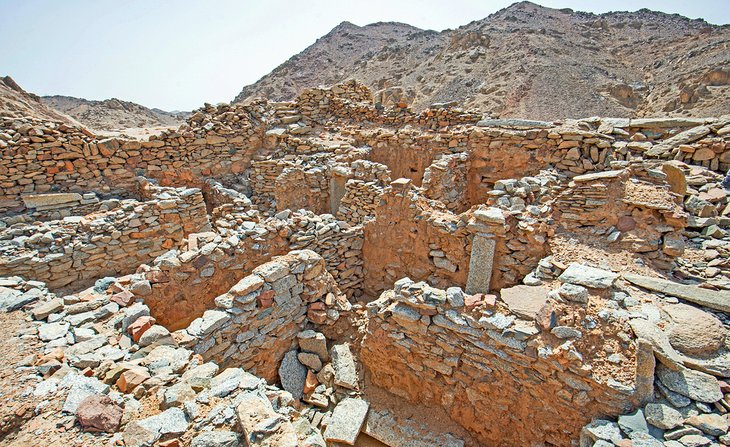
Mons Porphyrites, 60 kilometers northeast from Hurghada, is an ancient Roman porphyry mine and contains remnants of the mining town where the quarry workers lived while they extracted the purple-hued stone from the rugged mountains of the Eastern Desert.
Greatly-prized by the Romans, porphyry mined here was used in building works throughout Rome's Mediterranean empire.
Although there isn't much left of the once bustling mining town, you can still make out the miners' living quarters, their workshops, and the temples they built amid the scattered ruins.
Mons Claudianus is another Roman mining archaeological site, 65 kilometers southeast from Hurghada.
These two separate mines, signify the Eastern Desert's importance to the Roman Empire.
At Mons Claudianus, miners quarried granite out of the mountainside, which was then used throughout the Roman world. The workers here were all prisoners, and the harsh conditions they lived under can still be imagined in the ruins of their living quarters.
Mons Claudianus also functioned as a fortress guarding the surrounding desert. The ruins, though dilapidated are quite substantial.
Discover the Eastern Desert's Rock Inscriptions at Barrameya & Wadi Hammamat
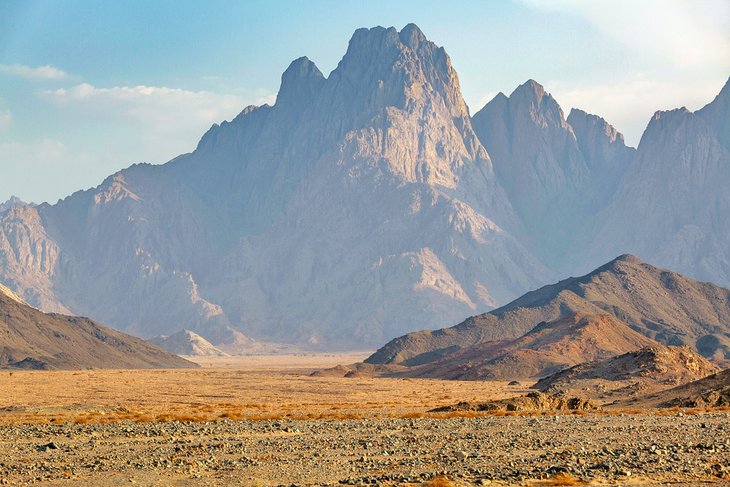
Visiting the rock inscriptions of Egypt's Eastern Desert provides some inkling of the deep and ancient history of this area.
This rugged landscape has been crisscrossed by trade routes throughout history.
Wadi Hammamat, along the Qift to Quseir route, and Barrameya are both littered with the evidence of this human history. A 4WD tour of these Eastern Desert areas is an interesting Red Sea excursion for travelers looking to delve into the past.
The rock faces here have been used as a canvas by passing travelers from the Pharaonic era right through to the early 20th centuries, with everything from hieroglyphics to animal scenes depicted in abundance.
Map of Things to Do in the Red Sea Region
More Related Articles on PlanetWare.com
Beach Time: See our article on the Red Sea coast's major town Hurghada for more information on this area and to learn about what to see and things to do. Or, check out our article on Sharm el-Sheikh if you're thinking of spending your beach time in the Sinai Peninsula.
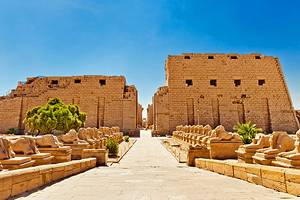
History Day Trip: The Upper Nile's glut of tombs and temples are within day-tripping distance from the Red Sea coast. Take a look at our articles on some of Egypt's most impressive sites, including Luxor, Karnak, and the Valley of the Kings for day trip inspiration.