Day Trips from Paris
The area surrounding Paris is rich in cultural attractions and natural beauty. By traveling only a short distance, one feels far away from the crowds, lines, and hustle and bustle of the Parisian metropolitan area. All the sights on this list are about an hour or less (by train or car) from the Paris city center.
Tourists can escape to the peaceful countryside, visit charming villages, admire glorious churches, and tour magnificent châteaux. Easy day-trip excursions include the incomparable Château de Versailles, the spectacular Gothic Cathedral of Chartres, the serene abbey of Royaumont, and the wonderfully preserved medieval town of Provins.
For those who love Impressionist art, Monet's Gardens in Giverny are a must-see. History buffs will appreciate the Napoleonic estate of Château de Malmaison, the National Renaissance Museum in Écouen, and Saint-Germain-en-Laye for its antiquities museum. For families with young children, an outing to Disneyland Paris is not to be missed.
Just outside of Paris, an array of sightseeing adventures awaits travelers. Plan your itineraries with our list of the best day trips from Paris.
Château de Versailles
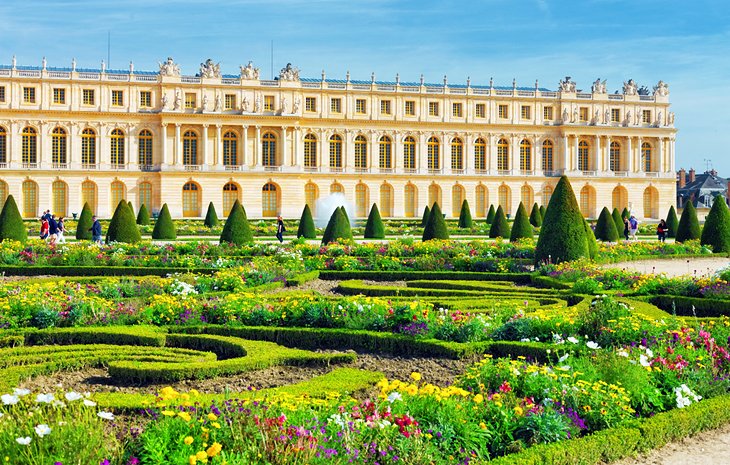
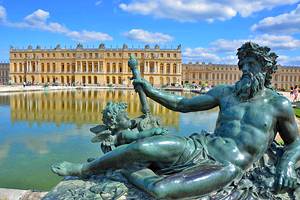
The UNESCO-listed Château de Versailles is a marvel of classical French architecture. Designed by Jules Hardouin-Mansart, the Palace of Versailles was the showpiece of King Louis XIV, who embodied the 17th-century belief in absolute power and the divine right of the monarch.
The famous Hall of Mirrors (Galerie des Glaces) was designed to impress the king's courtiers. This extravagant, sparkling reception hall has 17 gigantic gilded mirrors comprised of over 300 mirror segments that reflect the sunlight, creating a sensational effect. In sumptuous Baroque style, crystal chandeliers and elaborate ceiling paintings add to the dazzling impression.
Other highlights of the château include the lavishly decorated Queen's Bedroom, with an exquisite Rococo ceiling, and the Hercules Salon, adorned with The Apotheosis of Hercules ceiling painting by François Lemoyne, as well as a masterpiece by Veronese.
Within the Château de Versailles, visitors have several dining options: the Grand Café d'Orléans, a casual cafeteria-style restaurant at the garden level of the château, accessible via the Cour des Princes without an admission ticket to the château; the Ore restaurant, an elegant café (open for breakfast, lunch, and afternoon tea, pastries, and refreshments) in the Pavillon Dufour on the first floor of the château overlooking the Cour Royale, accessible without an admission ticket via the Cour d'Honneur; and Restaurant Angelina, a refined tea room on the first floor of the château.
In the evenings, the Ore restaurants offers the "Ducasse au Château de Versailles" experience, exclusive gastronomic dinners created by the renowned French chef Alain Ducasse. The menu takes its inspiration from historic meals served at the court of Versailles, and meals are served on the porcelain dinnerware of Marie-Antoinette. The "Ducasse au Château de Versailles" dinners are available upon request, by advanced reservation.
The Château de Versailles is surrounded by 800 hectares of parkland and formal gardens (Les Jardins) created by renowned landscape designer André Le Nôtre. Full of fountains, perfectly trimmed shrubs, and tidy flowerbeds, the immaculately manicured gardens rival the château in terms of splendor.
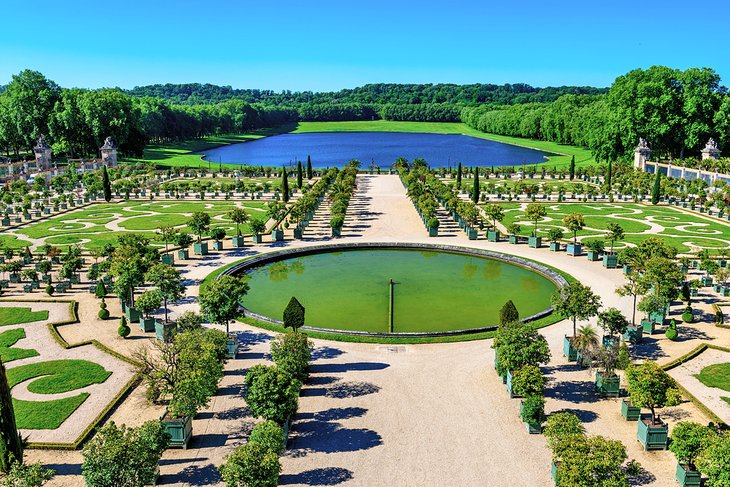
From April through October, visitors marvel over the gorgeous fountains as they dance to the rhythms of Baroque music during the Musical Fountains shows, held on Saturdays and Sundays. The Music Fountains shows are also held on Tuesdays from May through June and on holidays during springtime and summer.
During late spring through early fall, Musical Gardens adds to the charm of visiting the Château de Versailles estate. Musical entertainment enlivens the formal gardens and the groves of the parkland from Tuesday through Friday (days vary depending on the month).
The parkland and gardens of Versailles include several places to dine: La Petite Venise, an Italian restaurant in a Historic Monument (open for lunch and takeaway meals) located between the Bassin d'Apollon and the Grand Canal; Angelina Petit Trianon (in front of the Petit Trianon palace), which serves sandwiches, quiches, salads, and pastries on the outdoor terrace or to take away for picnics; Le Dauphin, a snack stand in the Bosquet du Dauphin, which sells sandwiches, salads, homemade ice cream, and buckwheat crepes; and La Girandole in the Bosquet de la Girandole, another casual café-restaurant that offers sandwiches, crepes, and ice cream.
Versailles is 20 kilometers from the center of Paris and is easily accessed by train, which takes an hour or less (depending on your departure point). To get the most out of a visit to the Château de Versailles, an organized tour is recommended.
Read More: From Paris to Versailles: Ways to Get There
Cathédrale Notre-Dame de Chartres
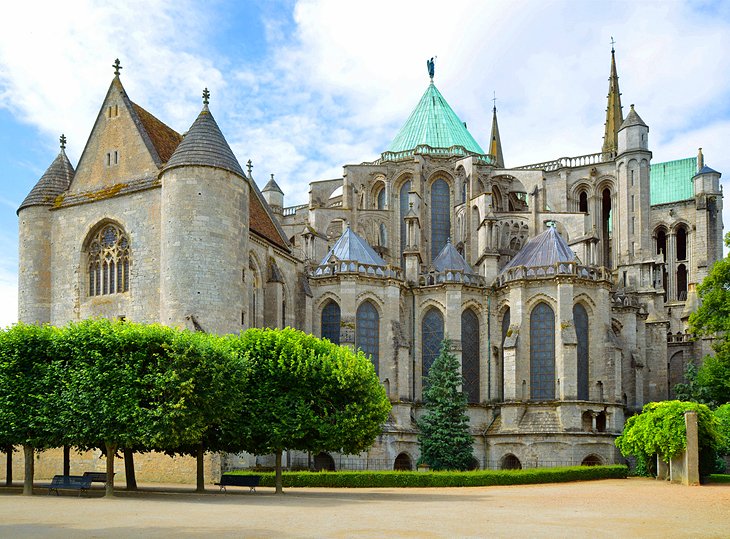
The beauty of Chartres' Cathedral is said to have inspired faith in the doubtful. It's easy to see why when stepping into this UNESCO World Heritage Site, a breathtaking example of medieval Gothic architecture. In its vast high-vaulted nave, the cathedral features brilliant stained-glass windows that provide the sanctuary with a serene glow. The filtered light lends an otherworldly quality.
Viewers are awed by the intricate details of the windows, the result of painstaking craftsmanship. Some of the windows, such as the venerated Notre Dame de la Belle Verrière, date to the 12th century; the majority are from the 13th century. The immense rose windows are especially stunning. Other highlights include the La Vie de la Vierge (Life of the Virgin) window and the L'Arbre de Jessé (Tree of Jesse) window, which shows the genealogical tree of Jesus Christ.
Every evening (nightfall until 1am) from early April through the holiday season, the town of Chartres has a spectacular nighttime light show. Chartres en Lumières illuminates the town's historic monuments, including the cathedral, using creative visuals and vibrant colors.
The cathedral also hosts the "Grand Prix de Chartres" (International Organ Festival) with free concerts every Sunday afternoon in July and August. During the festival, musicians compete to win the Grand Prix de Chartres prize.
Address: 16 Cloître Notre Dame, 28000 Chartres

Château de Fontainebleau
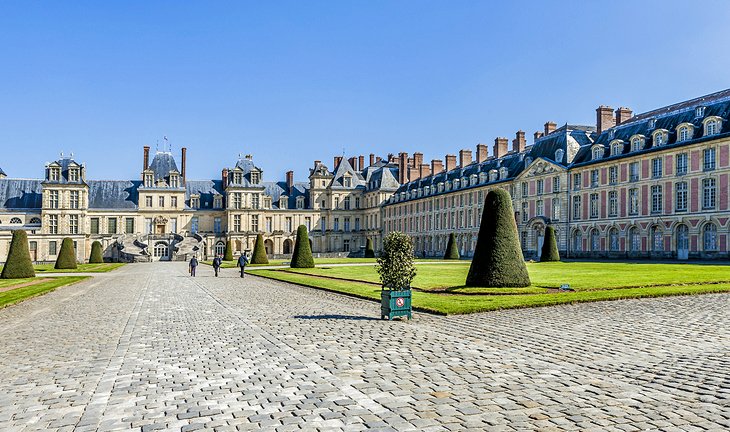
About an hour's drive from Paris, Fontainebleau is a royal French château at its finest. Surrounded by forests and a lush parkland of 130 hectares, the UNESCO-listed Château de Fontainebleau was a residence of France's sovereigns for eight centuries. The original medieval château (dating to the 12th century) was almost entirely rebuilt when François I ordered renovations in 1528.
As a literary king and patron of the arts, François I created a spectacular Italian-style palace that is a masterpiece of Renaissance architecture. François I commissioned the best Italian artisans and artists of his time to decorate the interior. Today, the château houses an outstanding art collection of approximately 30,000 pieces dating from the 16th century to the 19th century.
With 1,500 rooms, Château de Fontainebleau is one of the best places in France to see a fully furnished castle. The opulent Appartements Royaux (Royal Apartments) of Château de Fontainebleau reveal the influence of various royals. The Boudoir d'Argent de la Reine, sumptuously adorned with Neoclassical art and gilded paneling, reveals the refined taste of Marie-Antoinette.
After the French Revolution, Napoléon I made Fontainebleau an Imperial palace, adding his signature classical-inspired decor to his apartment. Napoléon was particularly fond of Fontainebleau but had to sign his first abdication here on April 6, 1814.
Equaling the beauty of the interior, the Jardins du Château exemplify classic French style, with delightful pools; statues; and a Grand Parterre created by André Le Nôtre, who designed the garden at Versailles. The 130-hectare parkland offers opportunities for outdoor activities, including jaunts by horse-drawn carriage and boating. The Petit Train ride amuses the youngest visitors.
Address: Château de Fontainebleau, 77300 Fontainebleau
Bruges
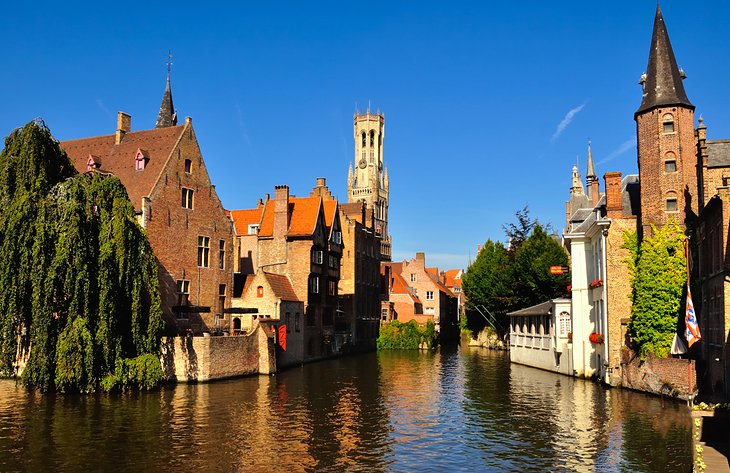
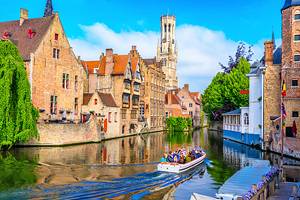
With its delicate Flemish architecture; narrow, old streets; and quaint canals, Bruges offers the captivating charm of another era. This wonderfully well-preserved medieval town in Belgium has a rich history, as an important trading port from the 12th to 15th centuries.
Known as the "Venice of the North" because of its waterways, Bruges enchants visitors with its many things to see and do. The town is filled with ornate churches and exceptional art museums, as well as many small boutiques that sell delicious artisanal Belgian chocolates.
Although Bruges is in Belgium, it is only about a 2.5-hour train ride from Paris, which makes it possible to visit as a day trip. An easier way to discover Bruges is by taking an organized tour.
Read More: From Paris to Bruges: Ways to Get There
Mont Saint-Michel
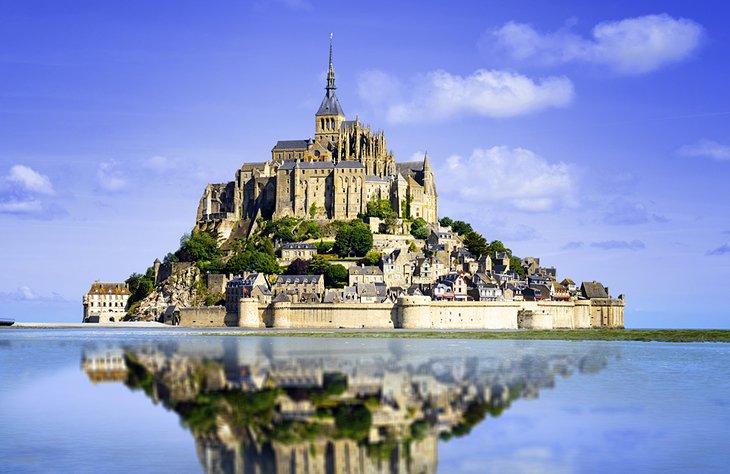
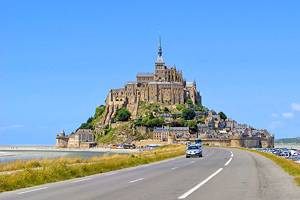
One of the most awe-inspiring spiritual sights in France, the island of Mont Saint-Michel rises out of the waters of Normandy's Baie de Saint-Michel. The UNESCO-listed Abbaye du Mont Saint-Michel stands on the highest point of the island. An important medieval pilgrimage site, this medieval Benedictine abbey is a marvel of Gothic architecture presiding over the sea, with graceful cloisters and a majestic church.
At high tide, Mont Saint-Michel appears as a distant mystical island, while at low tide, it is possible to walk from the mainland to the island just as pilgrims approached it in the Middle Ages. The entire island of Mont Saint-Michel is well-preserved, with a village atmosphere, ancient cobblestone streets, and old-fashioned shops.
To see all the sights on Mont Saint-Michel (the abbey's church, cloister, village, and ramparts) takes at least four hours, if not an entire day. Since it's a long drive (around four hours) from Paris, the best way to visit Mont Saint-Michel is either by staying overnight or taking an organized day-trip tour.
Read More: From Paris to Mont Saint-Michel: Ways to Get There
Normandy D-Day Battlefields and Landing Beaches
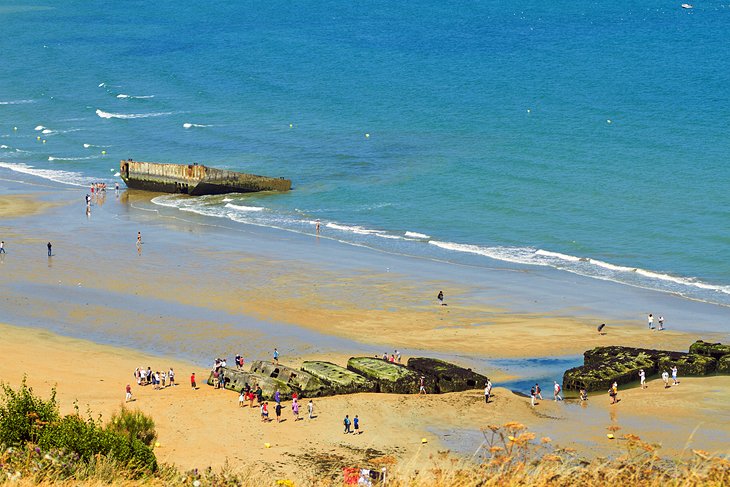
On June 6, 1944, the battles of the D-Day became the turning point in World War II that allowed the Allies to gain a favorable advantage. Evidence of the wartime bunkers and tanks still stands on the sandy beaches that were landing sites.
For many American tourists, visiting Normandy's D-Day landing beaches and memorials is a moving experience.
Omaha Beach is the most famous of the Normandy landing beaches and was the scene of the bloodiest D-Day battle. Overlooking Omaha Beach is the largest American cemetery in Normandy, with 9,000 gravestones. Nearby, the Overlord Museum chronicles the D-Day Allied landings and the Liberation of Paris.
The Caen Mémorial museum is an excellent place to learn more about the Battle of Normandy and other World War II military history. The Musée du Débarquement in Arromanches illustrates the heroic operation of the Mulberry Harbor, one of the most challenging events of the war.
While the Normandy D-Day museums provide an excellent background to the D-Day battles, the best way to explore the Normandy Landing Beaches is by taking a guided small-group tour.
Read More: From Paris to Normandy: Ways to Get There
Château de Chantilly
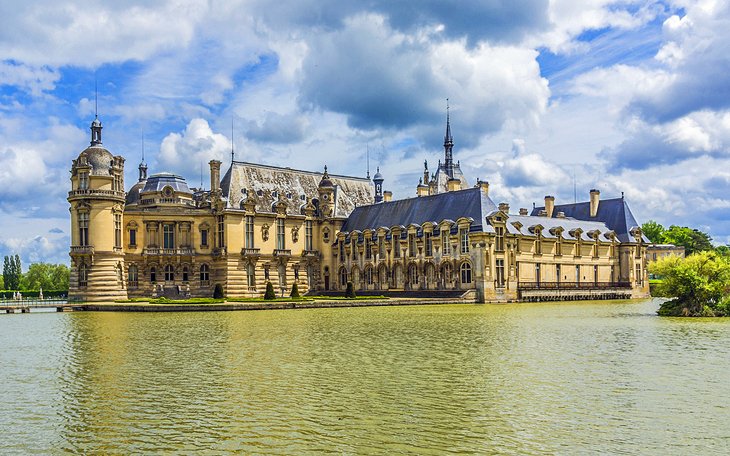
An easy day trip from Paris (only 25 minutes by train from Gare du Nord), the grandiose Château de Chantilly is a remarkable Renaissance castle in a unique setting. Surrounded by woodlands and swampy marshlands, the castle appears to be floating above the property's man-made ponds and canals.
The château interior features lavish Rococo decor and precious furnishings. Within the château, a fine arts museum displays a vast collection of historical paintings that is second in importance to the Louvre Museum. The galleries include many masterpieces, such as works by Botticelli, Raphaël, Philippe de Champaigne, Poussin, Ingres, and Delacroix.
The Château de Chantilly is also renowned for its expansive formal garden (Jardin à la Française) designed by André Le Nôtre, with his signature French-style flowerbeds, geometric design, and elegant fountains.
Tucked away in the Anglo-Chinese Garden of the chateau's 115-hectare parkland is a collection of small rustic houses, originally surrounded by an orchard and vegetable gardens. These thatched-roof cottages, which give the impression of a tiny country village in a pastoral landscape, provided the inspiration for Marie-Antoinette's hamlet at Versailles.
Chantilly is one of the best places to visit near Paris for outdoor activities. There are many enjoyable things to do in the Château de Chantilly park, such as boating, cycling, romantic strolls, and attending equestrian shows.
Children enjoy taking a ride on the Petit Train, a 35-minute excursion through the park and gardens. On this pleasant joyride, the Little Train passes by the formal garden, the Grand Canal, and the hamlet of the Anglo-Chinese Garden.
Other visitor amenities at the Chantilly estate include two gift shops, as well as two options for meals and snacks: La Capitainerie, an upscale fine-dining restaurant; and Le Hameau restaurant (open March - November), in a delightful little house of the château's hamlet, which serves lunch and desserts made with the famous Crème Chantilly (whipped cream).
Visitors can enjoy a luxurious overnight stay near the château at a five-star Relais & Châteaux hotel, the Auberge du Jeu de Paume. Guest rooms offer the elegance and refinement of an 18th-century French mansion. Gourmands will be delighted by the haute-cuisine at the hotel's Michelin-starred restaurant, La Table du Connétable, which has seating that overlooks the gardens of the Château de Chantilly. Other amenities include a fitness center, spa, concierge, room service, a boutique that sells regional products, an inviting lounge, and a casual bistro.
Address: 7 Rue Connétable, Le Château, 60500 Chantilly
Official site: https://chateaudechantilly.fr/en/
Château de Vaux-le-Vicomte
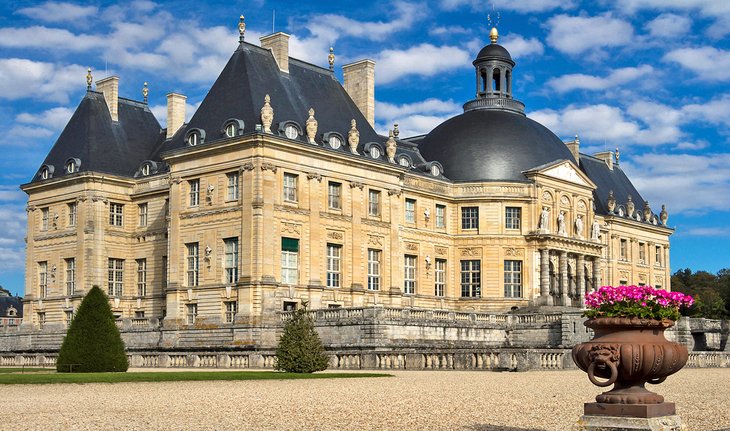
Nicolas Fouquet, minister of finance to Louis XIV, commissioned the best architect (Louis Le Vau) and artists of his time to build this sumptuous château. However, Fouquet's enjoyment of his castle was short-lived. After hosting a lavish celebration for Louis XIV on August 17, 1661 at his new estate, Fouquet was the next day accused of embezzlement. Three weeks later he was sentenced to life imprisonment, and Vaux-le-Vicomte was confiscated.
Today the Château de Vaux-le-Vicomte is a private estate that is listed as a Historic Monument and is open to the public. The estate is also a coveted venue for weddings and has been used as the location set for more than 80 film productions.
Beautifully preserved over the centuries, Vaux-le-Vicomte is a rare example of a French château that has retained its furnishings and decor from the 17th century. Fouquet's private apartments on the First Floor are mostly in their original state.
André Le Nôtre designed the 33-hectare Formal Gardens of Vaux-le-Vicomte in classic 17th-century French style, with geometric lines, elaborate fountains, and graceful statues. Because the garden made such a dazzling impression, Louis XIV hired Le Nôtre to landscape the grounds of the Château de Versailles.
The château looks most enchanting on Candlelit Evenings, every Saturday from mid-May through September and every Friday from early July through August, when the gardens are illuminated by more than two thousand flickering candles.
The 500-hectare estate of the Château de Vaux-le-Vicomte has two picnic areas; Le Relais de l'Ecureuil, a casual self-service restaurant; Les Charmilles, which offers a romantic fine-dining experience on Saturday night Candlelit Evenings, with meals served on a terrace overlooking the formal gardens; and Jean de La Fontaine's table in the formal gardens, for dinners on Friday night Candlelit Evenings during July and August.
The château also hosts events throughout the year, such as period costume parties and Christmas festivities. For children, one of the most fun things to do at the château is the annual Easter egg hunt in the gardens.
Address: Château de Vaux-le-Vicomte, 77950 Maincy
Official site: http://www.vaux-le-vicomte.com/en/
Basilique Cathédrale de Saint-Denis
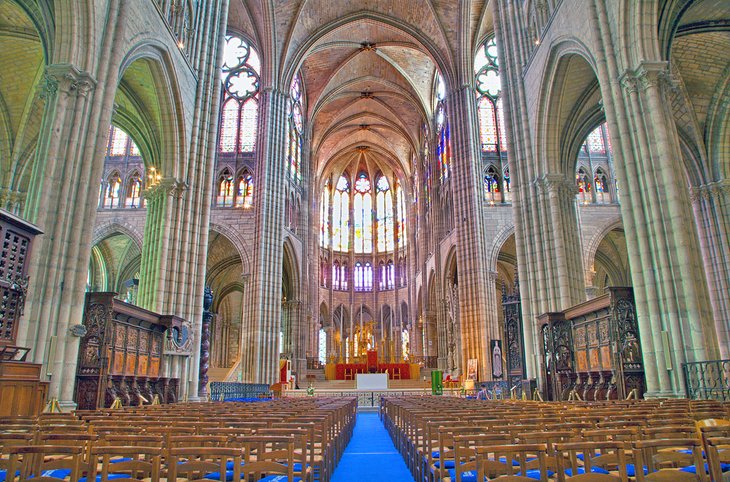
An easy day trip from Paris (10 kilometers away), the Basilique Cathédrale de Saint-Denis is a masterpiece of early Gothic architecture. Construction of the basilica was begun in the 12th century, when churches began to transition from Romanesque to Gothic style, and completed in the 13th century. The sanctuary's spacious high-vaulted nave and sublime stained-glass windows impart a sense of airiness as well as serenity.
Since early Christian times, Saint-Denis has been an important place of pilgrimage. The legend of Saint Dionysius describes how, after his beheading on the Butte Montmartre, the saint carried his head in his hands to the place where he desired to be buried. A church was built on the spot in the 5th century, followed in the 7th century by the foundation of an abbey.
Devoted to the patron saint of France, the Basilique Cathédrale de Saint-Denis stands on the location of Saint Denis' grave. This sacred house of worship is the royal burial place of 43 French kings and 32 queens.
Address: 1 Rue de la Légion d'Honneur, 93200 Saint-Denis

Giverny
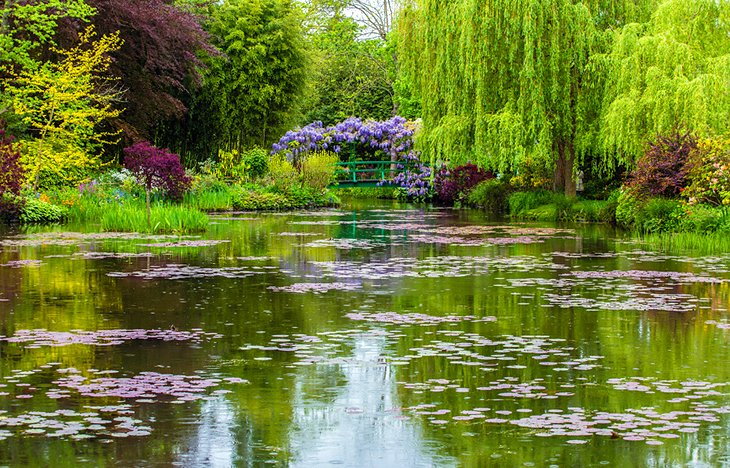
Impressionist art lovers will appreciate a visit to Giverny, about 75 kilometers from Paris (less than 45 minutes by train). In a beautiful setting on the Seine River, the village of Giverny is most famous for its association with Claude Monet.
The artist discovered the beauty of Giverny in 1883 and stayed here for thirty years. During the same time, other artists were attracted to the area and were influenced by Monet's techniques of painting in nature.
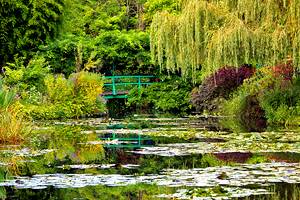
The top attraction in Giverny is Claude Monet's House & Gardens, a charming countryside retreat where Monet painted his renowned Water Lilies paintings. Tourists can see the water lily pond, with its iconic Japanese bridge, and wander about Monet's blossoming flower garden.
Provins
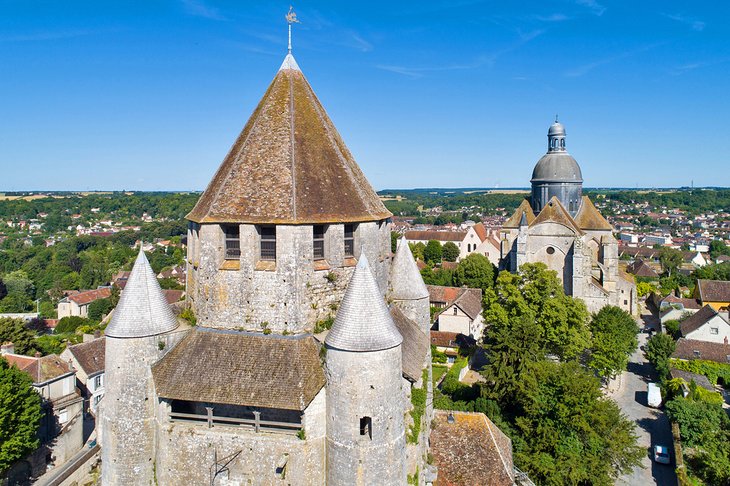
During the 12th and 13th centuries, Provins was a bustling city, where merchants gathered for trade fairs, and trouvères (troubadours) sang ballads about courtly love. This captivating walled medieval town is a UNESCO World Heritage Site with more than 50 listed Historic Monuments. The ambience of the Middle Ages is uncovered in quaint half-timbered houses, a maze of winding streets, and spacious public squares once used for markets.
The Ramparts with fortified gates built in the 12th and 13th centuries are a top attraction. Visitors can stroll alongside the defensive walls via the Allée des Remparts and the Allée des Lépreux.
Another must-see sight, the Tour César is a 12th-century tower that served as a fortress under King Henry the Liberal; the building exemplifies medieval military architecture and houses the Saint-Quiriace Collegiate church (which was never completed).
The most noteworthy church in Provins is the 11th-century Prieuré Saint-Ayoul, which features a bright and inspiring sanctuary. Saint Ayoul's relics made the church a pilgrimage site in the Middle Ages.
The Maison Romane (Romanesque House) is the oldest edifice in Provins. Today, the building houses an excellent antiquities collection, including Merovingian sculptures and Gallo-Roman tiles and pottery.
Provins hosts several historical reenactments that bring the medieval world to life. Once a year, Provins hosts the Les Médiévales de Provins during a lively weekend of entertainment. This medieval festival includes a medieval ball, medieval music concerts, dances, troubadour performances, games, jesters, acrobatic shows, and a costume parade. A highlight of the festival, the Eagles of Ramparts show gives visitors a glimpse of the ancient art of falconry.
Disneyland Paris

A perfect day trip for families with kids, Disneyland Paris is a gigantic fairyland of fantasy and adventure. A top attraction is Sleeping Beauty Castle, which depicts the story of Sleeping Beauty in stained glass and tapestries, while the vaulted cellars are occupied by a fire-breathing dragon. Other favorite areas are Snow White and the Seven Dwarfs, the Mad Hatter's Tea Cups spinning ride, and it's a small world cruise.
Disneyland Paris has several hotels and over 50 different restaurants. From Paris, it's an easy journey by taking the RER Line A train from Chatelet Les Halles to Marne-la-Vallée (the ride takes about 40 minutes). There is also a direct TGV train from Charles de Gaulle airport to Marne-la-Vallée.
Address: Disneyland Paris, 77777 Marne-la-Vallée
Official site: www.disneylandparis.com
Château de Malmaison
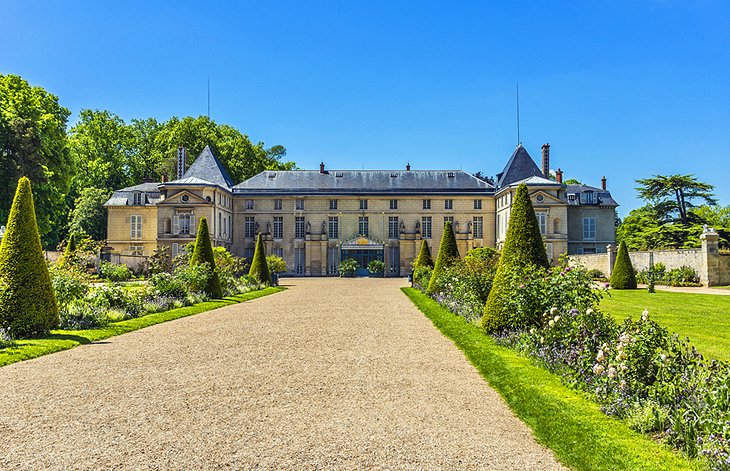
In the suburb of Rueil-Malmaison, the Château de Malmaison (which houses the Museé des Châteaux de Malmaison et de Bois Préau) is a worthwhile and easy excursion from central Paris. The château, built in 1620, exemplifies Early Baroque style.
The château was acquired in 1799 by Joséphine de Beauharnais, Napoléon Bonaparte's first wife. After separating from Napoléon in 1809, she lived here alone. As the château was her private residence (rather than an official palace), it has an intimate feeling despite the grand Empire style.
Joséphine used her home to host social gatherings and concerts. She also took an interest in landscaping and botany. Reflecting this passion, the château has a beautiful rose garden filled with flowers that bloomed here during Joséphine's time.
Address: Avenue du Château de Malmaison, 92500 Rueil-Malmaison
Abbaye de Royaumont
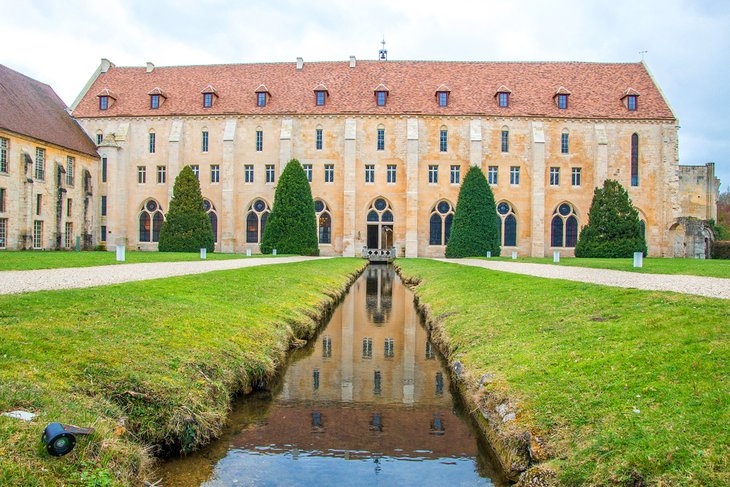
The Abbaye de Royaumont is a Cistercian abbey surrounded by dense woodlands in a peaceful setting that feels much farther away than 49 kilometers from Paris. The Royaumont Abbey offers a welcome retreat in nature and a place for spiritual contemplation.
Founded in 1228 by King Louis IX (Saint Louis), the abbey was created as a place of theological study. Visitors can take a guided tour of the beautiful Gothic abbey and see where the monks prayed, read holy texts, and prepared meals in the refectory. The old sacristy has been converted into an intimate chapel.
A highlight of the abbey is the grounds, including a serene cloister, idyllic gardens, and an expansive park, which inspire relaxation and meditation.
For those seeking a relaxing escape, the abbey offers welcoming bed-and-breakfast accommodations for overnight stays on Saturday evenings. Besides offering a restful night's sleep, the experience includes fine dining in a gorgeous 13th-century vaulted hall. The gourmet cuisine of the La Table de Royaumont restaurant is prepared from local and seasonal farm-fresh ingredients. The restaurant serves dinner on Saturday evenings and lunch on Sundays.
The abbey also has a salon de thé (tea salon) with a garden terrace and a bookstore/gift shop that sells local artisanal products and books about art, history, architecture, music, and gardening.
Address: 95270 Asnières-sur-Oise
Official site: https://www.royaumont.com/en
Château d'Écouen (Musée National de la Renaissance)
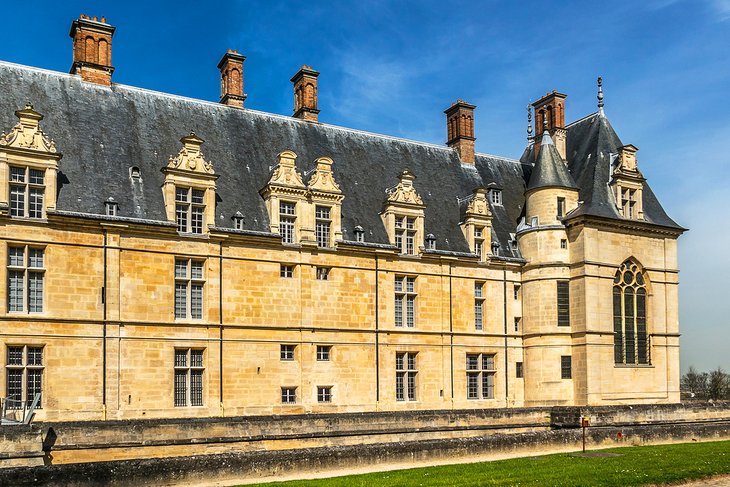
The Château d'Écouen presides over a 17-hectare estate, surrounded by the vast Forest of Chantilly just 20 kilometers north of Paris. This impressive Renaissance château was built in the 16th century for the Duc Anne de Montmorency, a philanthropist and patron of the arts. The sumptuous interior of the château displays many remarkable pieces from the Duke of Montmorency's art collection.
The château houses the Musée National de la Renaissance (National Museum of the Renaissance), which contains a renowned art collection that includes Renaissance decorative arts (furniture, ceramics, stained glass) as well as paintings and tapestries. One of the highlights is a tapestry that depicts the history of David and Bathsheba; another masterwork is the 16th-century Jupiter and Latona tapestry, a piece once owned by Diane de Poitiers.
The Musée National de la Renaissance is open year-round every day except Tuesdays. The museum also hosts Renaissance-themed exhibitions throughout the year. Guided tours are available.
Visitors will want to spend some time exploring the château's lovely park, which is open daily. The château property includes a restaurant, À la Table des Rois, which is open every day (except Mondays and Tuesdays) from 10:30am until 5:30pm.
Address: Château d'Écouen, Rue Jean Bullant, Écouen
Château de Saint-Germain-en-Laye (Musée d'Archéologie Nationale)
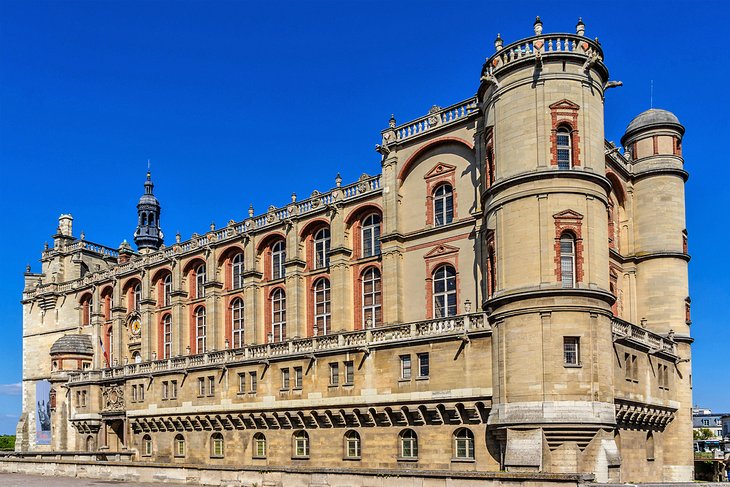
The birthplace of the composer Claude Debussy and King Louis XIV, the town of Saint-Germain-en-Laye boasts one of the most beautiful castles in France.
In the 12th century, King Louis VI built a fortress here on a plâteau above the Seine River, although it was destroyed by the English during a war in the 14th century. Successive monarchs Charles V and François I rebuilt the castle complex. Except for the 13th-century Chapelle Saint-Louis, the rest of the buildings date to the 16th and 17th centuries.
The Château de Saint-Germain-en-Laye houses the Musée d'Archéologie Nationale (National Museum of Archaeology), the only museum in France devoted entirely to archaeology. This extensive collection includes archeological finds and prehistoric art from all over France, spanning the Paleolithic era (including the Venus of Brassempouy) to the Bronze Age and Celtic and Gallo-Roman times.
Surrounded by 3,500 hectares of forest, the 40-hectare estate of the Château de Saint-Germain-en-Laye has splendid grounds featuring formal French gardens designed by André Le Nôtre, as well as a romantic English garden created in the 19th century. From the Grande Terrasse of the formal gardens, there is a magnificent view across the Seine River towards Paris.
The Musée d'Archéologie Nationale is open year-round daily except Tuesdays. The park and gardens of the Château de Saint-Germain-en-Laye estate are open every day of the year except December 25th, January 1st, and May 1st.
Address: Place Charles de Gaulle, 78100 Saint-Germain-en-Laye
Auvers-sur-Oise
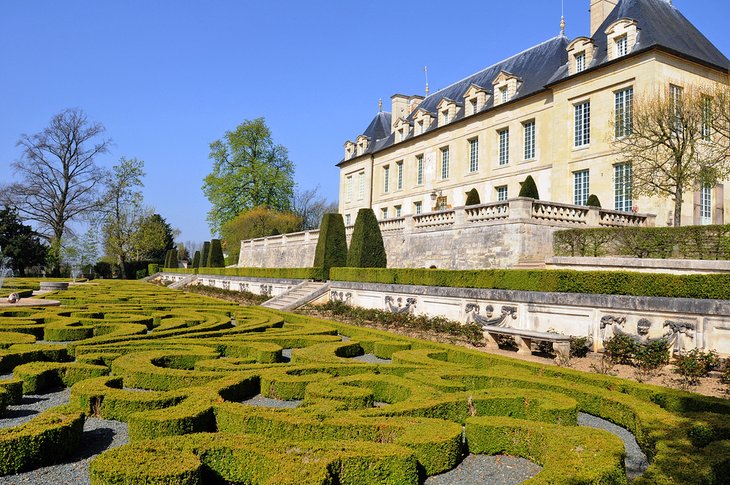
The charming village of Auvers-sur-Oise was a favorite destination of many Impressionist artists, who came here to paint the bucolic scenery. This picturesque village takes visitors into the quaint world of the French countryside, about an hour drive or train ride from Paris.
The town's must-see site is the Eglise Notre-Dame d'Auvers, a Romanesque church built in the late 11th century. Perched at the top of the village, this church was immortalized by Vincent van Gogh in his painting L'Eglise d'Auvers-sur-Oise, vue du chevet. There is a statue of Vincent van Gogh by the sculptor Zadkine in the town's Parc van Gogh.
For those seeking the trail of Vincent van Gogh, the Auberge Ravoux, also known as the Maison de van Gogh (House of Van Gogh), is where the artist rented a room for bed and board beginning on May 20, 1890. The Ravoux Inn no longer has rooms available but has retained its restaurant with the same decor of a 19th-century artists' café. Van Gogh sat at a table at the back of the dining room. The restaurant serves classic French cuisine prepared from local ingredients.
A listed Historic Monument, La Maison-Atelier de Daubigny was the house and atelier of Charles François Daubigny, a celebrated landscape painter. It's easy to see why Daubigny chose this house with its delightful flowering garden. Daubigny turned his atelier into an artistic center where other artists gathered to socialize and work. Today, the Maison-Atelier de Daubigny is open to the public as a museum and displays the works of Daubigny, as well as his artist friends, including Corot, Daumier, Dechaume, and Oudinot.
On the outskirts of the town in a pristine forest, the exquisite 17th-century Château d'Auvers-sur-Oise is surrounded by lovely formal French gardens. The château presents an innovative multimedia exhibit, the "Impressionist Vision" designed as an immersive experience to teach visitors about Impressionist art. For lunch and afternoon snacks, the château has a chic restaurant that serves a seasonal menu.
Château de Rambouillet
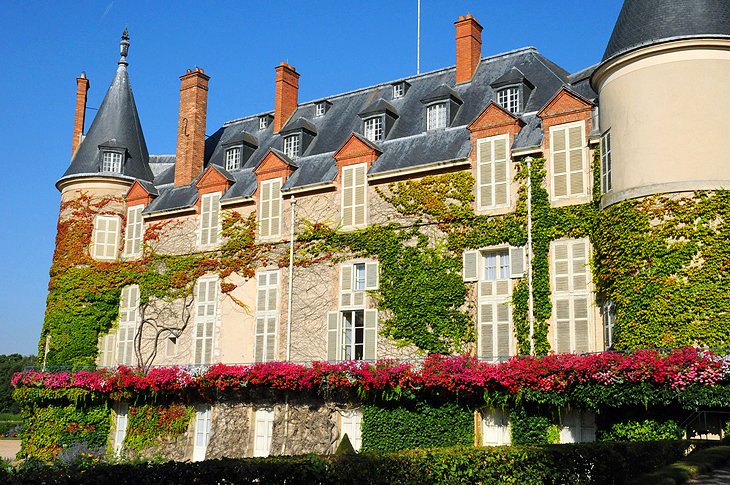
Nestled in the dense woodland between Versailles and Chartres, this magnificently furnished château boasts more than 20,000 hectares of parkland. The park offers pleasant walking trails through the refreshing forest of Rambouillet. Although the Château de Rambouillet is the summer residence of the President of the Republic, it is open to visitors.
The château was built in 1706 for the Comte de Toulouse. In 1783, the château was acquired by King Louis XVI, who used it as a hunting lodge. He created the Laiterie de la Reine, a dairy built for Marie-Antoinette that resembled a Greek temple. The château's 150-hectare property is classified as a Jardin Remarquable (Remarkable Garden).
Napoléon made the château his residence, and since 1959 it has been a part-time residence of the French President. The richly decorated interior features fine Delft tiles and period furniture. Notable rooms are the 16th-century Salle de Marbre (Marble Hall), the 18th-century Council Chamber, the bathrooms installed by Napoléon in 1809 and the Ballroom with Aubusson tapestries. Not to be missed is La Chaumière aux Coquillages, adorned with exquisite decor featuring pearls and seashells.
Address: 78120 Rambouillet
Official site: http://www.chateau-rambouillet.fr/en/
Senlis
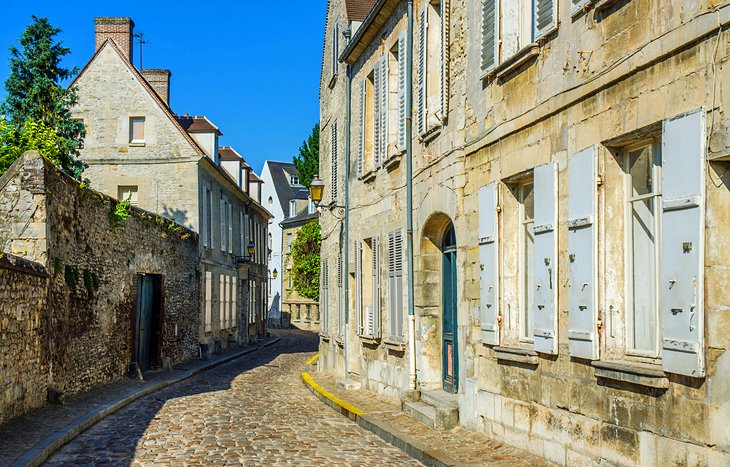
Brimming with Old World charm, this small historic town lies about 50 kilometers northeast of Paris. Senlis was an important religious city (the see of a Bishop) from the 3rd century until 1790.
The old town is dominated by the majestic Cathédrale Notre-Dame de Senlis, constructed between 1153 and 1184. This awe-inspiring cathedral represents various Gothic styles, as the edifice was renovated in the 13th century and the 16th century. The richly carved main doorway depicts the triumph of the Virgin. The beautiful interior, dating to the 12th century, is one of the earliest Gothic naves in France.
Near the cathedral are the remains of the town's Gallo-Roman walls and of the vestiges of a medieval castle, the Château Royal. In the park of the Château Royal is the Musée de la Vénerie (Hunting museum), which illustrates the art and history of hunting; the museum displays weapons, costumes, hunting horns, and trophies. On the western outskirts of the town are the remains of an ancient Roman amphitheater.
Compiègne
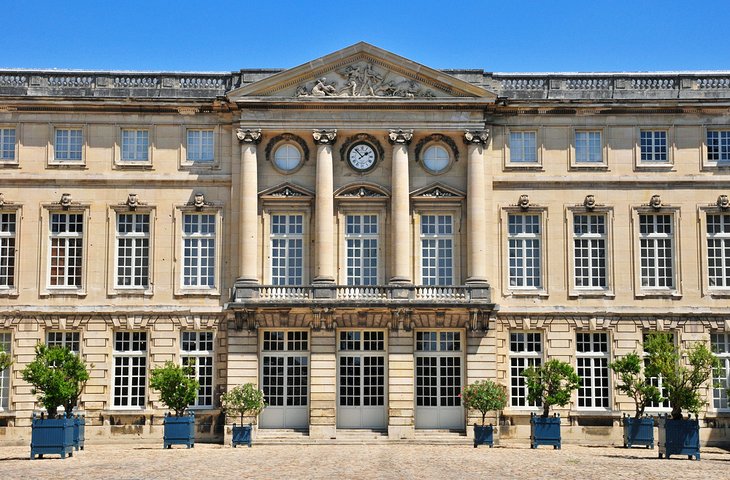
Steeped in history, the city of Compiègne is remarkable for its royal legacy and Imperial Palace. Louis XV built the grandiose Neoclassical Château de Compiègne, and Louis XVI enlarged it in the 18th century. After the French Revolution, Napoleon I made the palace his own, and later Napoleon III enhanced it further in glorious Second Empire style.
The Château de Compiègne is surrounded by an enchanting 700-hectare parkland featuring pavilions and neoclassical marble statues. Within the lush grounds is a delightful Jardin des Roses (Rose Garden) created in the 19th century and the five-kilometer-long Allée des Beaux-Monts, a pathway through the forest that affords stunning views of the château.
Official site: https://chateaudecompiegne.fr/en/royal-and-imperial-palace