Attractions & Things to Do in Trieste
The first thing you notice about Trieste may be how little it looks like Italy. There's a good reason: from 1382 until 1919 it was part of Austria.
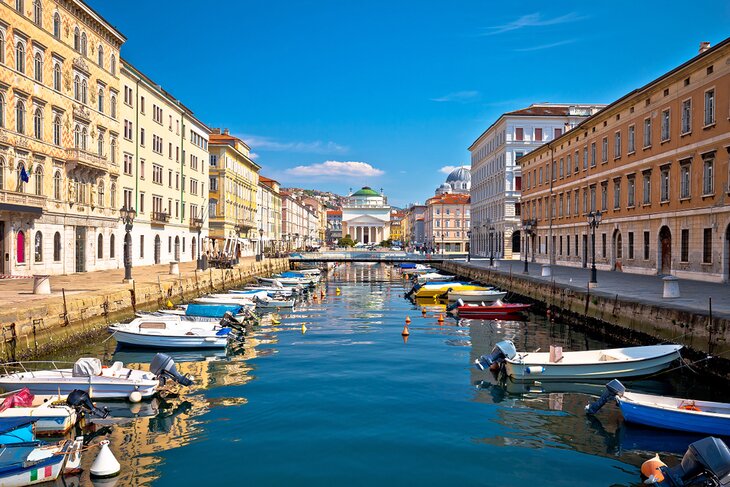
You'll notice bits of all this history in Trieste's colorful mix of people, languages, cuisines, attractions, and architecture, and other attractions, and it is the last of these that will strike you first. Grand buildings in traditional Habsburg style that would be at home in Vienna stand between those in Neoclassical, Baroque, Art Nouveau, and other styles, punctuated by a few remains of the Roman city of Tergeste.
All these arrange themselves in a near-perfect setting of broad streets and squares facing the Adriatic. At the heart of this is the Canale Grande, a wide basin that extends into the city and reflects the colors of elegant buildings that line its banks. The most important places to visit are in this busy central area. As you explore Trieste, be sure to stop and enjoy its lively café scene.
Plan your days of sightseeing in and around the city with our list of top attractions and things to do in Trieste.
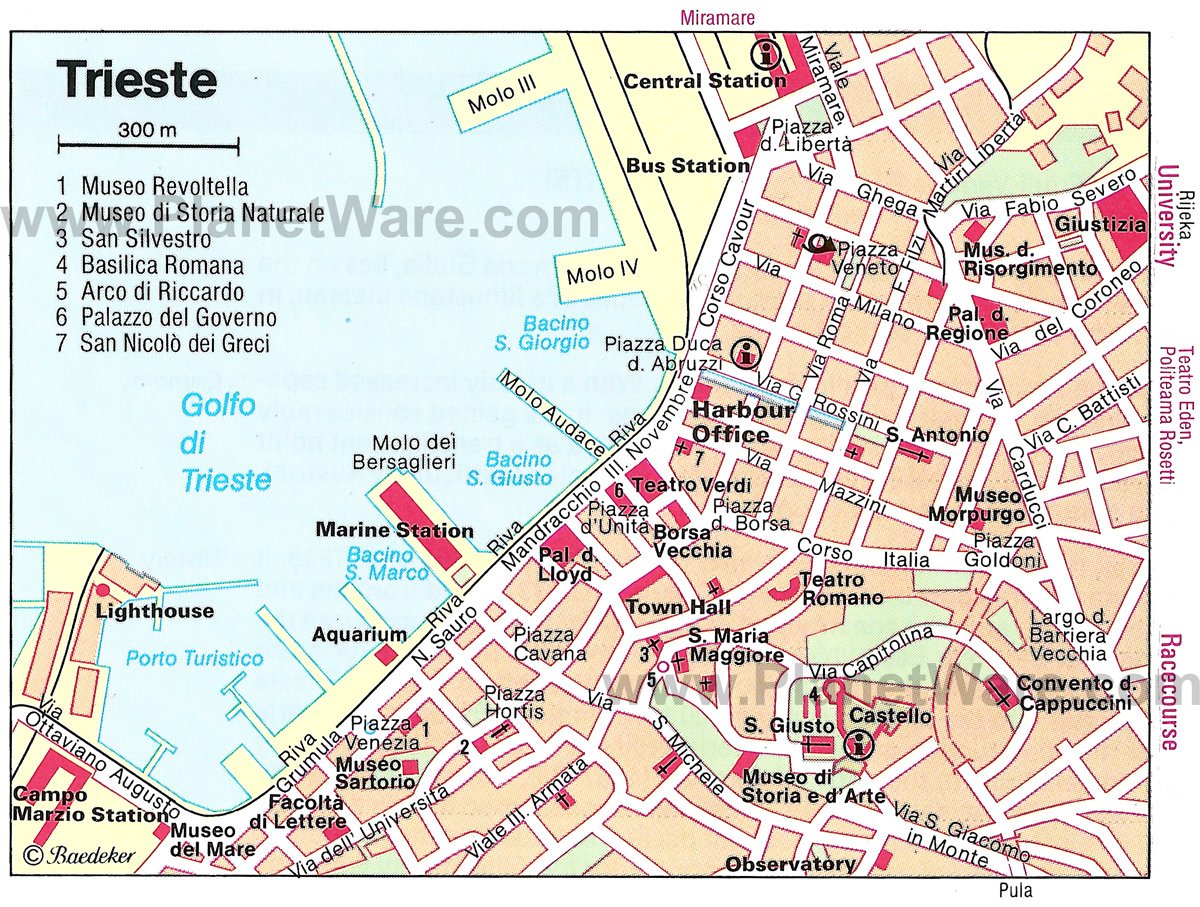
Piazza dell'Unità d'Italia
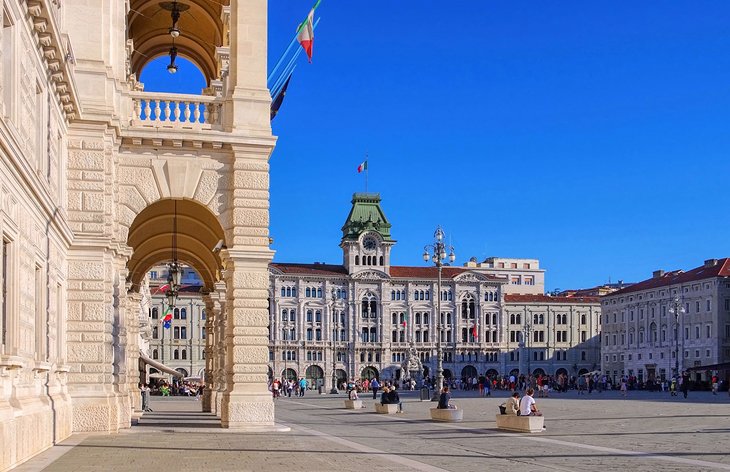
The largest square in the older part of Trieste is the Piazza dell'Unità d'Italia, facing onto the harbor. On its north side is the Palazzo del Governo (1904), on the south side, the massive 1882 palazzo of Lloyd Triestino, a shipping line founded in 1836 as the Austrian Lloyd company.
On the east side, the 1876 Palazzo del Municipio (City Hall) completes the square in late 19th-century harmony. Northeast of the Piazza dell'Unità d'Italia, the Teatro Verdi faces the water. For good views of the town and harbor, cross to the Molo Audace, the pier opposite the theater.
For more information on the best places to visit, stop in the Trieste tourism information office, located in the piazza.
Castello di Miramare
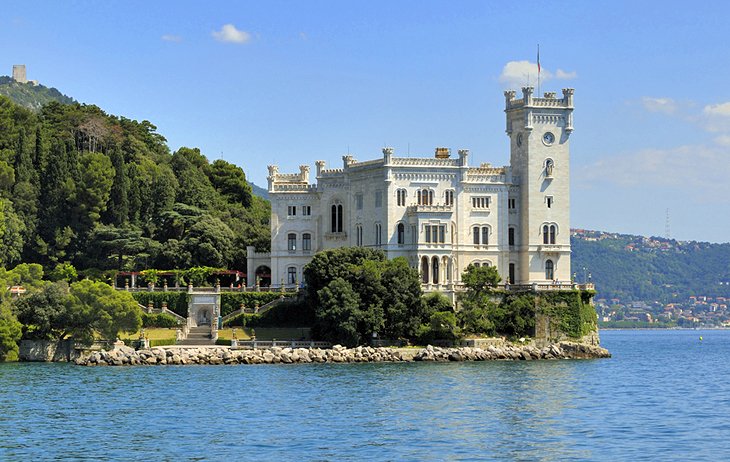
This white fairy-tale palace was built for Archduke Maximilian of Austria and his wife Charlotte of Belgium in 1855-60, before they went off to become (briefly) emperor and empress of Mexico. It stands above the sea, with views artfully framed by almost every window in its sumptuously decorated and furnished rooms.
Along with the interior, tour the terraced gardens in the park for even more magnificent views over the Adriatic. The 54-acre grounds, designed by the archduke himself and now protected as the Parco Marino di Miramare, are filled with tropical and exotic trees and plants.
Address: Viale Miramare, Trieste
Castello di San Giusto
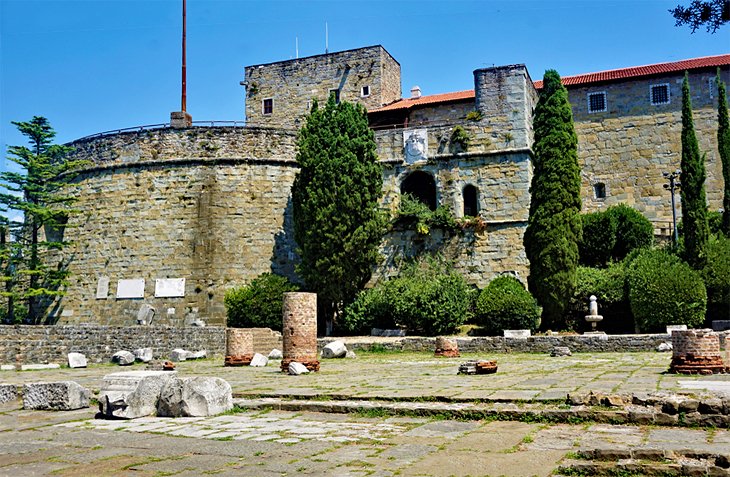
Crowning San Giusto Hill is the castle, built by the Habsburgs in the 15th to 17th centuries to enlarge a medieval Venetian fortress that replaced earlier Roman fortifications. Enter the castle over a wooden drawbridge across a narrow moat to explore its vaulted halls and climb to its ramparts.
The views are panoramic, covering the city, the Gulf of Trieste, and the surrounding hills. Inside the castle are displays of weapons from medieval times to the 19th-century, as well as furniture and tapestries; the Lapidario Tergestino contains 130 Roman stone finds from the city, including statues from the amphitheater.
Halfway up Castle Hill, at Piazza San Silvestro, stop to admire the Baroque interior of the 17th-century Jesuit church of Santa Maria Maggiore.
Address: Piazza della Cattedrale 3, Trieste
Museum Riseria di San Sabba
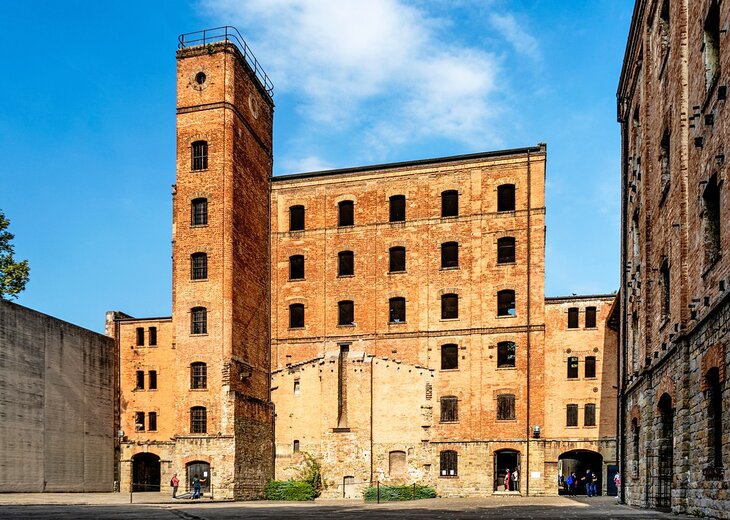
Touching, often heartbreaking mementos and documentation that recall the horrors of the Nazi occupation of Trieste fill this former rice processing factory that became a concentration camp during World War II.
Here, the Nazi police carried out their systematic killing of partisans, political prisoners, and Jews, as well as processing other detainees before deportation to concentration camps in the Reich. Property confiscated from Jewish families in Italy, Croatia, and Slovenia was stored here, as well.
Visitors interested in World War II history might also want to look into the tours of the underground shelters built by the Germans to protect the German governor and army and select civilians from bombing raids in the latter days of the war. Known as Kleine Berlin (Little Berlin), this network of shelters is not a museum, but tours are conducted once a month by volunteers. Consult the tourist office for information.
Address: Via Giovanni Palatucci, 5, 34148 Trieste
Museo Revoltella
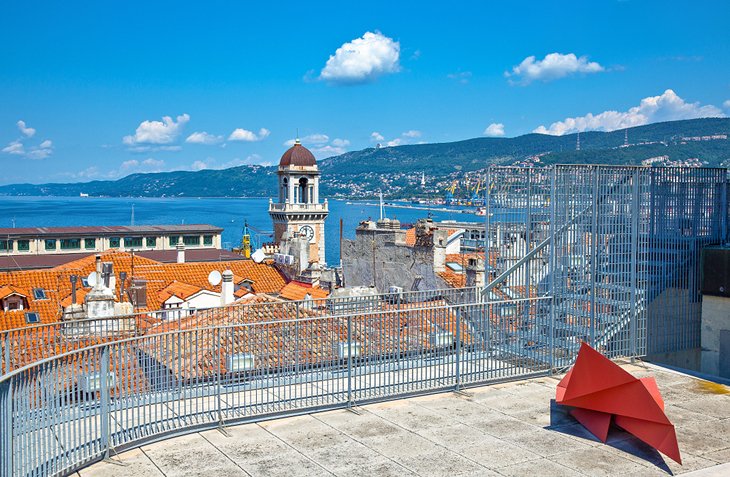
At the corner of the Piazza Venezia, the Museo Revoltella is one of Italy's major museums of modern art, with more than a thousand paintings and 800 sculptures, as well as prints and drawings. Its six floors and 40 rooms cover all the major movements from the mid-1800s through to the modernists.
The collections include works by nearly all the most significant names in 20th-century Italian art: Carlo Carrà, Giorgio Morandi, Lucio Fontana, and Mario Sironi among them - and it is fitting that the renovation of the adjacent Brunner Palace, completed in 1991, was designed by the preeminent Italian architect Carlo Scarpa. There is a beautiful view of the harbor from the museum's terrace.
Address: Via Armando Diaz, 27, 34123 Trieste TS, Italy
Stroll along the Molo Audace and Harbor
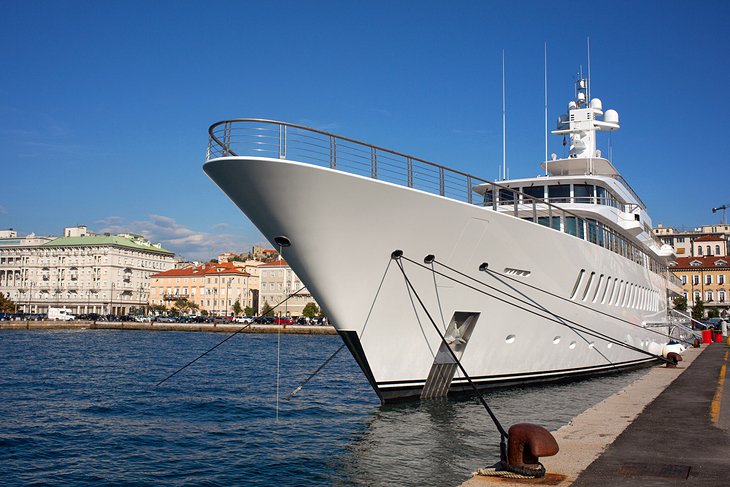
Trieste spreads around and above its harbor like a giant amphitheater with the Adriatic as its stage. Wide boulevards run along its perimeter connecting the four piers and long breakwater of the old port of Punta Franco Vecchio on the north with the Campo Marzio station and the Punto Franco Nuovo (New Free Port) and large shipyards to the south.
Along the harbor are a succession of large squares and the Canale Grande. Tourists join locals to catch the breeze and watch the sunset from the long Molo Audace, a pier that extends more than 250 meters into the Adriatic. There are beautiful views of the city from here, too.
Several tourist attractions are along the harbor, including an aquarium, railway museum, and the maritime museum. The harbor is always your best landmark if you lose your way.
Cattedrale di San Giusto
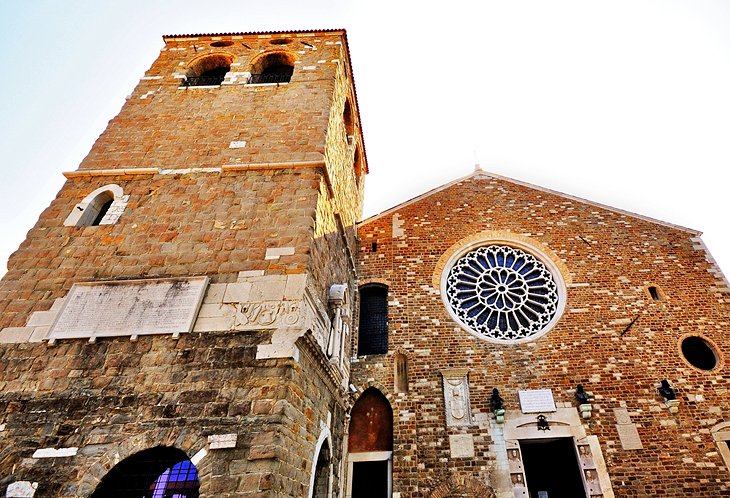
The cathedral of San Giusto was formed in the 14th century by combining two churches from the 6th and 11th centuries. On the right was the church of San Giusto and on the left, Santa Maria; their side aisles were combined to make the cathedral's central aisle (the nave).
Along with the two churches, bits of Roman stonework were recycled into the building - look for them in the doorway and the campanile. Look also for the excellent mosaic work from the 7th and 12th centuries in the altars at the end of the side aisles. To fully appreciate them, you can activate the lights for a '1 coin.
In the cathedral are the tombs of eight House of Bourbon claimants to the Spanish throne, who were promoted by the Carlist movement. You may hear another note of European history ring out here, as the cathedral bell was cast in 1829 from a cannon left by Napoleon.
His troops had fired cannon balls at the cathedral, some of which you can still see imbedded high on the façade. Outside are the remains of the second-century Roman forum and a first-century temple.
Address: Piazza Cattedrale 2, Trieste
Canale Grande and San Spiridione
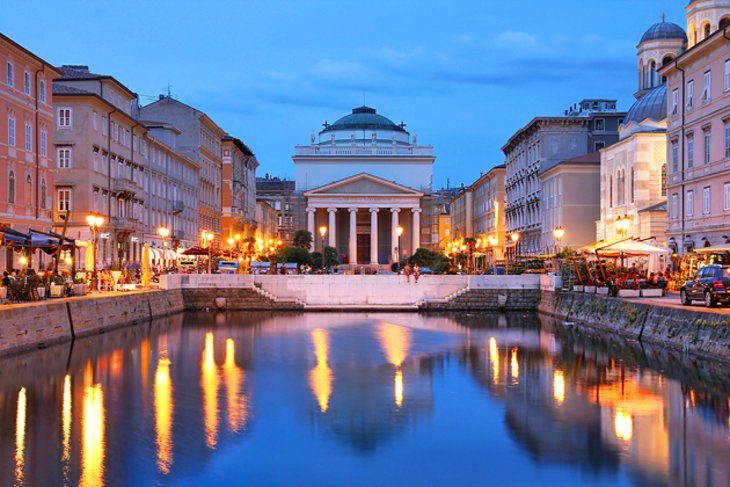
North of Piazza dell'Unità d'Italia is the Canale Grande (1756), a long harbor formerly used by sailing ships, and now filled with small boats. Cafés line the wide walkways at either side, and behind them stand beautifully maintained buildings.
Relax or stroll here at any time of day, but be sure to return in the evening, when the lights and reflections shimmer on the water. The area was a favorite of James Joyce, who lived in Trieste from 1904 to 1915. He is commemorated by a statue on one of the bridges across the Canale Grande.
The canal was once longer, but the upper end was filled in to create Piazza Sant'Antonio. Above the square stands Trieste's largest church, the Neoclassical Sant'Antonio, built in 1849. To the right is the Serbian Orthodox church of San Spiridione, built in 1868 and reminiscent of Byzantine-style Eastern churches.
Along with frescoes and paintings, the church contains four outstanding early 19th-century Russian icons in the iconostasis, covered in gold and silver. The large silver candelabrum in front of the iconostasis was a gift of a Romanov Grand Duke.
Savor Trieste's Coffee Culture
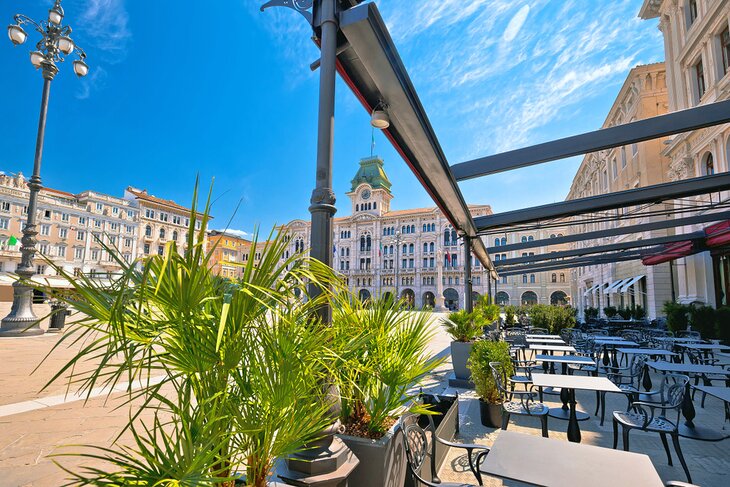
Trieste's position as the main port for trade with the East also made it the Mediterranean's main coffee port, a position it still holds today. One of Italy's biggest coffee brands is based here, and coffee is a way of life.
Trieste is considered Italy's coffee capital, and its café scene rivals that of even Vienna. All along the seafront and in almost every piazza, café tables spill out into the street, and they seem to be perpetually full. Unlike other Italian cities, where coffee is usually downed at a bar, in Trieste it's all about sitting down and savoring it.
Cafés are the center of social life. Become a part of the local scene by spending time in one — or several — of these. And go inside, even if the weather is beautiful outside. The cafés are elegantly decorated bastions of leisurely living, and worthy of a place on your sightseeing agenda.
Sink into a red leather chair at Caffè degli Specchi, overlooking Piazza Unità d'Italia since the early 1800s, or the nearby and equally historic Caffè Tommaseo. Order a caffelatte, the Trieste term for a cappuccino, and enjoy some people watching.
Take a Day Trip to Lake Bled and Ljubljana
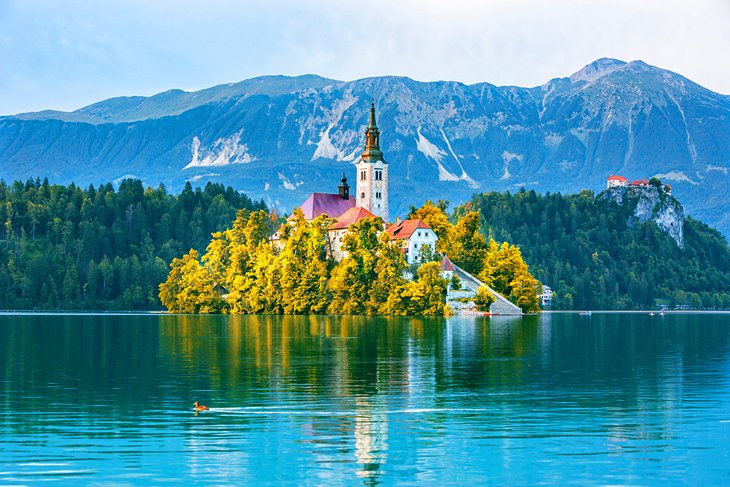
One of the most idyllic spots in neighboring Slovenia, Lake Bled, is only about 100 kilometers from Trieste. The beautiful, clear glacial lake sits under a background of a mountain range, with a pretty village along its wooded shore and a postcard-perfect island set in its center.
The island rises to a beautiful spired Gothic church. Swans swim in the lake, and walking paths lead along its shore from the village, where the 12th-century Bled Castle perches atop a steep 130-meter cliff above the lake.
You can get here by bus via the capital city of Ljubljana, itself worthy of a visit for its unique architectural heritage.
Attractions in Ljubljana include the Ljubljana Cathedral, Prešeren Square, the Town Hall, Triple Bridge, and Shoemakers' Bridge.
Teatro Romano (Roman Theater)
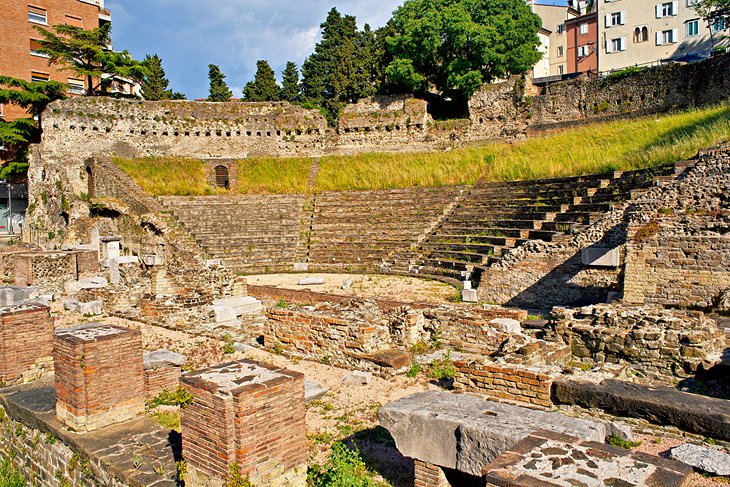
Leave the "modern" elegance of Trieste's waterfront and follow the broad Via del Teatro Romano southeast from Piazza dell'Unità d'Italia to the Roman theater, built in the first century AD, when the Romans were busy developing Tergeste at the orders of Emperor Octavius.
The stone theater uses the slope of the San Giusto hill as its base, and the upper steps and the stage were probably made of wood. You can see some of the statues that adorned the theater, which was brought to light in the 1930s, in the Castello San Giusto.
Several other tourist attractions are on this hill, which is the old city of Trieste, with narrow winding streets and venerable buildings, quite a contrast to the Austrian-Hungarian part of the city below. It's a nice place to stroll, and if you're wondering where to eat in Trieste, you'll find a number of restaurants and cafes here.
See the Panorama from Faro della Vittoria
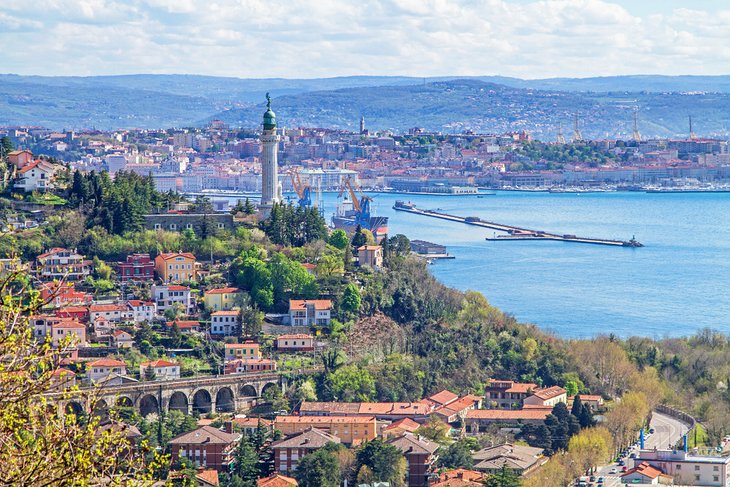
Both a monument and a working lighthouse, Faro della Vittoria was built after World War I, commemorating those who had died at sea during the war, and celebrating Trieste's joining the Kingdom of Italy following its long occupation by the Austrian Empire.
The location, too, has symbolic significance, as the lighthouse stands on the foundations of an important former Austrian fort. Atop the lighthouse, a seven-meter-tall statue of the Winged Victory holds a raised torch in one hand, a laurel branch in the other.
Below, standing against the base of the tower is an 8.6-meter statue representing an unknown Seaman, also created by sculptor Giovanni Meyer. Below the statue is the anchor of the destroyer Audace, commemorating the historic entry of the first Italian ship in Trieste.
The lighthouse is often open to visitors, who are treated to panoramic views of the harbor, the city, and the Adriatic Coast.
Address: Str. del Friuli 141, Trieste
Explore the Grotta Gigante
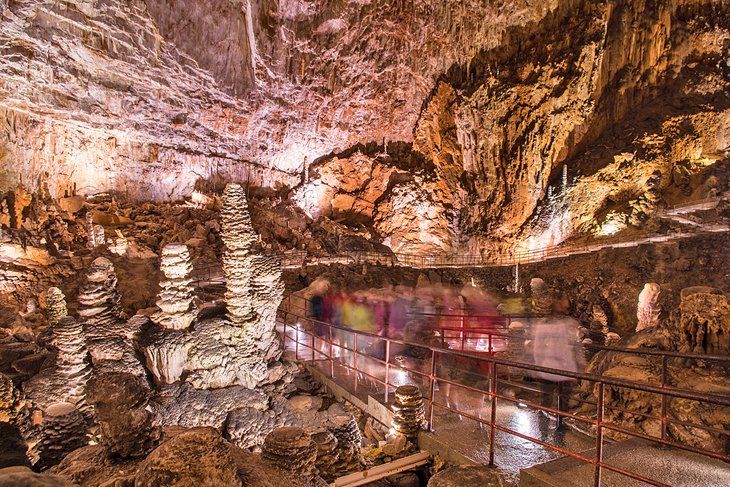
The 50-minute guided tour of this karst cave, about 20 kilometers from the city center, cannot possibly show you all of it. But you'll be impressed as you stand inside the main underground chamber, which is 98 meters high, 76 meters wide, and 167 meters long.
This and other galleries you'll see are studded with stalactites and stalagmites in all sorts of colors and convoluted shapes. Until 2010, the Guinness Book of Records listed Grotta Gigante as the largest cave in the world that's open for tourists, but the record was broken with the opening of La Verna cave in southwest France.
Bring a jacket, as the temperature inside never goes above 55 degrees.
Location: Borgo Grotta Gigante 42, Sgonico, Trieste
Take a Day Trip to Predjama Castle and Postojna Cave
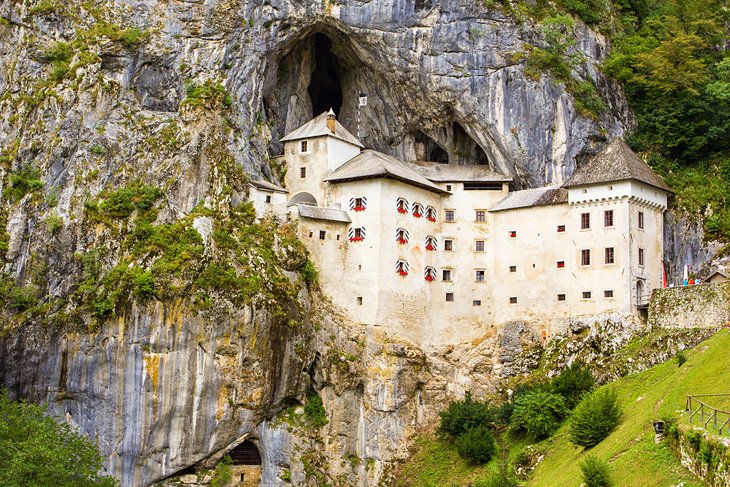
Only a few minutes apart, and 48 kilometers from the city center in neighboring Slovenia, the 800-year-old Predjama Castle and Postojna Cave are among the most popular places to visit near Trieste.
Close to the pretty little village of Predjama, the castle is an amazing sight, built high on a vertical 123-meter-high cliff, set right into the mouth of a giant cave. So good a defensive position was this that it withstood a siege of more than a year, thanks to an underground water source and supply tunnels inside the network of caves.
Part of the same karst cave system, the nearby Postojna Cave is one of the world's largest karst caverns and the only one of its size that can be toured on an electric train. The tour takes you on a route through a web of tunnels, passages, and fantastic galleries filled with a variety of diverse features and amazing colors.
Museo Civico di Storia Naturale (Museum of Natural History)
The prize of this excellent museum has to be the fossil of a 3.6-meter-long hadrosaurus found near Trieste, almost entirely intact and anatomically connected. Its other paleontology exhibits are worthwhile, and there is a section on the evolution of hominids (humans and their fossil ancestors), with the skull of the Man from Mompaderno, which was found in Istria in the late 1800s. Along with the fossils themselves are casts of important fossil hominids, including the famous "Lucy."
The zoological exhibits show mammals from all over the world, as well as fresh and saltwater fish, corals, reptiles, amphibians, and birds. There is a good mineral collection and a large exhibit on local plants and those from elsewhere in Italy and the Adriatic.
Address: Via dei Tominz 4, Trieste
Museo del Mare (Maritime Museum)
Ship models, many of them works of art in themselves, make up much of the collection in the Museo del Mare, which focuses on the sailing ships of the Adriatic and Tyrrhenian Sea, as well as fishing craft through the ages. Along with beautifully crafted models of sailing ships are intricately detailed models of some of the most prestigious cruise liners in history, commissioned to convince shipping companies to invest.
The exhibits are not all models. There is one of only two known examples in the world of the "zopolo," an ancient dugout canoe used in the Mediterranean, and made by hollowing out a single log. A highlight is the collection of ancient nautical instruments, showing ancient cross-staffs, and the original wireless key used by Guglielmo Marconi.
Even rowing gets a nod, with the boat that delivered the first Olympic gold in the sport.
Address: Via Campo Marzio 5, Trieste
Explore Gorizia on a Day Trip
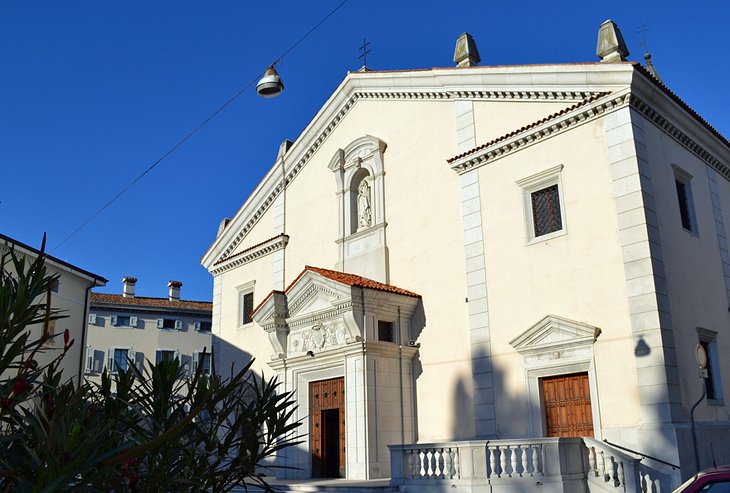
The old town of Gorizia was part of Austria until 1918 and was largely destroyed in the First World War. In 1947, the eastern suburbs were transferred to what was then Yugoslavia, and are now part of Slovenia, known as Nova Gorica. At the foot of the castle hill is the triangular Piazza della Vittoria, with the 17th-century Jesuit church of Sant'Ignazio.
South of this is the Gorizia Cathedral, whose origins are 14th century, but which was completely rebuilt in 1927. Notice especially, the angels on the ceiling of St. Acathius' Chapel, painted in the mid-15th or early 16th century. The cathedral treasury contains gold and silver works of the 12th to 14th centuries.
Address: Piazza del Duomo, Gorizia
More Related Articles on PlanetWare.com
Places to Visit near Trieste: This far eastern corner of Italy, known as the Friuli-Venezia Giulia, is still one of Italy's secrets, stretching northeast from Venice through scenic foothills into the ski resorts of the Dolomite Alps. Even closer to Trieste, heading south through a narrow strip of Slovenia are the Adriatic beaches and historic cities of Croatia.
In and around Venice: Trieste is only a two-hour train ride from Venice, where you could spend days exploring St. Mark's Basilica, the palaces along the Grand Canal or gliding through Venice on a gondola. After exploring the attractions in Venice, you'll find plenty of nearby adventures in our list of top day trips from Venice.
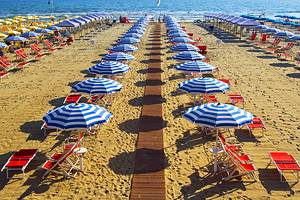
Italian Vacation Ideas: Visitors who enjoyed exploring the lovely seaside gardens at Miramare can find other beautiful gardens in Italy, and if thoughts of Adriatic beaches appeal, refer to our list of Italy's best beach resorts. For insider advice on seeing the top attractions in Italy, whether traveling by train, bus, or car (even by boat), see Plan Your Trip to Italy: Itineraries.