Tourist Attractions & Places to Visit in Bali
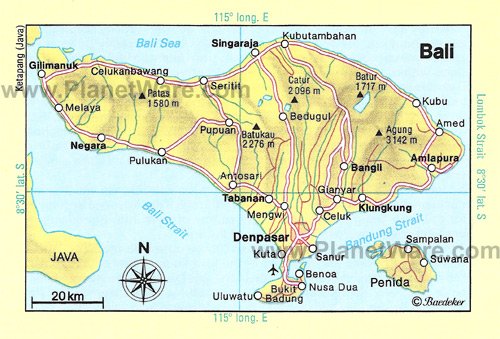
Bali is one of the most evocative places to visit in the entire Indonesian archipelago. A visit here sparks the senses. The intoxicating fragrance of incense and clove oil hangs in the thick tropical air. Peanuts sizzle at roadside stalls, petal-strewn offerings smolder on busy sidewalks, and traditional gamelan music jangles against the buzz of mopeds.
Despite the clamor and chaos of the main tourist areas, the island is rich in natural beauty, with attractions for every kind of traveler. Surfers come for the legendary swells, hikers can trek up jungly volcanic peaks to misty waterfalls, and cyclists can bike through lush landscapes bristling with rice terraces and dotted with traditional villages.
The island's rich arts scene is another top draw, and if relaxation is your top priority, the spa treatments and shopping in Bali are fabulous – and affordable. Spirituality adds yet another layer to Bali's allure, and visiting the magnificent temples and sacred Hindu ceremonies are top things to do in Bali.
Since the famous book and film Eat, Pray, Love spotlighted this enchanting island, the tourist throngs have undeniably swelled, but you can still experience Old Bali if you stray off the beaten track. Find the best things to do, and some of the island's hidden gems, with our list of the top attractions and places to visit in Bali.
Pura Tanah Lot
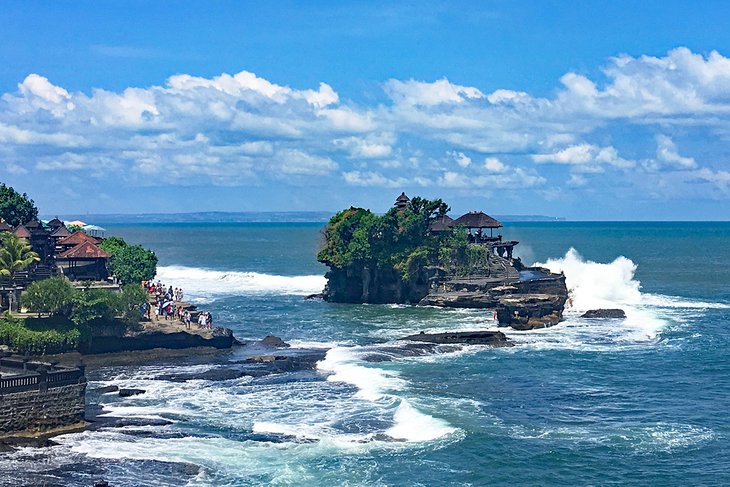
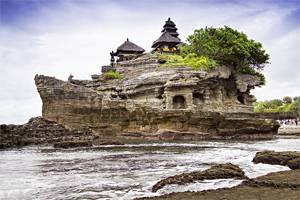
About 20 kilometers northwest of Kuta, Pura Tanah Lot ("Pura" means temple in Balinese) is one of Bali's most iconic temples. Its spectacular seaside setting, on a rocky islet surrounded by crashing waves, is a major wow factor.
For the Balinese people, it is one of the most sacred of all the island's sea temples. Every evening, throngs of tourists from Kuta, Legian, and Sanur find their way through a labyrinth of lanes lined by souvenir sellers to watch the sun setting behind the temple.
Pura Tanah Lot was built at the beginning of the 16th century and is thought to be inspired by the priest Nirartha, who asked local fishermen to build a temple here after spending the night on the rock outcrop.
Although foreigners can't enter any of the temples in the complex, you can walk across to the main temple at low tide. It's also fun to wander along the paths, taking photos and soaking up the magnificent setting.
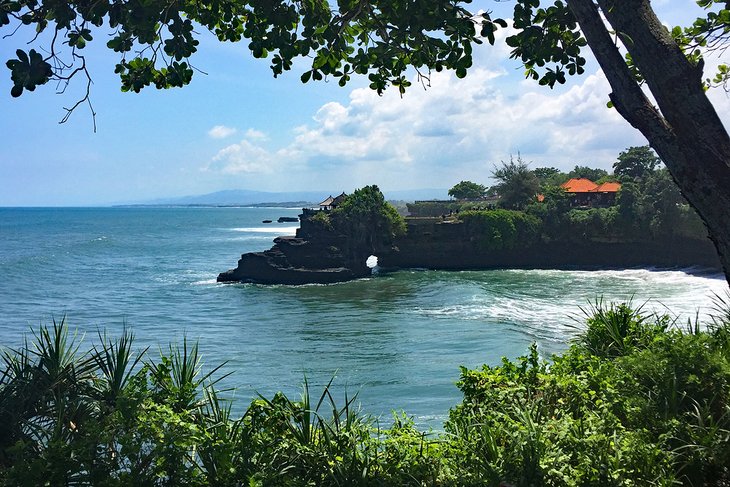
From Tanah Lot, you can stroll along tropically landscaped pathways to beautiful Batu Bolong, another sea temple perched on a rock outcrop with an eroded causeway connecting it to the shore.
After viewing the various temples and shrines, save time to relax at one of the clifftop restaurants and cafés here and sample the famous Kopi luwak (civet coffee). In some of the cafés, friendly civets snooze on the tables, offering fun Instagram-worthy photo ops.
When visiting any temples in Bali, be sure to dress respectfully, and wear a sarong and sash.
Mount Batur
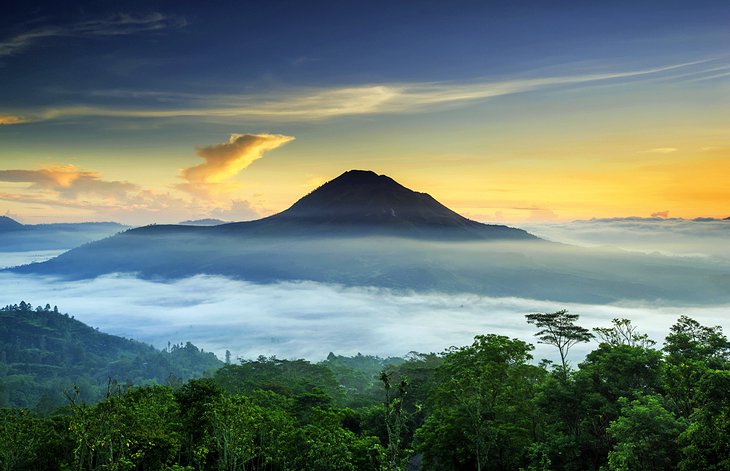
Every day in Bali's predawn darkness, hundreds of visitors begin the trek up the 1,700-meter summit of Mount Batur. Once at the top, they watch the sun rise above the lush mosaic of mist-shrouded mountains and the caldera far below. If you're looking for romantic things to do in Bali for couples, this should be top on your list.
This sacred active volcano lies in Kintamani District in Bali's central highlands, about an hour's drive from Ubud. The hike, along well-marked trails, is relatively easy and usually takes about two to three hours. Guided treks typically include a picnic breakfast, with eggs cooked by the steam from the active volcano. On a clear day, the views are spectacular, stretching all the way across the Batur caldera; the surrounding mountain range; and beautiful Lake Batur, the island's main source of irrigation water.
Sturdy hiking shoes are essential, and it's advisable to wear layers, as the temperature can be cool before sunrise.
You can also combine a trip here with a visit to one of Bali's most important temples, Pura Ulun Danu Batur, on the lake's northwest shore, and a therapeutic soak in hot springs at the beautiful village of Toya Bungkah on the banks of Lake Batur.
Uluwatu Temple
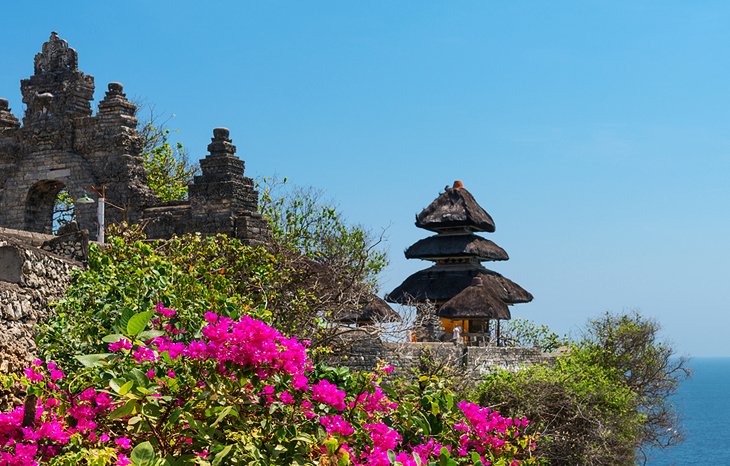
Uluwatu Temple (Pura Luhur Uluwatu) is one of the Bali's most famous temples, thanks to its magnificent clifftop setting. It presides over plunging sea cliffs above one of Bali's best surf spots.
In Balinese, "Ulu" means "tip" or "land's end," and "Watu" means rock, a fitting name for the location of the temple on the Bukit Peninsula, along the island's southwestern tip. Like Pura Tanah Lot, sunset is the best time to visit, when the sky and sea glow in the late afternoon light.
Archaeological finds here suggest the temple is of megalithic origin, dating from around the 10th century. The temple is believed to protect Bali from evil sea spirits, while the monkeys who dwell in the forest near its entrance are thought to guard the temple from bad influences (keep your belongings securely stashed away from their nimble grasp).
A scenic pathway snakes from the entrance to the temple, with breathtaking viewpoints along the way. Only Hindu worshippers are allowed to enter the temple, but the beautiful setting and the sunset Kecak dance performances that take place here daily are more than worth the visit.
The temple lies about 25 kilometers from Kuta.
Ubud Monkey Forest
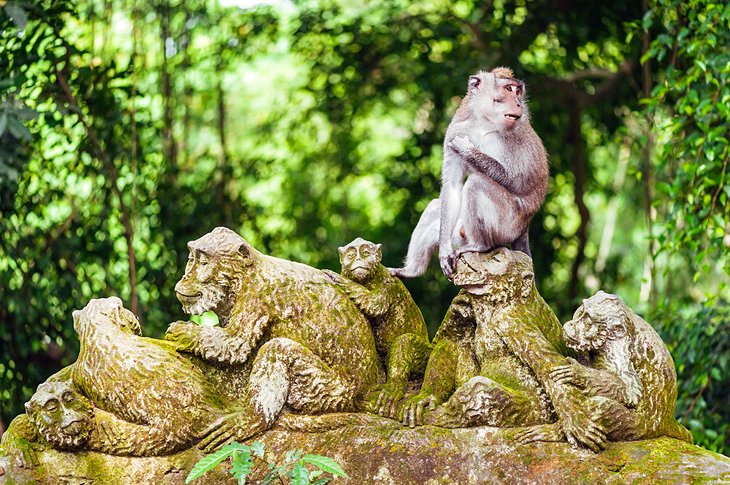
Visiting the Monkey Forest, also known as the Sacred Monkey Forest Sanctuary, is one of the top things to do in Ubud, Bali. It's also one of the best places to visit in Bali if you're an animal lover or photographer. You can walk here in about 10 minutes from the town center in Ubud.
Besides the entertaining troops of grey long-tailed macaques that make their home here, a large part of the appeal is the evocative jungle setting where the monkeys roam free. Paved pathways lead through thick forests of giant banyan and nutmeg trees, where moss-covered statues and ancient temples loom through the dense foliage, imparting an almost mystical feel.
The forest is intended to represent the harmonious coexistence between humans and animals. It also conserves rare plants and is used as a location for researching macaque behavior, particularly their social interaction.
On the southwest side of the forest is one of the three temples found here: the 14th-century Pura Dalem Agung Padangtegal. Here, hundreds of monkeys swing through the trees and clamber over the walls.
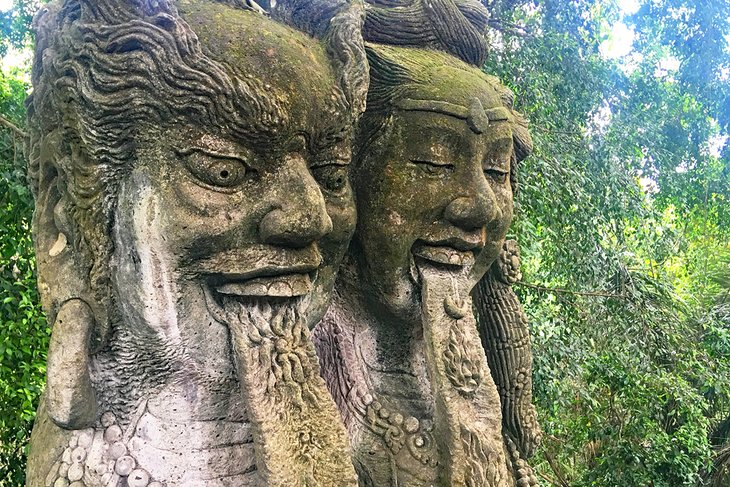
In the northwest of the forest, an ancient bathing temple, Pura Beji, nestles next to a cool stream and makes a beautiful backdrop for watching the monkeys' antics.
While visiting the forest, make sure to secure your belongings, and avoid direct eye contact with the animals (and smiling), as this can be interpreted as a sign of aggression. It's also a good idea not to bring any food into the area.
Address: Jalan Monkey Forest, Padangtegal, Ubud, Gianyar, Bali
Official site: http://monkeyforestubud.com/
Ubud Art & Culture
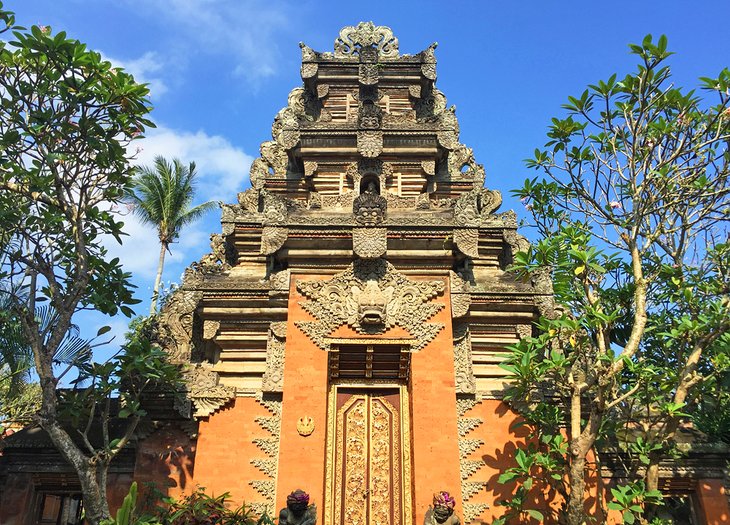
Made famous by the book and movie Eat, Pray, Love, Ubud is also the epicenter of Balinese art and culture. This is where the modern Balinese art movement was born, with the surrounding royal palaces and temples acting as the main patrons.
Today, several excellent local museums and galleries celebrate its evolution and traditions. Art gazing is particularly rewarding here, as many collections are housed in traditional Balinese buildings surrounded by serene tropical gardens.
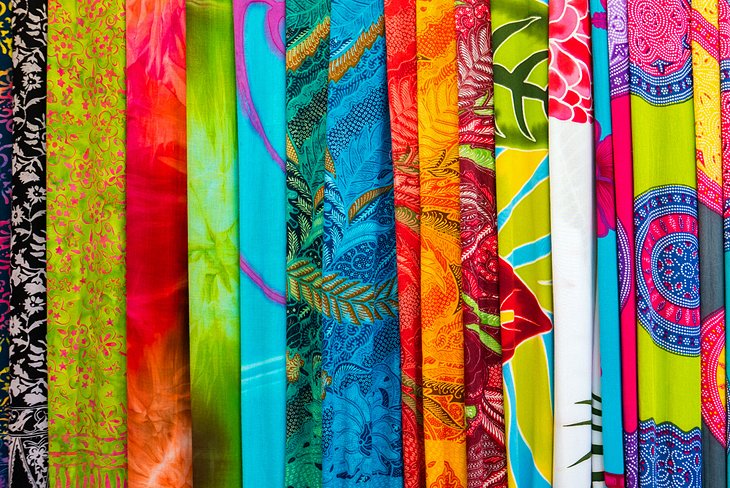
For an overview of Balinese art, your first stops should be Agung Rai Museum of Art (ARMA) and the Neka Art Museum, which lie within a short stroll of the Ubud Monkey Forest. Collections at both include works ranging from traditional to contemporary, including kris (ceremonial daggers), photography, and classical wayang (puppet-figure) paintings.
Other art galleries and museums in the Ubud area that might be of interest to art lovers include Setia Darma House of Masks & Puppets featuring ceremonial masks from Asia and beyond; Museum Puri Lukisan, spanning a range of Balinese artistic styles; and the Don Antonio Blanco Museum, at the artist's former home and studio.
If shopping for art is more your style, don't miss the Ubud Art Market. This labyrinth of stalls brims with carvings, sculptures, jewelry, sarongs, paintings, and homewares and is one of the top tourist attractions in Ubud. Bargaining is essential, and a good rule of thumb is to counter with half the asking price and barter upwards from there, always with a smile.
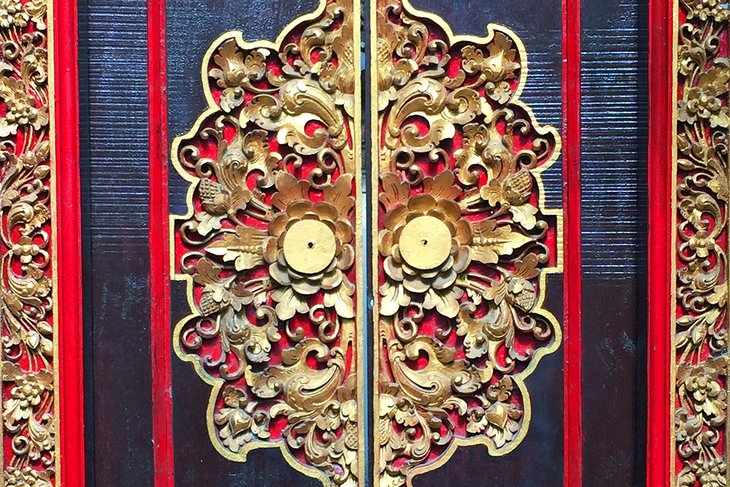
Opposite the market, the Puri Saren Royal Ubud Palace is also worth a visit. Attending a traditional Balinese dance performance during the evening here is one of the top things to do in Bali at night – especially for families. The colorful costumes and hypnotic music will dazzle young and old. During the day, it's a beautiful place to photograph some of the architectural features, and stroll through the gardens.
Looking for things to do in Bali with kids to soak up the local culture? Sign up for an art workshop at a local village. Traditional painting, mask-making, and jewelry making are just some of the activities that might appeal to creative young minds.
Tegallalang and Jatiluwih Rice Terraces in Bali
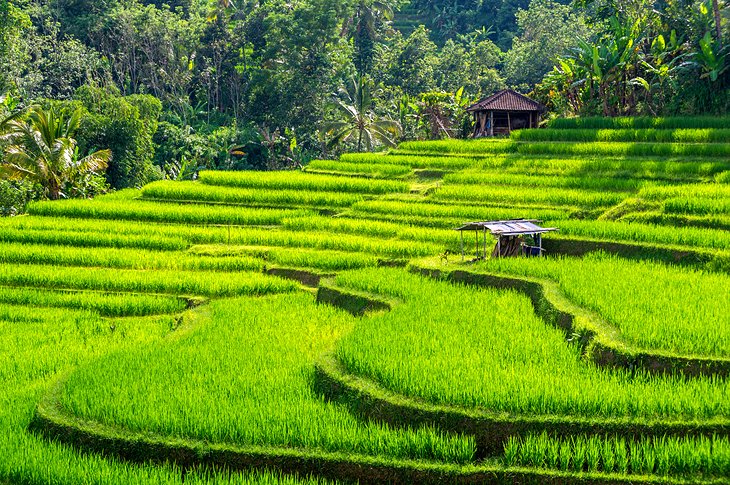
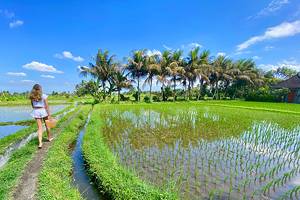
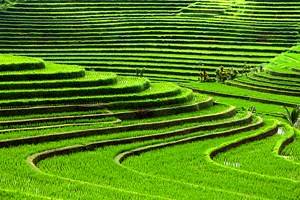
Want to visit the beautiful emerald-hued rice fields that you see on all the Bali tourist brochures and Instagram posts? The Tegallalang or Jatiluwih rice terraces should be at the top of your sightseeing list — especially if you're a photographer.
About a 30-minute drive north of Ubud, Tegallalang Rice Terraces are one of the most famous areas to photograph these iconic landscapes and absorb their timeless beauty. Be aware that locals ask for donations along the most popular trail through the rice fields here, and many request fees for entrance and parking along the road. A relaxing way to enjoy the lush landscapes is at one of the many restaurants and cafés overlooking the fields.
About a 90-minute drive from Ubud, the Jatiluwih rice terraces cover more than 600 hectares of rice fields along the hillsides of the Batukaru mountain range and tend to be less crowded than Tegallalang. You'll also find fewer tourist touts here, so it's easier to walk around and explore without being hassled.
Both of these locations use the traditional water management cooperative called "subak," a UNESCO-recognized irrigation system that dates to the 9th century.
Pura Ulun Danu Bratan
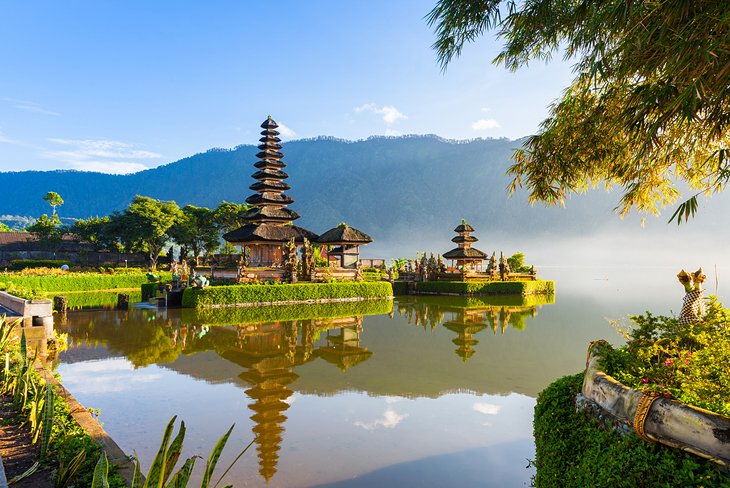
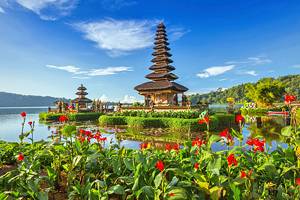
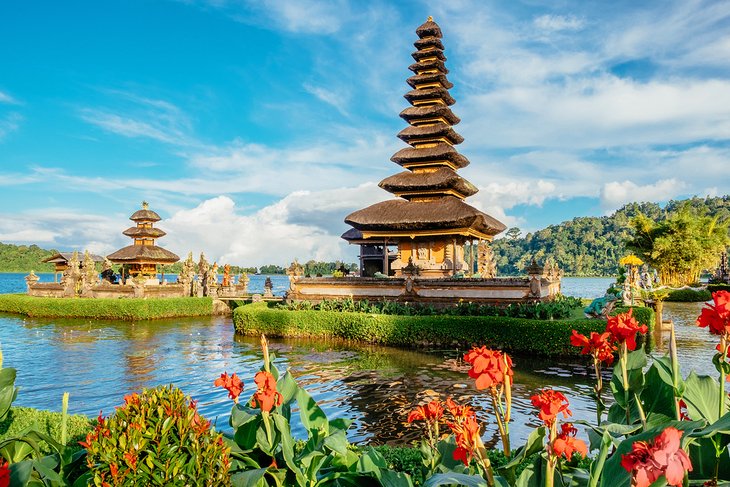
The 17th-century Pura Ulun Danu Bratan is one of Bali's most picturesque temple complexes. It sits on a small island along the western shore of Lake Bratan, in the cool highlands of central Bali. Set against the imposing backdrop of Gunung Bratan, the thatched temples reflect on the lake, and when the water levels rise, they seem to float on its surface.
Lake Bratan is one of Bali's main sources of irrigation and drinking water, and the temple complex is dedicated to Dewi Danu, goddess of the sea and lakes.
An unusual feature is the Buddhist stupa on the left of the entrance to the first courtyard, with figures of Buddha meditating in the lotus position in niches on the square base. The stupa reflects the adoption of Buddhist beliefs by Balinese Hindus.
The best time to visit this sacred Hindu temple complex is early in the day, before the tourist buses arrive. The temple is especially picturesque in the soft morning light, when cool mist sometimes cloaks the lake and the mountains beyond. You can also hire a canoe and paddle out on the lake to explore the meru (thatched shrines) at close range.
Not far from the temple complex, the Bali Botanic Garden (Kebun Raya Bali) is also worth a visit, with its beautiful bamboo forests, begonias, orchid collection, and medicinal plants.
Address: Jalan Bedugul - Singaraja, Candikuning, Baturiti, Kabupaten Tabanan
Seminyak Shopping

Bali is known for its flamboyant designers and fabulous shopping, and you'll find the best examples of Balinese design along the busy streets of Seminyak. Cutting-edge designer fashion, surf and swimwear, jewelry, furniture, and homewares are just some of the items you can buy at the chic shops and busy market stalls here.
Top boutiques include Biasa, Magali Pascal, and Bamboo Blonde. Sea Gypsy is a favorite for jewelry, and Drifter Surf Shop & Cafe offers a collection of surf and skateboard gear.
The two main shopping malls are Seminyak Square and Seminyak Village, but you'll probably find better deals in the smaller shops lining the streets.
Looking for a real bargain? Head to the Seminyak Flea Markets near Seminyak Square, where you'll find stalls crammed with clothing, jewelry, carvings, and handicrafts.
Seminyak is also home to some of Bali's best beach resorts, restaurants, and art galleries.
Nusa Dua Beach
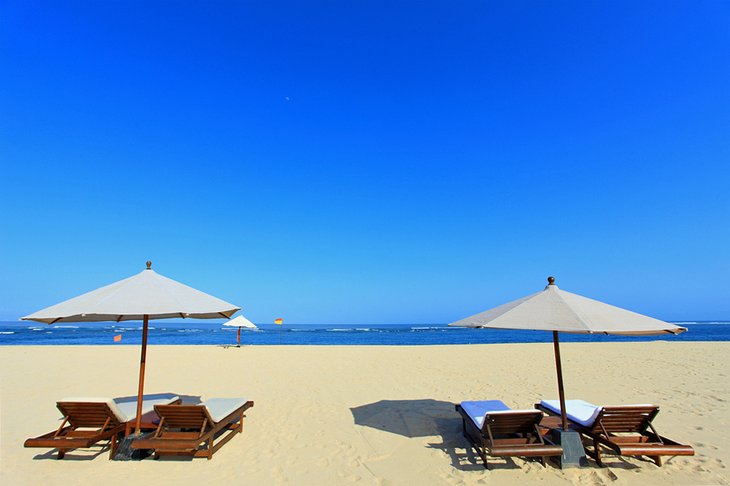
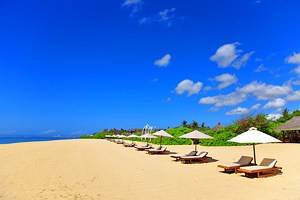
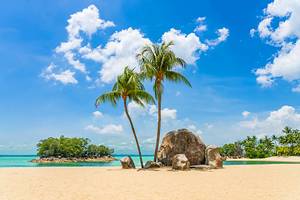
Want an escape from Bali's urban buzz? Nusa Dua Beach is your answer. Here, you can recline on a comfortable sun lounger, cool drink in hand, and listen to the gentle slosh of surf on silky, white sands. You won't get that cultural hit you'll find elsewhere in Bali – this is a gated resort area on its own private peninsula after all, but if it's peace and relatively pristine sands you seek, you'll find it here, at one of Bali's best beaches.
Some of Bali's best luxury beach resorts preside over this sweeping stretch of shore, and resort staff work hard to keep the sand clean and clear of trash. Popular things to do at Nusa Dua include strolling for miles along the shore, swimming, surfing, parasailing, and sunbathing, but you might need to pay a fee or eat at one of the resorts to use their sun loungers. Still, if you're after a top Bali beach experience, Nua Dua ticks the box.
When you tire of the beach, you can sign up for some pampering at a posh resort spa or browse the chic shops at Bali Collection, an open-air shopping mall. A paved promenade skirts the shore for off-sand strolling between the resorts and attractions. With all this relaxation on tap, no wonder Nusa Dua is one of the top places to visit in Bali for a honeymoon.
Besakih Temple (Pura Besakih)
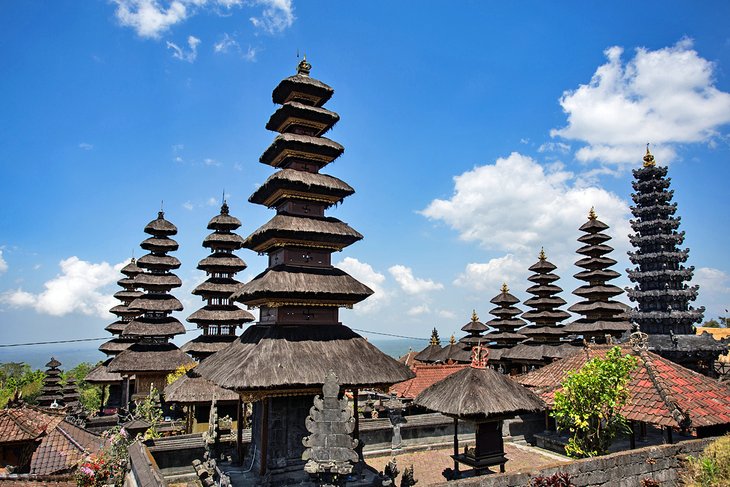
More than a thousand years old, Pura Besakih is known as the Mother Temple for a reason: It's the holiest Hindu temple complex in Bali – and the biggest.
Set in a spectacular location on the southern slopes of Mount Agung, at an altitude of 1,000 meters, Pura Besakih is actually a series of many different temples, which serve as the spiritual center for the Balinese people. Pura Penataran Agung is the largest.
Lush rice paddies and forests ring this temple complex, and many important festivals take place here; you might be lucky enough to see one during your visit.
Plan to spend about three hours touring the temples. It's also a good idea to wear comfortable walking shoes – you'll need to walk a fair distance and climb many stairs.
Insider's Tip: Locals trying to sell sarongs, incense, guiding services, and various other items bombard visitors at the gates here, but your ticket includes everything that you'll need during your visit. The best time to visit Pura Besakih is early in the morning before the tourist buses arrive.
The Nusa Islands
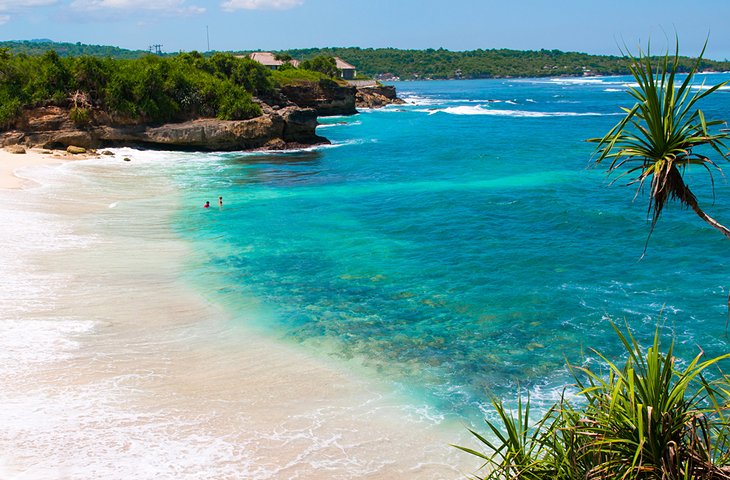
Craving a slower-paced Bali, without the crowds, traffic, and tourist touts? The Nusa Islands are where you'll find it. They are also a great place in Bali for couples who crave a little more serenity than they might find on the mainland.
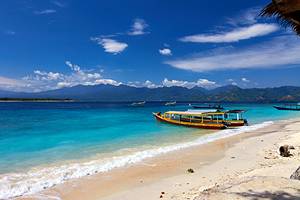
The most popular of the three islands is Nusa Lembongan, about 20 kilometers offshore from Sanur and easily accessible by speedboat. Surfing, snorkeling, diving, kayaking, and stand up paddleboarding are the main activities here, and the top attractions include beautiful Dream Beach; Mushroom Bay; and the Devil's Tears rock outcrop, with views of crashing surf erupting over the rocks. Many locals still make their living from seaweed farming, and you can watch them harvesting it by the shore.
The neighboring island, Nusa Ceningan, lies just over a bridge from Nusa Lembongan, with a beautiful blue lagoon.
The largest of the island trio, Nusa Penida, is a quick boat ride away. Rock formations, caves, and a bird sanctuary are Nusa Penida's top draws, and diving is one of the most popular things to do here, with the chance to see manta rays, sunfish, and turtles. Don't miss the steep hike down to Kelinking Beach, also known as T-Rex Bay, to bask on your own slice of golden sand, backed by soaring sea cliffs – it's one of the top beaches in Asia.
Accommodation on the islands ranges from rustic huts to luxury villas.
Kuta Beach
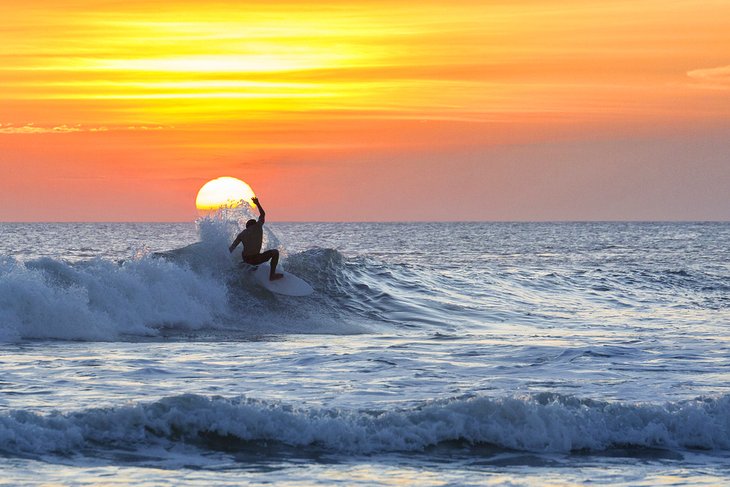
Yes, it's crowded and persistent hawkers stalk the beach, but this famous stretch of sand, along with neighboring Legian and Seminyak Beaches just to the north, is one of the most happening places to visit in Bali. You'll have a fun day out here – especially if you're a beginner surfer or you just want to soak up the scene.
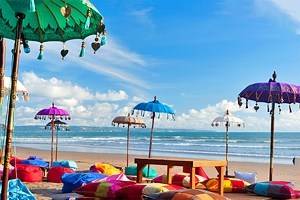
You can book surf lessons and rent surfboards, boogie boards, sun loungers, and umbrellas directly from vendors set up on the sand, and plenty of cafés and restaurants border the beach. Beach vendors are easily dissuaded with a polite "no thank you," but an icy cold coconut sloshing with juice served directly to your sun lounger can be a blessing on a sultry day.
Kuta Beach is one of the best places for young travelers who are looking for a livelier vibe than the sleepy beach resorts offer.
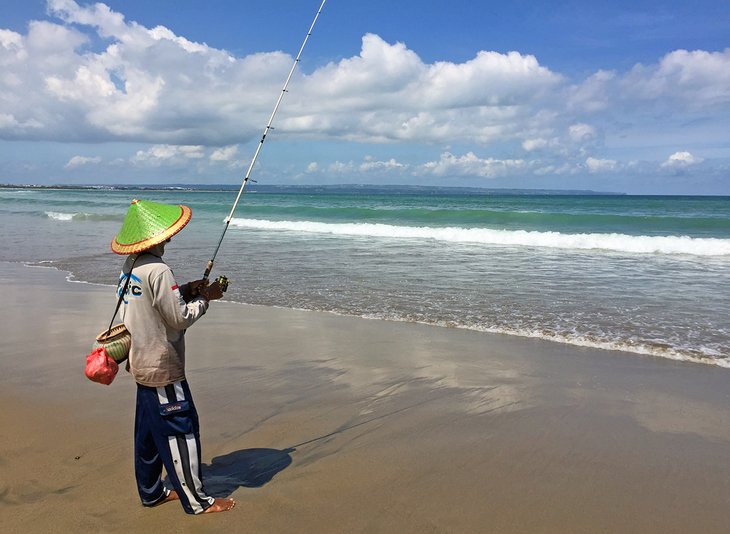
For a more peaceful slice of coast on the island, head to the soft sands of Sanur Beach, Jimbaran Beach, or Nusa Dua (Geger Beach here has public access).
Surfers should check out Dreamland, Canggu, Balangan, Bingin, Padang-Padang, or the cliff-fringed hidden coves of Uluwatu.
Lempuyang Temple Complex
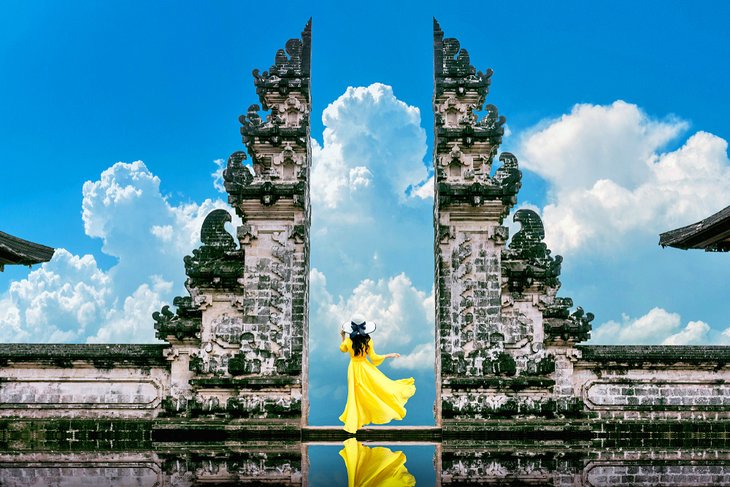
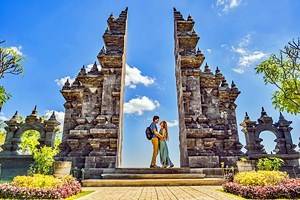
If you've ever seen the famous Instagram photo of people at the Gates of Heaven and wondered about the location, Pura Penataran Agung Lempuyang is where they posed. Often just called "Lempuyang Temple" (Pura Lempuyang), this famous structure is actually one of a series of temples peppering the highlands of Mount Lempuyang. Tourists come here to capture a photo standing between the towering dragon staircases, which frame the misty peak of Mount Agung.
If you have time, it's worthwhile visiting the other temples while you're here. Pura Luhur Lempuyang is one of Bali's most sacred temples, and one of the hardest to access. Ready for some exercise? The temple lies at the top of a calf-sculpting hike up 1,700 steps through the steamy jungle to almost 1,200 meters above sea level. Keep an eye out for the grey long-tailed macaques scampering around the forest along the way.
The hike to Pura Luhur Lempuyang usually takes around 1.5 to two hours, depending on your fitness level, but once at the top, you'll be rewarded with the mystical beauty of an ancient relic – and spectacular views. Not up for the hike? You might be able to pay a local to whisk you to the end of the asphalt road on a motorbike to shorten the trek.
Insider tip: Try to visit on a clear day for the best views, and bring a sarong, otherwise you might have to rent one at the temple. Also note that local villagers request "donations" at this famous spot.
The Sidemen Valley
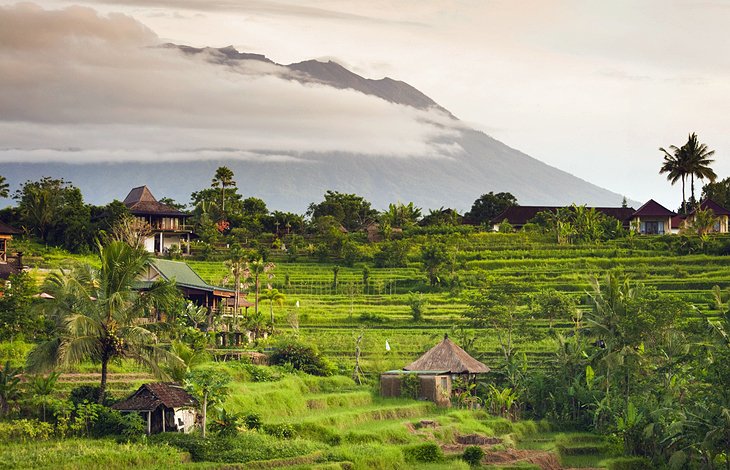
About 90 minutes' drive northeast of Ubud, the emerald-hued Sidemen Valley evokes the feel of Old Bali, before the tourist throngs descended on the island. Sleepy villages snuggle in the valley amid cascading rice terraces, and cloud-capped Mount Agung looms in the background like a benevolent sentry.
A highlight of a visit here is strolling around the small villages. This is where the locals still tend to their traditional activities, surrounded by farmland and rice paddies. You can also hike through the countryside to the summit of Mount Agung, or trek through the rice fields and lush countryside past cocoa and coffee plantations.
Other popular things to do here include rafting the rivers; yoga retreats; and taking part in cultural activities such as dancing, carving, or traditional weaving.
Bali homestays and B&Bs are particularly popular in this area, but you'll also find some luxury villas overlooking the rice fields.
Sekumpul Waterfall
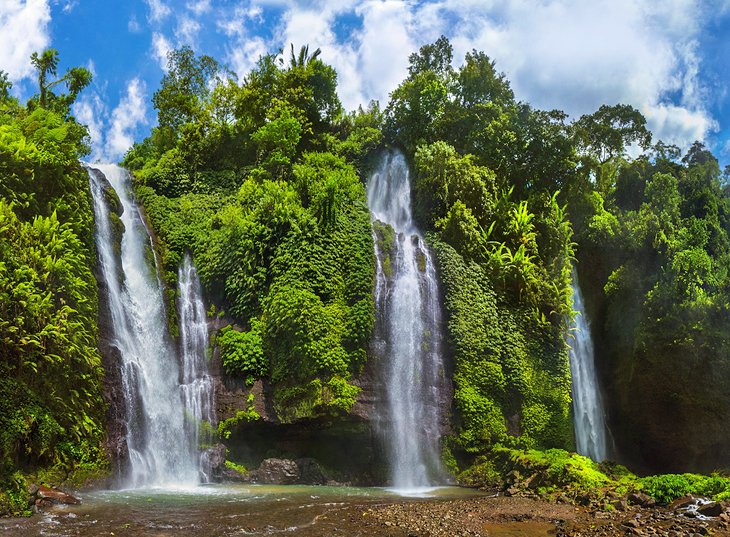
Sekumpul Waterfall is considered by many to be Bali's most beautiful waterfall. Located in the Singaraja region, about 66 kilometers north of Ubud, this tucked-away tourist attraction is actually a series of about seven falls, cascading like long misty veils over the lip of a lush, jungle-clad cliff.
Note that if you choose to drive yourself here, locals might try and stop you well before the entrance, demanding exorbitant entrance and parking fees. It's a good idea to hire a local guide who knows how to negotiate these roadblocks and access the correct trailhead to the falls.
The three- to four-hour round-trip trek passes by rice terraces and local villages rimmed with rambutan and durian trees, and continues through dense tropical jungle. It can be strenuous in parts, as you need to hike down slippery steps and slosh through a river, but once you arrive, you can cool off with a refreshing swim at the base of the falls.
This is a great adventure for nature lovers who want a taste of wild Bali far from the touristy resorts.
Tirta Empul Temple
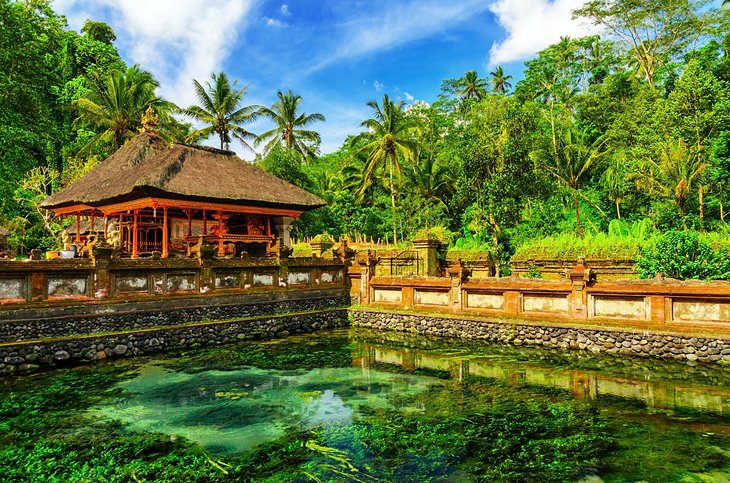
Dating from around 960 CE, Tirta Empul Temple (Pura Tirta Empul) in the lush tropical forest of Central Bali, offers a glimpse into a sacred purification ritual.
This important temple complex, a national cultural heritage site, is divided into three courtyards. The focal point is the large, rectangular pool, fed by a holy mountain spring, where locals come to pray and soak in the healing waters that gush from a series of sculpted spouts.
If you wish to join the locals in the cleansing ritual, it's best to ask an experienced guide first to make sure you respect the customs. You must enter the water fully clothed, wearing a sarong and sash, and it's best to explore the temple complex first, as you are not allowed to drip water in the courtyards.
The best times to visit Tirta Empul Temple are early morning and late afternoon.
Waterbom Bali
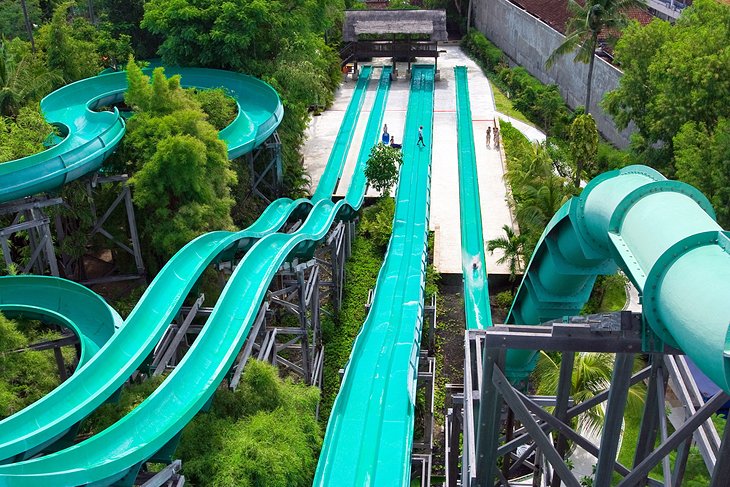
Wondering about places to visit in Bali with the family? Plan a day at Waterbom Bali. This action-packed water park, in the heart of Kuta, has something for every member of the family. Kids can splash in the swimming pools; drift down the Lazy River; or zoom down one of the many twisting water slides and rides, with names like the Python, Green Viper, and Super Bowl.
Moms and dads can relax with a reflexology session, manicure or pedicure, or fish spa therapy. Restaurants and cafés cater to a range of different diets, and the grounds are landscaped with large, shady trees and beautiful tropical gardens, making this a refreshing respite from the heat on a hot tropical day.
Ever wanted to try wakeboarding, waterskiing, kneeboarding, or skurfing (a cross between surfing and waterskiing) in a relatively safe environment? Bali Wake Park is the place to visit for this and more exhilarating water park fun. Kids will love Aqualand here – it's a giant inflatable obstacle course on the lake.
Official site: http://waterbom-bali.com/
Bali - Climate Chart
| Average minimum and maximum temperatures for Bali, Indonesia in °C | |||||||||||
| J | F | M | A | M | J | J | A | S | O | N | D |
| 30 26 | 30 26 | 31 26 | 31 26 | 30 26 | 29 25 | 28 24 | 28 24 | 29 24 | 30 25 | 31 26 | 30 26 |
| PlanetWare.com | |||||||||||
| Average monthly precipitation totals for Bali, Indonesia in mm. | |||||||||||
| 348 | 287 | 213 | 94 | 76 | 71 | 51 | 23 | 41 | 91 | 155 | 292 |
| Average minimum and maximum temperatures for Bali, Indonesia in °F | |||||||||||
| J | F | M | A | M | J | J | A | S | O | N | D |
| 86 78 | 86 78 | 87 78 | 87 78 | 86 78 | 85 77 | 83 76 | 83 76 | 85 76 | 86 77 | 87 78 | 86 78 |
| PlanetWare.com | |||||||||||
| Average monthly precipitation totals for Bali, Indonesia in inches. | |||||||||||
| 14 | 11 | 8.4 | 3.7 | 3.0 | 2.8 | 2.0 | 0.9 | 1.6 | 3.6 | 6.1 | 12 |
More Related Articles on PlanetWare.com
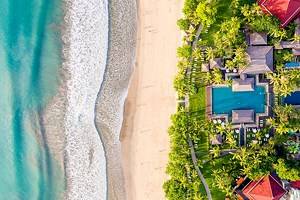
Where to Stay in Bali: Bali is famous for its warm hospitality and first-class resorts, and you can find luxury here for less than you might pay at other destinations. Discover the best places to stay along the coast, from villa resorts to boutique hotels, with our list of the Beach Resorts in Bali, and if you're traveling with the kids, check out our article on the Family Resorts in Bali.
Explore More of Bali & Beyond: Surfing, swimming, snorkeling, and sunbathing – no matter what you want to do, you'll find the perfect stretch of sand and sea with our article on the Beaches in Bali. And if you want to explore more of this culturally rich country, discover the best places to visit with our page on the top attractions in Indonesia. Get a glimpse of what to expect with our stunning pictures of best places to photograph in Indonesia.