18 Top-Rated Tourist Attractions in Darwin
Bathed in tropical heat, laid-back Darwin is the youngest of the Aussie state capitals and one of its most multicultural. Rich in Aboriginal heritage, the city lies on the doorstep of Asia, and its melting pot of cultures infuses the city with a cosmopolitan feel, despite its remote location on the brink of the Aussie Outback.
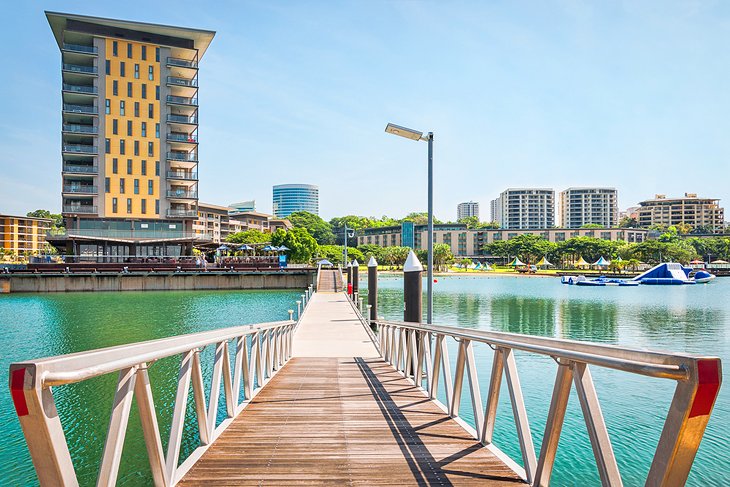
Szechuan sizzles in the famous Mindil Street Sunset Markets; international restaurants jostle with Aboriginal art galleries downtown; and Darwin's excellent museums share the city's fascinating history, from Word War II air raids to the devastation of Cyclone Tracy in 1974.
Life is mostly lived outside in this sultry city on the water. You can dine alfresco on fresh-caught seafood, stroll through lush botanic gardens, and browse the shops of the vibrant waterfront precinct.
Darwin is also the only seaport in the Northern Territory. Surrounded by Darwin Harbour, the Timor Sea, and Shoal Bay, it's the perfect spot to get out on the water – book a bluewater fishing charter, or sign up for a sunset cruise to soak up its seafront setting.
Exhilarating wildlife adventures are another top attraction. Watch massive saltwater crocodiles leap from the water, catch a big barramundi in a local billabong, and see wetlands and abundant wildlife all within a short drive of the city. Darwin is also the gateway for safaris to Litchfield and Nitmiluk National Park, as well as the spectacular World Heritage-listed wilderness of Kakadu National Park.
Discover the best places to visit in this diverse Top End city with our list of the top attractions in and around Darwin, Australia.
- 1. Mindil Beach & Mindil Beach Sunset Market
- 2. Museum and Art Gallery of the Northern Territory
- 3. Hang out at the Darwin Waterfront Precinct
- 4. Stokes Hill Wharf
- 5. Swim with Crocodiles at Crocosaurus Cove
- 6. Defence of Darwin Experience
- 7. Jumping Crocodile Cruise on the Adelaide River
- 8. Sunset Dinner Cruise
- 9. Mary River Wetlands Cruise
- 10. Take a Day Trip to Litchfield National Park
- 11. Book a Darwin Fishing Charter
- 12. Royal Flying Doctor Service Darwin Tourist Facility
- 13. Territory Wildlife Park & Berry Springs Nature Park
- 14. Day Trip to the Tiwi Islands
- 15. George Brown Darwin Botanic Gardens
- 16. Darwin Aviation Museum
- 17. Feed the Fish at Aquascene
- 18. Chinese Temple & Museum Chung Wah
- Map of Attractions & Things to Do in Darwin
- Darwin, Australia - Climate Chart
1. Mindil Beach & Mindil Beach Sunset Market
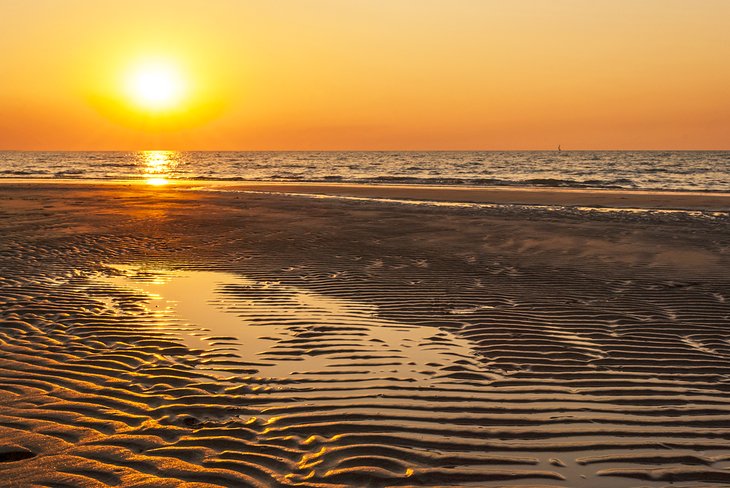
Mindil Beach, five minutes from the city center, is one of the best places in Darwin to watch the sunset. Tourists and locals alike head here late in the afternoon, stake a spot on the soft sand, and wait for Mother Nature's show. Boats bob on the calm sea, silhouetted against a fiery sky, as the sun sinks in a tropical blaze over the placid Timor Sea. It's one of Darwin's simple pleasures.
Mindil Beach Sunset Market is the beach's other claim to fame, and food is the highlight. Thai, Sri Lankan, Portuguese, Indian, Greek, Chinese, Brazilian, and Malaysian are just some of the cuisines on offer, and many visitors buy dinner here for a sunset picnic on the beach.
Slurp spicy noodles, inhale the aroma of sizzling satay, and enjoy local performers and live music. Held every Thursday and Sunday evening from the last Thursday in April to the last Thursday in October, this Darwin institution is a great way to experience the city's many cultural influences. The market also sells unique gifts.
From Mindil Beach, you can follow waterfront paths to Fannie Bay and East Point Nature Reserve, home to the Darwin Military Museum.
Official site: http://www.mindil.com.au/
2. Museum and Art Gallery of the Northern Territory
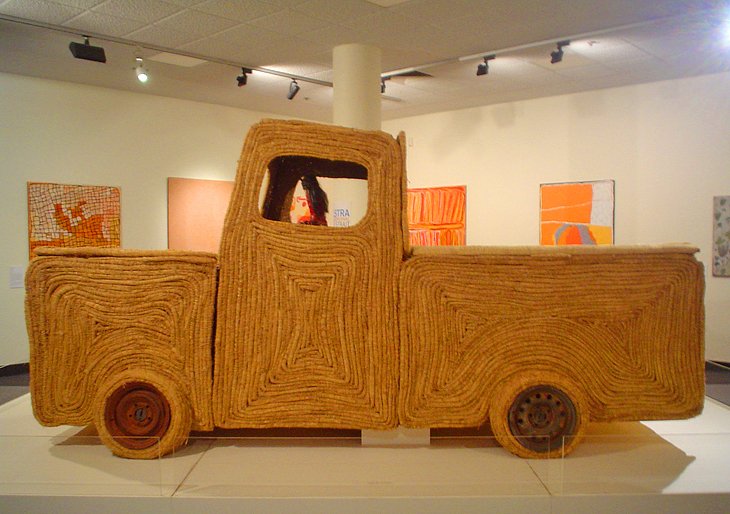
Tucked in a tropical garden on Darwin Harbour, the Museum and Art Gallery of the Northern Territory is one of seven related museums in the Northern Territory and provides an excellent one-stop dose of history and culture. If you only have one day in Darwin, this museum is a must-see. The gallery hosts an impressive collection of Aboriginal, Southeast Asian, and Oceanic art, as well as works by Australian painters, while the museum provides an overview of the region's history.
Don't miss "Sweetheart" the stuffed crocodile, one of the largest captured in northern Australia. The Natural History Room provides insight into the region's ecology, including mangroves, wetlands, and the marine environment.
The Maritime History Gallery features handcrafted canoes and boats, and other highlights are the photographs of Darwin before and after Cyclone Tracy in 1974 and a chilling audio recording of the devastating cyclone.
Visiting this excellent museum and gallery is one of the best free things to do in Darwin. After touring the complex, you can relax on the long verandah overlooking the water with a coffee and snack at the on-site café.
Address: Conacher Street, Bullocky Point, Darwin, Northern Territory
Official site: https://www.magnt.net.au/
3. Hang out at the Darwin Waterfront Precinct
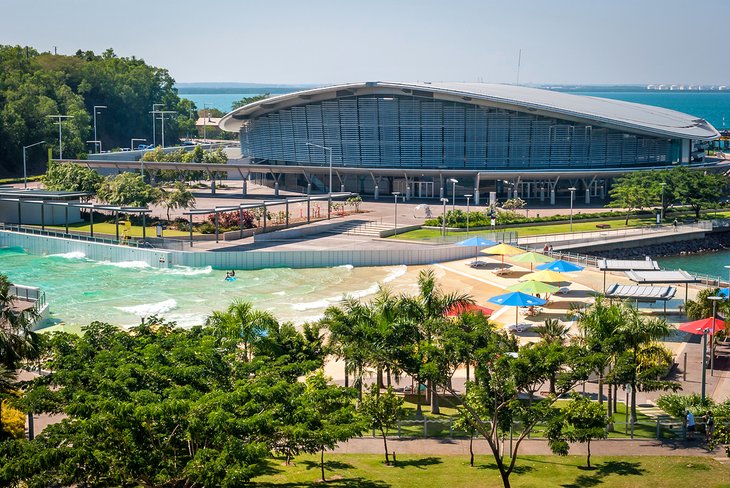
Buzzing day and night, Darwin Waterfront is ground zero for family fun. This pedestrian-friendly precinct in the heart of Darwin's CBD features tourist attractions, galleries, restaurants, shops, and beautiful water views. It's easy to get around here. A promenade links the precinct to the Darwin CBD, and you can stroll along a waterfront path to all the attractions.
Feeling hot and sticky after all your sightseeing? Bring your swimsuit and take a dip in the lagoon pool or bask on the man-made white-sand beach. Traveling with the kids? They'll love bouncing around on the Aqua Park, swimming in the wave lagoon, or clambering up the climbing wall and ropes course in the Waterfront Park.
Adults will find plenty of things to do here, too. For more history, save time to stop by the World War II secret Oil Storage Tunnels. And if all the fun makes your belly rumble, no worries. Darwin Waterfront restaurants serve up everything from fresh-caught seafood to Mexican tacos, Indian food, and burgers.
Looking for things to do in Darwin at night? Catch a film at the Deckchair Cinema. Operated by the Darwin Film Society, this open-air cinema screens a discerning selection of films seven days a week, during the dry season.
If you're staying right downtown and you're looking for things to do in Darwin without a car, this is top spot to add to your sightseeing itinerary.
4. Stokes Hill Wharf
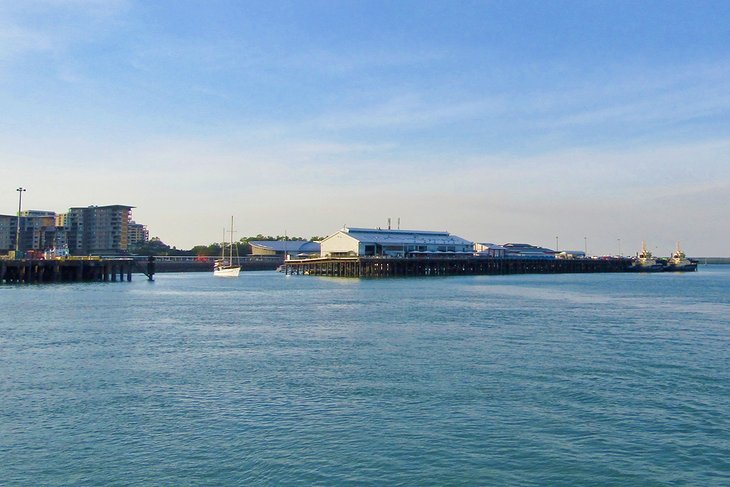
Stokes Hill Wharf is another tourist hot spot. Just a few minutes' stroll across the bridge from Darwin Waterfront, this working wharf is where harbor cruises, Jet Ski tours, and fishing charters depart, but it's also a top spot for waterfront dining.
Craving an alfresco meal? Fresh-caught seafood is the specialty here, but you'll find everything from Asian fusion to modern Mexican, pizza, and pasta.
One of the top tourist attractions is the RFDS Darwin Tourist Facility. Pop in here to learn all about the history of Australia's Royal Flying Doctor Service, and see a virtual experience about the bombing of Darwin.
Fishing is another top thing to do. Try your luck and cast a line from the free fishing platforms. And if you're looking for things to do in Darwin for couples, this is a beautiful spot to watch the sunset.
5. Swim with Crocodiles at Crocosaurus Cove
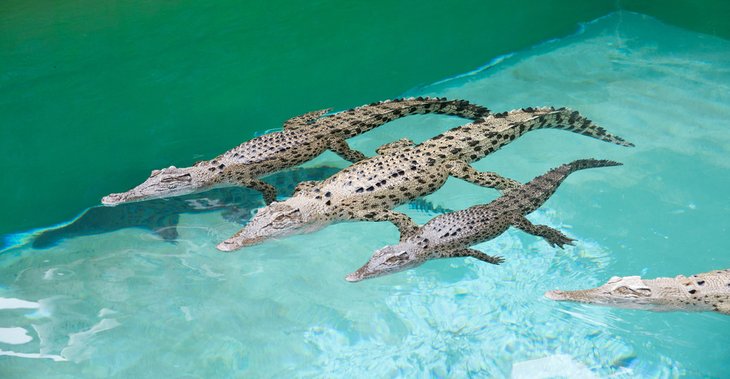
Crocosaurus Cove, in the heart of the Darwin city center claims to have the largest display of Australian reptiles in the world. If you're looking for unusual things to do in Darwin, something that will really get your heart pumping, the "Cage of Death" is for you. This unique attraction plunges you into the water in a protective enclosure, where you will come face to face with a giant saltwater crocodile. But it's not for the faint of heart!
If that's a little too scary, don't fret. You can always feed the crocs, hold a squeaking baby croc, see the barramundi and sawfish in the aquarium, or linger at the Top End Turtle Billabong.
This urban wildlife adventure is a great place to visit for those who can't make it out into the real wilderness. It's also one of the top things to do in Darwin during the wet season, when many other outdoor attractions are waterlogged.
Address: 58 Mitchell Street, Darwin, Northern Territory
Official site: http://www.crocosauruscove.com/
6. Defence of Darwin Experience
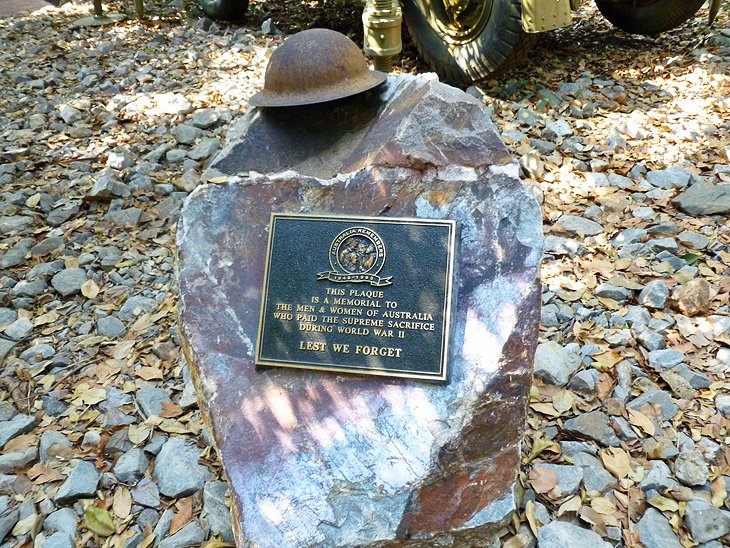
Part of the Darwin Military Museum, this poignant attraction commemorates the bombing of Darwin in 1942. Multimedia presentations and firsthand accounts retrace the story of Darwin's role in WWII and explore the impact of the war on the residents of Darwin.
You can also browse the exhibits in the adjacent Darwin Military Museum, which is set in beautiful tropical gardens surrounded by the sea in the East Point Reserve. The museum documents Darwin's role during WWII as an important naval base frequently attacked by Japanese bombers from February 1942 onwards. Within the grounds are a coastal battery, observation towers, bunkers, and gun positions dating from that period.
Address: 5434 Alec Fong Lim Drive East Point, Darwin, Northern Territory
Official site: http://www.defenceofdarwin.nt.gov.au/
7. Jumping Crocodile Cruise on the Adelaide River
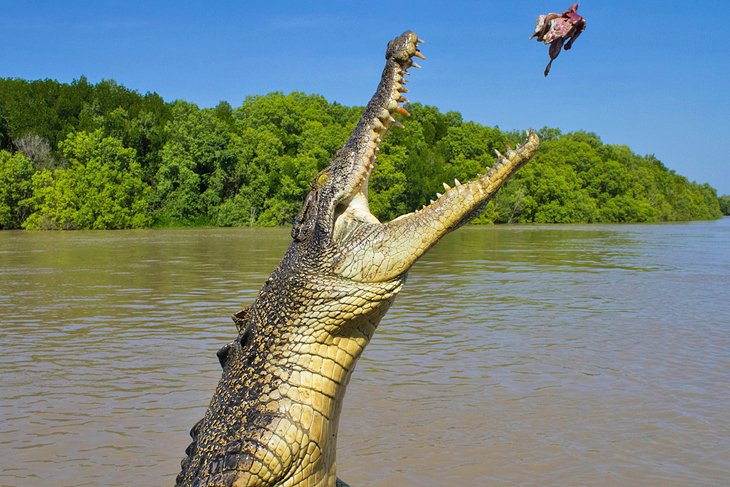
Watching a six-meter-long saltwater crocodile leap out of a murky river meters from where you sit is sure to get your adrenaline pumping. You can see all this and more on a jumping crocodile cruise on the Adelaide River. Motor along the wildlife-rich waters, accompanied by fascinating commentary about crocodiles and other wildlife from an expert guide.
Along the way, crocs leap out of the water to feast on meat dangled from the boat, allowing an up-close look at these prehistoric beasts. Bring your camera! You'll also have a chance to see other wildlife, such as white-bellied sea eagles and whistling kites.
A convenient way to experience this cruise and visit the surrounding wetlands is on the Pathfinder Jumping Crocodile Cruise Shuttle from Darwin. This four-hour tour includes pickup and drop-off from your central Darwin hotel and a Crocodile Cruise boarding pass.
8. Sunset Dinner Cruise
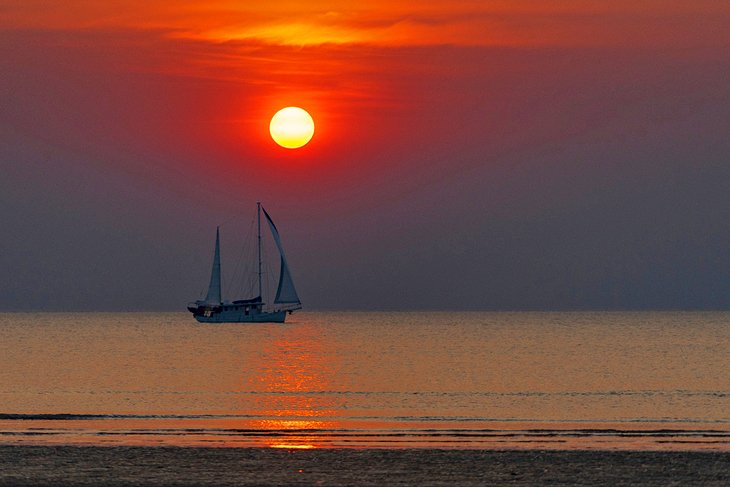
A great way to enjoy the city's warm tropical evenings and sample some of the city's famous seafood at the same time is on a sunset dinner cruise. Hop aboard a traditional fishing ketch and enjoy a 2.5-hour cruise along the coast as the lights of the city twinkle at dusk. This is a great way to capture photographs of the city and the fiery colors of the sunset.
Make sure you bring a healthy appetite. Darwin is famous for its fresh-caught seafood, and you'll have a chance to sample several local specialties during a delicious four-course dinner prepared by the onboard chef. The cruise departs from Stokes Hill Wharf.
9. Mary River Wetlands Cruise
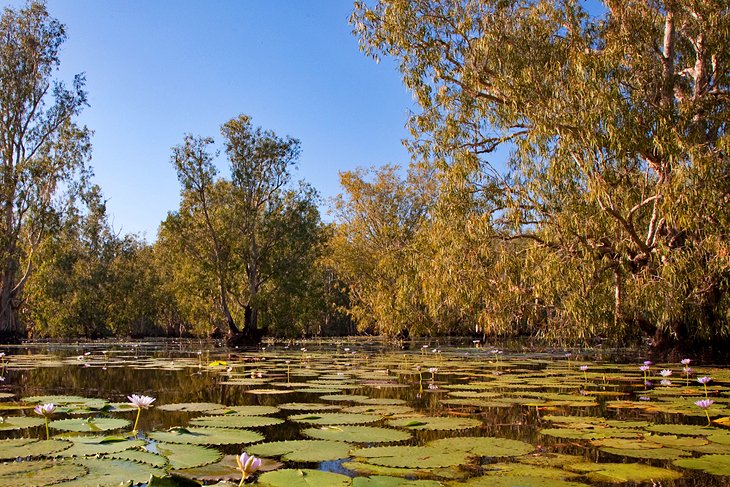
Beautiful scenery, saltwater crocodiles, birds, and other wildlife are the highlights of the Mary River Wetlands. Enjoy a front-row seat to all this natural splendor on a cruise along these glistening, lotus-topped waters. The wetlands lie about a 90-minute drive from Darwin and are home to one of the country's highest concentration of saltwater crocodiles.
Birders will also have plenty to see here. Ibis, jabiru, jacana, brolga, whistling ducks, and sea eagles are just some of the species you might spot, and your expert guide will share fascinating facts about the wetlands ecosystem.
An easy way to experience this natural attraction is on the Corroboree Billabong Wetland Experience from Darwin. This full-day tour includes a stop at the Windows on the Wetlands Visitor Centre, a 2.5-hour cruise on an open-sided boat, a delicious lunch, as well as hotel pickup and drop-off.
10. Take a Day Trip to Litchfield National Park
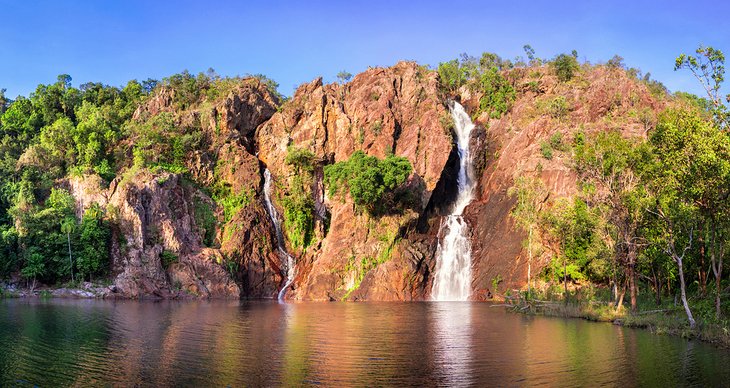
No time to visit Kakadu National Park? No worries. Litchfield offers a rewarding taste of Top End wilderness on an easy day trip from Darwin. It's only about 108 kilometers from the capital, and at 1,500 square kilometers, it's an easy park to explore. You can see most of the top attractions in a day.
Waterfalls are a highlight. Hop in a helicopter for a bird's-eye view, or float in refreshing water holes below and watch them cascade over the cliffs of the Tabletop Range.
Hiking is another top thing to do in Litchfield National Park. Disappear into lush monsoonal forest; linger at the Lost City, a cluster of huge sandstone columns; or explore a forest of magnetic termite mounds. Cultural tours round out your visit. Learn about the park's traditional owners on an Indigenous tour then, after all your outdoor adventures, relax with a picnic and a cool dip at Wangi Falls.
Want to extend your stay? No problem. Litchfield campgrounds put you in easy reach of all these wilderness treasures. Best of all, most of the top attractions of Litchfield are accessible on sealed roads with a 2WD vehicle, although you can access more remote areas of the park on the 4WD tracks.
Official site: https://nt.gov.au/parks/find-a-park/litchfield-national-park
11. Book a Darwin Fishing Charter
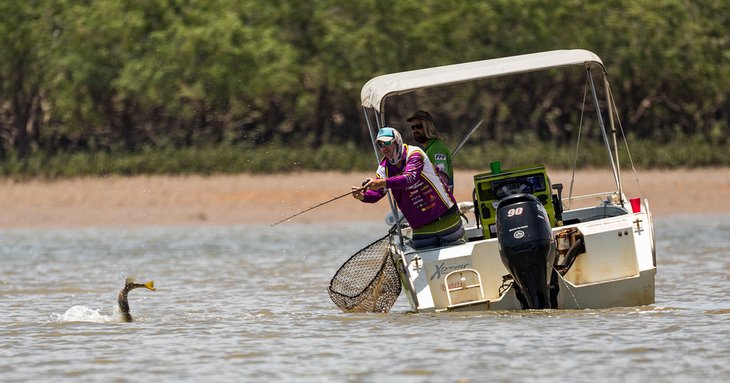
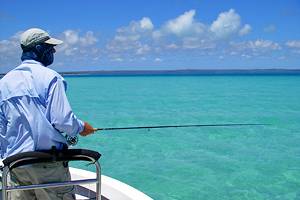
One of Australia's top fishing spots, Darwin is probably best known for its fantastic barramundi fishing. These famous fish grace the plate in some of Darwin's best restaurants, and you can hook one in the nearby coastal waters, rivers, and billabongs.
Wondering about the best time to fish for barramundi? One of the peak times is during the barra build-up, from October through December, before monsoonal rains flood the region. At this time of year, the fish school in the local billabongs and saltwater estuaries Another good time to fish is during the barra run-off, from February through May, when the barramundi cluster at the river mouths.
But Darwin fishing is not all about barramundi. When the seas are calm, deep sea fishing can be excellent, and during the dry season, from May through November, reef fishing is also popular.
Booking a trip with an expert local guide is always the best approach. Darwin Red Devil Charters and Darwin Harbour Fishing Charters both offer several charters with expert guides, ranging from half-day to full-day charters.
Alternatively, you can base yourself at a fishing lodge, or hire a boat and fish the areas independently. But beware of the "salties" (saltwater crocodiles)!
12. Royal Flying Doctor Service Darwin Tourist Facility
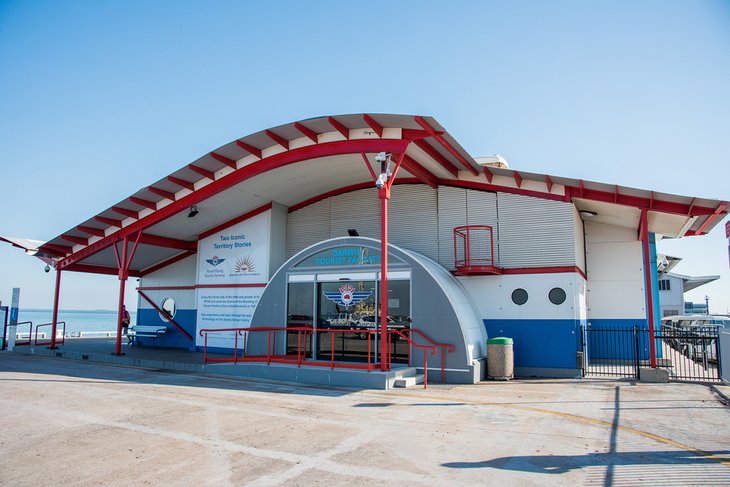
RFDS Darwin tells two important stories from Australian history through evocative interactive exhibits. It's a must-visit attraction for history buffs in the Darwin Waterfront precinct.
Ever wondered how remote Australian communities access medical care? RFDS pays tribute to the Royal Flying Doctor Service, a lifeline to the country's far-flung communities. Hologram movies, virtual reality headsets, and touch-screen TVs tell the story of how Reverend John Flynn founded the service in 1928, and you can also peek inside a decommissioned RFDS Pilatus PC 12 plane.
The Bombing of Darwin is the second facet of this worthwhile museum. On 19th February 1942, Japanese bombing raids struck the city, and the museum presents a virtual reality experience of the event.
Kids can keep busy with interactive games, and tap into their creative side with digital painting.
Address: Stokes Hill Wharf, Darwin, Northern Territory
Official site: https://www.rfdsdarwin.com.au/
13. Territory Wildlife Park & Berry Springs Nature Park
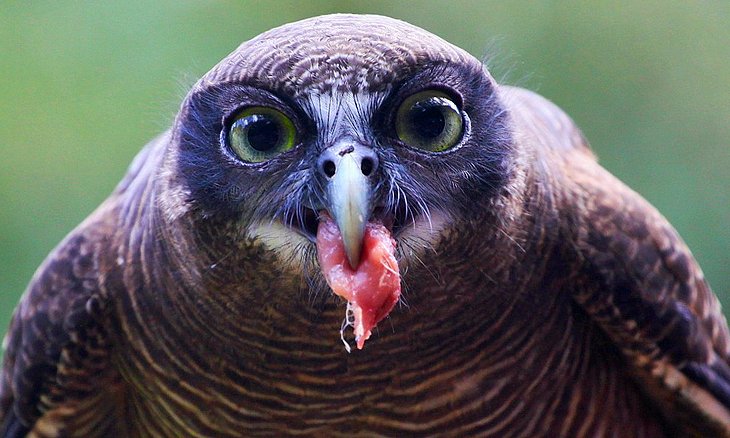
About a 45-minute drive south of Darwin, the Territory Wildlife Park is a great option for those who can't make it to the national parks in the Top End. This popular wildlife park is home to a vast array of animals from the region, living in wetland, woodland, and monsoon forest habitats.
Walking trails and free shuttles link the attractions, which include an aquarium, aviary, and nocturnal house. Highlights include the excellent raptor show, the spitting archerfish, freshwater whipray encounters, and the informative presentations by naturalists. Take plenty of water, and wear good walking shoes.
After viewing all the wildlife, stop by nearby Berry Springs Nature Park for a refreshing dip in the natural springs. If you're looking for things to do in Darwin on a budget, this is a great option – entry is free!
Address: Cox Peninsula Road, Berry Springs, Northern Territory
Official site: http://www.territorywildlifepark.com.au/
14. Day Trip to the Tiwi Islands
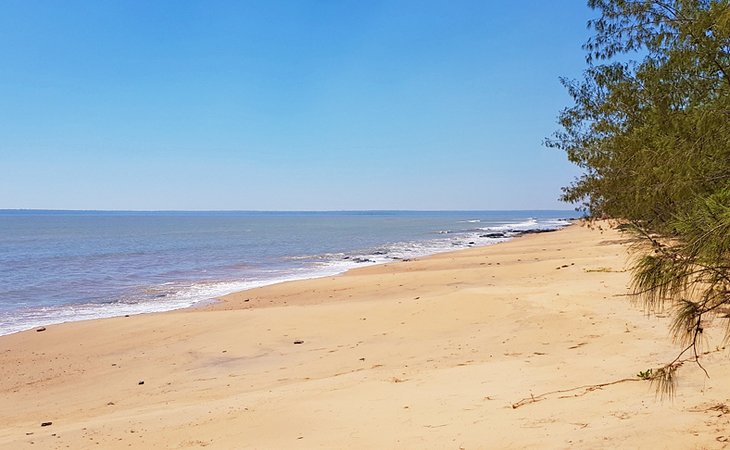
Also known as the "Islands of Smiles," the Tiwi Islands are only a 2.5-hour ferry ride away from Darwin. Friendly hospitality, fantastic fishing, vibrant art, lush rainforests, and tropical beaches are some of the highlights of a visit. It's a wonderful way to soak up a dose of unique Indigenous culture and enjoy some beautiful island scenery and sightseeing at the same time.
You can also fly to the islands in about 25 minutes, but you need to organize a permit in advance. Bathurst and Melville Islands are the only inhabited islands in the group and are the most popular day trip destinations.
The best way to visit the islands, which are a designated Aboriginal Reserve, is on a Tiwi Island Day Tour from Darwin. Under the care of an Indigenous guide, this full-day tour includes round-trip ferry from Darwin; traditional song and dance performances; art workshops such as screen-printing, painting, and carving; a museum visit; and lunch.
Fishing is another popular thing to do on the islands. If this is your main focus, you can base yourself out of one of the island lodges: Melville Island Lodge, Clearwater Island Lodge, or Johnson River Camp. Barramundi, jewfish, giant trevally, and golden snapper are among the prized species to catch.
If you're an Aussie Rules footie fan, a great time to visit is during grand final season in March, when footie fever takes over, and the entire community celebrates the sport.
15. George Brown Darwin Botanic Gardens
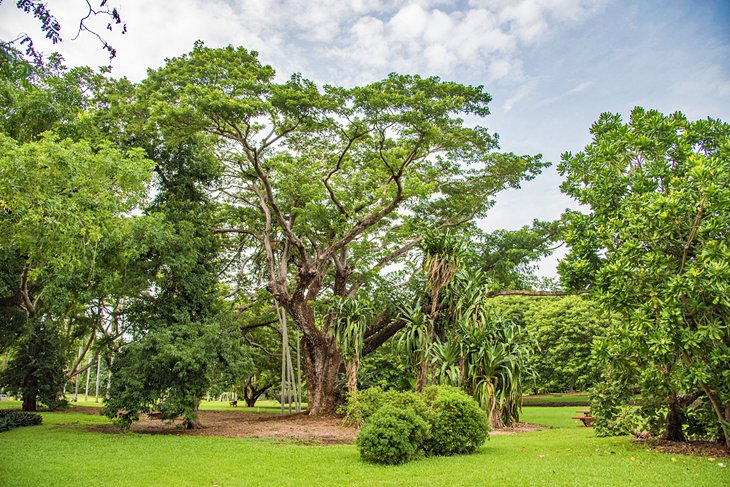
Spanning 42 hectares, the George Brown Darwin Botanic Gardens are among a few in the world where both estuary and marine plants grow naturally. Maurice Holtze, a Russian immigrant, laid out the gardens in 1891 to contain a great variety of tropical plants, both native and exotic species.
Highlights are the palms, a miniature rainforest with a waterfall and pond, the orchid garden, and the collection of baobabs in the woodland section. A network of paths connects the main gardens, and an amphitheater hosts live performances.
Address: Gardens Road, Darwin, Northern Territory
Official site: http://www.parksandwildlife.nt.gov.au/botanic
16. Darwin Aviation Museum
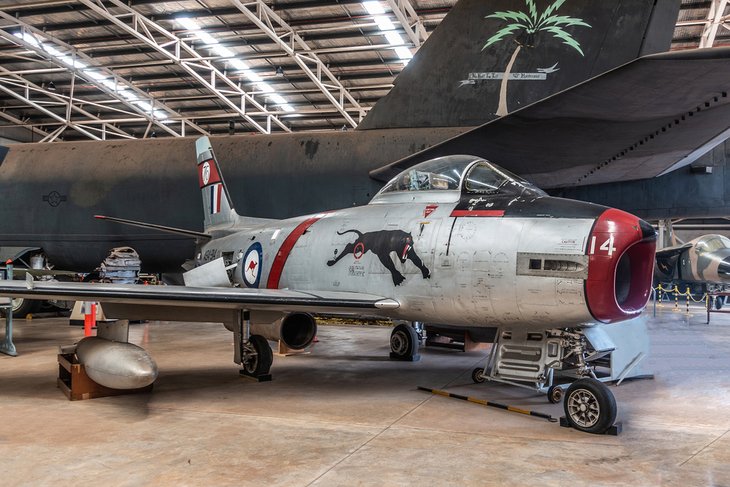
Aviation aficionados will have a field day at the Darwin Aviation Museum. Stealing the show is a huge B52 Bomber on loan from the US Air Force, one of only two in the world on public display outside the States.
Among the 19 aircraft exhibited are Sabre jets; a Spitfire replica; and helicopters, including a Royal Australian Navy Wessex helicopter that helped clean up Darwin after Cyclone Tracy. Videos on aviation and the bombing of Darwin provide a fascinating historical background.
Address: 557 Stuart Hwy, Darwin, Northern Territory
Official site: https://www.darwinaviationmuseum.com.au/
17. Feed the Fish at Aquascene
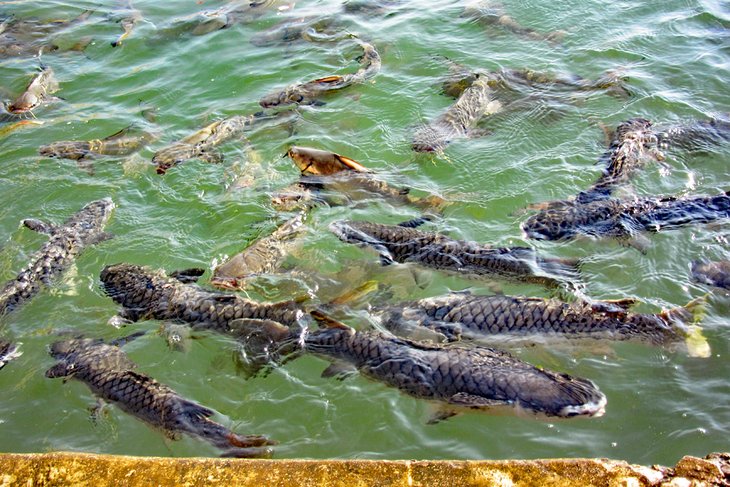
During high tide, at the north end of the Esplanade in an area called Doctors Gully, a curious thing happens. Hundreds of friendly mullet, milkfish, batfish, barramundi, and bream gather to be hand fed by squealing tourists. This phenomenon has occurred faithfully since the 1950s and is now a favorite tourist attraction called Aquascene. Children in particular love feeding these slimy critters.
Address: 28 Doctors Gully Road, Darwin, Northern Territory
Official site: http://aquascene.com.au/
18. Chinese Temple & Museum Chung Wah
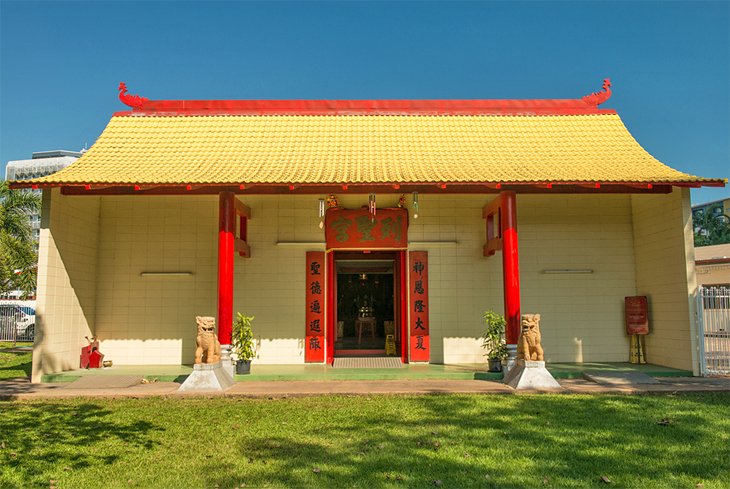
Originally built in 1887 for Darwin's sizable Chinese community, the Chinese Temple offers a colorful jolt of Chinese culture on a hot Darwin day. The present building dates from 1977 after Cyclone Tracy destroyed the previous structure, and worshipers visit here every day to practice a blend of Buddhism, Taoism, and Confucianism.
The much-loved Museum Chung Wah here illuminates more than a century of history of Chinese immigrants in the Northern Territory. Chinese immigrants came to Australia during the Gold Rush, and the museum's exhibits, including photographs, personal stories, and artifacts tell the story of their important contribution to the community. The bodhi tree on the grounds is thought to be a descendent of the tree under which Buddha attained enlightenment.
A great time to visit is during one of the Chinese Festivals or events, especially during Chinese New Year.
Address: 25 Woods Street, Darwin City, Northern Territory
Official site: https://www.chungwahnt.asn.au/
Map of Attractions & Things to Do in Darwin
Darwin, Australia - Climate Chart
| Average minimum and maximum temperatures for Darwin, Australia in °C | |||||||||||
| J | F | M | A | M | J | J | A | S | O | N | D |
| 32 25 | 31 25 | 32 25 | 33 24 | 32 22 | 31 20 | 31 19 | 31 21 | 33 23 | 33 25 | 33 26 | 33 26 |
| PlanetWare.com | |||||||||||
| Average monthly precipitation totals for Darwin, Australia in mm. | |||||||||||
| 0 | 0 | 0 | 86 | 28 | 3 | 0 | 8 | 18 | 76 | 132 | 234 |
| Average minimum and maximum temperatures for Darwin, Australia in °F | |||||||||||
| J | F | M | A | M | J | J | A | S | O | N | D |
| 89 76 | 88 76 | 89 76 | 91 75 | 89 72 | 87 67 | 86 66 | 88 69 | 90 73 | 91 77 | 91 77 | 91 77 |
| PlanetWare.com | |||||||||||
| Average monthly precipitation totals for Darwin, Australia in inches. | |||||||||||
| 0 | 0 | 0 | 3.4 | 1.1 | 0.1 | 0 | 0.3 | 0.7 | 3.0 | 5.2 | 9.2 |
More Related Articles on PlanetWare.com
Top End Nature: Darwin makes a great base for exploring some of Australia's top wilderness areas. See our article on Visiting Kakadu National Park from Darwin for ideas on things to see and do in this spectacular region of wetlands, waterfalls, woodlands, and rivers. South of here, you can explore Nitmiluk National Park, a rugged region of plunging gorges carved by the mighty Katherine River. Kayaking, hiking, and wildlife-viewing are some of the top activities here.
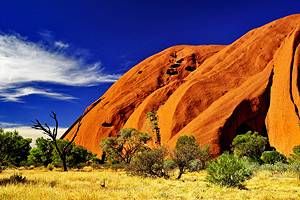
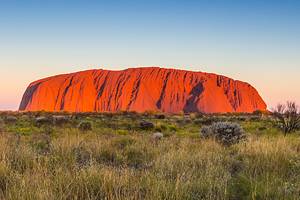
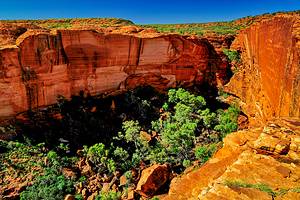
Other Outback Adventures: To see more Northern Territory attractions, venture farther south into the Red Centre, where Uluru rises from the red-earthed desert near Alice Springs. About 330 kilometers from "the Alice," you can explore Watarrka National Park. Home to Kings Canyon, the Red Centre's deepest gorge, this diverse national park offers fantastic hikes, abundant wildlife, and fascinating aboriginal heritage.