12 Top-Rated Attractions & Things to Do in Haarlem
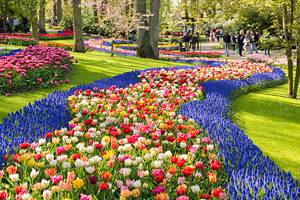
The capital of the province of Noord-Holland, Haarlem lies between Amsterdam and the North Sea. Just seven kilometers from the coast on the little River Spaarne (the source of the city's nickname of "Spaarnestad"), this typical Dutch town lies on the northern boundary of the Bollenstreek, a famous bulb-growing region that produces tulips, hyacinths, crocuses, and daffodils.
Haarlem has a long and rich history. From the 11th to 13th centuries, it was the seat of the Counts of Holland and received its municipal charter in 1245, making it the second oldest city in the Dutch heartland.
In the 17th century, the city was the scene of great artistic activity and the residence of many painters, including Frans Hals, Jacob van Ruisdael, Philips Wouwerman, and Adriaen van Ostade. This rich cultural heritage lives on to this day, and the Frans Hals Museum, one of the top places to visit in Haarlem, draws large numbers of visitors.
To learn more about this and other top tourist attractions, be sure to read through our list of the top things to do in Haarlem.
See also: Where to Stay in Haarlem
- 1. Visit St. Bavo Church: Grote Kerk (St.-Bavokerk)
- 2. Explore the Frans Hals Museum
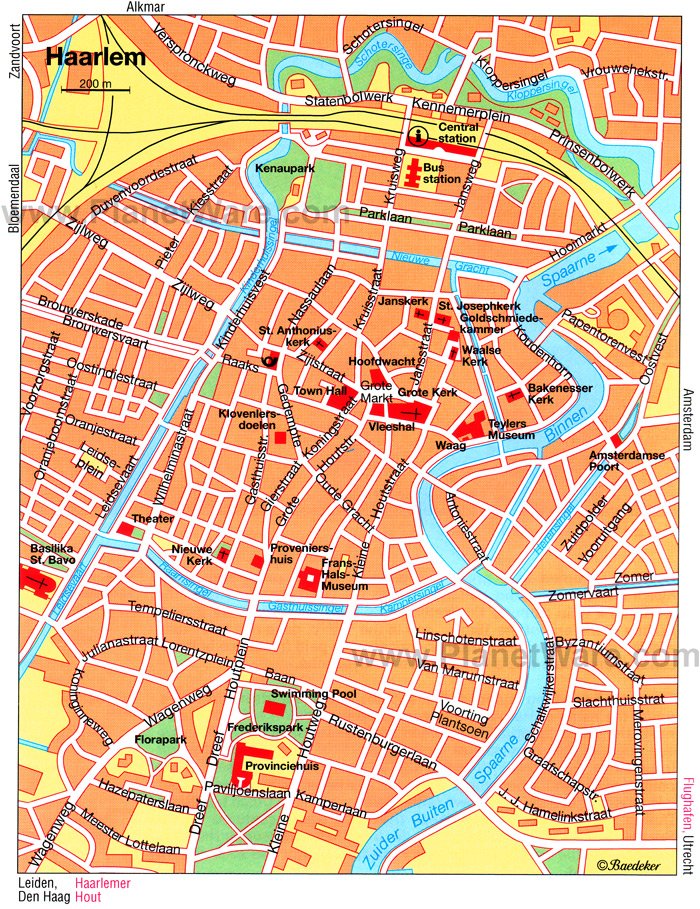
- 3. Wander around the Grote Markt and Old City
- 4. The Old City Hall
- 5. Teylers Museum
- 6. Take a Walking Tour of Amsterdamse Poort
- 7. See the Historic Old Homes on Proveniershuis
- 8. Enjoy a Recital at the Cathedral of St. Bavo
- 9. See the Tomb of William of Orange at Nieuwe Kerk
- 10. Learn the Lessons of War at the Ten Boom Museum
- 11. Take a Tour of De Adriaan Windmill
- 12. Brederode Castle
- Where to Stay in Haarlem for Sightseeing
- Haarlem, Netherlands - Climate Chart
1. Visit St. Bavo Church: Grote Kerk (St.-Bavokerk)
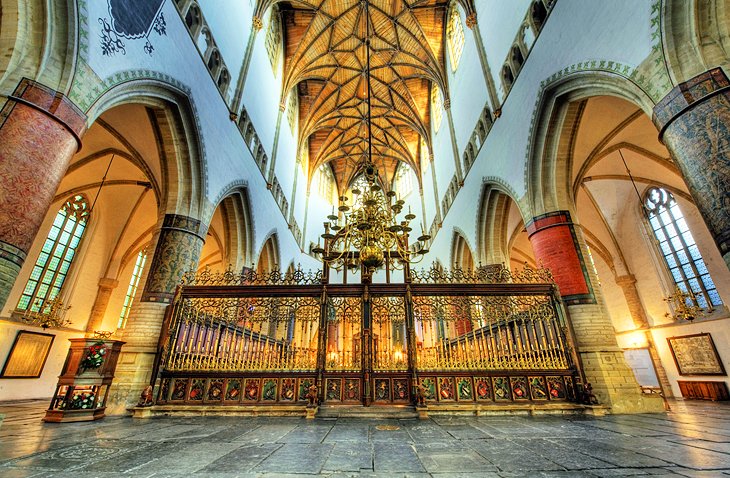
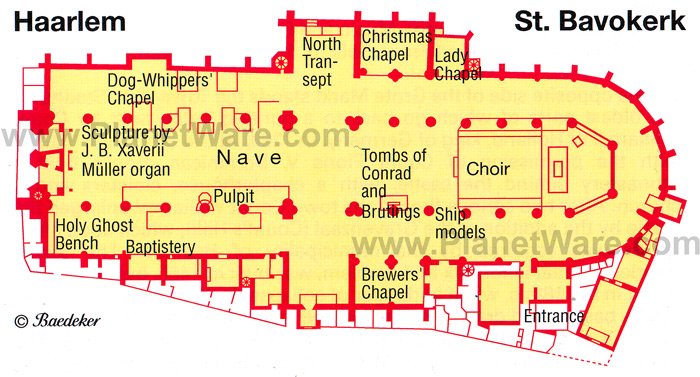
Located in the heart of the Grote Markt, Haarlem's main city square, the St. Bavo Church, or Grote Kerk (St.-Bavokerk), is the city's most striking building. This late Gothic cruciform basilica is 140 meters in length and features a slender 40-meter tower. It was started in the 14th century with the building of the choir, with the transepts bing added later in the mid-15th century.
Interior highlights are its rich furnishings dating from before the Reformation, including the choir and lectern from 1499, the beautifully carved choir-stalls from 1512, and the brass choir screen from 1509. In front of the former chapel of the Seamen's Guild hang three models of Dutch warships, while the piers under the tower and in the choir are covered with 15th- and 16th-century paintings depicting symbols of the Apostles, the guilds, and church doctrine.
The real star, however, is the church's famous Müller Organ. Considered one of the greatest such instruments in the world for its tone and decoration, this magnificent instrument was built by Christian Müller in 1738 and features three manuals, 68 stops, and 5,000 pipes, the largest of which is 10 meters long with a diameter of 40 centimeters.
Among those who have played the organ are Handel and Mozart. For an unforgettable experience, try to coincide your visit with one of the attraction's regular organ recitals.
Address: Grote Markt 22, 2011 RD Haarlem, Netherlands
Official site: www.bavo.nl/en/
2. Explore the Frans Hals Museum
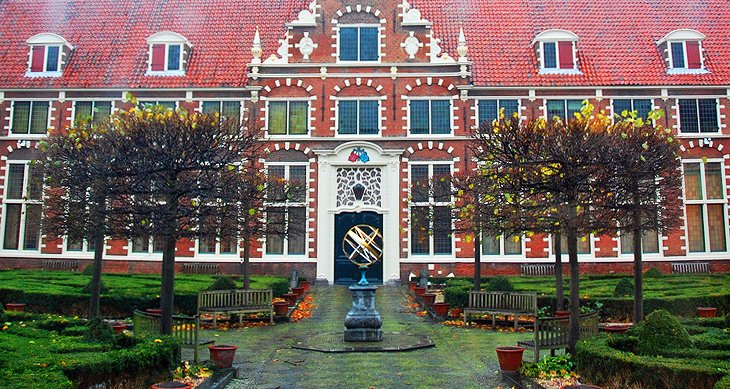
Established in 1913 in one of Haarlem's most important historic structures, the 17th-century Old Men's Almshouses (Oude Mannenhuis), the Frans Hals Museum is one of the leading art galleries in the Netherlands. Spread across two locations – the "Hof" and the "Hal" – the museum focuses on the work of the Haarlem Academy, a group of artists established by Frans Hals in the 1600s.
Today, this impressive museum is home to the world's largest collection of Hals' works, including five of his large civic guard pieces. These large canvases display his genius for capturing a moment and bringing it to life in each of the faces.
Other highlights include works related to the marksmen's guilds, companies of volunteers from the city's more prosperous citizens who would join together to form a civic militia. The collection also includes 17th-century portraits and landscapes, along with a collection of modern and contemporary art, including paintings, sculptures, textiles, ceramics, and graphic art by artists from Haarlem and the surrounding area.
A sizeable collection of contemporary art and photography can also be viewed. English language guided tours are available, and a café and shop are also located on-site.
Address: Groot Heiligland 62, 2011 ES Haarlem, Netherlands
Official site: www.franshalsmuseum.nl/en/
3. Wander around the Grote Markt and Old City
In addition to being the location of many of the city's main tourist attractions – including the Town Hall and Grote Kerk – Haarlem's historic market square (Grote Markt) is home to a number of other splendid sights, and a visit here is one of the most popular things to do.
Highlights include the Brinkmann-Passage with its shops and restaurants, and the old Guard House (Hoofdwacht), one of the oldest buildings in Haarlem and notable for its gable from 1650.
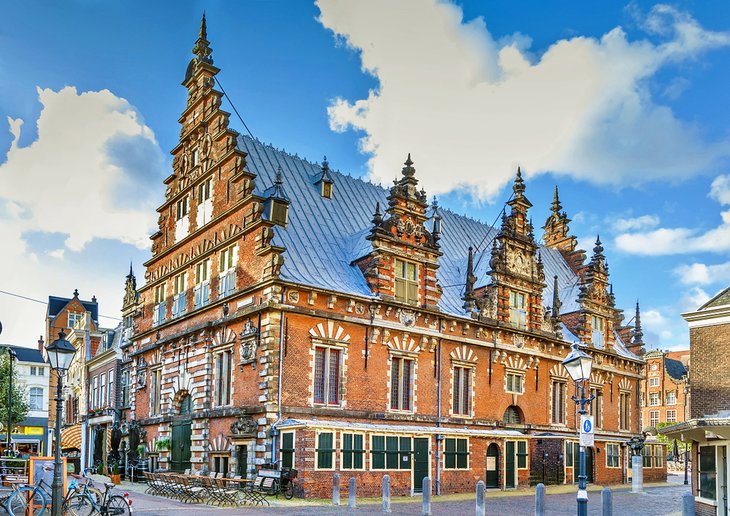
But the real gem here is the Vleeshal, or Meat Hall. Built in 1603 to house both the municipal slaughterhouse and the butchers' guild, it ranks as the finest work of the Northern Renaissance movement and has been perfectly preserved as an annex of the Frans Hals Museum.
Be sure to also pop into the basement of the Vleeshal for a look at the Archeological Museum Haarlem (Archeologisch Museum Haarlem), one of the top free things to do in Haarlem. Exhibits include artifacts (including ancient human remains) uncovered during local archaeological digs.
Also of note is the Vishal, or Fish Hall. Also occupied by the Frans Hals Museum, this building is notable for its red and white façade topped by beautiful ornamental gables.
4. The Old City Hall
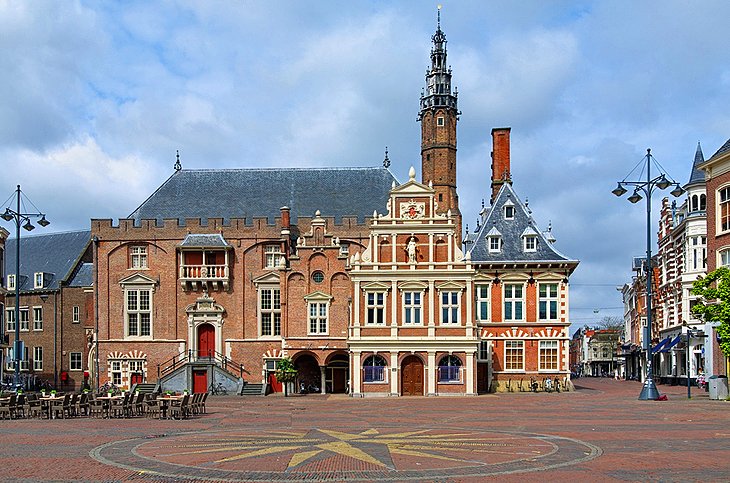
Standing opposite the Grote Kerk is the old City Hall (Stadhuis), the oldest parts of which date back to 1250. More recent features, such as the external staircase, the north wing, and the Neoclassical façade, were added in the 1600s.
The tower, Haarlem's greatest landmark and emblem, was rebuilt based on original plans in 1913 (the original bell still rings at the beginning of council meetings). The interior is also of interest and includes numerous fine paintings, relics, and mementos, along with fine wood carvings. Guided tours are available.
Address: Grote Markt 2, 2011 RD Haarlem, Netherlands
5. Teylers Museum
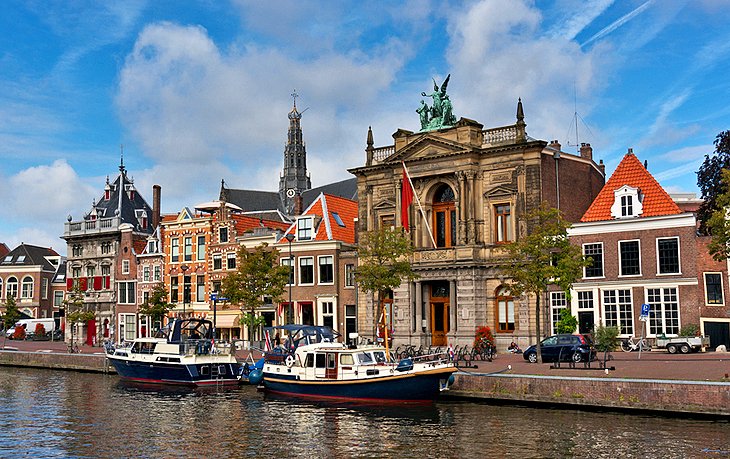
The oldest museum in the Netherlands, Teylers Museum was founded in 1778 after its namesake, a wealthy cloth and silk dealer, bequeathed his fortune to build an establishment to illustrate the development of art and science. One of only four such museums in Europe – its contemporaries are in Oxford, London, and Paris – the museum includes an extensive art collection, with numerous drawings and pictures by early Dutch masters.
Other important works include figure studies for the Sistine Chapel by Michelangelo; drawings by Raphael; and outstanding collections of scientific instruments, minerals, and fossils. Of particular interest is the exquisite Oval Room, designed as a place for research and study and where scientific experiments were once conducted.
English language guided tours are available. Also worth visiting is the adjoining Weigh House (Waag), erected in 1598 and in use until 1915.
Address: Spaarne 16, 2011 CH Haarlem, Netherlands
Official site: www.teylersmuseum.nl/en
6. Take a Walking Tour of Amsterdamse Poort
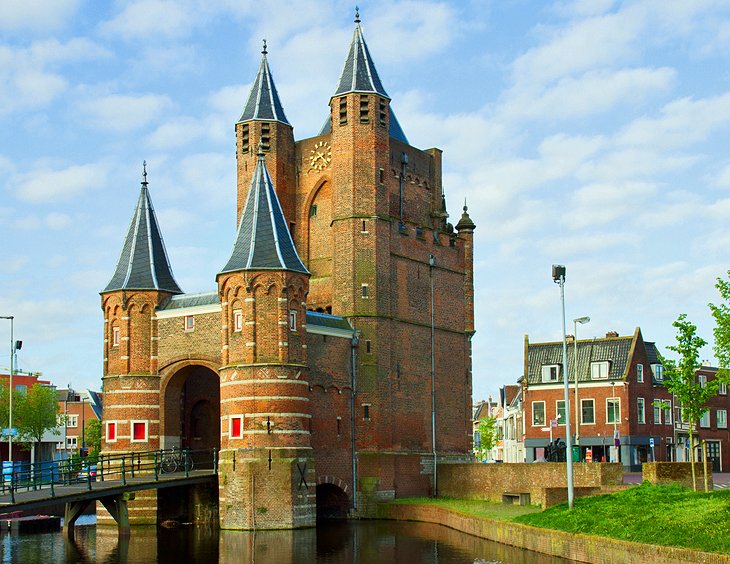
One of the most picturesque corners of Haarlem lies around the Bakenessergracht, home to some of the city's oldest and most spectacular buildings. Especially pretty is Hofje van Bakenes, a lovely little courtyard dating from 1395 that's famous for its cryptic rhyme (look for the plaque above the entrance).
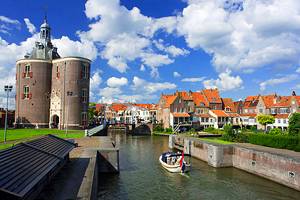
At the end of the Bakenessergracht is the River Binnen Spaarne, crossed here via an attractive old drawbridge, and from which you get a great view of the Amsterdamse Poort, Haarlem's only surviving city gate. Built in the early 1400s and a national monument, it's flanked by two octagonal towers and two round towers, as well as remnants of the old city walls.
Address: Amsterdamsevaart, Haarlem, Netherlands
7. See the Historic Old Homes on Proveniershuis
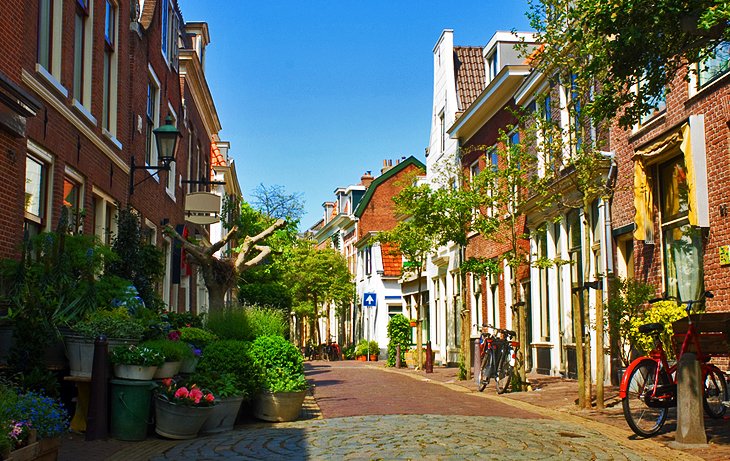
Located on Grote Houtstraat, Haarlem's main shopping street, Proveniershuis is a collection of fine old buildings dating from the 17th and 18th centuries that really should be included on your list of places to visit. Historically, this attractive area has housed a cross-section of city folk, from nuns and priests, to merchants and retired guildsmen.
Today, it's a splendid area to stroll around as you soak up the atmosphere and explore the side streets that peel off into the city's many quiet nooks and crannies. Highlights include seeing the numerous old almshouses where the poorer citizens once lived.
Address: Grote Houtstraat, Haarlem, Netherlands
8. Enjoy a Recital at the Cathedral of St. Bavo
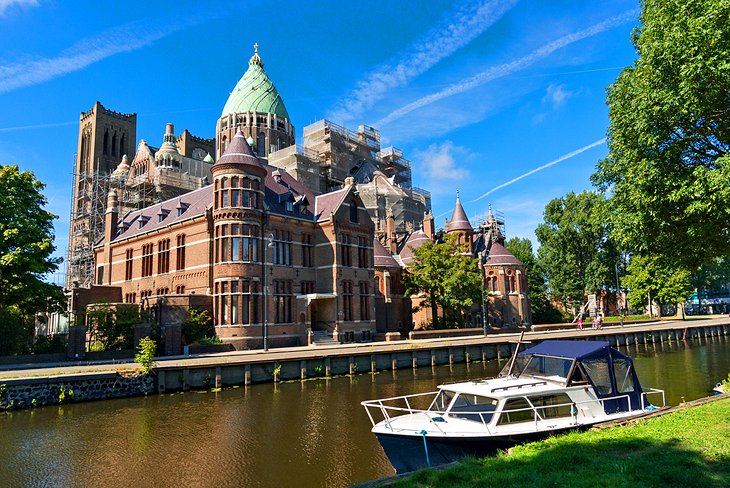
The Roman Catholic Cathedral of St. Bavo is a relatively recent three-aisle cruciform basilica built between 1895 and 1906. Some 100 meters long, 42 meters wide, and 60 meters high, it's a good example of the transition in church architecture from traditional to more modern designs.
Highlights include the Cathedral Treasury with its valuable silver liturgical utensils and a reliquary with the remains of St. Bavo. Other notable features are the fine stained glass, as well as sculptures and paintings by well-known Dutch artists.
Also of note is the Willibrord Organ, built in 1923 with four manuals and 75 stops. Be sure to check the schedule for periodic organ recitals.
Address: Leidsevaart 146, 2014 HE Haarlem, Netherlands
9. See the Tomb of William of Orange at Nieuwe Kerk
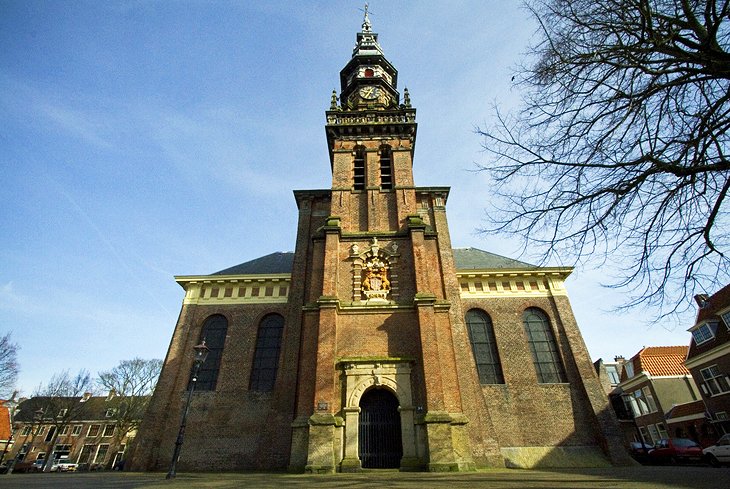
Haarlem's New Church (Nieuwe Kerk) was built between 1645 and 1649, with a graceful Renaissance tower and clock dating from 1795. Inside the church, be sure to notice the magnificent Baroque tomb of William of Orange, made by Hendrick and Pieter de Keyser in 1614.
Also of importance in the adjoining churchyard are the graves of painters Jacob van Ruisdael and Philips Wouwerman.
Address: Nieuwe Kerksplein 36, 2011 ZT Haarlem, Netherlands
10. Learn the Lessons of War at the Ten Boom Museum
Although one of the city's smallest attractions, the Ten Boom Museum is well worth a stop when visiting Haarlem. Dedicated to the life of author Corrie Ten Boom, it's reminiscent of the Anne Frank House in Amsterdam and portrays a typical small home that played an important role in hiding persecuted Jews during WWII.
The focus of the museum – located in the watch shop her family owned – is Ten Boom's bestselling book, The Hiding Place, which vividly portrays the dangers involved in providing a safe haven for refugees. Tragically, the family were found out, and most were killed before the end of the war. English language guided tours are available.
Address: Centrum, 2002 CE Haarlem, Netherlands
Official site: www.corrietenboom.com/en/home
11. Take a Tour of De Adriaan Windmill
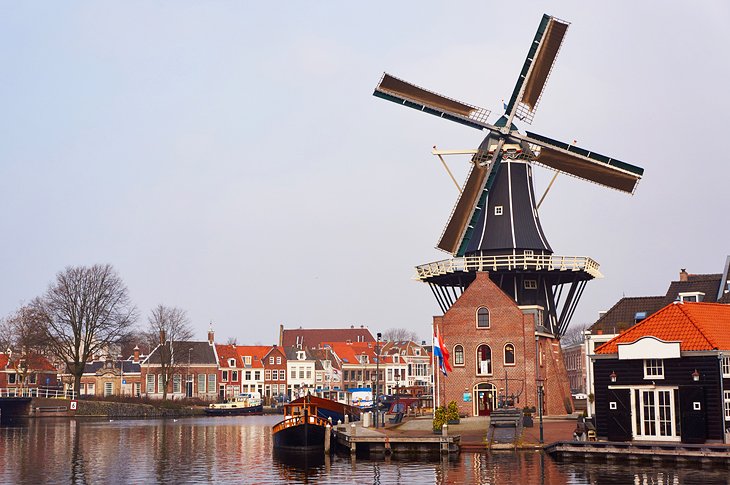
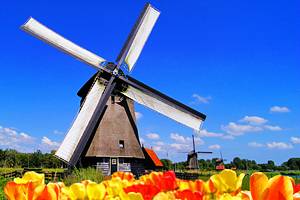
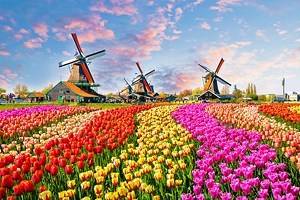
Standing on the banks of the river Spaarne, the De Adriaan Wiindmill (Molen de Adriaan) is a faithful replica of the original 1778 mill built on the foundations of an ancient defensive tower. The original, which ground tufa to a powder used in cement making and was later used to grind tobacco and then corn, burned in 1932.
On a 45-minute tour, you can learn more about the mill's – and Haarlem's – history and see how a windmill operates. From the viewing platform, you can enjoy good views of the river and city.
Address: Papentorenvest 1, Haarlem, Netherlands
Official site: www.molenadriaan.nl/en
12. Brederode Castle
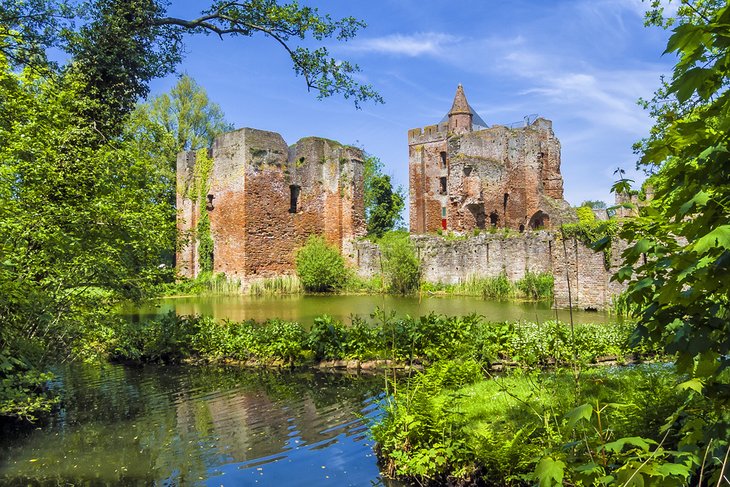
Though now largely ruins, Brederode Castle (Kasteel Brederode) offers a superb look at life in The Netherlands during the 13th century. Noted as the country's first national monument, it's located just a few minutes' drive (or bus ride) from downtown Haarlem in Santpoort-Zuid.
There's no shortage of fun things to see and do here, particularly for those traveling with kids. In addition to its remarkably pretty setting – the grounds even feature a moat and bridge – staff and volunteers regularly hold costumed events with period themes, such as markets and musical performances.
These same "living history" enactors also provide fascinating guided tours in character. Frequent exhibits geared specifically for children include Playmobil toy displays
Address: Velserenderlaan 2, 2082 LA Santpoort-Zuid, Netherlands
Official site: https://ruinevanbrederode.nl/en/
Where to Stay in Haarlem for Sightseeing
We recommend these convenient hotels in Haarlem, close to top attractions like the Grote Kerk and the Frans Hals Museum:
Luxury Hotels:
- A good choice of luxury accommodations in Haarlem, Carlton Square Hotel is centrally located near the city's top attractions and shopping, and is across the road from a pretty park. This 4-star hotel features stylish design in its spacious rooms, which come with mini-fridges, free Wi-Fi, and balconies. Underground parking is available.
- Classy yet quirky was obviously on the minds of the designers of excellent Boutiquehotel Staats. Located on a quiet, tree-lined avenue close to the Frans Hals Museum, each room is individually decorated, and features an interesting and attractive mix of antique and modern furniture. If available, request one of the larger suites, which come with upgraded bathrooms. An on-site restaurant serves a good breakfast, too.
- The upscale Koninginn is certainly worth booking. Situated in an attractive old building dating from the 1800s – and on a charming cobbled street – this chic boutique hotel features comfortable rooms and suites with heated floors, kitchenettes, separate living areas, and balconies.
Mid-Range Hotels:
- Hotel Lion D'or is perfect for those seeking mid-range pricing near the train and bus station in Haarlem, and has been welcoming guests since 1839. In addition to featuring bright, contemporary decor; friendly multi-lingual staff; and a comfortable lounge, it also offers clean, comfortable rooms with free Wi-Fi and Nespresso machines.
- At the upper end of this category, the Amrath Grand Hotel Frans Hals offers surprisingly affordable rates for so luxurious a hotel. Set in a fantastic central location close to attractions and top restaurants, it's known for its wonderful service, central spiral staircase, and 82 well-appointed rooms. While there's no on-site restaurant, breakfast is available.
- It doesn't get much more central than the Haarlem Hotel Suites. Just three minutes' stroll away from the Teylers Museum, its spacious suites are great for families, with the largest featuring kitchens and terraces. Breakfasts are available, and can be delivered to your room.
Budget Hotels:
- A popular choice of affordable accommodations in Haarlem, the Ambassador City Centre Hotel features budget-friendly rates in a central location opposite St. Bavo church. If available, be sure to request one of the uniquely decorated rooms facing the church – it really is a memorable experience. The hotel lobby is also nice to relax in and is filled with antique clocks.
- Perfect for backpackers, Stayokay Haarlem features hostel-style rooms in a good location close to public transport. Dorms are mixed, and come with linens and shared bathrooms. Amenities consist of a good breakfast buffet, a dining room, a terrace with a fire pit, laundry facilities, parking, and bike rentals.
- The quirkily named Hello I'm Local Boutique Hostel features a mix of dorm-style accommodations and private rooms. Linens and towels are provided, and private rooms come with their own showers and toilets.
Haarlem, Netherlands - Climate Chart
| Average minimum and maximum temperatures for Haarlem, Netherlands in °C | |||||||||||
| J | F | M | A | M | J | J | A | S | O | N | D |
| 6 1 | 6 1 | 9 3 | 12 4 | 16 8 | 19 11 | 21 13 | 21 13 | 18 11 | 14 8 | 9 4 | 7 2 |
| PlanetWare.com | |||||||||||
| Average minimum and maximum temperatures for Haarlem, Netherlands in °F | |||||||||||
| J | F | M | A | M | J | J | A | S | O | N | D |
| 42 34 | 42 33 | 48 37 | 53 39 | 61 46 | 66 52 | 69 56 | 70 55 | 64 51 | 57 46 | 49 40 | 44 36 |
| PlanetWare.com | |||||||||||
More Related Articles on PlanetWare.com
Fun Places to Visit: If you include the city of Amsterdam in your Netherlands itinerary (and you really should!), be sure to add important cultural institutions such as the Rijksmuseum to your to-do list, home to classic artworks by Rembrandt. You can learn more about this famous Dutch painter by visiting the town of Leiden, his birthplace and the location of the National Museum of Antiquities. The many tourist sites of The Hague are also worth visiting and include fine old palaces now used for administrative and government purposes.

The Netherlands Travel Ideas: If you've ever wanted to learn more about Delftware, that famous blue and white Dutch pottery, you'll want to visit the historic town of Delft, where this popular pottery is still manufactured today (factory tours are available). The second largest city in the Netherlands, Rotterdam offers plenty of fun things to do, from its top-rated Maritime Museum in the old harbor area to its many art galleries. At the other end of the scale, the smaller city of Breda is worth visiting for its splendid 13th-century Grote Kerk and Breda Castle.