

10 Netherlands Tourist Attractions Worth Visiting On Your First Trip
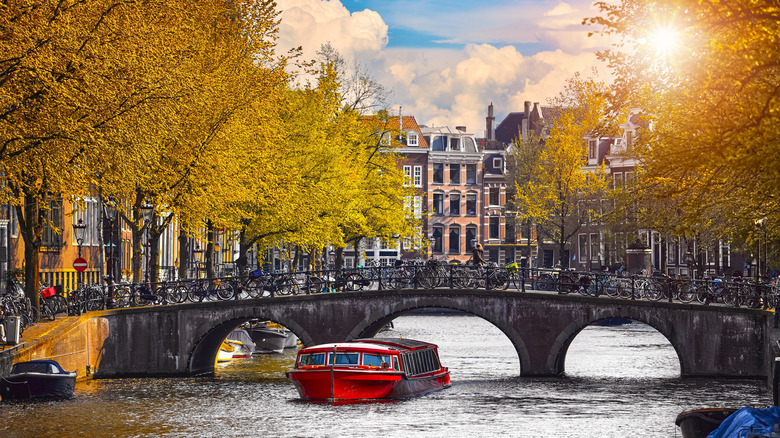
For centuries, The Netherlands has been a cultural powerhouse of Western Europe. When thinking of this historic country, images that come to mind might include tulips, canals, windmills, wooden clogs, cheese, and renowned Dutch paintings. The Netherlands is known for a lot, which makes it a fantastic place to visit for incredible food, scenery, and cultural experiences.
The country is sometimes mistakenly referred to as Holland, although Holland specifically describes two of the 12 provinces that comprise the Netherlands. North of Belgium and west of Germany, the nation is defined by its location on the North Sea coastline and numerous port cities, which saw enormous commercial success during the late 16th and 17th centuries, known as the Dutch Golden Age. It's home to several historic cities, including The Hague, Utrecht, Rotterdam, Maastricht, Groningen, and of course, its capital city, Amsterdam. You'll find countless fishing communities, idyllic agricultural regions, and picturesque lakes — much of it below sea level, very flat, and protected by an elaborate water management system.
Unfortunately, Amsterdam is one of Europe's most popular travel destinations where overtourism has become a big problem. The city welcomes more than 20 million visitors each year, and while there are some amazing things to see in the capital, the Netherlands boasts so much more, too. Here are 10 attractions perfect for your first visit to this extraordinary country.
Cruise along Amsterdam's canals
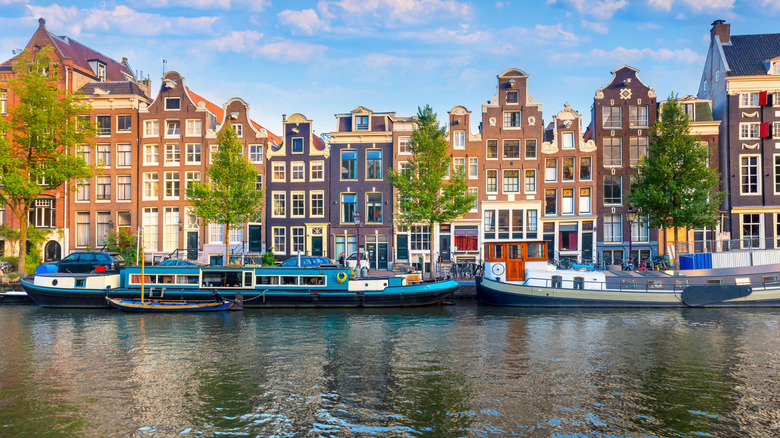
Amsterdam is one of Europe's most-visited cities, and it's easy to see why. Famous for its canals, world-renowned museums, red-light district, architectural heritage, and "coffeeshops," a fun way to experience the city like a local, Amsterdam is a delight. Despite its overtourism woes, it remains an eminently attractive place to visit and explore on foot, bicycle, tram, or canal tour. Check out the historic Jordaan, originally built to house working class families in the 17th century. Its architecture is iconic and endlessly charming, complemented by moored boats, narrow streets, quaint shops, and interesting cafes. Experience life in the canals at the Amsterdam House Boat Museum, located on the Prinsengracht.
Amsterdam's canals have been designated a UNESCO World Heritage Site, and for good reason — they're not only beautiful and rich with history, but also an astonishing feat of engineering. Cafes along the water's edge all throughout the city center grant lovely views of boats passing by. On a nice day, you can rent a pedal boat or paddleboard to experience the water firsthand. If you prefer the comforts of a cruise, numerous companies offer canal tours that often include drinks and nibbles along the way. Flagship Amsterdam, for example, offers luxury cruises that take you past historical sites while a host shares facts and stories about the city. Then, dive into the Grachtenmuseum, located inside a historic home on one of the city's most significant canals, the Herengracht.
Explore unique art museums in The Hague
As the judicial and administrative capital of the Netherlands, The Hague is perhaps best known as the home of the International Court of Justice. Here, you can visit a relatively unassuming monument surrounded by stones from all over the world, which holds the World Peace Flame that has burned continuously since 2002. It's also a fabulous alternative to the crowds of Amsterdam, where you can enjoy numerous canals, peaceful parks, and gorgeous architecture. It's a mere 3 miles from the scenic Dutch beach town of Scheveningen and is easily accessible by tram. The Hague is also home to a wealth of wonderful museums. While in Scheveningen, don't miss the Museum Beelden aan Zee with its remarkable sculpture displays.
Also in Scheveningen, a historic museum called Panorama Mesdag combines a 19th-century installation with exhibitions by contemporary artists. Its main focus is a 360-degree painting by Dutch artist Hendrik Willem Mesdag of the Scheveningen seaside, completed in 1881. Before TV or motion pictures, panoramas were popular immersive tourist attractions, and Panorama Mesdag is a rare example that still sits in its original spot.
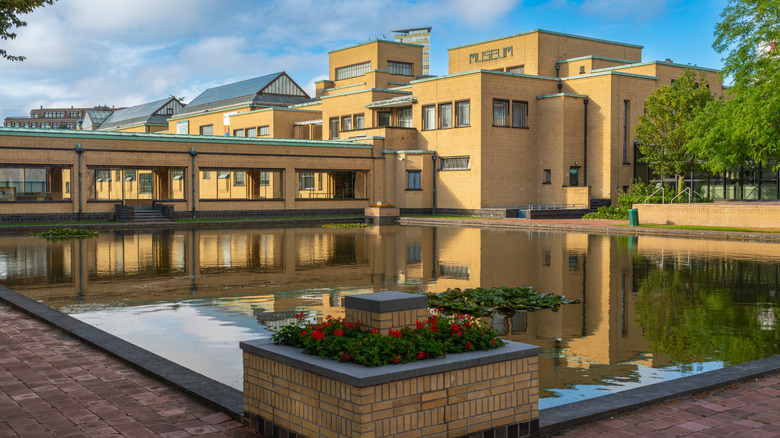
Kunstmuseum Den Haag is a landmark museum situated within a marvel of Art Deco design, conceived by architect H.P. Berlage. Rotating exhibitions complement a permanent collection of more than 160,000 pieces. If earlier art history is more your style, don't miss the Mauritshuis, home to incredible masterworks including Johannes Vermeer's "Girl with a Pearl Earring."
Shop and dine in Oude Haven, Rotterdam
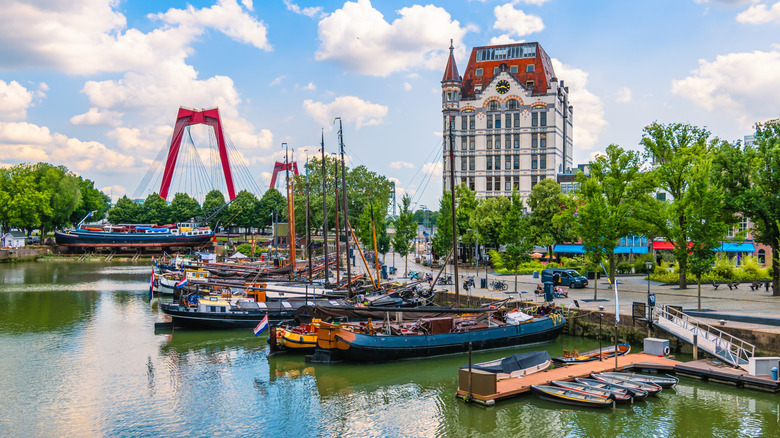
If charming historic architecture is what you're after, Rotterdam probably wouldn't top your list of the most picturesque places to visit in the Netherlands. Much of the city was destroyed in bombing raids during World War II, from which sprung modern architecture that makes this city a trendy and urban commercial hub. To get a taste of Rotterdam's avant-garde vibe, head to the Kijk-Kubus Museum-house, also known as the Cube Houses, to see 1980s postmodernism with flair. These form a row in Oude Haven, or the Old Harbor, where past meets present in a unique mash-up of architectural styles.
Built in 1350, Oude Haven will transport you through time in an area that has been connected to maritime life for centuries. You'll see vintage ships moored here as part of the Maritime Museum, glimpsing different eras of Rotterdam's port history. A short walk will take you to the enormous, modern Markthal, where you can sample international flavors at more than 100 stalls.
Another feature of this area is the ornate Witte Huis, or White House, which was Europe's first skyscraper when it was constructed in 1898. Dine with a view of this landmark and the harbor at Café Vader Kleinjan, which serves delicious sandwiches and craft beverages for lunch or dinner. For an upscale indulgence, check out Restaurant On Cru, which is known for its artful tasting menu.
See the Kinderdijk windmills
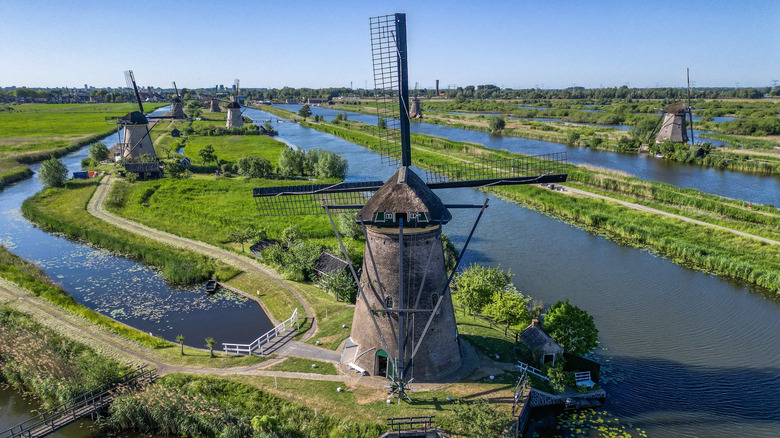
Just over 10 miles east of central Rotterdam, you'll discover a "world of windmills, water and, willpower," as the Kinderdijk World Heritage Foundation describes its unique historic site. A UNESCO World Heritage site, the Kinderdijk-Elshout area is home to a landscape that has been engineered to keep the land dry since the medieval period — a process that continues today. Perhaps the most iconic facet of the landscape is the series of 19 windmills that line canals amid the polders, lowland areas that are consistently drained by the mills, which redirect excess water to the nearby river. Kinderdijk also happens to be among the most welcoming summer destinations for LGBTQ+ travelers.
Two of the mills are open for visits: the Nederwaard Museum Mill, built in 1738, and Blokweer Museum Mill, which is by far the oldest in Kinderdijk, built in 1630. Check out the windmills' fascinating mechanics at the Wisboom pumping station and learn about its history at the De Fabriek pumping station. Of course, no visit would be complete without a boat tour, and a voyage on The Hopper includes stops at both windmill museums. For a memorable overnight stay, climb into an actual windmill in the Alblasserwaard region. Boutique Hotel Jan van Arkel and Getaway de Bonk Molen offer modern yet cozy accommodations inside authentic windmills.
Slow down in the villages of IJsselmeer (Zuiderzee)
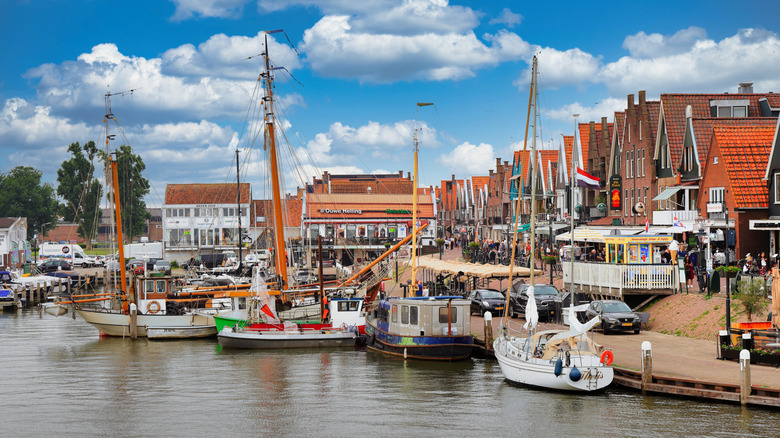
If there's one thing that defines Dutch ingenuity over the centuries, it's the ability to shape the land to accommodate agriculture and transform the coast into an economic powerhouse. Like the polders of Kinderdijk and the canals of cities like Rotterdam, Amsterdam, and Utrecht, IJsselmeer is a phenomenal example of water management. Once part of the Zuiderzee — an inlet connected to the Wadden Sea — it was transformed into a giant lake as part of a colossal engineering project. IJsselmeer's saltwater composition was even changed to freshwater and now adjoins Markermeer, another freshwater reservoir that forms part of Nieuw Land National Park.
Drive, bike, or sail around this bucolic area, checking out quaint villages like Marken, Edam, and Volendam, which Rick Steves counts among the best day trips from Amsterdam. Edam might ring a bell for its eponymous cheese, and on Wednesdays in July and August, you can visit a traditional cheese market to see countless wheels of the good stuff.
Volendam is sometimes referred to as the "Pearl of the Zuiderzee," beloved as a fishing village with a history that goes back to the 14th century. Walk along the picturesque promenade, where you can visit quaint shops and grab fresh seafood from a local vendor. Stop by Paviljoen Smit Bokkum for views of the water from the patio on a sunny day and sample their house special: smoked eel on toast.
Visit the Anne Frank House in Amsterdam
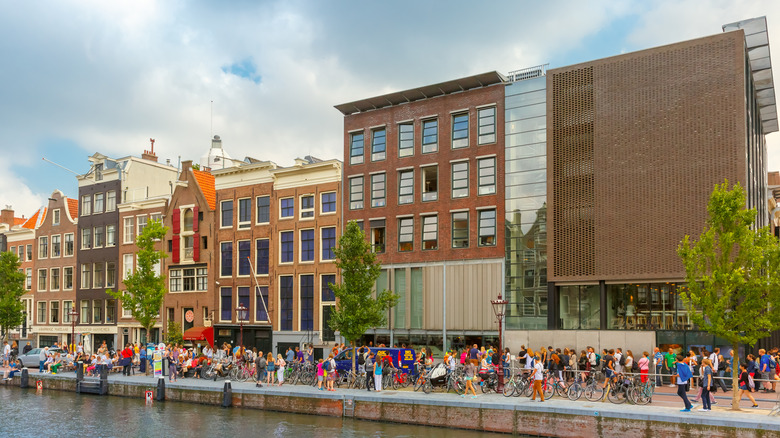
The story of Anne Frank is one of the most enduring and heartbreaking accounts of the Holocaust. Born in Frankfurt, Germany, Frank and her family immigrated to Amsterdam in 1934, a year after the Nazi regime rose to power in Germany. World War II officially began in 1939 with Hitler's invasion of Poland, and in 1940, the Netherlands fell under occupation. The family went into hiding in 1942, not long after Anne's 13th birthday, when she received her now-famous diary. The diary was later published by Anne Frank's father, Otto Frank, the only family member who survived after they were discovered and deported to concentration camps.
The Anne Frank House museum — located in the actual building where she and her family went into hiding — is an immersive and emotional journey through Anne Frank's lens. Visit several rooms in the house, now full of photographs, artifacts, and quotes. You can also se her original red plaid diary on display. Tickets can be booked up to six weeks in advance, with adult admission priced at €16, or roughly $18.55 USD, at the time of writing.
Experience tulip mania at Keukenhof
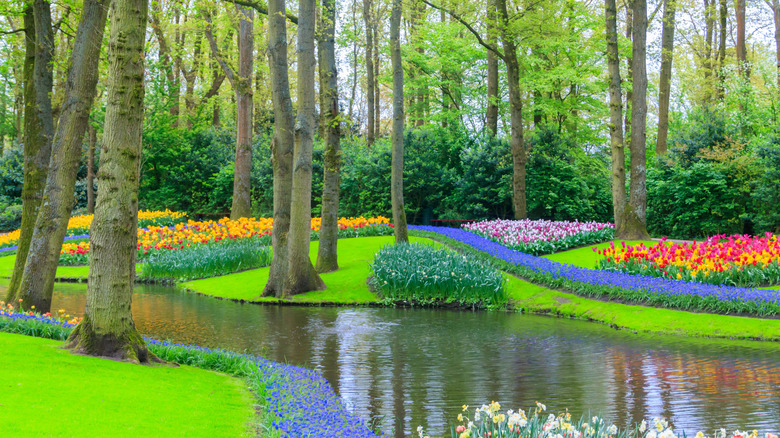
About a 40-minute drive from both Amsterdam and The Hague, a springtime wonderland awaits at Keukenhof. Open from mid-March to early May, this spectacular garden teems with vibrant blooming bulbs, starting with daffodils and hyacinths in the early part of the season, then exploding with tulips later on. The park boasts around 7 million flowers total. A windmill, water features, creative plantings, and dining options make for a great day out — you're also welcome to pack your own picnic. Tickets for the upcoming season go on sale in October, and be sure to book your visit early in advance to reserve your preferred time slot.
Rent a bike to explore Keukenhof on two wheels, or book a 45-minute tour on an electric "whisper boat" that includes an audio guide with insights about the region's famous flowers. The only drawback is its short opening season, which means that the garden can get pretty crowded. The gardens had 1.4 million visitors in 2024 — an average of about 26,000 per day. To escape the crowds and still find flowers aplenty, head to Goeree-Overflakkee, one of Europe's most beautiful destinations covered in vibrant tulips every spring, located south of Rotterdam.
Relish great art in Amsterdam's museums
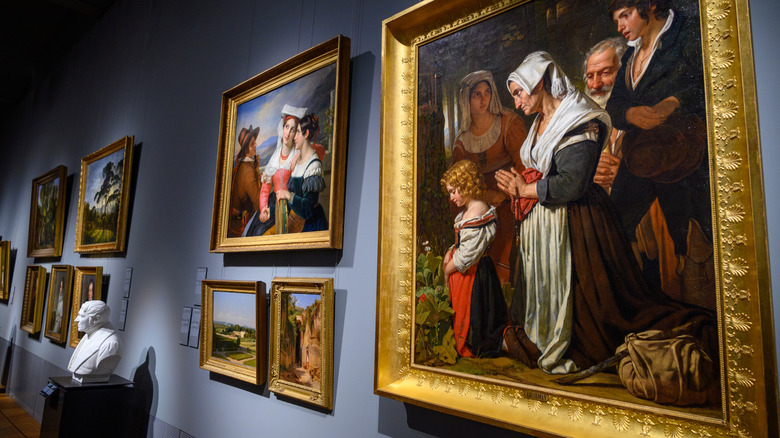
Whether depicting landscapes, historical scenes, portraits, or still lifes, Dutch artists essentially dominated the art world in the 17th century. Think visionaries like Rembrandt van Rijn, Rachel Ruysch, Johannes Vermeer, Frans Hals, and Jan Steen, among many others. Then, there's Vincent van Gogh and Piet Mondrian, the latter famous for his modernist grid compositions featuring squares filled with primary colors. Luckily, many of these masterpieces can be seen in museums around the Netherlands, with a handful of showstoppers all located in Amsterdam.
The Rijksmuseum forms the sprawling national museum of the Netherlands, with rotating exhibitions and a huge collection of more than 840,000 artworks and historical objects that span eight centuries. Explore paintings by Rembrandt, like his seminal "The Night Watch," or view spectacular examples of Delftware and decorative arts. If you're really big on Rembrandt, don't miss a visit to his house museum, glimpsing the home and studio where he worked from 1639 to 1658. The Rijksmuseum is also home to works by van Gogh, but there's also an entire museum — aptly named The Van Gogh Museum — dedicated to the artist, where you can find some of his best-known paintings like "Sunflowers" and "The Bedroom."
If design or contemporary art is more to your taste, don't miss the Stedelijk Museum, which features a rich program of temporary exhibitions along with a permanent collection. The relatively new Moco Museum, which opened in 2016, highlights modern and pop art along with cutting-edge and immersive digital experiences.
Bike around Utrecht and De Haar Castle
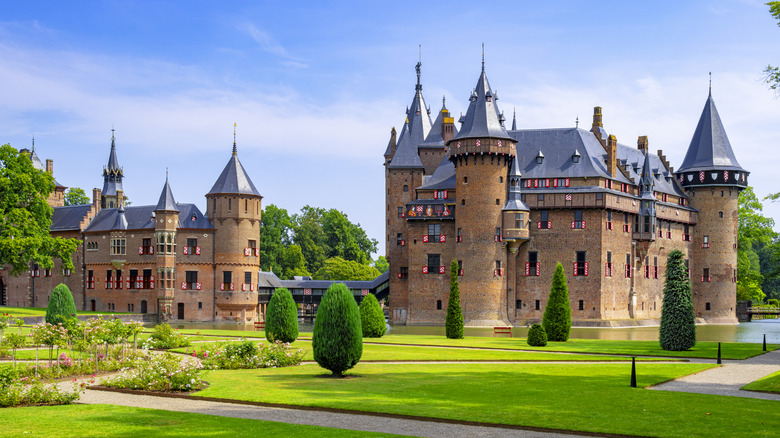
Utrecht is an attractive destination almost equidistant from both Rotterdam and Amsterdam, though farther inland. The charming canals, trendy neighborhoods, and attractive historic buildings of this lesser-known and just-as-pretty canal city are a draw for tourists, with the added bonus of being way less crowded than Amsterdam. Plus, Utrecht has been referred to as the most cycle-friendly city in the Netherlands. Start in Oudegracht, where you'll find numerous cafes, boutiques, and beautiful places to stop and snap a photo. There are actually two levels to the canal pathways in this part of town. Shops and apartments are located at street level, and unique gems and artistic destinations await at the canal level. Soaring overhead is the Dom Tower, the tallest church spire in the country at 367 feet tall.
Take your Utrecht adventure to the next level with a boat tour on the canal or a rental bike to cruise along the city's streets, which are well-designed for cyclists. Or, head out on a little excursion to De Haar Castle. Situated roughly 8 miles outside of the city, De Haar Castle can be reached by bike in an hour or less, but chances are you'll want to stop often to take photos. Pack a lunch and make your way to the regal parkland, where you'll find the romantic turreted building surrounded by nature. Adult admission to the castle is €20, or around $23.18 USD, at the time of writing. Alternatively, a visit to the park costs €8, or $9.27 USD per adult. There are also two spots to grab a bite on the grounds: Laverie Restaurant and Tuynhuis Gabrielle.
See the home of Royal Delft
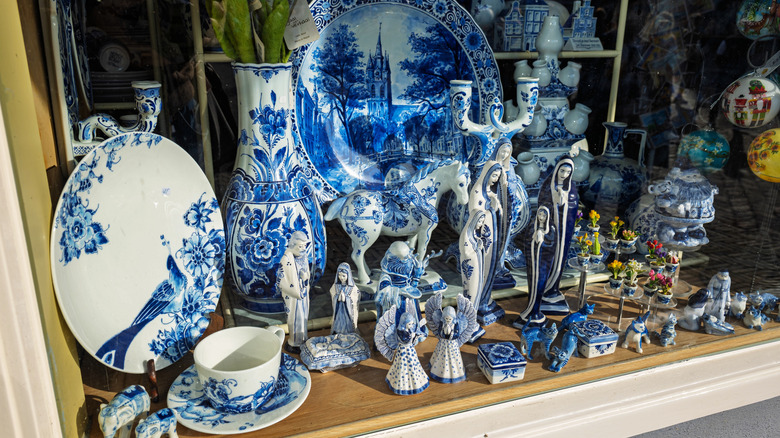
Originally inspired by Chinese blue-on-white porcelain designs imported to Europe around the turn of the 16th century, Dutch ceramic producers set out to create their own versions of this decorative glazed pottery as demand soared. By the mid-17th century, more than 30 factories dotted the city of Delft and surrounding towns, and the pottery became known as Delftware. Today, only one factory remains: Royal Delft. It's now a museum where you can view a vast collection of Delftware, participate in a workshop to make your own ceramic creation, enjoy afternoon tea at the on-site restaurant, and lead the kids on a scavenger hunt. Of course, a visit wouldn't be complete without a trip to the flagship store, where you can purchase authentic Royal Delft pottery and gifts to take with you. Audio guides are included with the price of admission, and an in-person guided tour may also be available, which you can book online in advance.
The city of Delft is a worthwhile visit unto itself, with postcard-worthy canals and plenty of historical architecture. After your visit to the museum, hop aboard the Delft Blue Line, a canal boat that provides trips to the city center every afternoon from April to October. Delft is also the birthplace of Johannes Vermeer, whose paintings are characterized by an intimate understanding of light and space — something you can immediately appreciate as you wander around the city.
Methodology
To really get a sense of the top 10 best things to do and see in the Netherlands on a first visit, we researched national and regional tourism sites like Holland.com, Amsterdam.info, DiscoverHolland.com, YourDutchGuide.com, DutchCountryside.com, AmsterdamTips.com, VisitUtrechtRegion.com, and Discover-Utrecht.com. We also relied on data from ResponsibleVacation.com and UNESCO, along with specific information for organizations like MaritiemMuseum.nl, HouseboatMuseum.nl, KubusWoning.nl, NationaalParkNieuwLand.nl, and AnneFrank.org. Our guide includes the attractions and destinations with the greatest number of positive visitor reviews on platforms such as Tripadvisor and Google Reviews, as well as highly-recommended places on discussion forums like Reddit.