Attractions & Things to Do in Utrecht
Utrecht, the fourth largest city in the Netherlands and the capital of the province of the same name, lies on the geographical divide between the country's fenlands and sandy heathlands. This position favored the development of the town over the centuries as the heathlands, lying higher, were out of reach of the North Sea's often devastating storm tides.
From very early times, Utrecht was one of the principal political, economic, and cultural centers of the Netherlands. It's also the seat of the provincial administration, and home to a famous university founded in 1636.
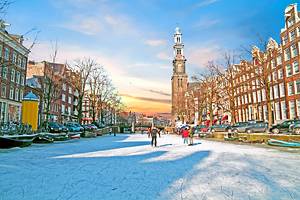
Tourism also makes a significant contribution to the economy, and the picturesque Old Town with its numerous historical buildings surrounded and intersected by canals offers many fun things to do for tourists and attracts large numbers of visitors year-round. It's an especially nice city to explore after nightfall, particularly in winter during the city's popular KNUS Winter Market and Festival (held during the lead-up to Christmas) and the city's traditional Christmas Market, held in the Mariaplaats.
Learn more about these and other city attractions with our list of the top things to do in Utrecht.
See St. Martin's Cathedral
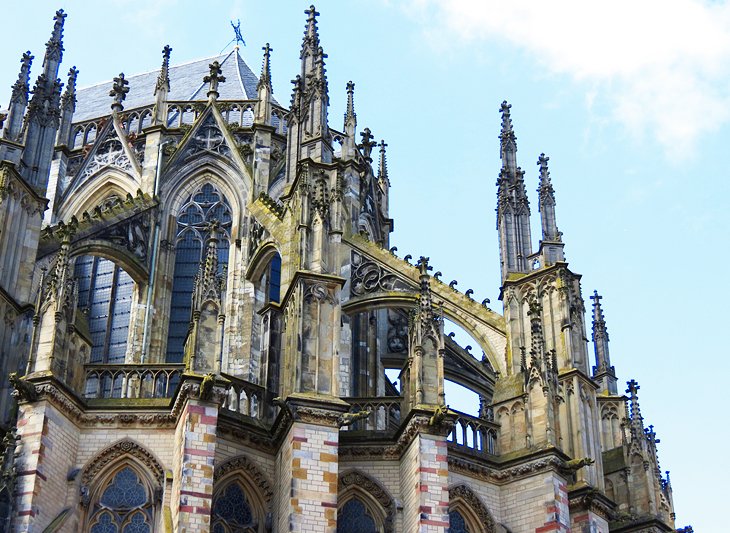
In the heart of Utrecht lies Cathedral Square, the Domplein, where you'll find St. Martin's Cathedral. Most often referred to by locals as the Dom Church (Domkerk), this fine building is considered to be one of the most important churches in The Netherlands.
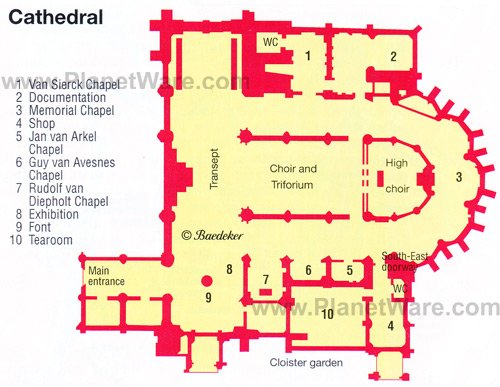
While the original structure was built in 1254 on the site of an earlier Romanesque church, today this impressive cathedral consists of the 14th-century choir, the 15th-century transepts, and two chapels. The original much larger structure incorporated the massive nearby Domtoren, the tower that became separated after the destruction of the nave during a tornado in 1674. The ruins were only cleared away in 1826, when the Domplein was laid out, with restoration finally completed in 1988.
Highlights include numerous old tombs and a crypt known to contain the internal organs of Emperors Conrad II and Henry IV, who died in Utrecht. Of particular note is the picturesque 14th-century cloister linking the cathedral with the university. Above its windows are scenes from the life of St. Martin, the patron saint, while in the center of the beautiful Cloister Garden is a fountain with a bronze figure of a monk.
While a visit to the cathedral remains one of the top free things to do in Utrecht, you can splash out a little for a pleasant repast in the on-site tearoom. Visitors are also welcome to attend Sunday services.
Address: Achter de Dom 1, 3512 JN Utrecht
Official site: www.domkerk.nl/
Climb the Domtoren: The Cathedral Tower
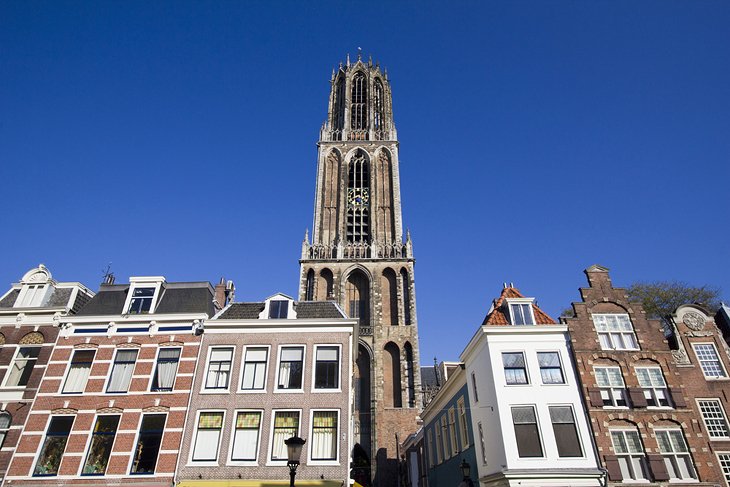
Looming high over the old city of Utrecht is the old cathedral tower, the Dom Tower (or Domtoren). This massive structure was separated from the Cathedral of St. Martin after the devastating storm of 1674. Built between 1320 and 1382, it stands a tad over 112 meters high and houses an impressive carillon of 50 bells, many of them centuries old, including some that date back to the 1600s. And be sure to pay a visit to the structure after nightfall when it's lit up in dramatic fashion.
Still the tallest church tower in the Netherlands, its viewing galleries offer magnificent panoramic vistas of the old city and the Domplein - on a clear day, you can see as far as the cities of Rotterdam and Amsterdam (remember, it's a flat country!). The 465-step climb is worth it, as you'll also get to see the bells up close. The climb is only available as part of a guided tour, but it's well worth the price.
Two chapels can also be visited within the tower: St. Michael's, the Bishop's domestic chapel, and the Egmond Chapel, home to an exhibition on the history of this spectacular structure and a visitor center (the RonDom). An interesting tidbit: local planners use an old ruling that no new structures can be built that would challenge the supremacy of the Domtoren as the city's tallest structure.
Address: Domplein 21, 3512 JE Utrecht
Official site: www.domtoren.nl/en
Wander around Cathedral Square and DOMUnder
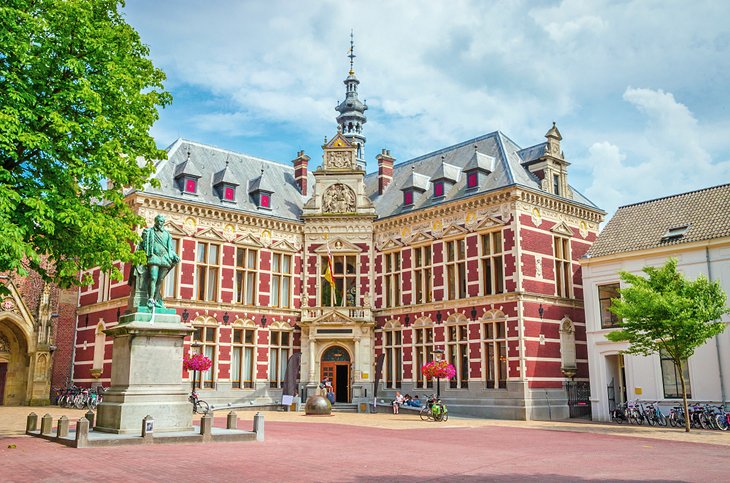
Like many historic cities in the Netherlands, Utrecht has numerous old public squares. By far the most important, though, is Cathedral Square (Domplein, or "Dom Square"). Named after the magnificent St. Martin's Cathedral, it's a lovely space to visit, especially for the many attractive old buildings that frame it.
In addition to the cathedral and the mighty Dom Tower (Domtoren), here you'll find the attractive (and colorful) Utrecht University building, as well as the Utrecht Tourist Information Office, a great place to begin your exploration for its helpful staff and useful tourist resources.
It's also here you'll find one of the city's newest attractions, a unique new exhibit called DOMUnder. As the name suggests, this fascinating self-guided tour takes you underneath Cathedral Square on an exciting journey that reveals the remains of the city's rich 2,000-plus-year history.
Armed with a flashlight that doubles as a visual-guide (English language available), you find yourselves literally dozens of feet underground and wandering a route that takes in the remains of the original Roman fortress, Trajectum, which started things off.
Your 75-minute adventure also includes a number of old cellars, as well as displays relating to the devastating 17th-century tornado that destroyed parts of the cathedral. English language audio tours are also available. (Editor's Note: Tickets to this popular attraction sell out quickly, so avoid disappointment and book in advance of your visit to Utrecht.)
Address: Domplein 4, 3512 JC Utrecht
Official site: www.domunder.nl/en
St. Catherine's Convent Museum
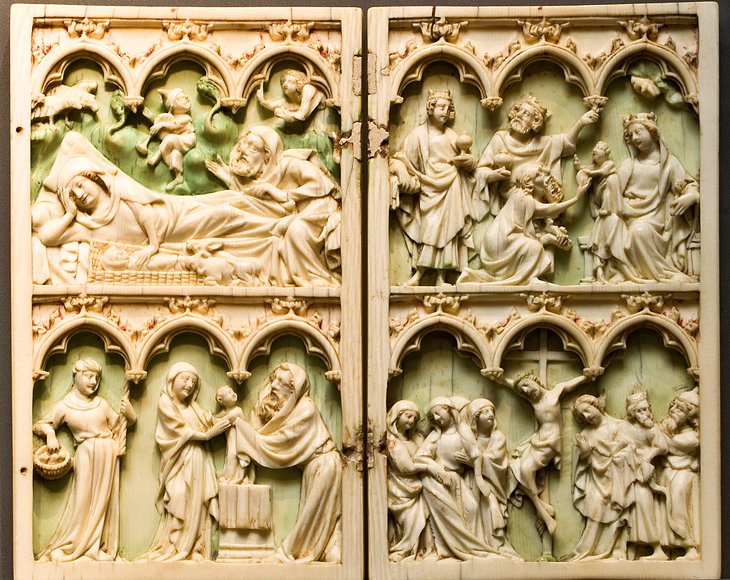
In the former hospice of the Order of St. John, St. Catherine's Convent Museum (Museum Catharijneconvent) deals with the history of Christianity in the Netherlands. Opened in 1978, it's the country's largest collection of medieval art treasures, with sections devoted to church interiors, religious beliefs, and medieval monasteries.
In addition to a large collection of 17th- and 18th-century material, other exhibits include valuable books and manuscripts, and a model of the original St. Martin's Cathedral with explanations of its history. Also on-site is a display of embroidered Flemish church vestments of the late Middle Ages. English language guided tours are available, along with audio guides. There's also an on-site shop and cafe, as well as a reference library.
Address: Lange Nieuwstraat 38, 3512 PH Utrecht
Official site: www.catharijneconvent.nl/visitor-information/
Take a Drive to De Haar Castle
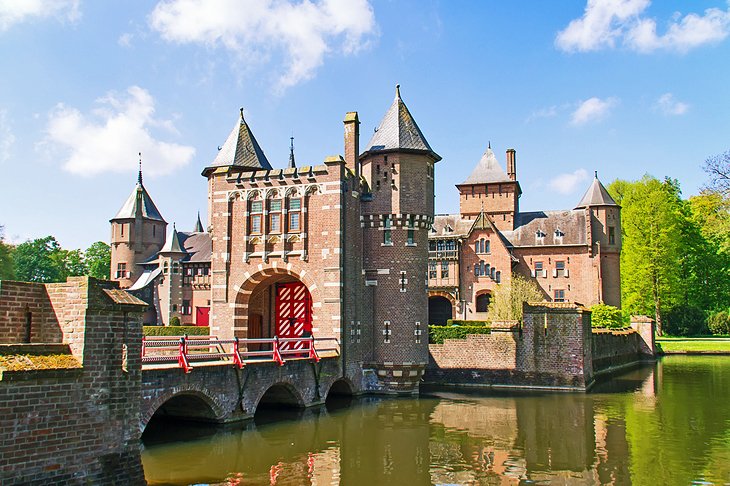
Built by Dutch architect PJH Cuypers, De Haar Castle (Kasteel De Haar) is not only the largest castle in the Netherlands, it's widely considered to be the most attractive thanks to its fairy-tale good looks. It is so large that when it was built in 1822, the whole village of Haarzuilens had to be moved. The castle is just 16 kilometers west of Utrecht, and highlights of a visit are its large collection of antiquities, furniture, paintings, and tapestries, along with its rich décor, including ornate wood carvings and tableware, and a rare Japanese coach designed especially for women.
The grounds, too, are wonderful to explore and comprise some 135 treed acres, along with fountains and a lovely formal garden. Events and festivals are also often held here, including the annual Country & Christmas Fair. An on-site store is available for those seeking souvenirs.
Just a short drive northwest of Utrecht in the quaint village of Oud-Zuilen is the impressive Zuylen Castle (Slot Zuylen). Although its roots date back to the 1200s, the structure you see today dates from 1510, with modifications added in the mid-18th century. Entrance is by guided tour only, but it's well worth it for the chance to explore this well-preserved mansion.
Address: Kasteellaan 1, 3455 RR Haarzuilens
Official site: www.kasteeldehaar.nl/english/
Explore Utrecht's "Old Canal," Oudegracht
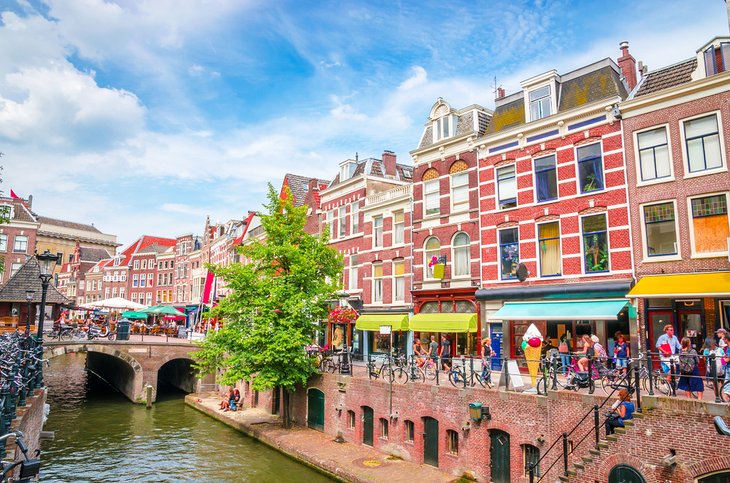
A highlight of a visit to Utrecht is exploring the beautiful Oudegracht (Old canal). This marvel of engineering runs directly through the city center and is the perfect place to visit for a pleasant stroll or, if you've got the time, a sightseeing cruise or kayak adventure.
The canal starts in the southeast section of the city and traces, in part, what was once the original route of a section of the Rhine. The northern section of the Oudegracht includes segments of a canal built around AD 1000 that connected the Rhine to the River Vecht.
Once Utrecht's network of locks was completed in 1275, the shores of the canal began to be settled, with numerous quays, wharves, and warehouses added. Today, many of these old buildings and their cellars have been turned into restaurants, cafés, galleries, and boutique shops.
Take a Utrecht Kayak Tour
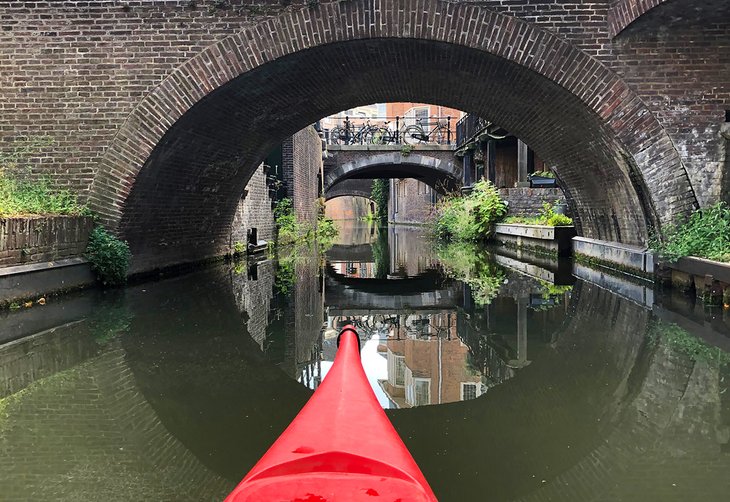
One of the best ways to see the Oudegracht, along with the city's other charming canals, is from the water. Undoubtedly one of the best such adventures is the popular Utrecht Kayak Tour. This fun experience departs in the afternoon from Domplein, the Old City's central square, and kicks off with an informative overview of the city's rich history from your English speaking guide.
Once aboard your two-person kayak, you'll get unique perspectives of some of the city's most iconic landmarks as you paddle past at a leisurely pace. A highlight of the excursion is paddling along the historic "ring-canal" that circles the city, taking a break at the midway point for refreshments at the Weerdsluis locks.
Next up is touring the length of the Old Canal itself, taking time to hear some of the interesting stories relating to the old wharves and homes you pass along the way. In addition to refreshments and use of the kayak, your tour fee includes a handy waterproof barrel in which to store personal belongings, and a life-vest.
Visit Museum Speelklok
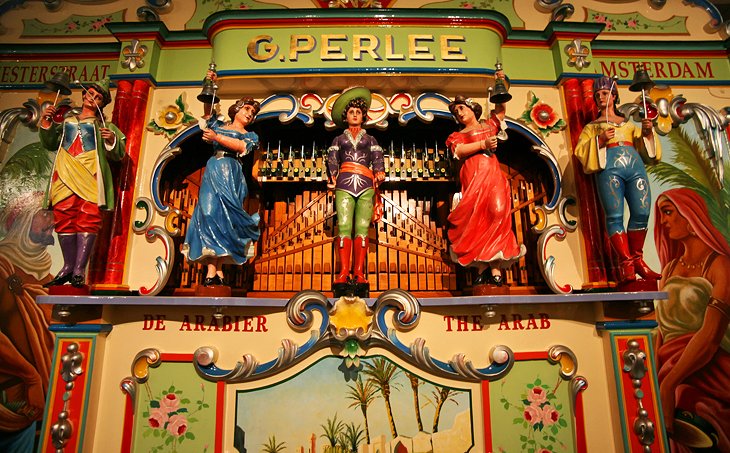
One of the more unusual of Utrecht's most popular tourist attractions is Museum Speelklok - or Musical Clock Museum in English - dedicated to music boxes, barrel organs, and other devices and instruments capable of playing music without human involvement (other than switching them on or cranking their handles). The museum was established in 1956, and its displays - many of them hands-on and interactive - include mechanical musical instruments from the 18th century to the present day, as well as domestic instruments, from tiny music boxes to massive fair organs, most of which can still be played.
Other highlights include examples of musical clocks, pianolas, and a turret clock with a carillon, along with the opportunity to peek behind the scenes at the restoration work performed in the workshops. Free English-language guided tours, including demonstrations, are available.
Another attraction centered on machinery, though of a more scientific nature, is the interesting Sonnenborgh Observatory (Museum Sterrenwacht Sonnenborgh). Highlights of a visit of this part museum and part still-functioning observatory include seeing this historic structure in action (guided tours are available).
Address: Steenweg 6, 3511 JP Utrecht
Official site: https://www.museumspeelklok.nl/lang/en/
See Utrecht's Art & Artifacts Collections at Centraal Museum
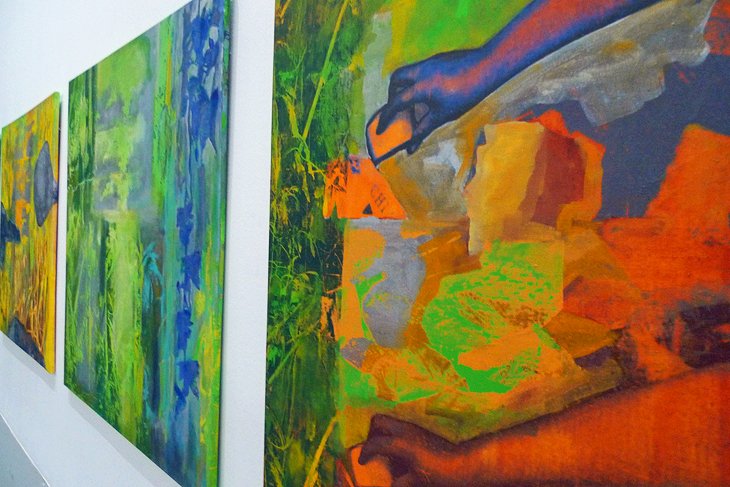
Spread between the remnants of a former convent and the city's old Artillery Stables, Utrecht's excellent municipal collections - most of them created by locals over the centuries - are well worth a visit.
Established in 1838 and housed in the city's Centraal Museum, the exhibits include the provincial archaeological collections and works by Utrecht-based painters from the 15th century onwards, including the Romanists, a group influenced by the Italian Renaissance and led by Jan van Scorel. Other schools represented are the Mannerists, represented by Abraham Bloemaert, who had an enduring influence on the Utrecht Caravaggisti (stylistic followers of Caravaggio).
The museum also has a collection of costumes from the 18th century to the present day, along with rooms furnished in period style, sculptures, silverware, and a collection of material on the history of the city. A rare 17th-century dollhouse with rooms decorated in chintz from the Dutch East Indies is also worth seeing, as is the famous Utrecht Ship, a 1,000-year-old vessel discovered in 1930. Also of interest is a display of art and artifacts related contemporary artist Dick Bruna, creator of the world-famous Miffy the cartoon bunny.
More of the world's cutest bunny can be enjoyed at the Miffy Museum. This first-rate educational facility is one of the top things to do in Utrecht for families traveling with younger children. Naturally, there's plenty of fun here, from storytelling and dancing to games and plenty of interactive playtime.
Address: Agnietenstraat 1, 3512 XA Utrecht
Official site: http://centraalmuseum.nl/en/
Enjoy a Train Ride at the Railway Museum
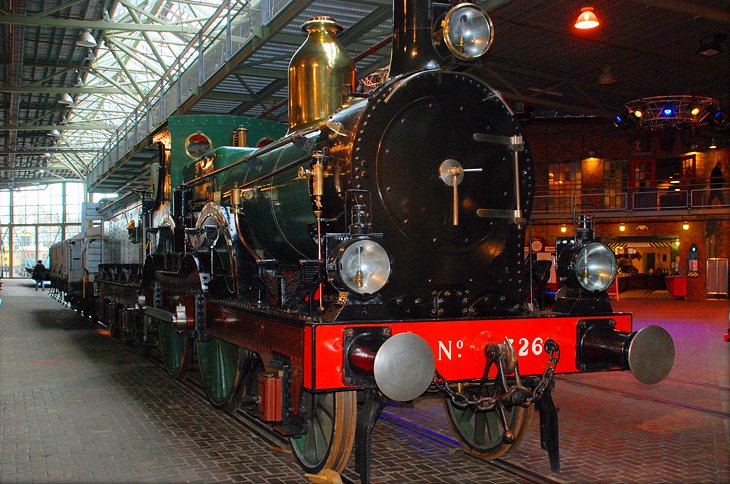
Located in the old Maliebaan train station, Utrecht's Railway Museum (Spoorwegmuseum) is the country's national railway museum and is a must-see for train buffs. Founded in 1927, highlights of this large, well-stocked tourist attraction include a cross section of the country's transit history, particularly its railroads and tram systems, with plenty of models and old vehicles to enjoy along the way.
Exhibits deal with the early years of railways, including its heyday of the 1900s, and an operational workshop. In addition to the museum's impressive collection of locomotives (including nine well-preserved steam engines) and rolling stock, kids will love the model railway and playground.
There's a shop and restaurant on-site. For a special treat, take the authentic shuttle train service running between the city's main train station (Utrecht Centraal) and the museum. Frequent themed events, such as Thomas the Tank Engine days, are also held, and regular guided tours are available.
Another related attraction - it deals with machinery, although this time with a focus on war - is the National Military Museum (Nationaal Militair Museum). Highlights include impressive collections of aircraft and vehicles, along with fascinating exhibits dealing with the various branches of the Dutch armed forces.
Address: Maliebaanstation, 3581 XW Utrecht
Official site: www.spoorwegmuseum.nl/
Huis Doorn: The Kaiser's House
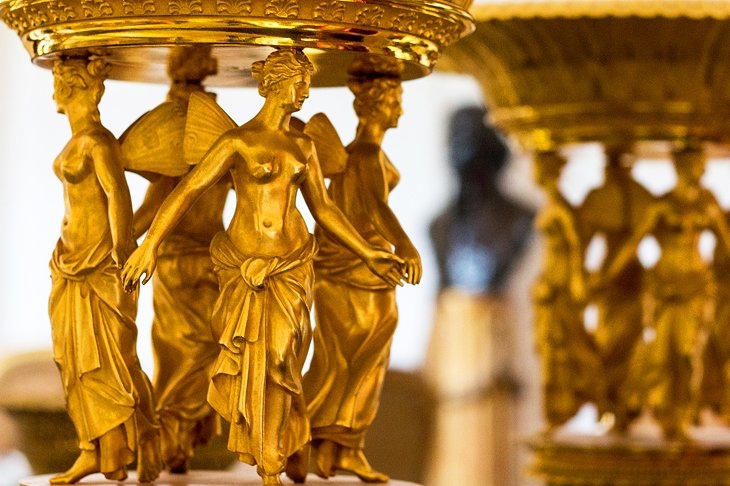
In the picturesque little town of Doorn is the last home of Germany's Kaiser Wilhelm II, Huis Doorn (known in English as Doorn Manor). Forced into exile after defeat in WWI, the Kaiser purchased Huis Doorn in 1920 and lived there until his death in 1941 at age 82 (he's buried in a mausoleum on the grounds). Originally a medieval castle, the house was rebuilt in Classical style in the 18th century, with only minor alterations since.
Set in a large and beautiful park, the house opened to the public as a museum in 1956 and has been preserved exactly as it was in the Kaiser's day, right down to the original furniture and furnishings, the Kaiser's personal possessions (including a collection of snuff-boxes belonging to Frederick the Great), uniforms, photos, and paintings.
The property's attractive Orangery is now a restaurant and serves a memorable, traditional high tea. English-language guided tours are available but need to be booked in advance.
Address: Langbroekerweg 10, 3941 MT Doorn
Official site: www.huisdoorn.nl/en/visitors/opening-times-prices/
Rietveld Schröder House
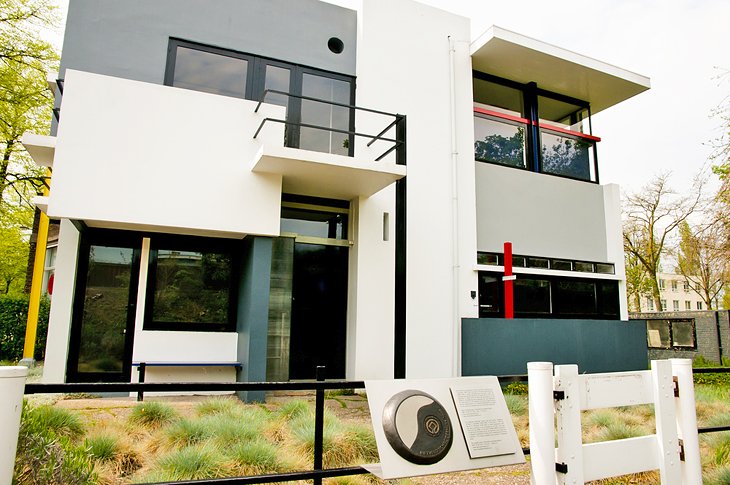
Considered so important a piece of architecture that UNESCO has deemed it a World Heritage Site, the stunning Rietveld Schröder House (Rietveld Schröderhuis) is a must-see for design buffs. Designed and constructed in the early 1920s by leading Dutch architect (and Utrecht resident) Gerrit Rietveld for a widower friend and her family, this attractive small home was decades ahead of its time in so many ways.
For example, the lower living area was created with retracting walls, a clever trick created by Rietveld - a leading member of the influential De Stijl design movement - that enabled family members to shut themselves off at night for privacy, yet served as a large communal space by day.
The unique windows were also revolutionary; large and able to be fully opened, they helped blur the distinction between the interior and exterior worlds. The house is now a museum, and admission is only available as part of a guided tour. A small shop selling related books and material is located nearby.
For those wanting to learn more about Rietveld and his impact on design, the Centraal Museum (which operates Rietveld Schröder House) have devised a fun self-guided walking tour that takes in city landmarks related to the designer. This pleasant five-kilometer route begins (and finishes) at the Centraal Museum and takes in Rietveld Schröder House and the architect's original furniture workshop.
Address: Prins Hendriklaan 50, 3583 EP Utrecht
Official site: www.rietveldschroderhuis.nl/en
Utrecht University Botanic Gardens
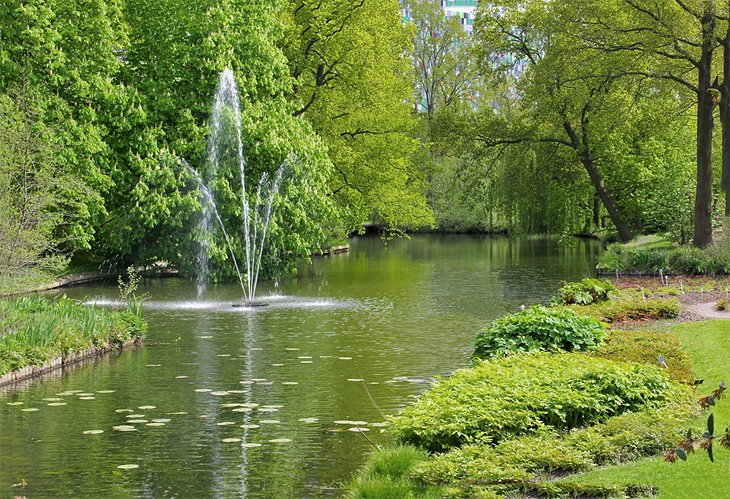
A fun diversion for those with green thumbs - or those who simply enjoy lovely green spaces and gardens - involves paying a visit to the Utrecht University Botanic Gardens. Centered around the old abandoned Fort Hoofddijk, this delightful 22-acre site, while a relatively new creation (it was laid out in the late 20th century), can trace its roots back to the early days of the university in the 17th century.
All told there are six unique gardens to explore. Favorites include the Birders Den (no surprise, it's popular with bird-watchers), and the Bee Hotel with its diverse array of pollinating insects. The tropical greenhouses are also worth exploring.
The gardens are open spring through December. Try to join one of the regular and informative guided tours to ensure you get the most from your experience (and explore on your own afterwards). The pleasant Garden Café is a welcome treat, and an on-site shop is also available.
If time permits, other fun things to do nearby include paying a visit to the Old Botanical Gardens (Oude Hortus), of interest for its medicinal plants and old ginkgo trees, and the University Museum Utrecht.
Address: Budapestlaan 17, 3584 CD Utrecht
Official site: www.uu.nl/en/utrecht-botanic-gardens
St. Peter's Church

Just a short walk north of St. Martin's Cathedral, in Pieterskerkhof, stands St. Peter's Church (St. Pieterskerk), the first of the town's churches to be built. Consecrated in 1048 and notable for its two Romanesque towers, the church features a crypt with a sarcophagus of the founder, Bishop Bernold.
Other notable features are the capitals of the columns in the nave, the wall paintings in the north aisle, and the 12th-century reliefs created in the Maasland style.
Address: Pieterskerkhof 5, 3512 JR Utrecht
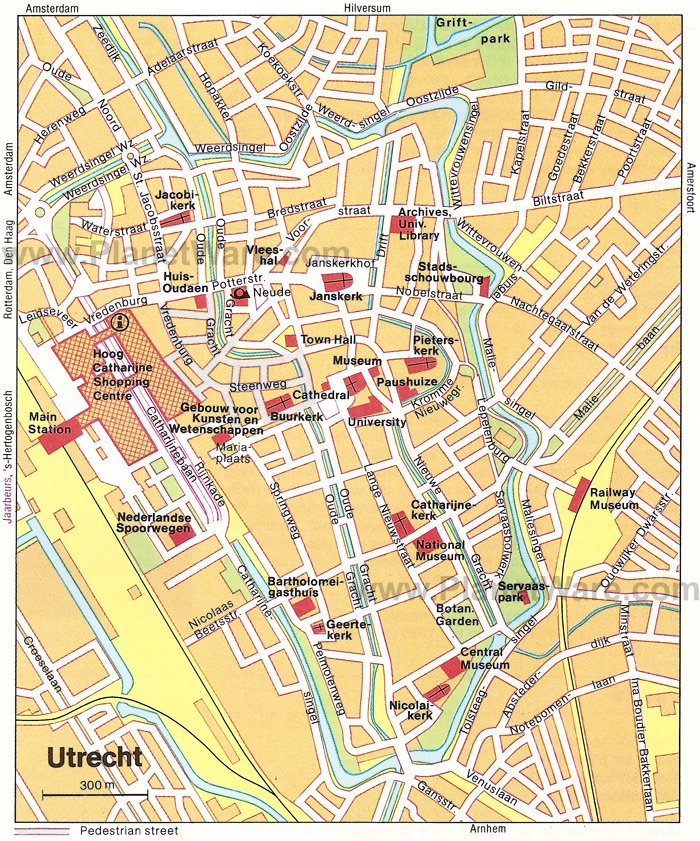
Map of Attractions & Things to Do in Utrecht
Utrecht, Netherlands - Climate Chart
| Average minimum and maximum temperatures for Utrecht, Netherlands in °C | |||||||||||
| J | F | M | A | M | J | J | A | S | O | N | D |
| 4 -1 | 6 -1 | 9 1 | 13 3 | 17 7 | 20 10 | 22 12 | 22 12 | 19 9 | 14 7 | 9 3 | 6 1 |
| PlanetWare.com | |||||||||||
| Average monthly precipitation totals for Utrecht, Netherlands in mm. | |||||||||||
| 69 | 48 | 66 | 53 | 61 | 71 | 76 | 71 | 66 | 74 | 81 | 84 |
| Average minimum and maximum temperatures for Utrecht, Netherlands in °F | |||||||||||
| J | F | M | A | M | J | J | A | S | O | N | D |
| 40 31 | 42 31 | 48 34 | 55 38 | 63 45 | 68 50 | 71 53 | 71 53 | 66 49 | 58 44 | 48 37 | 42 33 |
| PlanetWare.com | |||||||||||
| Average monthly precipitation totals for Utrecht, Netherlands in inches. | |||||||||||
| 2.7 | 1.9 | 2.6 | 2.1 | 2.4 | 2.8 | 3.0 | 2.8 | 2.6 | 2.9 | 3.2 | 3.3 |
More Related Articles on PlanetWare.com
The Netherlands by Rail: Utrecht is an easy 25-minute journey by train from the popular tourist attractions of Amsterdam, a must-visit destination that's home to the magnificent Rijksmuseum and its many collections of important antiquities and art. The port city of Rotterdam is equally easy to access and is a popular day trip for its fine marine museum, old harbor, and the nearby windmills. Finally, a trip to The Hague, the country's capital, is also worth adding to your Netherlands itinerary (it's 35 minutes by train), thanks to its fine old architecture and palaces.