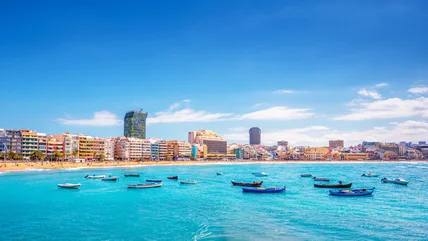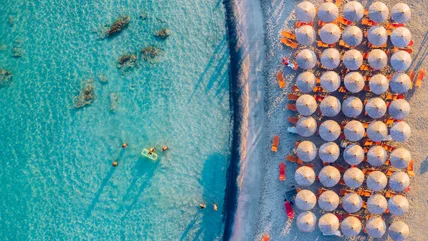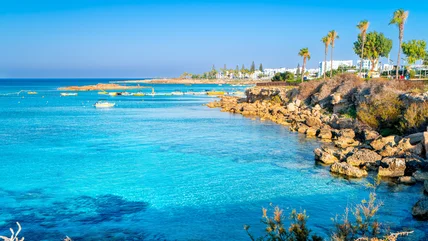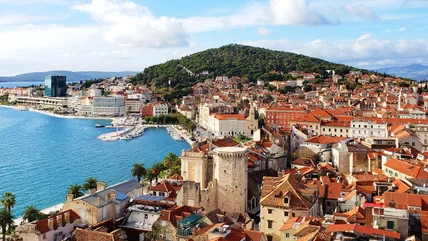
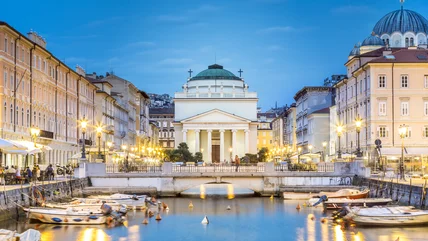
The busy town of Oban lies by a sheltered bay in the lee of the island of Kerrera (49mi/78km south of Fort William). Since Victorian times the town has been one of Scotland's most popular resorts and it is also an important harbor for services to the West Highlands and the Hebrides. It also makes a good base for excursions into the Highland mountains and lochs. Ganavan Sands behind Dunollie Castle offers opportunities for bathing.
One of the boat trips from Oban takes in the small islands of Staffa (unusual basalt rock formation) and Iona ("Cradle of Christianity") with views en route of the beautiful east coast of Mull. This trip is one of the most popular island tours and is highly recommended.
A coal-fired ironworks that was in service between 1753 and 1876 has been faithfully restored with particular emphasis on the furnace and adjoining buildings. A few years before it closed the foundry made cannonballs that were used in the Battle of Trafalgar.
Address:
Historic Scotland, Longmore House
Salisbury Place, Jedburgh TD8 6JQ, Scotland
Hours:
April 1 to September 30: 9:30am-5:30pm
Tips: Last admission 30 mins before closing.
Typical Visit: 30 minutes
Castle Stalker (25mi/40km north of Oban) occupies a romantic setting on a small island in Loch Linnhe. Begun in the 14th C as the home of the Stewarts of Appin, it was used by James IV as a hunting lodge. Denis R. Stewart Allward started work on restoring the castle in 1960.
Address:
Castle Stalker, Oban , Scotland
Guides: Guided tour included with admission.
A detour towards the southwest from Kilmartin to the Knapdale peninsula is worthwhile. Castle Sween (15mi/24km) on the east coast is thought to be the oldest stone castle on the Scottish mainland. It was built in the middle of the 12th century but destroyed in 1647 by Sir Alexander MacDonald.
Address:
Historic Scotland, Longmore House
Salisbury Place, Jedburgh TD8 6JQ, Scotland
Typical Visit: 30 minutes
The Dunstaffnage Castle, which belonged to the Campbell clan, is well fortified with walls and towers dating to the 1400s. The nearby chapel ruins are the final resting place of some early Scottish monarchs.
A notable collection of late medieval gravestones are found 12mi/19.2km to the south of St Columba's Cave not far from the ruins of Kilberry Castle (15th century).
Address:
Historic Scotland, Longmore House
Salisbury Place, Jedburgh TD8 6JQ, Scotland
Typical Visit: 30 minutes
(Near Oban)
The main tourist attractions in Kilmartin are some nearby standing stones, dating back to the Bronze Age, and the old gravestone in the church graveyard.
At the north end of Loch Awe are the ruins of Kilchurn Castle. From the Pass of Brander are beautiful views across the mountains.
The Promenade is a popular area in summer, with restaurants, shops, and various tourist attractions.
A side road branches off at Kilchrenan to Ardanaiseig Gardens which boast superb rhododendrons, azaleas and old trees as well as a marvelous view across Loch Awe to Ben Cruachan.
Tips: Open until dusk.
Typical Visit: 1 hour
At Arduaine, the international collection of flowers and trees takes the visitor on a horticultural tour around the world. The garden is from the early 20th C, designed by Loch Melfort.
Address:
Arduaine Garden, Arduaine PA34 4XQ, Scotland
Hours:
January 1 to December 31: 9:30am-Sunset
Parking: Free
Disability Access: Full facilities for persons with disabilities.
Facilities: Wheelchair loan or rental
Typical Visit: 1 hour
Carnasserie Castle dates from the middle of the 16th C but it was destroyed in 1685. It was once the seat of John Carswell, the first Protestant bishop of the islands. He translated the liturgy of John Knox into Gaelic and, when it was published in 1567, it became the first book to appear in this language.
Address:
Historic Scotland, Longmore House
Salisbury Place, Jedburgh TD8 6JQ, Scotland
Typical Visit: 30 minutes
To the southeast of Taynuilt (B845) a splendid nature trail has been laid out in the woods of Glen Nant Forest.
Many of the trees in the parkland surrounding Glenfeochan House (1875; 1mi/1.6km to the south of the Rare Breeds Park) are about 150 years old. Other colorful plant species to admire here include rhododendrons and peach and nectarine trees.
The abandoned castle on the island of Kerrera was started ca. 1582 for the MacDougall clan. It can be reached along a 1mi/2km footpath from the jetty where the passenger ferry lands.
About 100 different species of rhododendron bloom in the gardens of Kilmory Castle (1770).
Kinlochlaich Gardens, situated about halfway between Oban and Fort William, are worth a visit for their primulas and rhododendrons.
Address:
Kinlochlaich House Gardens, Oban , Scotland
Hours:
April 1 to September 30: 9:30am-5:30pm; Sun: 10:30am-5:30pm
October 1 to March 31: 9:30am-5pm; Closed: Sun
Tips: Donations welcome.
Facilities: On-site accomodations
Typical Visit: 1 hour
(Near Oban)
The A816 continues south to the village of Lochgilphead, home of the Highland Porcelain Pottery.
Address:
Lochgilphead Tourist Office, Lochnell Street, Lochgilphead PA31 8JN, Scotland
Typical Visit: 1 hour
The center is located between Oban and Lochgilphead and offers guided rides through the local woodlands and hills. Hombred Appaloosas and Quarterhorses are used for treks.
Local accommodation can be arranged.
Address:
Appaloosa Holidays/ Adfern Riding Centre, Craobh Haven
Ardfern
by Lochgilphead, Argyll PA31 8QR, Scotland
Tips: Group and child discounts.
Only 3mi/4.8km south of Oban the Argyll Tourist Route passes the Rare Breeds Park near Kilmore, where it is possible to observe many unusual varieties of sheep and cattle, as well as herds of red deer.
ATTRACTION IS CLOSED.
Address:
Oban Rare Breeds Farm Park, Oban , Scotland
The underwater world on view in the Sea Life Centre by Loch Creran offers something for everyone. Sharks, rays, squid, seals and other sea creatures can be seen in their natural habitat. Children will be thrilled by the magnificent playground (6mi/9.6km north of Oban).
Address:
Oban Sea Life Centre, Barcaldine, Oban PA37 1SE, Scotland
Hours:
10am-am
Always closed on: Christmas - Christian (December 25)
Parking: Free
The narrow coast road passes St Columba's Cave. This rocky cavern just north of Ellary was probably used by Stone Age man. It is said the St Columba first set foot on Scottish soil here and a rock altar and cross symbols testify to the existence of an early Christian church.
Pickling and smoking are among the oldest ways of preserving food. The owners of the Inverawe Smokehouse use a secret recipe handed down from generation to generation. The fish is first pickled in brine (sometimes with herbs and sugar) and then smoked slowly over oak.