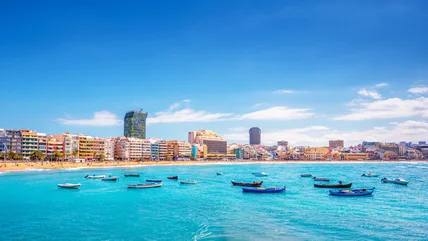
Ayr is not only a good shopping center but also a good base for exploring the Lowlands. It faces the island of Arran and is the main town in the county of Ayrshire. Robert Burns described the local people as "honest men and bonnie lasses". A memorial at the station, Tam o'Shanter Inn is an examples of the Burns legacy in the region. Devotees can even follow the Burns' Heritage Trail, a literary tour through southwest Scotland as far as Dumfries that takes in all the places connected with Burns. Ayr boasts an important racecourse, no fewer than three golf courses and a long sandy beach.
A well-known attraction in Scotland, Culzean Castle reflects a mix of Roman, Greek and Classical architecture. The Castle is situated in a charming cliff-top location.
The thatched house where Burns was born is situated in Alloway, a suburb to the south of Ayr. It was built by his father and Burns spent the first seven years of his short life here. Exhibits include memorabilia, manuscripts and the old family Bible.
Always closed on: Bank Holiday - Scotland (January 2), New Year's Day (January 1), Day after Christmas, St Stephen's Day, Boxing Day (December 26), Christmas - Christian (December 25)
Parking: Free
Disability Access: Full facilities for persons with disabilities.
The Bachelor's Club in Tarbolton has been made famous as a place frequented by Robert Burns. In this 17th C thatched house he formed a debating club and was initiated into the Freemasonry.
A huge granite rock some 1,114ft/348m high and 2mi/3km in circumference is visible from Girvan. It lies 10mi/16km offshore and is now a haven for birds. Ailsa Craig, Gaelic for "Fairyland Rock", is famous for the quality of its granite, known as "Ailsite" which is used, among other things, for making curling stones. A ruined medieval tower occupies a prominent position on the rock.
There is a fine view over the River Ayr and its two bridges from the Burns' Monument (1823) where more than 600 exhibits relating to the celebrated Scottish hero are displayed.
It was across one of the bridges, the 13th century "Auld Brig", that Tam o'Shanter fled from the witches - he remembered that they were not allowed to cross flowing water - only his horse's tail remained in the hands of his pursuers. In line with Burns' prophecy, the bridge of 1788 had to be rebuilt in 1877.
Address: Robert Burns' Monument, Alloway KA7 4PQ, Scotland
Take a detour to Auchinleck about 6mi/9.6km to the southeast of Ayr. The Boswell Museum in the old parish church documents the life of the village's most famous son, James Boswell (1740-1795). He is best known for his association with the English man of letters Dr Samuel Johnson (1709-1784). Boswell accompanied Johnson to the Hebrides and he wrote a diary about their travels which was the forerunner for his biography on Dr Johnson.
Tam O'Shanter is said to have looked out of a window in the Auld Kirk (early 16th C) and seen the devil at a witches' sabbath. The grave of Burns' father, who died at the age of 63, lies at the entrance to the cemetery.
These two annual festivals run concurrently for 10 days in early June. The festivals promote local performers while at the same time bringing together internationally-acclaimed names from throughout the world. The events include ballet and theatrical performances, operas, jazz sessions, poetry readings and folk nights.
Address: Ayrshire Festival Office, Wallace Tower High Street, Ayr , Scotland
Trawlers, lifeboats and tugs are among the vessels on display in this maritime museum. Exhibits at the Victorian Linthouse Building at the end of the harbor include a collection of model ships.
This annual festival takes place in mid-August and celebrates Mary, Queen of Scots. Marymass horse races, crowning of the Marymass Queen and other traditional events are among the many events offered.
Well-maintained footpaths, rare giant trees, waterfalls, beautiful views and pony trekking for children are just a few of the attractions on offer at Kelburn Country Centre.
Address: Kelburn Castle & Country Centre, Fiarlie KA29 OBE, Scotland
Kilwinning Dalgarven old mill has recently undergone careful restoration and its displays now record country life in Ayrshire. The museum's premises on the Dalry Road (A737) date from 1753. Fresh bread made from flour ground at the mill is sold in the bakery.
Souter Johnnie's Cottage in Kirkoswald is in fact a museum dedicated to the souter (cobbler) John Davidson who with his friend Douglas Graham is immortalized in Burns' narrative poem "Tam O'Shanter". Tam O'Shanter and Souter Johnnie sit in the museum garden as life-sized statues, both the work of James Thorn (1802) who later emigrated to America and became an architect.
Address: Souter Johnnie's Cottage, Main Road, Kirkoswald KA19 8HY, Scotland
Hours:
April 1 to September 30: 11:30am-5pm; Closed: Wed, Thu
Always opened on: Easter - Christian, Good Friday - Christian, Easter Monday - Christian
Tips: Last admission 4:30 pm.
Car park is located at the south end of the village.
Parking: Pay
Disability Access: Partial facilities for persons with disabilities.
The Pencil Monument in the sailing center of Largs (pop. 11,200) was erected to commemorate the decisive battle of 1263, which resulted in the Hebrides, for centuries under Norwegian domination, being captured by the Scots.
Battle of Largs Memorial at Largs.
Window on the Battle of Largs Monument.
Address: Largs Tourist Office, The Station, Main Street, Largs KA30 8AN, Scotland
One of Scotland's few Cluniac monasteries is situated about 5mi/8km to the east near Maybole. The foundation stone for Crossraguel Abbey was laid in 1244 by Duncan, Earl of Carrick, but the monastery was destroyed by Edward I in the 13th century. It was rebuilt in the 15th C and the monks even acquired the right to mint coins. The well-preserved ruins of the monastery testify to the high status that this abbey once enjoyed.
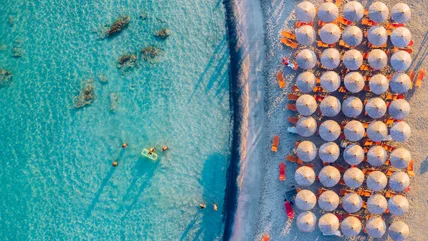
Saltcoats has a fine beach. The town's Martello tower dates from 1800. Ferries for Arran leave from Ardrossan. The 12th century castle was destroyed by Cromwell's troops and little now remains.
Tarbolton (8mi/12.8km north of Ayr) owes its fame to the fact that Robert Burns and his friends founded the Bachelor's Club here in 1780 and then a year he later joined the local Freemason's Lodge.
Turnberry is synonymous with golf. As well as two golf courses, the "Ailsa" and the "Arran", a top-class hotel has also been built there. Turnberry Castle (2mi/3.2km to the south) was the birthplace of Robert the Bruce.