Tourist Attractions in Languedoc-Roussillon
Author Lisa Alexander spent two years living in France and has traveled the country extensively.
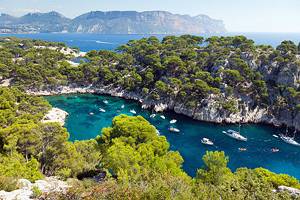
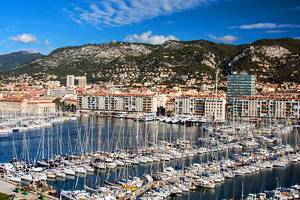
Slightly off the beaten path, the Languedoc-Roussillon area of southern France captures tourists' hearts with its distinctive Mediterranean charm and rich cultural heritage. In addition to fabulous sightseeing, the region's sunny, mild weather and beautiful seaside scenery ensure an enjoyable holiday experience.
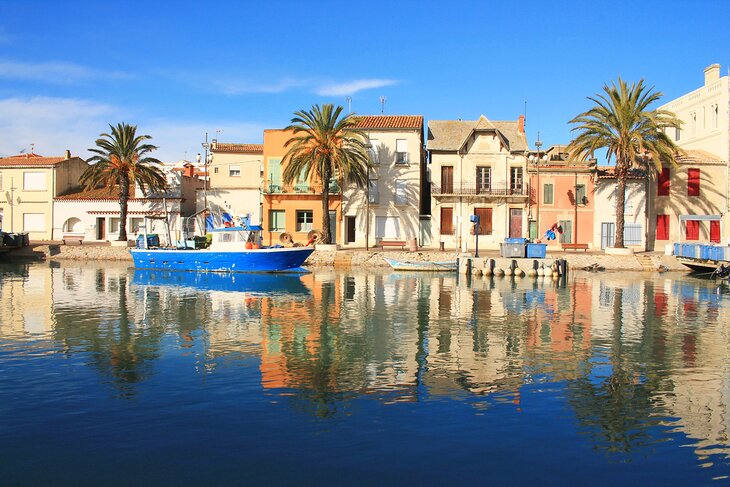
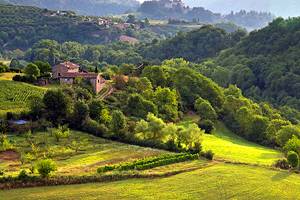
The region extends along the Mediterranean coast of France between the mouth of the Rhône River and the Pyrenees Mountains. Expansive ranches, vine-covered rolling hills, coastal plains, and dense forests blanket the landscape, which also features rocky gorges, fruit tree orchards, dairy farms, and unspoiled beaches. Perched medieval villages and ruined castles on mountain crags add an element of romance.
Must-see sites and tourist attractions include the ancient fortified city of Carcassonne and, closer to the sea, the happening metropolis of Montpellier and the balmy town of Perpignan. The seaside resorts of Cap d'Agde and Port-Camargue offer sandy shorelines and fewer crowds than the French Riviera.
A special festival called "Les Troubadours" celebrates the unique cultural heritage of Languedoc-Roussillon. This unique cultural event presents the music of the medieval troubadours in concerts held at splendid historic venues throughout the region.
For more ideas on things to do in this scenic region, see our list of the top attractions in Languedoc-Roussillon.
Carcassonne
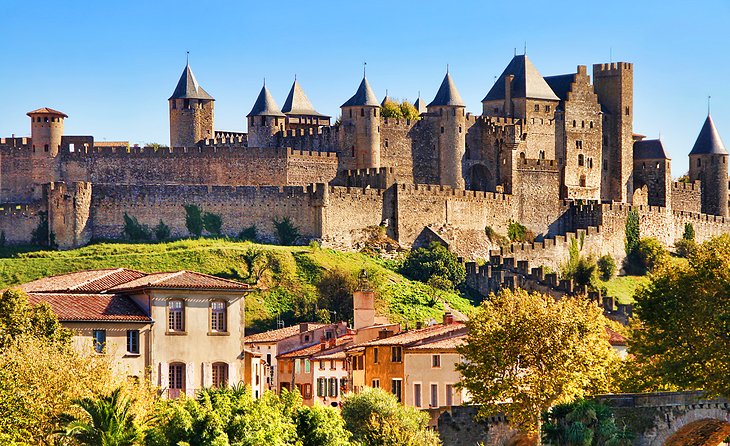
One of the top attractions in France, Carcassonne offers a real-life image of a fairy-tale scene. From far away, the rows of turreted towers and crenellated ramparts create a stunning impression. This incredibly well-preserved medieval fortified city, known as the Cité de Carcassonne, delivers the sense of traveling back in time.
The UNESCO-listed Cité de Carcassonne (La Cité) is a totally enclosed citadel, perched on a hilltop and entered through imposing gated doorways. Visitors cross a drawbridge and become immersed in a magical scene: a maze of narrow, winding cobblestone streets dating back to the Middle Ages. Many of the buildings, squares, and alleyways have retained their centuries-old character.
This enchanting medieval realm includes noteworthy historic landmarks. Built between the 10th and 14th centuries, the Basilique Saint-Nazaire et Saint-Celse is a gem of Romanesque and Gothic architecture prized for its spectacular stained-glass windows. At the heart of La Cité is the 12th-century Château Comtal, stronghold of the Viscounts of Carcassonne.
The main entry gate into La Cité is the imposing Porte Narbonnaise with turreted towers dating to the 13th century. Another entry gate, the Porte d'Aude near the Château Comtal was featured in the movie Robin Hood.
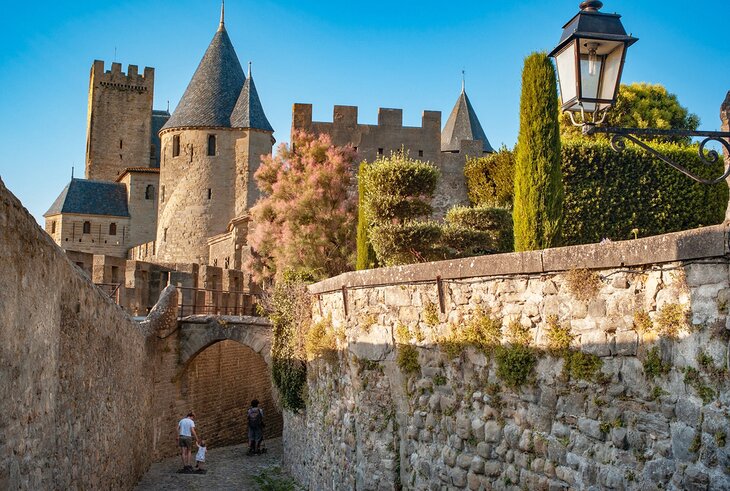
La Cité is arguably Europe's best-preserved medieval citadel, surrounded by three kilometers of ancient ramparts. The double circuit of defensive walls features machicolations, slits for arrows, and 52 watchtowers.
The fortifications, dating in parts to the 3rd and 4th century, were strengthened by Louis IX in 1250 and by Philip the Bold in 1280. Renowned architect Eugène-Emmanuel Viollet-le-Duc helped to restore the ramparts in the 19th century.
Visitors can take a scenic walk along the ramparts. The Promenade des Lices is a one-kilometer-long path in between the double walls of the fortifications, which affords sweeping views of the landscape. It's even possible to see the Pyrenees Mountains in the distance.
The Cité de Carcassonne stands above the lower part of town known as the "Ville Basse," which also has its charms. Things to do here include shopping in boutiques and sampling from restaurants and cafés.
During summertime, Carcassonne hosts many cultural events. The Festival de Carcassonne presents cinema screenings, music concerts, opera, theater, and dance performances from the end of June through August. The festival includes over a hundred shows, most of which are free of charge.
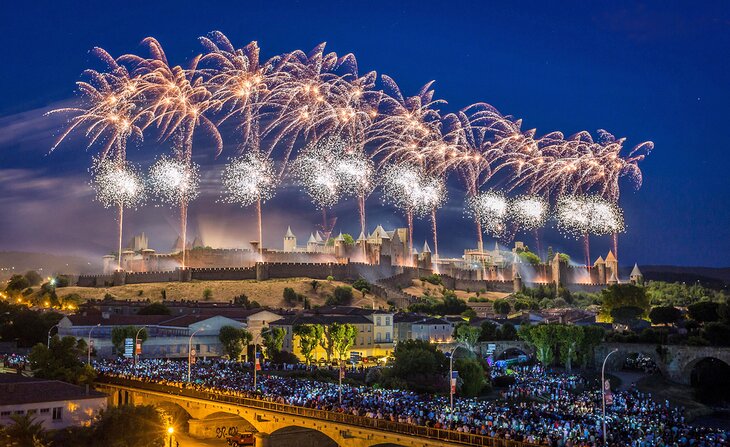
Every year on July 14th, Carcassonne celebrates Bastille Day (La Fête Nationale) with a marvelous spectacle of fireworks. A tradition that has taken place here since 1898, this half-hour fireworks show illuminates the ramparts of La Cité in dramatic style and concludes with a flourish of red fog, as if the city has suffered a medieval battle. Some of the fireworks are launched directly from the ramparts.
In July and August annually, Le Grand Tournoi de Chevalerie (Medieval Festival) allows visitors to experience an event that originated in the 13th century. This thrilling reenactment of a medieval chivalry tournament includes jousting contests and equestrian shows.

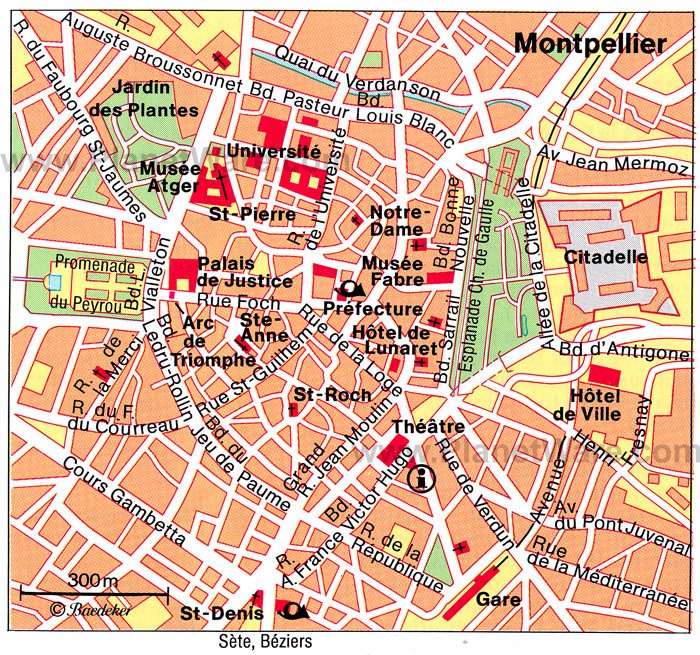
Montpellier
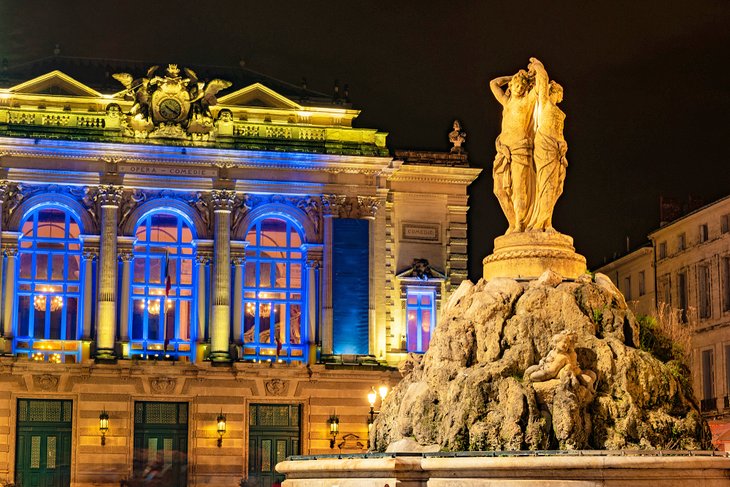
With its elegant buildings, grand public squares, and balmy weather, Montpellier is a top tourist destination of the Languedoc-Roussillon region. This lively university town belonged to the Kings of Aragon in the 13th century, was a headquarters of the Huguenots in the 16th century, and is still a center of culture.
The city boasts a wealth of cultural attractions. High on the list of must-see places to visit, the Musée Fabre (39 Boulevard Bonne Nouvelle) has an exceptional collection of paintings by Italian, Dutch, and French masters from the Renaissance era up to the 19th century.
The town itself is like an open-air museum. Tourists will delight in wandering the narrow medieval streets and spacious squares of L'Écusson (the historic center). From the Place de la Comédie, the best places to stroll are the Rue de la Loge pedestrian area and the Rue Foch, lined with handsome 19th-century buildings that house fashionable clothing boutiques.
The Rue Foch leads to the Promenade du Peyrou (Place Royale du Peyrou), a park built on terraces with exceptional views as far as the sea. Highlights of the Promenade du Peyrou are the equestrian statue of Louis XIV and the neo-classical Château d'Eau (water tower).
A farmers' market is held at the Boulevard des Arceaux (near the Promenade du Peyrou) on Tuesday and Saturday mornings.
At the eastern edge of Montpellier's old town is the Esplanade Charles de Gaulle, a wonderful area for a leisurely walk.
Perpignan
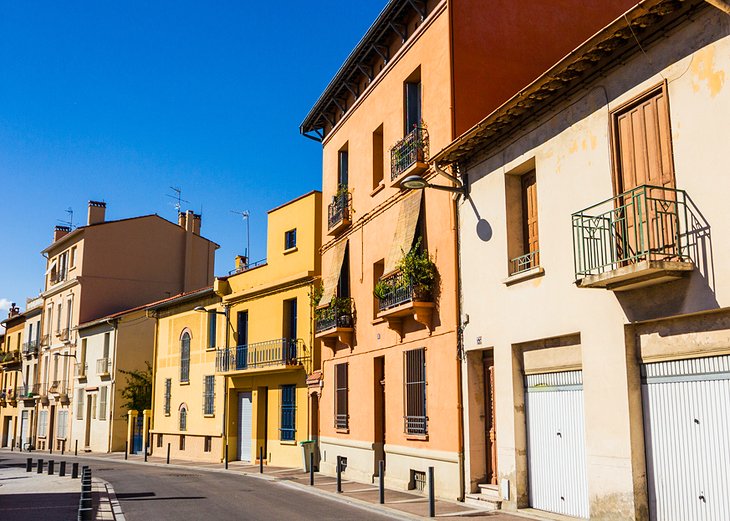
About 15 kilometers away from the sea, Perpignan is a sunny Mediterranean town featuring characteristic red-tile roofed buildings and streets lined with palm trees. There is a distinct Spanish influence because of the proximity to the Pyrenees Mountains that border Spain's Catalonia region.
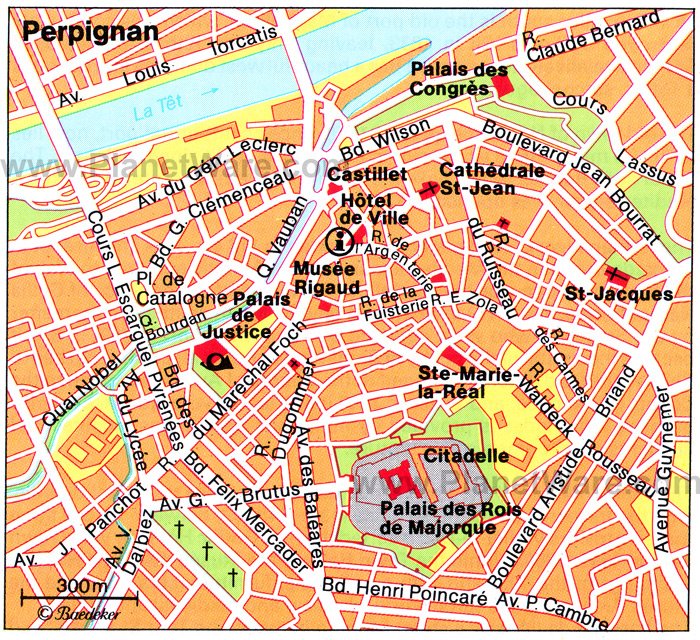
Le Castillet, a 14th-century fortified tower, was once the main entrance gate into the medieval walled town. The only remaining portion of the old ramparts, Le Castillet is Perpignan's most emblematic landmark.
The Castillet houses the Casa Pairal, a museum of Catalan folk art. The top level of the Castillet tower (accessed by climbing 142 steps) at one time was a donjon. Today, tourists can ascend the tower to admire panoramic views of Perpignan and the Pyrenees Mountains in the distance.
Another must-see attraction is the Cathédrale Saint-Jean-Baptiste, which exemplifies Southern Gothic architecture. Built in the 14th and 15th centuries, the cathedral has an ornately decorated interior. The most notable features are the 16th- and 17th-century reredos, the white marble high altar, and a celebrated sculpture of Christ created in 1307.
Perched on a promontory above the old town, the Palais des Rois de Majorque offers a stellar example of medieval military architecture. This vast fortress dates back to 1274 and was the residence of Jacques II, the Count of Roussillon and Cerdagne, as well as the King of Mallorca. In the 13th century, Perpignan was the capital of the Kingdom of Mallorca.
Nîmes
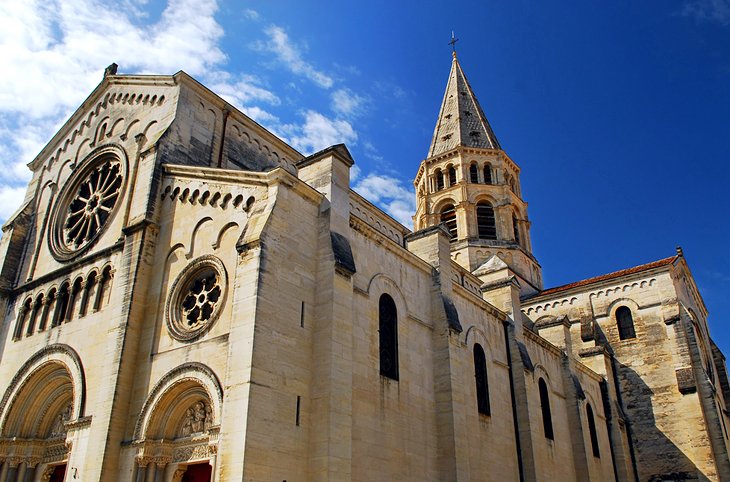
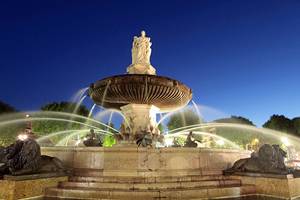
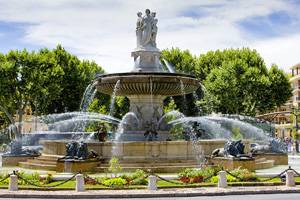
In the foothills of the Cévennes Mountains, Nîmes has the distinctive characteristics of sultry Southern France: spacious public squares featuring refreshing fountains and outdoor cafés; lively traditional festivals, including bullfights; and an abundance of Roman monuments. The city's ensemble of ancient buildings is under consideration by UNESCO for inscription as a World Heritage Site.
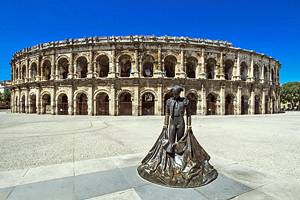
The Arènes de Nîmes in the town center is one of the best preserved of all the 70 known Roman amphitheaters. This richly decorated 1st century CE monument was able to accommodate 24,000 spectators. Hundreds of staircases provided access to the rows of seats.
Today, the Arènes de Nîmes hosts theatrical events on themes related to ancient Roman culture. In mid-August, Nîmes Cité des Dieux (Nîmes, City of the Gods) presents mythological tales, ancient battle scenes, and circus acrobatics. With dazzling sets and special effects, the show tells the stories of ancient civilizations that have left their mark on Nîmes.
Another historical drama, called Vercingetorix, takes place at the Arènes de Nîmes in early May. This show reenacts a legendary battle between a Gallic leader and Julius Caesar.
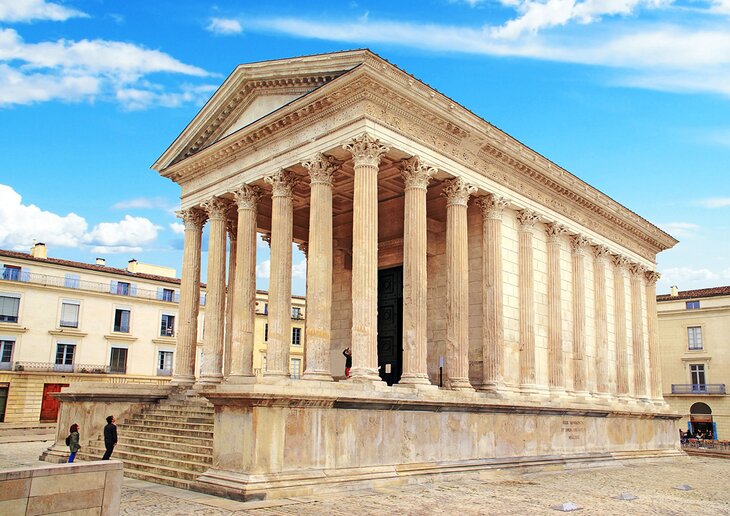
After visiting the Arènes de Nîmes, the next essential stop in Nîmes is the Maison Carrée, a remarkable ancient monument on the Place de la Maison Carrée. Standing on a podium, this perfectly maintained Roman temple was erected from 20 BCE to 12 BCE during the reign of emperor Augustus. The Maison Carrée is considered the best-preserved sanctuary of the ancient Roman world.
At the end of the Avenue J. Jaurès lies the tranquil Jardins de la Fontaine, one of tourists' favorite places to visit in Nîmes. These Neoclassical gardens were laid out in the 18th century by Jacques-Philippe Mareschal at the request of Louis XV. Within the 15-hectare grounds are ruins of the ancient Roman Temple de Diana, which stands near a natural spring, and the 3rd century BC. Tour Magne (defense tower).
In a sleek ultra-modern building that was unveiled in 2018, the Musée de la Romanité allows visitors to discover the fascinating ancient history of Nîmes. The museum has an extensive collection of Gallo-Roman archaeological finds, which provide evidence of a city that thrived here two millennia ago.
Just 23 kilometers away from Nîmes is the Pont du Gard, an impressive Roman aqueduct. This UNESCO World Heritage Site is a masterpiece of ancient engineering. With its three levels of arches that span the Gard River, the 50-meter-high aqueduct is a truly a breathtaking sight to behold.
Narbonne
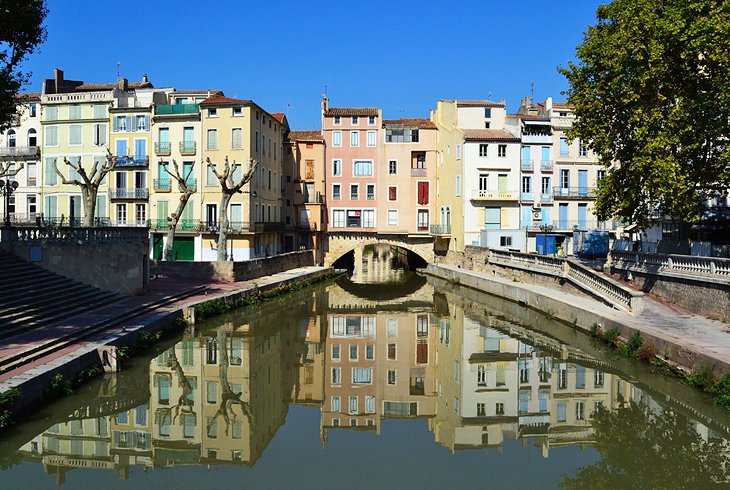
An important ancient Roman town because of the nearby port, Narbonne is a vibrant city about 15 kilometers from beaches along the Mediterranean. That's close enough to benefit from the pleasant sea breezes.
Narbonne is built up along the Canal de la Robine, which is skirted by picturesque tree-lined pedestrian paths. This is one of the best places to visit in the city for a leisurely stroll.
A top tourist attraction is the Palais des Archevêques (Archbishop's Palace). Constructed in the 13th and 14th-centuries, this impressive Gothic palace houses the Musée d'Art et d'Histoire with a superb collection of 19th- and 20th-century paintings, enamels, furniture, and faïence ceramics; and the Musée Archéologique with prehistoric, classical, and medieval antiquities.
Adjacent to the Archbishop's Palace, the Cathédrale Saint-Just et Saint-Pasteur was built between 1272 and 1340. The cathedral exemplifies Rayonnant Gothic architecture, a surprising style in Southern France but obviously inspired by the grand cathedrals of northern France. The cathedral has a magnificent choir and exquisite 14th-century stained-glass windows.
In the southwest part of the town is the Early Gothic Basilique Saint-Paul. The church reveals some Romanesque elements from the early stages of its construction in the 12th century. The building was completed in the 13th and 14th centuries.
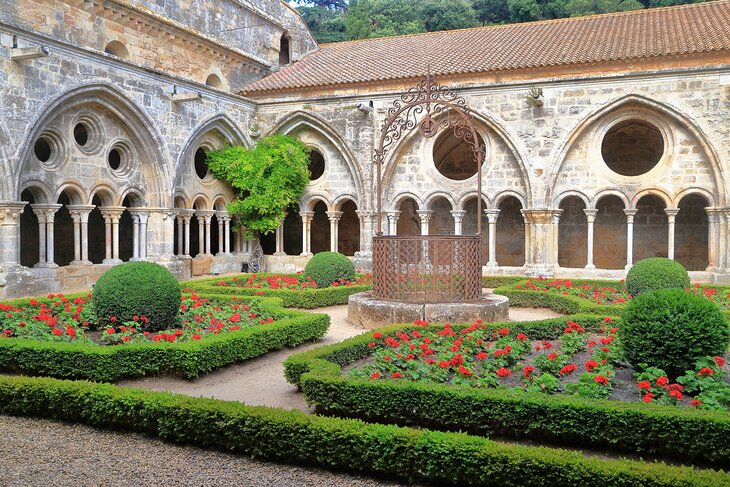
About 15 kilometers away from Narbonne in a peaceful valley is the Cistercian Abbaye de Fontfroide, founded in 1093. The abbey has a simple 12th- to 13th-century Romanesque church and a serene Gothic cloister. Lovely manicured grounds, with thousands of roses (blooming from May through September) and terraced Italianate gardens, blend into the tranquil natural environment.
The land surrounding the abbey is protected as part of the Narbonnaise Regional Natural Park. Hiking trails lead from the abbey through rosemary-scented scrublands into the Corbières foothills.
The abbey welcomes visitors daily year-round (except for Christmas Day and January 1st) and is renowned for its gourmet dining. Open for lunch every day, the Restaurant de Fontfroide has been awarded a "toque" from the Gault & Millau guide. When the weather is pleasant, guests may enjoy their meal on the restaurant's outdoor terrace.
Overnight accommodations are available at the abbey's Maison sur le Pont, a small rental cottage that provides lodging for two or three people.
Uzès
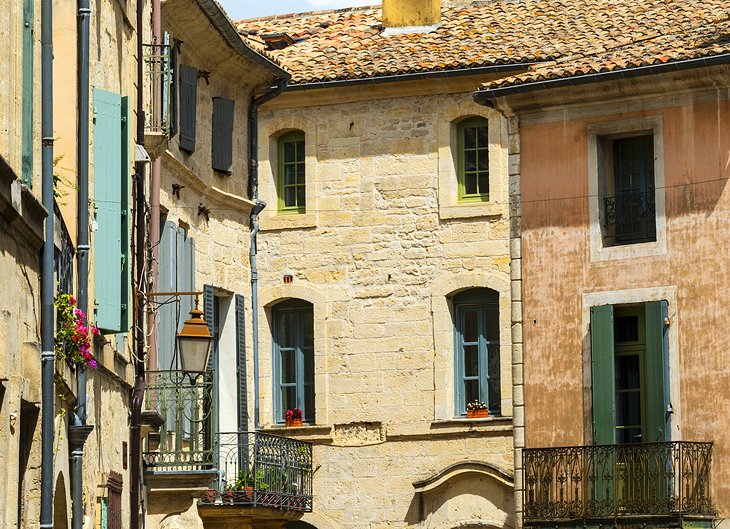
The historic town of Uzès lies beyond the boundaries of Provence about 40 kilometers west of Avignon in a pleasant setting above the wooded Alzon valley. Visitors will appreciate the alluring ambience of Uzès, with its narrow streets, quiet alleys, and shaded boulevards.
At the heart of Uzès, the Place aux Herbes, is shaded by leafy plane trees, lined with arcades and outdoor café terraces, and has an old fountain at the center. On Saturday and Wednesday mornings (from 7:30am until 1pm on Saturday and until 2pm on Wednesday), a traditional outdoor market takes place at this spacious medieval square. Dozens of local vendors set up parasol-shaded stalls, where they sell fruits and vegetables from nearby farms and other produits du terroir (products of the terroir).
Other attractions are the Château Ducal, which was built in various stages from the 11th to the 17th centuries, and the Musée Georges Borias, a museum of fine arts, archaeology, local history and ethnography, housed in the Ancien Evêché (former Bishop's Palace).

Aigues-Mortes
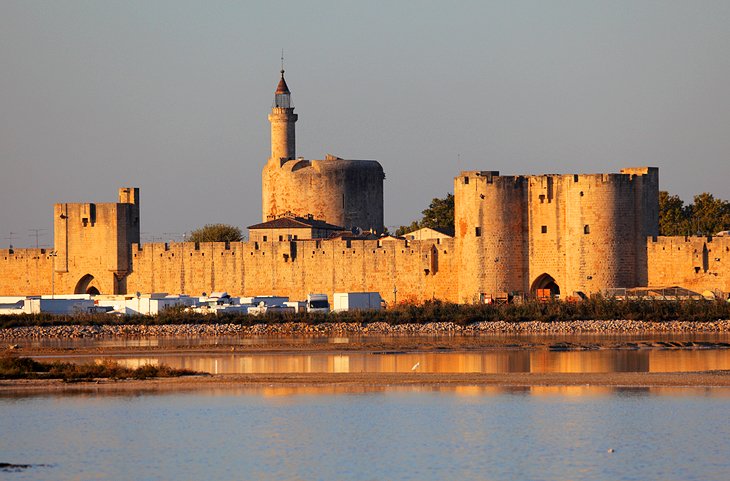
Presiding over a landscape of wetlands and salt marshes near the protected Camargue nature preserve, Aigues-Mortes is remarkable for its perfectly preserved medieval fortifications. The town is a 45-minute drive from Arles, and its historical value merits the journey.
King Louis IX (Saint Louis) developed the town in the 1240s for the purposes of commerce and to embark on a Crusade from the nearby port. The ramparts took more than 30 years to build; they form a rectangle, which still completely surrounds the town. The enclosure of defensive walls has 15 towers and 10 entry gates.
The best way to discover Aigues-Mortes is by walking around the walls beginning at the Porte de la Gardette. It's also worthwhile to take a stroll through the narrow streets of the old town to soak up the medieval ambience.
About two kilometers outside of the fortified town is the Salin d'Aigues-Mortes, where the prized Fleur de Sel de Camargue sea salt is harvested in an artisanal manner. Sea salt production in this region dates back to the ancient Roman era. Guided tours of the salt marsh are available in French. The site also has a small café and a boutique that sells a variety of Camargue sea salts, including aromatic or spiced salt blends and Fleur de Sel de Camargue.
Less than 10 kilometers away from Aigues-Mortes is Le Grau-du-Roi, an old fishing village that is now a modern seaside resort. Continue four kilometers farther south to the popular holiday resort of Port Camargue, with its yacht marina, wide sandy beaches, and pretty vacation homes.
Another bustling summertime resort town by the sea is Saintes-Maries-de-la-Mer located about 30 kilometers from Aigues-Mortes within the 60-hectare Parc Ornithologique du Pont de Gau, a fantastic place for bird-watching, with over 300 species of birds.
Both Saintes-Maries-de-la-Mer and the Parc Ornithologique du Pont de Gau are found within the Parc Naturel Régional de Camargue, the UNESCO Biosphere Reserve that encompasses unspoiled marshlands, beaches, and sand dunes. The Camargue region is famous for its pink flamingos and the Camargue bulls that appear at traditional bullfighting events.
Saint-Gilles du Gard
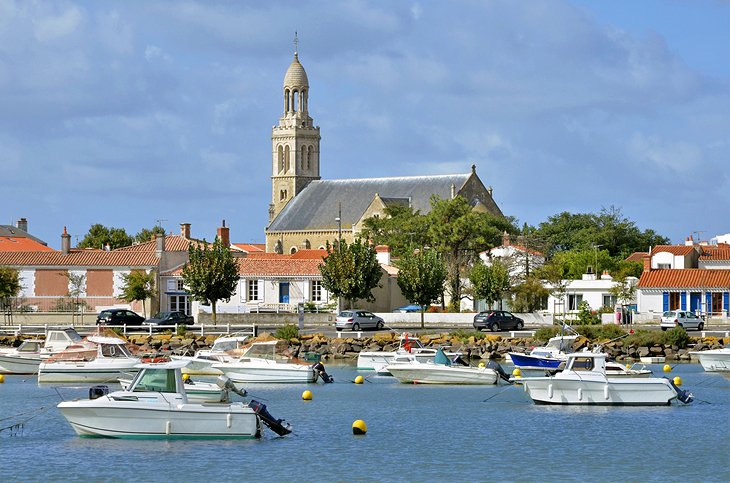
Saint-Gilles du Gard is surrounded by a lush pastoral landscape, about 20 kilometers from Arles. This historic port town makes it onto the tourist map because of its UNESCO-listed abbey church that dates to the 12th and 13th centuries.
The Abbatiale de Saint Gilles is one of the most exquisite Romanesque buildings in Southern France and was a stop on the Chemin de Saint Jacques medieval pilgrimage route to Santiago de Compostela in Spain. The richly decorated facade features the first detailed representation of the Passion in Western sculpture. The abbey church is open to the public for cultural visits every day year-round (except during Mass on Sunday mornings and on December 24th and 25th, and January 1st).
A short walk from the church is the 12th-century Maison Romane (Romanesque House), which belonged to Fucoldi, a 13th-century troubadour, jurist, and pope. The house contains the Musée de la Maison Romane, a collection of natural history, sculptures from the town's Romanesque abbey, and ethnography (focused on the regional culture). The second-floor windows overlook the rooftops of Saint-Gilles and the outlying countryside.
Saint-Gilles du Gard is a convenient base to explore the nearby Parc Naturel Régional de Camargue (less than 5 kilometers away). It's also an easy drive to Arles (less than 20 kilometers away).
Béziers
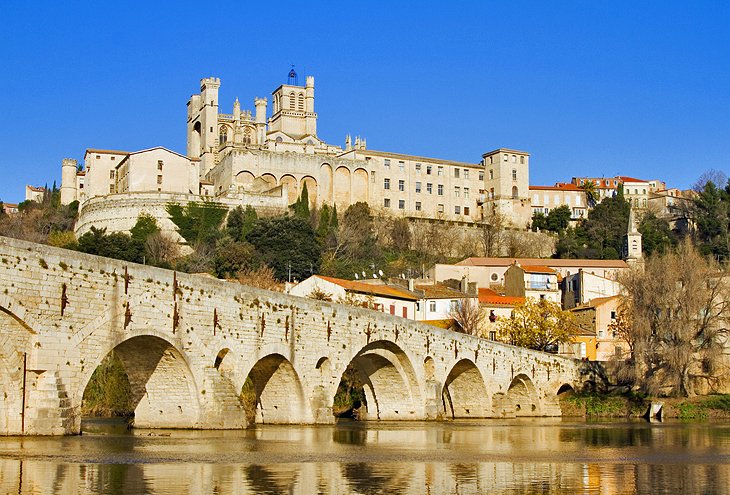
Béziers enjoys a dignified position on a hillside overlooking the Canal du Midi, which has proven beneficial for centuries. During ancient times, Béziers was a busy Roman military colony.
Two historic churches reveal the city's early Christian and Romanesque heritage: the Eglise Sainte-Madeleine (Eglise de la Madeleine), originally built in the 11th century but later altered in Gothic and then Baroque style, and the 12th- to 14th-century Basilique Saint-Aphrodise, which contains a 3rd-century sarcophagus.
In the center of the old town is the 18th-century Hôtel de Ville (town hall). Standing on higher ground a few minutes' walk away is the Cathédrale Saint-Nazaire et Saint-Celse, a rare fortified church of the 12th to 14th centuries, with massive towers and a large rose window on the west front.
Continuing north to the Rue du Capus is the Musée des Beaux-Arts housed in the Hôtel Fayet, a historic mansion that dates to the 17th century. This superb museum of fine arts is renowned for its extensive collection of 19th-century paintings, including works by Corot, Delacroix, and Géricault.
At the south end of town just outside the medieval walls, the Eglise Saint-Jacques dates in part from the 10th century (Carolingian Romanesque era). Renovated in the 12th century, the church was a stop on the Chemin de Saint Jacques medieval pilgrimage trail to Santiago de Compostela in Spain.
The garden terrace of the Eglise Saint-Jacques features spectacular views of the Mediterranean coastline and the Cévennes mountain range. Nearby are the ruins of an ancient Roman amphitheater (on the Rue des Anciennes Arènes).
Further afield, about 14 kilometers west of town, the Oppidum d'Ensérune archaeological site reveals the remains of an Ibero-Greek settlement of the 4th and 3rd centuries BCE.
Villefranche-de-Conflent
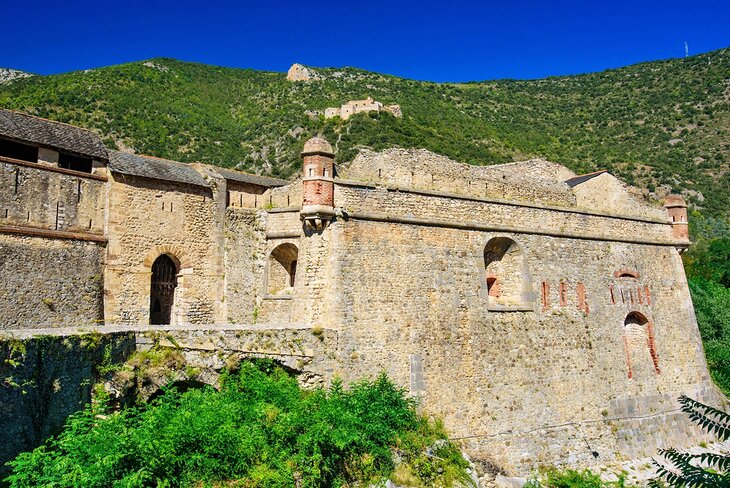
At the junction of the Cady and Têt rivers, the historic village of Villefranche-de-Conflent is listed as one of the Plus Beaux Villages de France (Most Beautiful Villages of France). The medieval fortified town was once an important stop on the pilgrimage road to Santiago de Compostela in Spain. Within the ramparts are atmospheric narrow lanes; elegant 15th-, 16th-, and 17th-century houses; restaurants; artisan boutiques; and other inviting shops.
Another highlight of the village is the Eglise Saint-Jacques, built between the 12th and 13th centuries. Noteworthy paintings of Saint Pierre and Saint Antoine adorn the somber Romanesque sanctuary.
Perched on a rocky spur above the town is Fort Libéria, created by Sébastien Le Prestre de Vauban (military engineer during the reign of Louis XIV) in the 17th century. This UNESCO-listed citadel features strong defensive walls that were designed to protect against a siege. Watchtowers provide sweeping perspectives of the valleys below.
Villefranche-de-Conflent lies 50 kilometers west of Perpignan in the Parc Naturel Régional des Pyrénées Catalanes (Regional Natural Park of the Catalan Pyrenees Mountains). The town is a good base for visiting the Cerdanya Valley, a sunny high-mountain area that has been a health resort since the early 20th century.
South of Villefranche-de-Conflent is the village of Corneilla-de-Conflent at the foot of Le Canigou mountain. The tiny village has an ancient church, the Eglise Notre-Dame de Corneilla, which dates back to the early 11th century and was later incorporated into a monastery. The church's doorway features a finely carved tympanum, and the interior is richly decorated.
Sète
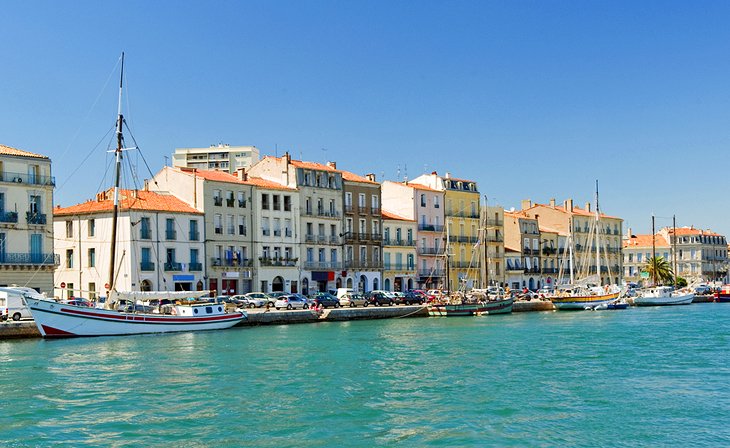
At the foot of Mont Saint-Clair, the atmospheric town of Sète is traversed by many canals. After Narbonne and Aigues-Mortes were cut off from the sea by the accumulation of sand, Sète became the principal port for trade with North Africa. It is now an important fishing and commercial port.
The Vieux Port (Old Port) dates from the time of Louis XIV. From the Môle St-Louis, there are gorgeous views of the town and Mont Saint-Clair.
The renowned Jazz à Sète event takes place every year in July. The high-caliber festival features a varied program of performances, including swing, blues, and contemporary jazz.
Céret
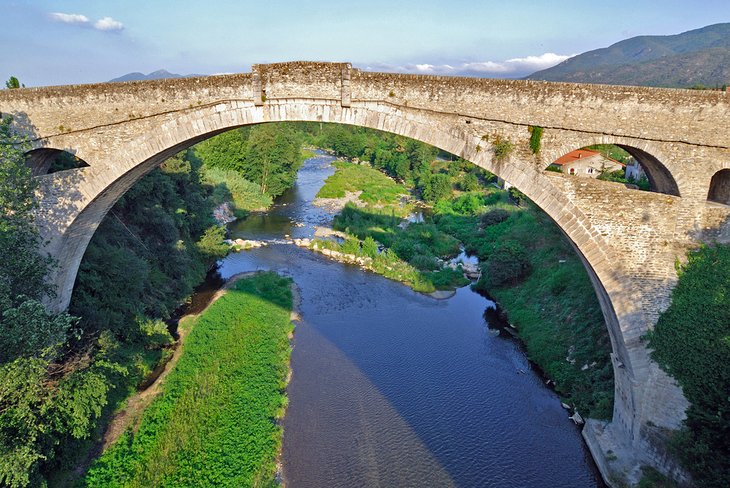
Céret is a lovely artists' town about 32 kilometers southwest of Perpignan in a delightful countryside setting. At the beginning of the 20th century, the Catalan sculptor Manolo (Manuel Martinez Hugué) and the composer Déodat de Sévérac inspired many celebrated artists to come to Céret, turning the town into an artists' colony.
The Musée d'Art Moderne de Céret now possesses many works of modern art including pieces by Matisse, Chagall, Maillol, Dalí, Miró, and Picasso. The museum's war memorial was designed by Maillol.
Amélie-les-Bains
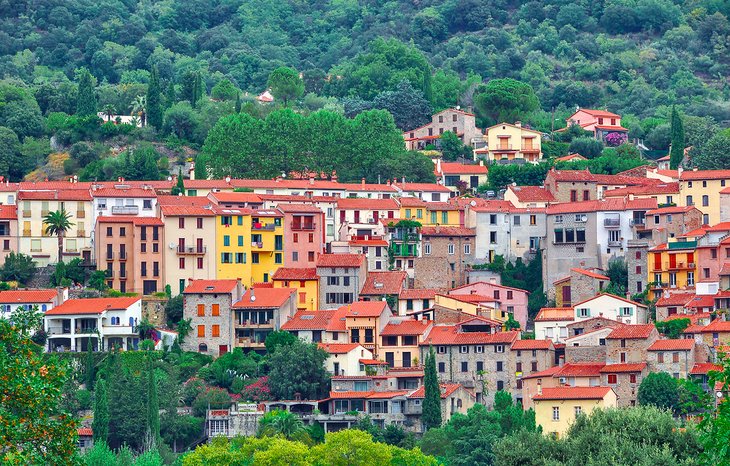
Nestled in the idyllic Tech Valley (12 kilometers from Céret), the spa town of Amélie-les-Bains was named after the wife of Louis-Philippe, the Duc d'Orléans. The mineral waters from the natural springs have been praised for their health value since Roman times. The remains of ancient Roman baths can be seen in the modern spa establishment, Thermes et Spa d'Amélie-les-Bains, which is part of the Chaîne Thermale du Soleil company.
The town also has a historic church that dates back to the 10th century. A big tourist draw of Amélie-les-Bains is the lively International Folklore Festival (Festival Folklorique International). This annual week-long festival in August showcases folkloric dance and music from around the world.
Amélie-les-Bains is also an ideal staring point for a trip into the Mondony Valley, about eight kilometers southeast, which has a hiking route to Le Roc de France at 1,450 meters. This advanced hike takes about 4.5 hours to complete the 11.4 kilometer round-trip trail. The hike has an elevation gain of 700 meters and offers rewarding views of the Mondony Valley, Le Roc Saint-Sauveur, and Mount Canigou.
Arles-sur-Tech
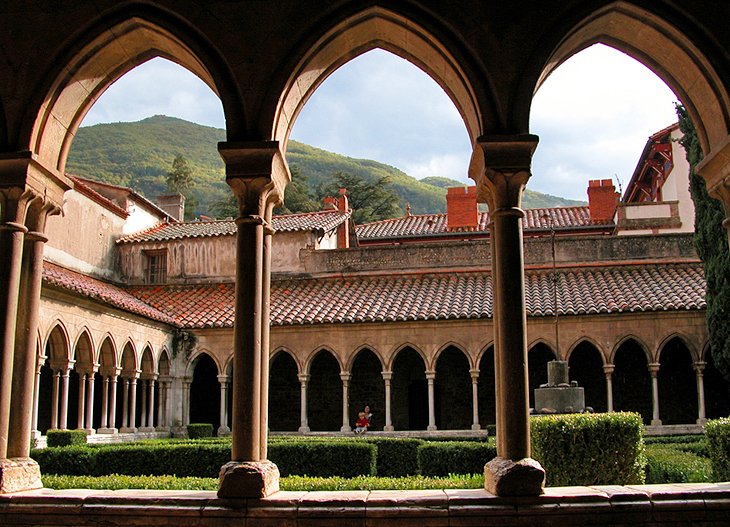
The Puig de l'Estelle mountain peak provides a picturesque backdrop for the little town of Arles-sur-Tech. The town is nestled in a lovely natural environment, three kilometers southwest of Amélie-les-Bains.
The town grew up around a Carolingian abbey, the Abbaye Sainte-Marie, that was founded in the 8th century. The abbey's Romanesque church is well preserved and contains ancient sarcophagi, one of which dates from the 4th century. The church's 13th-century Early Gothic cloister is magnificent. (To find the cloister, enter from the north aisle of the church.)
Near the abbey is the town's parish church, the Eglise Saint-Sauveur, with a majestic tower and an ornate interior. The church is only open for music concerts and certain religious ceremonies.
Saint Martin-du-Canigou
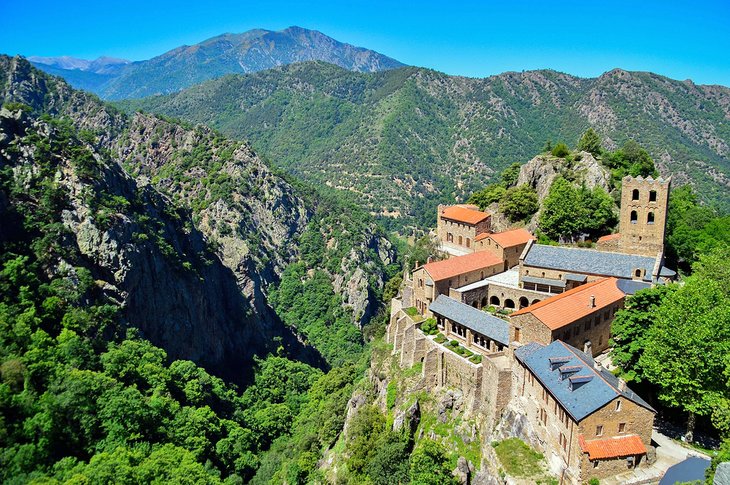
Soaring to 2,785 meters, Le Canigou is one of the highest peaks in the Eastern Pyrénées, commanding extensive views over the landscape. This mountain is seen in the background of Saint Martin-du-Canigou, a small village eight kilometers from Villefranche-de-Conflent. Visitors will be delighted by the town's sublime scenery and its historic abbey.
Standing on a precipice overlooking the Vallée du Cady, the Abbaye Saint-Martin-du-Canigou offers a soul-inspiring setting for prayer and meditation. The 11th-century Romanesque abbey is home to the Communauté des Beatitudes evangelical community. Pilgrims and tourists may visit the abbey on guided tours. It is also possible to attend Mass or to participate in a spiritual retreat.
Nearby is the little village of Casteil, perched on a crag at an altitude of 1,094 meters. A top tourist attraction is the Parc Animalier de Casteil, a zoo with spacious enclosures that allow the animals to roam free. The Parc Animalier de Casteil is found within the Parc Naturel Régional des Pyrénées Catalanes.
Cap d'Agde
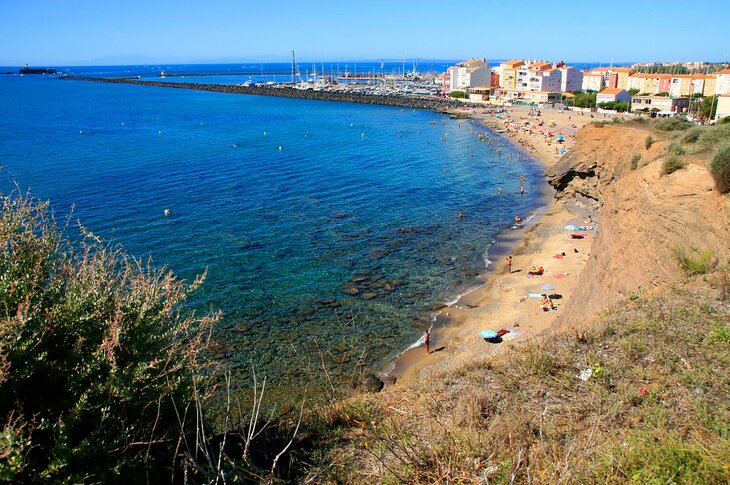
This popular beach resort, less than 30 kilometers away from Béziers, is well designed to welcome visitors during the vacation season. There are many modern seaside hotels, and the sandy beaches have excellent public facilities.
Four kilometers from the coast is Agde, a pleasant riverside city with narrow cobblestone streets and interesting historic landmarks. In Vieux Agde (the Old Town), the Cathédrale Saint-Étienne is an unusual Romanesque cathedral constructed from black volcanic stone. It was originally built in the Carolingian era (9th century) and fortified with defensive walls and a donjon in the 12th century.
In a Renaissance hôtel particulier (mansion) at the center of Vieux Agde, the Musée Agathois Jules Baudou displays an excellent collection of paintings, including folk art and religious art. This top-notch museum (labeled as a "Musée de France") also exhibits Art Nouveau furniture; traditional local costumes and home decor; and items recovered by underwater archaeology.
Prades
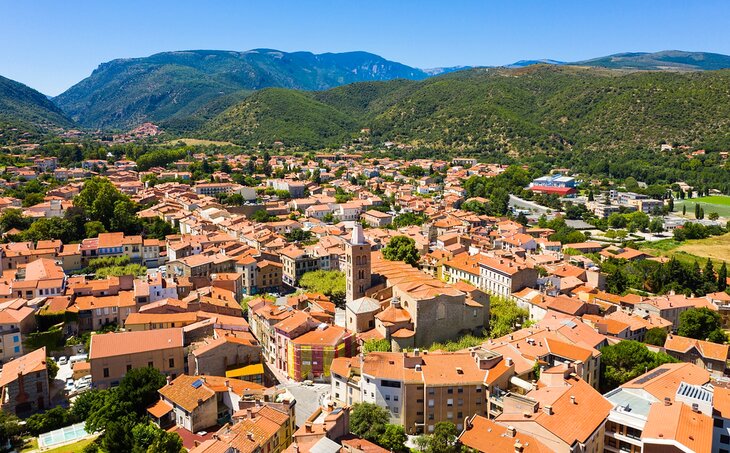
The picturesque village of Prades stands at the foot of Le Canigou mountain in the Têt Valley. About 44 kilometers from Perpignan, Prades is part of the Parc Naturel Régional des Pyrénées Catalanes (Regional Natural Park of the Catalan Pyrenees Mountains) and is culturally tied with the neighboring Catalonia region of Spain.
The town boasts an interesting Gothic church, the Eglise Saint-Pierre, which mainly dates to the 17th century. The church was built on the site of a 12th-century Romanesque church, but only the bell tower remains. Noteworthy works created by Catalonian artists include the Baroque altar by Joseph Sunyer and the mural paintings by Léo Polge.
The famous cellist Pablo Casals (1876-1973) lived in exile in Prades. As a tribute to Casals, the town hosts an annual chamber music festival, the Festival Pablo Casals. Held in July and August, the festival presents classical chamber music such as pieces by Mozart, Bach, Beethoven, Haydn, and Debussy, as well as some contemporary pieces.
Many of the Pablo Casals Festival concerts are held in the nearby community of Codalet (eight kilometers away from Prades) at the Abbaye Saint Michel de Cuxà, a beautiful early-Romanesque church with a 10th-century nave and a striking 11th-century bell tower. The sanctuary provides exceptional acoustics.
Cerbère
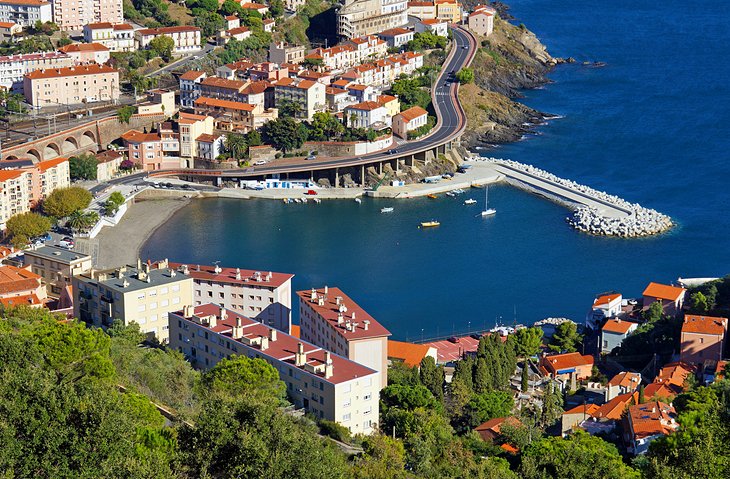
This laid-back seaside village lies near France's border with Spain. Cerbère is only six kilometers away from the Catalan town of Portbou and shares some of the traditions of Catalonia. The main tourist attraction of Cerbère is its small protected beach, the Plage de Peyrefite, which has a snack bar and lifeguard supervision.
Vacationers will also enjoy the pleasant town square and scenic waterfront lined with cafés and restaurants.
To take in the beauty of the landscape, travel southwest of town to the Cap Cerbère, a rugged promontory with exceptional views of the Spanish coastline.
Cerbère is easily accessible by train. From Perpignan, the train ride only takes 37 minutes. It's also possible to take a train from Cerbère to Barcelona in Spain, which takes less than three hours.
More Related Articles on PlanetWare.com
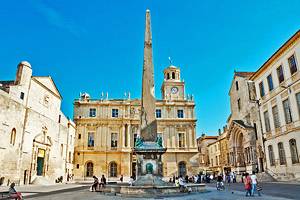
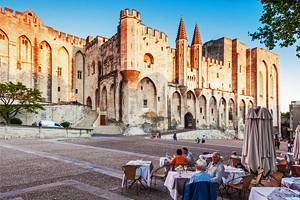
Visiting the South of France: An interesting vacation itinerary combines the top sights of the Languedoc with attractions in the western portion of the Provence region. From Nîmes, it's only a 30-minute drive or train ride to Avignon, renowned for its 14th-century papal palace, and only slightly farther (a 40-minute drive or one-hour train ride) to Arles, where Vincent van Gogh painted his famous scenes of the town's outdoor cafés.
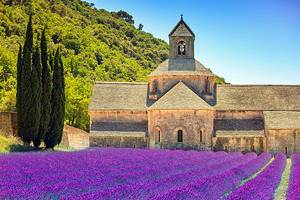
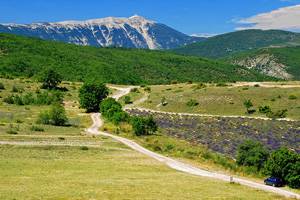
Country Charm of Provence: To experience the bucolic landscape of Provence, drive west from Nîmes to Les Baux-de-Provence or head north to the rolling hills of the Haut-Vaucluse, an area dotted with ancient Roman archaeological sites and medieval hilltop towns. A particularly scenic corner of the Haut-Vaucluse, the Luberon delights visitors with picturesque villages tucked away in the quiet countryside.
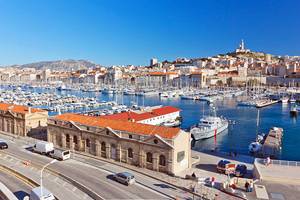
Seaside Splendor and Beautiful Beaches: For those seeking an authentic taste of Provence, the port town of Marseilles (about a two-hour drive away from Montpellier) dazzles, with its bustling harbor and vibrant cosmopolitan culture. Continuing to drive east (about two hours from Marseilles) is the glamorous seaside resort of Saint-Tropez, famous for its sandy beaches, fancy restaurants, and charming village ambience.