10 Top-Rated Tourist Attractions in La Rochelle
With its weather-beaten harbor and salty sea air, La Rochelle has the distinctive character of an ancient port town. Imposing fortified towers guard the city, which overlooks a picturesque bay of the Atlantic Ocean.
La Rochelle has a fascinating historic district, which is full of impressive old buildings. A stroll through the cobblestone streets takes you on a journey back in time, from the Middle Ages to the 18th century.
This cultured city boasts an astounding array of museums. It's also a place for outdoor activities, such as biking, sailing, nature walks, and seaside relaxation.
For the perfect beach getaway, the dreamy Island of Ré is just a short drive away. Several other day trip options are within easy travel distance, including Rochefort, the elegant 17th-century naval base, and the small country village of Esnandes.
Learn about the best places to visit and things to do in La Rochelle with our list of the top attractions.
See also: Where to Stay in La Rochelle
- 1. Vieille Ville (Old Town)
- 2. Vieux Port (Old Port)
- 3. La Rochelle Aquarium
- 4. Musée d'Histoire Naturelle
- 5. Musée du Nouveau Monde de La Rochelle
- 6. Musée des Beaux-Arts de La Rochelle
- 7. Protestant Heritage: Museum & Temples
- 8. Musée Maritime
- 9. Parc Charruyer
- 10. Cathédrale Saint-Louis
- Where to Stay in La Rochelle for Sightseeing
- Day Trips from La Rochelle
- Île de Ré
- Rochefort
- Esnandes
- Map of Attractions & Things to Do in La Rochelle
1. Vieille Ville (Old Town)
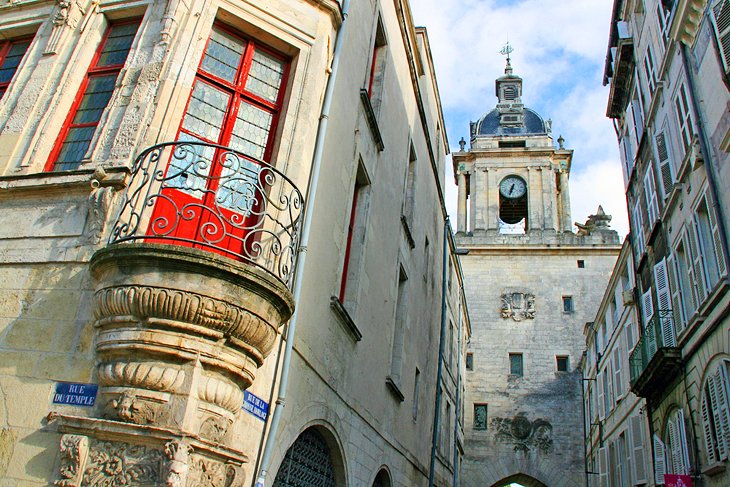
Get ready to do some walking through the pedestrian-only cobblestone streets of the Vieille Ville. La Rochelle's historic quarter invites you to step back in time. You will cover several centuries of history while wandering around and admiring the sights.
At the center of the Vieille Ville is the richly decorated Hôtel de Ville. The building dates back to the 13th century, which makes it France's oldest town hall. The Hôtel de Ville was reconstructed in the late 15th century and recently restored after a fire in 2013 damaged the building. Today, the Hôtel de Ville is open for visits Monday through Saturday.
Nearby on a quiet side street (11 Bis Rue des Augustins), the opulent 16th-century Maison de Henri II exemplifies Renaissance grandeur. The garden courtyard of the Maison de Henri II is open every day year-round. The interior of the monument is not open to the public.
At the northeast corner of the Hôtel de Ville, is the Rue des Merciers (Street of the Haberdashers) lined with half-timbered medieval houses and stately townhouses. True to its name, the street has many clothing boutiques in its rez-de-chaussée arcades.
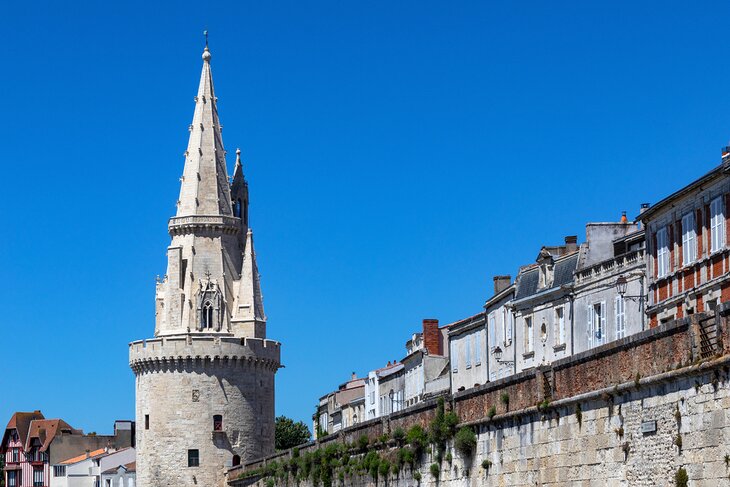
A focal point of the city, the 15th-century Tour de la Lanterne was built as a lighthouse and was formerly used as a prison. Buy a ticket to see the interior of the Tour de la Lanterne (open daily year-round). The old prison cells are covered with prisoners' graffiti, and you can take in the sweeping views from the top (reached by a staircase of over a hundred steps).
Just north of the Tour de la Lanterne on the Rue du Palais are two splendid 18th-century buildings: the Palais de Justice (Law Courts) and the Bourse (Stock Exchange).
At the end of the Rue du Palais is the 14th-century Porte de la Grosse-Horloge (Door of the Grand Clock), originally an entrance gate to the Vieille Ville from the port. This classified Monument Historique is a remnant of the town's medieval-era ramparts.
Read More: Top Attractions & Beautiful Villages in Poitou-Charentes
2. Vieux Port (Old Port)
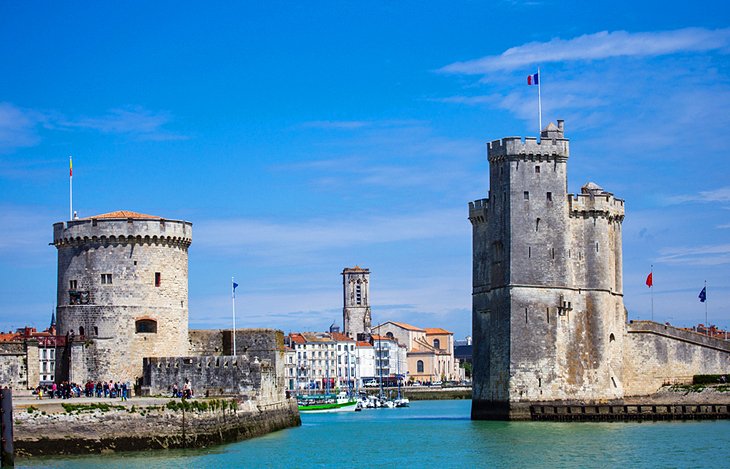
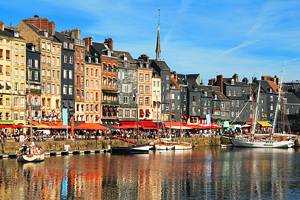
Spending time at the atmospheric Vieux Port is one of the most exciting things to do in La Rochelle. At this historic port, you can embark on a cruise, dine at a waterfront restaurant, or simply enjoy the seaside ambience.
The harbor is filled with small fishing boats (and touristic boats) and lined with enticing restaurants. Many of the restaurants serve classic French cuisine, including fresh seafood. You can enjoy a leisurely meal on an outdoor terrace facing the port.
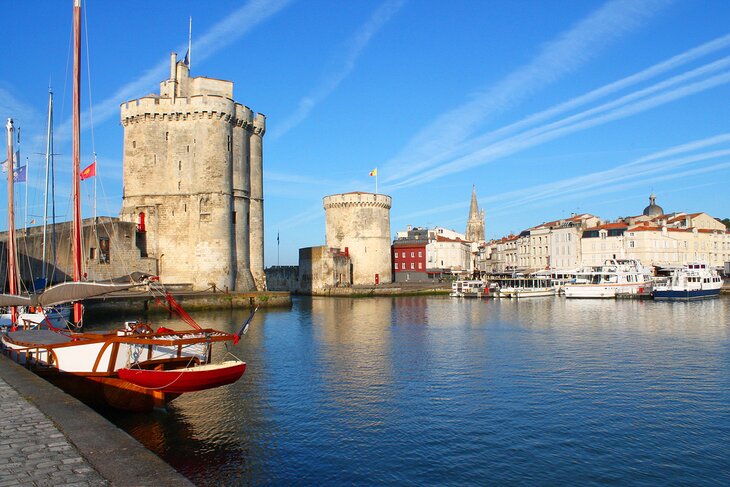
The entrance to the Vieux Port is guarded by two medieval towers, the massive Tour Saint-Nicolas on the east side and the imposing Tour de la Chaîne on the west. The Tour Saint-Nicolas was designed as a fortress to protect the city from invaders.
The Tour de la Chaîne on the Rue sur les Murs (Tower of the Chain on the Street of Walls) takes its name from the chain that was drawn across the mouth of the harbor and attached to the defensive walls at night during the Middle Ages.
The south side of the harbor affords a sensational view of the harbor and the town.
Read More: Best Cities in France
3. La Rochelle Aquarium
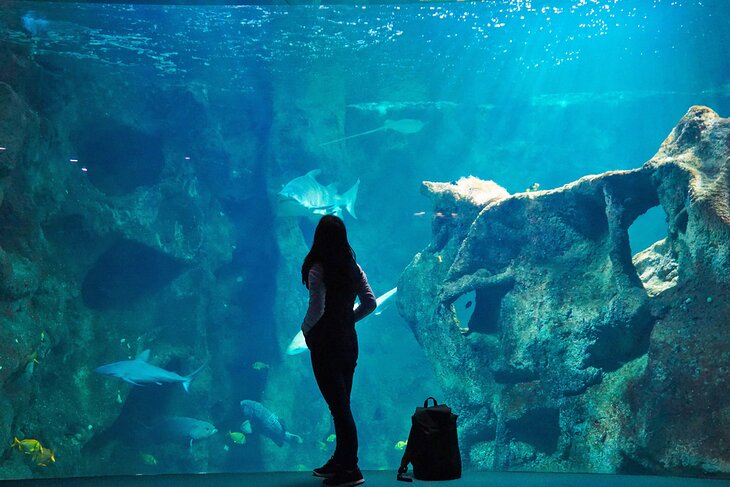
A marvelous underwater world awaits you at the La Rochelle Aquarium. With 82 tanks, the aquarium contains over 12,000 marine animals, from the Atlantic and Indo-Pacific oceans, the Mediterranean, and the Caribbean seas.
You can observe 600 different species, including distinctive animals such as transparent jellyfish, spotfin lionfish, long-snouted seahorses, and bonnethead sharks. Some aquarium residents are endangered or protected species, like the hawksbill turtles and coral reefs.
La Rochelle Aquarium has a souvenir shop and snack bar, as well as a restaurant, the Brasserie Là-Haut. At the Brasserie Là-Haut, you will be treated to refined French cuisine (with a focus on seafood) and splendid sea views. The dining room features floor-to-ceiling windows that look out onto a tropical garden and the Vieux Port.
Near the museum is the Port des Minimes district, where a small sandy beach is a locals' favorite.
Address: Quai Louis Prunier, La Rochelle
4. Musée d'Histoire Naturelle
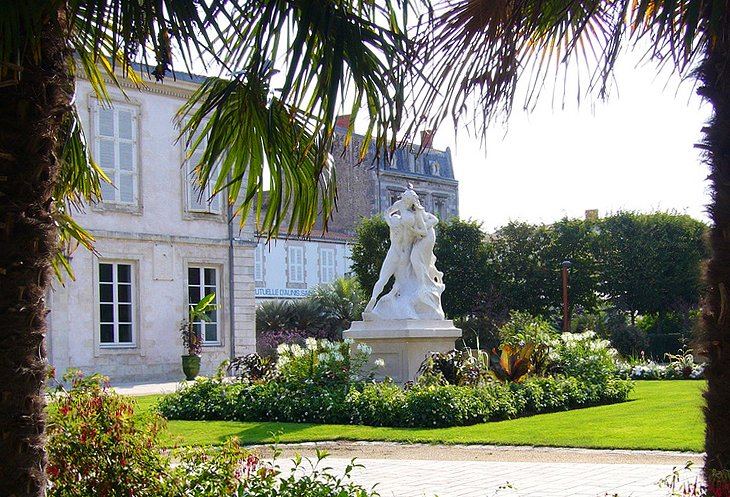
This fantastic museum of natural history dates back to the 18th century. The Musée d'Histoire Naturelle has been distinguished as a "Musée de France" by the Ministère de la Culture, signifying the museum's cultural value.
With 2,300 square meters of exhibition space, the museum displays an astonishing collection of around 10,000 objects found by naturalists and ethnographers from all over the globe. The collection allows you to discover the richness and diversity in the natural world, while learning about the science and history.
Highlights of the museum include the archaeological collection, especially the paleolithic tools and an assortment of ancient items from Africa; a geology collection focused on mineralogy and fossils; the zoology collection, in particular the seashells, birds' eggs, and birds' nests; as well as examples of extinct animals such as the dodo.
A tour of the museum concludes with the Jardin des Plantes, a botanical garden with plants from all over the world.
Address: 28 Rue Albert 1er, La Rochelle
5. Musée du Nouveau Monde de La Rochelle
The Musée du Nouveau Monde de La Rochelle documents the history of France's relationship with North and South America since the 16th century. The Museum of the New World covers topics such as colonialism and slavery.
The collections are presented in spacious Rococo and Neoclassical salons of the 18th-century Hôtel Fleuriau in the Vieille Ville. The rooms are decorated with exquisite furniture and art that reveals the world of shipowners and their enormous wealth.
Exhibits range from old maritime maps to historic information about trade routes in Brazil and the Caribbean. A spectacular piece by José Conrado Roza, called La Mascarade Nuptiale portrays a Brazilian dwarf in the King of Portugal's court.
Address: 10 Rue Fleuriau, La Rochelle
6. Musée des Beaux-Arts de La Rochelle
The Musée des Beaux-Arts is another exceptional museum in the Vieille Ville. The museum occupies the Hôtel Crussol d'Uzès, a bishop's palace built during the era of Louis XVI.
The museum displays around 900 European paintings and drawings from the 15th to 20th centuries. The 19th century is well represented, with masterpieces by Camille Corot, Paul Signac, Paul Huet, William Bouguereau, Eugène Fromentin, and Gustave Doré.
Because the museum has limited space to show its collection, the presentation changes regularly. The museum also features temporary exhibitions throughout the year.
Address: 28 Rue Gargoulleau, La Rochelle
7. Protestant Heritage: Museum & Temples
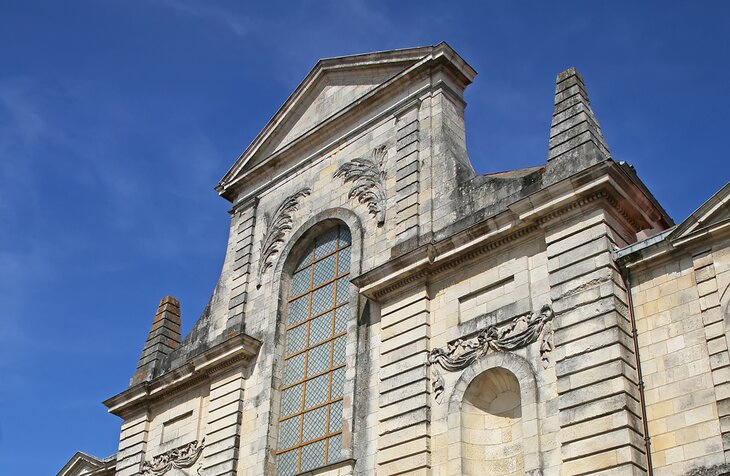
During the 16th and 17th centuries, La Rochelle was the capital of the French Protestant (Huguenot) Reformation in France. You can explore this religious heritage by visiting several Protestant churches and a museum dedicated to the local history of Protestantism.
The Musée Protestant in the Vieille Ville (2 Rue Saint-Michel) traces the history of Protestantism in La Rochelle. Exhibits are presented in chronological order, beginning with the Wars of Religion in the 16th century and progressing through key events such as the revocation of the Edict of Nantes in 1685 until the modern era. The Ministère de la Culture has awarded this museum the "Musée de France" label.
The Protestants of La Rochelle had several places of worship, called "temples." The Great Temple at the Place de Verdun was founded in 1577 but was transformed into a cathedral after the Great Siege of 1628. Other Protestant temples were also returned to the Crown after the Great Siege.
Since the Protestants didn't have a place of worship in 1628, Louis XIII donated a piece of land for their temple on the Prée Maubec, now the location of the Chapelle de l'Hôpital Saint-Louis (Rue du Prêche), which was destroyed in 1685. All that remains is the plaque above the door.
8. Musée Maritime
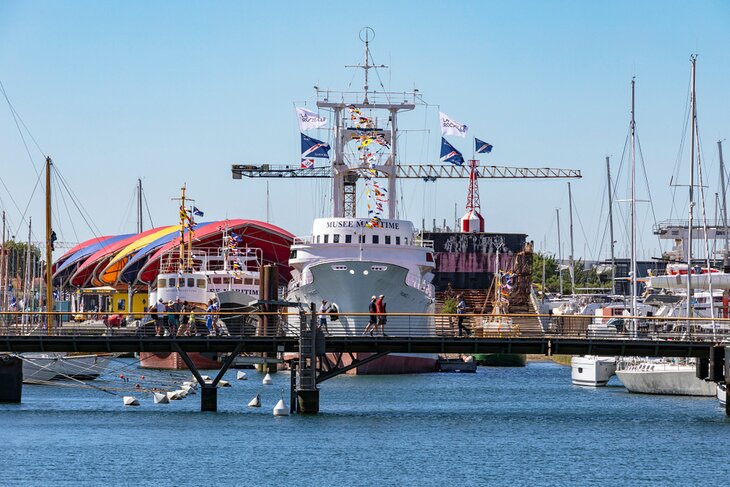
This maritime museum, moored at the La Rochelle docks, is a fleet of nine beautifully renovated ships. You may tour some of the boats. Highlights include the France 1 weather observation vessel, the Saint Gilles tugboat, and the Angoumois fishing trawler.
Boat conservation work (restoring traditional boats) is another aspect of the Musée Maritime, along with a project focused on sailing heritage and preserving the memory of seafarers.
The Musée Maritime is open year-round every day except Mondays.
Address: Place Bernard Moitessier, La Rochelle
9. Parc Charruyer
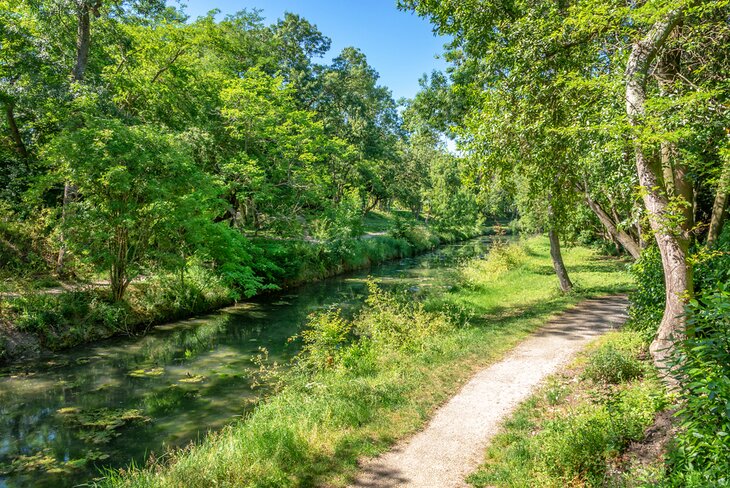
This peaceful 40-hectare green space extends along the Chemin des Remparts, the town's old fortifications. Unlike most French parks, the Parc Charruyer is not heavily landscaped and in many areas feels more like an unspoiled nature site.
The park is filled with a remarkable variety of trees and flowers, including a hibiscus garden. The park has two kilometers of walking paths. Meandering through the leafy grounds, pedestrian alleys, and footbridges invite leisurely strolls. The park also has a children's play area and waterways that provide a habitat for ducks (beloved among the youngest visitors).
At the south end of the Parc Charruyer, the seafront Allée du Mail was a meadow where fairs and festivals took place in the 15th century. This expansive lawn has been used since the 17th century to play Mail, the French equivalent of croquet.
10. Cathédrale Saint-Louis
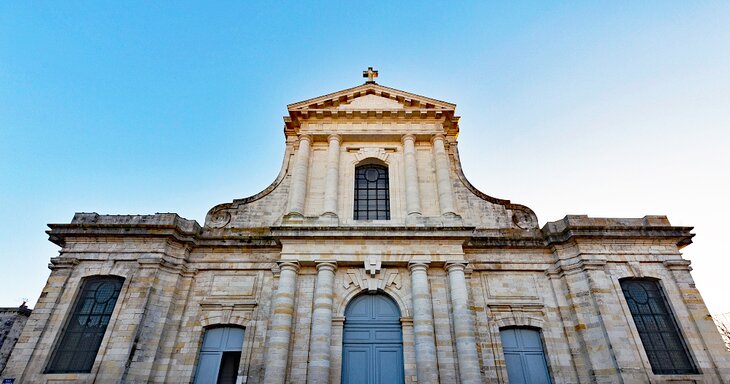
Although the Cathedral of La Rochelle does not compare to medieval Gothic cathedrals found in other cities of France, it is still a special place of worship.
Following the Siege of 1628, the city's Catholics decided to convert a former Protestant temple into a cathedral. The building is a gem of Neoclassical architecture, designed by Jacques-Gabriel and constructed between 1742 to 1762. Today, the Cathédrale Saint-Louis is classified as a Monument Historique.
Take time to admire the magnificent interior. The sanctuary is decorated in the Baroque style with rich ornamentation. Renowned local artist William Bouguereau painted the dome's ceiling frescoes in the 19th century.
The Cathédrale Saint-Louis is open year-round daily, from 9am until 7pm. Admission is free of charge.
Address: Place de Verdun, La Rochelle
Where to Stay in La Rochelle for Sightseeing
You will enjoy staying in the Vieille Ville if you love old-world charm and the convenience of being located within walking distance of the top tourist attractions. The Vieux Port has plenty of atmosphere, stunning harbor views, and a wide selection of restaurants.
Book a hotel on the peaceful Île de Ré for quiet nights and the feeling of getting away from it all. This idyllic island features gorgeous sandy beaches, quaint seaside villages, and some of the most luxurious accommodations. Plus, the island is just a short drive from La Rochelle.
Luxury Hotels:
- The Maison des Ambassadeurs is a five-star boutique hotel in the heart of the Vieille Ville. The interiors are decorated in a refined mid-century modern style. Amenities include an outdoor swimming pool, a full-service spa, an upscale gourmet restaurant, and room service. A hearty breakfast buffet is available for an additional charge.
- A renovated 17th-century shipowner's mansion was converted into the Hôtel de Toiras, an exclusive hotel on the Île de Ré. Overlooking the Saint-Martin-de-Ré harbor, this five-star Relais & Châteaux property offers the ultimate in classic luxury. Amenities include gardens, an outdoor swimming pool, and a chic restaurant with an outdoor terrace facing the port.
- One of the "Small Luxury Hotels of the World," the boutique four-star Le Clos Saint-Martin Hôtel & Spa (on the Île de Ré) ensures a pampering experience. Guest rooms feature soothing earth-tone minimalistic decor. If you're seeking relaxation and recreation, you'll love the hotel's Spa by Clarins, two outdoor swimming pools, gardens, and fitness center. Families or small groups of friends will appreciate the hotel's private villa.
Mid-Range Hotels:
- Steps away from the Vieux Port, Un Hôtel en Ville boasts a rooftop terrace with panoramic views. Recently refurbished, the guest rooms feature cheerful contemporary decor. This small boutique hotel is run by a welcoming couple who offer superb hospitality. The hotel serves a generous buffet breakfast that includes local and organic products.
- On the Île de Ré, the four-star Atalante Relais Thalasso offers spectacular ocean views. The resort-like property includes a beach, spa, two swimming pools (indoor and outdoor), fitness center, and bike rentals. Foodies will enjoy the hotel's gourmet restaurant, which specializes in cuisine of the terroir made with regional ingredients, especially fresh local seafood.
Budget Hotels:
- Perfectly situated at the center of historic La Rochelle, the two-star boutique Hôtel de Paris occupies an 18th-century townhouse. The cozy guest rooms feature views of the city or the hotel's courtyard garden. The hotel has a 24-hour front desk and a small dining room where breakfast is served (for an additional charge). A parking lot is located close to the hotel at the Place de Verdun.
- The Hôtel Première Classe La Rochelle Centre - Les Minimes provides affordable accommodations about a 25-minute walk from the historic center of La Rochelle, close to the aquarium (just a 10-minute walk). This two-star hotel has the feel of a youth hostel, however, it does offer clean, cheerful rooms. A generous breakfast buffet is available at a reasonable price. For added convenience, the hotel has a paid parking lot.
- The three-star ibis La Rochelle Vieux-Port offers comfortable accommodations in the Vieux Port area. The rooms are basic but include televisions, Wi-Fi, and private bathrooms. Breakfast and parking are available for additional charges.
Day Trips from La Rochelle
Île de Ré
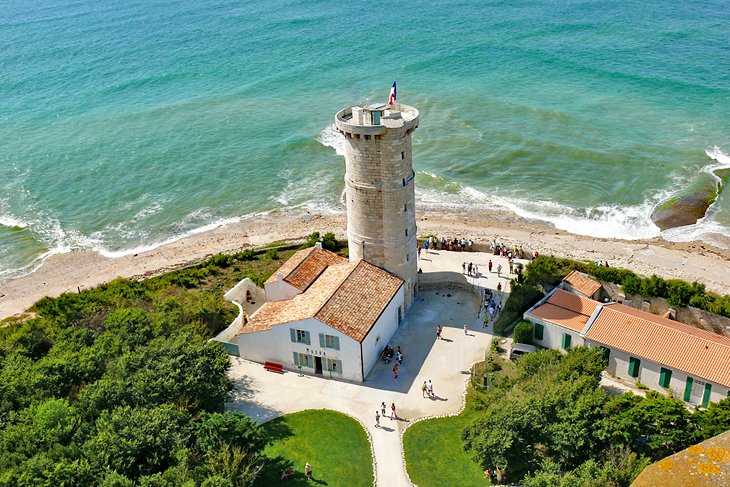
Travelers can easily escape to this relaxing island as a day trip, weekend getaway, or a longer seaside holiday. Just a short drive away (about 20 to 30 minutes), the Île de Ré is connected to La Rochelle by a three-kilometer bridge.
This idyllic island is prized for its seaside scenery, adorable villages, beautiful sandy beaches, scenic bike paths, and hiking trails. It's also famous for its salt marshes and delectable seafood specialties.
The Île de Ré is a place to relax, slow down to a more leisurely pace, take nature walks, and enjoy authentic meals at the island's seafood restaurants.
The island's historic capital, Saint-Martin-de-Ré is renowned for its UNESCO-listed 17th-century ramparts. This port town has an attractive harbor filled with little fishing boats that deliver fresh catches daily.
Read More: Top-Rated Beach Destinations in France
Rochefort
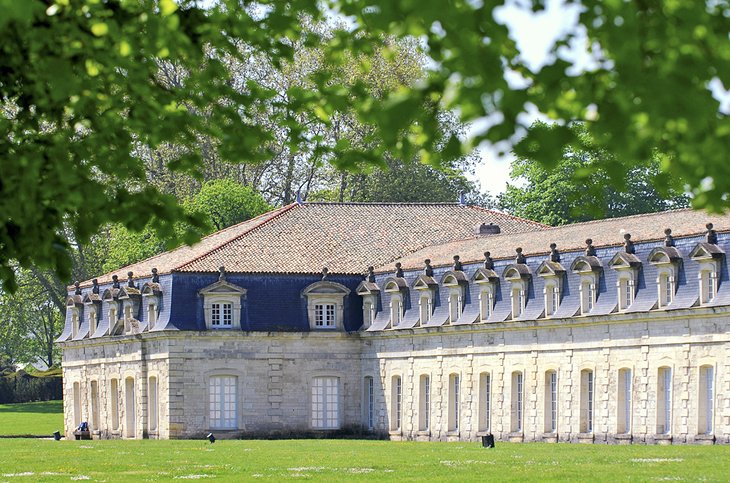
Built in the 17th century around the Charente River, this historic maritime city was developed as a naval base for King Louis XIV and his military arsenal. The city is designated a Ville d'Art et d'Histoire (City of Art and History) because of its important heritage.
The top attraction is La Corderie Royale de Rochefort, the factory that produced rope for the royal navy during the reign of Louis XIV. Exemplifying classical French architecture, this splendid building now houses the Centre International de la Mer (maritime museum).
Rochefort is 35 kilometers south of La Rochelle, about a 40-minute drive away or less than one hour by train.
Esnandes
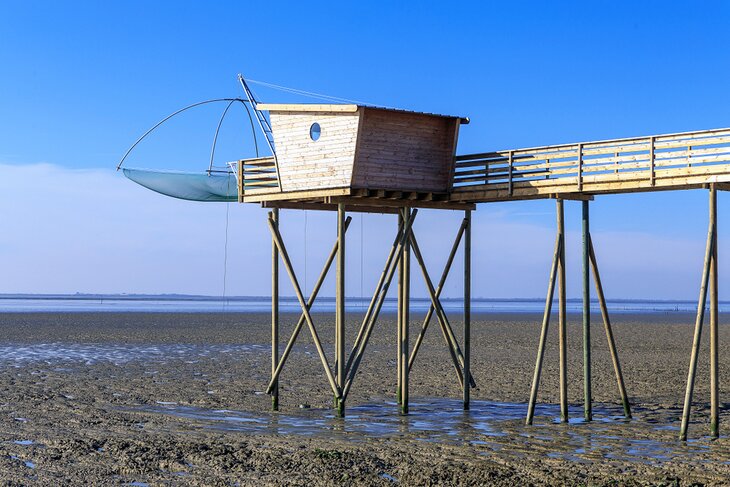
About 12 kilometers north of La Rochelle is the village of Esnandes, renowned for its Romanesque church, the Eglise Saint-Martin d'Esnandes. The church was altered in the 14th century when a crenelated defensive wall was added. However, it has retained its original facade, and the interior is generally well-preserved.
Near the town of Esnandes are several fine sandy beaches, which are popular during summertime.
Map of Attractions & Things to Do in La Rochelle
More Related Articles on PlanetWare.com
Southwest France: La Rochelle is surrounded by the picturesque landscape of the Poitou-Charentes region, which has many cultural attractions. Just a one-hour drive away is the ancient town of Saintes, renowned for its Romanesque churches and Archaeological Museum. Even more historic churches are found in Poitiers, about a two-hour drive away. The summertime beach resort of Royan is only a 90-minute drive from La Rochelle.
Farther south in the Aquitaine region, Bordeaux abounds with architectural treasures. The entire city is a UNESCO World Heritage Site, with over 350 buildings classified as historic monuments. For those seeking the best of the Atlantic coastline, the pristine sandy beaches of Arcachon and the fashionable seaside resort of Cap-Ferret are within a one- to two-hour drive from Bordeaux.
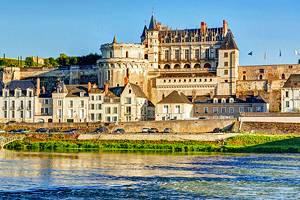
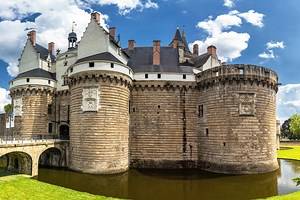
More Charming Historic Towns to Explore: Many detour-worthy towns are found in the Brittany region, considered one of the best places to visit in France. Rich in history, Nantes (a two-hour drive or 2.5-hour train ride) has a fortified 15th-century castle, which contains a museum, garden, and café-restaurant. Other highlights of Brittany, about a three-hour drive away are Rennes, the old capital city, and Vannes, an enchanting medieval town on the Gulf of Morbihan.
In the Loire Valley, the ancient town of Le Mans (about a three-hour drive from La Rochelle) brims with old-world charm. Le Mans' unique "Cité Plantagenêt" (historic district) is a delightful little world of tidy cobblestone streets, handsome half-timbered houses, and ornate Renaissance mansions.