

Essen, Germany's 10 Must-See Tourist Attractions For First-Time Visitors
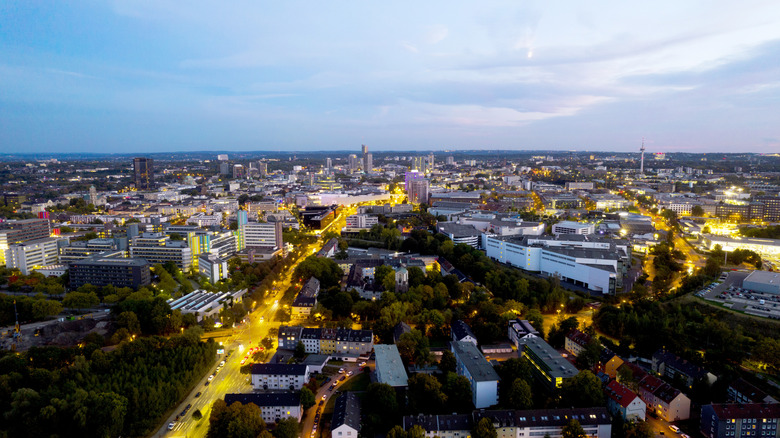
Essen, Germany, is arguably one of the most fascinating destinations in the country's Ruhr region. This area has been transformed from a post-industrial wasteland into a region that offers unique architecture, arts and culture, and plenty of relaxation — and Essen is at the heart of it. This city of just over half a million residents has undeniably been shaped by its industrial past, but that has actually given rise to some pretty cool attractions.
Once known primarily for its coal mines and steel production, modern Essen offers travelers a wide range of appealing activities that include museums, impressive urban parks, and fantastic classical music performances. In short, although Germany has many incredible vacation destinations, Essen is a place that delivers a rather unexpectedly fantastic stay.
Because Essen isn't as well-known as Berlin, Munich, or even Düsseldorf, many people arrive here not knowing what to expect. But that's exactly what makes a trip to this mid-sized city so rewarding. There are massive former coal mining complexes now listed as UNESCO World Heritage Sites, over-the-top villas constructed for industrial tycoons, and even one of Germany's best art museums. In this guide, we'll explore 10 must-see attractions for first-time visitors to Essen. Whether you're drawn to art, history, architecture, or simply want to check out Germany away from the usual tourist cities, Essen is a great place to begin exploring the Ruhr region.
Zollverein Coal Mine Industrial Complex (Zeche Zollverein)
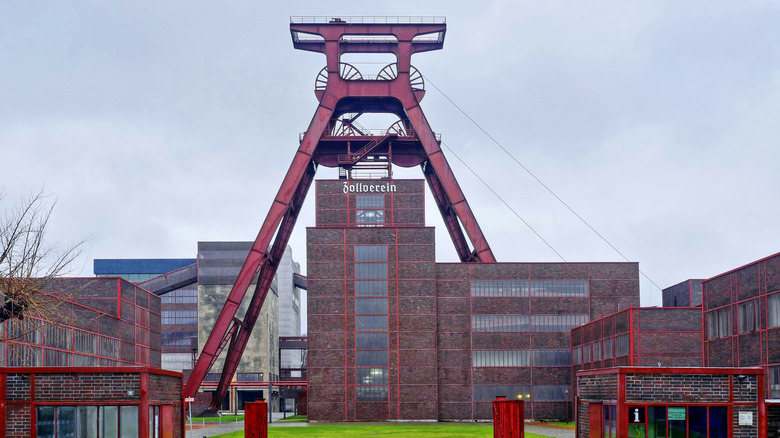
The Zollverein Coal Mine Industrial Complex, a UNESCO World Heritage Site, is a powerful example of Essen's industrial legacy, making it an essential stop for first-time visitors. Often referred to as the "world's most beautiful coal mine" for its arresting Bauhaus architecture, Zollverein is a well-preserved historical site. Although mining operations here ceased in 1986, the complex is now home to a variety of cultural attractions. Industrial Shaft XII, widely considered an architectural triumph, is among the most popular components of the original structure, especially for photo buffs. Inside, the shaft is now the home of the Red Dot Design Museum, where visitors can explore exhibits in an industrial-chic setting. A mint-condition Fiat Nuova 500 and a display celebrating the history of Apple products are must-sees.
Across the complex, key stops include the Tipper Hall, where mine carts and rails are still visible; the workshop, where coal miners' tools look as if they could be picked up and used at any moment; and the coking plant, which was Europe's largest in its heyday. Swimming in the Werksbad pool is among the most unique things to do on-site. If you want to take a dip, the best time of year to visit Germany for this activity is in the spring or summer. During the winter months, the pool is converted into an ice rink.
To have the best experience at the mines, consider reaching out to the Zollverein Foundation to reserve a guided tour. Third-party guided tours from organizations like Route Industriekultur (the Route of Industrial Culture) are also available. Whether you're fascinated by engineering or the contemporary reuse of these structures, Zollverein is an iconic landmark.
The Ruhr Museum
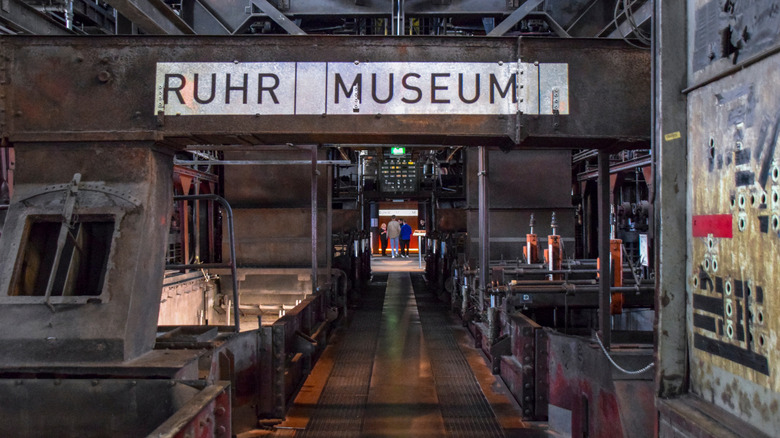
Although it sits within the larger Zollverein Coal Mine Industrial Complex, the Ruhr Museum is a destination in and of itself thanks to its extraordinary range of exhibits. Housed in the facility's original coal-washing plant, the museum takes visitors through a three-story journey of the Ruhr region's history, industrial evolution, and cultural identity. Inside, there are an astounding 6,000 exhibits — with everything from a woolly mammoth skeleton to taxidermy foxes, sculptures and busts of historic figures, and glass from Roman times. This is a collection that is eclectic in the best possible way, and no matter what visitors' interests are, they are sure to find something here that captivates them. The museum's layout is artistic and experiential, taking guests from the past, through eons of history, then back to the present once again before exiting the facility. This, of course, symbolizes the cyclical nature of human history.
One of the main photo ops in the Ruhr Museum is the orange, glowing escalator at the entrance. All of the exhibits, though, are beautifully displayed amid the industrial bones of the former coal mine. For those who want a deeper understanding of this region, guided tours are available for groups. There is also a free, smartphone-accessible audio guide for all guests. Children under 18 and students under 25 both receive free entry. This museum's significant collection of artifacts, coupled with its unique setting, makes for an educational, yet engaging, experience for all ages. It's a great place to kick off an Essen holiday, providing a foundation for all of the other sites travelers will see along the way.
Museum Folkwang
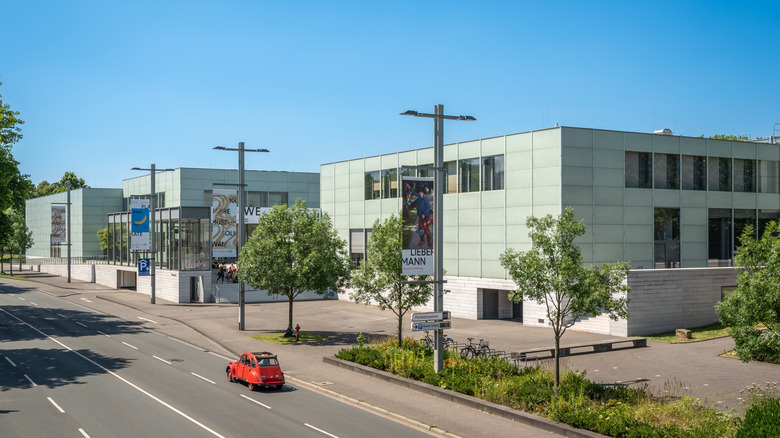
Widely considered one of Germany's best art museums, Museum Folkwang has been curating its outstanding collection since it opened in 1902. With works that primarily focus on the 19th and 20th centuries, the museum's permanent collection features many masters of Impressionism, Abstract Expressionism, and modern art. Vincent van Gogh, Auguste Rodin, Paul Gauguin, Henri Matisse, Mark Rothko, Jackson Pollock, and many more famed artists are all showcased here. Highlights include Van Gogh's "La moisson," painted while he was in a mental institution in 1889, and Paul Cézanne's "La carrière de Bibémus," an abstract rendition of a quarry near his home in France. Though its focus is firmly on art from the past few centuries, Museum Folkwang is also home to an arts and crafts wing that features handiwork from as far back as 4,000 BC.
There are a number of art museums where the architecture rivals the art inside, and Museum Folkwang is decidedly among them. Its sleek, angular exterior has even been hailed as one of the world's most beautiful modern art museums. The current iteration of the building was designed by renowned architect David Chipperfield, who also worked on notable buildings in Düsseldorf that are must-see tourist attractions. Architecture lovers are sure to enjoy taking photos both inside and out. Indoors, the minimalist, light-filled spaces allow guests to really focus on the art without distraction. In addition to its permanent collection, Museum Folkwang regularly hosts lectures, performances, and classes for children and teens, cementing itself as a local cultural cornerstone. If you enjoy art, this museum alone is a good reason to add Essen to your travel bucket list.
Essen Minster (Essener Münster)
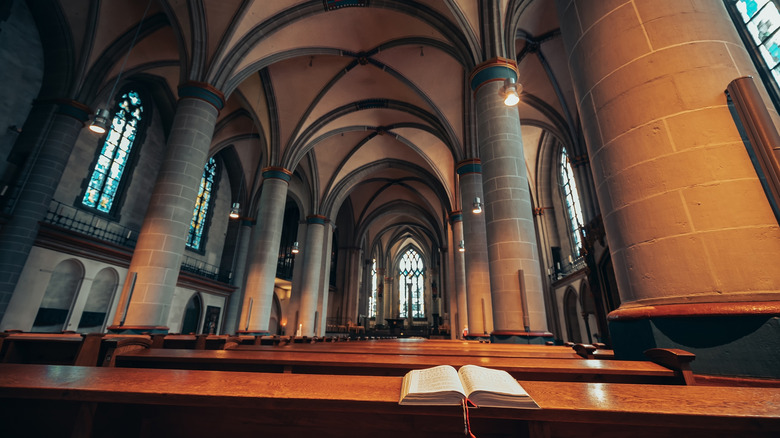
Essen Minster is one of this city's most significant historic landmarks. It has a lengthy history, beginning with its origin as a ninth-century convent. It was officially classified as a cathedral in 1958 when the Diocese of Essen, sometimes referred to as the Ruhr Diocese, was formed. As one of the oldest cathedrals in the country, it is unsurprising that this church is quite stunning from an architectural standpoint.
Enthusiasts will note that it primarily features a combination of Romanesque and Gothic elements. Over the centuries, however, Essen Minster has undergone numerous alterations and renovations, some the result of necessity and others due to changing architectural fashion. While there was a devastating fire in 1275 that caused significant damage to the structure, the late 1800s saw Baroque decorations removed merely because the Gothic tradition was once again in vogue in stylish circles.
The main reason tourists come to Essen Minster is to see the Golden Madonna, a 10th-century sculpture and one of the oldest surviving representations of the Virgin Mary. Crafted from wood, covered in gold leaf, and sitting on a throne inlaid with gems and pearls, this gorgeous piece is fascinating to anyone interested in religious art or early Christian history. Below the cathedral, guests can still visit the site's crypt, which has survived since medieval times. Whether you come to view the Golden Madonna, explore religious life in the Middle Ages, or attend a worship service, Essen Minster is a must-see location.
Grugapark
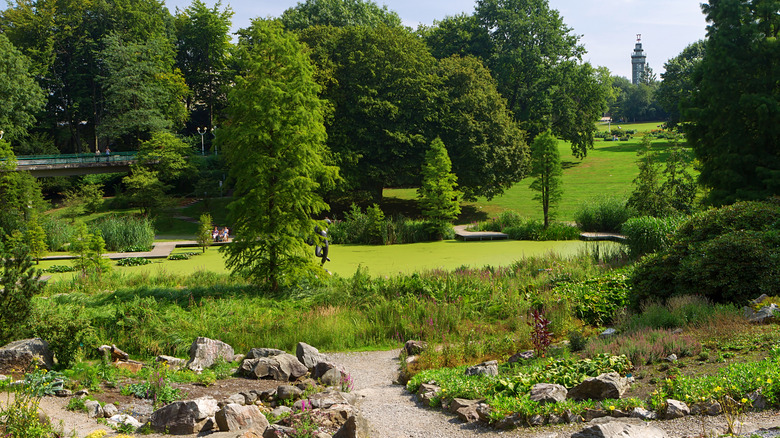
Since it first opened in 1929, Grugapark has been providing Essen residents and tourists with lovely urban green spaces to enjoy. Preparations for a national garden show in the 1960s gave rise to the park's current form, which centers around having fun and living an active lifestyle. Today's visitors can participate in a wide variety of activities, particularly during the spring and summer months. Children's playgrounds, walking and jogging paths, botanical gardens including a rose garden, beach volleyball, and pony rides are just a few of the things to do here. Grugapark's animal experiences are also a highlight for families. In addition to the ponies, children can make friends with goats, rabbits, a pot-bellied pig, and more at the Small Animal Park. Alternatively, check out the Aviary, where flamingos, ibises, and other exotic birds reside.
For art lovers, there are some unexpected surprises at Grugapark, as sculptures by masters like Auguste Rodin and Henry Moore dot the grounds. The park also hosts various events and festivals throughout the year. Its periodic rare plant sales, for instance, have been a highlight of the park's annual calendar since 1993. Visitors can purchase plants from knowledgeable sellers and get tips for how to cultivate better gardens at home. Parkleuchten, or "Park Lights," is another favorite among local Essen residents. This ticketed event sees Grugapark transformed with gorgeous light displays and photo ops, including some spooky spots! Finally, the park's cactus and succulent market takes place three times a year in April, July, and September. Whether you come to Grugapark for an afternoon or spend an entire day on the grounds, it is a relaxing change of pace from industrial historic sites and museums.
Villa Hügel
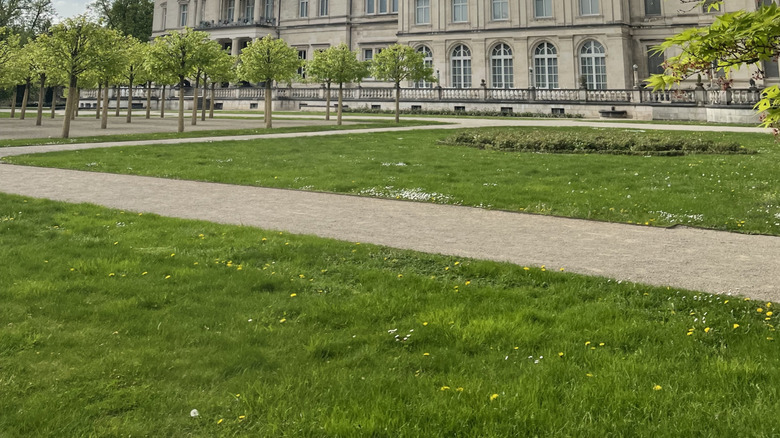
Though it is not as large as North Carolina's Biltmore Estate, one of travel pro Samantha Brown's favorite destinations, Villa Hügel is still one of Essen's most visually stunning landmarks. Built by Alfred Krupp — who took over business operations for the powerful Krupp family when he was just 14 — the mansion is an incredible example of the wealth that industrialists enjoyed in the late 19th century.
Villa Hügel has two main sections, one of which served as the family's private quarters, while the other functioned as a guest house for visiting dignitaries and business leaders. The Krupps were embroiled in problems after World War II, when the family's heir apparent, Alfried Krupp von Bohlen und Halbach, was sentenced to prison during the Nuremberg Trials. At that time, the villa was seized, though it was subsequently returned to the family when Alfried's conviction was overturned. The residence remains in the care of the Alfried Krupp von Bohlen und Halbach Foundation to this day.
Today, visitors can tour public sections of Villa Hügel — including a wood-paneled room with a stunning arched ceiling, a ballroom, and the Garden Hall, where tapestries of Biblical scenes are hung. The experience of being at Villa Hügel transports guests back to the heyday of industrialism, when vast fortunes allowed families to live like kings. Adding to the immersion is the fact that certain original furnishings, like artwork and Alfried Krupp's desk, remain in the home. The Krupp family residence is a stark reminder that with great power comes great responsibility, and both 60- and 90-minute guided tours of the main house are available for a fee. The longer tour also includes a stop at the on-site Krupp Historical Exhibition. Before you leave, make sure to explore the villa's expansive grounds, which overlook the nearby Lake Baldeney.
Old Synagogue (Alte Synagoge)
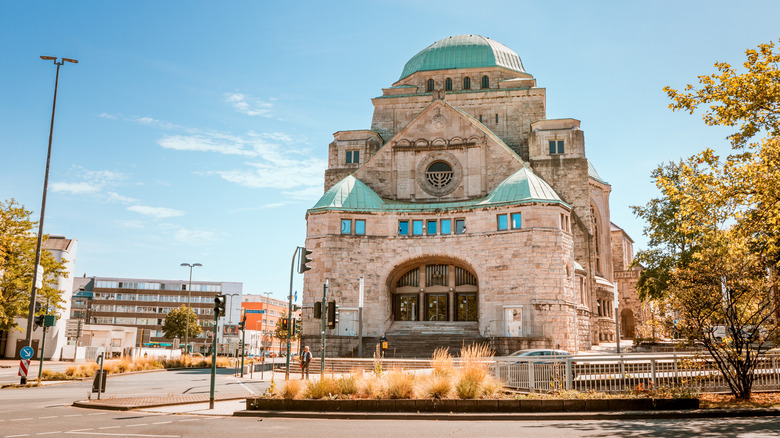
Essen's Alte Synagoge, or Old Synagogue, is a meaningful historical site, as well as an essential stop for first-time travelers interested in the Ruhr region's Jewish heritage. The largest pre-war synagogue still standing in Europe, the Old Synagogue has served as a Jewish heritage museum since 2010. Before that, its purpose changed several times. Until World War II ravaged the continent, this synagogue was the center of Essen's rich Jewish community, with an astounding 5,000 worshippers in the 1930s. In 1938, much of the interior was destroyed during the infamous Kristallnacht pogrom. From the end of the war until 1959, when the city purchased the building, the synagogue remained unused. In the 1960s, it was converted into an industrial museum that was almost Brutalist in style, before taking on its current, 21st-century form. Today, although there are displays throughout the space, the facility prefers to bill itself as a "House of Jewish Culture," rather than as a traditional museum.
The permanent collection here is comprised of five exhibits. This includes a display of Jewish cultural traditions, one dedicated to Jewish festivals, another about Judaism and its way of life, a display about the history of the Old Synagogue, and a final showcase about Essen's Jewish history. Old Synagogue staff members are more than willing to answer questions and guide tourists through the facility.
For those who follow Judaism, the Old Synagogue is much more than a cultural site. It's become a place to reflect on their and their family's histories, particularly if they are of German descent. Even for non-Jewish travelers, this is a valuable stop for anyone who wants a deeper understanding of the cultures that have shaped Essen over the centuries.
Lake Baldeney (Baldeneysee)
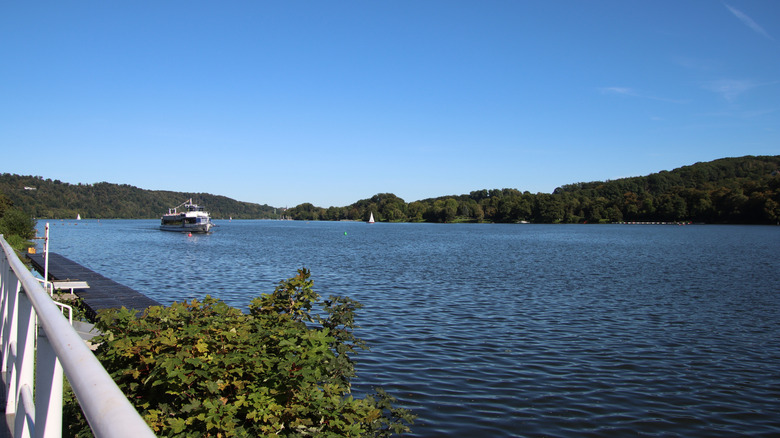
Germany is home to a number of spectacular lakes, and Essen's Lake Baldeney — or Baldeneysee — offers a nature-focused counterpoint to the city's plethora of industrial attractions. The lake opened to the public in 1933, and it has become a popular recreational spot for both locals and travelers. One of the best ways to enjoy Lake Baldeney is simply to walk or cycle along its pathways — including the lakeside Baldeneysee Loop, which is ideal for families with kids. Hiking is also popular here, and the lake has a dedicated hiking path called the BaldeneySteig. Open since 2017, this is a moderately challenging trail for those in good shape.
For those who prefer time on the water, boat tours and boat rentals are also available. Pedal boat rentals are especially popular when the weather is nice! There's also a beach where travelers can spend a warm day lounging on the sand.
Lake Baldeney is also home to a number of waterfront restaurants with stunning views. Check out Baldeneyer Fähre for a Greek-inspired menu (don't worry, there are still plenty of German beers available) and outdoor seating right on the water. Alternatively, Südtiroler Stuben is a more traditional Alpine-inspired restaurant, with a rustic wood interior and lots of light. This dining establishment even has an attached hotel where every room offers a view of the lake. Finally, there's Lujo, a more high-end, Mediterranean-inspired spot that is ideal for a date night.
Margarethenhöhe Garden City (Siedlung Margarethenhöhe)
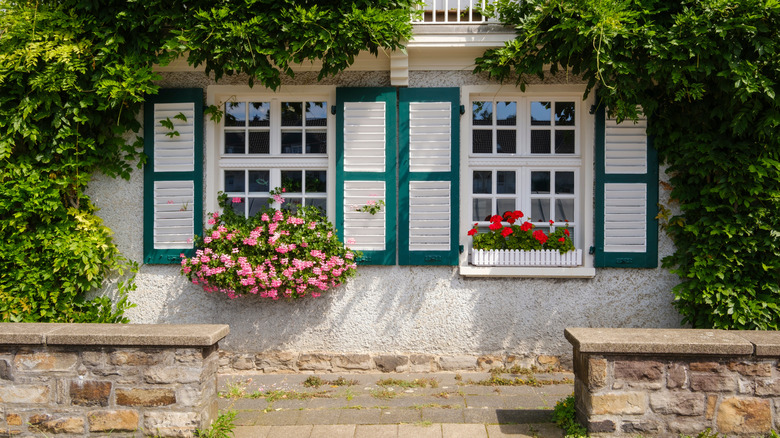
To close this guide to one of Germany's most surprisingly enchanting cities, we'll check out an incredibly unique neighborhood: Margarethenhöhe Garden Town. Built in the early 20th century, it was intended as a model residential community when the idea of "Garden Cities" was quite popular. These neighborhoods were remarkably socially progressive at the time, promoting the notion that factory workers and their families should enjoy clean, aesthetically pleasing residential districts. Margarethenhöhe, as the name suggests, was donated by Margarethe Krupp to celebrate her daughter's marriage. One of the hallmarks of all "Garden Cities" is that they featured green spaces for relaxation and leisure. This neighborhood is no exception, and there are several well-maintained courtyards and gardens in the area.
Today, visitors can book guided tours of Margarethenhöhe where they can enjoy taking a peek at storybook-style architecture on both historic workers' homes and commercial structures, like the Small Market. Even now, this neighborhood is quite vibrant and ranks among the most popular residential sections of Essen. Simply walking around is the best way to appreciate its lovely architecture and calming atmosphere. If you want to linger here, grab lunch or dinner at local spot Gasthof Margarethenhöhe, which has been serving patrons for decades.
Theaters and Essen Philharmonic (Philharmonie Essen)
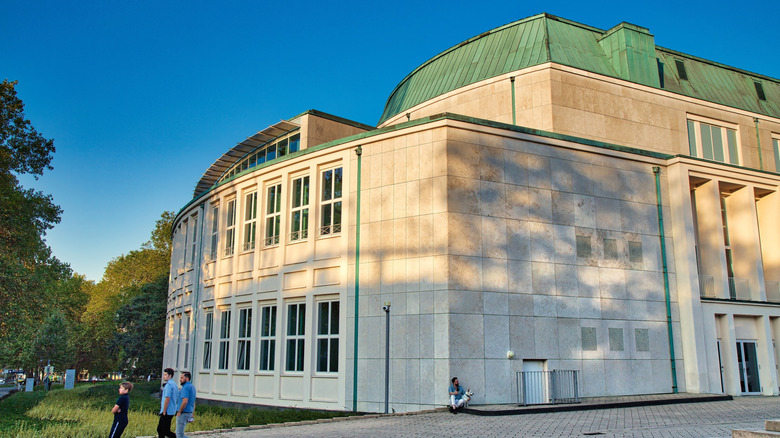
Essen's arts and culture scene may seem surprising since the city is mostly known for coal mines and factories. Bear in mind, however, that with industry comes wealthy industrialists, like the Krupp family. These people were often great patrons of the arts, and industrialists' support laid the groundwork for many of Essen's performing arts spaces, including the Essen Philharmonic. Today, it is revered as one of Germany's top concert halls. Following an extensive renovation that unveiled a unique navy blue ceiling resembling the night sky, the majestic Alfried Krupp Hall reopened in 2004. Often touted for its exceptional acoustics, the Essen Philharmonic hosts a wide range of events — from an annual New Year's Day concert to famous symphonies like Schubert's "Great."
The Philharmonie functions in conjunction with two other theaters: the Aalto Music Theater and the Grillo Theater. The latter was named after another local industrialist, Friedrich Grillo, who funded it in the 1890s. Together, the three facilities provide a rich calendar of events, with classics like a "Cinderella" ballet and a "Pinocchio" performance available for all ages. The theaters often host workshops for those with an interest in topics like costuming, and backstage looks at various performances. Whether you attend a symphony performance, an Aalto Ballet production, or a contemporary holiday show, Essen's theatrical culture is an enjoyable way to spend any evening.
Methodology
To put together this guide of the top 10 destinations in Essen for first-time visitors, we relied on high-authority tourism sources like Germany's official travel website, Visit Essen, NRW Tourism, UNESCO's official website, and World Heritage Journeys. Along with this, we also utilized the official websites for specific locations, such as the Zollverein mines, the Ruhr Museum, the Museum Folkwang, Grugapark, Villa Hügel, and the Theater and Philharmonie Essen. To ensure accuracy, we filled in supplementary details with context from reputable travel sites and blogs that include Google Arts and Culture, Airial Travel, Wanderlog, Choose Where, and Visit a City.