Exploring Kruger National Park: A Visitor's Guide
Author Meagan Drillinger traveled extensively through South Africa in 2022, including Kruger National Park in November.
Kruger National Park is, in a word, life-changing. One of the top attractions in South Africa, and one of the largest national parks in the world, Kruger National Park is a world all unto itself — and a must for any wildlife lover.
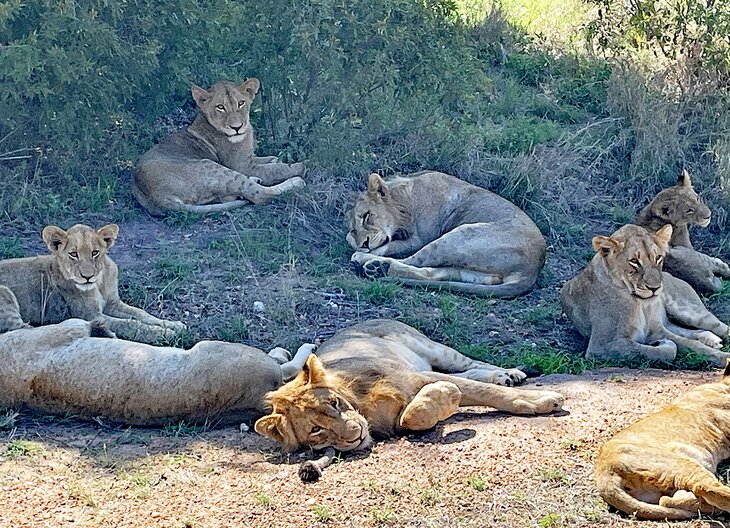
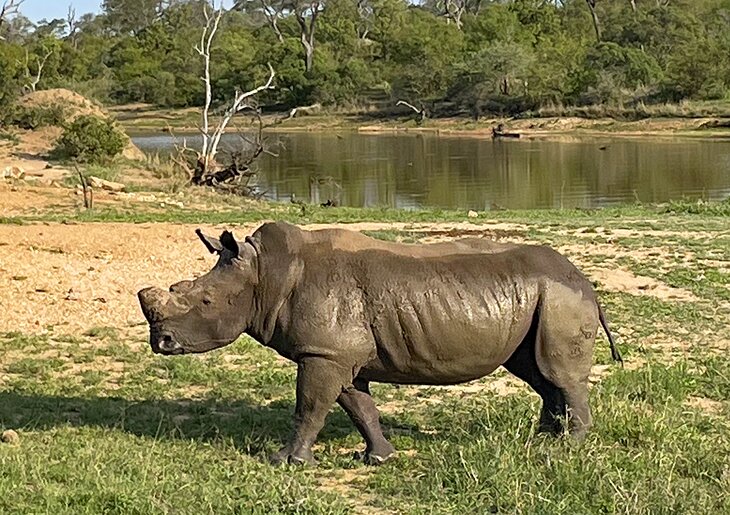
The park is home to an astounding diversity of wildlife across its nearly two million hectares. Brace yourself for breathtaking views of Africa's Big Five, as well as the opportunity to see more of the region's smaller and more peculiar animals, like the less official "Little Five."
Kruger National Park makes it easy for anyone to visit, with a variety of different options for exploring the park, whether on a guided visit or doing a self-drive. Near the park is a large variety of private game reserves that border the park.
A treasure trove of luxury safari lodges is within easy reach, as well. Visitors can also opt to stay within the park in accommodations ranging from rustic campgrounds to thatched-roof chalets.
Add to this dramatic rivers, sprawling plains, and even Bushman rock paintings, and it's easy to see why Kruger National Park is one of the best game reserves in Africa.
- When is the Best Time to Visit Kruger National Park?
- Kruger National Park Animals
- Driving in Kruger National Park
- Kruger National Park Tours
- Where to Stay in Kruger National Park
- Punda Maria Camp
- Shingwedzi Camp
- Mopani Camp
- Letaba Rest Camp
- Olifants Camp
- Balule
- Satara Camp
- Orpen Rest Camp
- Skukuza Camp
- Lower Sabie Camp
- Crocodile Bridge Camp
- Pretoriuskop Camp
- Berg-en-Dal Camp
- Tips & Tactics: Getting the Most out of a Visit to Kruger National Park
- Getting Here
When is the Best Time to Visit Kruger National Park?
Kruger National Park's climate is subtropical, with the driest months being June, July, and August. This is the best time of year to visit the park, when the days are sunny and warm and the nights are cooler. Many trees and shrubs have lost their leaves, and water sources dry up, making it easier to spot game around the remaining waterholes.
But spring and summer bring their own beauty. Spring rains wash the landscapes and bring the birth of many animals. In summer, when most of the rain falls, the dry, dusty landscapes transform into vibrant greens, making a colorful backdrop for photos.
November is a particularly good time to visit because it is the shoulder season, so you'll have far fewer crowds within the park. Plus, the weather is a big sell thanks to cool mornings and sunny afternoons.
Before you go, check the specific Kruger National Park weather for each month to find out what to expect. Depending on the conditions at that time of year, you can also pinpoint the best areas of Kruger National Park to visit.
Kruger National Park Animals
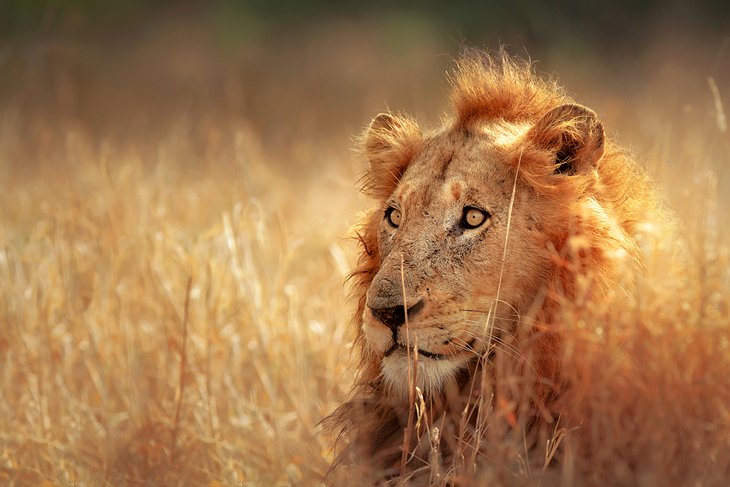
Nothing will prepare you for the sheer volume of wildlife that you'll be able to see in Kruger National Park. The park is home to 114 different species of reptiles; more than 500 species of birds; and 147 mammals.
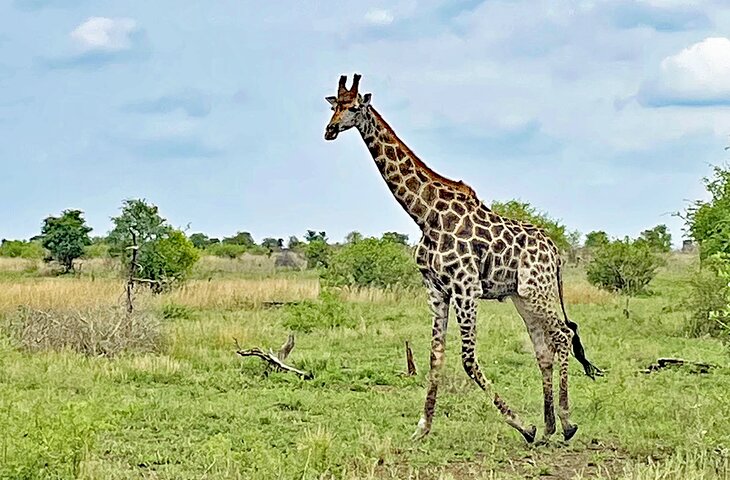
Not only will you have the opportunity to see the Big Five (lion, leopard, buffalo, elephant, and rhino), but you'll see tons of other mammals like zebras, giraffes, hyenas, hippos, impalas, and many more.
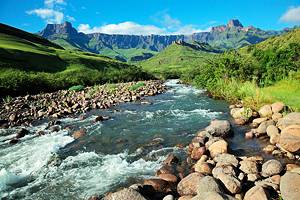
But it's more than just land animals that you'll see in Kruger. Look to the skies to test your luck spotting the stunning birds that soar above the landscape. Kruger has seven rivers that cross it, as well, which are teeming with nearly 50 species of fish.
The park is also one of the last refuges for endangered species, including the black rhino and African wild dog.
The best times to see the animals are the early morning and late afternoon. If you're part of a guided tour, your guides will ensure that you get out into the park at the crack of dawn. Some tours have you out in the park for up to 12 hours, which means you'll get both early morning and evening drives done in one day.
Driving in Kruger National Park
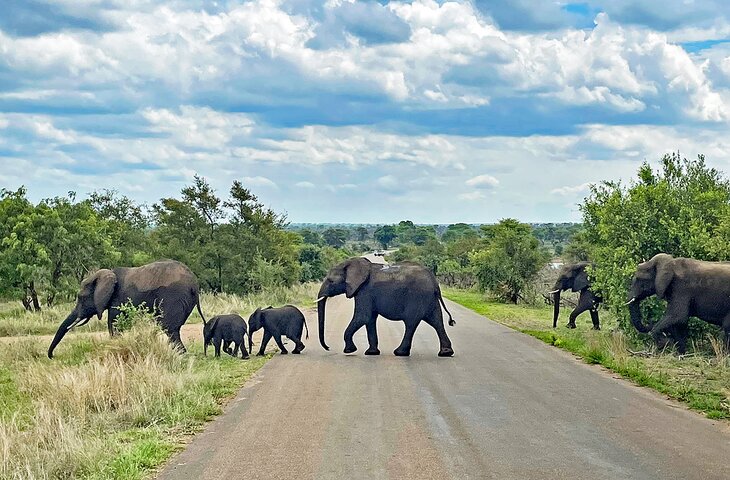
What makes Kruger National Park unique from other parks is that it is accessible via self-drive. Many people who come to the park come with their own vehicle because it's considerably more affordable than taking a guided tour. Doing a self-drive safari also gives you more flexibility with your timing.
The park has a network of some 2,300 kilometers of well-signposted roads. Not all are asphalted, but the unsurfaced tracks are usually negotiable by two-wheel-drive cars. Detailed maps are available when entering the park. The speed limit is 50 kilometers an hour on asphalted roads and 40 kilometers an hour on other roads.
A particularly rewarding trip is a drive through the entire length of the park, observing the striking contrasts in the scenery. Alternatively, you can use one of the camps as a base and explore the surrounding area in a series of shorter trips. At least two or three days is recommended to explore the park.
Kruger National Park Tours
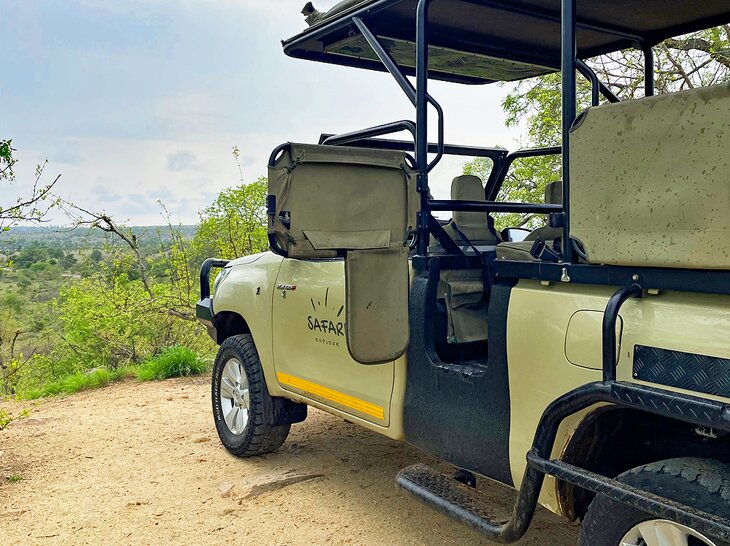
Visiting Kruger National Park is easy on your own, but a guided tour will ensure you see the best parts of the park. Guides can also help track and spot wildlife that the untrained eye might miss, and guides communicate with one another so that they always know where the action is happening. Most tours will pick you up at your Johannesburg hotel or Tambo airport.
The four-day Classic Kruger National Park Safari is a great introduction to the park. You'll be whisked to Tremisana Game Lodge in the Balule Section of the park, and accommodated in air-conditioned, thatched-roofed chalets. Here, you can relax, and perhaps enjoy a dip in the pool, before heading out on a three-hour sunset game drive. After dark, your guide's spotlight will illuminate nocturnal species.
Day two includes an exhilarating walking safari, optional game-viewing at the lodge's hide, and a four-hour sunset game drive. Day three brings more adventure. In the morning, you will hop aboard an open-sided, elevated game-viewing vehicle and travel to the Orpen-Satara- Nwanedzi regions, known to have among the highest concentrations of lions in Africa. Photographers can capture unobstructed shots of wildlife.
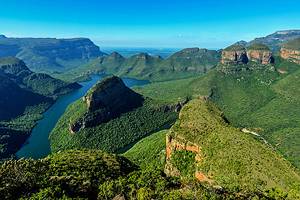
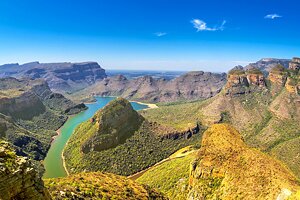
Day four brings a rewarding sunrise drive and a stop at one of the top attractions in Mpumalanga, the spectacular Blyde River Canyon on your return journey. The tour includes national park fees, most meals, activities, and transportation.
If you have a little more time, choose the five-day Katekani Lodge Kruger National Park Safari. It also includes both morning and evening game drives, walking safaris, and a stop at Blyde River Canyon. But you'll also visit several different game reserves, as well as Moholoholo Rehabilitation Centre, where you can mingle with orphaned animals. On this tour, you'll stay at both Tremisana Game Lodge and Katekani Tented Lodge.
If you're visiting the park in your own vehicle, you can still sign up for tours with Kruger National Park guides. These range from shorter day walks to overnight expeditions with accommodation in simple huts. The different camps also organize guided tours in cars, including night game drives, so you can spot some of the park's nocturnal creatures.
Where to Stay in Kruger National Park
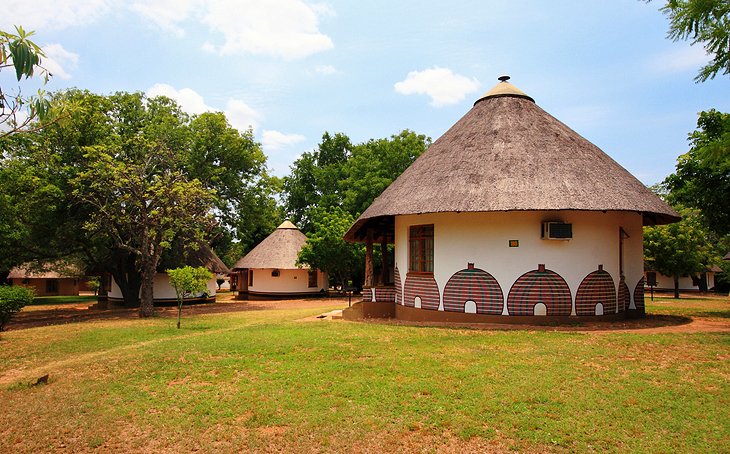
Kruger National Park is renowned for its diverse and abundant lodging options catering to all budgets. Accommodation is available in campgrounds, government-run rest camps, and privately run camps and lodges.
For luxurious accommodations, choose one of the private game lodges that lease land from the park. These include the plush, colonial-style Buhala Lodge on the banks of the Crocodile River, stylish Jock Safari Lodge, and Pestana Kruger Lodge.
Another option for upscale accommodations is the private game reserves on the park's western boundaries. Since these reserves are not within the park boundaries, they allow vehicles to drive off-road to track game that moves freely into and out of the national park. Another bonus of these private game reserves is that only guests of their lodges are allowed within the reserves, creating a more exclusive experience.
One of the most well-known private game reserves adjacent to Kruger is Sabi Sands. Here, you can choose from more than 20 different lodges, including Chitwa Chitwa, Ulusaba Rock Lodge, and the more affordable Notten's Bush Camp. Timbavati Game Reserve also borders the park and offers a wide range of accommodations.
Thornybush Game Reserve is another private reserve that borders Kruger National Park. In fact, the physical boundaries between the two parks have been removed so that wildlife from Kruger can roam freely on the lands of Thornybush. Thornybush has a slew of high-end camps to stay at, but one of the newest is the Waterside Lodge at Royal Malewane. The Waterside Lodge opened in 2022 and is an explosion of color and eclectic design nestled in the bush.
Kruger National Park accommodation prices are most affordable in the government-run rest camps, operated by SANParks. Most visitors spending two or more days in the national park stay in these camps. Here, you can choose from a range of accommodations, including safari tents, thatched bungalows, and comfortable well-equipped guesthouses. Most of them are air-conditioned and include cooking facilities.
All the larger rest camps have restaurants and shops, a filling station, an information center, and first aid facilities.
Below are descriptions of the main government-run camps in Kruger National Park. You book them on the SANParks website.
Punda Maria Camp
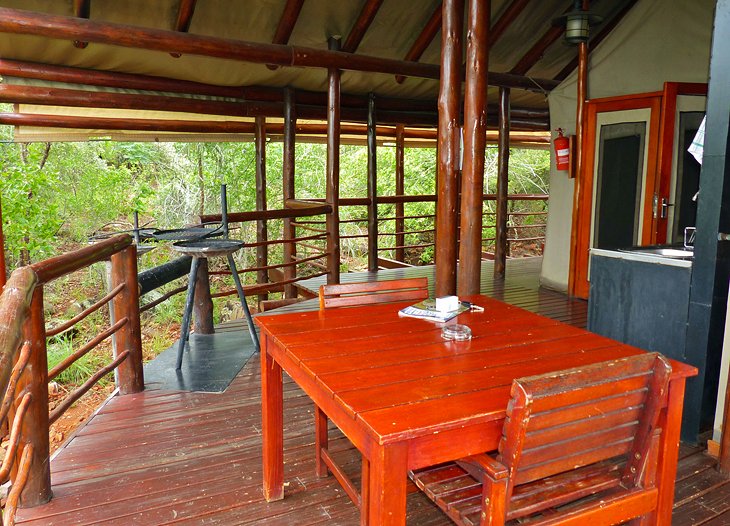
A haven for birders, Punda Maria, lies in the extreme north of Kruger National Park, at the foot of the Dimbo Mountain, with luxury safari tents and thatched bungalows. From the camp, you can gaze upon views over the Mopane plain.
The sandveld round Punda Maria is an offshoot of the Kalahari basin. Nyala, kudu, buffalo, and Sharpe's grysbok are common in this area.
To the north, on the Luvuvhu River, the dry savanna gives way to lush forests with fantastic birding opportunities. One of the park's best birding drives is the 25-kilometer Mahonie Loop around the camp.
At Klopperfontein, 20 kilometers northeast of the camp, giant baobab trees grow along the edge of a waterhole. About 23 kilometers beyond, the road comes to the Luvuvhu River picnic area, where you can spot crocodiles and hippos from the bridge. From here, a track runs east along the river to the Pafuri picnic area, with great views of the river banks.
Shingwedzi Camp
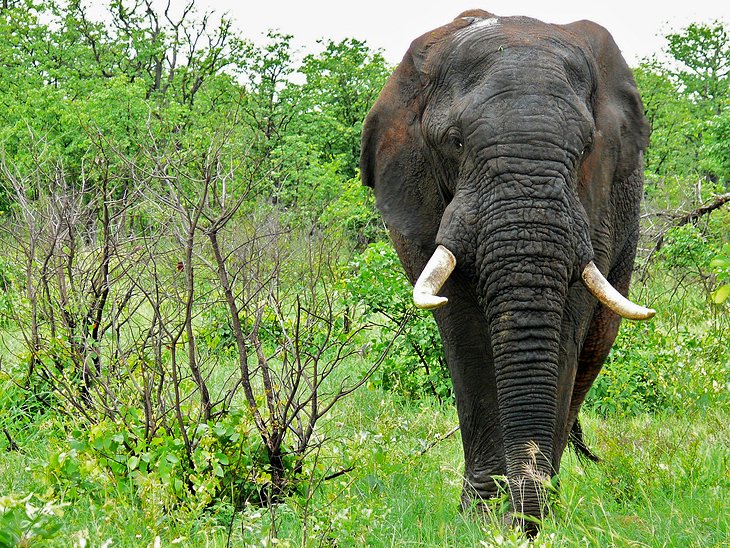
Nestled along a bend in the river, Shingwedzi camp lies 73 kilometers southeast of Punda Maria and is the largest of the three camps in the northern part of the park. Great viewpoints lie along the road from Punda Maria to Shingwedzi, which sits amid ideal elephant habitat.
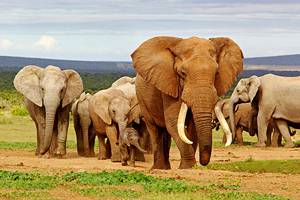
Accommodation includes bungalows and a luxury guesthouse. A few kilometers north of the camp, large herds of elephants, as well as buffaloes and baboons are frequently spotted, and lucky visitors may even glimpse wild dogs and leopards.
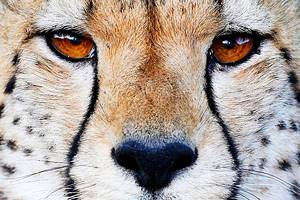
North of the Babalala rest area, cheetahs can sometimes be spotted on the open plains. Another track runs southeast from Shingwedzi to the Kanniedood Dam, with a bird hide. Look for African jacana here, as well as black crake.
Mopani Camp
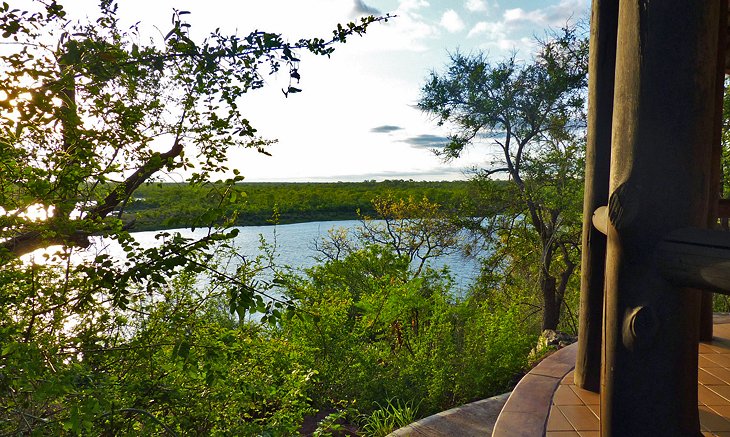
From Mopani Rest Camp, guests can enjoy a beautiful view over Pioneer Dam. Accommodation consists of an upscale guesthouse, cottages, and bungalows, as well as a bird hide that doubles as open-air accommodation in the evening.
About 17 kilometers east of Mopani, Nshawu Dam has an excellent game observation point, where herds of elephants gather, particularly after rain. Water birds are prevalent here, especially kingfishers, storks, and fish eagles.
Letaba Rest Camp
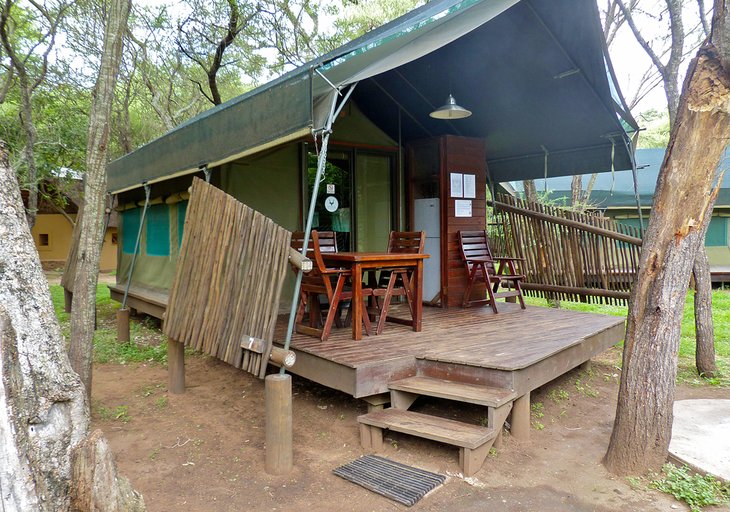
Midway between the southern and northern boundaries of Kruger National Park, Letaba Rest Camp lies on a wide bend on the Letaba River (Letaba means "river of sand"). Tall sycamore figs, mahogany, and sausage trees shade this well-equipped camp, which offers a choice of guesthouses, bungalows, cottages, huts, furnished safari tents, and campsites.
Bushbucks, vervet monkeys, and fruit bats live within the camp, and the area is popular with elephants and many species of birds, especially owls. Cheetahs and many species of antelope live in the savanna country around Letaba. At shady waterholes, elephants, buffaloes, zebras, and gazelles come to drink.
The Engelhard Dam to the east and the Mingerhout Dam are also good places for observing game and water birds.
The Elephant Hall here displays informative exhibits on these magnificent creatures, as well as an impressive collection of elephant tusks, including those of a bull elephant known as Shawu, which are believed to be the longest ever found in southern Africa.
About 39 kilometers from Letaba Rest Camp, is the Masorini Village Museum, where archeologists excavated the remains of a Stone Age iron-smelting plant. You can explore the reconstructed village and dome-shaped clay furnaces here.
Olifants Camp
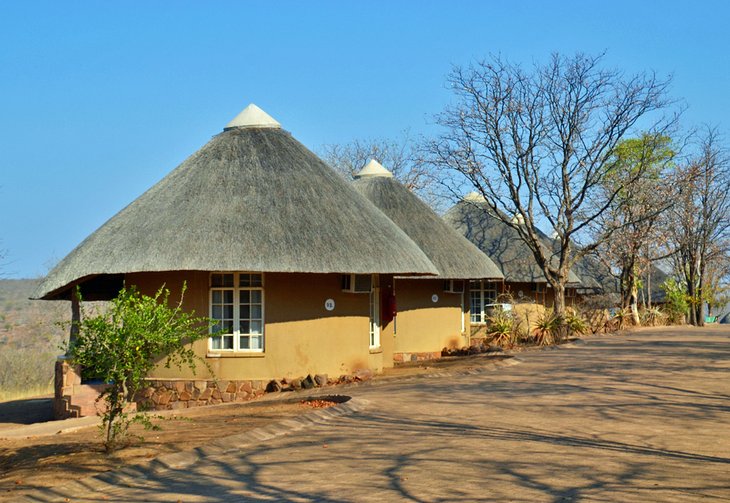
Perched 100 meters above the Olifants River, Olifants camp, with its magnificent old trees, occupies one of the finest locations in the park. Accommodation includes air-conditioned bungalows and two guesthouses.
From the camp itself, guests enjoy excellent views of game along the riverbank and the rolling plains below. Lions, crocodiles, and hippos are frequently sighted here. The sunrises and sunsets are spectacular.
In the north, mopane trees attract kudu, zebra, and elephants (olifants is the Afrikaans word for "elephants"). In the south, buffalo and giraffes are often spotted on the plains.
About 10 kilometers west of the camp is the Nwamanzi Lookout, one of the best game observation points in the park.
Balule
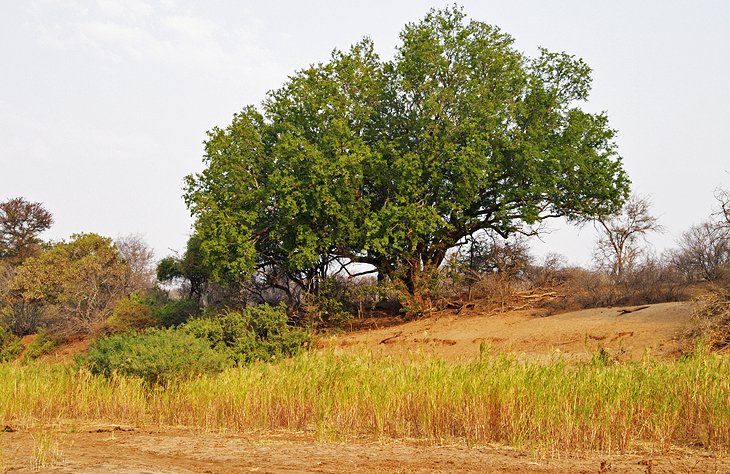
Beneath a large grove of shady trees, Balule Camp is a small satellite camp of Satara and Olifants Rest camps. The rustic atmosphere of Balule Camp will appeal to the independent camper who enjoys a close-to-nature experience. The camp has no electricity, and no day visitors are permitted.
A fence divides the camp in two sections. One section has six three-bedded huts and a communal bathroom and kitchen facilities. Each hut is supplied with linen and towels.
Satara Camp
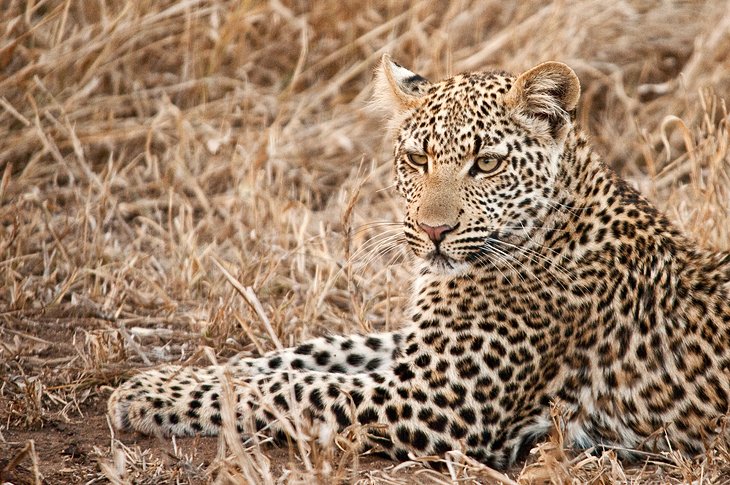
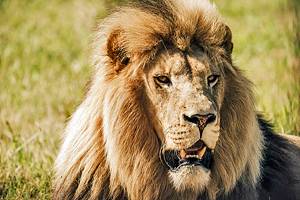
Near the park's center, amid savanna dotted with knob thorn and marula trees, Satara is the park's third largest camp and is often called, "the cat camp." This is one of the best areas to spot lions, leopards, and cheetahs. The rich grazing land and many waterholes here attract large numbers of antelope, which the big cats ambush - especially during the dry season when herds of impala come here to drink at the few remaining waterholes.
Accommodation is available in thatched bungalows, guesthouses, and camping sites.
At the Nsemani Dam, nine kilometers west of Satara, hippos and waterbuck are frequently spotted, as well as the occasional pride of a lion.
About 25 kilometers northwest of Satara, on the banks of the Timbavati River, is the popular satellite camp of Maroela, with tent and RV sites, one of only two sites that exclusively accommodate campers and RVs.
Orpen Rest Camp
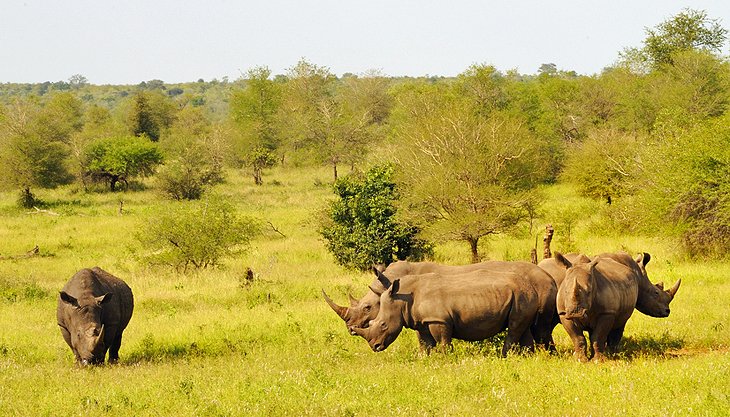
Tucked amid aloe gardens in the dry open plains, the small Orpen Rest Camp lies at the park's Orpen Gate. Comfortable thatched cottages and larger, more luxurious guest cottages are the accommodation choices here.
Just outside the fence of Orpen Rest Camp, a small waterhole attracts game throughout the day, including rhinos, impalas, baboons, and elephants. About seven kilometers from here, Rabelais Dam attracts waterbuck and other thirsty wildlife.
Orpen Camp offers game drives, game walks, and night drives.
Skukuza Camp
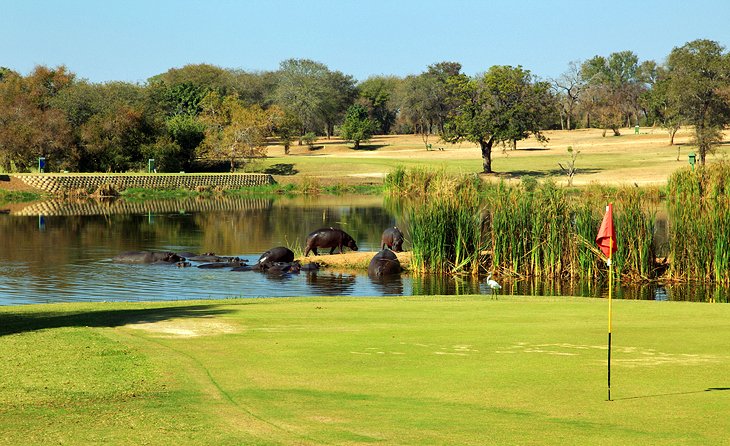
In Big Five territory, Skukuza is Kruger National Park's largest camp and offers plenty of facilities, including restaurants, shops, an Internet cafe, an airstrip, and even a nine-hole golf course.
An outdoor amphitheater screens wildlife documentaries, and the Stevenson-Hamilton Memorial Library here is a must-see. Its namesake was instrumental in establishing Kruger National Park, and his assistant, Harry Wolhuter, killed a lion to save his own life, armed with only a pocket knife. You can see the knife and the lion's skin in the museum.
Accommodation at this camp includes safari tents, guesthouses, family cottages, riverside bungalows, and a large camping site.
Wildlife is abundant in the area. Warthogs and vervet monkeys roam around the camp accommodations, and an observation point overlooks the banks of the Sabie River, where hippos live, and elephants come down to the river to drink.
Heading northeast from Skukuza to Tshokwane, big game are frequently sighted despite the fairly busy traffic, and the Manzimahle Dam and nearby Lion Pan are often frequented by lions.
Lower Sabie Camp
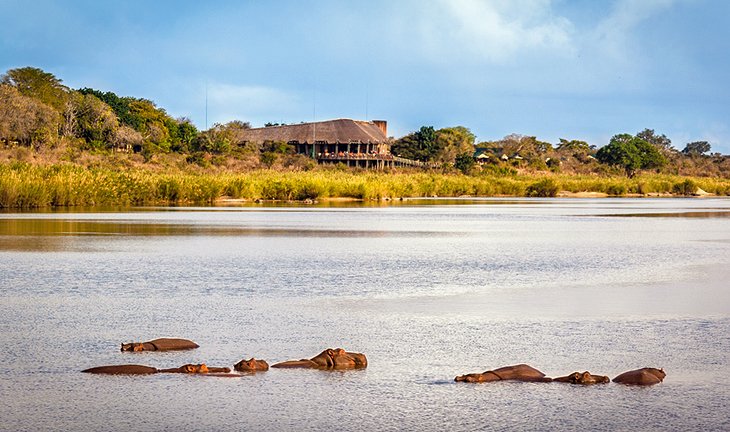
From Skukuza, a road runs along the Sabie River to the Lower Sabie camp, with a large diversity of wildlife, thanks to its sweet grazing land and abundant water.
Accommodation ranges from a campsite and furnished safari tents to a luxury guesthouse and bungalows. Big game can almost always be seen in the bush flanking the road, and drivers often have to brake to avoid giraffes, antelopes, elephants, or zebras.
With its extensive areas of grass and many trees, Lower Sabie is a popular camp. The Sabie River, which is dammed at this point, is home to many waterbirds, and you can also spot monkeys, elephants, rhinos, hippos, and buffaloes.
Crocodile Bridge Camp
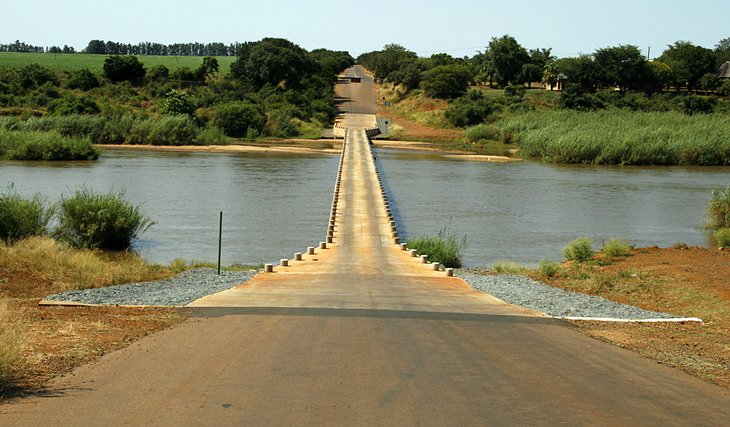
Near the Mozambican border, Crocodile Bridge is a great area to see the Big Five. The area is known for its many prides of lions and high concentration of rhinos.
The grassland in the surrounding area attracts zebras, wildebeests, impalas, kudus, gazelles, and large herds of buffaloes. In winter, the Crocodile River dries up, leaving only small pools, but these are still an important source of water for animals.
About six kilometers from the camp is an observation point, where you can watch hippos wallowing along the muddy riverbank.
Pretoriuskop Camp
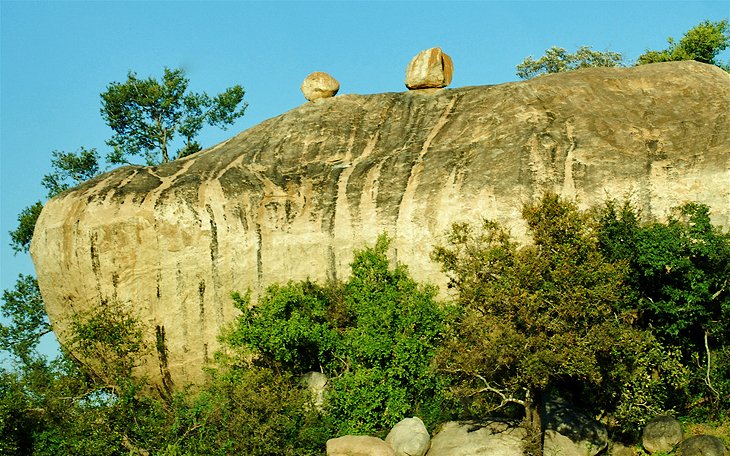
In the southwest of the National Park, nine kilometers from the Numbi Gate, is the Pretoriuskop camp, the oldest in the park and one of the largest. Wilderness trails surround the camp, and guests can cool off in the natural rock swimming pool.
Accommodations range from well-equipped guesthouses and family cottages to basic bungalows and campsites.
Within this area, enclosed by picturesque granite hills, many species of trees and shrubs grow, including the coral tree, which produces its blood-red flowers in August and September.
Around Pretoriuskop, you can sometimes see rare species of animals at close quarters, including wild dogs, cheetahs, leopards, and antelope. Rhinos are also common in this area.
Berg-en-Dal Camp
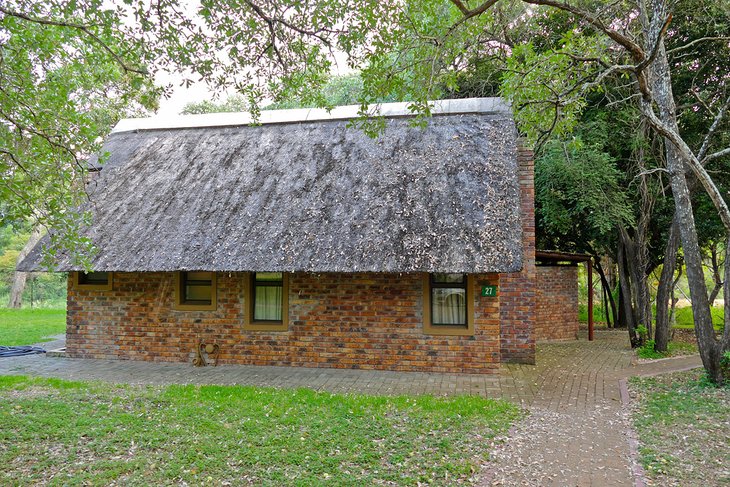
About 60 kilometers southeast of Pretoriuskop Camp, Berg-en-Dal is one of the park's newest camps and offers magnificent views of its hilly surroundings. It sits on the banks of the Matjulu spruit, in the southwestern corner of the park.
Lodging options include basic and older-style bungalows, guesthouses, and campsites.
A short nature trail runs through the camp, where many species of birds can be spotted, including lilac-breasted rollers and scarlet-chested sunbirds. Leopards, lions, and wild dogs are also found in the area.
Visitors can view San rock art along the Bushman Trail.
Tips & Tactics: Getting the Most out of a Visit to Kruger National Park
- Bring binoculars for close-up views of the wildlife.
- Review the animal sightings boards at the camp receptions to see what wildlife might be in the area before heading out on a game drive or walk.
- Stay in vehicles at all times, except at specially designated places.
- Drive slowly to see hidden animals and to avoid hitting wildlife.
- Check the opening and closing times of the park's gates and camps before visiting.
- Take appropriate precautions against malaria. Kruger National Park lies within a malaria zone.
- Never feed the animals.
Getting Here
By Air:
- Daily flights to Kruger National Park operate from Johannesburg to Skukuza Airport, Phalaborwa Airport, Hoedspruit Airport, and the Kruger/Mpumalanga International Airport (KMIA) between Nelspruit and White River.
- Daily flights also operate to Skukuza from Cape Town. KMIA also receives daily flights from Durban and Cape Town, and a bus shuttle operates between the airport and the park.
- Travelers can also fly from Cape Town to Hoedspruit.
By Car:
- The National Park is a 3.5- to 4.5-hour drive from Johannesburg. Most visitors enter by the Numbi Gate, Phabeni Gate, or Paul Kruger Gate. The fastest route to these gates is on the N4 to Nelspruit.
By Coach:
- Travel companies in Johannesburg, Durban, and Nelspruit run tours to Kruger National Park in air-conditioned coaches.
Official site: http://www.sanparks.org/parks/kruger/