Tourist Attractions in Guimarães
Deserving of its status as a UNESCO World Heritage Site, Guimarães, in the Minho region of northern Portugal, is reverentially known as the "cradle of the nation." As well as being the birthplace of the country's first king, Afonso Henriques, Guimarães was the first capital of the newly established kingdom of "Portucale" and is justifiably proud of its place in Portuguese history.
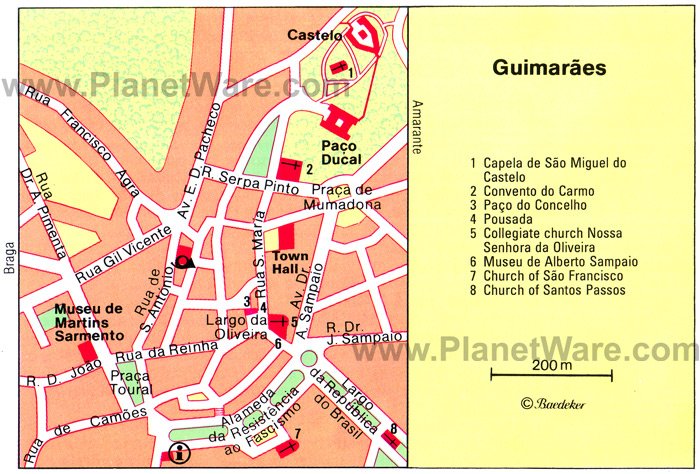
Its landmark castle, a medieval wonder, dominates the old town skyline. Together with the nearby Paço dos Duques, the ancient stronghold is indicative of the profusion of well-preserved buildings and historic monuments that embellish the maze of picturesque narrow streets converging on the town's tourist-friendly central square, Largo da Oliveira.
Adding to the allure are some fabulous museums housed in beautiful convents and monasteries. Sightseeing extends to the city's outlying districts, where verdant woodland and fun-packed water parks are waiting to be discovered. And not far from Guimarães is one of Portugal's most impressive archaeological sites and a deserved tourist attraction in its own right, the evocative Citânia de Briteiros.
For more ideas on places to visit, see our list of the top things to do in Guimarães.
Castelo de Guimarães
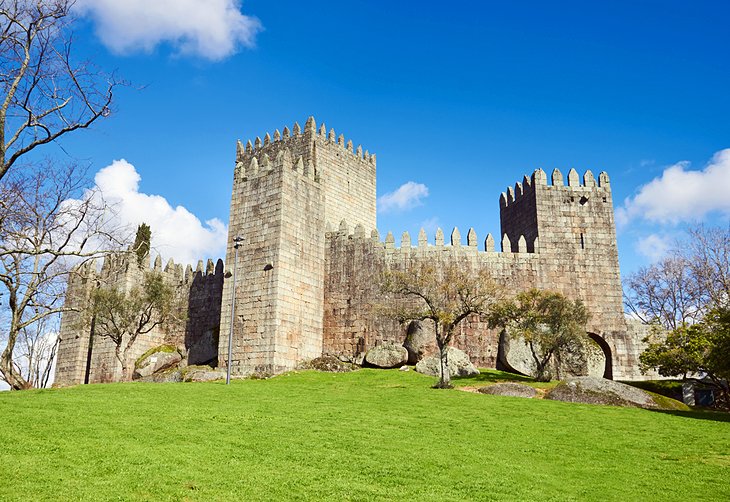
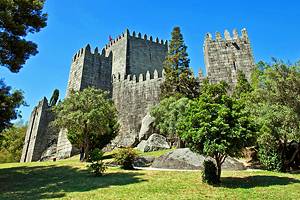
Looming large over the city center, Guimarães Castle is one of the most complete and best-preserved medieval strongholds in Portugal. Dating from the 10th century, its enormous square keep and the eight crenelated towers that surround it remain a familiar and much cherished landmark.
The castle is believed to be the birthplace in 1110 of Portugal's first king, Afonso Henriques, and as such is regarded by many as a national shrine; the much-visited font where he was baptized is kept in the Romanesque chapel of São Miguel, tucked into the western end of the castle. Mass is celebrated here annually on the king's birthday to commemorate the event.
The aforementioned keep - known as the Torre de Menagem - reputedly housed an 11th-century Benedictine convent founded by the Countess Mumadona. Visitors can walk the heavy curtain walls and scale the narrow steps to the top of the tower where fine views of the city and the countryside can be admired.
Address: Rua Conde Dom Henrique, Guimarães
Paço dos Duques de Bragança
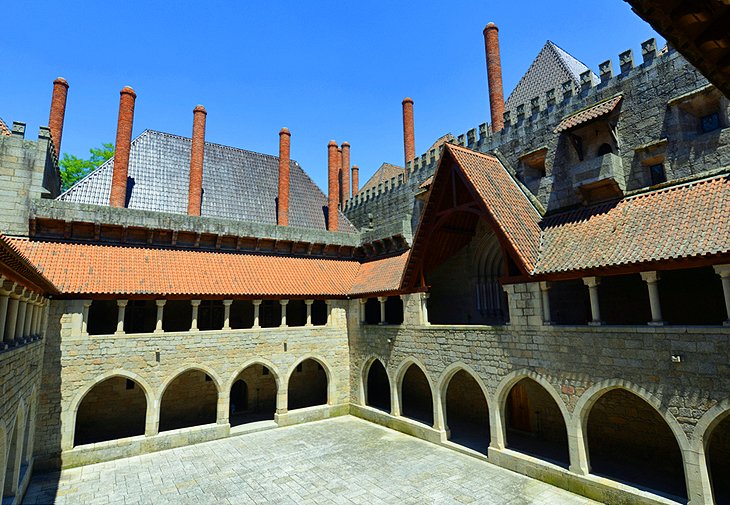
Standing at the foot of the castle hill is the Palace of the Dukes of Braganza. Begun in 1401 on the orders of Dom Afonso, the first Duke of Bragança, this magnificent royal residence follows a Burgundian style of architecture in deference to Dom Afonso's taste for all things French.
The palace was completed in 1442 but fell into disuse after the seat of the Bragança family was transferred in the early 16th century to Vila Viçosa. In 1933, the building underwent extensive renovation to become the official presidential residence during António Salazar's dictatorship.
A sightseeing tour of the palace takes in most of the rooms and their 16th-century furniture and includes a visit to a small museum where Persian rugs, Flemish tapestries, medieval weaponry, and a collection of rare paintings are displayed. The chapel is noted for its vivid stained-glass windows.
About 200 kilometers from Guimarães lies the town of Bragança, the original seat of the House of Bragança, which ruled in Portugal from 1640 to 1910.
Address: Rua Conde Dom Henrique, Guimarães
Museu de Alberto Sampaio
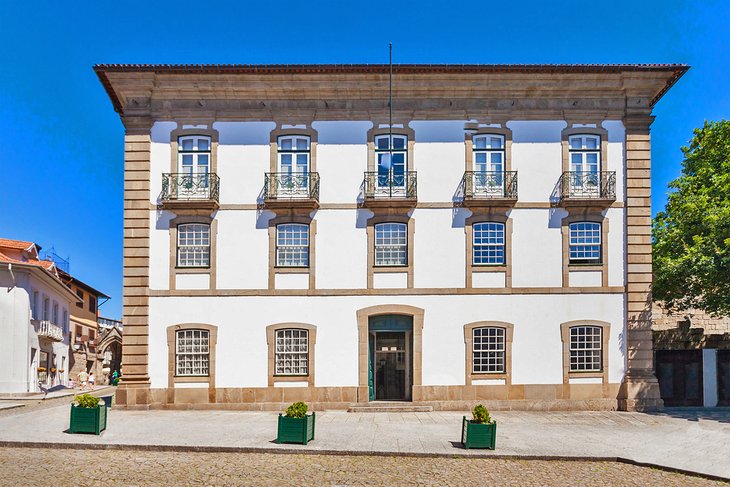
Enjoying a fabulous film-set location within the serene Romanesque cloister of Nossa Senhora da Oliveira, the Alberto Sampaio Museum was created to showcase the religious artworks belonging to the convent and other churches throughout the Guimarães region.
The depository of ecclesiastical treasures spans the 14th to the 18th centuries and includes an impressive collection of medieval and Renaissance-era sculpture, paintings, and ceramics; embroidered vestments; an outstanding array of rare jewelry; and items such as processional crosses and gold and silver chalices.
The Santa Clara room is an Aladdin's den of gilt carving. Central to the permanent exhibition is the magnificent 14th-century gilded silver altarpiece and the tunic worn by João I at the battle of Aljubarrota in 1385.
Address: Rua Alfredo Guimarães, Guimarães
Largo da Oliveira
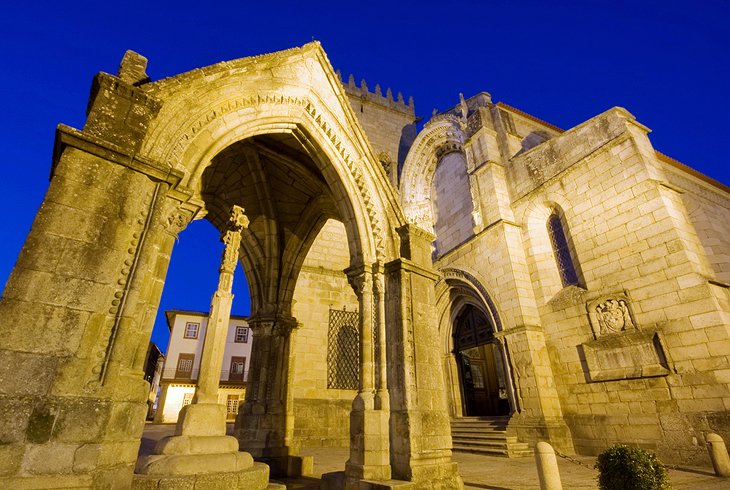
With its picture-postcard looks and venerable atmosphere, Largo da Oliveira exudes a genuine medieval aspect. Surrounded by time worn cobbled streets and heavy-set granite facades, the ancient square is the historic hub of old Guimarães. Some of the town's most recognized tourist attractions are set within the square's handsome arcades.
One, the Igreja de Nossa Senhora da Oliveira, dominates the location. This former monastery, founded by Afonso Henriques in the 12th century, stands on the site of an earlier convent built 200 years earlier. Much of the original structure was demolished, and the church as it appears today is largely 16th century - the Manueline bell tower was added in the early 1500s. The tranquil cloister houses the Museu de Alberto Sampaio.
In front of the church is the Padrão do Salado, a 14th-century Gothic shrine shielding a cross. The monument is said to mark the spot where an olive tree was transplanted in the 13th century to supply the altar lamp with oil.
Museu Martins Sarmento
Enthusiasts of archaeology are in for a treat at the Martins Sarmento Museum. It's no coincidence that the facility is named after the man who excavated Citânia de Briteiros in 1875 - one of the most impressive archaeological sites in Portugal.
The museum is imaginatively housed within the cloister of the 14th-century convent of São Domingos, and the Gothic setting lends a mysterious and strangely romantic quality to the collection.
The bulk of the exhibition is made up of Celtiberian artifacts unearthed at prehistoric Citânia de Briteiros and Castro de Sabroso, but also included are a host of finds from other northern Portuguese Iron Age sites. Actually, some of these date from the Stone Age, and placed together offer the visitor a fascinating glimpse into the region's Paleolithic and Neolithic past.
Address: Rua Paio Galvão, Guimarães
Convento e Igreja de São Francisco
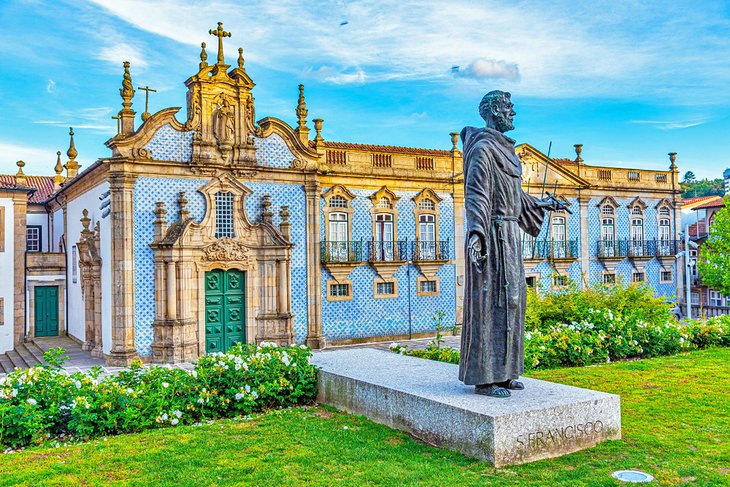
Situated away from the old town center, the graceful convent and church of São Francisco is celebrated for the 18th-century azulejos that adorn the chancel. The tiles depict the life of St. Anthony in a series of vivid blue and white panels that flow in style and harmony with the Gothic dome of the main chapel.
The church foundations date from 1400, but the building underwent considerable reconstruction in the 1740s. Besides the tile work, visitors should look out for the splendid engravings that decorate the nave, the wooden roof of which displays a wonderful example of trompe l'oeil painting.
Other notable features include the large arc of gilded woodwork that separates the chancel from the Gothic transept, and the double-tiered cloister.
Address: Largo de São Francisco, Guimarães
Penha de Santa Catarina
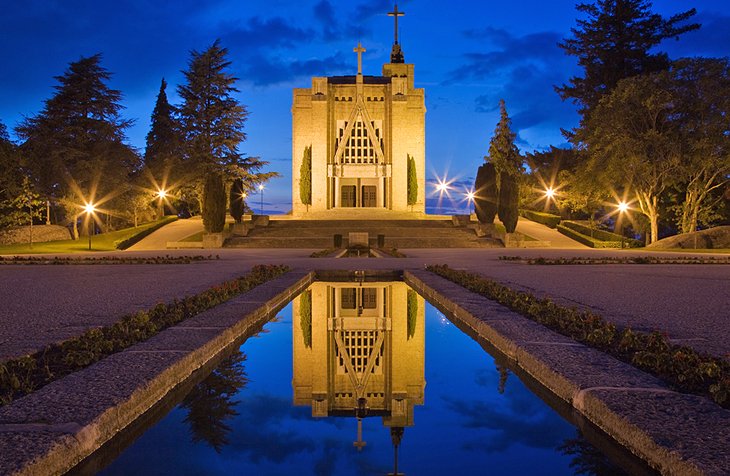
Reached by a picturesque mountain road that twists and turns through verdant sloping woodland, the Penha de Santa Catarina Park is an ideal excursion for those tourists seeking respite from the city, especially during the often stifling summer heat.
Rising to a height of 620 meters and yet only seven kilometers southeast from the center of Guimarães, the green space forms part of a National Ecological Reserve and covers 50 hectares. A veritable oasis of flora and fauna, the park is serious picnic territory and is a favorite destination for families. A labyrinth of footpaths can be followed that trace through a lush environment of ancient trees and huge granite boulders, many cut with steps.
On the lower slopes of the hill is the former monastery of Santa Marinha da Costa. Founded in 1154, it's now a stunning pousada hotel property, but the gardens and chapel are open to the general public. Crowning the summit (which incidentally can be reached by cable car) is the Santuário Nossa Senhora do Carmo da Penha, a major site of pilgrimage. The terrace surrounding the church provides fantastic views over Guimarães.
Location: Monte da Penha, Guimarães
Official site: http://www.penhaguimaraes.com
Parque Aquático Scorpio
For those traveling in the area mid summer with kids and looking for a way to keep them occupied, the Scorpio Water Park's plethora of themed attractions will work wonders. This premier leisure facility, two kilometers from the city center is one of the most popular things to do for families. It consists of two swimming pools, one designed for adults and older children; the other for youngsters.
But the fun really starts at Fantasyland, the park's purpose-built arena based on Guimarães Castle, where children can enjoy using multi-track waterslides, play under fountains, and get to grips with the pool's toy water animals. Those feeling bold can run the "Scorpio Tower," a 30-meter water tube. But the real test is the "Waterslide," a 40-meter aqua splash slide rising a dizzying six meters off the ground.
Address: Centro Comunitário de Desporto e Tempos Livres, Multiusos de Guimarães, Guimarães
Frequently Asked Questions
Which airport is closest to Guimarães?
Porto's Sá Carneiro International Airport is the closest flight hub to Guimarães. The airport is located at Maia, 10 kilometers north of Porto city center, which in turn is around a 53-kilometer, 45-minute drive from Guimarães.
What is the best time of year to visit Guimarães?
Guimarães is a pleasure to visit year-round, but early spring is especially appealing. At this time of year, the climate is warm with little rain, and crowds are thin. However, to fully appreciate the city's medieval past, visit the destination in the first week of August for the annual Festas Gualterianas, a boisterous costumed festival that's straight out of the Middle Ages. It's been held here since 1452.
How do you get to Guimarães from Porto?
Guimarães is 58 kilometers northeast of Porto and easily reached by vehicle using the A3 and A7 motorways, with tolls.
The Getbus airport shuttle bus runs daily between Porto's Sá Carneiro International Airport and Guimarães' main bus terminal.
CP trains operates an almost hourly service between Porto's main Campanhã station and Guimarães. The train station is south of the city center.
What are the must-visit destinations near Guimarães?
Exploration beyond Guimarães rewards the tourist with destinations steeped in history and mystery, and celebrated for their culture and architecture.
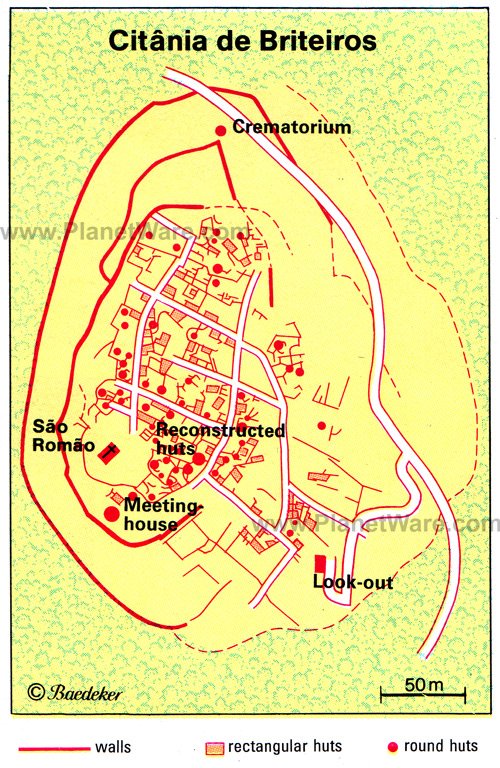
Citânia de Briteiros: The Iron Age settlement of Citânia de Briteiros, located 15 kilometers north of Guimarães, is one of the most important archaeological sites in Portugal.
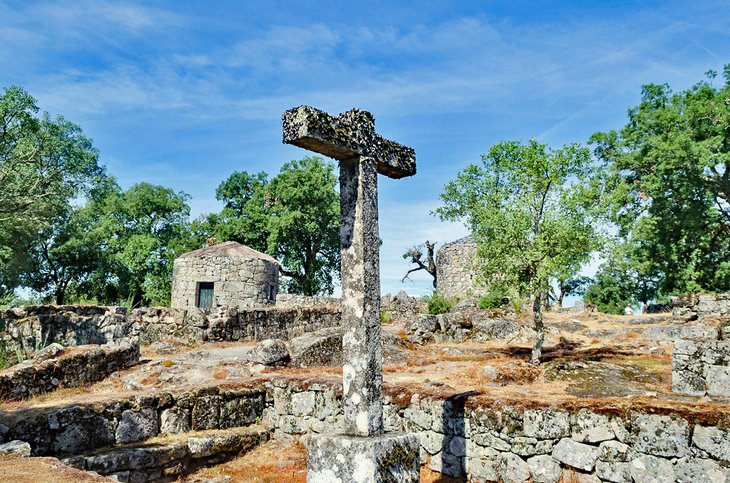
It's well worth spending time exploring the settlement, established by Celtiberians around 500 BC but most probably under Roman rule from 20 BC. The ancient town, surrounded by weathered walls, comprises the foundations of 150 single-roomed dwellings, round, oval, or rectangular in plan and built from stone. Some huts have been reconstructed to give a sense of their design. Excavations reveal an elaborate urban network of paved streets, underground cisterns, sewers, water conduits, and even a fountain.
Fragments of pottery, carved stones, jewelry, and other artifacts unearthed during the digs are now on display in the Museu Martins Sarmento, named after the archaeologist who discovered the site in 1874. Already evocative in its splendid isolation, the best views of the site can be had by following the chunky cobblestone path to the top of the hill.
Address: EN 309, Monte São Romão, Briteiros Salvador, Guimarães
Cabeceiras de Basto: It's a 40-minute drive east to Terras de Basto. Here, among the mountains and forests of this historic region, you'll find a collection of mysterious statues known as bastos standing unblinking under shaded woodland or on the dozens of paths that crisscross the area. Believed to represent Celtic warriors, they served as territorial markers and can be seen clutching shields as if ready to defend their kingdom.
In the town of Cabeceiras de Basto, the prime attraction is the splendid Baroque Mosteiro de São Miguel de Refojos. Its 33-meter-high dome is an architectural landmark, surrounded by statues of the Apostles, and surmounted by a statue of the archangel Michael.
Braga: Set aside a full day to acquaint yourself with Braga. Located 25 kilometers northwest of Guimarães, Braga is Portugal's most important religious center, with churches, chapels, and monasteries distinguishing the city's compact historic quarter. The twin-towered Sé, or cathedral, is one of the must-see attractions, noted for its exquisite gilded woodwork and a spectacular painted ceiling depicting the city's illustrious history.
A short jaunt east of Braga stands the country's most spectacular religious sanctuary, Bom Jesus do Monte. Renowned for its monumental Baroque stairway and pilgrim church, the whole site is set in a public park - prime picnic territory - with plenty of family-friendly attractions, including a magical hidden grotto.