20 Top-Rated Museums in Paris
Visitors could spend an entire vacation (or a lifetime) exploring the art collections in Paris. The city boasts more than 150 museums, many of which are world-class institutions.
Discovering the highlights of the Louvre Museum requires several days in itself. Tourists often get lost in the seemingly endless galleries, which are filled with masterpieces of Western Civilization. For first-time visitors, a guided tour of the Louvre is recommended.
Other museums are devoted to specific artists, such as the Musée Picasso, the Musée Rodin, and the Musée Marmottan Monet, or genres, such as Impressionist art at the Musée d'Orsay, medieval art at the Cluny Museum, and modern art at the Pompidou Center. Paris also has appealing small museums like the Musée Jacquemart-Andre and the Musée de l'Orangerie.
Tips for Travelers: Many museums are closed on Mondays or Tuesdays, while some museums (including the Musée Marmottan Monet) stay open late on specific days, and certain museums (such as the Centre Pompidou) are open late every day. Admission to the Musée du Louvre is free of charge on July 14th, a national holiday. Entrance to the Musée d'Orsay, the Centre Pompidou, and the Musée de Cluny is free on the first Sunday of the month.
A Paris Museum Pass allows unlimited entry to most museums over a two-day or four-day period. What's the best way to appreciate the museum collections, besides taking a course in Art History before the trip? Sign up for guided tours whenever possible. Knowledgable guides enhance your experience by providing historical context and sharing unique insights.
Learn about the best art collections and plan your visits with our list of the top museums in Paris.
- 1. Musée du Louvre
- 2. Musée d'Orsay
- 3. Musée de Cluny (Musée National du Moyen Âge)
- 4. Centre Pompidou
- 5. Petit Palais: Musée des Beaux-Arts de la Ville de Paris
- 6. Musée Rodin
- 7. Musée Marmottan Monet
- 8. Musée Carnavalet - Histoire de Paris
- 9. Musée de l'Orangerie
- 10. Musée Jacquemart-André
- 11. Musée National Picasso-Paris
- 12. Institut du Monde Arabe (Arab World Institute)
- 13. Musée des Arts Décoratifs
- 14. Hôtel de la Marine
- 15. Musée d'Art Moderne de la Ville de Paris
- 16. Musée National des Arts et Metiers Techniques
- 17. Musée Grévin (Wax Museum)
- 18. Musée du Quai Branly - Jacques Chirac
- 19. Fondation Louis Vuitton
- 20. Musée Guimet
- Map of Museums in Paris
1. Musée du Louvre
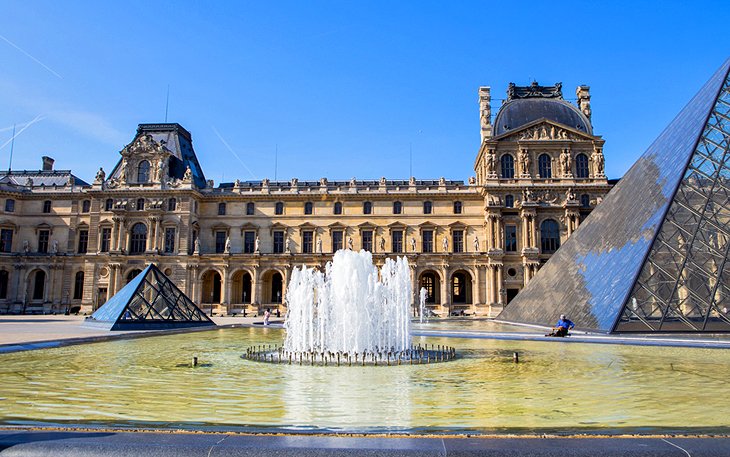
This incomparable museum contains the most prestigious art collection in Paris (and one of the most renowned in the world) housed in the former royal palace of French kings. Visiting the Louvre provides a crash course through some of Western Civilization's finest masterpieces.
With more than 30,000 works of art, the Louvre's expansive collection covers everything from Egyptian, Greek, and Roman antiquities to European paintings from the 13th to the 19th century. Also on view are the French crown jewels, antique French furniture, Islamic art, and Neoclassical 18th-century statues.
The most famous works of art include Leonardo da Vinci's Mona Lisa; the grandiose floor-to-ceiling painting Les Noces de Cana by Veronese; Le Sacre de Napoléon 1er by Jacques Louis David; the Vénus de Milo statue of the 2nd century BC; and the monumental Victoire de Samothrace sculpture, also known as the Winged Victory.
The best way to see all of the highlights is by taking a Louvre Museum Guided Tour, which has the added advantage of priority entry (to avoid the long lines). Another way to skip the lines is by using a 2-Day Paris Museum Pass or a 4-Day Paris Museum Pass.
Address: Rue de Rivoli, 75001 Paris (Métro: Palais-Royal Musée du Louvre station)
Official site: http://www.louvre.fr/en/homepage
2. Musée d'Orsay
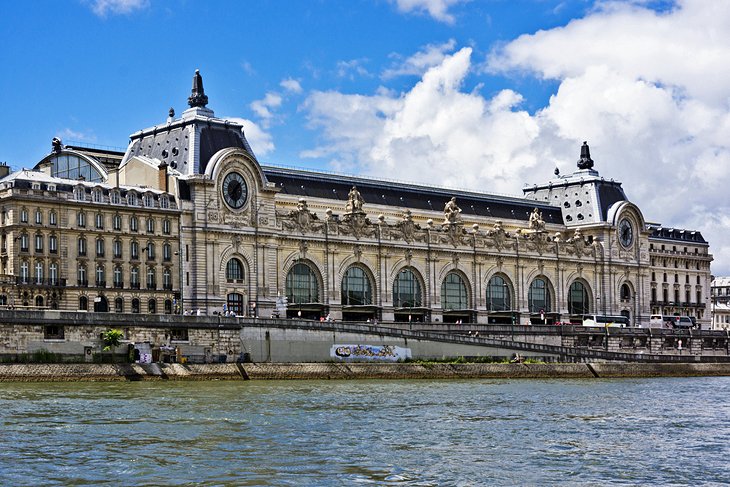
The Musée d'Orsay displays an exceptional assortment of 19th- and 20th-century art (from 1848 to 1914) in a converted Belle Epoque railway station. The collection represents all the great masters of Impressionism: Boudin, Caillebotte, Corot, Courbet, Degas, Manet, Monet, Pissarro, Sisley, Renoir, and Vuillard.
Presented roughly in chronological order, the collection follows the progression of the Impressionism movement, then continues with Post-Impressionism, covering works by Bonnard, Cézanne, Gauguin, and Van Gogh, and the Pointillists, Seurat and Signac. There are also drawings and paintings by Toulouse Lautrec, the Bohemian artist of Montmartre, who is in a class of his own.
Some of the museum's most exemplary pieces include Claude Monet's Coquelicots (Poppies), Gare Saint-Lazare, and Nymphéas Bleus (Blue Water Lilies); Renoir's La Balançoire (The Swing), Danse à la Campagne, and Bal du Moulin de la Galette; Cézanne's Pommes et Oranges still-life painting; Degas' La Classe de Danse; and Morisot's Le Berceau (The Cradle).
To best appreciate the works of art, taking a customizable private Orsay Museum two-hour guided tour is recommended. This tour skips the long entrance line and takes visitors straight to the must-see works of art, including masterpieces by Delacroix, Renoir, Monet, Cézanne, and Van Gogh.
Well designed to welcome visitors, the Musée d'Orsay has a bookshop-boutique, a stylish café with aquatic-themed decor, and an exquisite gourmet restaurant (listed as a Historical Monument) with glittering chandeliers, gilded moldings, and a splendid painting on the ceiling.
Address: 1 Rue de la Légion d'Honneur, 75007 Paris (Métro: Gare Musée d'Orsay station)
Official site: http://www.musee-orsay.fr/en/
3. Musée de Cluny (Musée National du Moyen Âge)
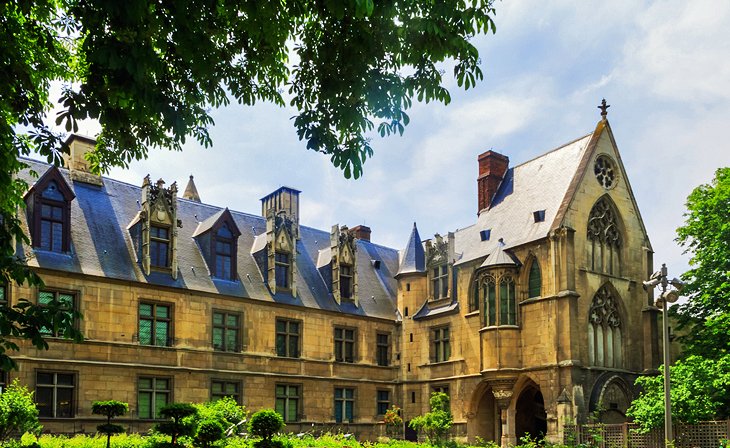
This Musée de Cluny is tucked away in the 15th-century Hôtel des Abbés de Cluny (Abbey House) on a quiet street off the Boulevard Saint-Germain. One of the top attractions of the Latin Quarter. The museum has an outstanding collection of medieval paintings, sculpture, stained glass, and church treasury items.
The museum is renowned for its tapestries including the famous Lady with the Unicorn (Dame à la Licorne) series that dates back to the late 15th and early 16th century. Rendered in exquisite detail, this series of six "millefleurs" ("thousand flowers") style tapestries incorporates multitudes of blossoms, trees, and friendly animals.
One of the rooms of the museum is part of the two-thousand-year-old Roman baths archaeological site, the Frigidarium (room of the cold bath). This room displays a small assortment of statues, mosaics, and other antiquities such as Gallo-Roman sculptures. The rest of the Roman baths complex, the Thermes de Cluny, built around AD 200, can be seen from outside the museum along the Boulevard Saint-Michel.
Renovations Update: The Musée de Cluny is currently closed for renovations. The museum is scheduled to reopen in early 2022.
Address: 28 Rue du Sommerard, 75005 Paris (Métro Cluny-La Sorbonne, Saint-Michel or Odéon station)
Official site: https://www.musee-moyenage.fr/en/home.html
4. Centre Pompidou
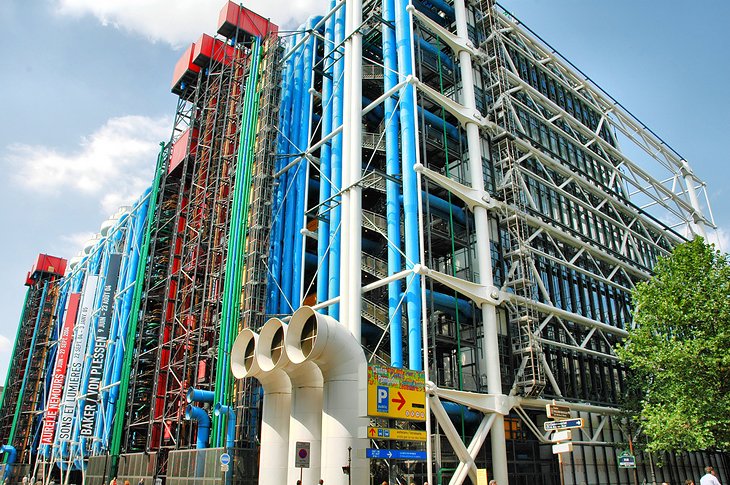
The Centre Pompidou astounds visitors with its stunningly modern steel-and-glass structure, considered by some to be fabulously original while others call it atrocious.
The Pompidou Center houses the Musée National d'Art Moderne, an extensive collection of 20th- and 21st-century art presented in chronological order, beginning with the Modern collection (including Braque, Duchamp, Dufy, Matisse, Kandinsky, and Picasso) continuing with the Contemporary collection (works by Mark Rothko, Andy Warhol, and other renowned artists born after 1920).
The Drawing collection was acquired from the Musée du Luxembourg and the Jeu de Paume. This collection contains remarkable works of graphic art by Marc Chagall, Jean Dubuffet, Marcel Duchamp, and Henri Matisse.
The Centre Pompidou covers all categories of art, including a Film and New Media collection that presents visual art installations, as well as experimental and artistic films dating from 1902 through the 21st century.
Visitors also appreciate the center's Café le Central snack bar on Level 1 and the rooftop (Level 6) Restaurant Georges, which dazzles with its sweeping views of Paris, including the Eiffel Tower in the distance. The Centre Pompidou also has three bookshops and a boutique that sells gifts and souvenirs.
Address: Place Georges-Pompidou, 75004 Paris (Métro: Rambuteau, Hôtel de Ville or Châtelet-Les Halles station)
Official site: https://www.centrepompidou.fr/en
5. Petit Palais: Musée des Beaux-Arts de la Ville de Paris
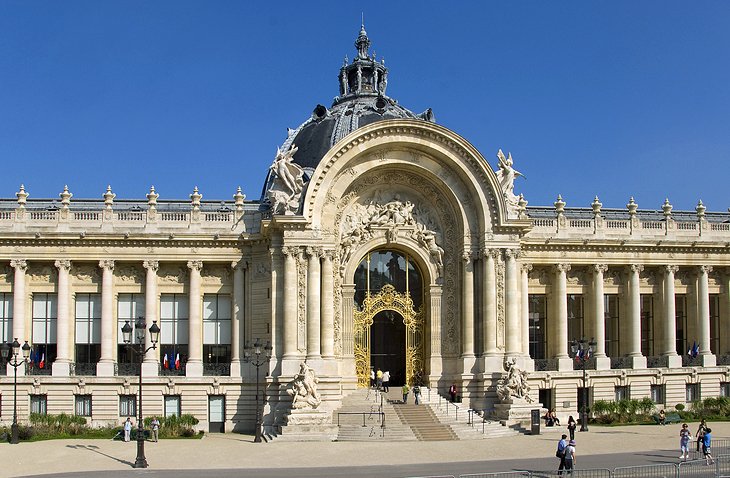
Designed in opulent Belle Epoque style, the Petit Palais was created for the 1900 Universal Exhibition and was converted into a museum in 1902. The building's ornate sculptural details and murals provide a perfect backdrop for the artworks on display.
The Petit Palais boasts an extensive fine arts collection covering classical antiquities, medieval artifacts, Renaissance paintings and manuscripts, 17th-century French and Dutch paintings, 18th-century Beauvais tapestries, 19th-century sculptures, Impressionist art, and Art Nouveau decorative objects.
Highlights of the collection are the masterpieces of European painting by Eugène Delacroix, Rembrandt, Peter Paul Rubens, Nicolas Poussin, Jacques Louis David, and other renowned artists; and a wonderful collection of Impressionist paintings by Bonnard, Cézanne, Monet, Morisot, Pissarro, Renoir, Sisley, and Vuillard.
Not to be missed are Claude Monet's Soleil Couchant sur la Seine (Sunset on the Seine), Rembrandt's self-portrait, Fragonard's Jérôme de La Lande, Delacroix's Combat du Giaour et du Pacha, and La Parisienne by Charles-Alexandre Giron.
At the center of the building's four wings is a delightful courtyard garden, where the Café-Restaurant Le Jardin du Petit Palais serves a simple lunch menu, snacks, and refreshments. During summertime, the café offers outdoor seating on a shaded terrace overlooking the garden.
Address: Avenue Winston Churchill, 75008 Paris (Métro: Champs-Elysées Clemenceau station)
Official site: http://www.petitpalais.paris.fr/en
6. Musée Rodin
The Rodin Museum presents its collection in the 18th-century Hôtel Biron, a Neoclassical-style mansion that is listed as a Historical Monument. French sculptor Auguste Rodin was inspired by the property's formal garden with its shady trees and well-groomed shrubbery.
In 1908, Rodin rented part of the mansion for use as an art studio, and beginning in 1911, he occupied the entire building. Based on period photographs, the museum has reconstructed Rodin's art studio as it was furnished and decorated during the time the artist lived here. Also on display is an assortment of Rodin's artwork along with his personal art collection that he willed to the French government.
The museum invites visitors to admire hundreds of works by Rodin, including his celebrated sculptures, as well as his paintings and drawings. Exhibition space is also devoted to the pieces collected by Rodin, such as paintings by Claude Monet, August Renoir, and Vincent van Gogh.
After viewing the collections in the mansion, visitors may take a stroll through the Sculpture Garden and stop at the café-restaurant, L'Augustine, for lunch or for afternoon tea or coffee and dessert. The café-restaurant serves classic French dishes prepared from seasonal ingredients, along with pâtisserie (tarts, cake, etc.) supplied by the prestigious Maison Lenôtre.
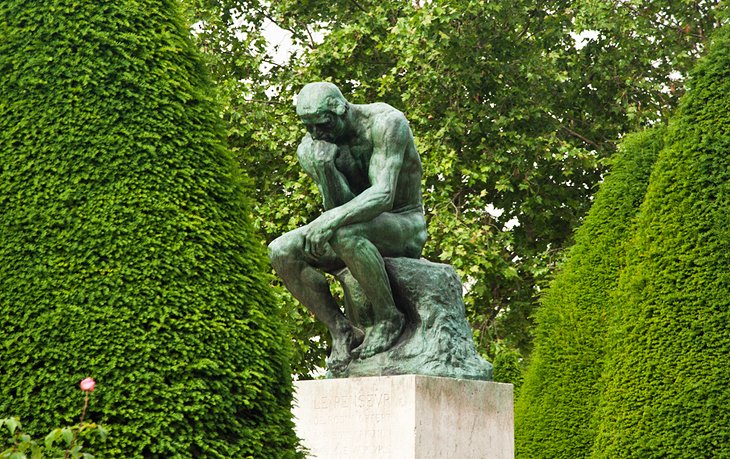
The beautiful three-hectare Sculpture Garden exhibits full-size copies of Rodin's world-famous works, including The Thinker (Le Penseur), the Monument to the Burghers of Calais (Les Bourgeois de Calais), and The Gates of Hell (La Porte d'Enfer). Originally Rodin had placed antique sculptures from his personal collection in the garden.
Within the perfectly manicured grounds is a rose garden that blooms in May and June. The estate's landscaping allows for different flowers to bloom every month throughout the year. For instance, visitors can admire lush clusters of viburnum in February, vibrant-yellow forsythia blossoms in March, and delicate hydrangeas in May.
During the height of summer, the Sculpture Garden and café-restaurant stay open late several evenings every week.
Address: 77 Rue de Varenne, 75007 Paris (Métro: Varenne or Invalides station)
Official site: http://www.musee-rodin.fr/en/home
7. Musée Marmottan Monet
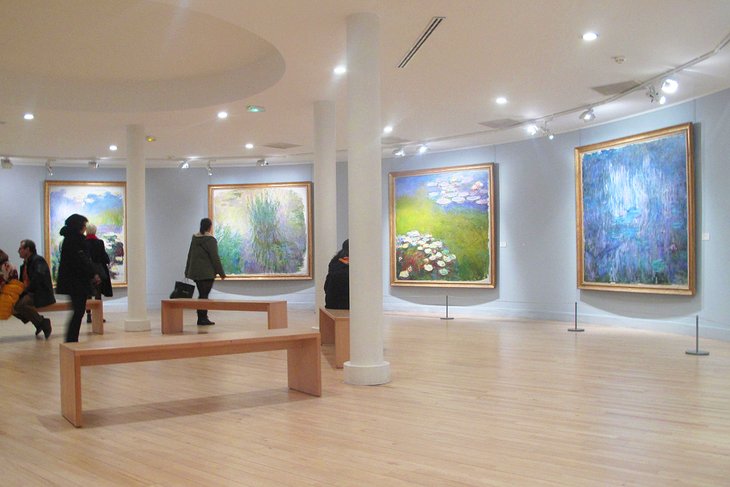
In the former hunting lodge of the Duke of Valmy, near the lovely Bois de Boulogne park, the Musée Marmottan Monet is a must-see destination for lovers of Impressionism. The museum showcases the paintings of France's most celebrated Impressionist artist, Claude Monet.
The Musée Marmottan Monet boasts the largest collection of Monet paintings in the world, with more than 100 artworks that represent the progression of the artist's career. In addition to its impressive quantity of pieces, the collection also features works of exceptional rarity.
The collection begins with Monet's groundbreaking Impression, Soleil Levant painting (1872), which gave Impressionism its name, and continues chronologically until his Nymphéas (Water Lilies) series, which he painted in his later years while living in Giverny. (Monet's Garden in Giverny is one of the top tourist attractions in Normandy.)
Treasures of the collection include Monet's renowned paintings Le Train dans la Neige. La Locomotive (1875); En Promenade Près d'Argenteuil (1875); Pont de l'Europe (1877); Cathédrale de Rouen (1892); and Londres, Le Parlement, Reflets sur la Tamise (1905).
The museum also displays works by Monet's contemporaries: Boudin, Corot, Gauguin, Daumier, Morisot, Pissarro, Renoir, and Sisley among others.
In addition, the museum has a room featuring medieval illuminated art; the collection includes masterpieces of craftsmanship from the 13th to the 16th centuries.
The museum also has a boutique that sells books, postcards, posters, and souvenirs.
Address: 2 Rue Louis-Boilly, 75016 Paris (Métro: La Muette ou Ranelagh station)
Official site: http://www.marmottan.fr/
8. Musée Carnavalet - Histoire de Paris
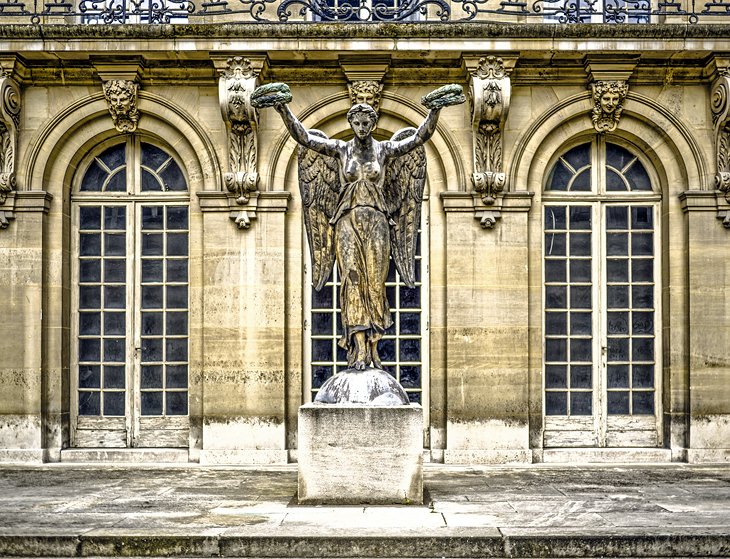
Reopened in 2021, the Musée Carnavalet - Histoire de Paris nestles in a quiet corner of Le Marais, an atmospheric quarter renowned for its resplendent medieval and Renaissance palaces. The collection is housed in two adjacent hôtels particuliers (mansions): the 17th-century Hôtel Peletier and the 16th-century Hôtel Carnavalet, also known as the Hôtel des Ligneris.
A renovation project took place over several years (from 2017 to 2021), which beautifully refurbished the museum's historic buildings. The restoration included a redesign of the exhibition spaces to improve the visitor experience.
The museum illustrates the history of Paris through an extensive collection (over 3,800 items) of antiquities, historical paintings, drawings, and objects of art. Exhibits range from prehistoric artifacts and medieval relics to Belle Epoque decor. The collection covers modern history with photographs of student protests in the 1960s and exhibits about the 2019 Notre Dame fire.
From 1677 to 1696, the Hôtel Carnavalet was the residence of Madame de Sévigné, whose letters to her daughter (more than 1,500 in number) describing life in Paris and at the court in Versailles provide valuable insights about the epoque of Louis XIV (the Sun King). Some of Madame de Sévigné's personal belongings can be seen at the museum.
An assortment of portrait paintings, along with profiles of renowned Parisians, highlight the city's most influential citizens. The collection covers important events, such as the Wars of Religion and the French Revolution, while documenting the intellectual and cultural evolution of Paris.
The Carnavalet - History of Paris Museum has a gourmet restaurant, Les Jardins d'Olympe (with an entrance at 16 Rue des Francs-Bourgeois), and a boutique-bookshop.
Address: 23 Rue de Sévigné, 75003 Paris (Métro: Saint-Paul station)
Official site: https://www.carnavalet.paris.fr/musee-carnavalet
9. Musée de l'Orangerie
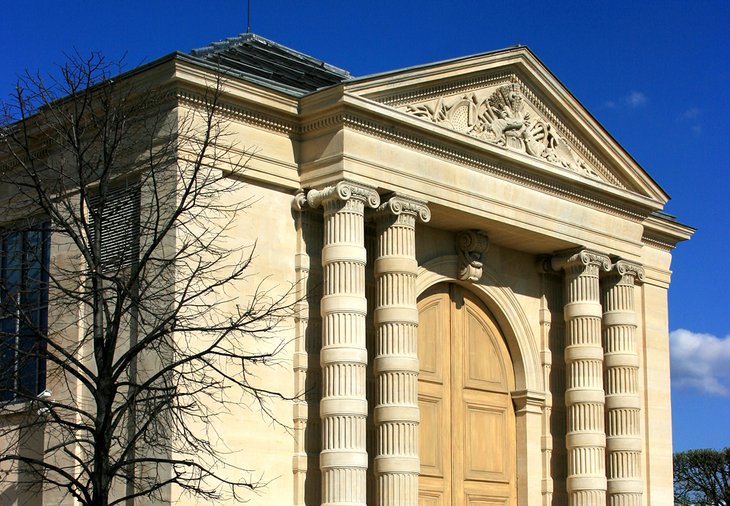
The Musée de l'Orangerie is one of the best places to visit in Paris to admire Impressionist art. The focus on Impressionism and 19th- to 20th-century art is similar to the Musée d'Orsay, except that the Orangerie Museum is smaller and less well known and therefore usually less crowded.
Tourists will enjoy seeing gorgeous Impressionist paintings in this intimate space. The museum represents the work of Impressionists (Monet, Sisley, and Renoir) as well as Post-Impressionists (Cézanne, Gauguin, Matisse, and Derain), and Modernists (Modigliani, Picasso, and Soutine).
A highlight of the museum is Monet's series of Nymphéas (Water Lilies) displayed in two elliptical rooms, called the "Sistine Chapel of Impressionism" by André Masson in 1952. The panoramic paintings immediately impress the viewer with their enormous size; the series of eight paintings covers 200 square meters, the entire wall space of both exhibition rooms.
From close up, the paintings appear to be scribbles of brush strokes, yet when viewed from several feet away the composition creates a realistic impression of water lilies floating in a dreamy pond. These masterpieces of Impressionist art reveal the remarkable talent and genius of Claude Monet.
Address: Jardin des Tuileries, Place de la Concorde, 75001 Paris (Métro: Concorde or Tuileries station)
10. Musée Jacquemart-André
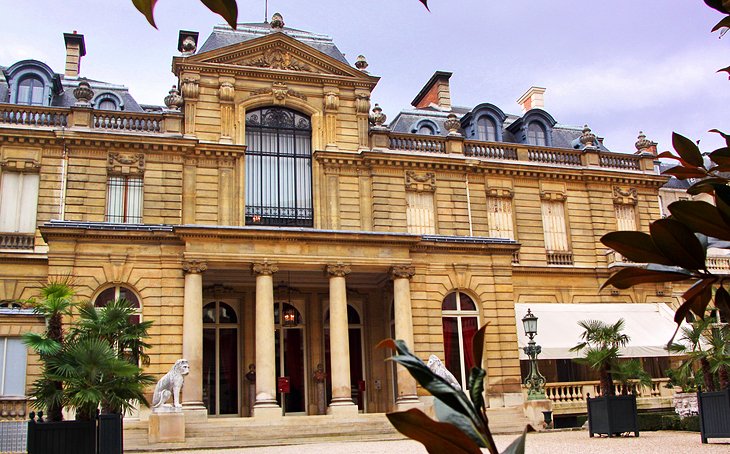
The Musée Jacquemart-André occupies a sumptuous 19th-century mansion built for Edouard André and Nélie Jacquemart, who entertained the high society of Paris with lavish parties in their Grand Salon.
The home reflects the refined tastes of the wealthy couple (Edouard and Nélie), avid art collectors who were passionate about 18th-century French painting, as well as the art of the Italian Renaissance. The couple's private art collection includes masterpieces by Elisabeth Lebrun, Fragonard, Jacques-Louis David, Rembrandt, Giovanni Bellini, Botticelli, and Tiepolo.
In the mansion's elegant former dining room, the Café Jacquemart-André serves refreshments and light meals, such as mixed salads and quiche, for lunch. At tea time, guests can sample the finest Parisian pastries from the renowned Pâtisserie Stohrer. The Café Jacquemart-André offers a special brunch menu on Sundays from 11am until 2:30pm.
Tourists will also appreciate the museum's boutique, which sells books and gift items.
Shopaholics can plan to visit the Musée Jacquemart-André before or after hitting the designer shops on the Champs-Elysées and the Galeries Lafayette department store, which are within walking distance of the museum.
Address: 158 Boulevard Haussmann, 75008 Paris (Métro: Saint-Philippe du Roule or Miromesnil station)
Official site: https://www.musee-jacquemart-andre.com/en/home
11. Musée National Picasso-Paris
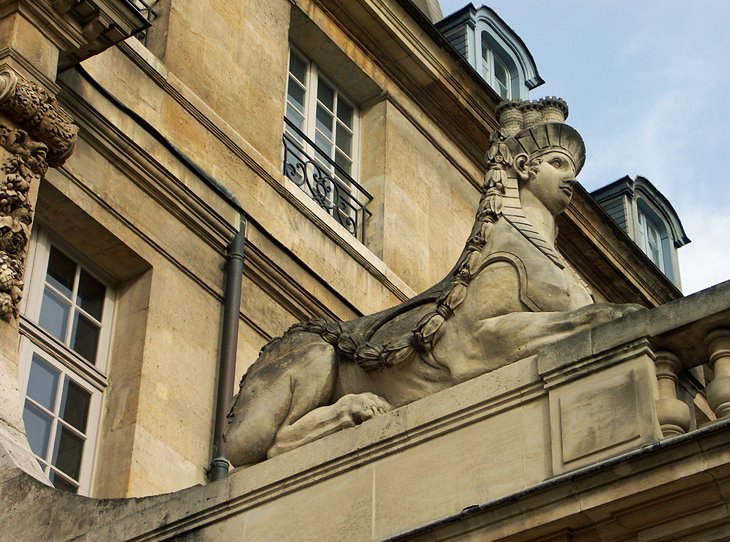
Renovated in 2014, the Musée National Picasso-Paris is located in the historic Marais quarter in the Hôtel Salé, one of the grandest 17th-century aristocratic mansions in Paris. The property features an elegant French formal garden, where visitors may relax on park benches.
The mansion's 3,700 square meters of exhibition space is used to display a wide range of Picasso's paintings along with sculptures and drawings representing the entire span of the artist's career. The museum contains over 5,000 items, which is the largest collection of Picasso's works in the world.
Some of the most iconic works in the collection are Picasso's Self-Portrait and La Célestine from the Blue period, the Demoiselles d'Avignon (Young Ladies of Avignon), and the Homme à la Mandoline (Man with Mandolin) from the Cubist period. Also noteworthy are the paintings of Large Nudes, vibrant Matadors, and whimsical Musicians.
Not to be missed is Picasso's personal art collection, which is exclusive to the Musée Picasso (a previso in Picasso's donation to the state prohibits loaning these pieces to any other museum exhibits). Picasso's collection includes works by the most famous 20th-century artists: Braque, Cézanne, Corot, Degas, Derain, Gauguin, Renoir, Matisse, Miró, and Rousseau.
The museum has a gift shop that is open Tuesday through Friday and a café that has the same opening hours as the museum.
Address: 5 Rue de Thorigny, 75003 Paris (Métro: Saint-Paul, Saint-Sébastien-Froissart or Chemin Vert station)
Official site: http://www.museepicassoparis.fr/en/
12. Institut du Monde Arabe (Arab World Institute)
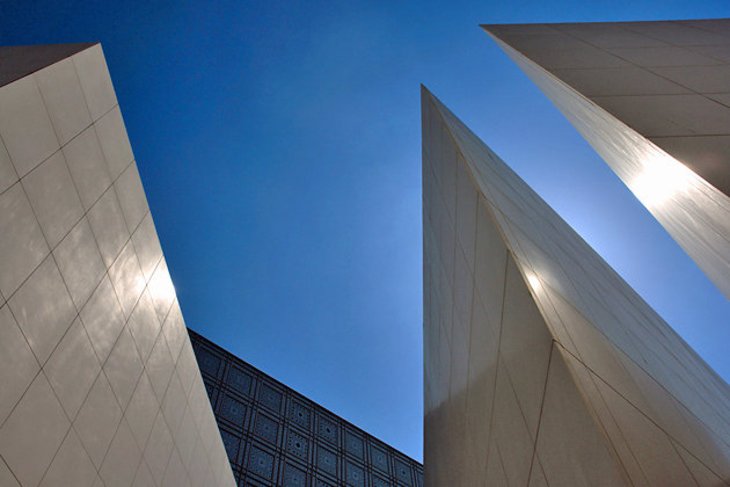
The Institut du Monde Arabe stands in stunning contrast to the ancient buildings of the medieval Latin Quarter. This unique Parisian landmark represents a contemporary interpretation of Islamic architecture. Inspired by Arab-inspired geometric patterns, the south facade is adorned with mashrabiyas (resembling mosaics or filigree work) that allow light to filter into the interior.
The institute was established to promote interchange between the cultures of the East and West through lectures, music concerts, film screenings, dance and theater performances, poetry readings, and temporary exhibitions that appeal to a general audience. Arabic language classes are offered in collaboration with the institute's Centre de Langue et de Civilisation.
The institute's museum includes three departments: Islamic Art, which displays ceramics, calligraphy, historic manuscripts, traditional carpets, textiles, and jewelry; Ethnography, which presents exhibits about society, culture and everyday life in various areas of the Arab world; and Modern and Contemporary Art, which features works created by Muslim artists since the 1920s.
The institute's museum presents a comprehensive view of the diverse civilizations of the Arab world. The collection begins with antiquity and highlights the period of the 3rd century when the Arabic language and the true identity of Arab culture emerge, while illustrating the influence of the Islam religion as early as the 7th century.
One of the most enjoyable things to do in Paris is dining at the institute's fine-dining restaurant, Le Zyriab, on the 9th floor. The restaurant's upscale dining room offers sensational views of Notre-Dame Cathedral and the Île de la Cité. The 9th floor also has a self-service cafeteria for casual meals. Le Café Littéraire on the ground floor serves light meals and snacks.
From the rooftop terrace, the panoramas extend all the way across the Paris cityscape to the Arc de Triomphe. On clear days, it's possible to see as far as La Défense.
Address: 1 Rue des Fossés Saint-Bernard, 75005 Paris (Métro: Jussieu or Cardinal Lemoine station)
Official site: https://www.imarabe.org/en/museum/the-museum-s-collections
13. Musée des Arts Décoratifs
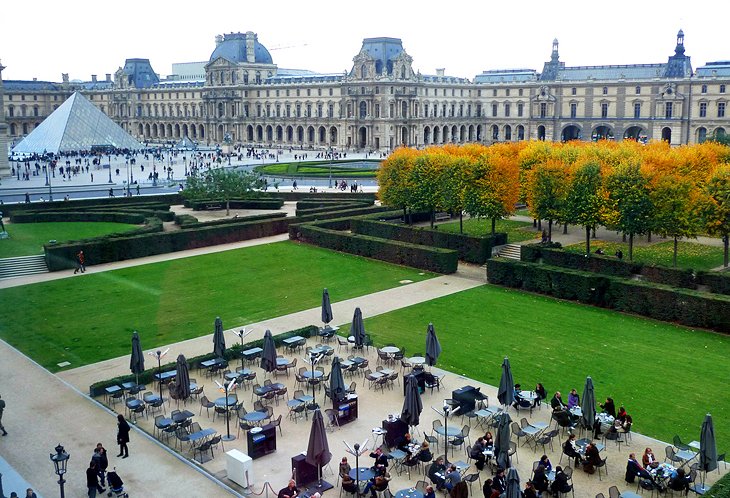
For those who appreciate fashion and the finer things in life, this museum in the Louvre's western wing is a delight. The Musée des Arts Décoratifs (Museum of Decorative Arts) displays an extensive collection (around 150,000 items) of decorative arts objects from the Middle Ages through the centuries until the Art Nouveau movement.
Visitors marvel over the variety of objects, from medieval altarpieces and Renaissance wedding chests to 18th-century tapestries and First Empire tableware.
The museum's chic restaurant, Loulou, embodies the essence of Parisian art-de-vivre with its Mediterranean menu (inspired by the cuisine of the French Riviera, Italy, and Sicily), stylish dining room, and pleasant garden terrace seating.
Associated with the Musée des Arts Décoratifs is the Musée Nissim de Camondo in the 8th arrondissement at 63 Rue de Monceau. This magnificent Belle Epoque private mansion displays a remarkable assortment of French decorative art objects and paintings from the 18th century, such as sparkling chandeliers, gilded clocks, Sèvres porcelain, and Marie Antoinette's vases.
The Museum of Decorative Arts also supports the Ateliers du Carrousel, which offers art workshops for children and adults taught by professional artists.
Address: 107 - 111 Rue de Rivoli, 75001 Paris (Métro: Palais Royal-Musée du Louvre, Tuileries or Pyramides station)
Official site: https://madparis.fr/en/
14. Hôtel de la Marine
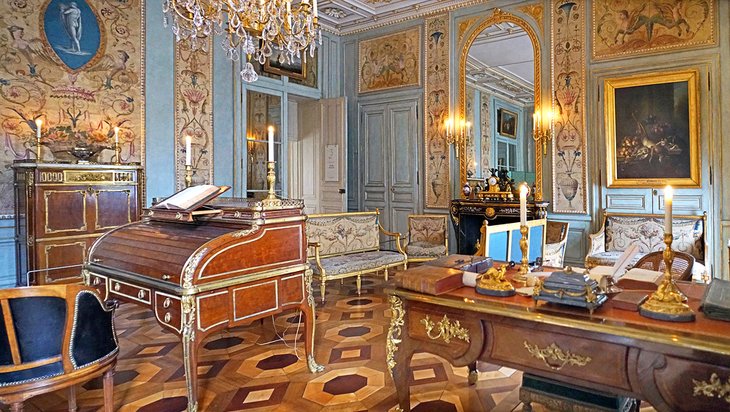
This stately Neoclassical palace conceals a marvelous hidden world of 18th-century history. The palace stands at the heart of Paris on the Place de la Concorde, which was originally called the Place Louis XV and was adorned with an equestrian statue of the king (removed during the Revolution).
In 1765, the Hôtel de la Marine became a repository for the royal Crown Jewels, furniture, weapons, and armor that belonged to Louis XV and his household.
Visitors can tour the interior to admire the splendid 18th- and 19th-century decor and the views onto the Place de la Concorde. A self-guided audio tour shares the monument's 250-year history. The palace also hosts exhibits throughout the year.
The Hôtel de la Marine is open every day. Services include a restaurant, café, and bookstore/gift shop. Late-night openings are until 10pm on Fridays (arrive at the ticket office by 9:15pm). Also, the building's interior courtyard is open from 9am until midnight daily.
Address: 2 Place de la Concorde, 75008 Paris (Métro: Concorde station)
Official site: https://www.hotel-de-la-marine.paris/en/
15. Musée d'Art Moderne de la Ville de Paris
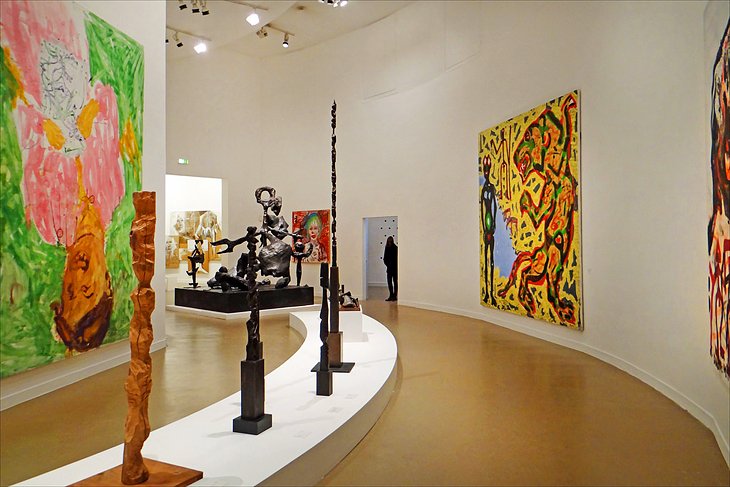
The City of Paris' Museum of Modern Art is housed in an Art Nouveau building that was designed for the International Art and Technical Exhibition in 1937. Opened in 1961, the museum focuses on 20th- and 21st-century art with a collection of around 13,000 works.
The collection features the work of famous modern artists, including Bonnard, Braque, Chagall, Derain, Dufy, Léger, Matisse, Modigliani, Picasso, and Vuillard, among others. With its wide range of artists represented, the collection covers the major trends in modern art.
Temporary exhibitions are held at the museum throughout the year.
Address: 11 Avenue du Président Wilson, 75116 Paris (Métro: Alma-Marceau or Iéna station)
Official site: http://www.mam.paris.fr/en
16. Musée National des Arts et Metiers Techniques
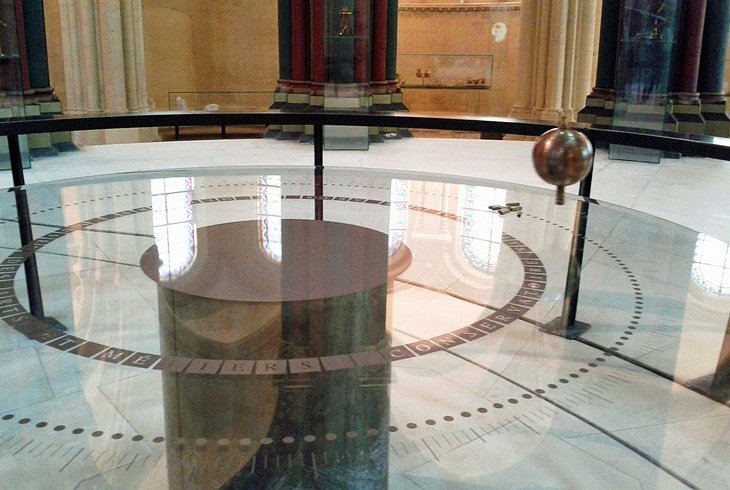
Founded in 1794 by Henri Grégoire, the Musée National des Arts et Metiers Techniques is a museum of scientific instruments and technological innovation. The collection exhibits more than 2,400 inventions that reveal remarkable technological innovations.
Not to be missed is the original version of Foucault's Pendulum. Demonstrated by the French physicist Jean Foucault in 1851, the metal pendulum swings in a full rotation of 360 degrees every 24 hours, thus proving the rotation of the earth.
Address: 60 Rue Réaumur, 75003 Paris (Métro: Réaumur - Sébastopol station)
Official site: http://www.arts-et-metiers.net/musee/visitor-information
17. Musée Grévin (Wax Museum)
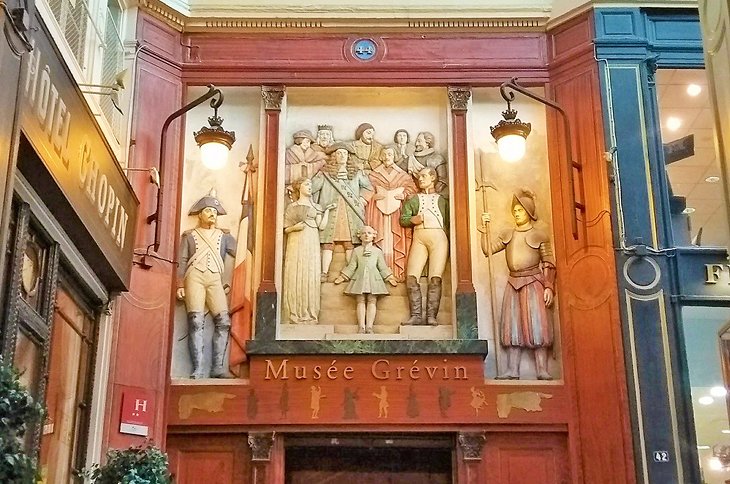
The most entertaining of Paris' museums, the Musée Grévin is pure fun for tourists. This popular wax museum amuses visitors with its incredibly realistic likenesses of today's most famous celebrities, as well as historical figures from French history.
Visitors can "meet" Louis XIV (the Sun King), Napoleon Bonaparte, and Victor Hugo, and then find favorite movie stars like Marilyn Monroe, Angelina Jolie, and Penélope Cruz (among more than 200 celebrities).
The Grévin Museum also has a café, with a simple menu for lunch or dinner, and a theater that presents classical music concerts.
To skip the long lines at the museum entrance, visitors may purchase tickets to the Musée Grévin in advance.
Address: 10 Boulevard Montmartre, 75009 Paris (Métro: Richelieu - Drouot or Grands Boulevards station)
Official site: https://www.grevin-paris.com/en
18. Musée du Quai Branly - Jacques Chirac
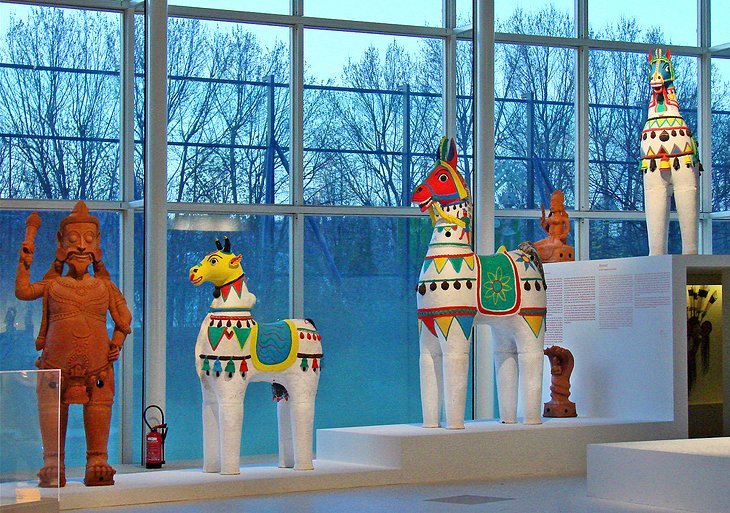
An eye-opening study of diverse cultures, the Musée du Quai Branly boasts one of the most eclectic art collections in Paris. The museum possesses around 370,000 items from Africa, Asia, Oceania, the Near East, and the Americas. The collection displays a wide range of artworks, religious items, everyday objects, clothing, musical instruments, and photographs.
Examples of noteworthy pieces at the museum include a tribal mask from Papua New Guinea, a carved ivory salt shaker from Nigeria, a wedding costume from Vietnam, an embroidered ceremonial robe from Uzbekistan, a traditional ritual lamp from Nepal, and a feathered helmet from the Hawaiian Islands.
For those who enjoy dining with a view, the museum's panoramic restaurant, Les Ombres, does not disappoint. The restaurant's floor-to-ceiling windows and rooftop terrace look out directly onto the Eiffel Tower and the museum's luxuriant garden. In this spectacular setting, the restaurant serves refined contemporary French cuisine.
The museum has a cinema, as well as a casual restaurant (Café Jacques) within the museum's two-hectare garden. Café Jacques has a pleasant outdoor terrace and views of the Eiffel Tower. The classic French lunch menu is based on seasonal ingredients. Café Jacques' dessert assortment is available all day and includes hot chocolate supplied by Ducasse Manufacture.
It's worth visiting the museum's boutique, which sells books about art and civilization of non-Western countries. Tourists will enjoy browsing the boutique's selection of gift items, including jewelry and decorative objects, that are handmade by artisans in the countries represented at the museum.
Address: 37 Quai Branly, 75007 Paris (Métro: Alma-Marceau, Iéna, Ecole Militaire or Bir Hakeim station)
Official site: http://www.quaibranly.fr/en/
19. Fondation Louis Vuitton
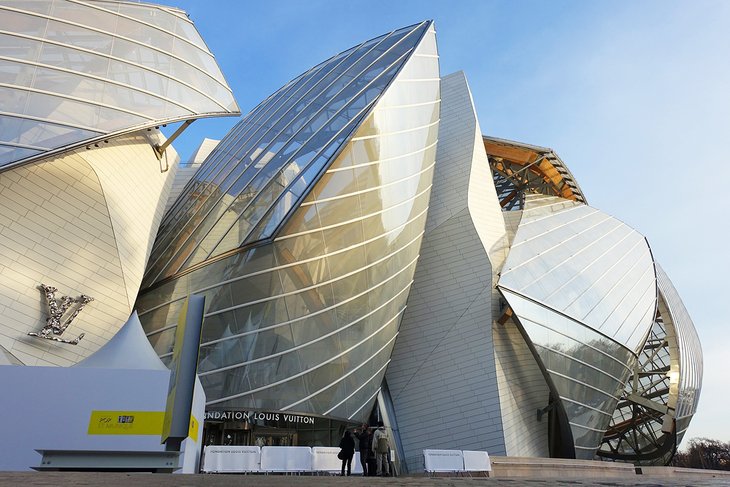
World-renowned architect Frank Gehry designed the ultra-modern glass-and-steel building that houses the Fondation Louis Vuitton collection. Opened in 2014, this 3,500-square-meter exhibition space in the Bois de Boulogne is one of the newest and coolest museums in Paris.
The striking exterior contains more steel than the Eiffel Tower and features 3,600 glass window panes, which allow natural light to illuminate the galleries. The bright, airy setting allows visitors to appreciate the art.
Rooftop terraces provide panoramic views of the Bois de Boulogne's 850-acre green space as well as the Eiffel Tower and cityscape of Paris in the distance.
The museum's permanent collection focuses on contemporary art, dating from the 1960s to the present day. Visitors are wowed by surprising examples of Pop art, abstract painting, photo portraits, and video installations. Some of the highlights include the colorful graphic works by Takashi Murakami, sculptures by Alberto Giacometti, and photographs by Omar Victor Diop.
Visitors can indulge in a gourmet lunch at the museum's trendy restaurant, Le Frank. The restaurant is open from 12 noon until 4pm daily and for dinner by reservation only on Friday and Saturday.
Address: 8 Avenue du Mahatma Gandhi, 75116 Paris (Métro: Pont de Neuilly or Avenue Foch)
Official site: https://www.fondationlouisvuitton.fr/en/visit
20. Musée Guimet
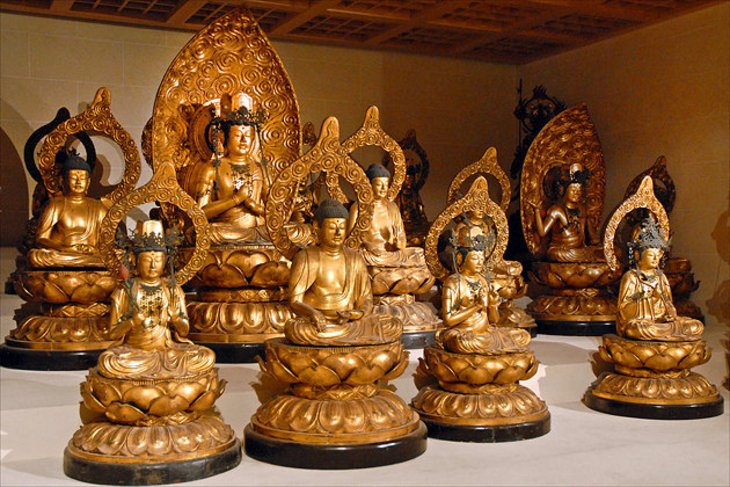
The Musée Guimet has the most important collection of Asian art in France. The museum was founded at the end of the 19th century, when the industrialist Emile Guimet bequeathed his personal collection to the city of Paris.
Highlights of the collection include the 6th-century to 13th-century Khmer sculptures from Cambodia, Buddhist reliefs of the school of Amaravati, and Chinese porcelain from the Tang period to the Compagnie des Indes.
The museum also has a casual restaurant and a fantastic boutique that sells books, as well as art objects inspired by some of the museum's masterpieces.
Address: 6 Place d'léna, 75116 Paris (Métro: Iéna or Boissière station)