Paris Churches
As the capital of a historically Catholic country, Paris has a legacy of glorious churches. The famous quote, "Paris is well worth a mass" (attributed to King Henry IV) reveals much about the religious and cultural heritage of the city.
Today, anyone can appreciate the beauty of the city's churches, which provide welcome spaces for meditation and prayer. Tourists may attend Mass and other services along with local congregants.
For those with a secular point of view, Paris' most important churches also offer a glimpse of the city's finest art and architecture. Many of the churches also host events, such as organ concerts and classical music festivals.
Learn more about the city's splendid religious monuments with our list of the top churches in Paris.
- Cathédrale Notre-Dame de Paris
- Sainte-Chapelle
- Eglise Saint-Sulpice
- Basilique du Sacré-Coeur
- Eglise Saint-Germain-des-Prés
- Eglise Saint-Germain l'Auxerrois
- Eglise Saint-Séverin
- Eglise Saint-Eustache in Les Halles-Beaubourg District
- Eglise Val-de-Grâce
- Eglise Saint-Etienne-du-Mont
- Eglise Sainte-Marie-Madeleine
- Eglise Saint-Louis en l'Île
- Map of Paris Churches
Cathédrale Notre-Dame de Paris
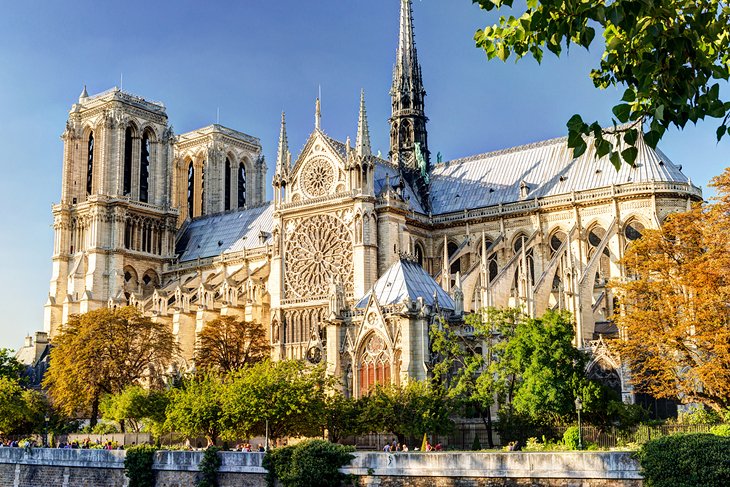
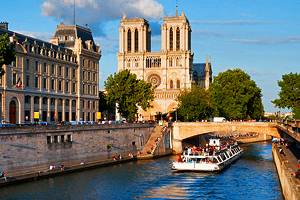
A truly soul-inspiring sight, the Notre-Dame Cathedral is one of the top attractions of Paris. The 12th-century cathedral is a masterpiece of Gothic architecture in the heart of medieval Paris. The first aspect to dazzle viewers is the facade, with its profusion of gargoyles and flying buttresses.
The marvelous exterior sets up anticipation for entering the interior, breathtaking in its sacred splendor. The immense sanctuary is a perfect example of an Early Gothic vaulted nave. Illuminated prayer candles flicker in the otherwise somber space, lending a serene and ethereal aura.
Note: A large fire in April of 2019 caused considerable damage to the cathedral: The medieval roof and the 19th-century spire collapsed. The city of Paris is currently working on a project to secure the building and ensure its structural integrity. A reconstruction project will follow, to restore the cathedral to its original state.
At this time, the cathedral and the area surrounding it are closed to the public. It is still possible to admire the cathedral's magnificent facade from the Seine River bridges and from the streets of the Île-de-la-Cité.
Address: Parvis de Notre Dame, 75004 Paris (Métro: Cité, Saint-Michel, Hôtel de Ville, Maubert-Mutualité, or Cluny La Sorbonne)
Official site: http://www.notredamedeparis.fr/en/
Sainte-Chapelle
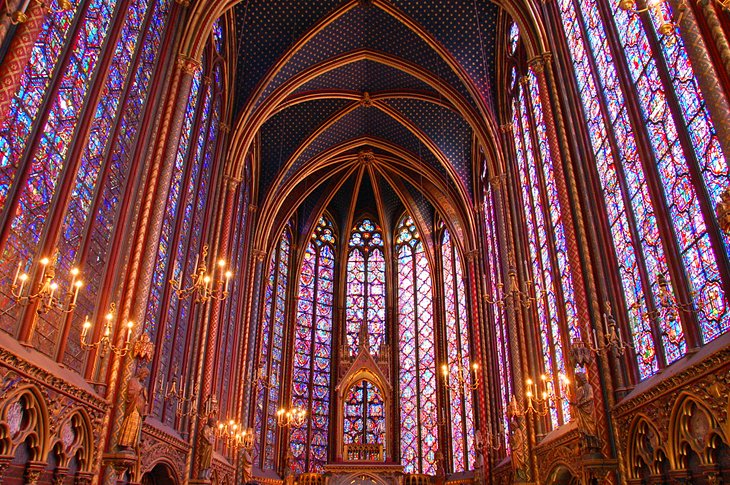
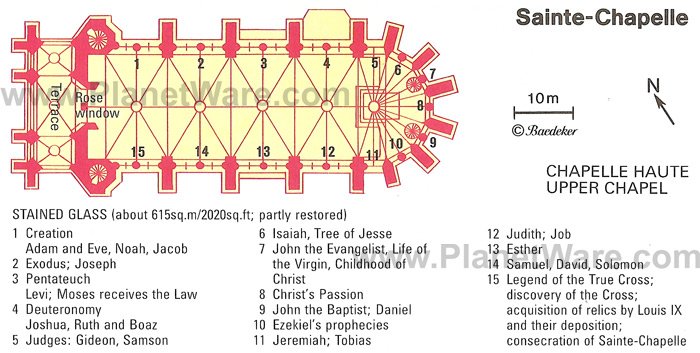
Upon entering this magical jewel box of a monument, visitors are awed by the gorgeous glittering stained-glass windows. The chapel's stained-glass windows cover 600 square meters of wall space. Since the windows span nearly all of the interior, the illumination is dazzling.
It's best to visit in the morning and on a sunny day to appreciate the full effect of light filtering through the colorful windows. Each of the 15 windows depicts biblical stories, with over a thousand scenes in total.
The chapel was built in the mid-13th century for Louis IX (Saint Louis), who commissioned it to house precious Christian relics. With its delicately vaulted nave and soaring buttressed exterior, the chapel exemplifies Flamboyant Gothic architecture.
Sainte-Chapelle is seldom used for religious services or other worship. Instead, the chapel is primarily a venue for classical music concerts. Attending a performance in this exquisite space is among the most spiritually inspiring and memorable things to do in Paris.
Tourists may visit Sainte-Chapelle on guided tours (with an admission fee) available for individuals and groups. Otherwise, attending a concert is a good way to see the chapel.
Address: 8 Boulevard du Palais, 75001 Paris (Metro: Cité station)
Eglise Saint-Sulpice
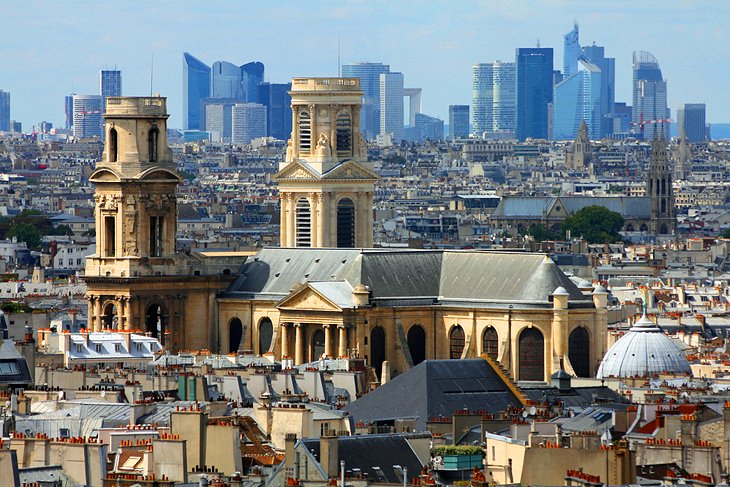
The Eglise Saint-Sulpice became a popular tourist destination after the publication of Dan Brown's Da Vinci Code and the subsequent blockbuster-hit Hollywood film. Despite a tenuous link between the church's "meridian line" and the "Rose Line" described by Brown in his novel, visitors still come here to learn about the church's connection to the fictional story.
Tourists will also discover an impressive 17th-century Baroque monument with a surprisingly unfussy Neoclassical facade and a delightfully spacious sanctuary.
Highlights of the church are the frescoes by Eugène Delacroix in the Chapelle des Saints-Anges (Chapel of the Angels) and the renowned 18th-century Clicquot organ (the church regularly hosts organ concerts).
The Church of Saint-Sulpice is found in the 6th arrondissement, presiding over a graceful square lined with sidewalk cafés. This charming neighborhood is a joy for tourists to explore, with its atmospheric cobblestone streets and abundance of enticing boutiques.
Just a short walk away from the church are the fabulous pastry shops: Pâtisserie Pierre Hermé (72 Rue Bonaparte) and Maison Mulot (76 Rue de Seine), where guests can sample the finest desserts in Paris.
The Eglise Saint-Sulpice is open to the public for visits every day. Guided tours of the church interior take place at 2:30pm on Sundays. On the second Sunday of every month at 1pm, a special guided tour focuses on the paintings of Delacroix in the Chapel of the Angels.
Address: Place Saint-Sulpice, 75006 Paris (Métro: Saint-Sulpice, Mabillon, or Odéon station)
Basilique du Sacré-Coeur
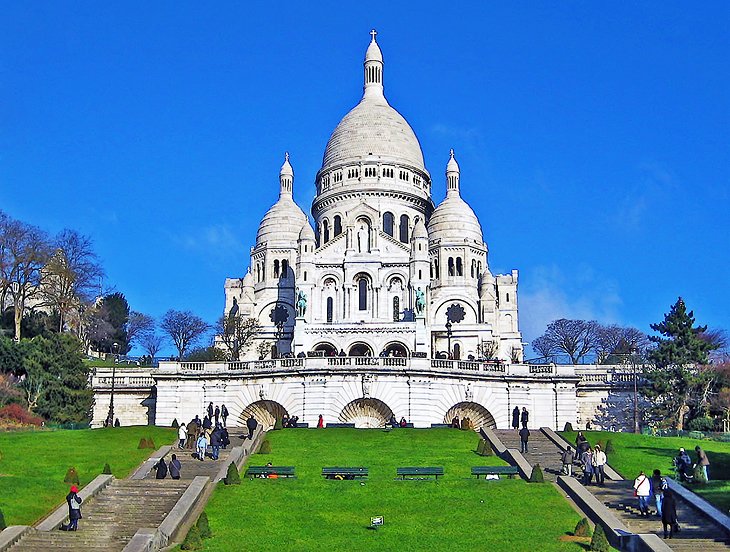
An iconic Parisian landmark, this Romanesque-Byzantine church stands high above the city on the Montmartre neighborhood's namesake hill (the "Mount of Martyrs"). Parisians fondly refer to this church as the "Wedding Cake" because of the gleaming alabaster domes and decorative detailing that resembles frosting.
Relatively modern for Paris, the Basilique du Sacré-Coeur was built in the 19th century as a symbol of reconciliation after France's defeat in the Franco-Prussian War. One of the world's largest mosaics, a large gilded image of Christ with a golden heart, adorns the domed sanctuary of the otherwise somber sanctuary.
To arrive at the Sacré-Coeur, walk through the narrow cobblestone streets of Montmartre that lead past the lively Place du Tertre up to 35 Rue du Chevalier de la Barre, the back entrance of the Basilica.
Another option: climb the steep flight of 270 steps that begins at the Rue du Cardinal Dubois (or take the funicular from here). From the Parvis de la Basilique, the esplanade in front of the Basilica, there are sweeping panoramas of Paris, including the Eiffel Tower, Pantheon, and Opera House.
Because the Basilique du Sacré-Coeur is devoted to the continuous adoration of the Holy Sacrament (perpetual silent prayer), no concerts or religious celebrations are held here. The only exception is the Christmas Eve organ concert prior to the Christmas Vigil and Midnight Mass.
The basilica's renowned Grand Organ, listed as a Historical Monument, is also played during Mass on Fridays and at Mass and Vespers on Sundays.
The church is open to the public every day for visits and worship. The opening hours (6am until 10:30pm) are considerably longer than other Paris churches because the Basilique du Sacré-Coeur is dedicated to perpetual adoration (all day and all night) of the Holy Sacrament.
Entrance to the basilica's dome requires an admission fee and climbing 300 steps to reach the viewing platform. The basilica also has a bookshop and a boutique that sells religious items.
Address: 35 Rue du Chevalier de la Barre, 75018 Paris (Métro: Abbesses, Pigalle, or Anvers station)
Official site: http://www.sacre-coeur-montmartre.com/english/
Eglise Saint-Germain-des-Prés
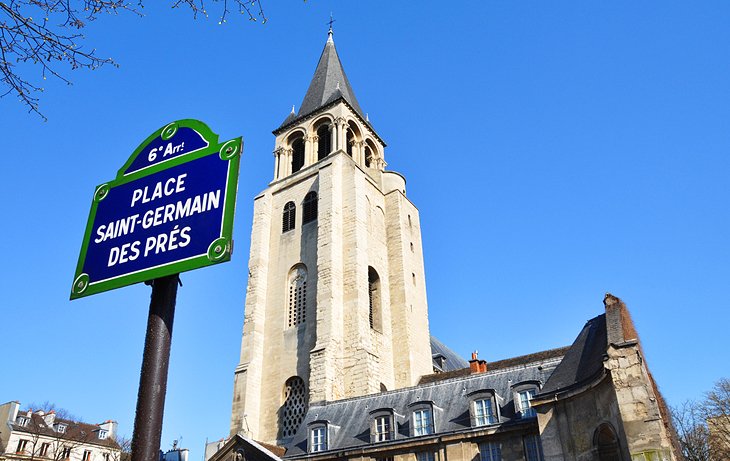
In AD 543, the Merovingian King, Childebert, created a basilica, which is the ancient foundation of this church, the oldest Christian house of worship in Paris.
Rebuilt in the 10th century, the church has a simple exterior that does not prepare visitors for the grandeur of the interior. The Romanesque nave features intricately decorated capitals.
Although the choir was renovated in the 12th century, it incorporates Merovingian-era marble pillars from the 6th-century basilica. The overall effect of the sanctuary is a harmonious and tranquil ambience.
The church holds Mass daily and is also open to the public every day for cultural visits, prayer, and meditation. The Eglise Saint-Germain-des-Prés is also used as a venue for music concerts, mostly classical and religious performances.
Another attraction for tourists is the church's location in the Latin Quarter neighborhood near the Boulevard Saint-Germain, with its legendary café scene. Just steps away are two famous institutions: Les Deux Magots and the Café de Flore, as well as the fancy pâtisserie shop and tea salon, Ladurée at 21 Rue Bonaparte.
Address: 3 Place Saint-Germain-des-Prés, 75006 Paris (Métro: Saint-Germain des-Prés or Mabillon station)
Eglise Saint-Germain l'Auxerrois
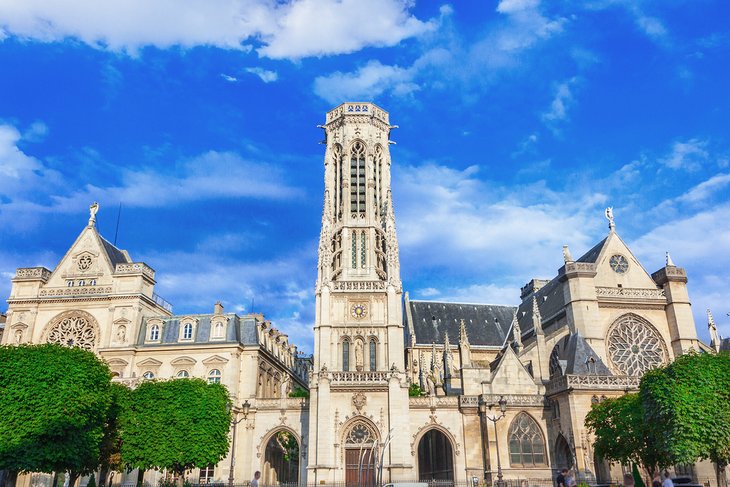
Renovated over several hundreds of years, this magnificent church blends architectural styles, with its soaring 12th-century bell tower, High Gothic vaulted nave, and Renaissance-era porch. The sanctuary has a heavenly ambience thanks to the stained-glass windows that allow glowing light to filter through.
Visitors should be sure to admire the 15th- to 16th-century rose windows. Located across from the Louvre Museum, the Eglise Saint-Germain l'Auxerrois was once a royal chapel used as the place of worship for the kings who resided at the Louvre Palace.
The Eglise Saint-Germain l'Auxerrois is open to the public for self-guided visits Tuesday through Sunday. The monument is closed on Mondays. The church holds Mass and Vespers services every day. On Sundays, Mass is celebrated several times, including a Mass with Gregorian chants at 10am.
Special events include a Midnight Mass on Christmas Eve and a Solemn Mass on Christmas, while the Easter celebration features Gregorian chants sung by the Chœur Grégorien de Paris (Gregorian Choir of Paris).
Address: 2 Place du Louvre, 75001 Paris (Métro: Louvre-Rivoli or Pont Neuf station)
Eglise Saint-Séverin
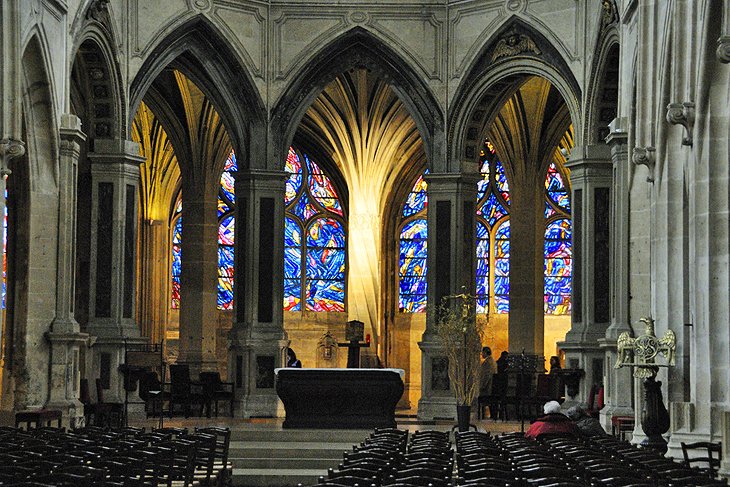
Named after the hermit Severinus, who lived here in the 6th century, the Eglise Saint-Séverin is built on the site of a Romanesque chapel. The present church, dating from the 13th to 15th centuries, is one of the finest examples of Gothic architecture in Paris.
Visitors are astounded by the brilliance and spaciousness of the high-vaulted interior. Lavish 14th-century stained-glass windows feature figures of the Apostles. Other windows date from the 15th century, as well as a few modern windows in the choir created by Jean Bazaine in 1966.
The church is open to the public every day for visits and prayer. Mass is held daily, and Catholic holidays are also celebrated here.
Renowned for its 18th-century organ, the church hosts organ concerts in December and January, as well as organ recitals in May and June during the Festival Paris des Orgues (Paris Organ Festival), which includes concerts at various churches in Paris.
The Church of Saint Severin is located the medieval Latin Quarter, which is full of cultural attractions.
Address: 3 Rue des Prêtes Saint-Séverin, 75005 Paris (Métro: Saint-Michel, Cluny-La Sorbonne, or Maubert-Mutualité station)
Eglise Saint-Eustache in Les Halles-Beaubourg District
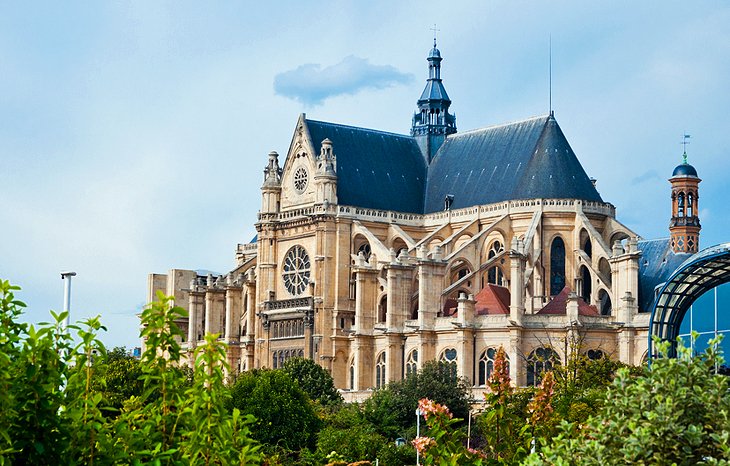
The Eglise Saint-Eustache was the last church in Paris to be built in the Gothic style before the Renaissance began. The foundation-stone of the church was laid in 1532 during the reign of King François I.
The church was designed with impressive dimensions of 88 meters in length and a height of 34 meters. Lovely 17th-century stained-glass windows illuminate the grandiose sanctuary.
This astonishing Gothic monument is one of the best places to visit in Paris to hear sacred organ music. The church is famed for its Ducroquet-Gonzalès organ, which is the largest organ in France.
Every Sunday from 5:30pm until 6pm, a free organ recital is performed by the resident organist. Throughout the year, the church also hosts symphony and choir performances, as well as prestigious festival concerts and Christmas carols.
The church is open to the public every day for self-guided visits. Audio-guides are available.
Saint-Eustache is the parish church of Les Halles district, which has a modern shopping mall, where old market halls once stood.
Address: 146 Rue Rambuteau, 75001 Paris (Métro: Les Halles or Etienne Marcel station)
Eglise Val-de-Grâce
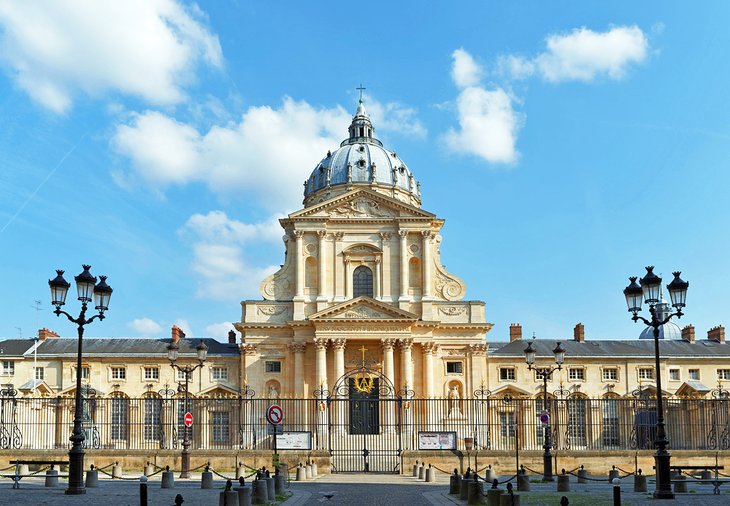
Modeled after the Church of Santa Susanna in Rome, the beautiful Baroque church of Val-de-Grâce is part of a well-preserved 17th-century convent. The church is noteworthy for its spectacular dome, adorned with a sumptuous fresco by Pierre Mignard, and the paintings by Philippe de Champaigne in one of the chapels.
During the French Revolution, the Val-de-Grâce abbey buildings were transformed into a military hospital. Today, the Eglise Val-de-Grâce is attached to a museum, the Musée du Service de Santé des Armées, which focuses on the history of French medical service during wartimes.
The church and museum are open to the public on Tuesday, Wednesday, Thursday, Saturday, and Sunday. Entrance requires an admission fee (except on July 14th when admission is free).
Mass is celebrated at the church every Sunday at 11am.
Music lovers should take note that the church has an exceptional Cavaillé-Coll organ and a strong musical tradition. Organ concerts take place (free of charge) at 5:30pm on the first Sunday of the month from October through June.
Address: Church: 277 Bis Rue Saint-Jacques; Museum: 1 Place Laveran, 75005 Paris (Métro: Port-Royal or Luxembourg station)
Eglise Saint-Etienne-du-Mont
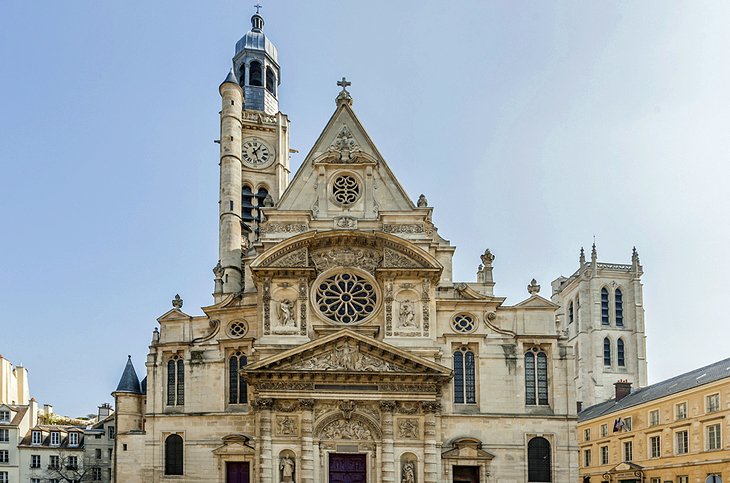
The 15th-century Church of Saint-Etienne-du-Mont in the Latin Quarter surprises visitors with its unique blend of architectural elements. The interior features dramatic Renaissance-era spiral staircases and ornate Late Gothic vaulting over the crossing.
Visitors are especially dazzled by the sanctuary's 16th- to 17th-century stained-glass windows, depicting the Apocalypse and the Parable of the Marriage Feast.
The most prized possession of the church is its rood screen by Philibert de l'Orme, which is the last example existing in Paris.
The church holds Mass daily, with several services on Sundays. Mass is celebrated with Gregorian chants on Sundays at 11am and 6:45pm.
The Eglise Saint-Etienne-du-Mont is open to the public for visits Tuesday through Sunday. Guided tours are available. The church is closed on July 14th.
Address: Place Sainte-Geneviève, 75005 Paris (Maubert-Mutualité or Cardinal Lemoine station)
Eglise Sainte-Marie-Madeleine
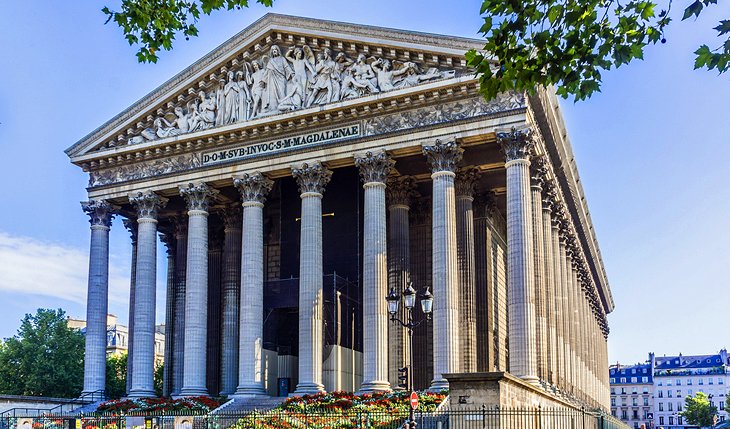
An atypical church built in the 18th and 19th centuries, the Eglise Sainte-Marie-Madeleine is a Neoclassical monument designed in the style of an ancient Greek temple. The exterior features 54 Corinthian columns and reliefs of the Ten Commandments and the Last Judgment.
Known simply as "La Madeleine," this monumental church has an opulently adorned sanctuary filled with noteworthy works of art: a neo-Byzantine mosaic, a 19th-century Baptism of Christ sculpture, and a marble group on the high altar representing the assumption of Mary Magdalene into heaven.
The church has a superb Cavaillé-Coll organ, which is still used for organ recitals and classical music concerts throughout the year.
Tourists may visit the church to admire the splendid interior. The church is open to the public every day and has a gift shop.
Tourists will enjoy exploring the area around the church, in the vicinity of the Palais Garnier (Opera House). This quarter (8th arrondissement) of Paris is distinguished by its Grand Boulevards (wide 19th-century boulevards), stately Haussmann buildings, elegant glass-covered shopping arcades (Passage des Panoramas), designer boutiques, upscale department stores (such as the Galeries Lafayette), and bustling sidewalk cafés.
The Café de la Paix across from the Opera House is a great spot to people-watch and take in the Parisian street scene. A chic gourmet restaurant, the Café de la Paix, serves classic French dishes in a sumptuous Napoléon III dining room. Guests can also enjoy coffee and pastries at the café's sidewalk terrace overlooking the Opera House.
Address: Place de la Madeleine, 14 Rue de Surène, 75008 Paris (Métro: Madeleine, Saint-Augustin, or Miromesnil station)
Eglise Saint-Louis en l'Île
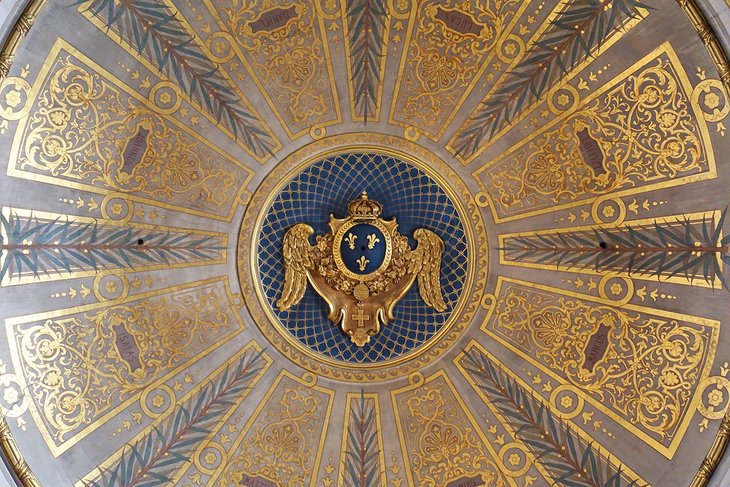
The Eglise Saint-Louis en l'Île was founded in 1664, however the history of its relics dates back further. The church is dedicated to Saint Louis, King of France (Louis IX) who reigned from 1226 to 1270.
From this location in 1269, the King set out to join his Knights on the Crusades to defend Jerusalem. Along the way, King Louis bought a piece of the crown of thorns from the Emperor Baldwin II of Constantinople; this precious relic is displayed on the statue placed in the organ loft.
The church is open to the public for visits every day, and Mass is celebrated here daily. Once a month (except in July and August) on a Sunday at 3pm, guided tours in French are provided free of charge.
This stunning Baroque church is found within a quaint cluster of cobblestone streets on the Île Saint-Louis. Just a short walk away from the church is a favorite ice-cream parlor in Paris, Maison Berthillon (29-31 Rue Saint-Louis en l'Île), which is usually crowded during the summertime.
Every year from July to early October during the Festival Musique en l'Ile (religious and traditional music festival), the Eglise Saint-Louis en l'Île hosts music concerts in its sanctuary.
The Festival de Musique Baroque de l'Île Saint-Louis (Festival of Baroque Music) takes place at the end of June, with concerts held at the Eglise Saint-Louis en l'Île and in the courtyards of hôtels particuliers (townhouses) on the Île Saint-Louis.
Address: 19 Rue Saint-Louis en l'Île, 75004 Paris (Métro: Pont Marie or Sully-Morland station)
Map of Paris Churches
More Related Articles on PlanetWare.com
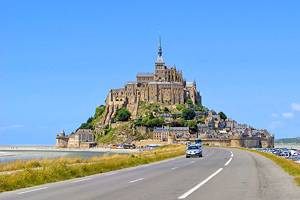
Highlights in and around Paris: Historic churches are just the beginning of the cultural attractions in Paris. For a comprehensive list of tourist sights, read our top attractions in Paris article. Paris has top-notch museums and charming neighborhoods such as the Latin Quarter and Montmartre. For excursions outside of Paris, our top day trips from Paris article includes ideas such as the Château de Versailles, the Château de Fontainebleau, and Mont Saint-Michel.