18 Top-Rated Tourist Attractions in Madrid
Authors Michael and Lana Law last visited Madrid in the fall of 2022 while on assignment for PlanetWare.
Full of energy and packed with cultural attractions, Madrid is a modern metropolis that offers a taste of the real Spain. Wide avenues are congested with traffic, but beautiful parks break up the urban sprawl.
Madrid is a hub of social life with a happening café culture and bustling nightlife. Constantly buzzing with activity, the city offers so much to see and do that you will be spoiled for choice.
The world-class Prado Museum displays an endless array of masterpieces created during the Golden Age of Spain, and the 18th-century Royal Palace rivals the Château de Versailles in France.
Be sure to experience Madrid in the evening, when the city really comes to life. Madrileños love going out on the town, and the paseo por la noche (evening stroll) is a cherished ritual.
If possible, it's best to avoid visiting during summer when the heat is oppressive. Savvy travelers come to Madrid during the springtime or autumn to take advantage of more mild weather.
Spain's capital city, Madrid boasts an impressive array of historical monuments and art museums, as well as pleasant gardens and public plazas. Learn more about the best places to visit with our list of the top attractions and things to do in Madrid.
- 1. Museo Nacional del Prado
- 2. Buen Retiro Park and the Crystal Palace
- 3. Royal Palace and Gardens
- 4. Wander through the Plaza Mayor
- 5. Puerta del Sol: The Heart of the City
- 6. Museo Thyssen-Bornemisza: Fine Arts Museum
- 7. Estadio Santiago Bernabéu: Real Madrid's Stadium
- 8. Museo Nacional Centro de Arte Reina Sofía
- 9. Fuente de Cibeles and Gran Via
- 10. Mercado de San Miguel
- 11. Temple of Debod: An Ancient Egyptian Temple
- 12. Goya Frescoes at Ermita de San Antonio de la Florida
- 13. Basílica de San Francisco el Grande
- 14. Museo Sorolla
- 15. National Archaeological Museum
- 16. Lázaro Galdiano Museum
- 17. Puerta de Alcalá
- 18. National Museum of Romanticism
- Where to Stay in Madrid for Sightseeing
- Tips and Tours: How to Make the Most of Your Visit to Madrid
- Map of Tourist Attractions & Things to Do in Madrid
1. Museo Nacional del Prado
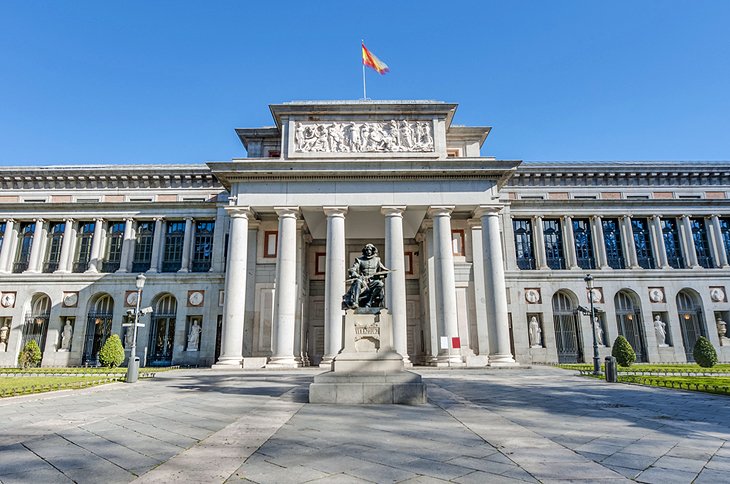
A truly world-class museum, the Museo Nacional del Prado has a collection of more than 8,000 paintings and 700 sculptures. Among its extensive assortment of artworks are many masterpieces, including celebrated paintings that rival the most famous works of the Louvre Museum in Paris.
The Prado Museum displays around 2,300 pieces of the collection in more than 100 rooms on three floors. Trying to see it all in one visit can be daunting, but it's possible to focus on a specific itinerary of masterpieces. The Prado suggests "routes" (self-guided tours) of specific works.
Spanish paintings from the 12th century to the early 19th century form the majority of the collection. The assortment of paintings by Francisco de Goya comprises a remarkable 140 works. Also not-to-be-missed is Las Meninas, a depiction of the Spanish royal family of Felipe IV created by Velázquez in 1656.
Other must-see works in the Spanish Painting collection include The Annunciation by El Greco, Jacob's Dream by José de Ribera, The Third of May by Goya, The Virgin and Child by Luis de Morales, Christ Embracing Saint Bernard by Francisco Ribalta, and The Immaculate Conception by Murillo.
Part of the Prado Museum's exhibition space includes a contemporary building and the renovated 16th-century cloister of the San Jerónimo el Real monastery. These galleries display a noteworthy collection of 17th-century Spanish religious paintings.
Get the most out of your time at the Prado by joining a Skip the Line: Prado Museum Tour in Madrid, avoiding the long lines and going directly to the most interesting galleries. On the 90-minute tour, your knowledgeable guide provides an overview of the museum's must-see masterpieces, while providing historical context to help you understand the artworks.
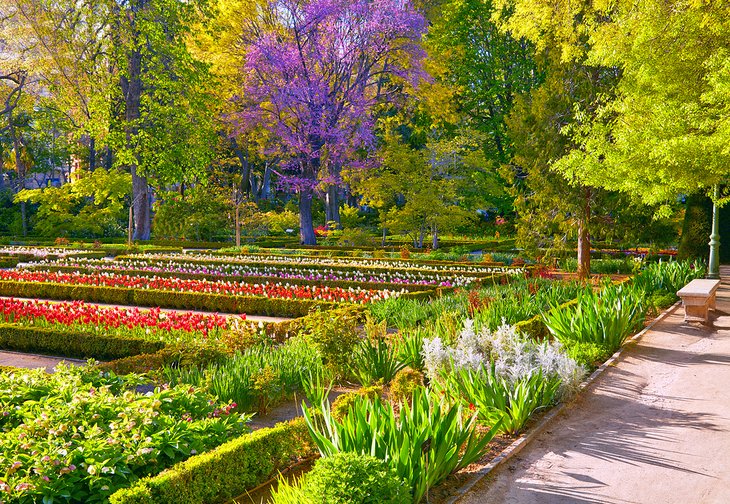
After touring the art collection, tourists can relax at the Real Jardín Botánico (Royal Botanical Garden) located next to the Prado Museum. This lovely green space features shady pathways, benches, sculptures, greenhouses, a Kitchen Garden planted with vegetables, and a Rose Garden that blooms in May and early June. The Real Jardín Botánico is also home to the Museum of Natural History.
About a 10-minute walk from the Real Jardín Botánico is the popular Restaurante TriCiclo (28 Calle Santa María), which serves lunch and dinner in a contemporary-style dining room with a casual ambience. The restaurant specializes in international cuisine, prepared from seasonal market ingredients with gastronomic flair.
Address: Paseo del Prado, Madrid
2. Buen Retiro Park and the Crystal Palace
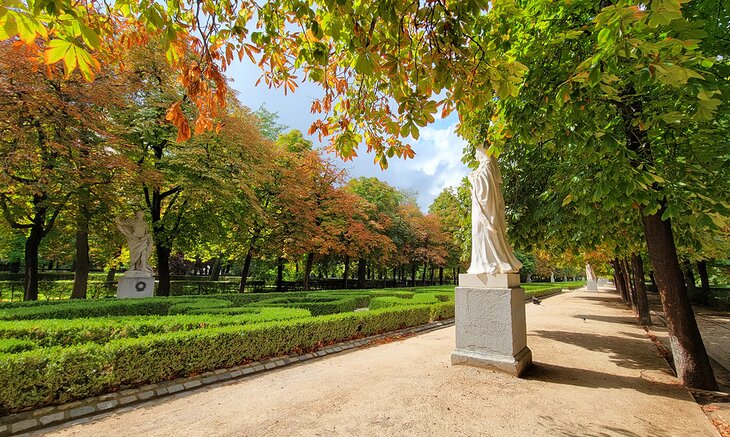
The Buen Retiro Park (Parque del Retiro) is an oasis of peace in the heart of Madrid. This lush and beautifully manicured park offers an escape from the hustle and bustle of the city. The park encompasses more than 125 hectares and is shaded by over 15,000 trees.
Created for the Count-Duke of Olivares in the 17th century, the historic park has an elegant ambiance with its variety of gardens and tree-lined paths. The Parque del Retiro was owned by the Spanish royal family until the 19th century; since then it has been a public park.
From the main entrance at the Plaza de Independencia, visitors arrive at the pool in the center of the park. From here, paths lead to the enchanting La Rosaleda (Rose Garden), the formal French Jardín de Don Cecilio, and the Andalusian-style Jardines de Cecilio Rodríguez.
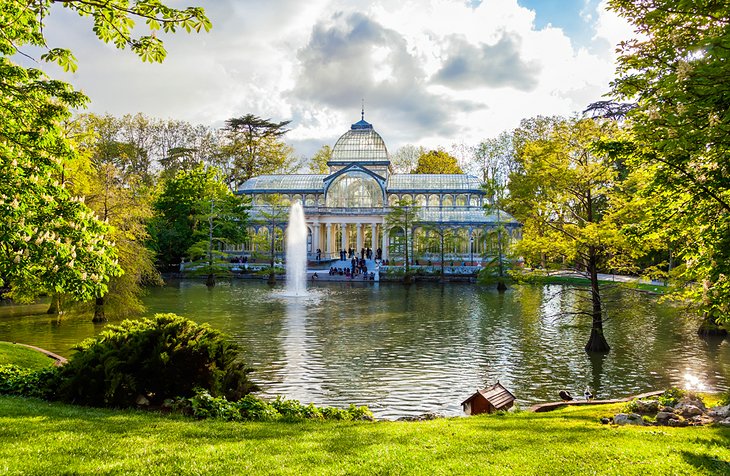
Built in 1887, the Palacio de Cristal (Crystal Palace) is a splendid cast-iron and glass pavilion that presents exhibitions of contemporary art. The Crystal Palace looks out onto a graceful fountain and reflecting pool. Visitors will find other interesting fountains at Buen Retiro Park including Los Galápagos (The Turtles), El Ángel Caído (The Fallen Angel), and La Alcachofa (The Artichoke).
Locals and tourists alike enjoy boating on the park's tranquil lake. Other favorite things to do include taking the kids to puppet shows at the Teatro de Títeres, going for walks on the scenic tree-lined paths, and basking in the sun or relaxing in the shade at one of the park's outdoor cafés.
For stargazers, the park has an observatory that was built in 1790.
3. Royal Palace and Gardens
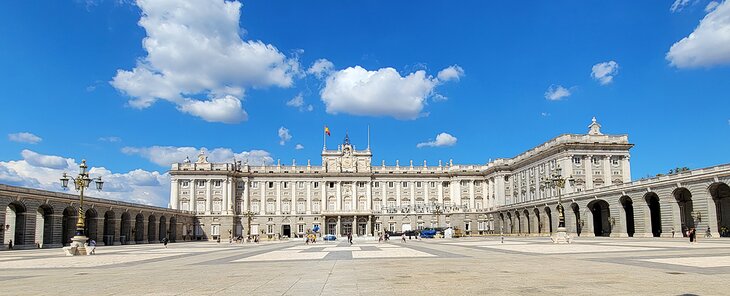
This grandiose palace is the Spanish version of Versailles, a royal court designed to impress. However, unlike Versailles, which is now just a museum, the Royal Palace of Madrid (Palacio Real de Madrid) is still the official residence of a monarch (the King of Spain) and continues to be used for official State events.
The palace was commissioned by Philip V in the 18th century. The majestic Neoclassical facade is crafted entirely from granite and white Colmenar stone. The facade's Ionic columns and Doric pilasters are based on drawings that the sculptor Bernini originally intended for the Louvre in Paris. The balustrade features statues of Spanish kings.
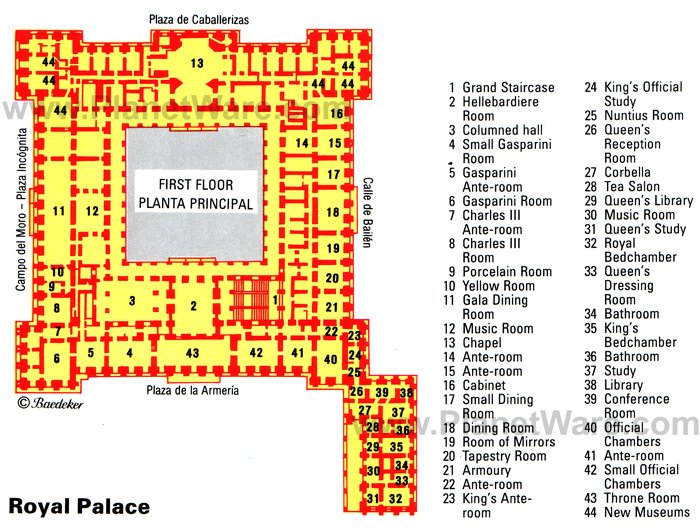
The most striking aspect of the interior is the imposing staircase at the entrance hallway, with a fresco of The Triumph of Religion and the Church, that leads up to the main floor. Throughout the palace, masterpieces of art decorate the walls: paintings by Velázquez, Goya, Rubens, El Greco, and Caravaggio, and exquisite Flemish and French tapestries.
The King Charles III apartments are among the most beautiful rooms in the Royal Palace. These rooms are adorned with refined decor of the Enlightenment era.
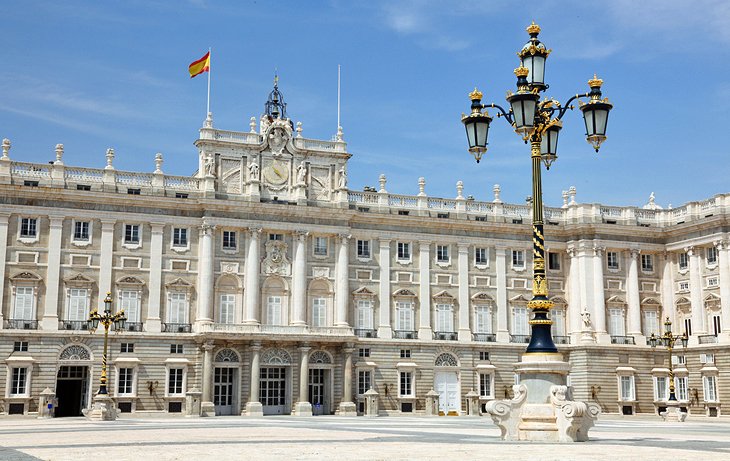
A masterpiece of Rococo style, the Salón del Trono (Throne Room) is adorned with frescoes by Tiepolo including The Greatness of the Spanish Monarchy, one of his finest works. Still used for State ceremonies, the Throne Room is clad in sumptuous red velvet and decorated with valuable tapestries, mirrors, furniture, and chandeliers.
History buffs will want to visit the palace's Royal Armory (La Real Armería), which contains 3,000 exhibits dating back to the Middle Ages. On display are the armor and weapons that have been used by Spain's kings over the centuries.
Visitors should save time to explore the Jardines del Campo del Moro. These delightful historic gardens were created during the reign of Philip II and are landscaped in a formal French style with fountains and avenues. The 20-hectare green space provides a haven of tranquility in the center of Madrid. It's a wonderful place for relaxation and scenic strolls.
Address: Calle Bailén, Madrid
4. Wander through the Plaza Mayor
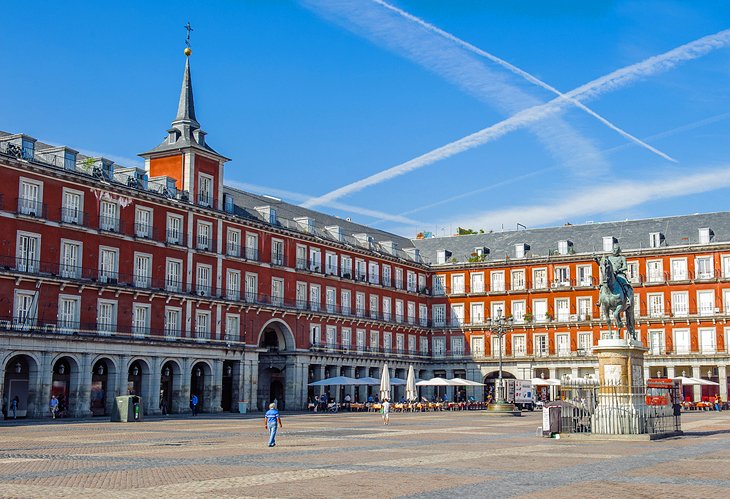
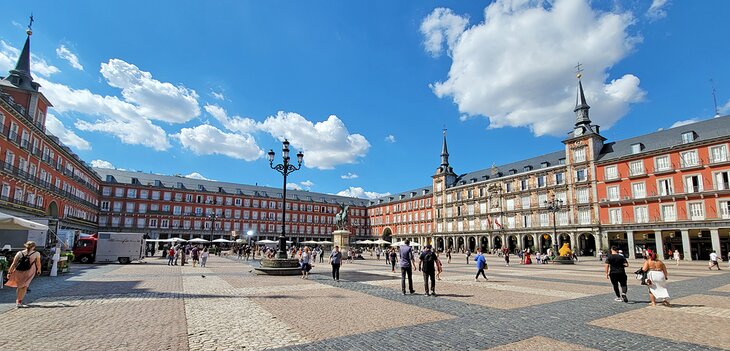
This elegant 17th-century plaza was built during the reign of Philip III and used as a center of commerce and municipal life, as well as the scene of ceremonial events such as the proclamation of a new king and the canonization of saints. The square also served as a venue for bullfights, dramatic performances, and knightly tournaments.
The Plaza Mayor took on its present appearance after a fire in 1790, when the corners were enclosed and the nine entrance arches were constructed, linking it to Calle de Toledo, Calle Mayor, Calle de Postas, and others.
Today, the Plaza Mayor continues to be an important gathering place in Madrid. The expansive cobblestone square is a pedestrian area, surrounded by outdoor cafés and atmospheric restaurants shaded by its arcades. In the evenings, the square is a lively place to visit for both tourists and Madrileños.
A short walk from the Plaza Mayor is the Chocolatería San Ginés (5 Pasadizo San Ginés), famous for its chocolate con churros (hot chocolate with deep-fried pastries), which has been a specialty since 1894. This inviting chocolate boutique and café features marble tables and refined decor. No need to rush, the Chocolatería San Ginés is open 24 hours a day Wednesday through Sunday, and until 11:30 pm Monday and Tuesday.
5. Puerta del Sol: The Heart of the City
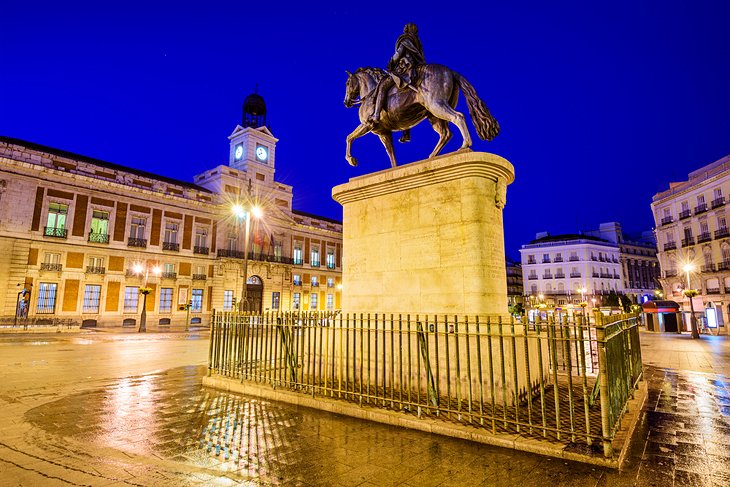
The Puerta del Sol was named after the sun emblem on the old city gate, which formerly stood here. This spacious town square aligns with the rising sun. Besides being a hub of public transportation (with several bus stops and Metro entrances), the Puerta del Sol is also the "Kilometer Zero" point from which all distances on the Spanish national road network are measured.
The Puerta del Sol has been the scene of many historic events, including the Spanish resistance to Napoleon on May 2nd, 1808, and in 1931, the Second Republic was proclaimed here.
Nowadays the square is a place to hang out and enjoy life. Lined with shops and cafés, the Puerta del Sol is still one of the most happening squares in Madrid.
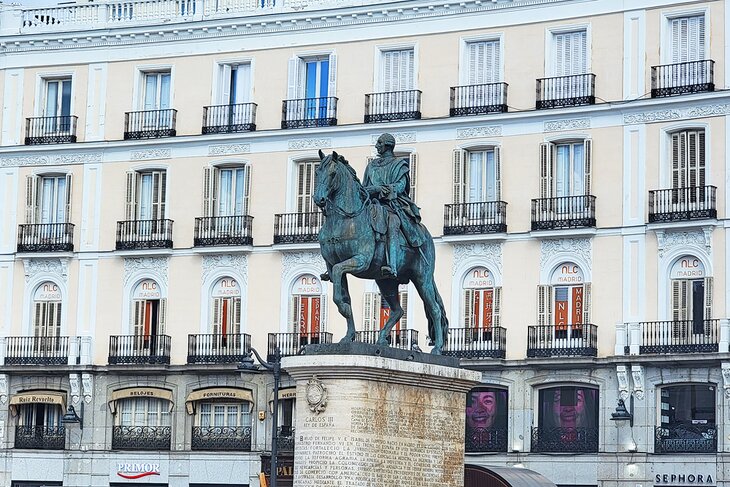
The area around Puerta del Sol is packed with restaurants and shops. For tourists seeking special gifts to bring back home, La Violeta (6 Plaza de Canalejas) is the place to go. The shop is just steps away from the Puerta del Sol. Founded in 1915, this family-run boutique offers the Madrid specialty of violet candies, as well as chocolate bonbons and other old-fashioned confections.
Note: Puerto del Sol is undergoing major construction in 2023, and barricades and scaffolding dominate the scene.
6. Museo Thyssen-Bornemisza: Fine Arts Museum
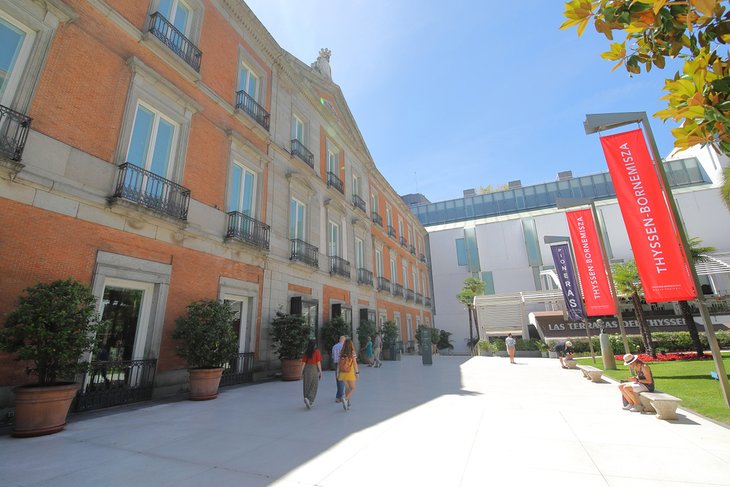
The Thyssen-Bornemisza Museum presents an overview of European art from the 17th century to the late 20th century. With nearly 1,000 paintings on display, the collection covers medieval religious art, Renaissance-era portraits and biblical themes, the Baroque period, Rococo, Romanticism, Impressionism, Fauvism, Expressionism, modern art, and Pop Art. The museum also has an excellent collection of 19th-century American paintings.
This prestigious collection includes renowned masterpieces such as Christ and the Samaritan Woman by Duccio di Buoninsegna, Venus and Cupid by Peter Paul Rubens, The Annunciation by El Greco, Young Knight in a Landscape by Vittore Carpaccio, Jesus among the Doctors by Albrecht Dürer, The See-Saw by Jean-Honoré Fragonard, Dancer in Green by Edward Degas, Solitude by Jean-Baptiste-Camille Corot, Route de Versailles by Camille Pissarro, Les Vessenots in Auvers by Vincent van Gogh, and The Harvesters by Pablo Picasso.
Since the Thyssen-Bornemisza Museum is located near the Prado, art lovers could easily combine a visit to both museums in the same day.
Address: 8 Paseo del Prado, Madrid
7. Estadio Santiago Bernabéu: Real Madrid's Stadium
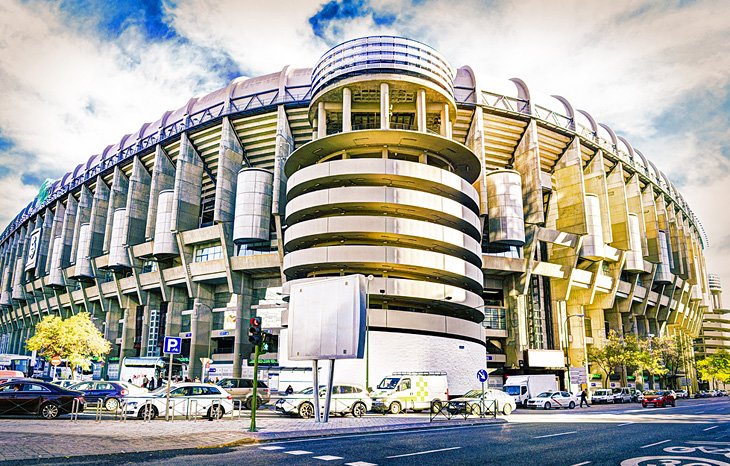
Not all of Madrid's tourist attractions revolve around art. One of its most-visited museums draws football (soccer) fans to the stadium known as Estadio Santiago Bernabéu, the home of the Real Madrid soccer club. The club boasts unapologetically that their stadium is the "Greatest Stadium in the World."
You can take a tour of the stadium, as well as the museum, which displays trophies, team artifacts, and temporary exhibits. Tours also give fans a chance to enjoy the view of the field from the top of the stadium.
Significant infrastructure improvements are planned over the next few years for the stadium. They include a retractable roof, digitization of the display screens, along with an underground car park.
Address: 1 Avenida de Concha Espina, 28036 Madrid
8. Museo Nacional Centro de Arte Reina Sofía
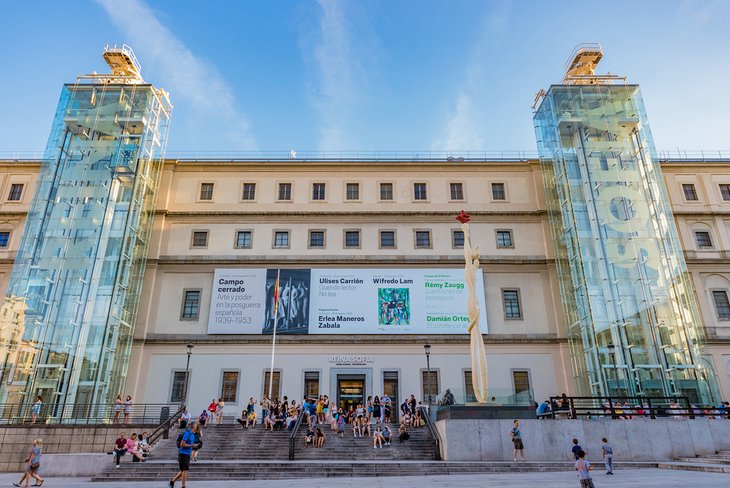
Opened by Queen Sofía in 1986, the Museo Nacional Centro de Arte Reina Sofía is Madrid's avant-garde center for contemporary art. The sleek modern building was created by the architect Antonio Fernández Alba and has features that recall the Pompidou Center in Paris, especially the three glass towers that house the elevators on the outside of the building.
Another wonderful surprise to visitors is the charming garden in the inner courtyard filled with imaginative sculptures.
The Museo Reina Sofía contains over 23,000 artworks in its collections. In its thorough representation of Spanish modern and contemporary art, the collection includes remarkable masterpieces such as works by Joan Miró, Pablo Picasso, Salvador Dalí, and Alexander Calder. The artworks are displayed in various rooms spread out in a vast exhibition space of 39,000 square meters.
Visitor amenities include a bookstore, gift shop, and audioguides. The museum also has a trendy café-restaurant, NuBel, which is open for brunch, lunch, afternoon refreshments, tapas, and dinner. Evening meals feature a lively ambience, with DJ music sets every night.
Address: 52 Calle de Santa Isabel, Madrid
9. Fuente de Cibeles and Gran Via
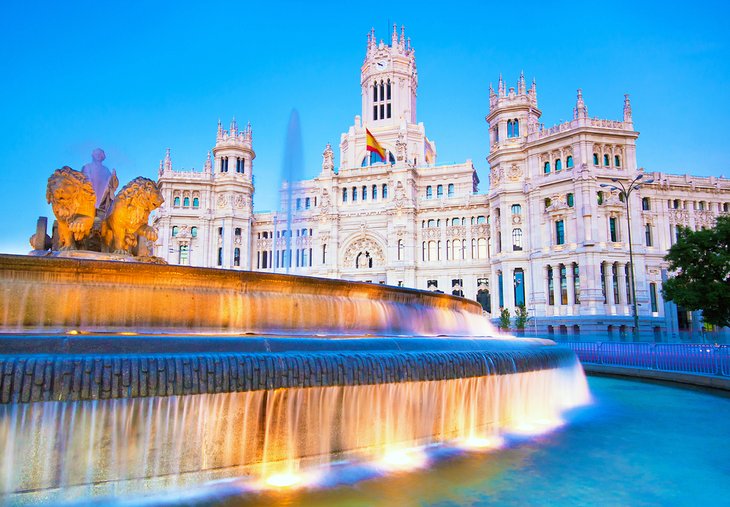
Standing in a major traffic intersection, the Fuente de Cibeles (Cybele's Fountain) is one of the most emblematic monuments in Madrid. Lifelike statues depict the Roman Goddess Cybele riding a lion-drawn chariot. The fountain was created in 1782 by Francisco Gutiérrez and Roberto Michel with the original purpose of providing water for public use.
Behind the fountain is the Palacio de Cibeles, which houses the CentroCentro cultural center, which hosts art exhibitions and workshops, conferences, and concerts. The Centro Palacio de Cibeles has the Restaurante Palacio de Cibeles on the sixth floor, an elegant dining establishment with spectacular city views. Visitors can also admire panoramic vistas from the Mirador observation deck on the building's eighth floor.
Nearby (via Calle de Alcala) is one of Madrid's most popular shopping streets, the Gran Vía. Tourists will find many restaurants, hotels, and theaters on this bustling street.
Just off the Gran Vía on Calle de Jovellanos, the famous Teatro de la Zarzuela presents ballet performances and classical music concerts, including renowned performances of zarzuela - a unique type of satirical opera with songs accompanied by classical Spanish guitar music.
Address: Plaza de Cibeles, Madrid
10. Mercado de San Miguel
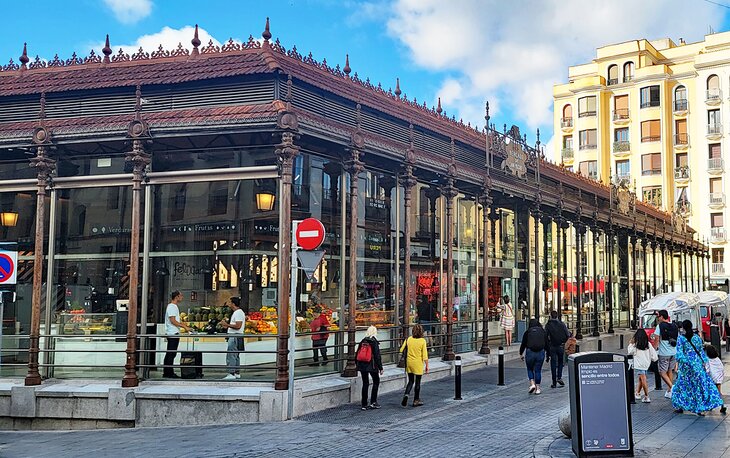
Touring a city like Madrid with all its sights can bring on a fierce hunger. Fortunately, the Mercado de San Miguel has everything you need to recharge your natural batteries. Here, you'll find over 20 different vendors selling the freshest meats, cheeses, fruit, and tempting tapas.
Vendor stalls are piled high with taste-bud tempting items. Figuring out what to eat may be the toughest task you face all day. Pick a few things from each place and then sit at one of the tables and soak up the lively atmosphere.
The Mercado de San Miguel has been operating in the same location for over 100 years. You'll find it just to the west of Plaza Mayor.
Address: Plaza de San Miguel, Madrid
11. Temple of Debod: An Ancient Egyptian Temple
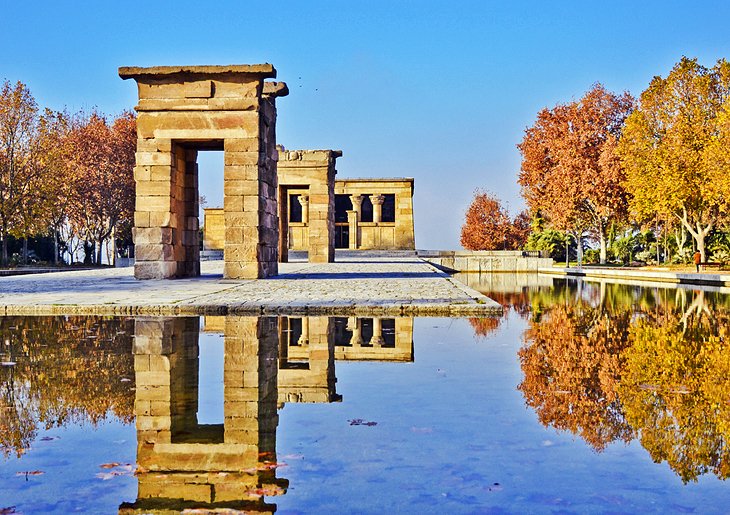
An ancient Egyptian temple in Madrid? Yes, such a thing does exist, and it can be found in La Montaña Park (close to the Plaza de España). A gift from Egypt, in thanks for Spain's help in saving the Abu Simbel temples during the building of the Aswan Dam, the Temple of Debod was brought to Madrid in 1968.
The temple was built for King Adikhalamani in the 2nd century BC and was dedicated to the Egyptian God and Goddess, Amun and Isis. Well-preserved original decorations are found inside the temple, which is rare for an archaeological site.
Originally the peaceful gardens surrounding the monument had reflective pools and a fountain; however, these features are no longer operating. Admission to the temple is limited, and the line moves very slowly. Sights inside are fairly limited, so if you see a long line, give it a pass.
Address: Parque de la Montaña, Calle de Ferraz, Madrid
12. Goya Frescoes at Ermita de San Antonio de la Florida
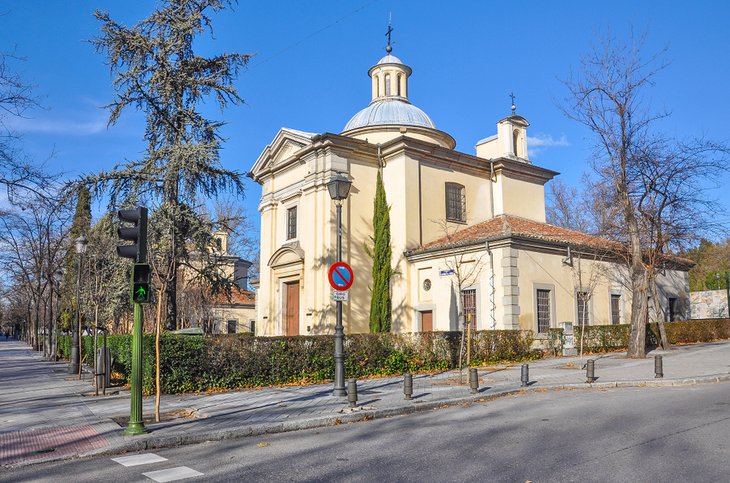
Perhaps the least visited of Madrid's major art treasures are the stunning frescoes painted by Francesco Goya that decorate the vaults and ceiling of the chapel of the Hermitage of San Antonio de la Florida.
The little 18th-century chapel, along the banks of the Manzanares River behind the Royal Palace, hosts an annual festival in honor of Saint Anthony of Padua on June 13th, but it's the interior that has become a place of pilgrimage for art lovers.
Among Goya's finest works, the frescoes illustrate the theme of the miracle performed by Saint Anthony, while also depicting scenes of everyday life in Madrid. The frescoes reveal Goya's boldness of artistic style and revolutionary painting techniques. These works were painted at a turning point in Goya's career and are considered a precursor of modern painting.
The chapel is designated as a National Monument and is no longer used for religious services to protect the frescoes.
Address: 5 Glorieta de San Antonio de la Florida, Madrid
13. Basílica de San Francisco el Grande
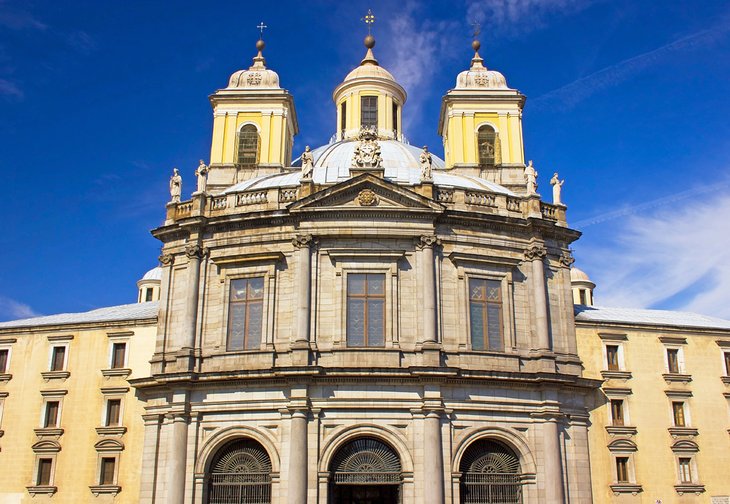
The Basílica de San Francisco el Grande was built by Carlos III in 1761 for a Franciscan friary. The church was designed by Francisco Cabezas, who modeled the Neoclassical architectural plan on the Church of Santa Maria in Campitelli in Rome. The construction was completed in 1784 by Francisco Sabatini.
The interior features an inspiring 58-meter-high dome that is larger than the dome of Saint Paul's Cathedral in London. Magnificent paintings adorn the chapels of the basilica, including masterpieces by the Spanish Old Masters.
In the first chapel on the left are Goya's Saint Bernardino, and Velázquez's Saint Bonaventure and The Appearance of the Virgin to Saint Anthony. The church also contains a painting of Saint Bonaventure by Zurbarán.
The church museum in the cloister displays a variety of religious art and artifacts.
Address: Plaza de San Francisco el Grande, Madrid
14. Museo Sorolla
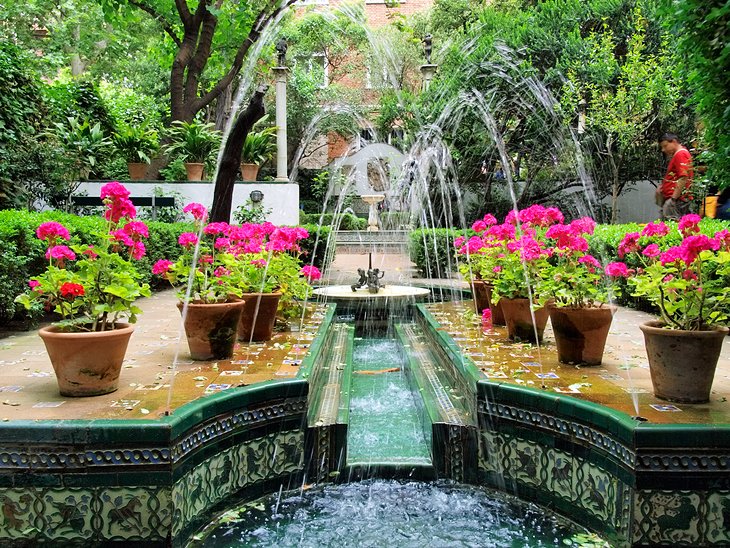
This charming museum is dedicated to the work of Joaquín Sorolla y Bastida, the most famous Spanish Impressionist painter. More than 1,200 paintings and drawings by Sorolla are displayed in the artist's house and studio, which has retained its original decor. The extensive collection includes a broad representation of Sorolla's works.
Visitors should be sure to see the museum's garden patio. Designed by Sorolla, this exquisite tree-shaded outdoor space is adorned with a gurgling fountain and Andalusian-style decorative tile work.
Address: 37 Paseo del General Martínez Campos, Madrid
15. National Archaeological Museum
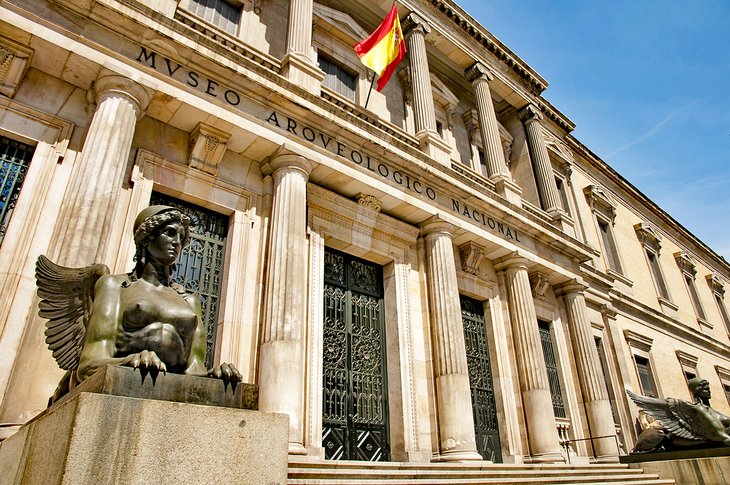
The National Archaeological Museum (Museo Arqueológico Nacional) was founded by Queen Isabella II in 1867 and has a rich collection of artifacts from prehistoric times to the 19th century. Exhibits feature archaeological finds, ethnography, decorative arts from antiquity, and ancient coins.
Highlights of the permanent collection include Egyptian mummies, Hispano-Roman and Islamic archaeological finds, Visigothic crowns, and Mudéjar ceramics. One of the most prized possessions of the collection is the bust of the Lady of Elche and the ivory Pot from Zamora.
Address: 13 Calle de Serrano, Madrid
16. Lázaro Galdiano Museum
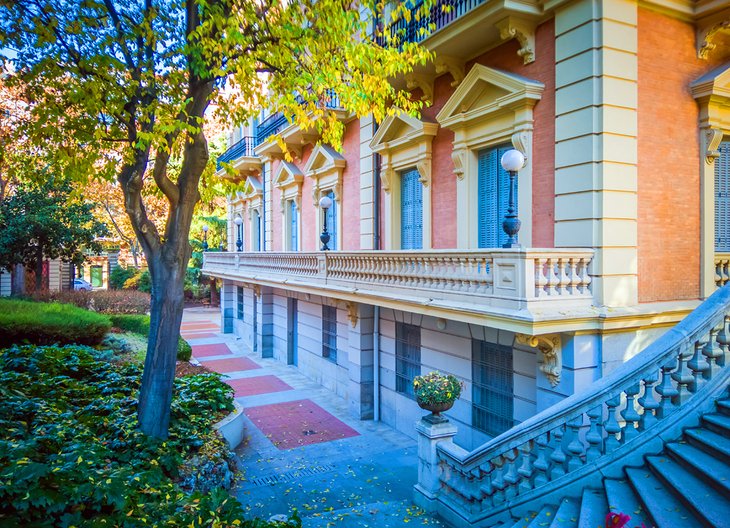
The Lázaro Galdiano Museum displays the exceptional private collection of 19th-century financier Lázaro Galdiano, housed in the mansion of Parque Florido, where he resided. The museum has an extensive collection of around 9,000 artworks exhibited in 30 rooms.
From armor, coins, and medals to jewelry, Baroque crystal, and tapestries, the collection is extremely diverse. Be sure to see the 16th- to 17th-century Spanish paintings by famous Old Masters, including El Greco, Goya, Velázquez, Zurbarán, Ribera, Pereda, and Murillo.
Among the masterpieces are El Aquelarre by Goya, San Francisco en éxtasis by El Greco, Meditaciones de San Juan Bautista by Hieronymus Bosch, Cabeza de Muchacha by Velázquez, El Salvador Adolescente by Giovanni Antonio Boltraffio, and La Tienda by Luis Paret y Alcázar.
Address: 122 Calle de Serrano, Madrid
17. Puerta de Alcalá
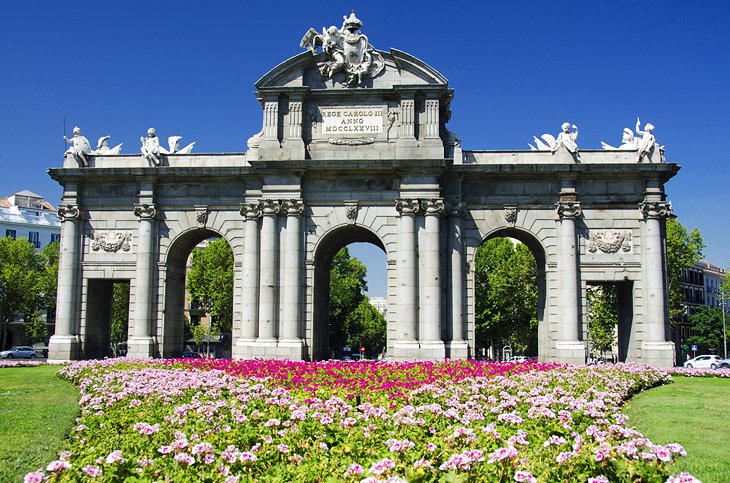
This grand Neoclassical triumphal arch was commissioned by King Charles III to celebrate the arrival of the monarchs to Spain's capital city. The monument was designed by Francesco Sabatini and built between 1769 and 1778.
Nearly 30 meters high, the elegant granite entrance gate makes a grand impression. The facade is adorned with sculptures, capitals, and decorative reliefs.
Just below the monument, at 54 Calle Alcalá, is Madrid's fanciest patisserie shop VAIT Pastelerías, which offers exquisite cakes, cookies, pastries, chocolate candies, and hot chocolate.
Address: Plaza de la Independencia, Madrid
18. National Museum of Romanticism
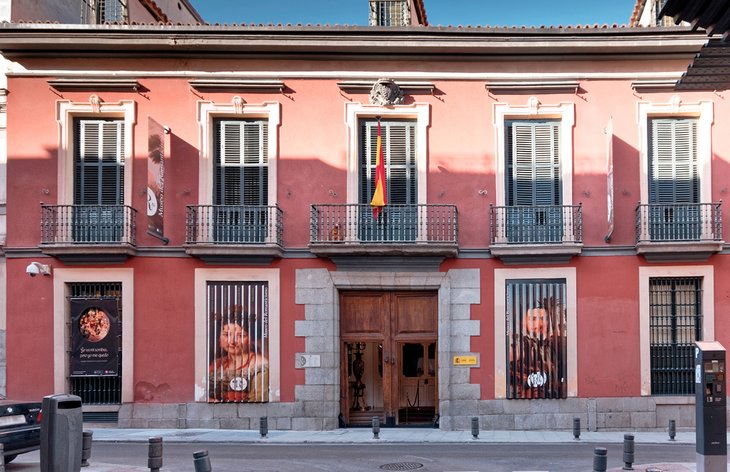
The National Museum of Romanticism (Museo del Romanticismo) presents a unique collection on the theme of Romanticism, the artistic and intellectual movement of the early 19th century. The museum occupies the Palacio del Marqués de Matallana, which dates to 1776 and features wonderful 19th-century decor and furnishings.
The eclectic collection includes jewelry, ceramics, furniture, and porcelain dolls. A highlight of the museum, the assortment of 19th-century paintings stands out for its exceptional quality, thanks to works by masters such as Goya.
The museum also has a splendid Magnolia Garden, landscaped in 18th-century formal French style with avenues, a fountain, and parterres. A café in the garden serves coffee and cakes to museum guests in need of refreshments.
Another cultural attraction nearby is the Museum of Contemporary Art (Museo de Arte Contemporáneo), located at 9 Calledel Conde Duque. This museum showcases avant-garde to present-day paintings, drawings, sculptures, and photography.
Just a 10-minute walk from the Museum of Contemporary Art is Madrid's largest department store, El Corte Inglés, which sells everything from clothes, shoes, and swimsuits to traditional Spanish fans.
Address: 13 Callede San Mateo, Madrid
Where to Stay in Madrid for Sightseeing
Anywhere between the Royal Palace and Buen Retiro Park, an area that includes both the Plaza Mayor and Puerta del Sol, is ideal for sightseeing. Most major tourist attractions lie in these neighborhoods, with the greatest concentration of art museums along Paseo del Prado, the famed Mile of Art, paralleling Buen Retiro Park. These highly rated hotels in Madrid are all in this central area:
Luxury Hotels:
- Catalonia Las Cortes is found between the Plaza Mayor and the Prado Museum. This four-star hotel occupies a renovated 18th-century palace with original architectural details. The spacious, elegant guest rooms feature modern amenities such as flat-screen televisions and coffee machines.
- The Hotel Atlantico is located on the Gran Via in the heart of Madrid's shopping district and an easy walk from all the major attractions. This four-star hotel has two cafés, one of which is on the rooftop terrace that affords superb views. Guest rooms feature classic décor and are outfitted with modern amenities.
- An emblematic landmark near Madrid's top museums, The Westin Palace Madrid occupies a Historic Monument dating to 1912 that was commissioned by Alfonso XIII. This opulent five-star hotel is one of the most luxurious places to stay in Spain. Services include three restaurants, a fitness center, spa treatments, and a hair salon.
Mid-Range Hotels:
- The NH Madrid Nacional occupies a Historic Monument opposite the Real Jardín Botánico (botanical gardens) on Paseo del Prado, near the Atocha rail station. This modern four-star hotel is located in Madrid's "Art Triangle" just steps away from the Museo Nacional Centro de Arte Reina Sofía.
- Artrip Hotel gets rave reviews for its thoughtfully designed contemporary-style guest rooms, cozy atmosphere, and concierge service. The hotel is located about a 10-minute walk from the Reina Sofía Museum and a slightly farther walk to the Prado Museum.
Budget Hotels:
- Just a short walk away from the Prado Museum and the Plaza Mayor, the three-star Ibis Styles Madrid Prado offers comfortable guest rooms decorated in a whimsical style. Some rooms feature balconies; many rooms have city views. This modern hotel provides a 24-hour front reception desk.
- Between the Royal Palace and Puerta del Sol, the two-star Hotel Francisco I benefits from a quiet location on a pedestrian street. Tourists will appreciate that the area is brimming with shops and restaurants.
- Near the Plaza Mayor and the Puerta del Sol, the Mayerling Hotel offers comfortable guest rooms decorated in sleek minimalist style. This two-star hotel provides 24-hour front desk and concierge services.
- A stylish and fun addition to the budget scene and in a great location is the SLEEP'N Atocha. The hotel has small rooms, some with large windows that open to the square below. The highlight of the hotel is the sunny enclosed rooftop patio where it's easy to meet and chat with fellow travelers.
Tips and Tours: How to Make the Most of Your Visit to Madrid
See the Highlights of Madrid in a Day:
- Many first-time visitors enjoy seeing the sights on the Hop-on Hop-off Madrid City Tour. This tourist-friendly experience offers 15 or 20 stops on two different routes, which include top attractions such as the Royal Palace, the Puerta del Sol, and the Cibeles Fountain.
Take a Spin around the City:
- For an exhilarating way to see the sights, consider the Madrid Segway Tour. This small-group excursion includes a safety briefing, a helmet, and an English-speaking guide. There is a choice of three different itineraries.
Visit UNESCO World Heritage Sites:
- The full-day Avila and Segovia Day Trip includes a tour of the two UNESCO World Heritage-listed cities near Madrid. More history and culture awaits on the Toledo Half-Day or Full-Day Trip, where you can admire masterpieces of painting by El Greco, stroll the city's medieval streets, and visit amazing historic monuments.
Experience a Serene Spiritual Site:
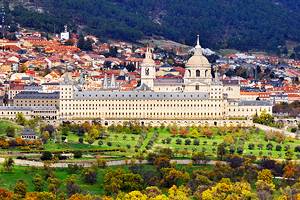
- Discover another remarkable UNESCO World Heritage site on the El Escorial Monastery and the Valley of the Fallen tour. This five-hour day trip from Madrid includes round-trip transportation, a guided tour of the 15th-century monastery, and a visit to a monument honoring fallen soldiers of the Spanish Civil War.
Map of Tourist Attractions & Things to Do in Madrid