Attractions & Places to Visit in the Haut-Vaucluse, Provence
Author Lisa Alexander spent two years living in France and has traveled the country extensively.
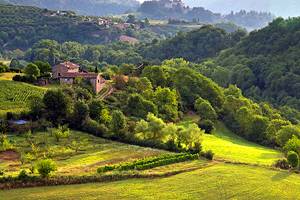
In the heart of the Provençal countryside, the Haut-Vaucluse is a gorgeous sun-drenched landscape that beguiled Impressionist painters Paul Cézanne and Marc Chagall. This vibrant patchwork of farmlands, olive groves, orchards, and lavender fields inspired many paintings.
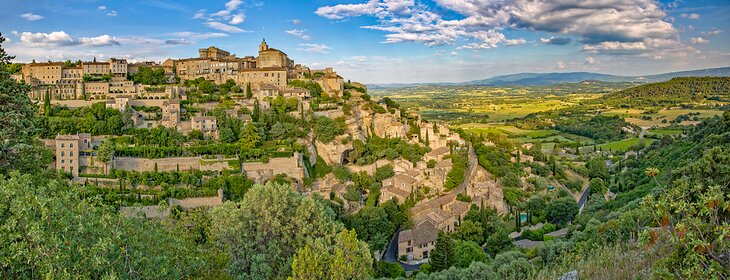
The Haut-Vaucluse is one of the most charming places to visit in Provence. This area, which contains many highlights of the Provence region, begins around Orange and spreads out east of Avignon, south to the Lubéron Mountains, and north to Mont Ventoux. At the crossroads of the Alps and the Rhône Valley, the varied terrain includes chalky limestone mountains, green rolling hills, and fertile plains.
Ancient Gallo-Roman cities and medieval perched villages are scattered throughout the Haut-Vaucluse. In fact, this area is one of the best places to visit in France to discover medieval hilltop villages. Most of these small, remote towns are delightfully undiscovered but require a driving itinerary.
Tourists can indulge in the local pastime of relaxing at a café terrace on sultry afternoons and balmy evenings. Savoring the delicious Mediterranean cuisine adds to the experience; regional specialties are based on fresh vegetables, herbs, olives, and sometimes feature the prized black truffle.
Plan your sightseeing in this picturesque region with our list of the top attractions and places to visit in the Haut-Vaucluse region of Provence.
Mont Ventoux: A UNESCO Biosphere Reserve
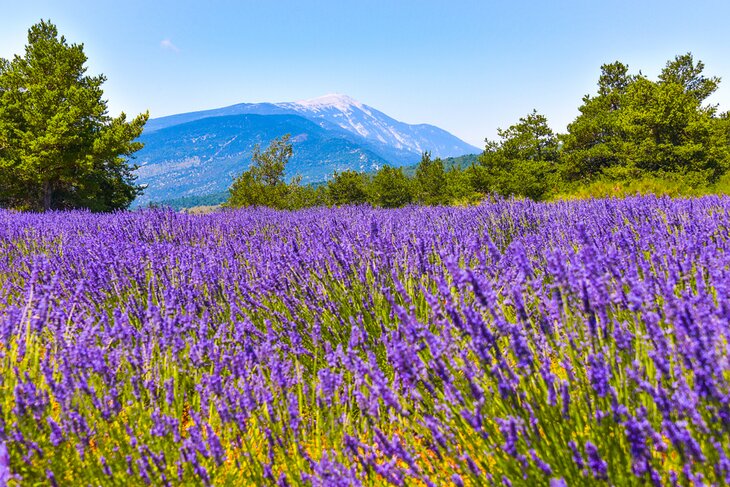
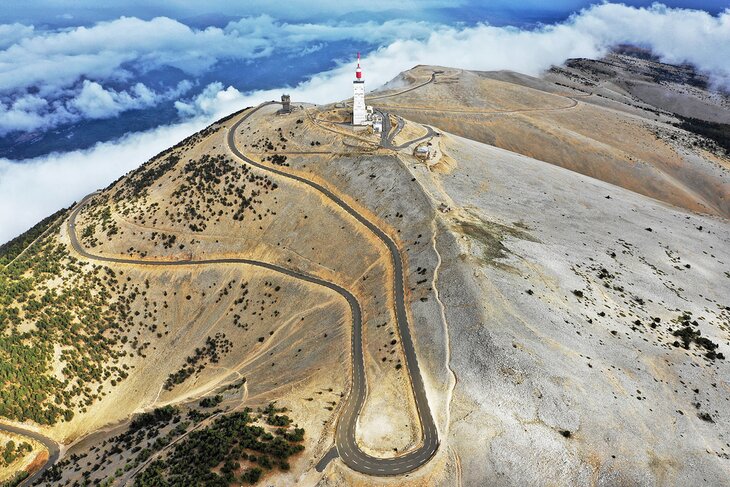
A UNESCO-listed biosphere reserve, this iconic mountain is the most famous nature site in the Haut-Vaucluse. Mont Ventoux is called the "windy mountain" because of the strong winds and violent storms that can occur here. Rising east of the Rhône River above the Ouvèze Valley, Mont Ventoux towers in impressive isolation over the surrounding countryside.
According to local legend, on April 24, 1336, the poet Francesco Petrarch climbed Mont Ventoux for religious and spiritual inspiration. This was the first ascent of a mountain for its own sake.
A typical starting-point to explore Mont Ventoux is from Vaison-la-Romaine. Follow the D938 road to Malaucène, then turn left on the D974. This stretch traverses stunning scenery with magnificent views and climbs steeply through coniferous forests.
About 16 kilometers beyond Malaucène, a narrow road leads to the viewpoint of Le Contrat then continues winding upwards for six kilometers to the Col des Tempêtes viewpoint. From here, the outlook extends over the Gorges du Toulourenc.
On the summit of Mont Ventoux, visitors will find an observatory and observation platform with views of the Montagne du Lubéron. Above 1,500 meters, Mont Ventoux offers extensive ski slopes.
Mont Ventoux is also famous as a land of black truffles, the prized culinary ingredient of the region. From November through March, restaurants in the area serve delicious dishes made with this delicacy.
A destination for discovering authentic regional gastronomy is Le Bistrot de Villedieu (16 kilometers from Malaucène). This village bistro serves traditional Provençal cuisine prepared from local ingredients using a wood-fired oven. The Michelin Guide has listed Le Bistrot de Villedieu as a "Bib Gourmand" restaurant on account of its skillful simple "bistronomic" cooking. Delightful in ambience, the restaurant's dining terrace overlooks the Town Hall and is shaded by centuries-old plane trees. At night, the terrace is illuminated with festive strings of lights.
Le 6 à Table in the quiet village of Caromb (10 kilometers south of Malaucène) is another Michelin-recommended "Bib Gourmand" restaurant. This cozy bistro has a convivial dining room with an open kitchen, and shaded tables on an outdoor patio overlooking the village church. The restaurant specializes in modern seasonal cuisine.
Roman Ruins in Orange
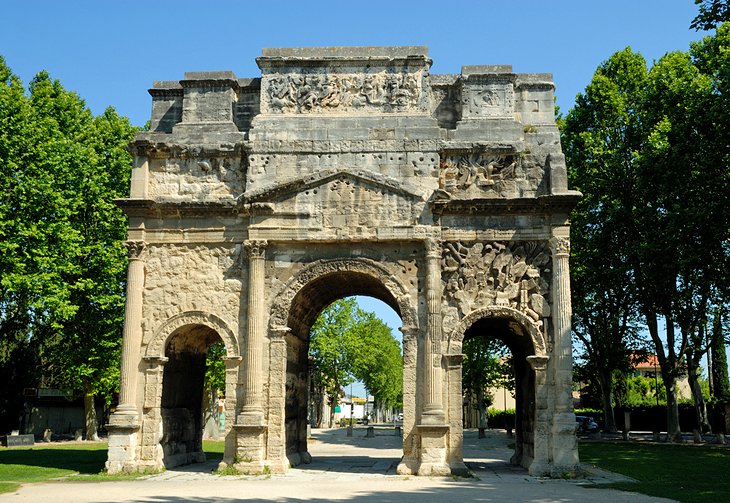
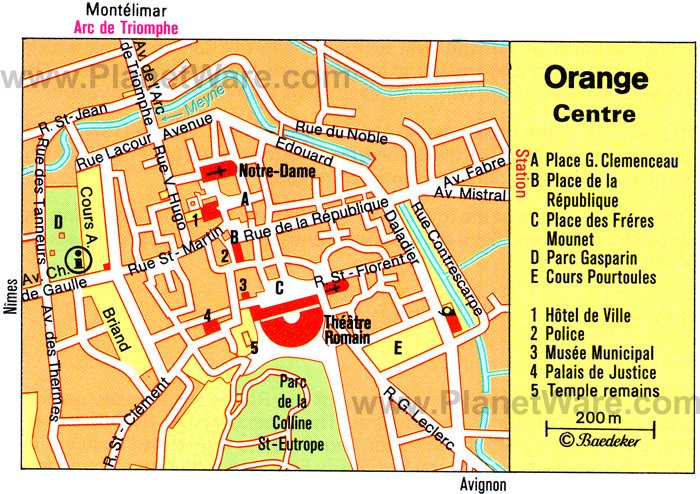
Orange boasts some of the most impressive archaeological sites in France, most notably the UNESCO-listed Théâtre Antique. The 1st-century AD Roman theater is incredibly well preserved, with rich decorations still intact on the back wall. The theater accommodates up to 7,000 people, evidence of the ancient city's size and the Romans' value of entertainment.
Today, the Théâtre Antique continues to be used as an event venue. During the summer, Les Chorégies d'Orange festival presents classical music concerts, ballet performances, and operas at the ancient theater.
Other exceptional ancient Roman monuments in Orange are the Arc de Triomphe, the 2nd-century triumphal arch dedicated to Rome's Emperor Tiberius, and l'Hémicycle d'Orange, ruins of a Roman temple adjoining the Roman theater.
The Musée d'Art et d'Histoire, housed in a 17th-century hôtel particulier (mansion) is a must-see attraction. This richly endowed museum displays objects of art, from antiquity through the Middle Ages to the 19th century. Highlights of the collection are the Mosaïque des Centaures, a beautifully restored ancient mosaic, and a series of paintings from the Palais Episcopal that are classified as Historic Monuments.
A worthwhile detour 20 kilometers from Orange is the Château de Suze-la-Rousse, which was the hunting lodge of the Princes of Orange. The medieval fortress was built in the 12th century and enhanced in the 16th century.
Surrounded by vine-covered rolling hills, this château is a peaceful getaway in the Provençal countryside. The Château de Suze-la-Rousse is open year-round (except holidays and Mondays during low season) for self-guided visits or guided tours.
The Hilltop Village of Gordes
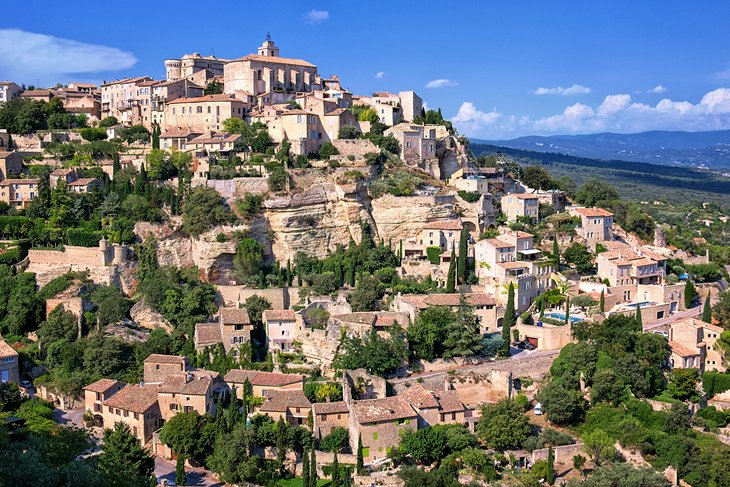
Listed as one of the "Plus Beaux Villages de France" (Most Beautiful Villages of France), Gordes is a captivating hilltop village that looks like the scene of a postcard or painting. In fact, artists Victor Vasarély and Marc Chagall found inspiration for their art work here.
Gordes stands dramatically on a steep slope, typical of a medieval "village perché" (perched village) of the Lubéron region. Dominating Gordes is the Château de Gordes, a fortified 11th-century castle that was enlarged in the 14th century and enhanced during the Renaissance era with a monumental spiraling staircase, as well as other ornate features.
The Château de Gordes presents a variety of cultural expositions throughout the year. Also within the castle is the Musée Pol Mara, a museum dedicated to the Flemish painter's masterpieces. Outside the castle on the Place du Château de Gordes are many cafés, restaurants, art galleries, and souvenir shops.
Gordes is 40 kilometers from Avignon, which is less than an hour drive away. On the route to Gordes, the best photo-op is from the road leading up from Cavaillon.
A few kilometers south of Gordes is the Village des Bories. The "Bories" houses are made of flat stones without mortar and usually without windows. For nearly 3,000 years (since the Bronze Age until the 18th century) this type of structure was common for building the huts of herdsmen and sometimes to build entire settlements.
Abbaye Notre-Dame de Sénanque
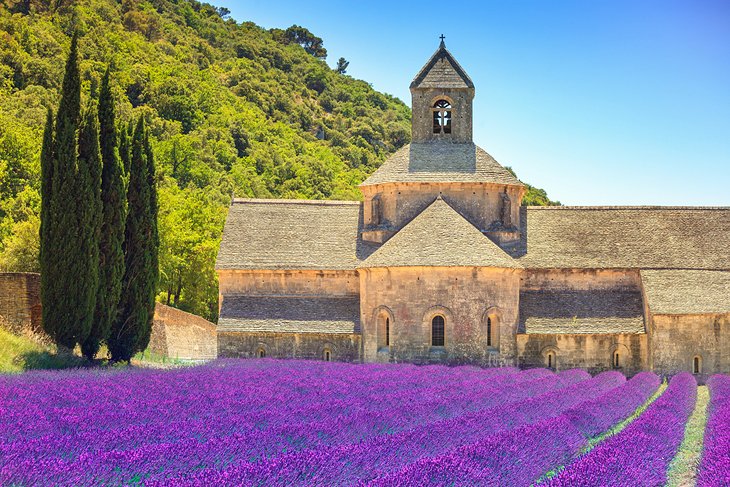
Just five kilometers from Gordes in the Lubéron region, the Abbaye Notre-Dame de Sénanque is encircled by an idyllic valley where lavender flourishes. From July through early August, the lavender fields enliven the landscape with vibrant purple blossoms.
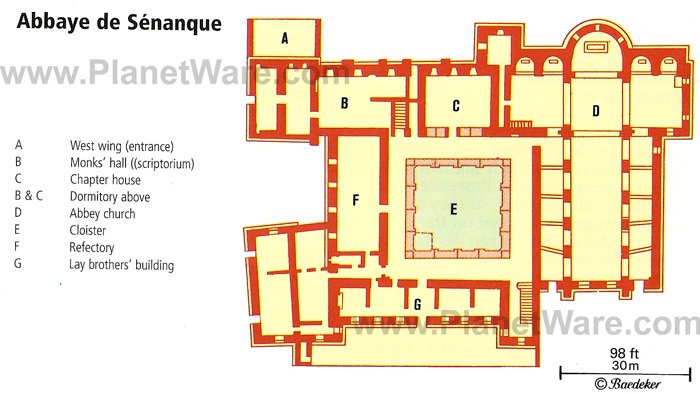
Founded in 1148 by Cistercian monks, the Notre-Dame de Sénanque Abbey is still a working monastery that follows the Rule of Saint Benedict. With its simple architecture, serene cloister, and exquisite gardens, the abbey promotes the Cistercian concepts of monastic living: seclusion, poverty and simplicity, prayer, and physical labor. The community gathers for prayers seven times each day.
The abbey is open to the public but requires visitors to respect the quiet ambience of the place and abide by proper behavior and dress code. Visitors may walk around the abbey's exterior grounds, attend religious services, or participate in silent prayer at the abbey church.
Guided tours (in French) take visitors to the abbey church, cloister, chapter hall, and dormitory rooms. Another option is taking a self-guided tour with a digital tablet that presents information in English, Italian, Spanish, and other languages.
The Abbaye Notre-Dame de Sénanque also welcomes visitors for spiritual retreats (maximum stay is eight days) to experience the community's life of prayer. However, visitors must participate in silence and should have the intention to focus on spiritual contemplation.
The property of the Abbaye Notre-Dame de Sénanque also includes a lavender farm, olive grove, and apiary. The abbey monks create artisanal products that are sold at the Boutique de l'Abbaye Notre-Dame de Sénanque, including lavender honey, lavender-fragranced soap and hand cream, essential oil of lavender, and estate olive oil.
Address: Abbaye Notre-Dame de Sénanque, 84220 Gordes
Official site: https://www.senanque.fr/
Vaison-la-Romaine
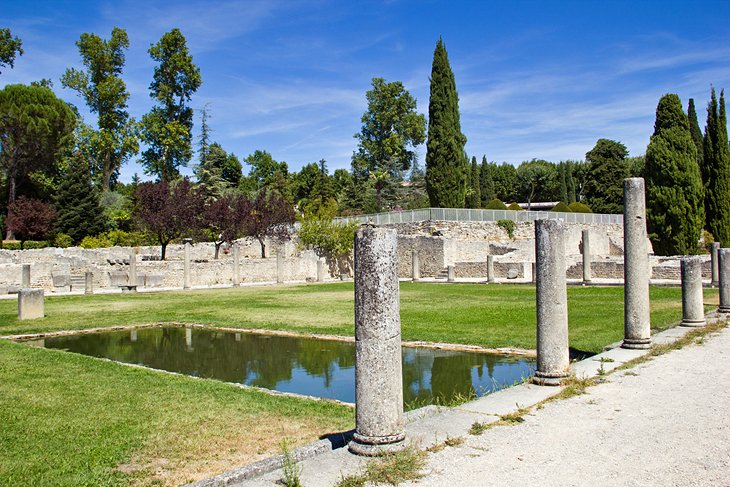
In a pastoral landscape at the foot of Mont Ventoux, Vaison-la-Romaine (30 kilometers from Orange) is distinguished as one of the "Plus Beaux Détours de France" ("Most Beautiful Detours in France).
The town has a medieval section, with quaint cobblestone streets and old churches, but is most well known for its extensive ancient ruins, dating from the 1st century BC to the 4th century AD, including two remarkable excavation sites.
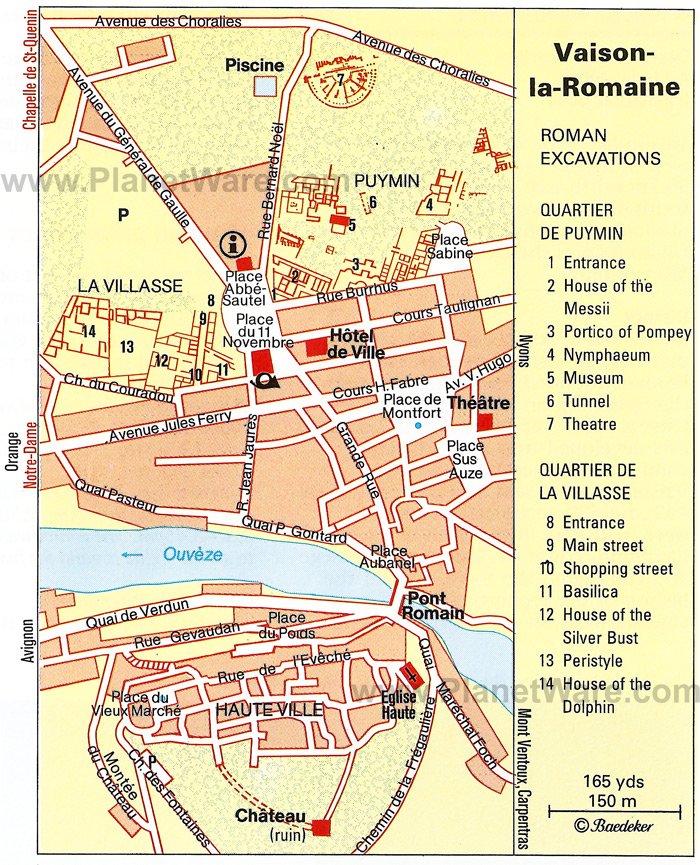
The Quartier de Puymin archaeological site is a gently sloping hillside laid out like a park with oak and cypress trees. The foundations of ancient Roman houses, the House of the Messii and the Portico of Pompey were uncovered here, along with the remains of an ancient temple and the 1st-century Roman theater (now used as an open-air performance venue during the annual Vaison Danses summertime festival and every three years for the Choralies choir festival).
Within the Quartier de Puymin is the Musée Archéologique Théo Desplans, an antiquities museum that displays statues and other objects excavated at the archaeological site. Items such as toilet and bath accessories, jewelry, religious objects, and ceramics (found in the remains of ancients dwellings) reveal the everyday life of the Gallo-Roman era. Frescos and mosaics give a sense of interior design in Roman villas.
A short walk from the Quartier de Puymin is another archaeological site, the Quartier de la Villasse. Here, visitors can see ruins of public baths, ancient houses, and a carefully paved Roman street featuring gutters. In some places mosaic floors are visible under a protective covering.
In the more "modern" area of town are the Cathédrale Notre-Dame-de-Nazareth built between the 11th and 12th century, and Le Jardin des 9 Damoiselles (Garden of the Nine Damsels).
Visitors can experience the local culture on Market Days held throughout the year on Tuesday and Saturday mornings (as well as on Thursday mornings during summertime) on the main streets and squares of the town. This bustling weekly event draws crowds who shop for everything from fresh fruits and vegetables to goat cheese and spices. Tourists will appreciate the Provençal linens, kitchenware, and handmade leather shoes.
During summer, Vaison-la-Romaine comes alive with cultural events and festivals, which makes the town worth visiting for at least a few nights. The ancient theater hosts large audiences for the Vaison Dance Festival in June and July and the Ancient Theater Week in July, as well as other concerts and entertaining shows throughout August.
Grignan
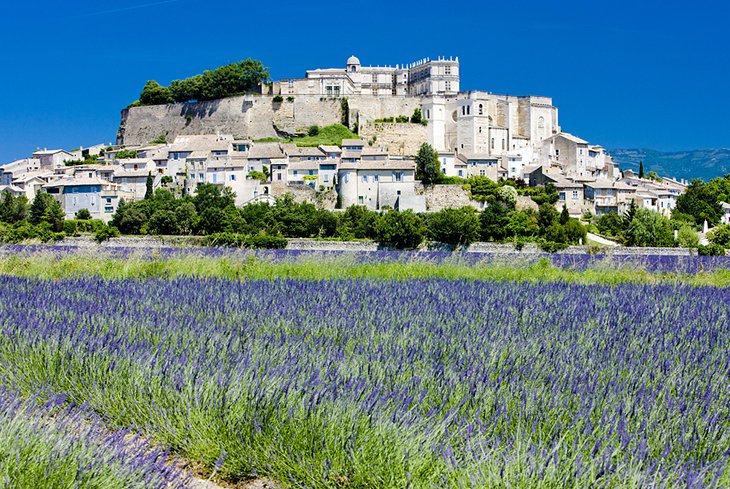
The hamlet of Grignan perches on a hilltop, majestically overlooking the bucolic landscape. This small pastoral community (less than an hour drive from Vaison-la-Romaine and Orange) was founded in the 12th century.
The fortified medieval village grew up around its castle, the Château de Grignan, which became the most glorious Renaissance château in southeastern France. Later, the château almost fell into ruin but was saved by the literary accomplishments of Madame de Sévigné, who lived there in the 17th century.
Today the Château de Grignan hosts several cultural events, including the Musique au Château music festival that's held throughout the year. Inspired by the acclaimed epistolary works of Madame de Sévigné, the Festival de la Correspondance (Festival of Letter Writing) takes place in July at the château and at other venues in Grignan.
In August, Les Soirées Musicales de Madame de Sévigné (classical musical festival) is held at an outdoor venue, the Cours de Adhémars: Espace François-Auguste Ducros (Place Jeu de Ballons) in the village of Grignan.
Classified as a "Village Botanique," Grignan is renowned for its rose gardens, planted along the castle walls and throughout the village (indicated by a series of signposts), that bloom in spring and summer. While wandering through the village, visitors can discover 150 different varieties of heirloom roses and English roses.
Grignan hosts the Marché Hebdomadaire (Weekly Market), a traditional Provençal open-air market, on Tuesday mornings. Local vendors sell fresh fruits and vegetables from nearby farms, lavender, honey, colorful Provençal fabrics, and other regional products.
The countryside around Grignan is a distinctly Mediterranean terrain of scrubland, oak trees, juniper, and lavender fields. In the foothills surrounding the village, the woodlands provide a source of truffles, a sought-after delicacy used in the local cuisine.
Another famous regional specialty is the Nougat de Montélimar (a candy made with honey and almonds), which has been produced in the nearby village of Montélimar since the 17th century.
Nyons
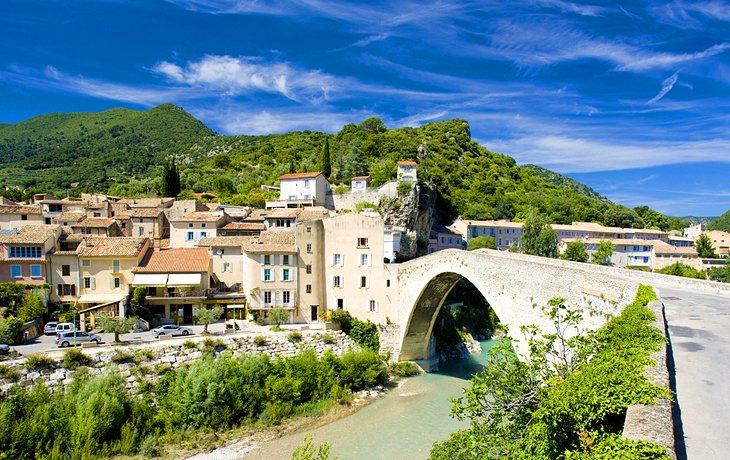
Nestled in a verdant valley sheltered by the Vaucluse foothills, Nyons is listed as a "Plus Beaux Détours de France" (only 16 kilometers away from Vaison-la-Romaine). Nyons is also classified as a "Site Remarquable du Goût" (Remarkable Site for Taste) because of its exceptional regional cuisine and Appellation d'Origine Contrôlée olive oil produced from the "Tanche" black olive variety that grows in the local olive groves.
Equally rich in history as it is in gastronomy, Nyons has retained its medieval ramparts and vestiges of a castle built during the Crusades period. The 16th-century Eglise Saint-Vincent contains a precious Virgin statue and a nativity painting attributed to Ribera.
The Chapel Notre-Dame de Bon Secours at Place de la Chapelle is a 19th-century monument that tops a medieval tower called the "Tour Randonne." The tower, originally the castle's prison, was built in 1280. Standing on a hilltop overlooking the village, the site offers sensational views of the countryside. The Chapel Notre-Dame de Bon Secours site is open daily year-round. Every year on August 15th, a festival is held here.
Just six kilometers from Nyons is the village of Les Pilles, registered as a "Bâtiment de France" because of its 17th-century houses with unique facades and doors. The village holds a Marché de Producteurs (Farmers' Market) on Monday evenings (5pm to 7pm) from May through November.
Another charming village near Nyons (14 kilometers to the south) is Saint-Romain-en-Viennois. This small medieval village stands on a promontory in the Côtes du Rhône's undulating landscape, with Mont Ventoux as the backdrop. Saint-Romain-en-Viennois is still encircled by ancient ramparts and has retained the tower of its 16th-century castle.
Pernes-les-Fontaines
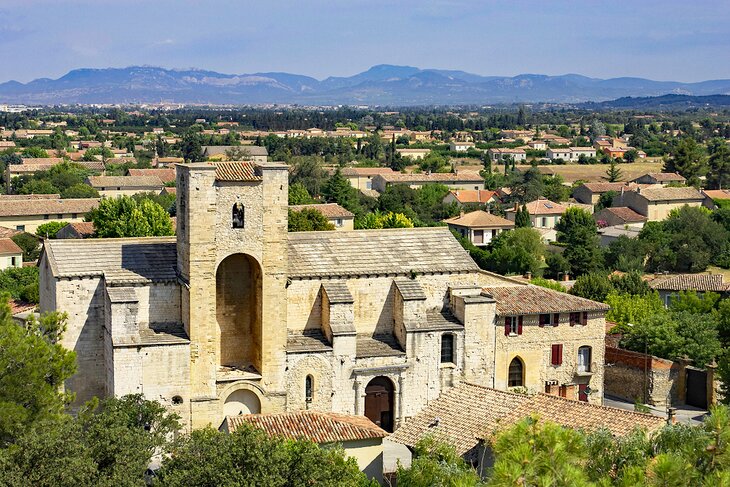
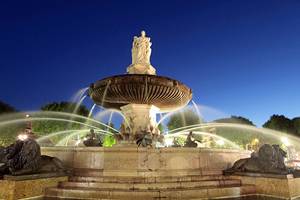
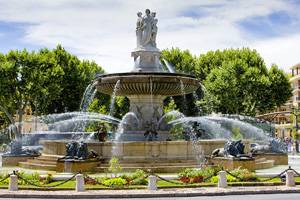
A typical sun-drenched Provençal town, Pernes-les-Fontaines has a relaxing ambience thanks to its abundance of flowing fountains. Within the medieval center of Pernes-les-Fontaines are 40 fountains, decorative monuments that were originally designed to provide a water source to local residents (for drinking and washing).
Many of the fountains date back to the 18th century; some are even classified as Historic Monuments. At the Tourist Office, visitors can pick up a "Fountain Walk" map for taking a self-guided tour of the town's fountains.
Founded in the Gallo-Roman era, Pernes-les-Fontaines became a capital of the "Comtat Venaissin" during the Middle Ages and later was ruled by the Counts of Toulouse and the Popes of Avignon. Old stone houses, cobblestone streets, walled fortifications, and medieval town gates give Pernes-les-Fontaines its distinctive old-world charm.
The Porte Notre-Dame, the most spectacular gate in the ramparts, leads to the Eglise Notre-Dame de Nazareth. This 11th-century Romanesque church features ornate columns on the facade with capitals of acanthus leaves. The beautifully decorated nave has a frieze depicting biblical scenes.
Also not-to-be-missed are the 12th-century Tour de l'Horloge, which was the keep (dungeon) of the château, and the Tour Ferrande, which has rare 13th-century frescoes on the third floor. The Halle Couverte, built in the 17th century, served as the town's marketplace for fishmongers and for farmers selling fruits and vegetables.
Carpentras
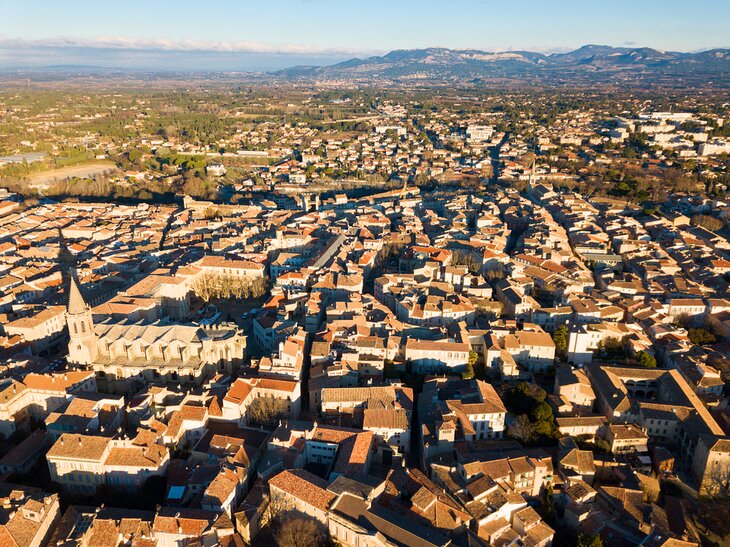
Carpentras has a unique heritage, revealed in its Flamboyant Gothic Cathédrale Saint-Siffrein. Built between 1406 and 1519, the cathedral has a Gothic facade with a special doorway, the Porte Juive (Jews' Gate), designed as the entrance for Jews who wished to be baptized.
The town's Jewish heritage may be discovered at the historic Synagogue de Carpentras (Place Maurice Charretier), the oldest Jewish house of worship in France that is still in use. Built in 1367 and restored in the 18th century, the synagogue surprises visitors with its elegant Baroque sanctuary. The site also houses the 14th-century ritual baths (known as "mikvah"), and two kosher bakeries.
The synagogue continues to hold services on Shabbat and religious holidays. Tourists may visit by guided tour on weekdays outside of Jewish holidays.
During three days in late July or August, the town of Carpentras hosts a Jewish Culture & Music Festival (Festival des Cultures & Musiques Juives) that attracts many locals and tourists. Music concerts, theater performances, lectures, and cinema screenings take place at several different venues including the Synagogue de Carpentras, the Cour de la Charité (180 Place Aristide Briand), and Le Rivoli cinema.
Carpentras is also renowned for its excellent cuisine and desserts. The Maison Jouvaud (40 Rue de l'Évêché) is considered the top pâtisserie shop in Carpentras and one of the best in Provence.
Gourmands will find an inviting restaurant about a 30-minute drive outside of Carpentras. The Michelin Guide lists Côteaux et Fourchettes, at 3340 Route de Carpentras, as a "Bib Gourmand" restaurant for its quality cuisine (creative modern) and good value.
This restaurant focuses on seasonal dishes, with everything prepared in-house from local ingredients and specialty products (produits du terroir). Guests may enjoy meals in a stylish dining room or on the shaded outdoor terrace of the property's Provençal gardens.
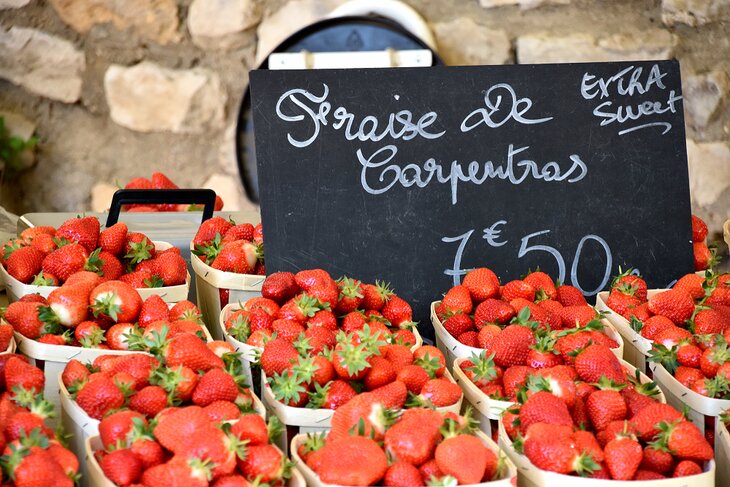
The area around Carpentras grows delicious strawberries, definitely worth trying at the peak of the season in springtime. Every year for one day in April, the town of Carpentras celebrates the Fête de la Fraise (Strawberry Festival). This lively festival features a farmers' market with musical entertainment and dancing.
Visitors have a chance to sample and purchase a variety of strawberries as well as delicious cakes, tarts, syrup, and jams made using the local fruits. There are also culinary workshops, baking demonstrations, and presentations about traditional products derived from strawberries.
Medieval Venasque
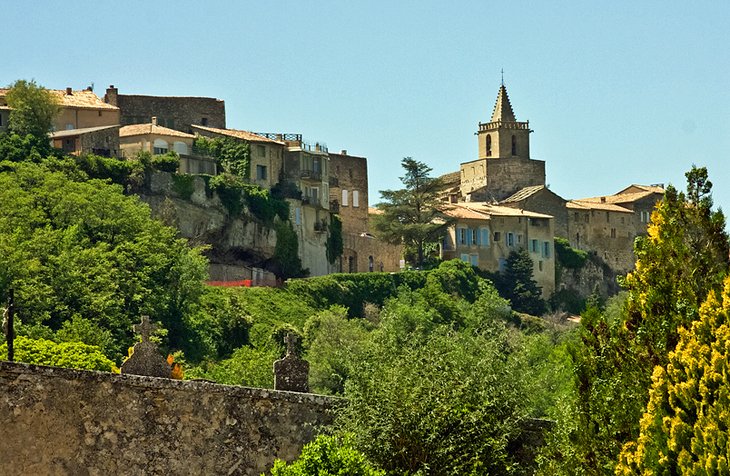
The enchanting medieval city of Venasque (listed as one of France's "Most Beautiful Villages") is 11 kilometers southeast of Carpentras in the old "Comtat Venaissin" county, an especially scenic area of the Haut-Vaucluse countryside. The town's dramatic hilltop position proved to be virtually impregnable to invaders throughout the centuries.
Today, the main draw of the location is the chance to wander the town's steep alleyways and admire superb views of the Dentelles de Montmirail mountains and Mont Ventoux. In this awe-inspiring natural setting, the village is filled with fascinating religious buildings.
The Baptistère has the distinction of being the oldest religious site in France. Built in the 6th century (and renovated in later centuries) on the site of an ancient Roman temple, the Baptistry is shaped like a Greek cross and decorated with arches featuring repurposed ancient columns. The Baptistry is classified as a Historic Monument.
Also noteworthy is the Eglise Notre-Dame de Venasque, a 12th-century Romanesque church that possesses a celebrated painting, La Crucifixion, (created in 1498) that is considered a masterpiece. The work of an artist from the Ecole d'Avignon, the painting was restored in 1937 by workshops at the Musée du Louvre in Paris.
The surrounding area of Mont Venasque is covered with endless cherry orchards. The particular variety of cherries that grows here, the "Monts de Venasque" has a registered trademark. The prized fruit is appreciated for its luscious, sweet flavor. Be sure to sample the cherry desserts when in season.
One of the most enjoyable things to do while visiting Venasque is attend the Festival de la Cerise (Cherry Festival), which takes place in the town annually during one full day in June, featuring tastings, presentations of local products, culinary demonstrations, and a clafloutis (traditional cherry custard dessert) competition.
Fontaine-de-Vaucluse
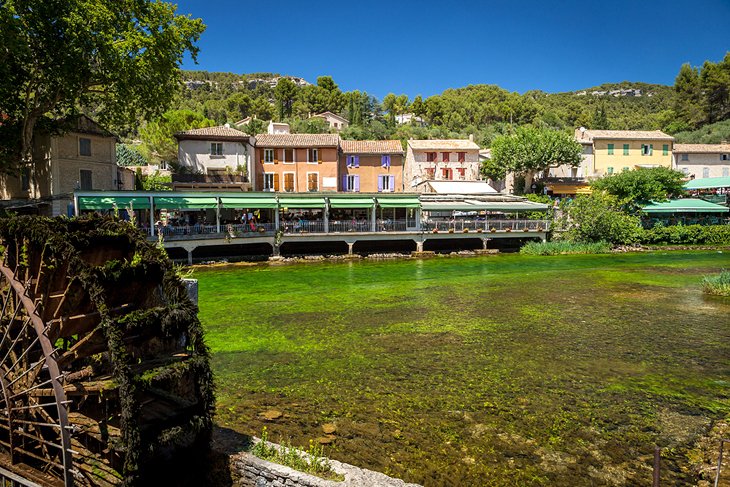
The little village of Fontaine-de-Vaucluse is named for its natural freshwater source. In a lush valley, the Fontaine de Vaucluse (spring) comes from a source at the base of a steep cliff and pours into a deep pool of translucent emerald waters that forms the origin of the Sorgue River. It is most impressive around April and May, when melted snow increases the water flow.
Fontaine-de-Vaucluse also boasts a connection with the 14th-century Italian poet and humanist Petrarch, who occasionally stayed in the town (supposedly at the site where the Petrarch Museum is located). Near one of Fontaine-de-Vaucluse's small springs is a tablet memorializing Petrarch and his beloved Laura, who features in many of his poems.
The Musée-Bibliothèque François Pétrarque educates visitors about the life and literary works of Petrarch, known as the "Prince of Poets." A member of the Fédération des Maisons d'écrivains et des Patrimoines littéraires (Federation of Writers and Literary Heritage), the museum contains rare editions of manuscripts and also has a section devoted to poet René Char, who hailed from nearby L'Isle-sur-la-Sorgue. Visitors may make use of the museum's library and research center or participate in a writing workshop.
L'Isle-sur-la-Sorgue: The Venice of Provence
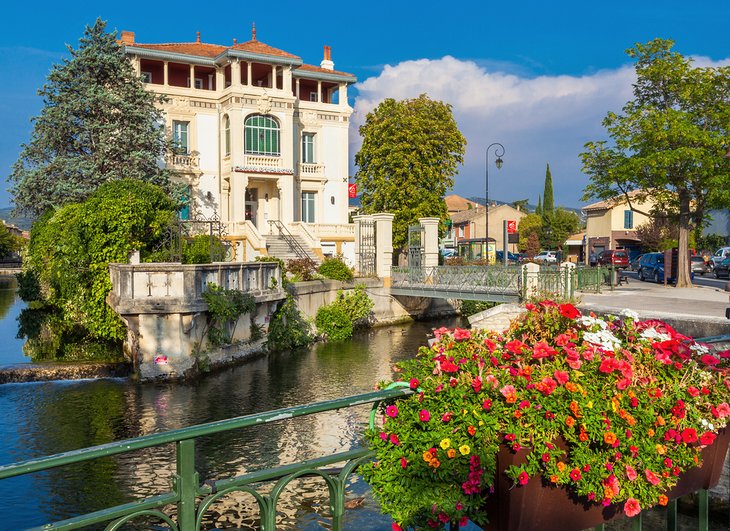
The calm, quiet atmosphere of L'Isle-sur-la-Sorgue comes as a welcome relief to tourists seeking relaxation. Originally a fishing village, the town sits on several canals of the Sorgue River, which is why it is called the "Venice of Provence."
Visitors enjoy wandering around the ancient winding streets and picturesque canals. Several historic mills are still seen along the canals, including those on the Avenue des Quatre Otages, Place E. Char, and Place V. Hugo.
The town's Gothic church, the Collégiale Notre Dame des Anges, has a lavish 17th-century interior that exemplifies Provençal Baroque decor. Other noteworthy buildings are the 18th-century Hôtel Donadeë de Campredon, an aristocratic mansion classified as a Historic Monument that now houses an art collection, and the 18th-century Hôtel-Dieu (formerly the town's hospital, now protected as a Historic Monument) with its lovely wrought-iron gate, gardens, chapel, and wood-paneled apothecary.
L'Isle-sur-la-Sorgue is an appealing place for lovers of art, culture, and cuisine, thanks to its many art galleries and gourmet restaurants. Also famous for antiquing, the town has a wide selection of boutiques that sell antiques and vintage items. The weekly Marché Provençal (traditional outdoor farmers' market) on Sundays hosts many local antique vendors. The Sunday market opens at 8am.
Twice annually, the town of L'Isle-sur-la-Sorgue holds the Foire Internationale (International Antiques Fair), a huge flea market/antiques fair with hundreds of vendors. The Foire Internationale in L'Isle-sur-la-Sorgue is considered one of the best antique fairs in Europe, on par with events held in London and Paris. The fair takes place around Easter weekend and for several days at the end of October through early November.
Visitors should also savor the local gastronomy. For a truly indulgent fine-dining meal, try the Michelin-starred restaurant Le Vivier (800 Cours Fernande-Peyre), which overlooks the Sorgue River banks.
Tourists can easily visit both L'Isle-sur-la-Sorgue and Fontaine-de-Vaucluse on the same day, as the two towns are just 17 kilometers apart.
Saumane-de-Vaucluse
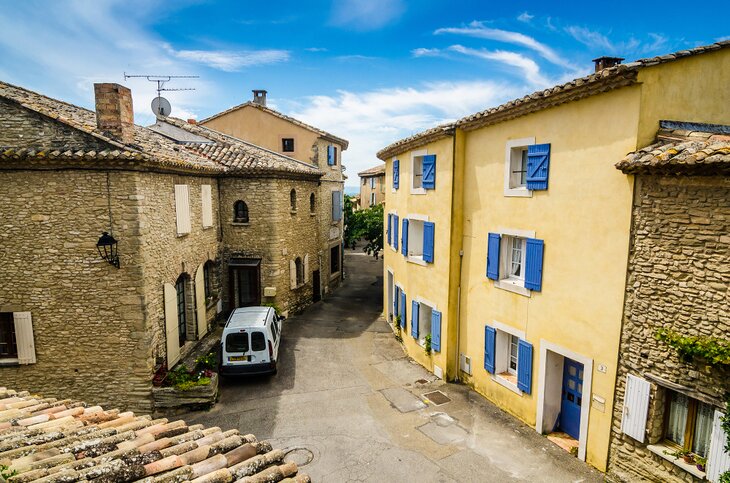
Crowning a rocky outcrop in the rolling hills of the Monts de Vaucluse, this typical Provençal village perché has a small Romanesque church, old stone buildings, fountains, shaded outdoor cafés, and atmospheric cobblestone streets. Views from the village extend from the Sorgue Valley to the edge of the Vaucluse Plateau.
At the highest point in the village, the Château de Saumane is a spectacular example of fortified architecture and is classified as a Historic Monument. For several centuries, the château was home to the family of the Marquis de Sade. The author spent time here as a boy, and the influence can be seen in his literary works. After years of restoration, the Château de Saumane has opened to the public for self-guided visits.
The surrounding countryside is filled with oak trees, olive orchards, and aromatic "garrigue" plants (Mediterranean scrubland). The prized truffle is also found in this landscape. Many hiking and jogging trails are in the area, and some pass by the quaint little hamlet of Châteauneuf-de-Gadagne (18 kilometers from Saumane-de-Vaucluse).
Beaumes-de-Venise
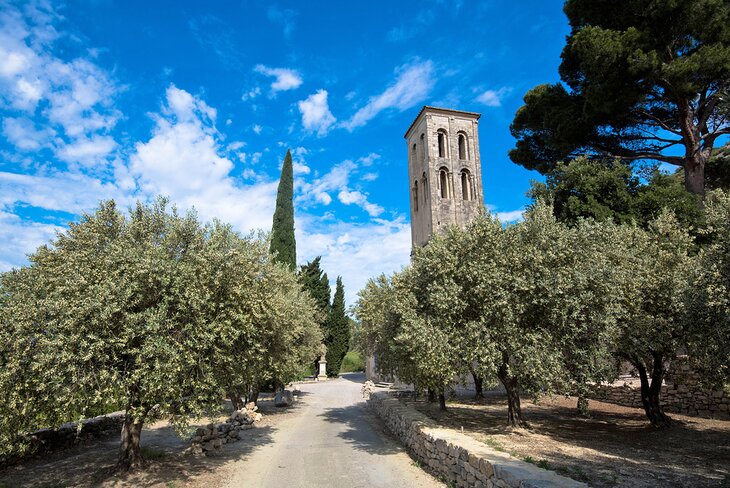
Beaumes-de-Venise is a charming village (eight kilometers from Carpentras) that attracts many visitors during summer as well as winter because of its mild climate. Tourists will enjoy exploring the historic center of the village, with its église paroissiale, a beautiful 16th-century parish church, and typical Mediterranean red-tile roofed buildings.
The peaceful natural setting of Beaumes-de-Venise is another draw. Orchards and olive groves flourish in this sun-soaked landscape. There are many hiking trails for nature enthusiasts to take in the scenery.
Less than seven kilometers away from Beaumes-de-Venise is the tiny village of Suzette, which faces the Dentelles de Montmirail ("Mountains of Lace") and the foot of Mont Saint-Amand. Nestled in this gorgeous countryside, Suzette offers amazing views of the Mont Ventoux, the Dentelles, and the plain of Vaison in Vaucluse.
Monieux
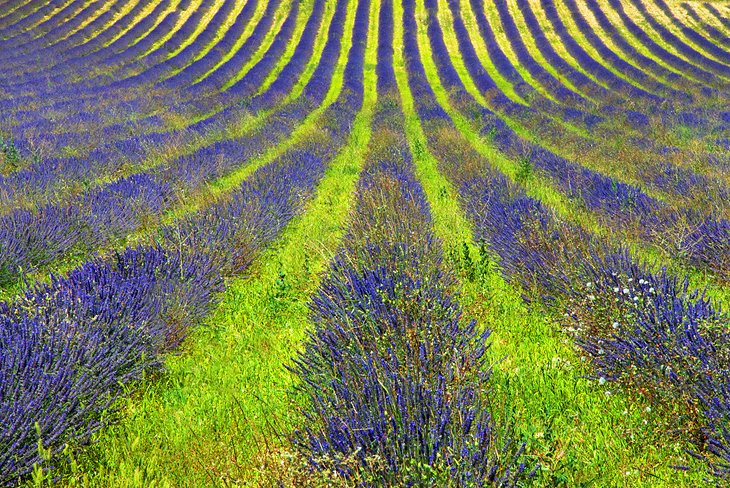
The quaint hilltop village of Monieux basks in the serenity of the Gorges de la Nesque. This wild landscape is distinguished by its dramatic rocky gorges, vine-covered hillsides, and fields that bloom with red poppies from April through June.
Because Monieux lies on the southeastern side of Mont Ventoux facing east, the village enjoys beautiful sunrises. Below the village, the tranquil Nesque River meanders around the countryside before eventually rushing through ravines of limestone rocks.
Tourists delight in strolling leisurely through the historic village with its winding lanes and picturesque 16th-century to 17th-century houses. Getting lost in the maze of old streets is a pleasant experience.
There are many historic sights to discover, including the medieval ramparts; the 12th-century Chapelle Saint-Roch; and the Eglise Saint-Pierre, a splendid 12th-century Romanesque church.
Gourmands should be sure to visit the town's museum dedicated to the regional truffles. The Musée de la Truffe du Ventoux focuses on the cultural heritage and culinary art of this delicacy.
Monieux also has interesting artistic shops and artisan boutiques as well as cultural attractions and things to do. On the first Sunday of September, the village hosts an annual Fête Médiévale (Medieval Festival) honoring the town's medieval heritage.
Picturesque Valréas
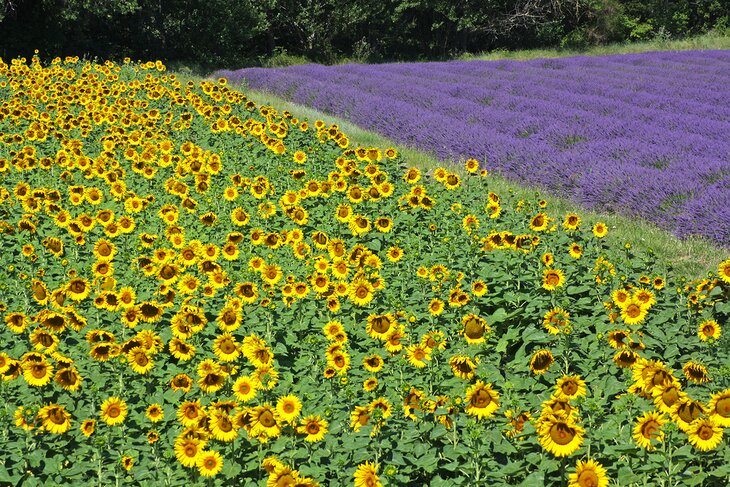
An important city of the Papal states, Valréas has a rich heritage going back 1,000 years. Architectural treasures classified as Historic Monuments include the 12th-century Eglise Notre-Dame de Nazareth, the elaborately adorned Chapelle des Pénitents Blanc built in the 16th century, and the Château de Simiane, formerly the residence of an noteworthy aristocratic family.
This historic city is listed as a "Ville Fleurie" ("Flowering Village") thanks to the vibrant floral blooms throughout the town and is also well known as a "green" vacation destination because of the pristine nature sites nearby, including areas for hiking and fishing.
Less than six kilometers from Valréas is the village of Grillon, which was once part of the Papal territory of Avignon's Popes. The ancient feudal town is encircled by medieval ramparts and centers around its château, which was built in the 12th century. The town also has an interesting church with a wrought-iron campanile and an octagonal stone spire.
The Hilltop Hamlet of Crillon le Brave
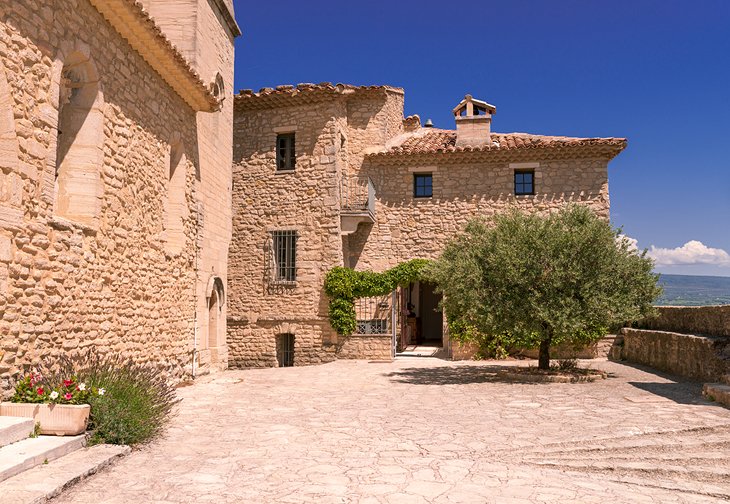
Crillon le Brave has all the charm of a typical Provençal village perché, with vestiges of 16th-century ramparts and quaint medieval streets. This tiny hilltop village (38 kilometers from Avignon) presides over the Mont Ventoux valley in the Lubéron region. The sublime pastoral setting of Crillon le Brave makes it one of the best places to visit in Provence for a relaxing getaway.
Vacation-goers can admire the gorgeous scenery while taking a stroll through the village or walking along the nature paths just outside of town. Cycling is another popular pastime in this area, the country roads offer the perfect backdrop for an invigorating ride.
For a luxurious overnight stay, try the plush accommodations at the Hôtel Crillon le Brave, which occupies 12 historic houses within the village near the Eglise Saint-Romain, a Romanesque church. This five-star Relais & Châteaux property is a haven of relaxation and pampering, with two refined restaurants, an upscale spa, a swimming pool, fitness center, and guest rooms decorated with contemporary Provençal flair. Many rooms offer vistas of Mont Ventoux.
Panoramic Mountain Views from Séguret
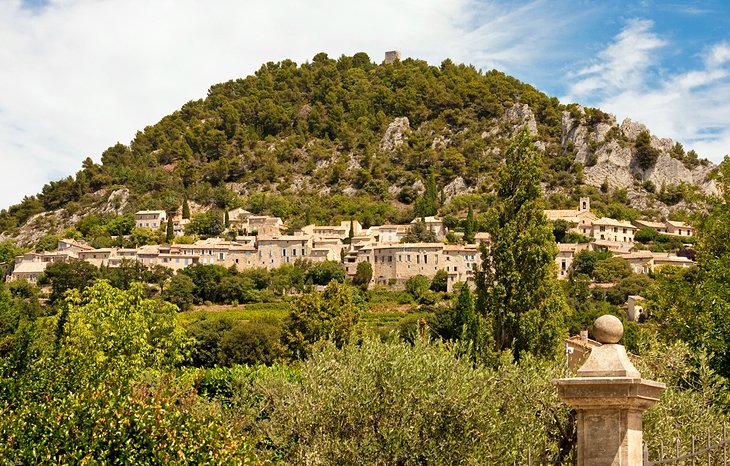
In a picturesque setting about ten kilometers from Vaison-la-Romaine, this tiny town is listed as one of the "Plus Beaux Villages de France". Séguret was built on the slopes of a hill, and the historic town is dominated by the ruins of its ancient château.
There is a walking path leading up to the castle with sensational views from this vantage point. The panoramas sweep across the vine-covered hills to the Dentelles de Montmirail, a mountain range with jagged ridges.
As a typical medieval perched village, Séguret has a distinctly old-world character. Visitors marvel over the ancient Romanesque church (dating back to the 10th century and mostly completed by the 12th century), the old houses with Provençal red-tile roofs, and quiet squares adorned with fountains.
Perfect for rest and relaxation, the village features a labyrinth of narrow cobblestone streets that invite leisurely strolls. The town also has a handful of hotels and restaurants that will delight visitors who are spending a few days here.
Visan: Medieval Town of the Popes
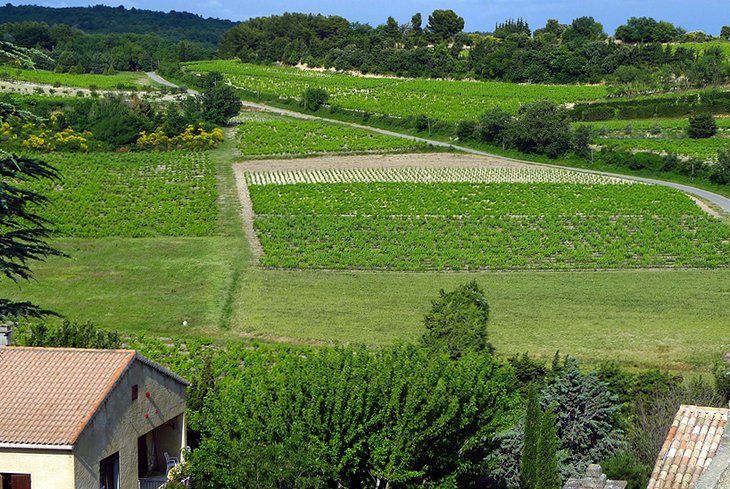
Visan is another interesting historic town close to Vaison-la-Romaine, about 17 kilometers away. The territory of the Popes of Avignon in the 14th century, Visan is found in a beautiful setting of rolling hills overlooking a peaceful plain.
The medieval town is characterized by winding streets from the Middle Ages, as well as elegant mansions built from the Renaissance period to the late 18th century. The 14th-century parish church is dedicated to Saint Peter. Inside the church is the exquisite painting Our Lady of Sorrows by Nicolas Mignard in 1659.
Visitors can see ruins of the village's old château sitting at a high point in town. From here, tourists can soak up wonderful views of the surrounding countryside and nearby villages.
Luberon Natural Regional Park (Parc Naturel Régional du Lubéron)
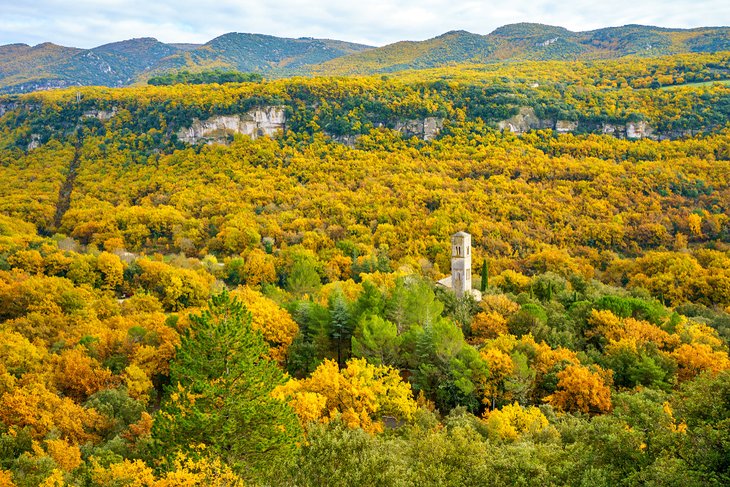
A gorgeous piece of rural landscape in the Haut-Vaucluse, the Parc Naturel Régional du Lubéron is a UNESCO-listed nature reserve. The Lubéron is a rugged mountainous area based around the Montagne du Lubéron. The 120,000-hectare nature reserve encompasses mountains, green rolling hills, peaceful valleys, extensive farmlands, and orchards.
The Lubéron Natural Regional Park is dotted with many medieval hilltop villages and historic towns, which are some of Provence's most charming, unspoiled tourist destinations. Scattered throughout the Lubéron are ancient "bories" huts. The centuries-old herdsmen's buildings were constructed from boulders without mortar.
More Related Articles on PlanetWare.com
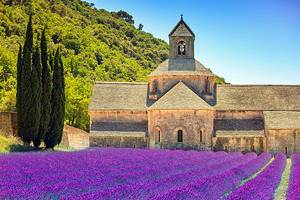
Nearby Attractions in Provence: The Haut-Vaucluse is an off-the-beaten-path corner of Provence, Southern France's most popular region. While many nearby towns in Provence (like Arles and Avignon) are packed with tourists during the high season, the Haut-Vaucluse comprises peaceful countryside dotted with enchanting medieval villages that are relatively undiscovered.
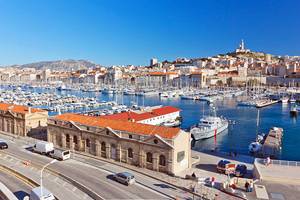
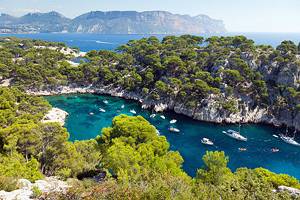
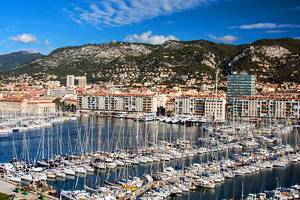
Mediterranean Seaside Towns: The Haut-Vaucluse is a landlocked region, but the Mediterranean Sea is within easy reach. It's a one-hour drive from Carpentras to the bustling seaside city of Marseilles, a 2.5-hour drive to the port town of Toulon, and just over a three-hour drive to the glamorous beach resort of Saint-Tropez.
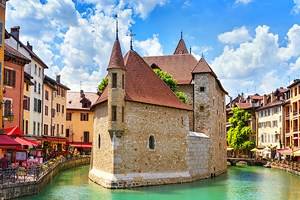
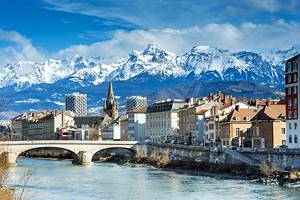
Exploring the French Alps: Also within a few hours' drive are many wonderful places in the French Alps, including the scenic lakeside town of Annecy, with its fairy-tale ambience, and the historic capital city of Grenoble, which is packed with cultural attractions. Farther north into the French Alps (a four-hour drive) is the iconic Mont Blanc, the highest mountain peak in Europe, and in its shadow, the traditional alpine village of Chamonix.