Tourist Attractions in Aix-en-Provence
Author Lisa Alexander spent two years living in France and has traveled the country extensively.
A slow-paced lifestyle and sultry Provençal charm make Aix-en-Provence an appealing tourist destination. Bathed in the sunshine of its southern climate, Aix-en-Provence reveals its beauty in tree-lined streets and stately squares.
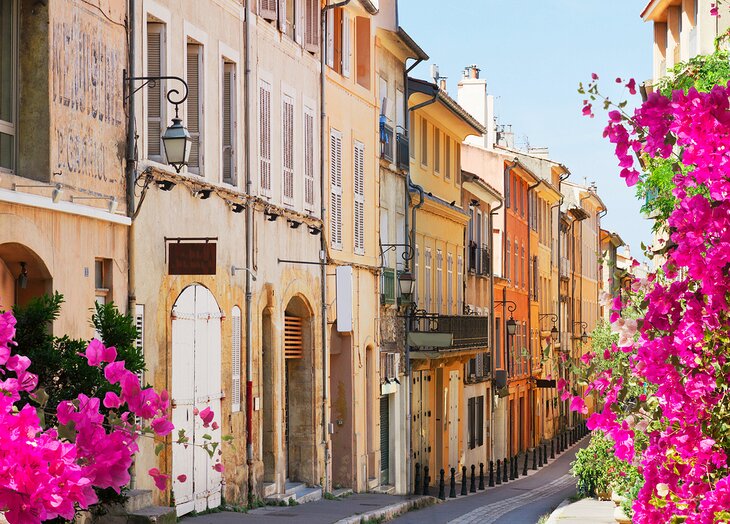
During summertime, some of the main attractions are leafy parks or shaded sidewalk cafés, and balmy evenings that allow you to experience the art de vivre with leisurely meals on restaurant terraces.
Known as the "City of Counts" because the Counts of Provence once lived here, Aix-en-Provence has several impressive old aristocratic palaces. There are also hundreds of fountains: Aix-en-Provence is called the "City of a Thousand Fountains."
The city boasts two interesting historic areas: Vieil Aix and the Mazarin quarter divided by the Cours Mirabeau, a beautiful tree-lined avenue. Other cultural attractions include the world-class Granet Museum, Cézanne's art studio, and a trail of sites that Cézanne frequented. The museums of Aix-en-Provence are among the best places to visit in Provence for a look at the region's artistic heritage.
For more sightseeing ideas, see our list of the top attractions and things to do in Aix-en-Provence.
Vieil Aix (Old Town)
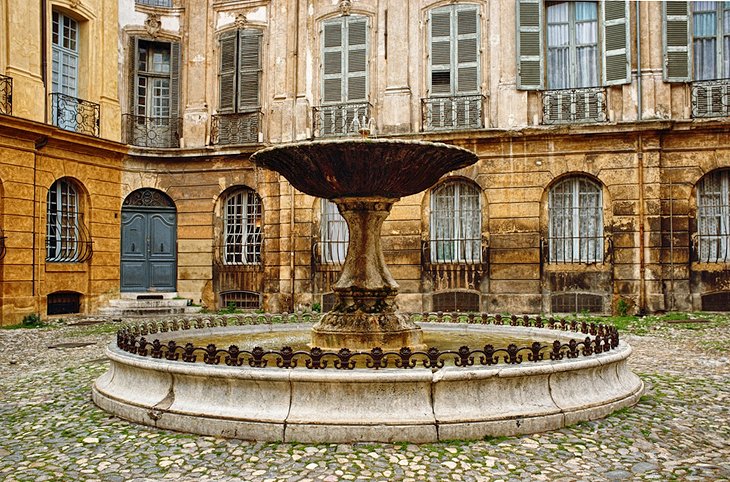
One of the best things to do while visiting Aix-en-Provence is wandering the charming streets and squares of Vieil Aix. The public squares of Aix-en-Provence feature elegant architecture and decorative fountains. Many squares are shaded by tall leafy trees, which makes these outdoor spaces inviting on warm days.
At the center of the Old Town is the Place de l'Hôtel de Ville. You can begin a tour at this square to see the 17th-century town hall building, with its beautiful Italian-style façade and ornately carved wooden doors, and the 16th-century Tour de l'Horloge, the old city belfry with an astronomical clock from 1661.
The Place de l'Hôtel de Ville centers around the 17th-century Hôtel de Ville (Town Hall), where you'll find outdoor café tables spread out beneath shady trees on the square's stone-paved terrace.
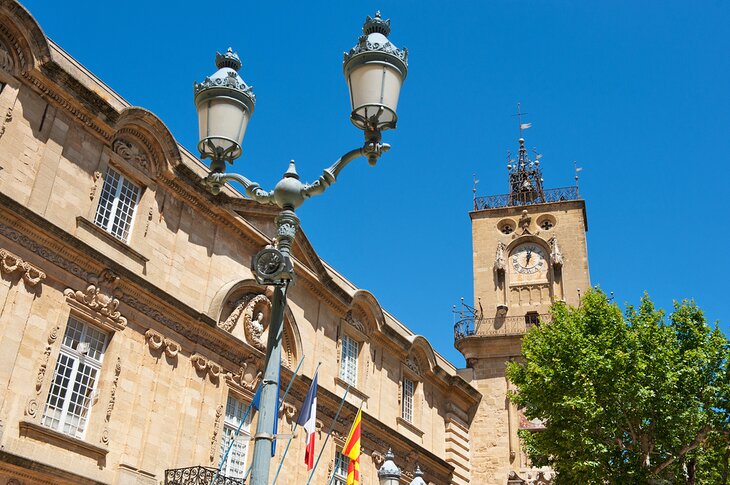
If you are visiting on the right day of the week, the famous flower market, Le Marché aux Fleurs, is a popular place to visit. It takes over the Place de l'Hôtel de Ville every Tuesday, Thursday, and Saturday morning (8:30am until 1pm) year-round. With its magnificent array of colorful blossoms, the flower market has provided inspiration for many artists.
Continue walking along the Old Town's peaceful streets and quaint cobblestone lanes to the Place d'Albertas. This 18th-century square is surrounded by elegant Baroque and Rococo buildings. The square features a simple fountain that dates from 1862.
On the south side of the Place d'Albertas square stands the Halle aux Grains (a former grain market that now houses a library) with a magnificent gable that was built in 1759-61 and embellished with sculptures by Jean Pancrace Chastel.
Cours Mirabeau
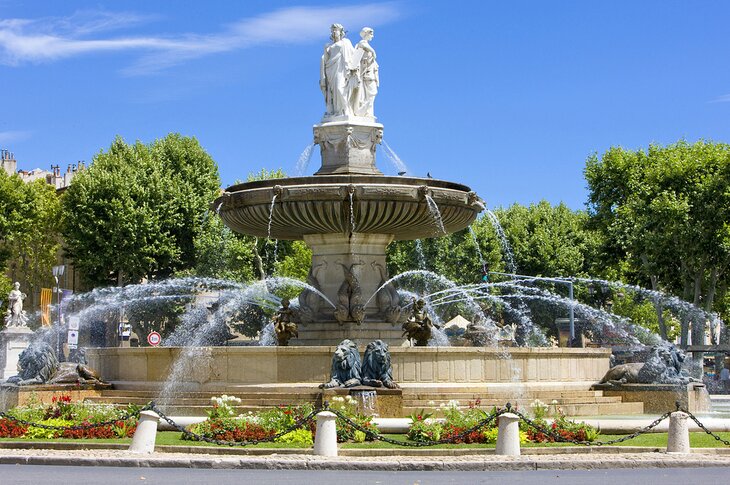
Perhaps the liveliest spot in Aix-en-Provence, the Cours Mirabeau is a graceful avenue shaded by giant plane trees and lined with cafés, restaurants, and boutiques.
This pleasant promenade is the perfect place for a leisurely stroll, an alfresco lunch, or a coffee stop at an outdoor terrace. Many locals meet here after work to bask in the late-afternoon sunshine and relax in the early evening.
The Cours Mirabeau links the Old Town with the Mazarin district. It's worth taking time to admire the 17th-century and 18th-century mansions, such as the Hôtel de Forbin (number 20), built in 1656, and the Hôtel de Maurel de Pontèves (number 38), built from 1647 to 1650.
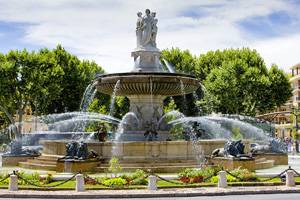
In keeping with Aix-en-Provence's fondness for fountains, several embellish the Cours Mirabeau. The monumental fountain at the west end, the Fontaine de la Rotonde, features a statue of the Three Graces, bronze lions, and multiple tiers of splashy waterworks. At the east end stands the 19th-century Fontaine du Roi René, commemorating the beloved king who reigned over Provence in the 15th century.
Quartier Mazarin
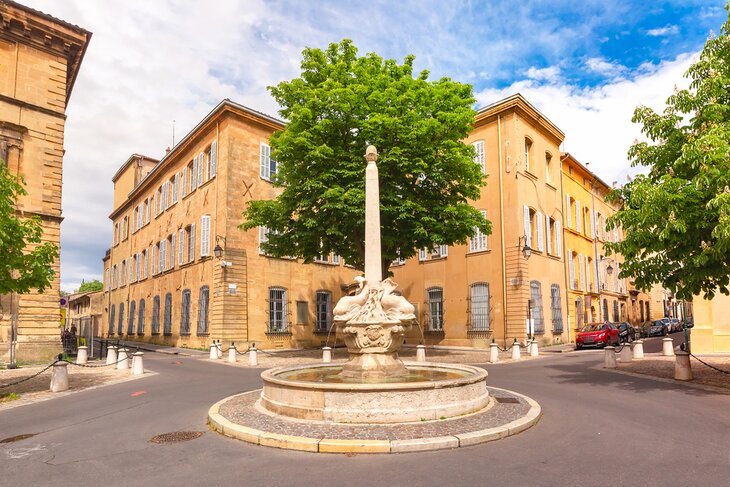
In Aix-en-Provence's historic center, the Quartier Mazarin neighborhood was originally developed beginning in 1646 by Michel Mazarin, the archbishop of Aix and brother of the famous cardinal and politician.
The perimeter of the quarter can be traced to the Old Town walls, along the Boulevard Carnot and Boulevard du Roi René, following rectangular lines characteristic of 17th-century town planning.
At the center of the Mazarin district is the Place des Quatre Dauphins with the Fountain des Quatre Dauphins, created in 1667. This whimsical fountain features sculptures of four dolphins spouting water. The square has several private mansions, including the Hôtel de Boisgelin with a fine coach yard decorated with monumental friezes.
Cathédrale Saint-Sauveur
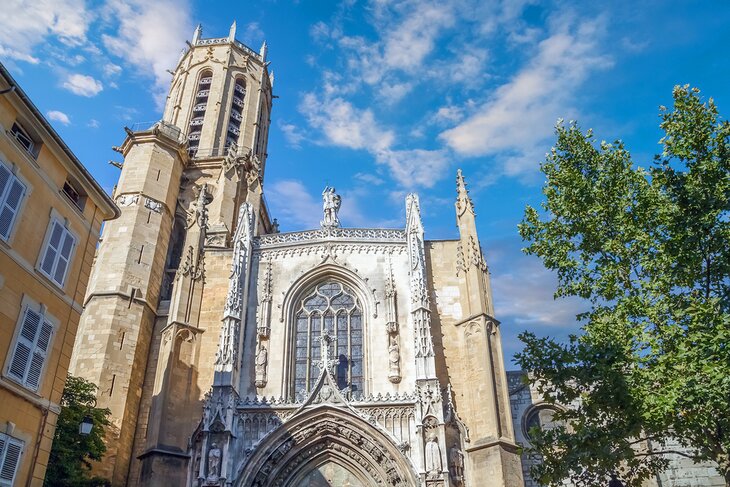
The Saint-Savior Cathedral is a unique monument because it was built over a long span of time, from the 5th to the 17th century. The blend of architectural styles is evident in the façade, which features Roman, Romanesque, and Gothic elements.
Upon entering the Romanesque doorway, visitors are awed by the serene beauty of the Baptistery Rotunda from the early Christian (Merovingian) era. The cathedral has three distinct naves (Romanesque, Gothic, and Baroque) reflecting the continuity of building construction through the various centuries.
On the right of the main nave is a famous 15th-century Burning Bush triptych painted by Nicolas Froment, which is only on display during scheduled dates. Further exploration through the left wing leads to a portrayal of Good King René created from 1434 to 1480. In the nave and south aisle are exceptional Flemish tapestries, and behind the High Altar is the Chapelle de Saint-Mitre, dedicated to the patron of the town.
Be sure to see the cathedral's Romanesque cloister. This exquisite space offers a sense of tranquility to inspire spiritual reflection.
Address: 34 Place des Martyrs-de-la-Résistance, Aix-en-Provence
Musée Granet
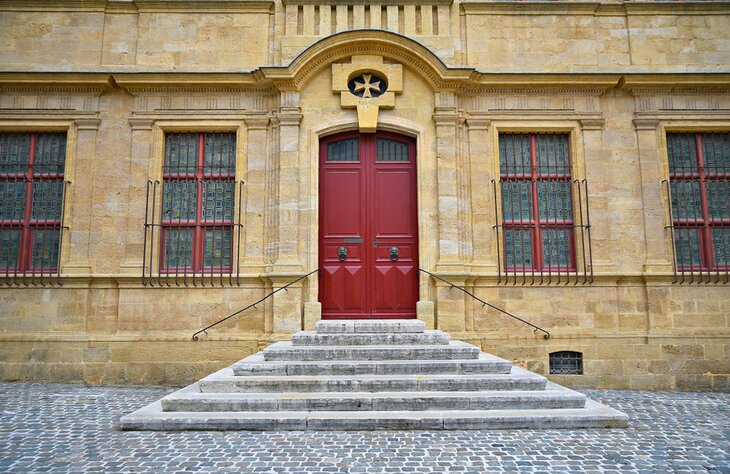
Housed in the former Prieuré de Malte (Priory of Malta) just off Rue d'Italie near the Cours Mirabeau, the Granet Museum is considered among the finest art museums of its kind in France. The museum boasts an extensive collection of paintings from the 14th to the 20th century, including pieces by the great masters Géricault, Ingres, and Rubens.
The museum has an exceptional assortment of Impressionist art, especially the paintings by Cézanne, as well as works by Degas, Monet, and Van Gogh. The Post-Impressionist and modern art movements are also represented with pieces by Bonnard, Braque, Dubuffet, and Picasso.
The Granet Museum hosts exhibitions and cultural events such as music concerts and late-night openings throughout the year.
Address: Place Saint-Jean de Malte, Aix-en-Provence
Musée des Tapisseries
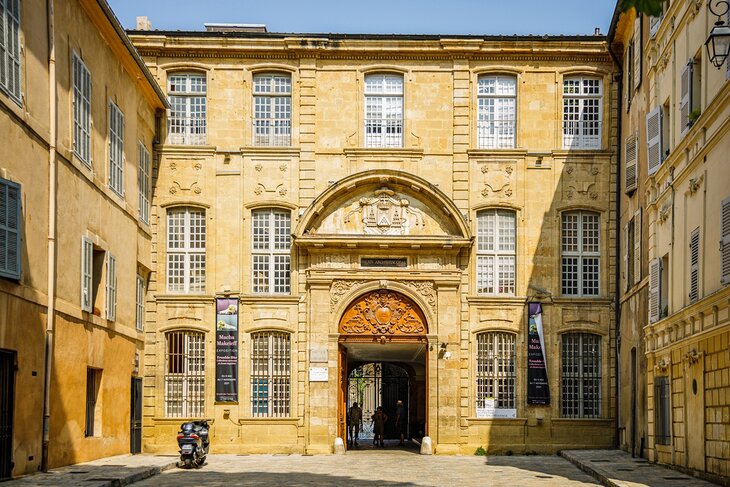
This exceptional museum displays a collection of tapestries from the 17th and 18th centuries, as well as contemporary textile art. Highlights of the museum's collection include a series of nine tapestries from the Manufacture Royale de Beauvais (Royal Manufactory of Beauvais) featuring scenes from Don Quixote de la Mancha by Cervantes.
The museum occupies the Palais de l'Ancien Archevêché (former Archbishop's Palace) near the cathedral.
During the summer, the courtyard of the palace is used as an outdoor theater for the internationally renowned Festival d'Art Lyrique d'Aix-en-Provence (Opera Festival).
Address: 28 Place des Martyrs-de-la-Résistance, Aix-en-Provence
Atelier de Cézanne
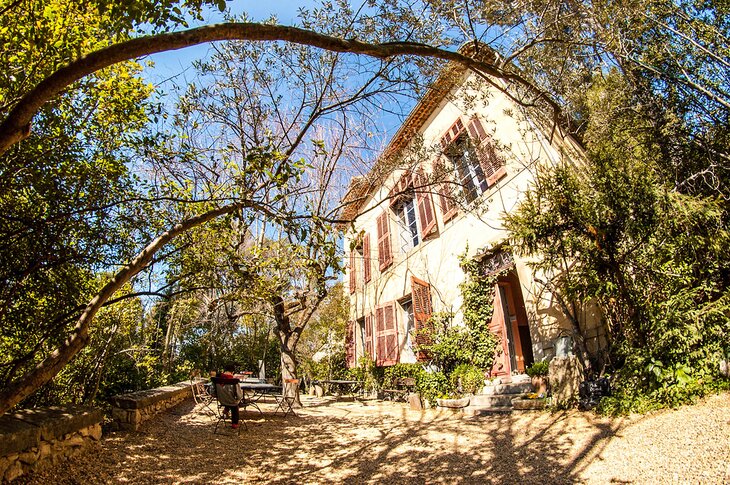
Admirers of Paul Cézanne enjoy visiting this atelier to see where the artist's creativity took shape.
Cézanne worked at this studio with great intensity throughout the year. On sunny days, he painted en plein air (outdoors). On rainy days, Cézanne would stay inside his atelier and paint ordinary objects for still life paintings: bottles, pottery, vases, flowers, and fruit.
The Atelier de Cézanne is one of the best places to visit in Aix-en-Provence to glimpse the setting that inspired the "father of modern painting."
For those interested in learning more about Cézanne and his artwork, audio guides (in several languages) and guided tours (in English or French) are available.
The site also has a garden that is open to the public free of charge. Tickets are required for admission to the Atelier de Cézanne, with additional fees for the audio guides and guided tours.
Address: 9 Avenue Paul Cézanne, Aix-en-Provence
Fondation Vasarely
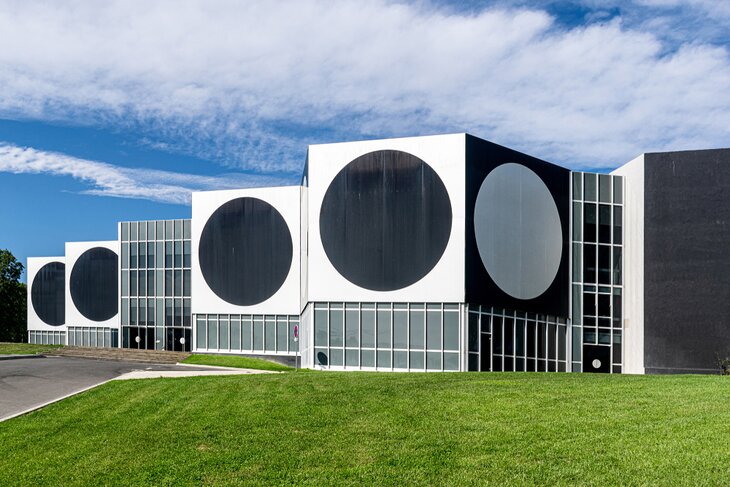
Fondation Vasarely was created in 1976, and the building itself is a stunning work of modern optical art, befitting the pieces displayed inside. In this unconventional building, visitors can see 44 huge wall-paintings, "integrations murales," and hundreds of studies by the Hungarian-French artist Victor Vasarely, who was part of the Abstract Constructivist school of painting.
The foundation also hosts temporary exhibitions, conferences, and cultural events (such as dance performances and music performances) throughout the year.
The Vasarely Foundation is located outside of the center of Aix-en-Provence on the Avenue Marcel Pagnol in the Jas de Bouffan district.
Address: 1 Avenue Marcel Pagnol, Aix-en-Provence
Pavillon de Vendôme
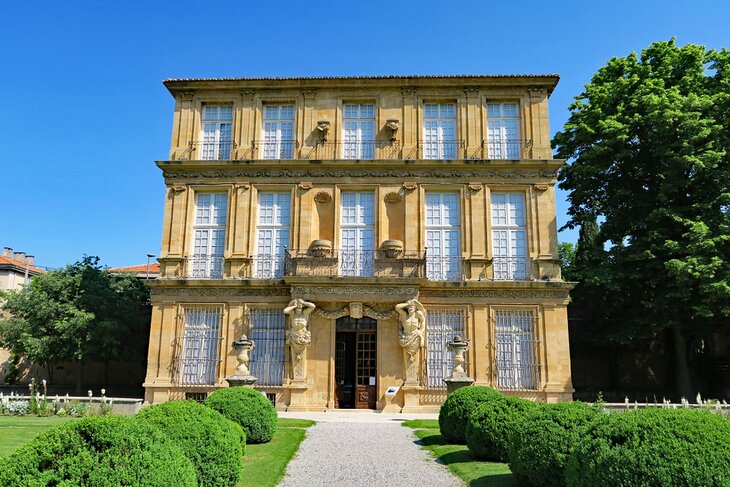
Nestled in a verdant setting not far from the city's historic center, this elegant 18th-century residence was built for Louis de Mercoeur, the Duke of Vendôme.
The duke's splendid mansion is a lovely aristocratic country house of the Grand Siècle (the 17th century). A place of peace and beauty, the Pavillon de Vendôme reflects the grandeur of a bygone era.
Open to the public as a museum, the Pavillon de Vendôme displays exhibitions of contemporary art. The sumptuous mansion also contains everyday objects, paintings, and furniture from the late 17th and early 18th centuries, which allow visitors to imagine the lives of the people who once lived here.
The Pavillon de Vendôme and the delightful formal French garden that surrounds the mansion are listed as Historic Monuments.
Address: 13 Rue de la Molle, Aix-en-Provence
Terrain des Peintres (Painters' Park)
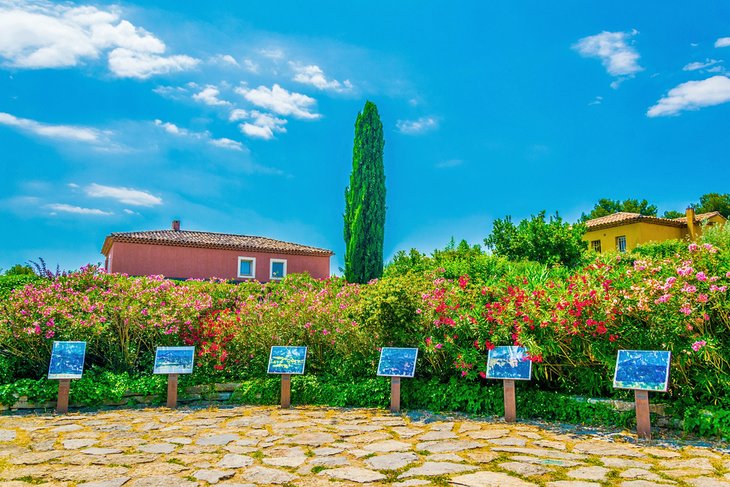
Outside of the historic city center, about a ten-minute walk from the Atelier Cézanne, this beautiful hillside site was popular among Impressionist painters. Cézanne would set up his easel here on the Chemin de la Marguerite, where he would paint the Sainte-Victoire Mountain and surrounding landscape.
Within this public park, the Chemin de la Marguerite is a scenic walking path through the unspoiled countryside that Cézanne loved (now called the "Terrain des Peintres"). The Terrain des Peintres exemplifies the Provençal landscape with its rows of cypress trees, an exceptional view of the Montagne Sainte-Victoire, and typical vegetation of the sun-drenched Mediterranean region.
The footpath leads to an esplanade where an open-air gallery displays reproductions of paintings by Cézanne. The paintings depicting the iconic Montagne Sainte-Victoire are the result of many hours that Cézanne spent working at his easel here.
In many of Cézanne's paintings of this site, it is easy to recognize the pathways, shrubs, and red-roofed houses that are still visible today. The Terrain des Peintres is a wonderful place to take a leisurely walk and to soak up the inspiration of Impressionist artists.
Address: Avenue Paul Cézanne, Aix-en-Provence
Cézanne Trail: Self-Guided Walking Tour

For art lovers, one of the most rewarding things to do while visiting Aix-en-Provence is to explore the city in the footsteps of Cézanne.
A pedestrian route known as the Cézanne Trail begins at the bronze statue of Paul Cézanne at the Cours Mirabeau, continues with landmarks such as the school that the artist attended as a child, the building where he was born, the houses of his friends, the cafés where he met other artists, and the church where he married his wife Hortense Fiquet.
The city of Aix-en-Provence has indicated the most important Cézanne locations with a trail of studs (nails shaped like the initial "C") on the pavement, allowing visitors to take a self-guided walking tour to see the places once frequented by Cézanne and appreciate how he experienced the world.
At the Atelier de Cézanne or the Aix-en-Provence Tourist Office, visitors can pick up brochures that indicate the "In the Steps of Cézanne" trail (for a self-guided walking tour). It is also possible to take a guided tour of the Cézanne Trail, offered by the Tourist Office.
Day Trips from Aix-en-Provence
Montagne Sainte-Victoire
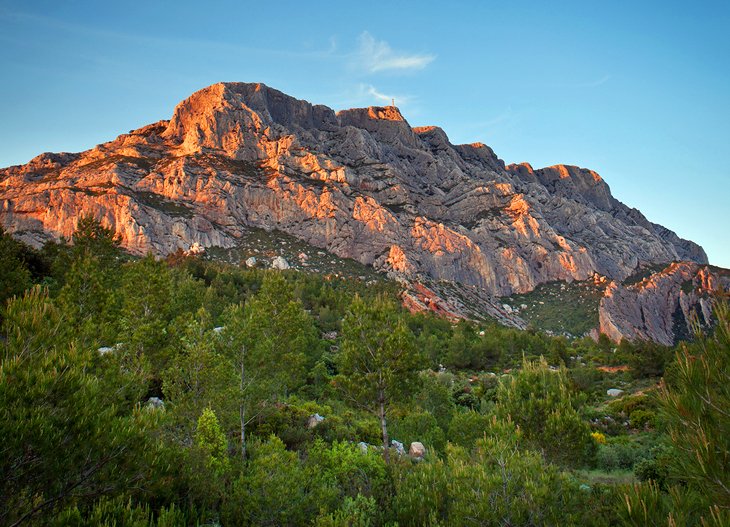
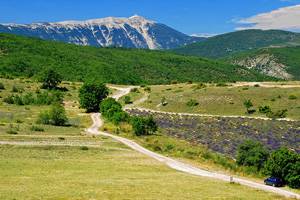
A symbol of Provence, the Sainte-Victoire Mountain is known as Cézanne's muse. Located about 25 kilometers from Aix-en-Provence, the mountain reaches an altitude of 1,011 meters and dominates the surrounding scenery.
The area has pleasant paths that are designed for nature walks and gentle rambles. Along the way are several sites of religious heritage: the 17th-century Sainte-Victoire Prior; the Saint-Ser Hermitage, a tiny chapel in a cave (named after a 5th-century hermit who sought refuge in this place); and the Cross of Provence, perched on the western tip of the massif.
From the Pic des Mouches, the highest point, the perspective stretches out over the rolling plains of the Aix region. On a clear day, the vista affords glimpses of the Mediterranean Sea and the French Alps.
Ventabren
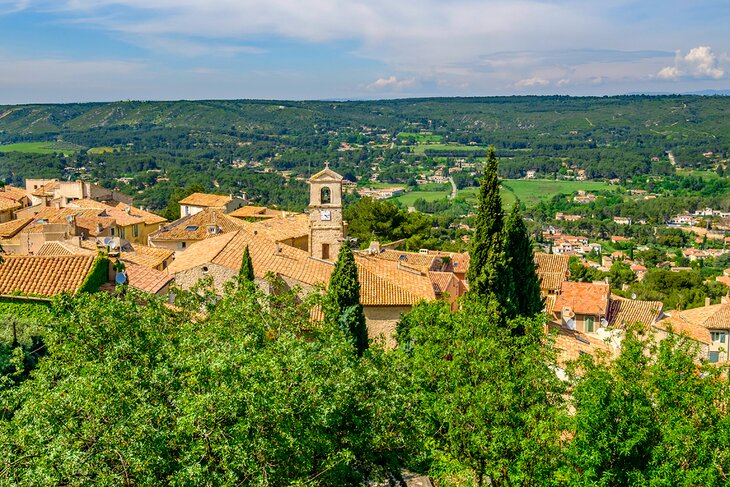
Outside of Aix-en-Provence about 15 kilometers, Ventabren is a picturesque hilltop village with remnants of an ancient castle. In its unique situation, high above the Valley of the Arc, this little village perfectly portrays what is meant by the term village perché: like a bird perched high up in a tree.
There is a magnificent 180-degree view from the castle ruins over the idyllic landscape to the north of the Etang de Berre and the town of Martigues, on the southern bank of the river. The village also has a noteworthy 11th- to 12th-century parish church dedicated to Saint Denis.
Roquefavour Aqueduct
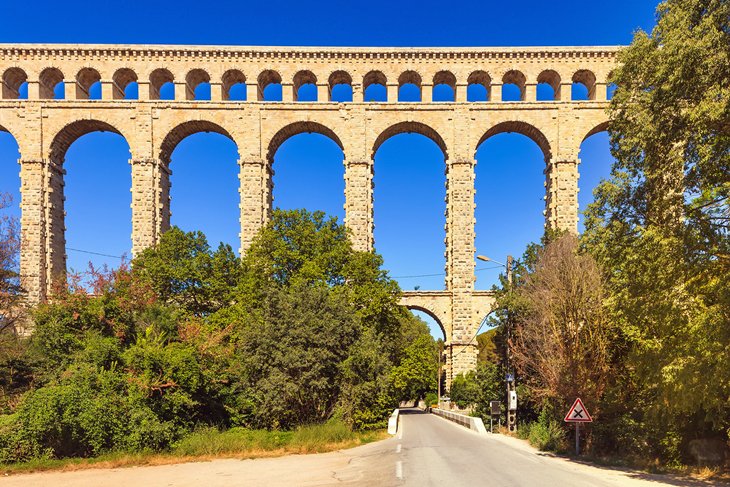
A few kilometers south of Ventabren, along the Valley of the Arc, is the Roquefavour Aqueduct. The world's largest stone aqueduct, this imposing three-story structure conveys water from the Durance River over the valley towards Marseilles. The aqueduct was built between 1841 and 1847 and is listed as a Historic Monument. Visitors are dazzled by the impressive architecture; its Classical-style construction offers a powerful visual effect.
The upper level of the aqueduct is accessible from the D64 highway coming from Ventabren, taking the first left turn towards Petit Rigoués just before reaching the D65 highway, and then a right turn at the watchman's house.
There are two hiking routes from Ventabren to the Roquefavour Aqueduct. One route takes 45 minutes, while the other takes one hour and 30 minutes. Both afford spectacular views of the Provençal landscape.
Château d'Ansouis
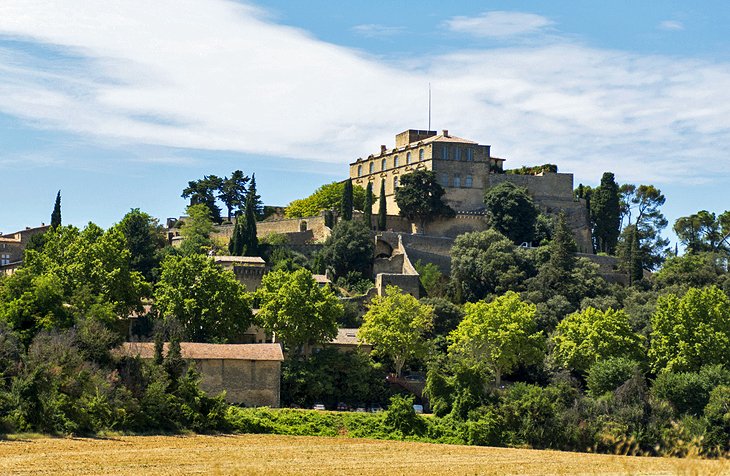
Just a 30-kilometer drive from Aix-en-Provence, the Château d'Ansouis gives visitors the sense of being transported back in time. This ancient château (dating back to the 10th century) was an important medieval military fortress, standing in its glorious location overlooking the Aygues Valley.
Rare for a castle in France, the Château d'Ansouis is fully furnished with authentic period pieces from various historic eras. The ornately embellished interior offers a realistic impression of what it was like to live here throughout the centuries.
The grounds around the château are also spectacular. Fitted along terraces below the château are a series of lush gardens that feature superb panoramas of the Alps in the distance. Immaculately landscaped and maintained, the gardens are designed in perfect harmony with the scenery.
The Château d'Ansouis is a private residence but is open to the public Thursday through Sunday in June, July, and August and on weekends during the month of September through mid-October. Tourists may see the château only on guided visits (available once or twice a day). The guided tours are led by the château owners.
The hilltop village of Ansouis is also worth visiting. This quiet country town is listed as one of the Plus Beaux Villages de France. Dating back to the medieval era, Ansouis enchants visitors with its old stone buildings, cobblestone streets, narrow alleyways, and 13th-century church.
Address: Rue du Cartel, 84240 Ansouis
Sisteron
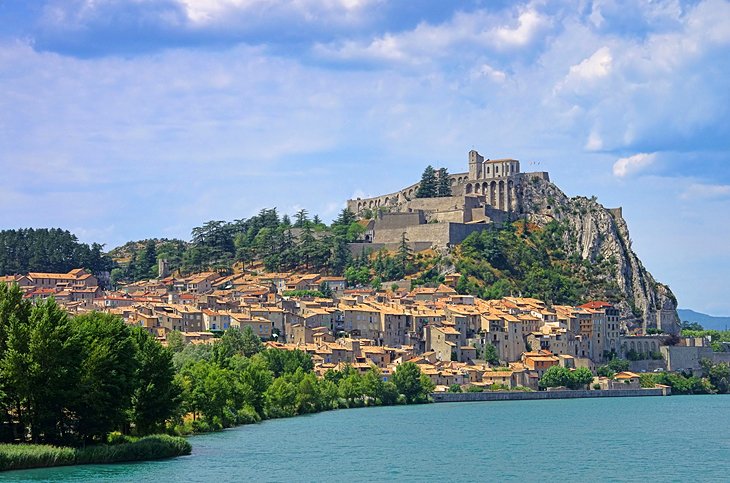
Built up along the banks of the Durance River in a lovely natural setting, this medieval town (100 kilometers north of Aix-en-Provence) has a rich cultural heritage. The history is evident in the atmospheric ancient streets, ornate 16th- and 17th-century houses, and a fortified medieval cathedral built between 1160 and 1220.
Sisteron also has an extraordinary citadel, perched high on a rocky promontory and surrounded by ramparts. Classified as a Historic Monument, the citadel is open for visits daily (from the end of March through mid-November). Visiting the citadel requires climbing some steps.
In July and August, the citadel's open-air theater becomes a venue for "Les Nuits de la Citadelle." Held in July and August, this annual festival includes a program of musical concerts, theater, and dance performances.
During summertime, the area around Sisteron is popular for camping and outdoor activities. Things to do include swimming, canoeing, kayaking, and river rafting. In season, the tributaries and lakes around Sisteron provide opportunities to catch salmon as well as other fish.
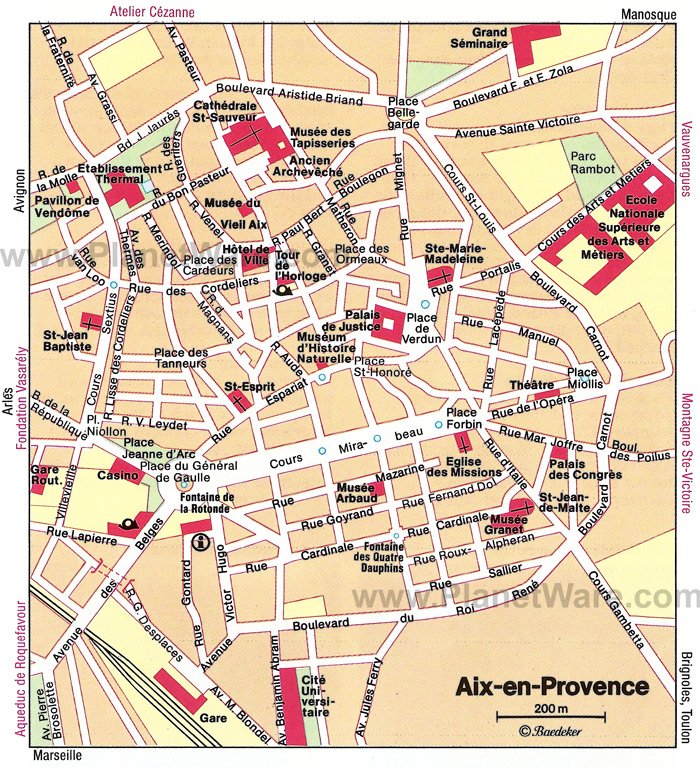
Map of Tourist Attractions in Aix-en-Provence
More Related Articles on PlanetWare.com
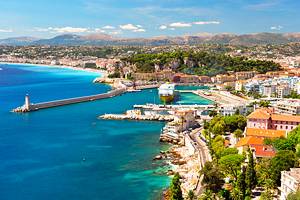
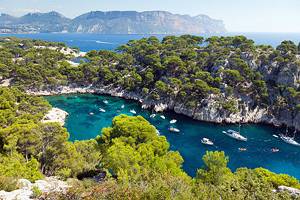
Exploring the South of France: Aix-en-Provence is at the heart of Provence, a region brimming with fascinating historic towns and quaint medieval villages. It's also close to many other top tourist destinations in southern France, including the glamorous resorts of the French Riviera.
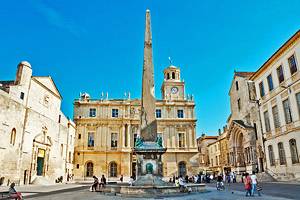
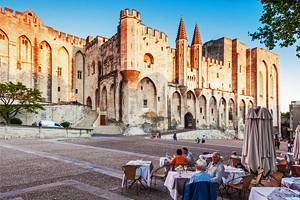
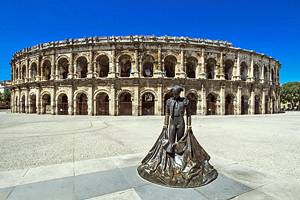
Highlights of Provence: Most first-time visitors to the area travel to Avignon to see the UNESCO-listed Palais de Papes and to Arles, a lovely town with a captivating Provençal ambience, landmarks painted by Vincent van Gogh, and classical-era monuments. Nîmes is also renowned for its ancient Roman buildings.
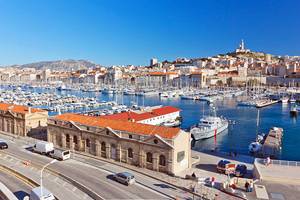
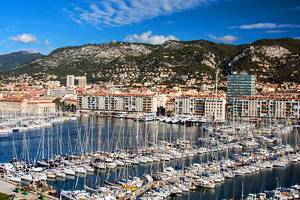
Mediterranean Port Towns: For a taste of Provençal urban life, Marseilles (only 30 kilometers south of Aix-en-Provence) offers the buzzing atmosphere and cosmopolitan culture of a Mediterranean port town. Another typical port town, Toulon has an attractive harbor and waterfront along with a rich Provençal heritage.
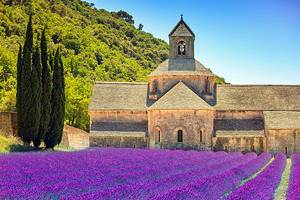
Pastoral Charms of the Haut-Vaucluse Region: To journey away from the cities into the charming Provençal countryside, the Haut-Vaucluse is an ideal destination. This sleepy pastoral region delights visitors with its sensational sun-drenched landscape, undiscovered rural towns, and the picture-perfect hilltop villages of the Luberon, a natural regional park in the Haut-Vaucluse.