Tourist Attractions in Croatia
The world has few places that are quite like Croatia. For thousands of years, Croatia has sat at the crossroads of East and West. It has a history of ever-changing borders and rulers, and much of its history is shrouded in pain.
But modern-day Croatia is nothing short of a celebration of life, energy, and natural beauty, with wonderfully warm and welcoming people and thousands upon thousands of places to visit. I first visited Croatia in 2019 and became enamored with the country. So in 2023, I went back to really immerse myself and learn all that I could about this fantastic country along the coast of the Adriatic Sea.
Historic cities and unspoiled nature are some of Croatia's top attractions. The vibrant capital city of Zagreb is home to some of the country's best museums, galleries, restaurants, and shopping.
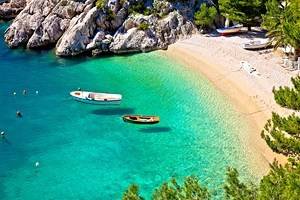
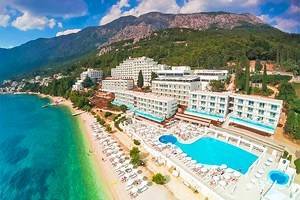
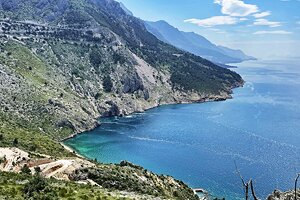
Along the coast, centuries-old harbor towns are packed with Venetian-era stone buildings, while countless pebble beaches offer things to do such as scuba diving, water skiing, and windsurfing. My road trip from Istria to Dubrovnik was a highlight of the trip, including the stunning scenery and beaches along the Makarska Riviera.
On the Adriatic, Croatia's blissful islands are a haven for yachters and those wanting to simply relax and enjoy the Mediterranean sunshine. One tip for your trip: Since 2023, Croatia has been using the Euro; the Kuna has been discontinued.
To get the most out of your travel experience in this beautiful country, be sure to refer to this list of tourist attractions in Croatia.
Dubrovnik Old Town
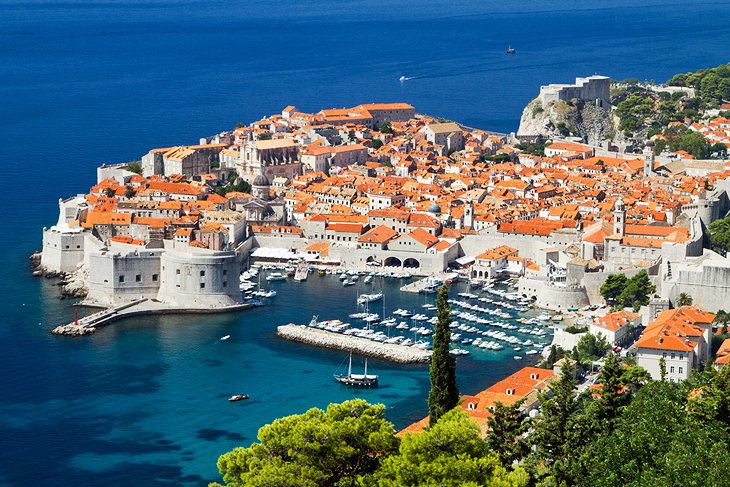
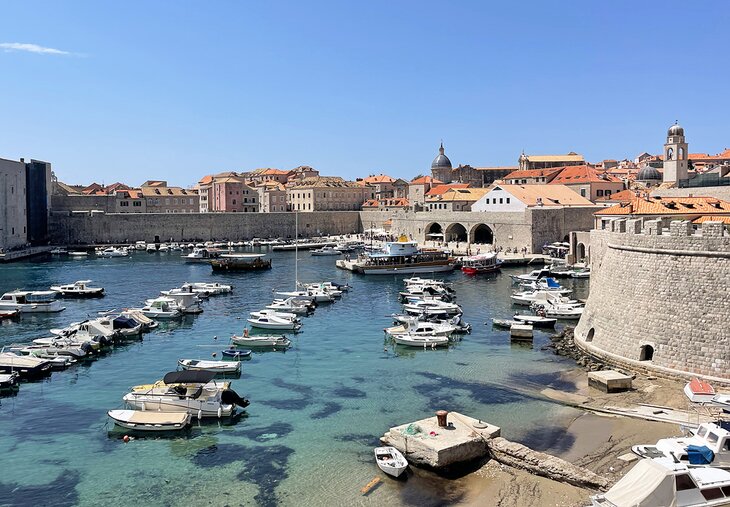
My first foray into Croatia was a visit to Dubrovnik. And it was because of Dubrovnik that I became forever hooked on Croatia. Dubrovnik, Croatia's most glamorous tourist destination and a UNESCO World Heritage site, centers on the magnificent Old Town area, contained within sturdy medieval defensive walls.
Any first-time sightseeing tour of the city should begin with a walk around the Old Town Walls. These sturdy old ramparts (the complete circuit measures two kilometers) incorporate fortresses, towers, and cannons along the way. Keep in mind that tickets to walk the walls are expensive, but if you buy a Dubrovnik Pass for slightly more, this one ticket, not only are the walls included, but many of the city's other top attractions, as well.
In summer, plan to walk the walls early in the morning or late in the afternoon. Midday heat and cruise ship crowds can make the narrow paths crowded and uncomfortable.
Of course, the walls are just the tip of the iceberg when it comes to things to see and do in Dubrovnik. The Old Town is a living, breathing museum and feels like a movie set coming to life. That said, it was the actual set of HBO's Game of Thrones and Star Wars: The Last Jedi, which definitely contributed to the surge in tourists.
You'll likely enter the Old Town through the famous Pile Gate, built in 1537 and one of the city's most impressive structures. From high up on the walls, you can enjoy amazing views over the Old Town rooftops and out across the glistening Adriatic Sea.
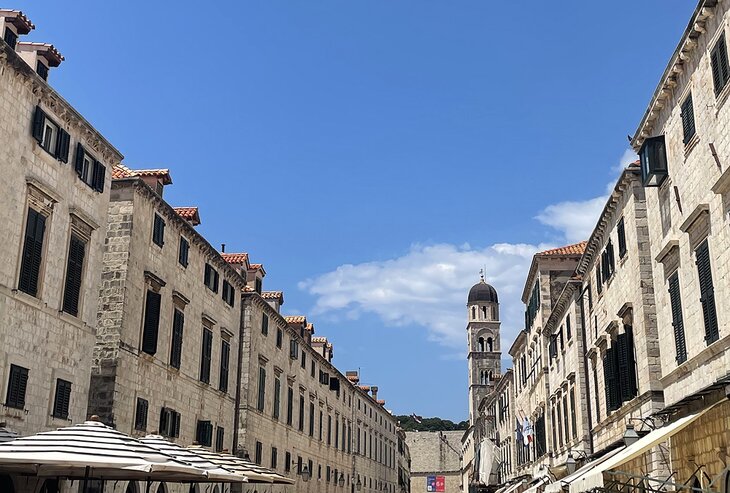
Other fun things to do in Dubrovnik include exploring the Stradun, a wide 300-meter-long pedestrian thoroughfare lined with boutiques, cafés, and restaurants that are famous for their white limestone cobblestones.
Don't miss the attractive cathedral; the spectacular Square of the Loggia, a historic gathering place famous for its lovely old buildings and monuments; and Fort Lovrijenac, one of the country's most important fortresses.
In case I'm gilding the lily here, let me be upfront and say that Dubrovnik is crowded. Crowded may even be an understatement, especially if you're visiting in the summer months when a cruise ship is in port. It will be a slog to get through the narrow streets and forget about finding a place to park. Still, Dubrovnik shimmers with fairy tale magic and is mesmerizing even among the throngs of people.
Plitvice Lakes National Park
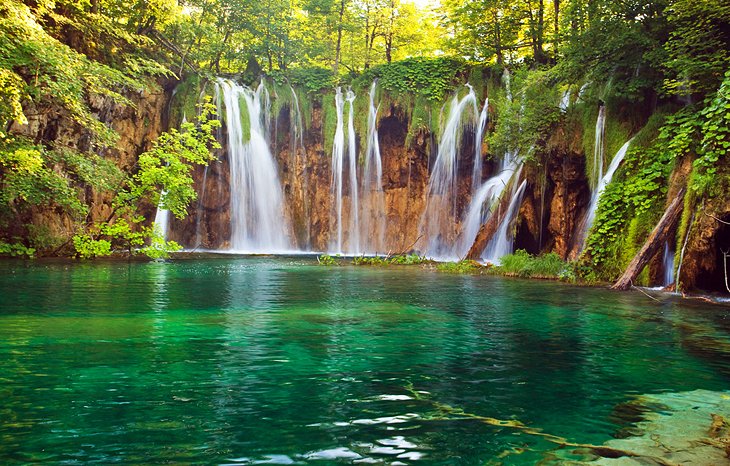
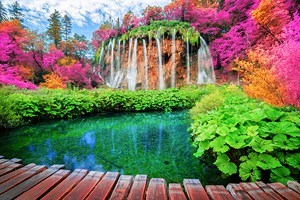
Croatia's most visited inland attraction, Plitvice Lakes National Park (Nacionalni park Plitvicka jezera) encompasses steep forested hillsides surrounding 16 emerald-blue lakes connected by a succession of thundering waterfalls. A network of footpaths and wooden bridges crisscrosses the park (the country's first national park), and the entrance ticket includes boat rides across the lakes.
Thanks to the lush, pristine nature, the park is a haven for wild animals, including wolves and bears (though they are timid, so you are unlikely to see them) as well as owls, eagles, and falcons. There are several hotels on the edge of the park, should you wish to stay the night. You can visit Plitvice on organized sightseeing tours by bus from Zagreb and Zadar.
If you're planning to visit without a guide or as part of a tour, you'll have the freedom to go wherever and whenever you want. Consider the hiking trails that ascend above the lakes. These trails are less trafficked and provide stunning panoramic views of the entire park, which cannot be seen from the boardwalks.
Be sure to reserve your tickets in advance, as this is a very popular tourist attraction and it receives over a million visitors a year.
Hvar Town
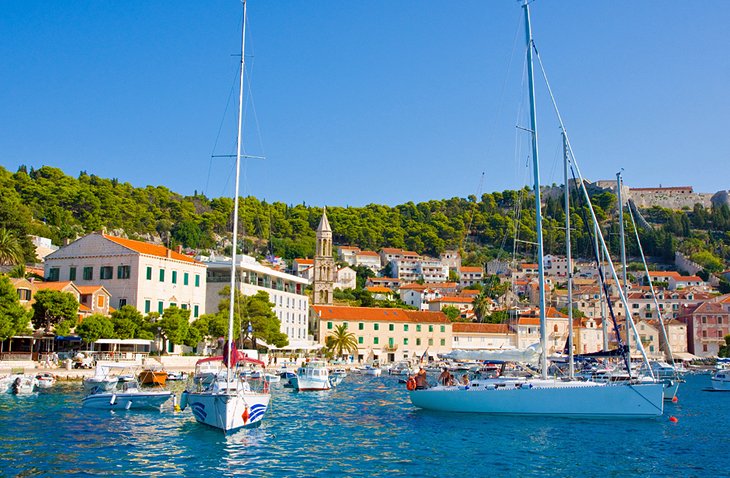
Many tourists visit Croatia to explore the blissful Dalmatian islands, of which the most fashionable is Hvar. Here, the trendy city of Hvar is home to some of the country's top hotels and best seafood restaurants.
Dating back to the years spent under Venetian rule (1420-1797), its car-free Old Town is made up of a spacious main square overlooked by a 16th-century cathedral, a pretty fishing harbor, and a hilltop fortress.
Hvar Town is popular with yachters and celebrities, as well as travelers who come here to enjoy its beaches and water sports. This clientele tends to spend lavishly, so prices for accommodation and meals can be expensive. If you are on a budget, consider staying in one of the smaller towns, generally a short bus ride away, where things are more reasonably priced.
Hvar is served by ferry from Split.
Diocletian's Palace in Split
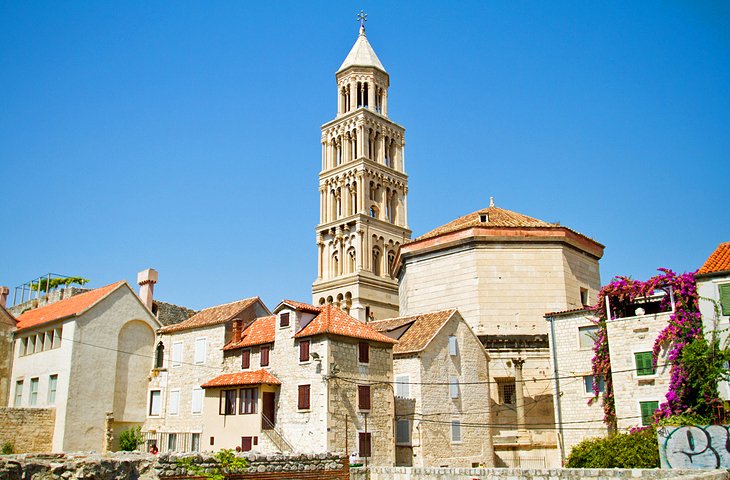
Split, Croatia's second biggest city after Zagreb, was established within the ancient Roman walls of the huge Diocletian Palace (Dioklecijanova palaca). Situated overlooking the Adriatic Sea, it was built by Roman Emperor Diocletian, who retired here in AD 305.
Square in plan – it's more fortress than palace and actually housed the Emperor's personal garrison – the palace has four monumental gates, three accessible from the land, and one that originally opened directly onto the water.
Within the walls, things to see include the magnificent Peristyle (an arcaded courtyard), where you'll also find the Cathedral of St. Domnius with its elegant bell tower. Below ground, the cellars of the palace (open to the public) were used as a filming location for Game of Thrones.
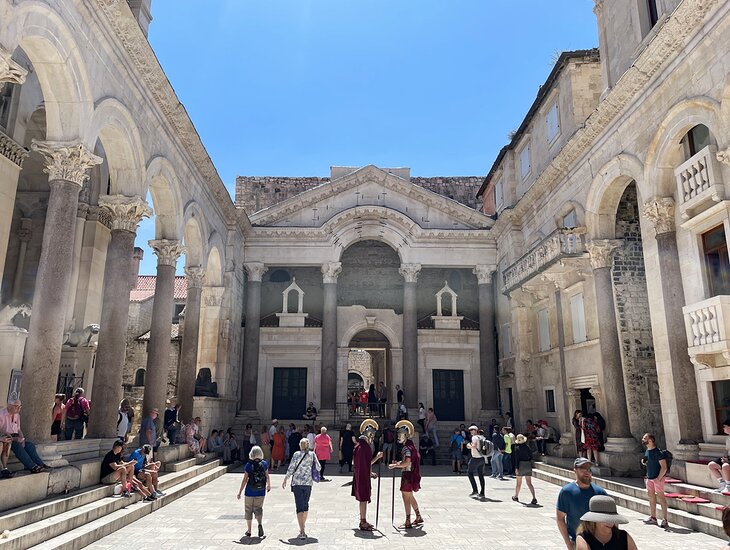
A fun thing to do at night is to visit and enjoy the illuminated ruins and listen to concerts by live klapa singers, a style of traditional Dalmatian a cappella singing. The entire Old Town is a pedestrian-only zone, which has been proclaimed a UNESCO World Heritage Site.
The best way to access the palace is to walk through the city's southern gate. It's the gate directly in front of the Church of Our Lady of Health (Crkva Gospe od Zdravlja). Once you pass through the gate, the palace will be directly on your left.
Be sure to go early in the day. This is Split's most important attraction and the number of crowds can be overwhelming. If you are in Croatia before June, you should have the place (relatively) to yourself.
Read More:
Rovinj
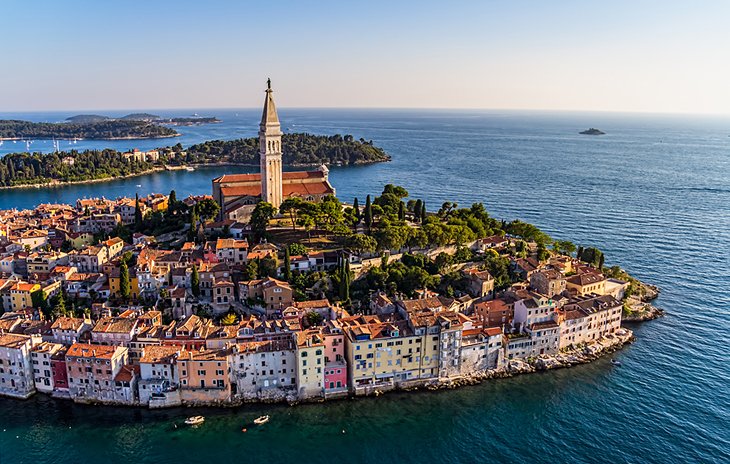
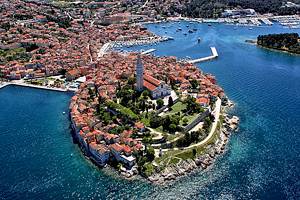
Located in northwest Croatia, on the Istrian peninsula, the Venetian-era seaside town of Rovinj is made up of pastel-colored houses ringing a pretty fishing harbor and presided over by the hilltop Church of St. Euphemia. To get your bearings and a spectacular photo, climb up the rickety wooden stairs in the bell tower for 360-degree views of the red rooftops and the Adriatic.
Besides the nearby pebble beaches, the main tourist attraction is the Batana Eco-Museum on the seafront, which tells the story of the batana, a type of wooden boat used by local fishermen. There are also plenty of reputable hotels, upmarket seafood restaurants, and art galleries to explore.
Don't miss the beaches surrounding Rovinj, either. These calm and beautiful beaches are perfect for relaxing with a good book and basking on the warm, white pebbles. Some of my favorite Rovinj beaches include Cisterna Beach, Cuvi Beach, and Skaraba Beach.
The locals speak a dialect that mixes both the Croatian and Italian languages. The nearest airport is in Pula.
Zadar's Romanesque Churches
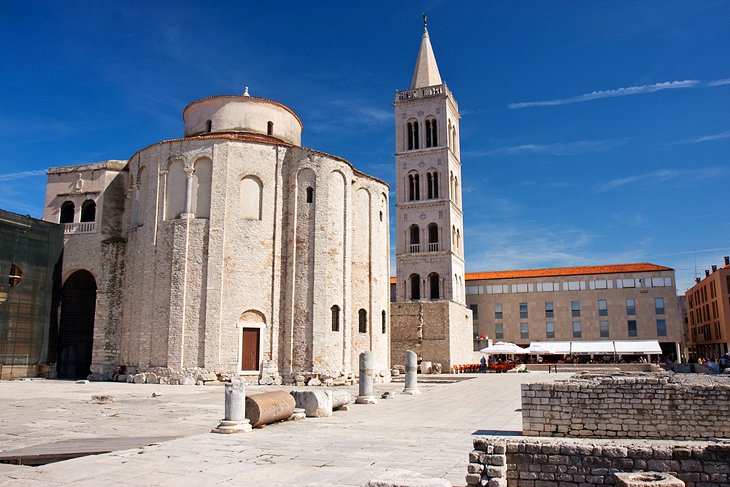
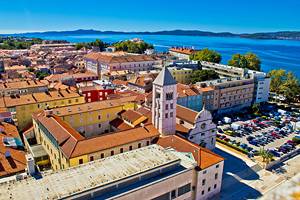
Zadar's car-free Old Town is built on a small peninsula jutting out onto Croatia's Dalmatian coast. Said to be the country's oldest continually inhabited city-it can trace its roots back as far as the Stone Age-its top tourist attractions are its many fine Romanesque churches, most of them built between the 9th and 13th centuries and filled with superbly preserved religious paintings and ornate golden treasures.
Be sure to check out the 9th-century pre-Romanesque Church of St. Donatus; the 11th-century Church of St. Mary; the Cathedral of Anastasia and the Church of St. Chrysogonus, both from the 12th century.
Other things to do include visiting the Museum of Ancient Glass, as well as two popular modern installations, the Sea Organ and the Greeting to the Sun, both on the seafront close to the tip of the peninsula.
One of the best free things to do in Zadar is to simply relax on picturesque Kolovare Beach, a stretch of pebbles and the odd patch of sand that backs onto a lovely park area. It's a locals' spot with a chill vibe, unlike the tourist-heavy areas.
You'll find several beautiful beaches around Zadar to enjoy some time by the sea.
Read More: Attractions in Zadar & Easy Day Trips
Marjan Park in Split
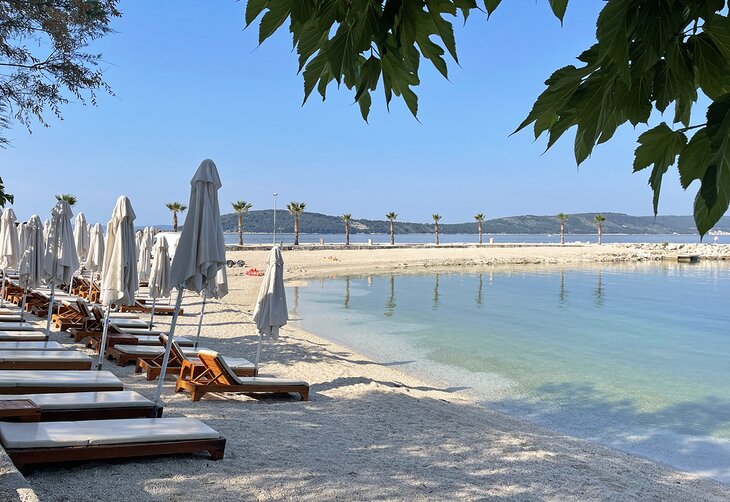
One of my favorite parts about visiting Split is getting the chance to explore Marjan Park. This green, forested peninsula is just north of Old Town and has some of the best beaches in Split. My favorite is Kasjuni Beach — perfect for a quiet morning dip or an energetic afternoon at Joe's Beach Lounge.
Marjan Park also has tranquil meandering trails that wind their way through the dense Mediterranean pine forest. From the shoreline, you'll have beautiful views of nearby islands and the sparkling blue Adriatic Sea.
The park is also home to the Mestrovic Gallery, which is considered to be one of the best museums in Croatia.
Ride the Dubrovnik Cable Car
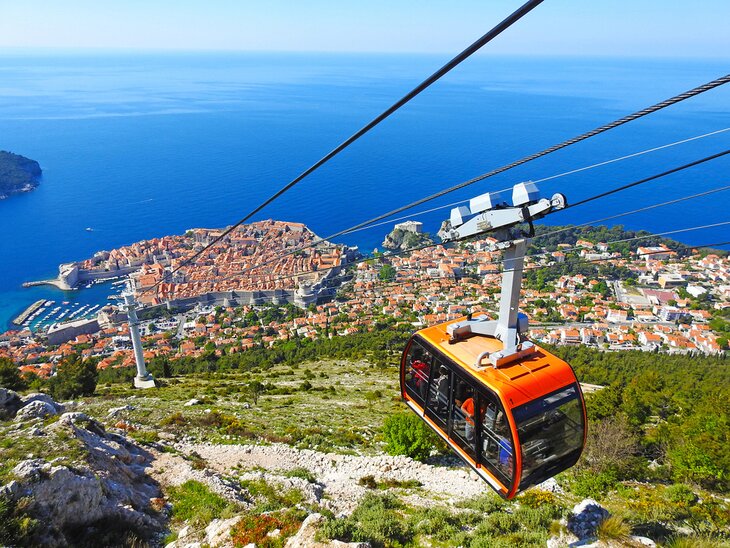
One of the best ways to see Dubrovnik is to hop aboard the Dubrovnik Cable Car. If you swoon over those aerial shots of Old Town, the cable car is a surefire way to take them yourself.
The cable car route travels up Srd Hill, and on a clear day you can see nearly 50 kilometers in the distance. The entire trip is less than 10 minutes, and when you are at the top, you can explore the top of the hill. Up here, be sure to inspect the 19th-century Imperial Fortress or dine at the restaurant that has views over Old Town.
You can choose to ride back to town or take the hike down option. For the hike down option, purchase a one-way fare (and save yourself 50 percent!) and then follow the well-marked winding path down while enjoying the views along the way. The walk takes about an hour.
Keep in mind that the line for the cable car can be quite long during high season, so buy tickets online in advance.
Address: Ulica kralja Petra Krešimira IV, 20000, Dubrovnik
Pula's Roman Arena
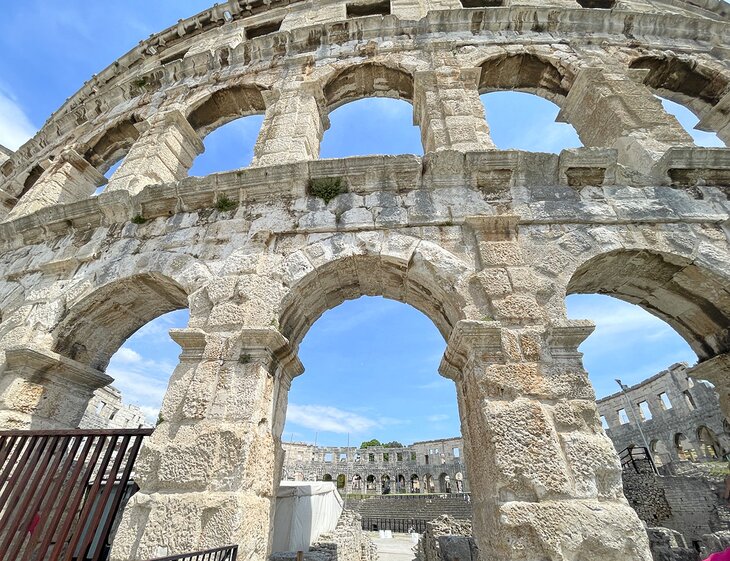
Located on the coast of the Adriatic in Croatia's popular Istria region, the historic city of Pula is well worth including on your travel itinerary. In addition to its lovely seaside setting, including a number of fine beaches, Pula is well known for its well-preserved Roman architecture and makes for an excellent day trip for those staying in other parts of the country.
Though inhabited by humans for tens of thousands of years, it was the Romans over 2,000 years ago who left their mark. Of the numerous examples of Roman buildings that remain, none are as impressive or as big as the Pula Arena (Pulska Arena). Ordered built around the 1st century by Emperor Vespasian, it's one of the largest surviving Roman amphitheaters, rivaled only by its famous cousin, the Colosseum in Rome.
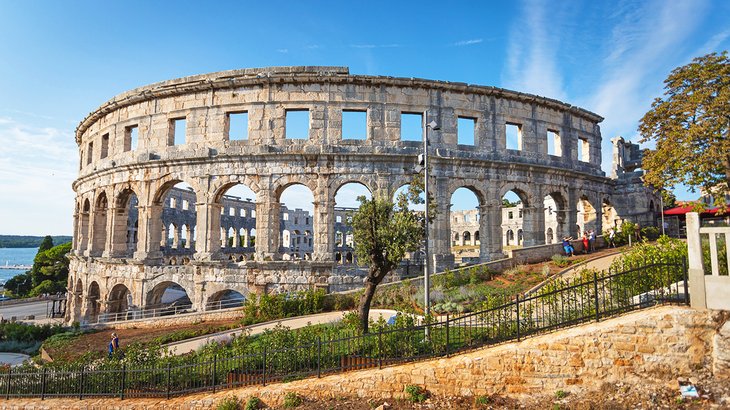
Designed to host crowds of up to 20,000 people, it was used predominantly for entertainment such as gladiator fighting and jousting. Thanks to careful reconstruction, this impressive structure to this day can still host audiences of up to 5,000 visitors during its regular summer schedule of concerts and festivals.
A number of other Pula Roman ruins are also worth seeing. Of these, the best is the Roman Forum, a well-preserved ancient square that for centuries has been at the center of town life. Here, you'll also find the Temple of Augustus (Augustov Hram), a finely preserved columned structure, which boasts a collection of Roman sculptures.
Address: Flavijevska ul., 52100, Pula, Croatia
Read More: Beaches in Pula
Explore Cavtat Old Town
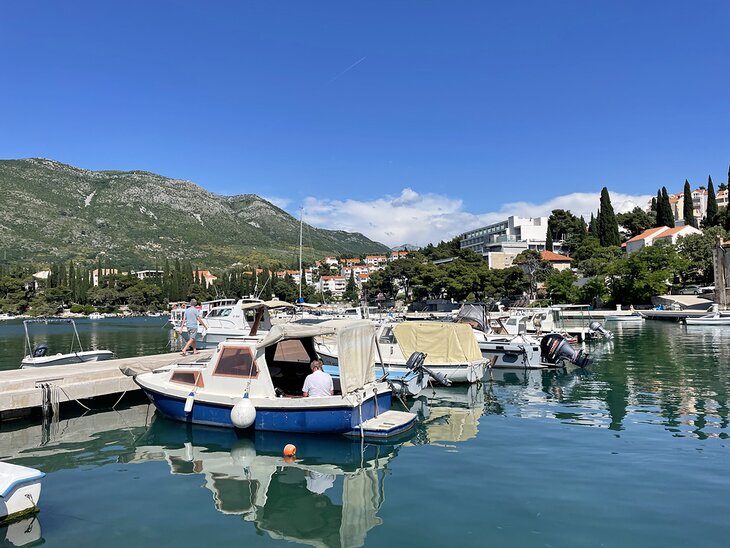
About 20 minutes south of Dubrovnik is the village of Cavtat, which I can only describe as "Dubrovnik light." The city boasts the same beautiful white stone buildings with red-topped roofs, a charming marina, and plenty of narrow alleyways to explore.
But unlike Dubrovnik, Cavtat's tourism numbers are blissfully pared down. Even during high season the city still feels calm, even tranquil, compared to the streets of Dubrovnik.
Cavtat is a wonderful village to visit for a slower pace of life. Linger at a waterfront cafe, or stroll along the marina walkways. The views from Cavtat are quite beautiful, as well.
Cavtat also happens to be the gateway to some of the nearby beach towns just outside Dubrovnik — the veritable "Dubrovnik Riviera." You'll find a string of beach towns between Cavtat and Dubrovnik, like Plat, Soline, Mlini, and Srebreno, all of which are known for their lovely, calm beaches.
Zagreb's Gornji Grad
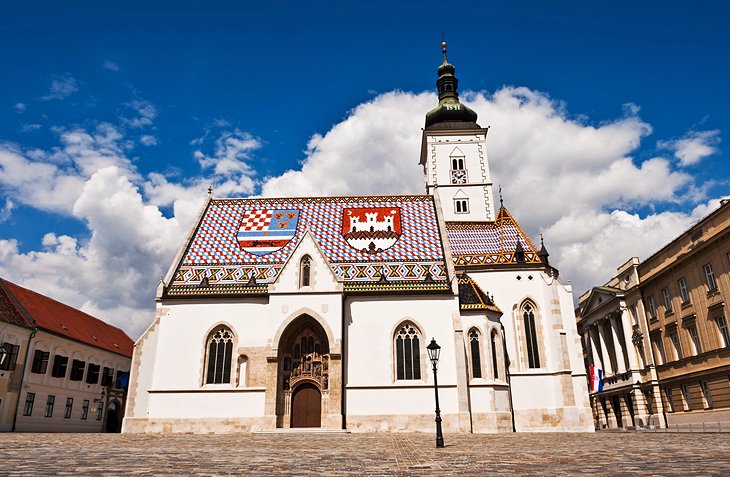
Zagreb's main sightseeing area is the medieval Gornji Grad (Upper Town) district. Here, popular tourist attractions include the cathedral with its neo-Gothic façade, twin steeples, and treasury with its large collection of religious art and artifacts; and the Croatian Parliament (Hrvatski sabor).
Also worth seeing are the Church of St. Mark with its famous colored tiled roof, and the 13th-century Tower of Lotrscak, which you can climb for fantastic views over the city and the surrounding area. Don't be surprised by a loud boom if you are here midday, the Gric cannon is fired every day at 12 noon.
Also, be sure to catch most people's favorite, the much-loved Museum of Broken Relationships.
- Read More: Attractions & Things to Do in Zagreb
Sailing around Kornati National Park
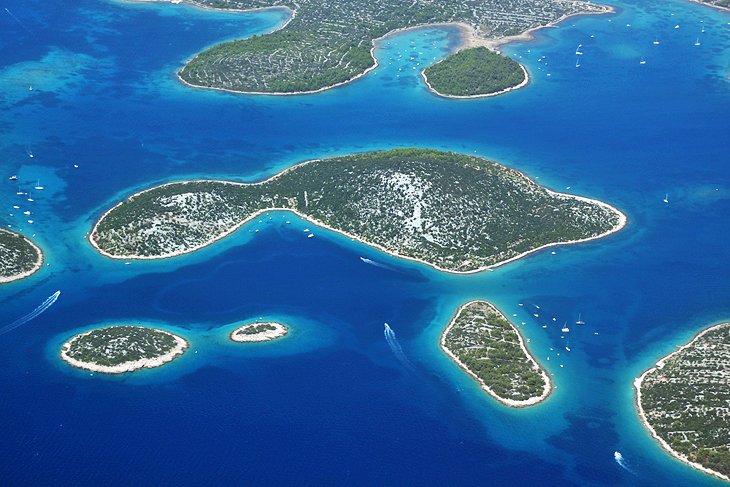
Spreading over an area of some 320 square kilometers-it's 35 kilometers long and 13 kilometers wide-the Kornati archipelago encompasses 89 scattered islets, big and small.
Rocky and arid with little fertile soil, the islets are practically uninhabited, though there are some very basic stone cottages dotted here and there. Originally built as one-room shelters by local fishermen and shepherds, they're now often used as holiday retreats or seasonal seafood restaurants.
The best way to explore this stunningly beautiful coastal region is by private sailing boat, with the nearest charter base being located in Biograd Na Moru. It's also possible to visit the Kornati as a day trip by excursion boat from either Zadar or Sibenik on the mainland. If sailing under your own steam, you'll need to purchase a valid permit, available online (see the official site below).
Official site: www.np-kornati.hr/en/
- Read More: Attractions in Zadar & Easy Day Trips
Zlatni Rat Beach
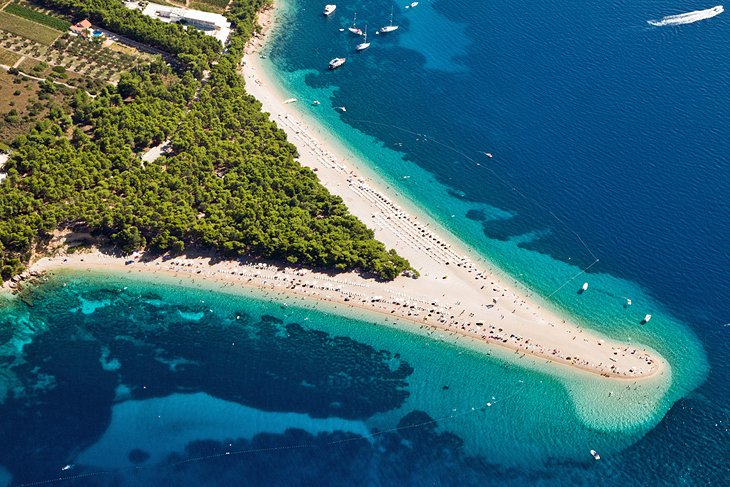
Croatia's most photographed beach has to be the remarkable Zlatni Rat (Golden Horn, or Golden Cape). Located in Bol on the south coast of Brac, this unusual landform, known as a "spit," is made up of fine pebbles and runs 500 meters perpendicular to the coast. Depending on local winds and currents, it moves and changes shape from season to season.
Backed by a cluster of pine trees offering shade and overlooked by the rocky heights of Vidova Gora mountain, it is lined in summer with sunbeds and umbrellas. Widely considered one of Europe's top beaches, the sea is warm enough to swim in from June through September, and some people even manage to stretch the bathing season out to May and October, too.
Extra attractions on the beach include water sports such as paddle boats, sea kayaks, and banana boat rides. Zlatni Rat is also Croatia's top windsurfing destination. Brac is accessible by ferry and catamaran from Split.
A number of top luxury hotels are located nearby for those wanting to enjoy an extended stay here.
The Pretty Town of Korcula
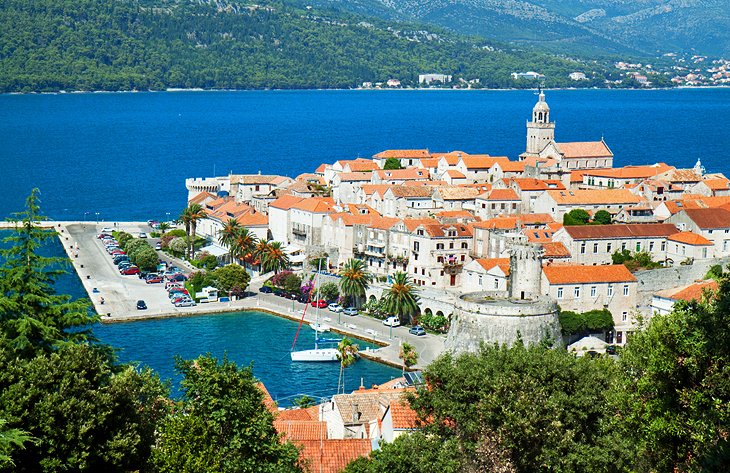
The town of Korcula, the chief settlement on the island of the same name in South Dalmatia, sits snugly on a tiny peninsula. Protected by medieval walls and towers, its car-free stone alleys are laid out in a herringbone pattern so as to give shelter from the prevailing winds. Packed with centuries-old aristocratic stone buildings, Korcula was built at a time when the island was under Venetian rule.
The top points of interest include Marco Polo house, said to be the birthplace of the renowned 13th-century explorer, while one of the best things to do is catch a performance of the moreska sword dance, a traditional dance staged for tourists just outside the town walls on summer evenings.
For a truly special experience, you can reach Korcula's historic town center by catamaran from Split (daily) or Dubrovnik (summer only).
Mljet National Park
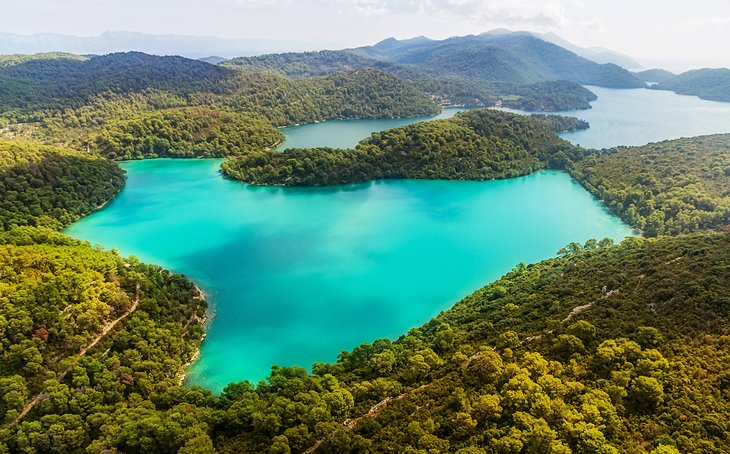
The western third of the island of Mljet has been designated as a national park. Easily accessible by road and largely covered by dense woodland, it centers on two interconnected, turquoise saltwater lakes, one of which has an islet capped by a 12th-century Benedictine monastery, which you can visit by taxi-boat.
Popular with nature lovers, the park offers plenty of things to do, including exploring the numerous paths that run through the woodland. There's also a nine-kilometer-long trail that runs around the perimeter of the lakes, making it ideal for walking or mountain biking. The area is also popular for swimming and activities such as kayaking (kayaks can be rented to explore the lakes).
Adventure seekers should explore the Odysseus Cave, situated near the village of Babino Polje on the island's southern coast. According to legend, this sea cave is where Odysseus was shipwrecked and held captive by the nymph Calypso. It's a breathtaking natural attraction, and on calm days, you can swim inside.
There are several hotels on the island, but local families do rent rooms to visitors in summer, and a number of reputable campsites are also available. Mljet can be reached by ferry or catamaran from Dubrovnik.
Brijuni National Park
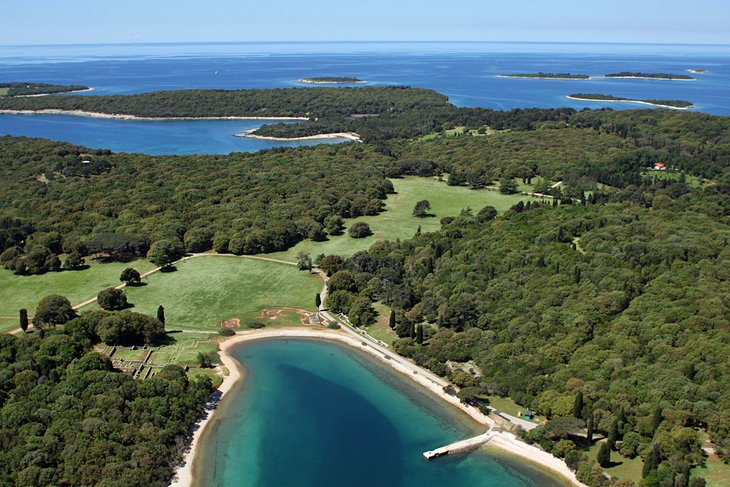
Lying off the Istrian peninsula, this archipelago of scattered pine-scented islets has been designated a national park (Nacionalni Park Brijuni). The largest island, Veli Brijun, is covered with beautifully landscaped parkland and is open to visitors year-round.
The former President of Yugoslavia, Tito, used to entertain visiting foreign dignitaries here, and some of them brought him exotic animals as gifts, the descendants of which are now on show in the small safari park: elephants from India, antelopes from Zambia, and zebras from Guinea are the main attractions.
The island is also home to an abundance of unique flora and fauna, along with evidence that dinosaurs once roamed here. The island has two hotels, along with a golf course and the ruins of a Roman villa. To get here, catch the national park boat (reservations essential) from Fažana on the mainland, seven kilometers north of Pula.
Trogir
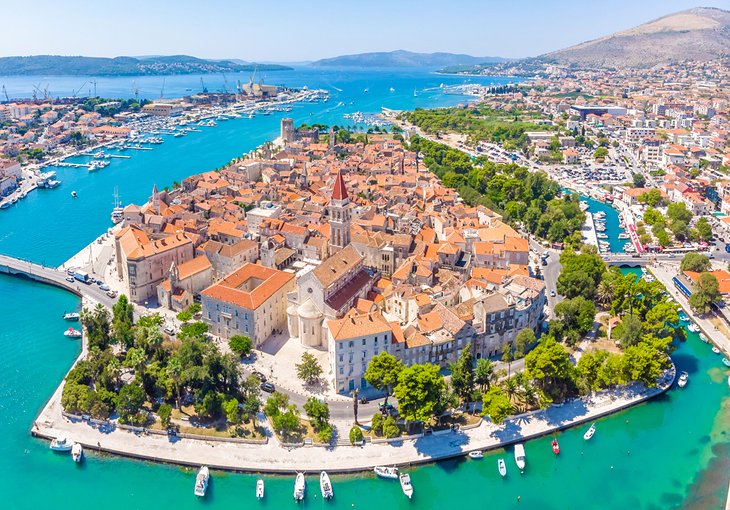
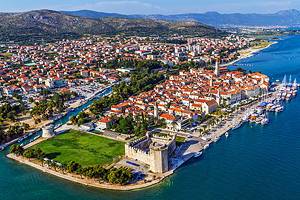
Widely regarded as one of the top places to visit on Croatia's spectacular Dalmatian coast, the attractive seaside town of Trogir is a delightful vacation destination to explore. With a rich history that dates all the way back to its founding in 380 BC, Trogir has at various times been ruled by the Greeks, Romans, Hungarians, and Venetians.
Trogir became my home base for almost two weeks while I was exploring Croatia's Dalmatian Coast. It is an extremely livable city, from the history of Old Town to the naturally beautiful beaches of Ciovo — the island just across the water from Old Town. You'll also find a delightful farmers market, and plenty of creature comforts in the way of grocery stores, fitness centers, and shopping.
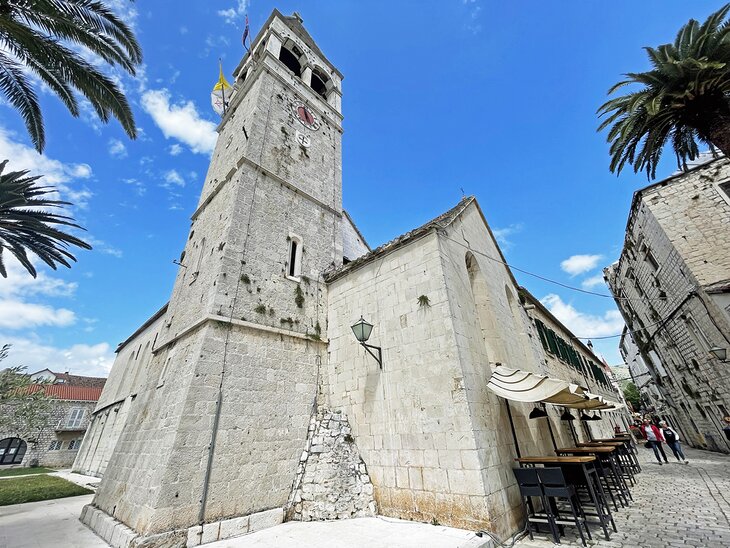
But Old Town Trogir is where the magic really lives, especially if you're only able to visit for a day. Now a UNESCO World Heritage Site – an honor bestowed on the town in 1997 – Trogir offers tourists no end of fun things to do. In addition to its many top hotels and accommodation options, visitors are spoiled for choice when seeking a good seafood restaurant or getting in some souvenir shopping.
Thanks to the careful preservation of its many old buildings, history buffs, and sightseers alike have plenty of attractions to visit, most of them to be found within the confines of the town walls dating back to the 1400s.
Examples of elegant Romanesque and Renaissance-style architecture can be seen everywhere along the town's medieval streets or lining the attractive waterfront promenade. Notable among these are Trogir Cathedral (the Cathedral of St. Lawrence), Cipiko Palace, and the Church of St. Peter.
Rijeka
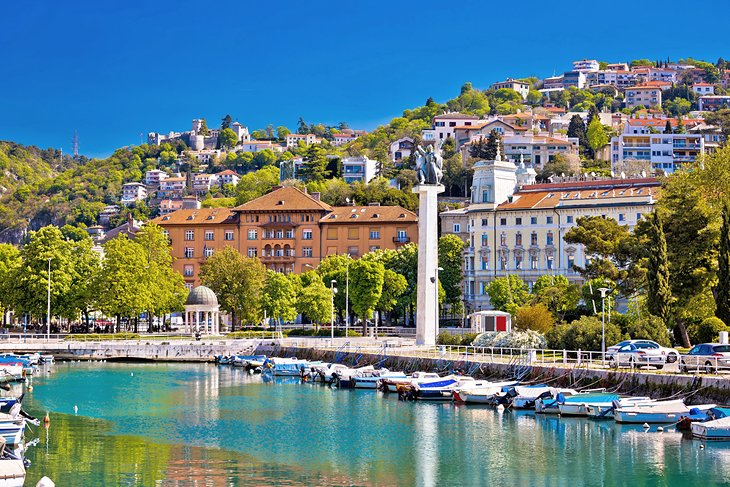
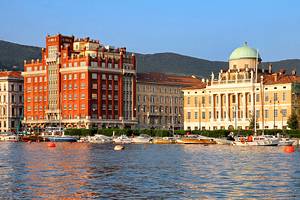
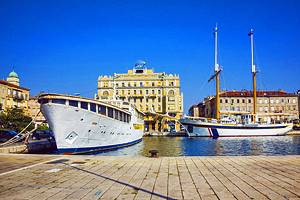
The attractive city of Rijeka, often overlooked by vacationers to the Dalmatian Coast, is well worth adding to your Croatia travel itinerary. In addition to the bonus of having to deal with fewer crowds, this long-important port city offers plenty of attractions and things to do for those who do visit.
Rijeka can be a good home base when exploring Croatia's northern coast. Rijeka has easy access from Zagreb, and it is the perfect jumping-off point from which to explore Istria.
But Rijeka itself is a destination worth exploring, particularly its Old Town. Highlights include exploring the well-preserved cobbled streets and lanes, each lined with splendid examples of townhomes and dwellings – as well as old shops and places of trade – that were built in the 1700s.
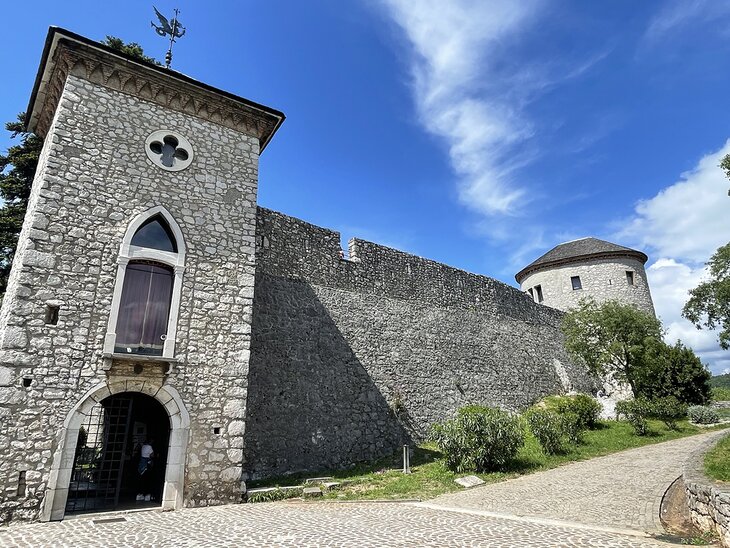
Be sure to visit the magnificent Trsat Castle (Gradina Trsat), built above the town in the 13th century and accessible via a lovely pathway that also leads to the nearby Church of Our Lady of Trsat (Gospa Trsat). Add to this a mix of great art galleries and museums, Croatia's largest carnival, and the nearby Risnjak National Park, and there's no end of good excuses to visit this charming town.
Sibenik
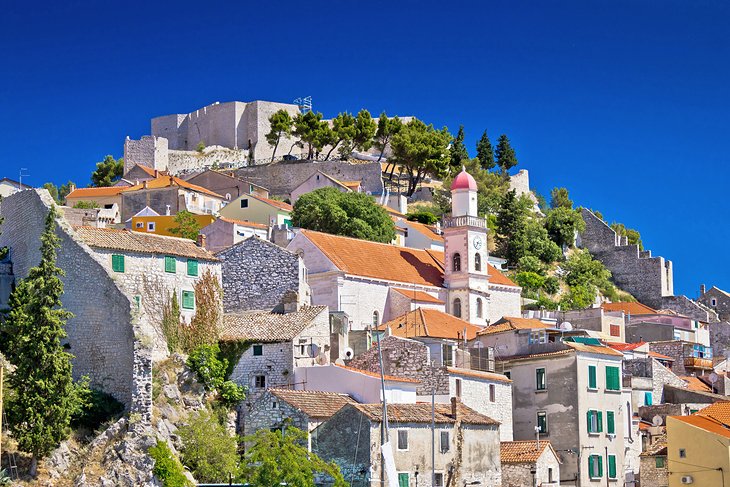
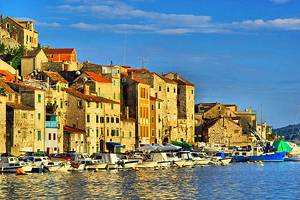
Boasting a rich history that can be traced back as far as the 11th century, the attractive Dalmatian city of Sibenik has much to offer tourists to Croatia. While not always as busy as other popular destinations within this beautiful country, there's no shortage of great things to do here.
Start by exploring the perfectly preserved historic Old Town center. Here, you'll find elegant 15th- and 16th-century architecture, along with numerous attractions worth visiting. Visit the 15th-century Cathedral of St. James (Katedrala Sv Jakova), a UNESCO World Heritage Site and one of the finest churches in all of Croatia.
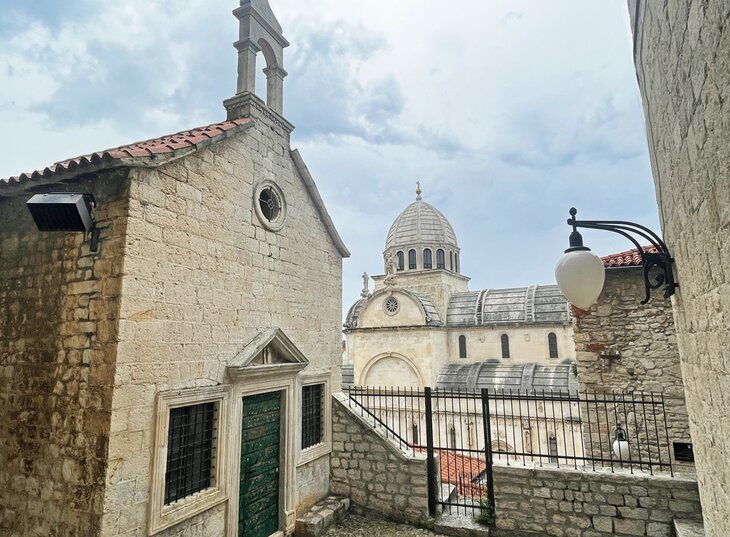
Also worth visiting are the remains of St. John's Fortress, perched high upon a hill overlooking the town and boasting magnificent views over the Adriatic, and the equally important St. Michael's Fortress, popular for the traditional cultural performances hosted on its delightful open-air stage.
What I loved most about Sibenik is that it still feels like a well-kept secret, especially compared to places like Split and Dubrovnik. The charming hilltop city has plenty of narrow alleyways and secret staircases to explore.
Along the waterfront, cafes are lively and full of happy travelers and locals looking for a nice bite to eat. My favorite place to stop for a rest here is Azimut, a river-front cafe, performance space, and gallery.

.jpg)