14 Top-Rated Attractions & Things to Do in Sibenik
Sibenik is a city that will take you by surprise. This medieval hilltop city overlooks a narrow channel of the Adriatic Sea and is regarded as the gateway to the Kornati Islands. A stroll down the waterfront reveals its small town, historic charm with a row of stony-faced medieval buildings and a string of speedboats bobbing up and down in front of open-air cafes.

I fell in love with Sibenik. Its narrow stone alleyways and hidden plazas felt like I had stumbled onto the set of a movie. And despite having ample tourist attractions, Sibenik also happens to be far less touristy than other medieval towns in Croatia. For whatever reason, I certainly did not mind having this town (practically) all to myself.
Speaking of movie sets, I learned that the city did appear as a film location in three episodes of Game of Thrones, so if TV tourism is your speed, then you'll certainly find Sibenik entertaining. But television aside, the city is absolutely beautiful and it is certainly not short on things to do.
Sibenik dates back to the 11th century and wandering Old Town will most definitely feel like a magical time warp. The location on the Adriatic means boat culture is alive and well here, and it happens to be the jumping-off point from which to go explore nearby islands.
If you're ready to discover this white stone city about an hour north of Split, read on to discover the best things to do in Sibenik.
See also: Where to Stay in Sibenik
- 1. Visit the Architectural Splendor of Sibenik Cathedral
- 2. Explore the Dalmatian Ethno Village
- 3. St. Michael's Fortress
- 4. See Sibenik's Old Town Hall
- 5. Take a Boat Ride to St. Nicholas Fortress
- 6. The Church of St. Barbara
- 7. The Count's Palace & Šibenik City Museum
- 8. Have a Splash at Aquapark Dalmatia
- 9. Take in the Views from St. John's Fortress
- 10. See the Waterfalls and Wildlife at Krka National Park
- 11. Enjoy a Scenic Side Trip to Drnis
- 12. The Church of St. Francis
- 13. Take a Drive to Otavice and the Mestrovic Mausoleum
- 14. Enjoy an Island Adventure in Primosten
- Where to Stay in Sibenik for Sightseeing
- Map of Attractions & Things to Do in Sibenik
1. Visit the Architectural Splendor of Sibenik Cathedral
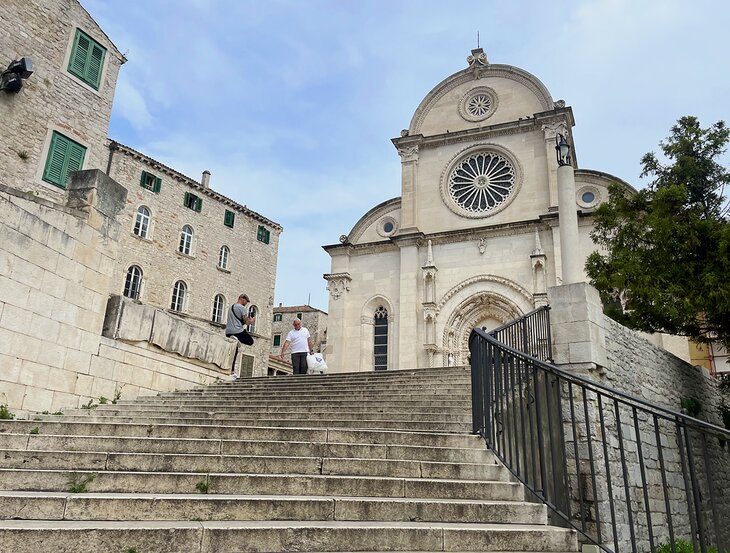
A UNESCO World Heritage Site, the Cathedral of St. James is one of the architectural highlights of the entire Dalmatian Coast. It dates back to the early 15th century and took more than 100 years to complete.
You'll find evidence of Gothic and Renaissance styles, but one of the most noteworthy features of the cathedral is the frieze on the outside of the apse with more than 70 unique faces.
The Cathedral of St. James can be accessed in two ways. One is from the road that parallels the sea. The second is to come down into the heart of Old Town from St. Michael's Fortress.
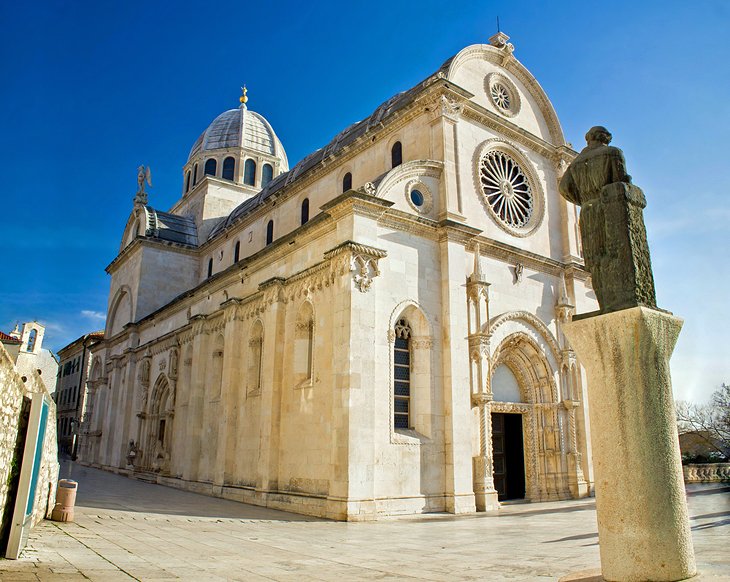
I did not know it on my first visit to Sibenik, but I was on a mission to find the cathedral and ended up wandering through a maze of stone alleyways and up and down medieval staircases until I finally emerged on the plaza with the impressive Cathedral at its center. In my opinion, the second way is much more fun. But no matter which way you choose to get there, it's an impressive site.
If you're feeling hungry or thirsty, head down the steps to the riverfront where a selection of open-air cafes away.
Address: Trg Republike Hrvatske 1, 22000, Šibenik, Croatia
2. Explore the Dalmatian Ethno Village
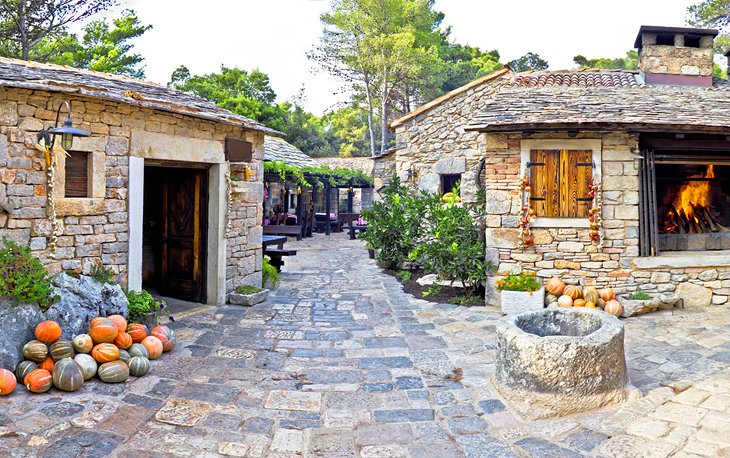
One of the newer attractions in Croatia, the Dalmatian Ethno Village provides a first-rate insight into the lives of the area's local people through the centuries.
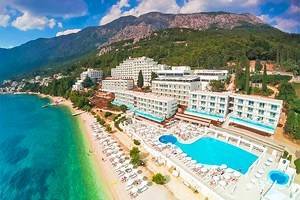
Part of the Solaris Beach Resort complex, just a few kilometers south of Sibenik, it offers the chance to watch and learn about how traditional foods and baked goods are prepared. You can also sample them, then afterward enjoy a wander around the narrow cobbled streets.
Other highlights of a visit include checking out a 100-year-old watermill, craft fairs, weaving workshops, and an original olive press. You can also visit one of the pretty stone and pebble beaches at the resort while on-site.
Address: Hoteli Solaris 86, HR-22 000 Sibenik, Hrvatska, Croatia
3. St. Michael's Fortress
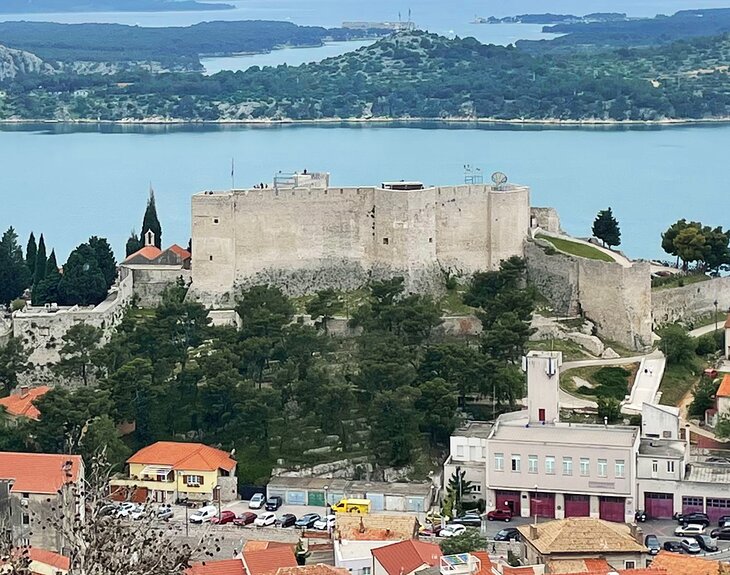
St. Michael's Fortress (Tvrđava sv. Mihovila) is another of the five fortresses in Sibenik and the one from which the city was born.
Constructed during the Middle Ages, it sits atop a hill in the middle of the old town. From the top, you have fantastic panoramic views across the city and out to the Adriatic Sea.
There is also an open-air stage that hosts concerts and other events throughout the year. If you can time your visit with a performance, it is a unique experience.
Address: Zagrađe 21, 22000, Šibenik, Croatia
4. See Sibenik's Old Town Hall
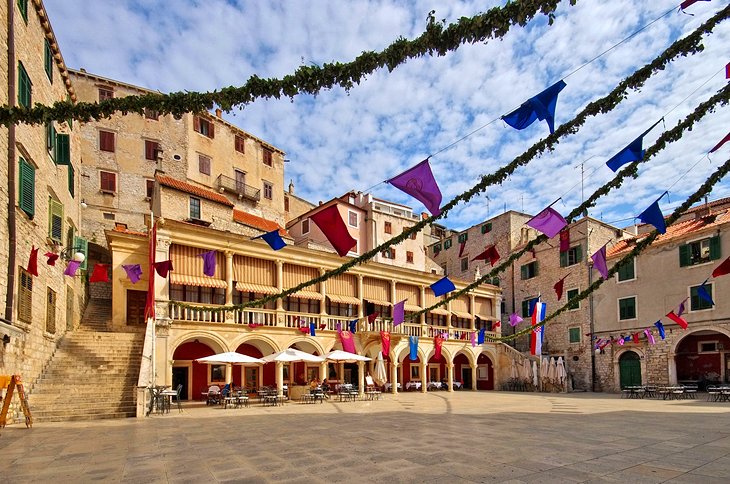
The splendid old two-story Sibenik Town Hall (Gradska vijecnica), just across the square from the cathedral, is well worth a visit. Famous for its beautiful large columns, arches, and balustrade, this superb example of Renaissance architecture dates from the middle of the 16th century and was built by well-known architect Michele Sanmicheli.
Although largely destroyed during an Allied air raid on Sibenik during WWII, the building was completely rebuilt following the original plans after the war.
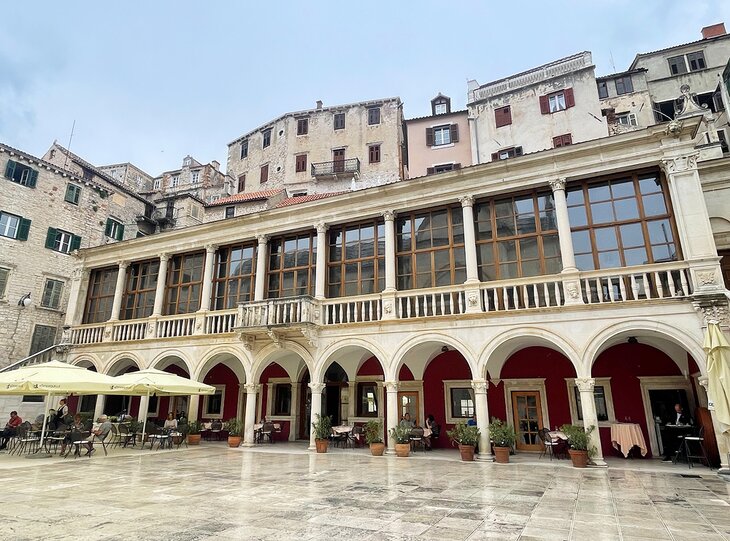
Now you'll find a delightful cafe that lives on the ground floor. It's a nice spot to sit and have a coffee while you people watch in the main square. Be on the lookout for one of the many cats who roam the streets here, too.
Address: Trg Republike Hrvatske 3, 22000, Sibenik
5. Take a Boat Ride to St. Nicholas Fortress
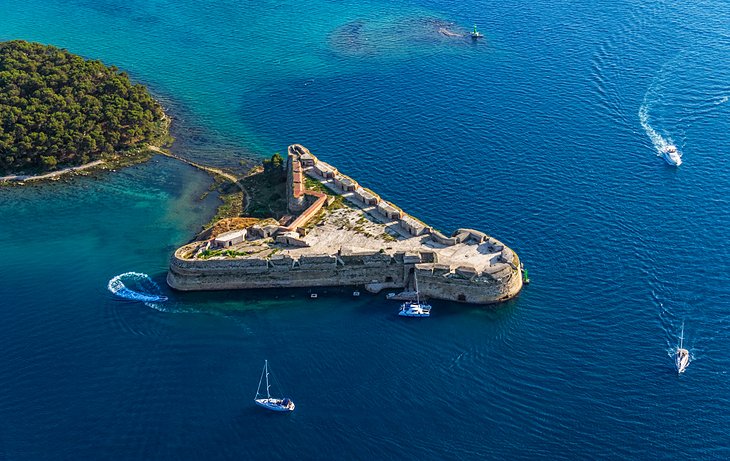
Built in the 16th century to defend the port of Sibenik from Turkish attack by sea, St. Nicholas Fortress (Tvrdava Sv. Nikole) is another of the five fortresses in the town and one of only three such forts still in existence in the Mediterranean (the others are in Venice and Malta).
The fortress resembles an arrowhead and was built on the site of a former monastery, on a small island off the mainland. It was designed by the leading Venetian architect Hyeronimus di San Michaela and once boasted an impressive arsenal of 32 cannons.
Now more than 500 years old, this brick and stone fortress remains relatively well-preserved despite its years and can best be seen as part of an organized tour of the city or by private charter.
Address: Info centar Tvrđave sv. Nikole, Obala dr. Franje Tuđmana 4, 22000, Šibenik, Croatia
6. The Church of St. Barbara
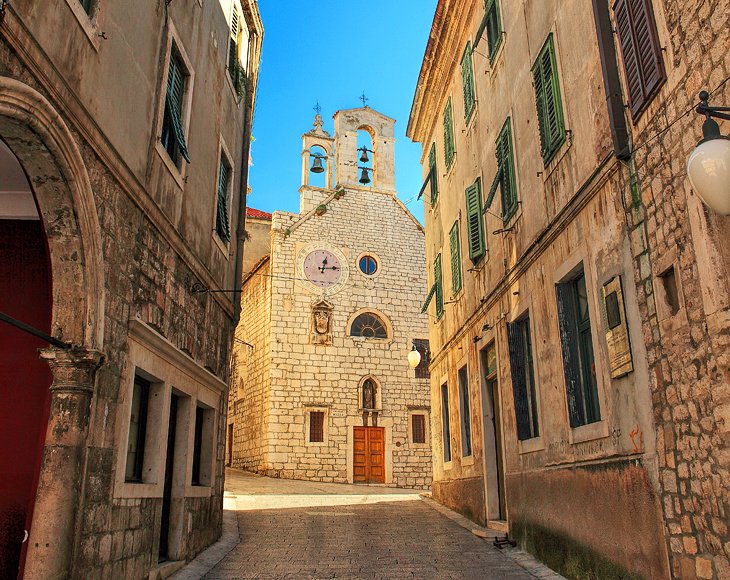
Just behind Sibenik Cathedral stands the pretty little Church of St. Barbara (Sv. Barbara), home to a small but noteworthy collection of sculptures and paintings dating from the 14th to 18th centuries.
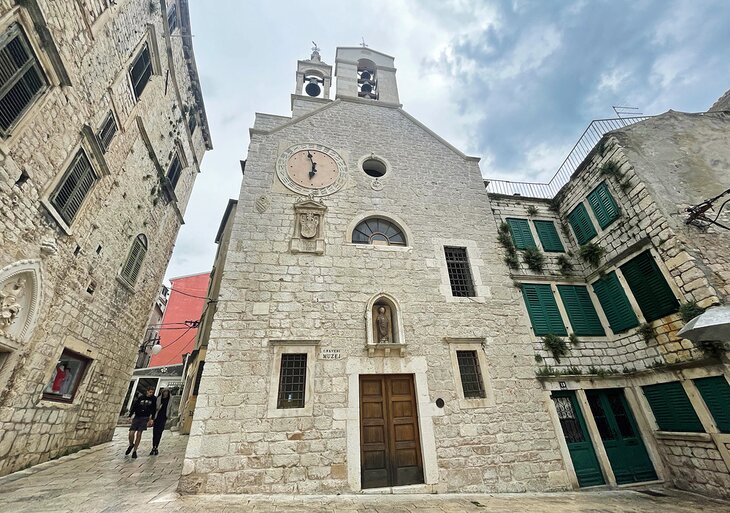
Built in the mid-1600s on the site of an earlier building, this single-nave church is notable for its unique façade, with its irregular-shaped openings, and a 15th-century statue of St. Nicholas by Bonino of Milan. The interior boasts two unique altars: one from the original church, and one that was built later but designed to complement the first.
7. The Count's Palace & Šibenik City Museum
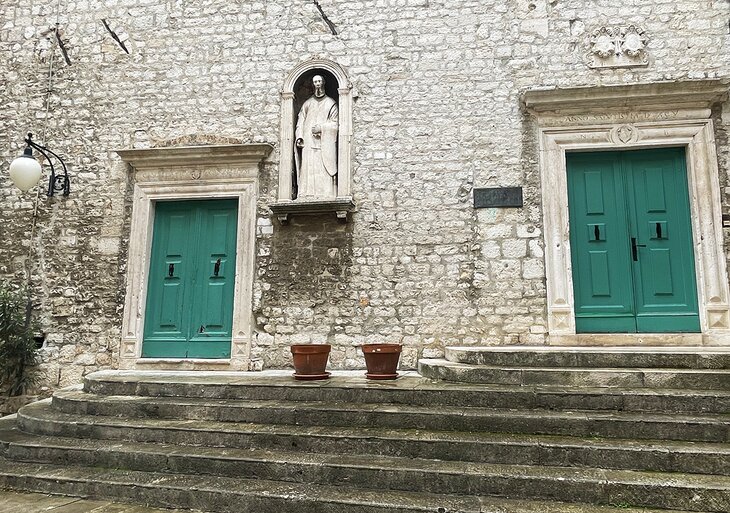
Another one of the top things to do in town is to pay a visit to the Count's Palace, which is just a short stroll from Sibenik Cathedral. The late Renaissance-era Rector's Palace was originally built to serve as the governor's residence during the 16th-century time of Venetian rule.
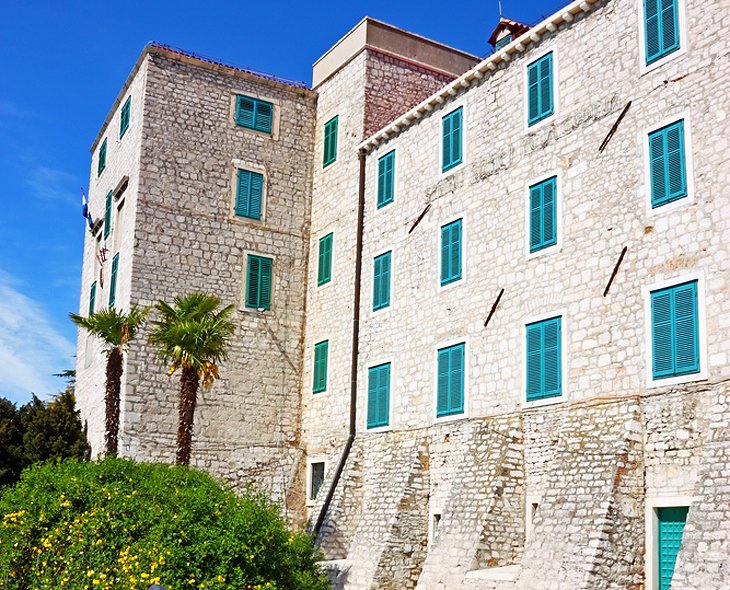
Today, the palace houses the Šibenik City Museum (Muzej Grada Sibenika). It's worth visiting for its many local archeological artifacts dating from Neolithic to Roman times, including sculptures (some from the 7th century), a coin collection, and other miscellaneous items from the surrounding region.
Address: Ul. Gradska vrata 3, 22000, Šibenik, Croatia
8. Have a Splash at Aquapark Dalmatia

For something fun to do during the warmer months, check out Aquapark Dalmatia, Croatia's first water park.
It offers a variety of water features in numerous pools, which are family focused, including waterslides, sprinklers, waterfalls, and a lazy river. There is also a special kids' zone with a fairy-tale cave, which creates a fantasy world for little ones. Refreshments, including homemade ice-cream, are also sold on-site.
Address: Hoteli Solaris 86, 22000, Šibenik, Croatia
9. Take in the Views from St. John's Fortress
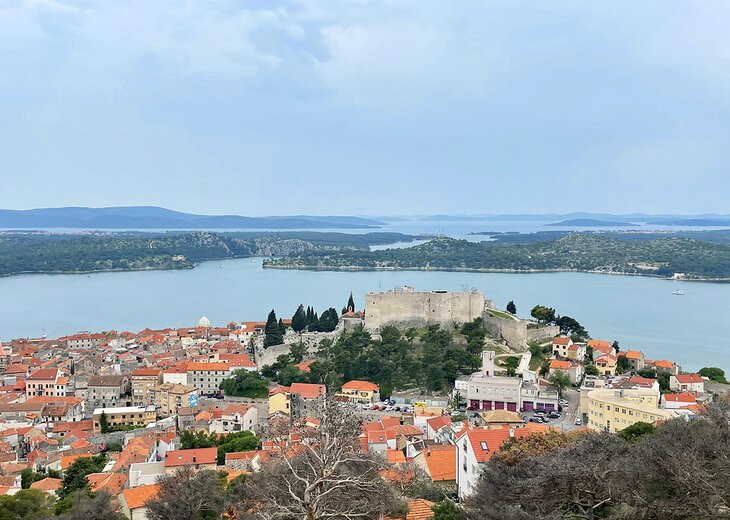
During the 16th century, Sibenik was one of Europe's best-protected cities with no less than five fortresses protecting it. St. John's Fortress is the city's highest fortress, perched atop a hill some 115 meters above the city center. It takes about 10 minutes of huffing and puffing uphill to reach the old town. Though perhaps it's easier to drive up the hill and park in the parking lot, which is what I did.
Don't be fooled — the first fortress-looking building is the welcome center. Continue up the gravel path to the right to reach the actual fortress and get ready for some impressive views of Sibenik below.
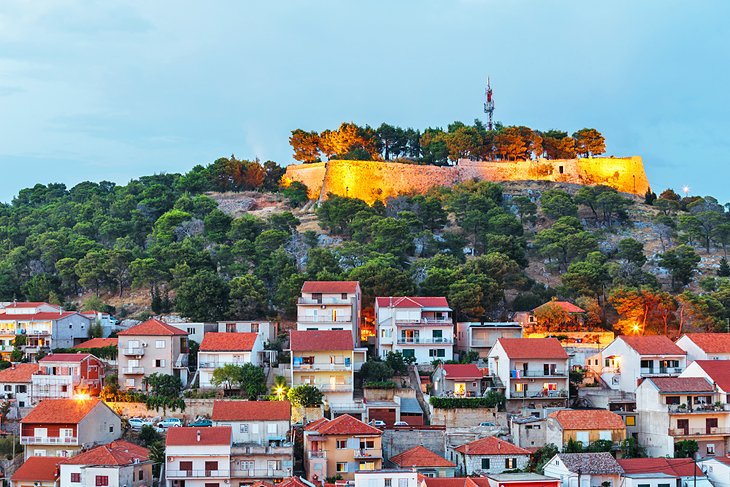
The fortress dates to 1646 when it was constructed to protect Sibenik from Turkish attacks. City residents were so terrified of these invasions that they assisted in the building of the fortress, which was completed in a record six weeks. The views from the top are also stunning.
Restoration work may mean some parts of the fortress aren't currently available for public access, so be sure to check their official website below for details.
Address: Ul. Sedmog kontinenta 27, 22000, Šibenik, Croatia
10. See the Waterfalls and Wildlife at Krka National Park
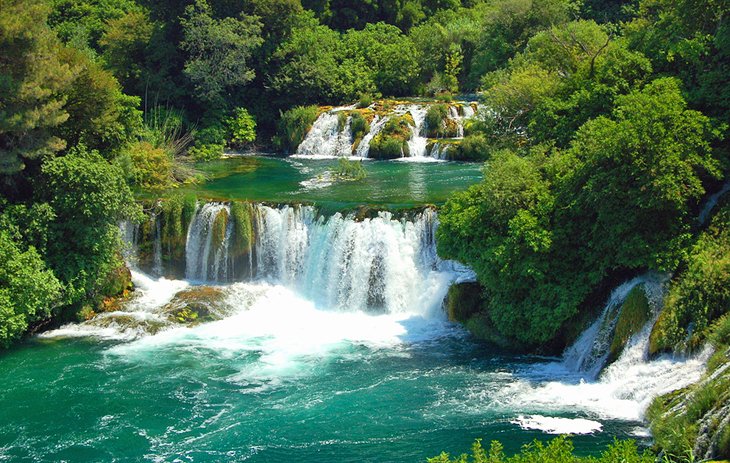
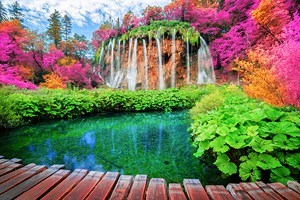
Established in 1985, the Krka National Park (Nacionalni Park Krka) protects the ecologically important area around the middle and lower sections of the River Krka. As the river flows down from the upper reaches, it meets a series of lakes and rapids, as well as the beautiful Roski Slap and Skradinski Buk waterfalls.
At the center of the park is Lake Visovac, just below the Roski Slap waterfalls, and from here, the Krka River joins up with the River Cikola before flowing over Skradinski Buk and out to sea.
A popular destination for bird watchers, the park is home to some 200 different bird species, including herons and egrets. It also boasts a number of important cultural attractions including the Orthodox Krka Monastery (Arandjelovac), dating from the early 15th century, as well as Samostan Visovac, the island monastery on Lake Visova. Easily accessed from Lozovac and Miljevci, the waterfalls can also be reached by boat from Skradin for a particularly fun outing.
Address: Trg Ivana Pavla II. br.5, 22000 Sibenik, Hrvatska, Croatia
11. Enjoy a Scenic Side Trip to Drnis
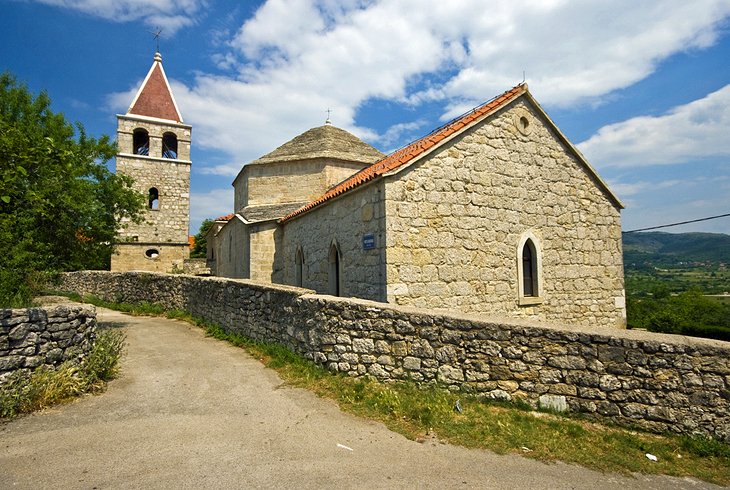
Just 30 kilometers inland from Sibenik is the delightful small town of Drnis, once famous for its 15th-century fort, built as a defense against invasion.
The fort was eventually captured, and Drnis fell to the Turks, who built a number of important structures, including a mosque and Turkish baths. While many of these were later destroyed during fighting in the 16th century, some elements of the occupation can still be seen, including in the church of St. Anthony, built from the remains of the old mosque.
12. The Church of St. Francis
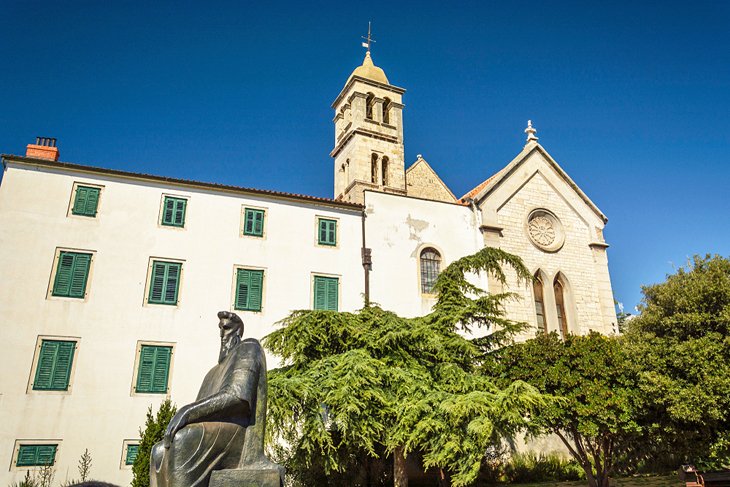
As with many of the fine old buildings found in Sibenik, the Church of St. Francis (Sv. Frane) has been rebuilt and altered numerous times over the centuries. Originally founded in 1229, the church was largely destroyed the following century, although parts of the original cloisters survived and were incorporated into rebuilding that took place in the 16th century.
In the 18th century, the church took on yet another look after being completely rebuilt in Baroque style, and the interior decorated with paintings. Of particular interest inside is a superbly preserved organ built by Petar Nakic in the 1760s.
Address: Trg Nikole Tomaszea 1, Sibenik, Croatia
13. Take a Drive to Otavice and the Mestrovic Mausoleum
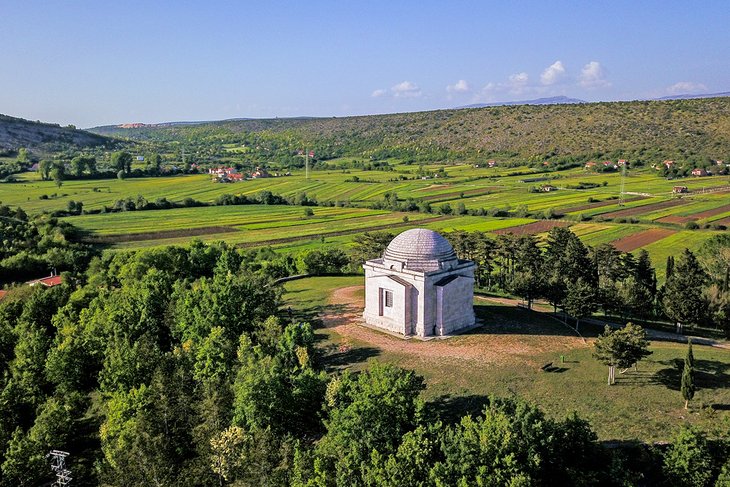
If you're able to drag yourself from the many fine sights and attractions in Sibenik for a few hours, a visit to the nearby village of Otavice is certainly worth the effort. Just 35 kilometers away, it is in this tiny village that one of the nation's most famous artists was laid to rest, making it a popular pilgrimage site for students of the arts.
Set on a hill overlooking the village, the simple yet striking Church of the Most Holy Redeemer – also known as the Mestrovic Mausoleum – was commissioned by the sculptor to his own design. Completed in 1930, it houses the remains of Ivan Mestrovic and his family, who lived close by.
The interior of the mausoleum is quite striking. Many of the motifs and reliefs were in fact completed by the artist's students, and are well worth seeing. Guided tours are available and highly recommended.
Address: Otavice, 22 322 Ružić, Croatia
14. Enjoy an Island Adventure in Primosten
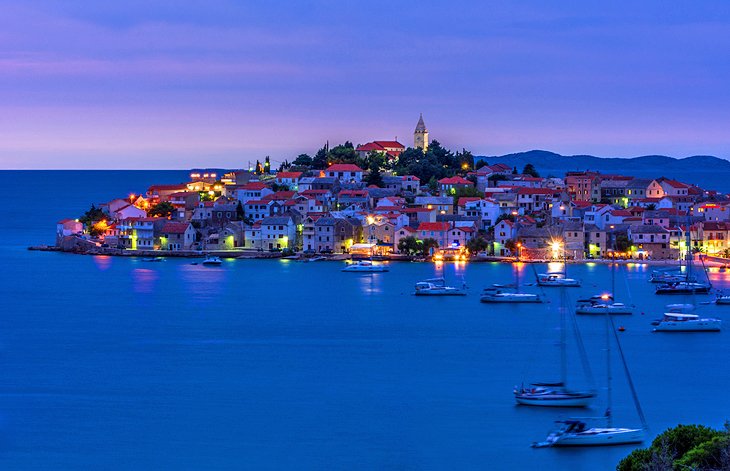
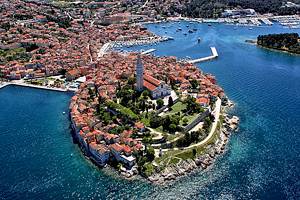
The beautiful little town of Primosten is another great day trip from Sibenik. Located about 20 kilometers southeast of Sibenik, this picturesque and utterly unique community spills over from its original island hub onto the mainland, which it's connected to by a causeway.
Seen from a distance, the island itself is so full of splendid old architecture that its buildings seem to consume every available inch of land. This pleasing effect only heightens the pleasure of exploring its wonderful old medieval streets.
Highlights of this fun day trip include visiting the historic town center, enjoying the views from the rocky shoreline over the Adriatic and the mainland, and relaxing on its pebble beaches. You will also want to visit the 15th-century Church of St. George, notable for its old graveyard and fine views.
Where to Stay in Sibenik for Sightseeing
In Sibenik, you'll find the majority of things to see and do clustered around the historic old town, and you'll find a number of hotel options in all budgets that are within walking distance of top sights like the Sibenik Cathedral. There are also plenty of accommodation options on the beachfront around the city, and this may be the better choice if you are visiting in summer and wish to stay near the clear blue waters of the Adriatic Sea. Here are some top-rated hotels in Sibenik to check out:
Luxury & Mid-Range Hotels:
- The posh D Resort, located behind the super-yacht marina, is where to come for luxe pampering with modern rooms and suites and an on-site spa.
- Another wonderful option is the historic luxe Heritage Hotel Life Palace inside a 15th-century palace in the heart of the old town. It comes complete with frescoes, a wellness area with a hot tub and sauna, and a coffee shop.
- For a more affordable sleep, right on the beach, try the mid-range Amadria Park Ivan. The property is just a short drive from town and has a lovely pool area and spa treatments.
Budget Hotels:
- Hostel Mare is a budget hostel in a great location, just steps to the old town. It boasts friendly owners and clean rooms and attracts plenty of repeat guests.
- Another budget choice is the Pansion Sibenik, which is also in the center of the old city and can only be reached by foot.
Map of Attractions & Things to Do in Sibenik
More Related Articles on PlanetWare.com
Croatia's Dalmatian Coast: The most popular town on the Dalmatian Coast is Dubrovnik, which is about a three-hour drive to the south. For ideas on what to see here, review our article on the Top Tourist Attractions in Dubrovnik. Another popular tourist destination on the coast is Split, about an hour south of Sibenik and Croatia's second-largest city. You can also check out our article on the attractions and things to do in Croatia for the country's highlights.