Attractions & Things to Do in Nicosia
The Cypriot capital of Nicosia is literally a tale of two halves. The southern half of Nicosia (also called Lefkosia) belongs to the Republic of Cyprus, while North Nicosia (also known as Lefkoşa) is the capital of the UN-unrecognized Turkish Republic of Northern Cyprus (TRNC).
Since 2003, the logistics of visiting both sides of the city have loosened up considerably, and popping over to Northern Cyprus and back again requires just a quick flash of your passport as you stroll through the Ledra Street green-line crossing that divides the old city district in two.
This means that the tourist attractions of North Nicosia's old town can be just as easily visited as the museums in Nicosia.
The city is also a fantastic base for launching yourself out on sightseeing trips into north Cyprus, which is home to some of the island's most important historic places to visit such as the fairy-tale castle of St. Hilarion and the extensive ruins of Ancient Salamis.
To help plan your time here, use our list of the top attractions and things to do in Nicosia.
- Admire Nicosia's Venetian Fortifications
- Visit the Cyprus Museum
- Shop for Crafts inside the Büyük Han
- View the Byzantine Art inside Makarios Cultural Foundation
- Admire the Architecture of the Selimiye Mosque
- Stroll Nicosia's Old Town Neighborhood
- See the Leventis Museum Collection
- Day Trip to the Ruins of Bellapais Abbey
- Road Trip through the Mesaoria Region
- Explore the Sights of Kyrenia (Girne)
- Climb up to the High Towers of St. Hilarion Castle
- Day Trip to Famagusta
- Wander through the Ruins of Ancient Salamis
- Visit the Remains of Buffavento Castle
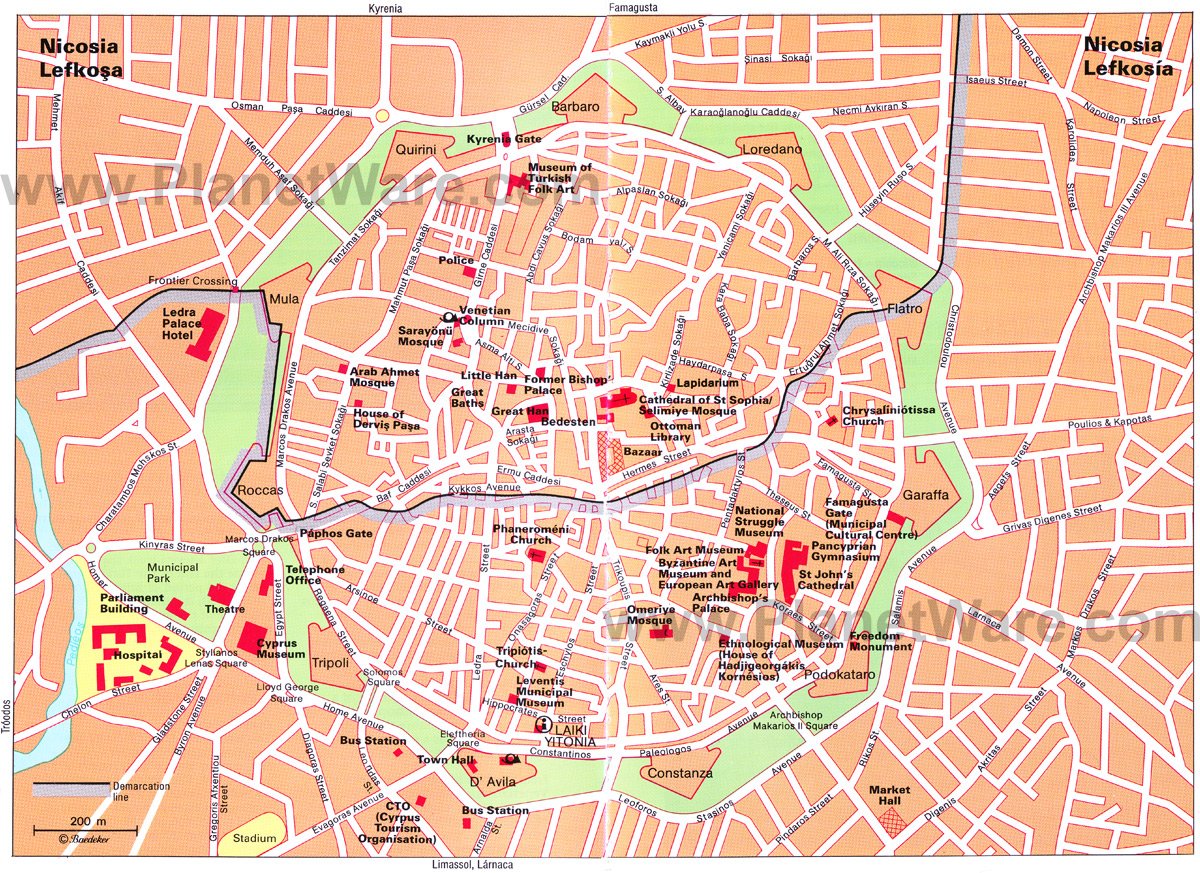
- Map of Attractions & Things to Do in Nicosia
Admire Nicosia's Venetian Fortifications
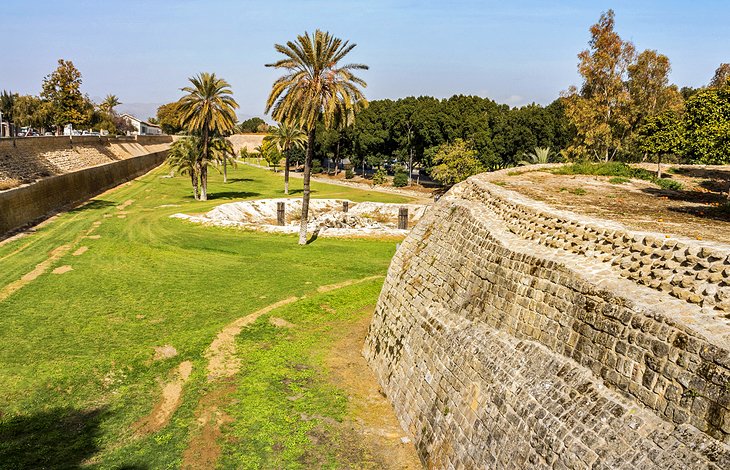
Nicosia's most defining features are its impressive Venetian walls, which encircle the old city. Although crumbling significantly, much of their original three-kilometer length is still in place.
Famagusta Gate is the best preserved and is decorated with numerous coats of arms. The passage here leads out from the old city to the old city's empty moat area.
Paphos Gate and the Roccas Bastion beside it are more interesting for their role in modern history. Here, the UN Buffer Zone between the Republic of Cyprus and northern Cyprus dwindles to less than 200 meters, and until 2003, this was the only place on the island where Greek Cypriots and Turkish Cypriots could get close up.
Today, flags for all four countries in the unresolved dispute (Greece, the Republic of Cyprus, Turkey, and north Cyprus) flutter in the breeze as a reminder of this island's unresolved woes.
Visit the Cyprus Museum
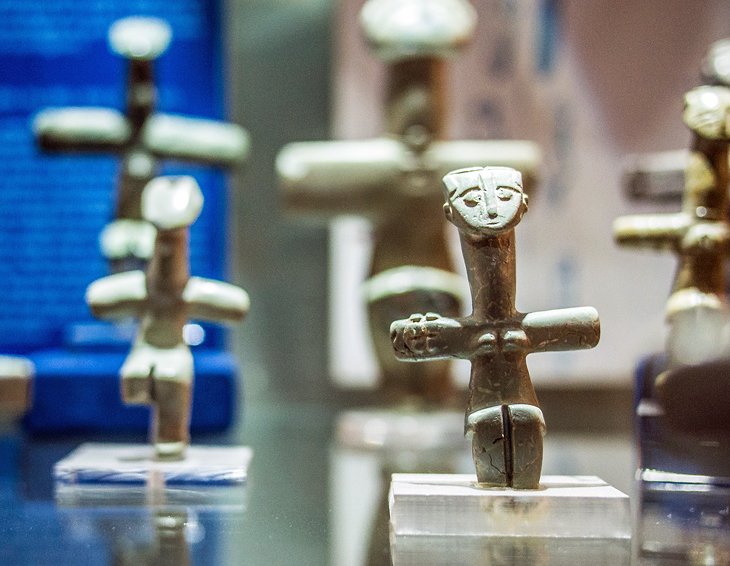
This exceedingly well-thought-out museum should be top of your things to do in Cyprus list if you are interested in getting to grips with the ancient history of the island. Its extensive collection of artifacts swoops from the Neolithic period right up to the Byzantine era.
Room One contains excavated finds from the Neolithic age, including a large number of Steatite idols.
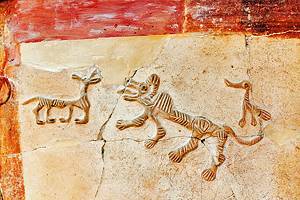
Room Two covers the Bronze Age, with many vases and jugs decorated with rather endearing animals. Mycenaean artifacts from Ancient Kourion are displayed in Room Three.
Head to Room Four to view the museum's highlight: a collection of votive figures (including Minotaurs, warriors, and charioteers) from 7-6 BC, found at Ayia Irini, near Morphou.
Rooms Five and Six are sculpture galleries with artifacts from a wide range of periods, while Room Seven contains a limestone female statue from Soli and a huge bronze statue of the Emperor Septimus Severus.
Continue on to Room Eight for exhibits of bronze tools and assorted weaponry, as well as some statues of gods. The tiny stone seals are interesting as are the Egyptian amulets and the green-horned god from Engomi.
You'll find representations of rock-cut tombs (2500 BC - 400 BC) along with the objects found in them, votive inscriptions, and other artifacts from tombs in Rooms Nine and 10.
Afterwards, check out the marble statues from Salamis in Room 13 and the terra-cotta figurines in Room 14 before heading for the exit.
Address: 1 Leoforos Mouseiou, Nicosia
Shop for Crafts inside the Büyük Han
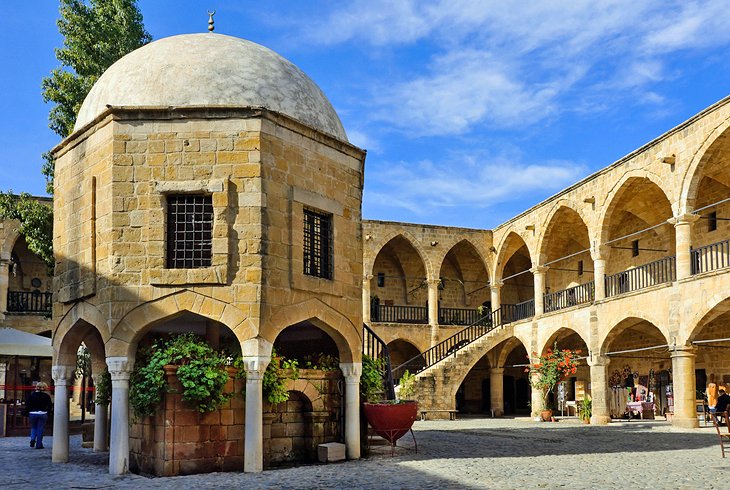
This han (a caravanserai) was constructed in 1572 and is an excellently preserved example of the architecture of that period.
Hans were used as accommodation and storage places for merchants as they passed through town, often including stabling facilities for their horses (or camels) and sometimes recreation facilities such as restaurants and hamams (Turkish baths) as well.
The Büyük Han is one of the city's finest historic buildings and has been painstakingly restored to its former glory.
Today the former sleeping quarters, now home to a variety of shops, cafés, and local artisan ateliers, are perfect for a spot of shopping to break up your old city sightseeing.
It's in North Nicosia, just a short stroll from the Ledra Street pedestrian green line crossing.
View the Byzantine Art inside Makarios Cultural Foundation
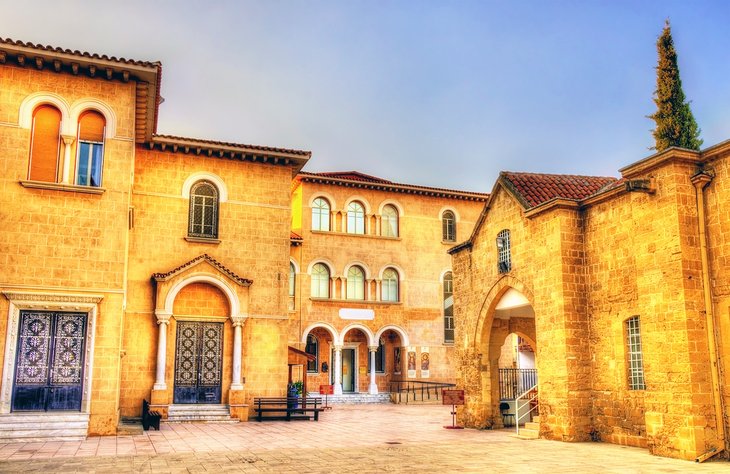
For anyone interested in Cypriot religious artwork, the Byzantine Museum contained within the Makarios Cultural Foundation is an important stop in the city.
Here, you'll find a staggering collection (220 pieces) of Christian icons that range in age from the beginning of the Byzantine era up until the 19th century.
For many people with a special interest in this artwork though, the highlight of the museum is the Kanakaria Mosaics on display.
These important art pieces were stolen from a church in the Karpas Peninsula after the 1974 Turkish invasion. In a story that could have been ripped straight from an art world thriller novel, involving dodgy art dealers and an Interpol sting operation, they were returned to the Republic of Cyprus in 1991.
Address: Plateia Archiepiskopou Kyprianou
Admire the Architecture of the Selimiye Mosque
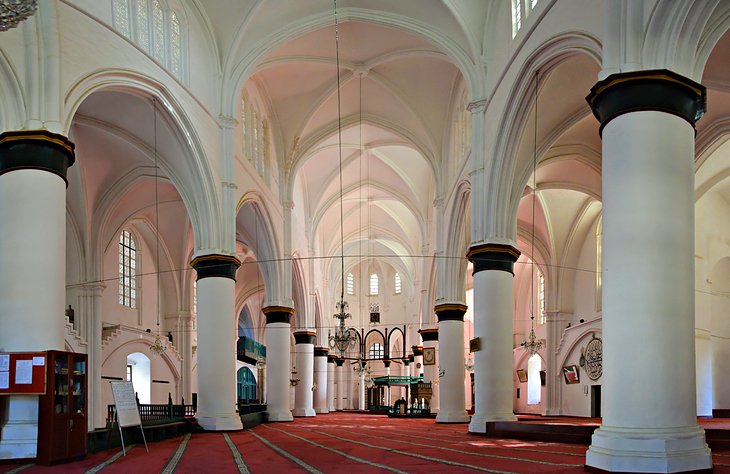
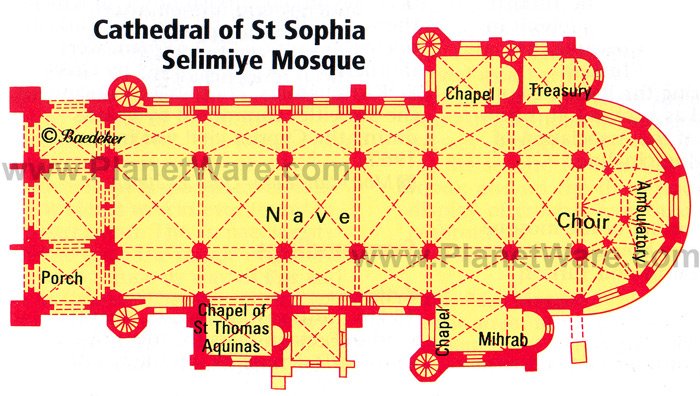
The most recognisable landmark in North Nicosia, the Selimiye Mosque began life as the Church of Agia Sofia and was finished after a 78-year construction process in 1326.
It has been a mosque since the 16th century, when the Ottomans took control of the island.
This merging of elaborate medieval church architecture and the simplicity of mosque design has created a fascinating space with the soaring interior of this typically Gothic structure having been whitewashed and any icon details long taken away.
If you'd like to enter, bring a headscarf (for females) and dress modestly (no shorts or shoulder-less tops).
The mosque is a five-minute walk from the Ledra Street green line crossing.
Address: Selimiye Meydani, North Nicosia
Stroll Nicosia's Old Town Neighborhood
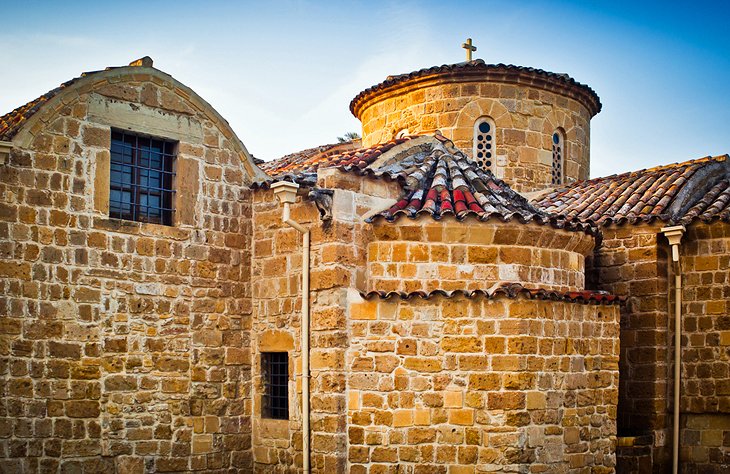
Although Nicosia doesn't have a huge amount of big-hitter tourist sights, the true attraction of a visit here is simply strolling the narrow lanes of the old town district.
Ledra Street is the main drag through the old town and is lined with cafés, restaurants, and shops, leading right up to the Ledra Street Green Line crossing-post to North Nicosia.
To explore the northern section of the old city, you will need to bring your passport to cross here.
Skirt off Ledra Street into the tumble of alleyways to check out the Ottoman mansion architecture of the House of Hatzigeorgakis Kornesios (20 Patriachou Grigoriou Street), who was the island's dragoman during the late 18th century and the Omeriye Mosque (Trikoupi Street), which has a 14th-century Lusignan entranceway.
Plenty of the old town's small churches have lavish interiors that merit a peek inside.
Two of the best are the Panagia Chrysaliniotissa (Archiepiskopou Filotheou Street), considered the oldest church in Nicosia and believed to have been built in 1450, and the Agios Ionnis (Plateia Archiepiskopou Kyprianou), which holds colorful 18th century frescoes.
Among the old town's many private museums that are worth seeking out, don't miss the photography and document collection at CVAR (Ermou Street), which focuses on the island's period under British colonial rule.
Afterwards cross into North Nicosia to continue your old town tour.
Along with the two main attractions of the Selimiye Mosque and the Büyük Han, make sure to visit the Bedesten (Arasta Sokak), which first served as the Church of St. Nicholas of the English and then became a market in the Ottoman era; the Mevlevi Museum (Girne Caddesi), which offers a series of well-thought-out exhibits on the whirling dervish Sufi order; and the Arabahmet neighborhood.
While wandering Arabahmet's alleys, rimmed with Ottoman-era mansions, don't miss the finely restored Armenian church Sourp Asdvadzadzinare (Şehit Mehmet Huseyin Sokak), which dates from the 13th century.
See the Leventis Museum Collection
Recently renovated, Nicosia's Leventis Museum is housed in a beautiful old city mansion and presents the history of Nicosia through a carefully selected collection of ethnographical displays and artifacts.
For history lovers, this is not to be missed, and the museum has won European Museum of the Year for its brilliantly curated exhibits that trace the city's long and eventful past.
Among the displays, you'll find items dating from 2300 BCE right up to the Ottoman and colonial era with some of the most fascinating exhibits being the wonderful traditional costumes on show.
The museum also helps you understand the impact of British rule on Cyprus and the city's modern history with the island's division in 1974.
Address: 17 Ippokratous Street, Nicosia
Day Trip to the Ruins of Bellapais Abbey
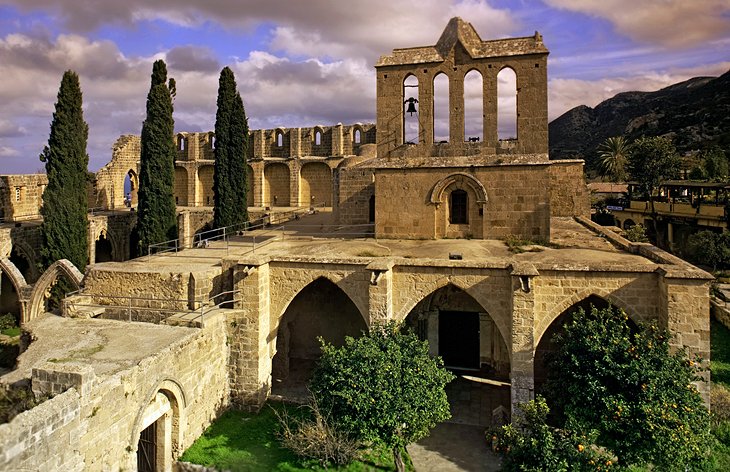
One of the island's most famous tourist attractions – thanks to writer Lawrence Durrell – Bellapais is a wonderfully old-fashioned village of humble whitewashed cottages that sprawl down the hillside ending at the evocative ruins of Bellapais Abbey below.
British author Lawrence Durrell wrote the book Bitter Lemons of Cyprus while living here, immortalizing Cypriot village life at the end of the British colonial period.
Although the village is incredibly picturesque itself, the main sight is Bellapais Abbey, an old Augustinian monastery full of intricately carved arches and cypress trees surrounding its cloister.
There are panoramic views across North Cyprus' coastline from the refectory roof.
Bellapais is 25 kilometers north from North Nicosia but there's no direct public transport to the village from the city.
If you don't have your own transport, hop on one of the frequent minibuses from North Nicosia heading to Kyrenia and then take a short taxi ride to the village from there.
Road Trip through the Mesaoria Region
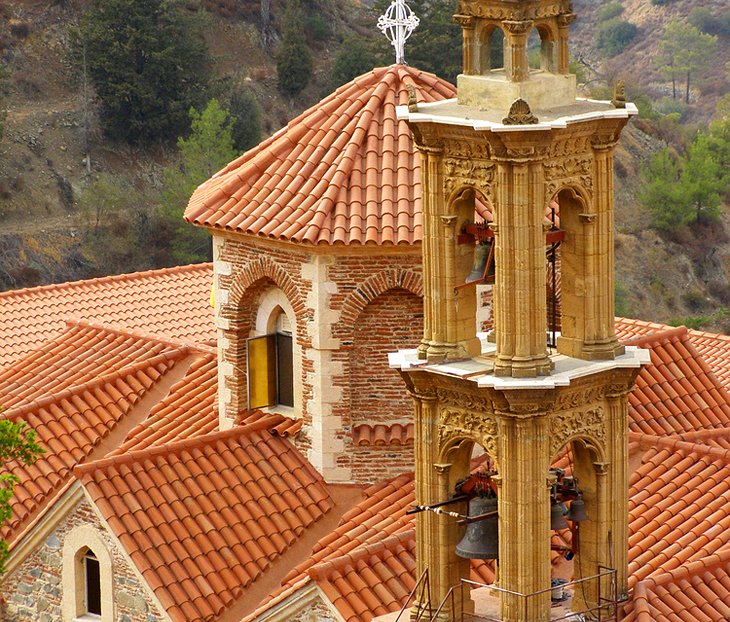
Just west of Nicosia is the Mesaoria region, scattered with tiny villages and ancient monasteries and churches. If you've got your own transport, this region is great for a day trip, exploring the historic highlights and rural scenery in easy reach of the city.
Of the villages here, Peristerona (30 kilometers west from Nicosia) is a quaint place, which deserves a visit for its 10th century five-domed Church of St. Barnabas and Hilarion, which towers over the surrounding traditional stone houses. Inside, the church contains important and well-preserved 16th century icon paintings depicting the presentation of Christ.
Head south from here to visit Maheras Monastery, sitting in splendid isolation on a craggy hill.
Then head northeast for a trip to the Monastery of Agios Irakleidios and the archaeological site of Ancient Tamassos, an old copper-working town that dates back to the 6th century BCE, both near the village of Pera.
Explore the Sights of Kyrenia (Girne)
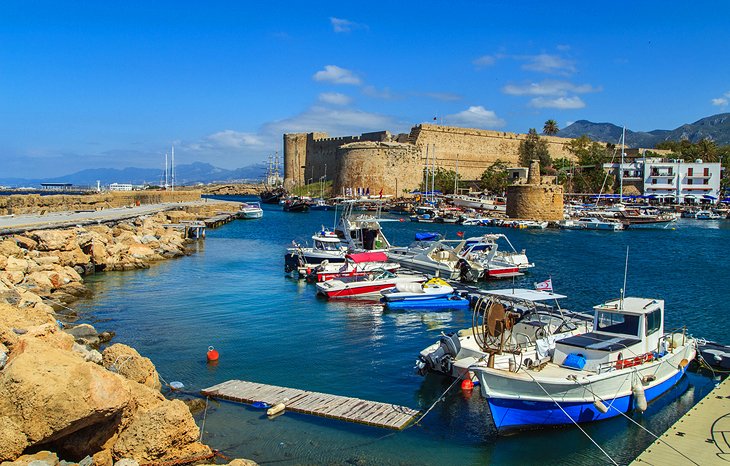
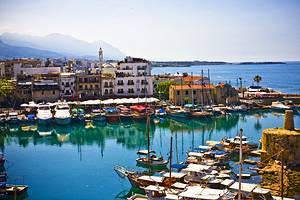
The atmospheric harbor town of Kyrenia (also known as Girne), 30 kilometers north of Nicosia, is northern Cyprus' vibrant seaside hub. It's one of the best places to visit if you are looking for day trip options from Nicosia.
The small harbor is overlooked by a grand Byzantine-era castle and backed by an old town district of tangled alleyways and Ottoman-period houses that are fun to explore.
Visit the castle first with its Shipwreck Museum, and then stroll harbor-side to see the Folk Art Museum in a restored carob warehouse.
Later, wind through the narrow lanes to the Church of Archangel Michael (Cambulat Caddesi), with its collection of religious icons that come from churches across northern Cyprus.
Frequent minibuses run from North Nicosia to Kyrenia, so it's very easy to day trip to the town by public transport.
Climb up to the High Towers of St. Hilarion Castle
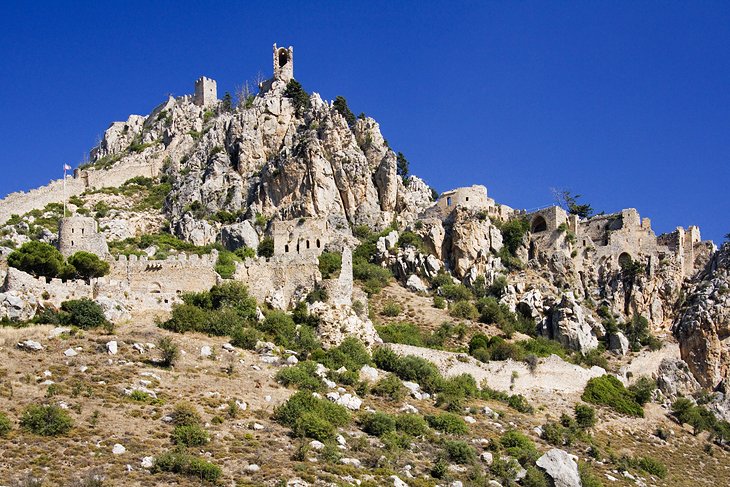
St. Hilarion Castle looks like it fell straight off the pages of a storybook. With its ramparts climbing up the jagged hilltop, this is the epitome of a fairytale castle (and it's said the castle in Disney's Snow White is based on St. Hilarion).
Built in the 10th century by the Byzantines, the castle sits in a lofty position that has been a strategic asset right up to the modern era.
Follow the path (wear good walking shoes) from the lower enceinte, where the garrison were housed, up to the middle enceinte, with its church and barrack rooms, and then climb higher to the upper enceinte, with a tower and royal apartments.
From here, a series of staircases lead you to Prince John's Tower, with amazing views across the countryside.
Located 36 kilometers northwest of Nicosia, St. Hilarion Castle is best visited with your own transport, as there's no public transport to the site. If you haven't rented a car, though, taxi drivers in North Nicosia are happy to run return trips to the castle.
Day Trip to Famagusta
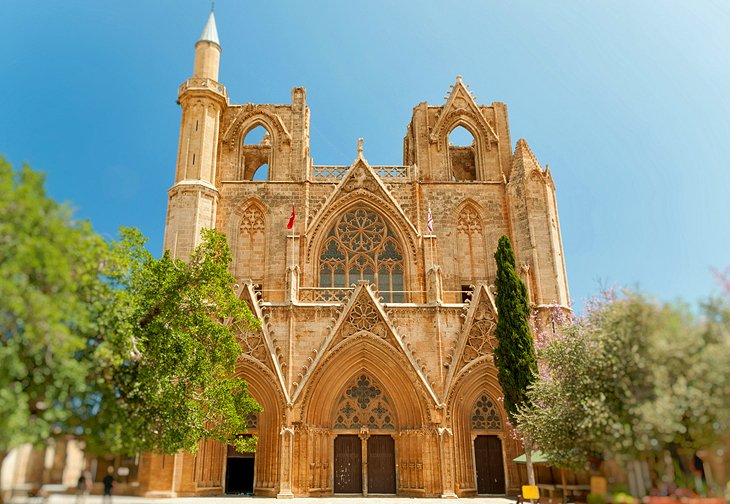
The old town of Famagusta (also called Gazimaǧusa), riddled with crumbling Gothic buildings, is the most beautifully evocative town on the island.
Ringed by a mighty border of well-preserved Venetian fortifications, the old town is stuffed full of golden-stone ruins of basilicas and remnants of palaces that sit incongruously between rows of dilapidated houses.
Right at the center is the glorious Lala Mustafa Pasha Mosque (Main Square), which was once the Cathedral of Agios Nikolaos and is a beautifully-preserved example of Gothic architecture.
Nearby are the roofless ruins of St. George of the Greek Church (Istiklal Caddesi), where faint traces of frescoes still remain on the apse.
On a grassy bank just inside the city walls are the haunting remnants of St. Mary Church and the Carmelite Church (Server Sokak).
From here, it's possible to climb up onto the Venetian fortifications at the Pulacazara Bastion. You can stroll along a segment of the walls here for commanding views across the town.
Famagusta is 58 kilometers east of North Nicosia, and there are regular minibuses between the two towns if you don't have a hire car. For a day trip, though, your own transport is best, as then you can easily fit in a visit to Ancient Salamis and other historic tourist attractions around Famagusta in one day.
Wander through the Ruins of Ancient Salamis
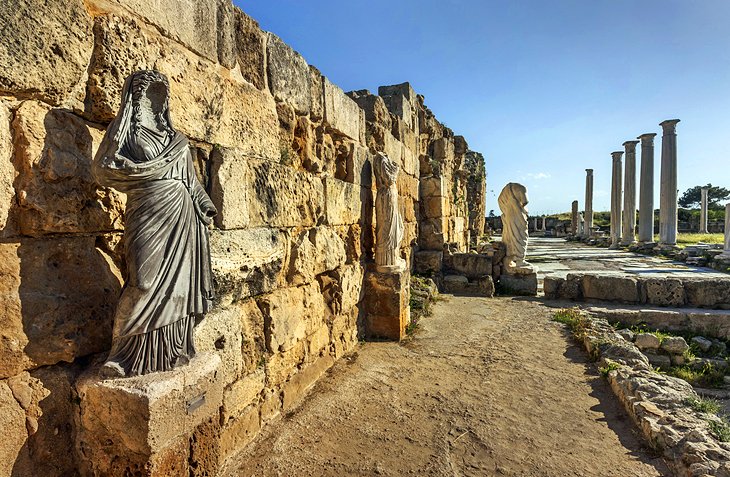
Along with Ancient Kourion, Ancient Salamis is Cyprus' most important ancient-kingdom archaeological site, with a wealth of ruins to explore.
The gymnasium and baths complex, with its fine statuary and grandly columned courtyard, is the main attraction, but further into the sprawling site are vast remnants of two basilicas, an agora and a huge reservoir complex.
Nearly all the remains date from the city's Graeco-Roman and Byzantine eras, but Salamis' history stretches much further back.
It's said to have been founded just after the Trojan War and has been variously under Assyrian, Persian, Greek-Ptolemaic, Roman, Byzantine, and Arab command, which mirrors the island's own classical history.
There's no public transport to the site, so it's easiest seen with your own wheels, or you could catch a minibus from North Nicosia to Famagusta and hire a taxi for the short ride to the site.
The ruins are located about 73 kilometers east of Nicosia.
Visit the Remains of Buffavento Castle
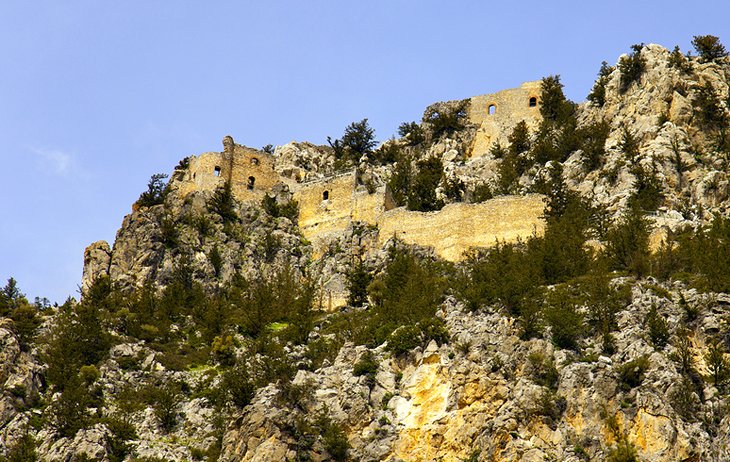
Less visited than St. Hilarion Castle and more dilapidated, Buffavento Castle is a windy, rugged outpost of a ruin atop a craggy mountain summit to the east of Kyrenia. The ruins here are not extensive but they lie in a picturesque location, towering over the forested slopes below.
Hike from the lower enceinte to the upper enceinte for the best views across the coast.
Buffavento is thought to have been built during the Byzantine era, and Crusader Richard the Lionheart once took ownership of it. Strategically, it played an important role in guarding the coastline along with St. Hilarion Castle to the west.
Located 52 kilometers northeast of Nicosia, the castle is best visited with your own transport as part of a day trip including St. Hilarion.
Map of Attractions & Things to Do in Nicosia