19 Top-Rated Tourist Attractions in Ontario
Author Lana Law grew up in Northwestern Ontario and currently lives in Southern Ontario.
Ontario is home to the nation's largest city, Toronto, and the capital city of Ottawa, but it also encompasses vast expanses of wilderness and pristine lakes and contains one of Canada's most visited natural attractions, Niagara Falls. This huge province, about 15 times larger than the state of Texas, offers boundless opportunities for travel, adventure, and family fun.
During the hot summer months, people visit Ontario to see some of Canada's top museums and galleries; spend family time at the amusement parks; relax at lakeside resorts; paddle or fish in the lakes and rivers; camp in the parks; and see some of the country's most iconic landmarks, like the CN Tower.
In winter, while some venture outdoors to enjoy the ski hills, skating rinks, snowmobiling, and winter festivals, most turn their attention indoors to hockey games, shopping, dining, Broadway shows, and other cultural attractions.
From small towns to big cities, this province can deliver whatever you're looking for in a vacation. Plan your trip and discover the best places to visit with our list of top tourist attractions in Ontario.
- 1. Niagara Falls
- 2. Toronto's CN Tower
- 3. Parliament Hill in Ottawa
- 4. Ontario's Provincial and National Parks
- 5. Royal Ontario Museum (ROM)
- 6. Canada's Wonderland
- 7. National Gallery of Canada
- 8. Toronto International Film Festival (TIFF)
- 9. Art Gallery of Ontario
- 10. Thousand Islands
- 11. Fishing in Northern Ontario
- 12. Trent-Severn Waterway National Historic Site of Canada
- 13. Muskoka and Cottage Country
- 14. Fort William Historical Park
- 15. Lake of the Woods
- 16. Blue Mountain Resort
- 17. Stratford Festival
- 18. Sainte-Marie among the Hurons
- 19. Rideau Canal National Historic Site
- Map of Tourist Attractions in Ontario
1. Niagara Falls
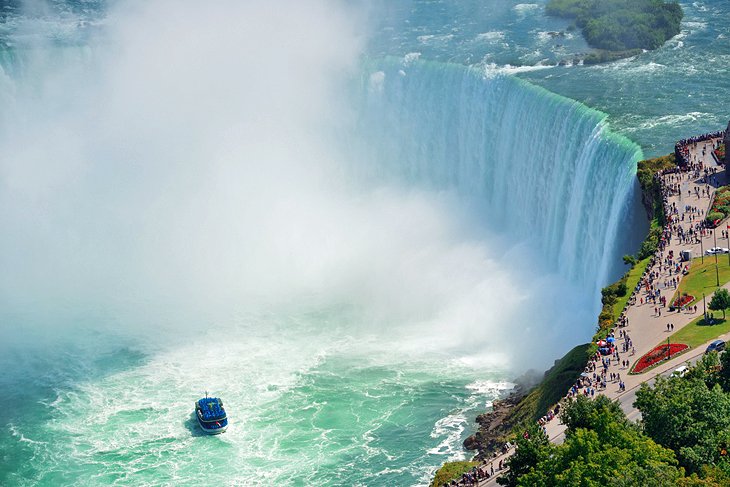
Niagara Falls is Canada's most internationally recognized attraction, visited by millions of tourists each year. While there are actually three sets of falls, the largest section, known as Horseshoe Falls, drops approximately 57 meters, creating a great wall of water that stretches between Niagara Falls, Canada, and Niagara Falls, USA. The falls are famous primarily for the large volume of water flowing over them, but combined with the huge drop, they are truly a magnificent sight.
The falls are located right in the city of Niagara Falls, making them easy to visit. It's possible to walk down the main tourist strip in Niagara Falls, an outrageous spectacle in itself, to the edge of the gorge, where you'll find great views all along the walkway overlooking the river and the falls. Day trip tours can be easily arranged from hotels or hostels in Toronto. By car, the trip from Toronto takes about 1.5 hours.
2. Toronto's CN Tower
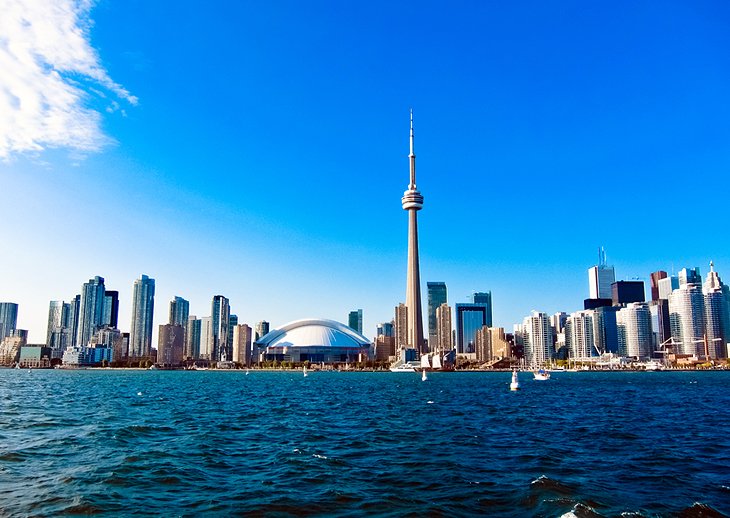
The CN Tower is one of Canada's most iconic structures, standing tall along the Toronto skyline. The 553-meter tower is lit up at night and can be seen from all over the city and surroundings at any time of day or night, but visitors will likely want to take a trip up the tower to fully experience it.
An elevator allows access to the observation deck and restaurant, located about three-quarters of the way to the top. The view is astounding, looking out over the city and Lake Ontario. On clear days, it's possible to see all the way to the plume of mist rising off Niagara Falls. In the evening, looking out over the sparkling city lights is also an impressive sight.
Thrill seekers will want to give the EdgeWalk a try. Strapped in, you'll step outside the SkyPod, and spend 30 minutes strolling around the tower, 166 stories above the ground. It's not for the faint of heart or those afraid of heights but adrenaline junkies will be entirely in their element.
The tower is located in the heart of downtown Toronto, and at the base is the new Ripley's Aquarium and Rogers Centre, two of Toronto's top attractions.
3. Parliament Hill in Ottawa
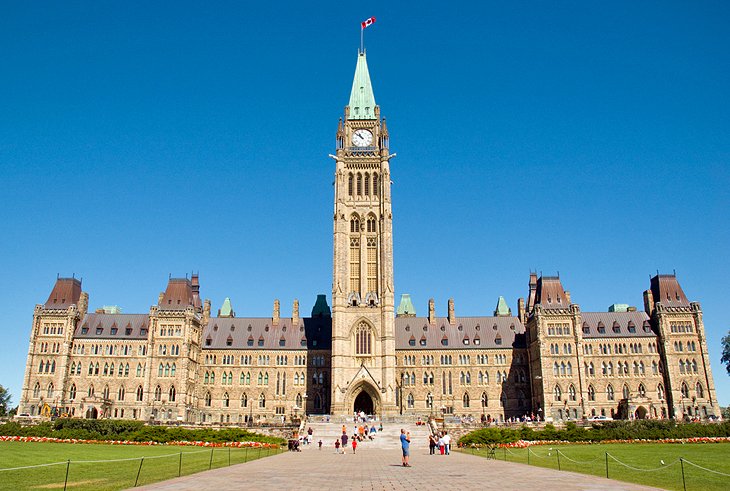
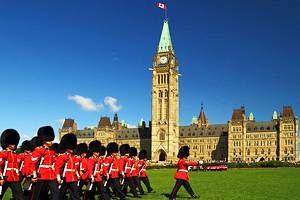
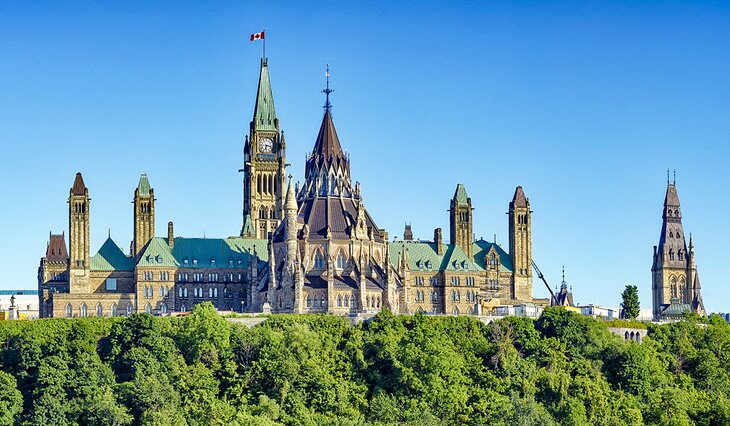
Parliament Hill in the nation's capital is where most visitors begin their sightseeing in Ottawa. The buildings reside in a lovely setting on a rise above the Ottawa River. The Peace Tower is the most obvious and the most photographed structure, standing more than 90 meters high between the Senate and the House of Commons.
In front of the Parliament buildings is the Centennial Flame. During the summer, visitors can see the Changing of the Guard on the lawn in front of the Houses of Parliament, while those who are lucky enough to be visiting Ottawa on July 1 can enjoy some of the biggest Canada Day celebrations in the country.
Daily guided tours of the Parliament Buildings, including the Senate, House of Commons, and the East Block are available free of charge. Tickets are available same day, although it's strongly advised that you book well in advance online.
4. Ontario's Provincial and National Parks
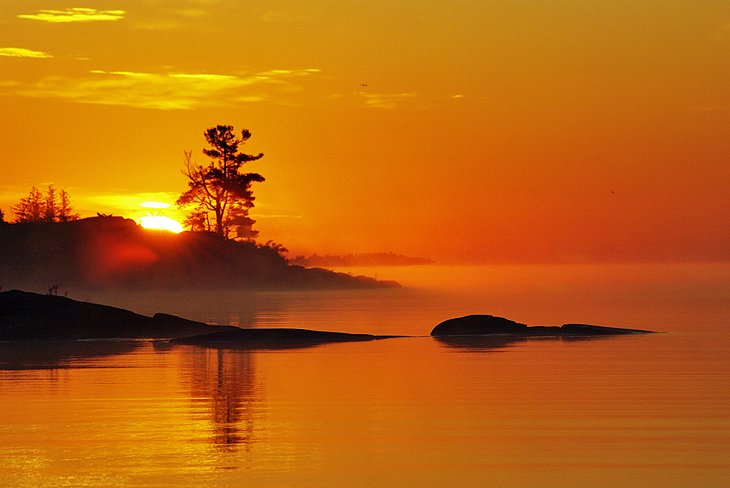
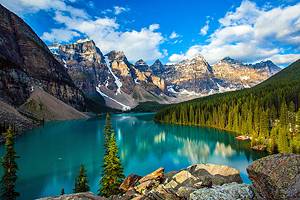
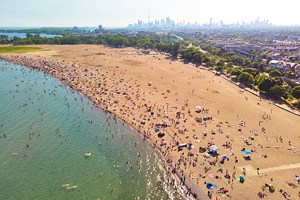
Ontario has many outstanding provincial and national parks that offer access to some of the most beautiful areas of the province. In these parks, you'll find Ontario's best lakes, where you can fish, swim, and go pleasure boating. If hitting the beach and laying in the sand is more your thing, the parks are also hot spots for Ontario's best beaches.
In Southern Ontario, just two hours from Toronto, Algonquin Provincial Park is one of the most popular parks and outdoor destinations, with an extensive network of hiking trails, and beautiful lakefront campgrounds. Further afield but equally beautiful, Killarney Provincial Park is another great area for hiking, canoeing, and camping.
On the shores of Lake Huron and Georgian Bay, Bruce Peninsula National Park offers its own attractions, and nearby but offshore, boaters and divers can find adventure exploring Georgian Bay Islands National Park and the Fathom Five National Marine Park.
You can also find history in some of the parks. The petroglyphs of Petroglyphs Provincial Park, just a short drive northeast of Peterborough, offer an easy and close-up look at an outstanding collection of 500 to 1,000-year-old Aboriginal rock carvings. Somewhat more difficult to access, but also impressive, are the pictographs that line the cliff walls on the shoreline of Lake Superior in Lake Superior Provincial Park.
Those who are looking for a truly remote experience will find invitingly pristine lakes and forests in Quetico Provincial Park in Northwestern Ontario. This is a popular area for backcountry canoe trips and fishing trips.
5. Royal Ontario Museum (ROM)
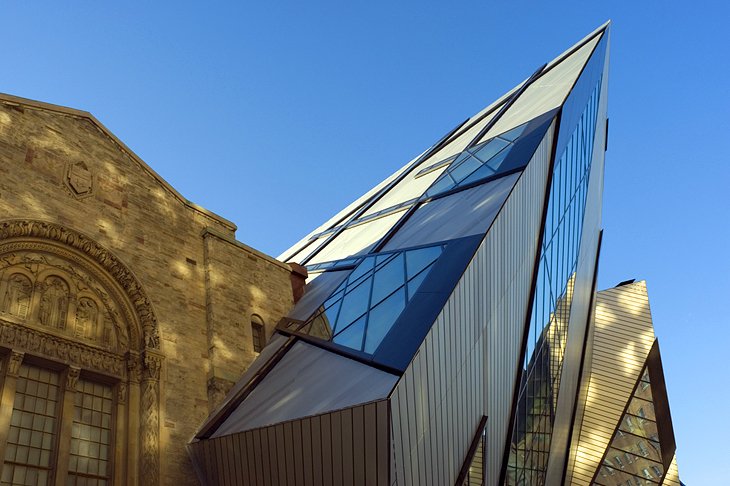
The Royal Ontario Museum in downtown Toronto is one of the premier museums in the province, featuring a broad range of collections, from natural history and science to cultural exhibits from around the world.
Commonly referred to as the ROM, this museum underwent an expansion in 2007, which saw the addition of a modern and unique extension known as the Michael Lee-Chin Crystal. The building is now a mix of old and new architecture with a striking appearance.
The Royal Ontario Museum is within walking distance of the fascinating Gardiner Museum and the tony shops of Bloor Avenue.
6. Canada's Wonderland
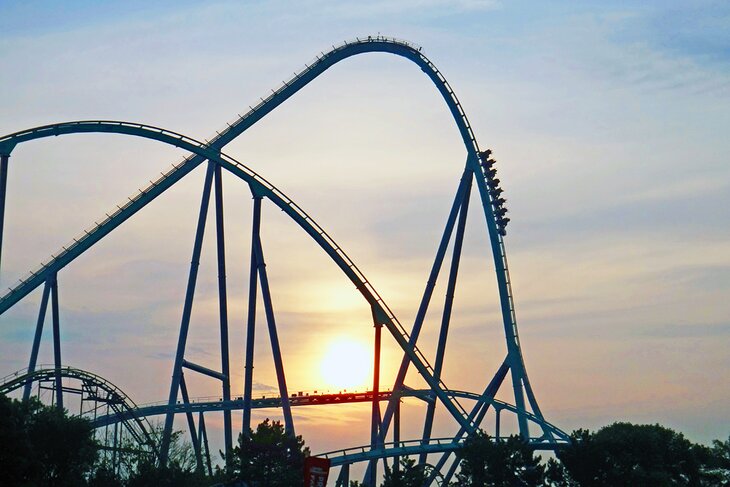
About 30 kilometers northwest of Toronto's city center is Canada's Wonderland, a huge theme park, which operates during the summer months. For local residents with kids, an annual visit to Canada's wonderland is one of the top things to do in summer. But, as Canada's premier amusement park, this attraction draws families from across the country.
Roller coasters and thrill rides for children of all ages, as well as a water park, dinosaur park, and live shows, are just some of the attractions. Canada's Wonderland is planning on opening two new rides in 2023: the Tundra Twister and Snoopy's Racing Railway.
Visiting Wonderland is an easy day trip from Toronto.
7. National Gallery of Canada
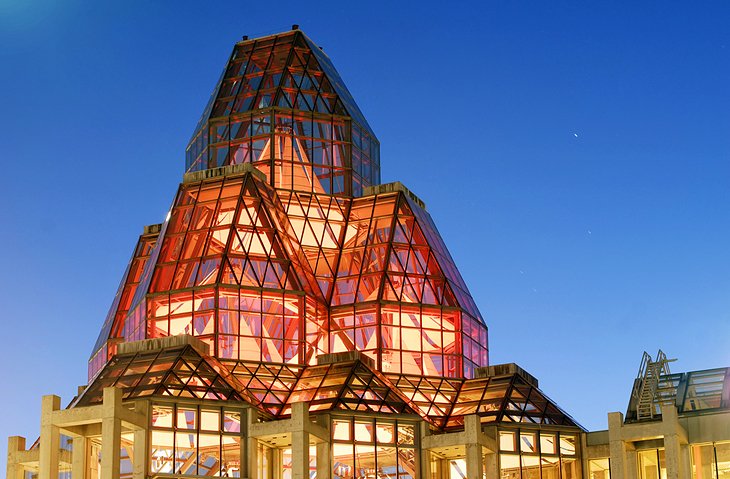
The National Gallery of Canada in Ottawa houses some of the country's most important collections. It contains a particularly strong selection of works by Canadian artists, from the Group of Seven to Emily Carr and many other famous names. The gallery also displays important pieces by well-known international artists.
The National Gallery building is housed in an ultra-modern architectural masterpiece designed by Moshe Safdie.
After you visit this fascinating museum, continue your museum tour by heading across the bridge to the Canadian Museum of History, or stroll over to the wonderful ByWard Market for a bite.
8. Toronto International Film Festival (TIFF)

The Toronto International Film Festival (TIFF) is the most famous event on Ontario's calendar, attracting some of the biggest movie stars across North America. This 10-day festival, held in early September in Toronto, is one of the best-attended film festivals in the world, with almost a half million visitors annually.
Tourists and locals descend on the city to watch a film or catch a glimpse of some of their favorite actors, and the city is a buzz of activity. At this time of year, the weather is still hot, and evenings are pleasant. The streets are full of people, restaurants are booked well in advance, and outdoor patios in the city are crowded until late at night. If you are visiting Toronto at this time of year, make sure you book your hotel and restaurants well in advance.
9. Art Gallery of Ontario
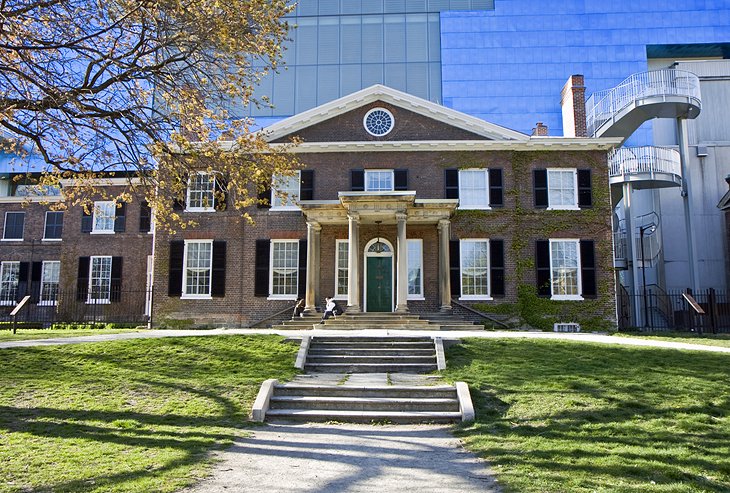
In downtown Toronto, the Art Gallery of Ontario (AGO) is one of Canada's most prestigious art galleries. It hosts a particularly impressive collection of Canadian paintings with a focus on artists from Ontario and Toronto. It also holds Canada's largest collection of African and Oceanic Art displayed in a museum.
Other highlights include paintings and sculptures by European masters and Modern and Contemporary collections from North America and Europe. Temporary exhibitions are held throughout the year, check the AGO's website for the most current list.
10. Thousand Islands
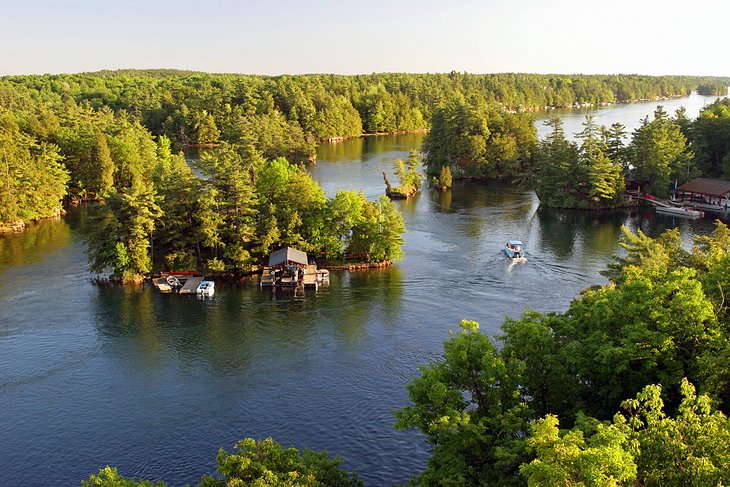
Spread over an 80-kilometer stretch of the St. Lawrence River is a scenic natural area known as the Thousand Islands. The islands are on a granite shelf extending from the Canadian Shield to the Adirondack Mountains in the United States, with the US-Canada boundary actually running between the islands. It is one of the oldest and best-known holiday areas in Ontario, popular with cottagers, boaters, and those looking to get away from the cities of Southern Ontario during the hot summer months.
One of the most popular things to do in this area is a Thousand Islands Sunset Dinner Cruise through the maze of islands. Cruises run from mid-April to mid-October.
Gananoque is the principal resort town in the area and the main gateway to the Thousand Islands.
11. Fishing in Northern Ontario
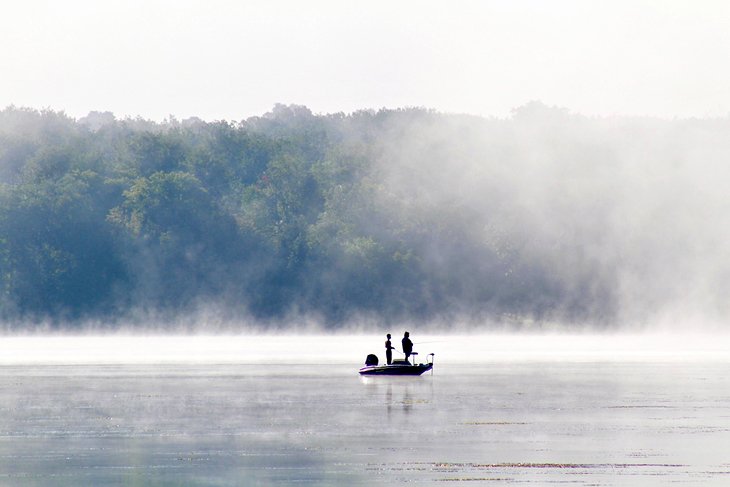
Northern Ontario is one of the best places in Canada for fishing. Walleye, pickerel, bass, northern pike, and muskies are some of the most sought-after catches, and people from all over North America come here to try their luck. And you don't have to be all that lucky if you know where to go.
Fishing lodges in Ontario range from luxury resorts to rustic cottages, but most offer everything you need to make your trip a success, including boats, guides, meals, and cabins. The best fishing is often found on remote northern lakes, and accessed by small float planes. Resorts either offer fly-in packages or, in some cases, boat pickup. You can also find a number of good drive-to resorts.
12. Trent-Severn Waterway National Historic Site of Canada
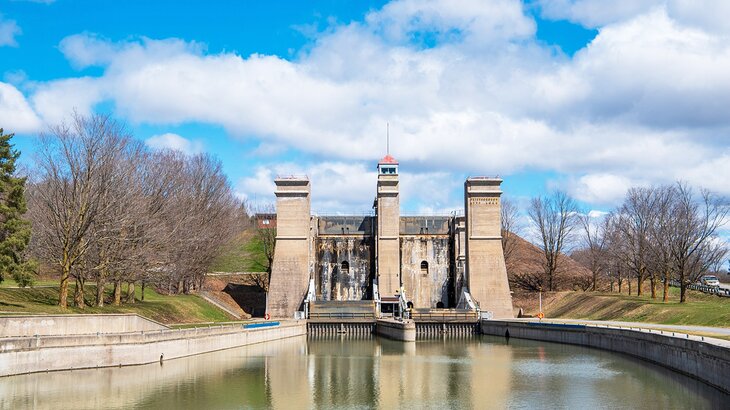
The historic Trent-Severn Canal, built in the late 1800s and early 1900s, is a system of waterways linking Lake Ontario with Georgian Bay on Lake Huron. The canal winds its way through a series of rivers and lakes, such as the Trent River and Lake Simcoe, in the east of Ontario. The changing levels are met with more than 40 locks, including the world's highest hoist, built in 1905 at Peterborough, covering a height of 20 meters.
In the past, the canal was mainly used for carrying grain and timber, but today, the Trent-Severn Waterway is a part of Parks Canada and is officially called the Trent-Severn Waterway National Historic Site of Canada. It is used largely for tourism and recreational boaters. At some of the locks, there are camping facilities and grassy areas for picnics.
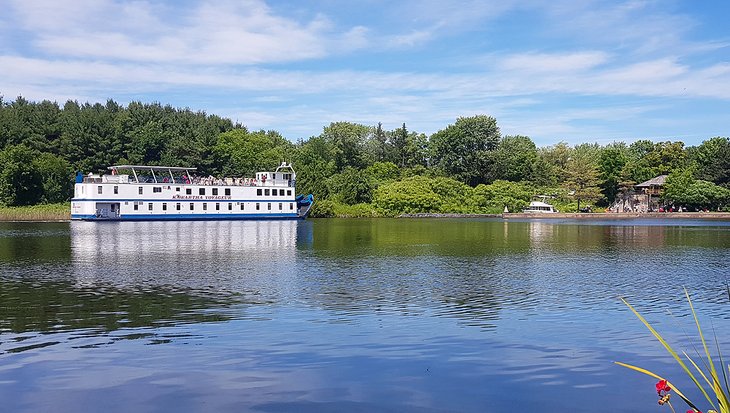
A great way to experience the Trent-Severn Waterway is on a Kawartha Voyageur Cruise. These multiday cruises allow you to see the sights and the locks at a leisurely pace, by basking on the sundeck or stopping at various ports,
13. Muskoka and Cottage Country
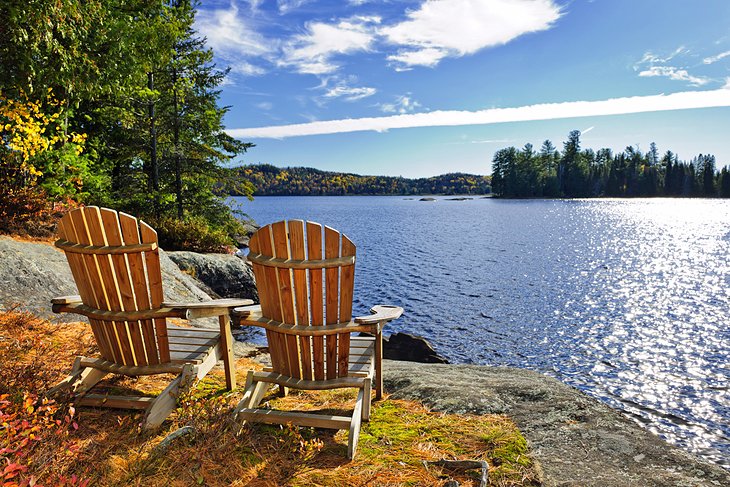
One of Ontario's most famous summer hot spots is an area known as Cottage Country or Muskoka. Located north of Toronto, this region is centered around Lake Muskoka and a number of other popular lakes in the area.
Although you can find areas of equal beauty all over Ontario, this region's proximity to the city, just two to three hours from Toronto, has made it extremely popular. The lakes are surrounded by high-end cottages and summer homes of Torontonians. On weekends, the highways to Cottage Country are clogged with traffic as people flee the heat of the city, to relax around the lakes.
This is also a fun area to visit, with many people renting cottages here or staying at luxury resorts. There are a number of small communities in Cottage Country, although the primary town is Gravenhurst, located on the shores of Lake Muskoka. From here, visitors can hop on historical steamships for a short cruise and tour of the lake.
14. Fort William Historical Park
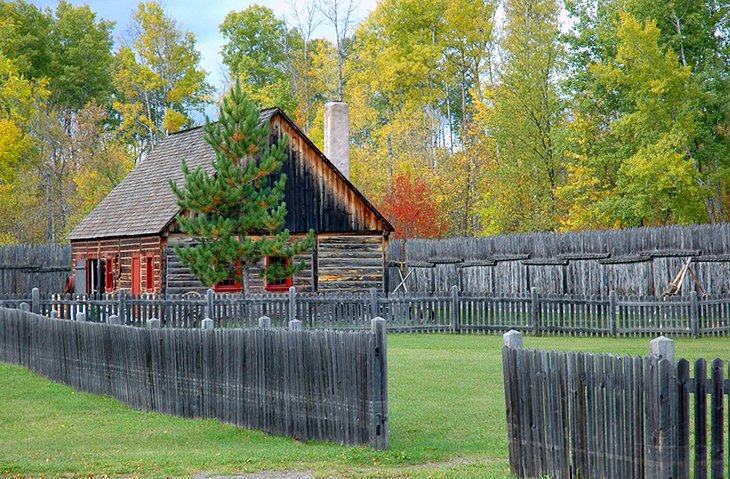
Fort William Historical Park is the reconstruction of the inland headquarters operated by the Northwest Company of the Canadian fur trade from 1803 to 1821. Situated on the banks of the Kaministiquia River in south Thunder Bay, the Fort comprises 57 buildings on 250 acres.
Each summer, fur traders, voyageurs, and first nations people would converge upon the Fort for the annual "rendezvous," which saw the transfer of tons of furs coming in from western posts with trade goods coming from Montreal, all conveyed by birch bark canoes within one season. This system enabled the Nor'Westers to emerge as a dominant force in the fur trade.
The Fort offers a fascinating looking at fur trade life, touching upon themes from furs and food to muskets and medicine, and highlighting a cultural mosaic of Scottish fur traders, French Canadian voyageurs, farmers and artisans, and aboriginals and Métis.
The park is not all about the fur trade, though. On the same grounds is the David Thompson Astronomical Observatory (DTAO). The observatory is home to one of Canada's largest public telescopes.
15. Lake of the Woods
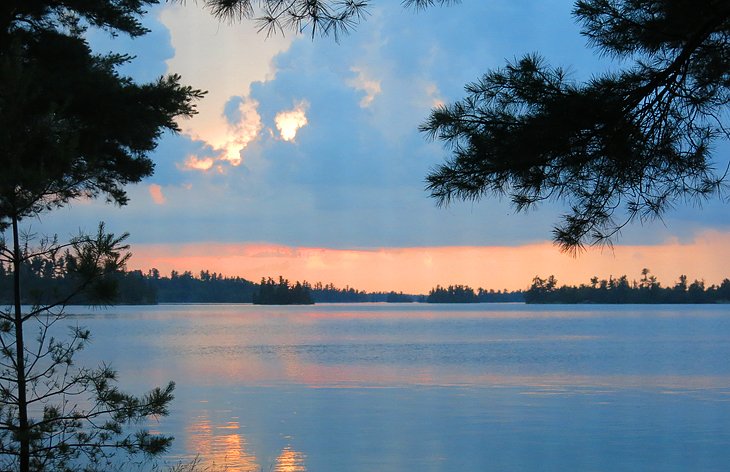
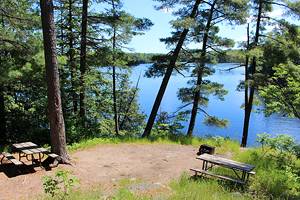
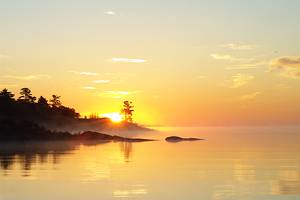
To discover Ontario's remote wilderness landscapes, one of the best places to visit is Lake of the Woods and the surrounding areas. This huge body of water lies on the lightly populated provincial borders of Manitoba and Ontario and also dips into the state of Minnesota. This beautiful lake provides an incredibly scenic setting and pristine wilderness experience for those interested in venturing into the backcountry.
Many people have cottages on Lake of the Woods, but its distance from major cities and the size of the lake mean cottages are few and far between. It is also a prime destination for tourists who come to Canada to go on fishing trips.
Lake of the Woods provides excellent opportunities for boating, fishing, and simply escaping into the Canadian wilderness. Islands fringe the heavily indented Canadian north shore, while the south shore is flat, sandy, and marshy in places. Beginning in 1688, the lake provided trappers and voyageurs with a passage westwards.
The main town on Lake of the Woods is Kenora, Ontario. This is where you can find lodging, plan charter flights, hire fishing guides, and get supplies.
16. Blue Mountain Resort
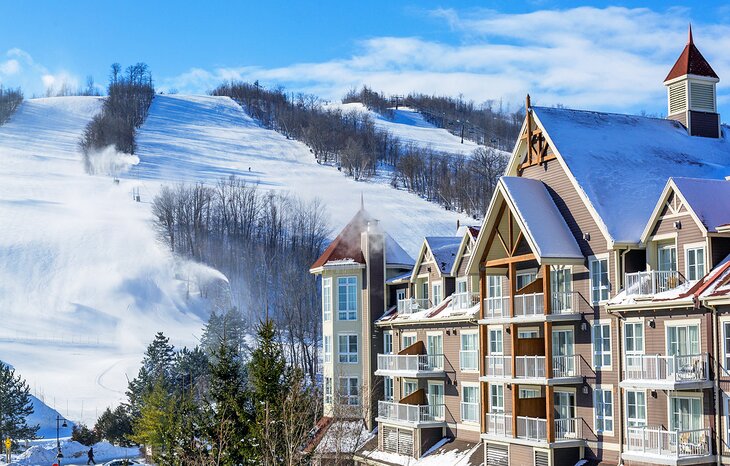
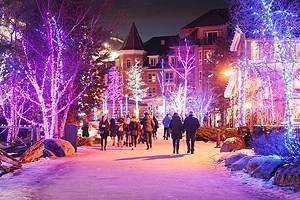
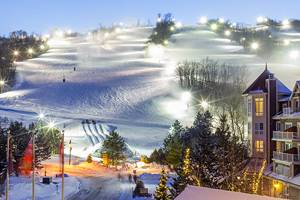
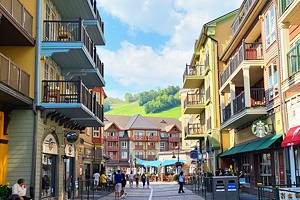
Blue Mountain Resort, just outside the town of Collingwood, on the shores of Georgian Bay, is one of the most popular ski resorts in Ontario. Blue Mountain Village, at the base of the hill, features fine-dining restaurants, top-end shops, and first-class accommodations. The hill itself is family oriented and extremely popular with Torontonians.
The resort is open year-round and almost as busy in summer as it is in winter, with activities that range from rock climbing and ziplining to mountain biking and hiking.
17. Stratford Festival
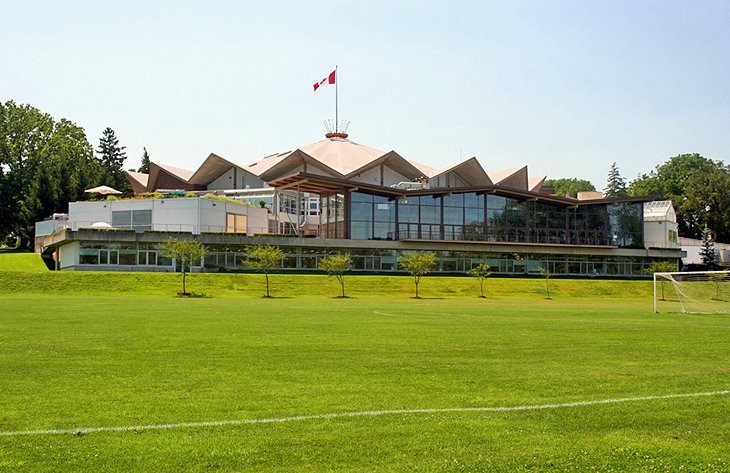
William Shakespeare would be proud of the fine folks who live in Stratford who, each summer, put on an incredible internationally renowned summer festival celebrating his works. Stratford is just 60 kilometers northeast of London, Ontario, and draws particularly large crowds from the Toronto area.
The 2,250-seat Festival Theatre has been staging plays between May and October since 1953, with pride of place going to Shakespeare. There are now four theater venues, and plays by other famous writers, along with up-and-coming playwrights, are also presented. Most seasons, at least 12 productions are performed at the Stratford Festival.
18. Sainte-Marie among the Hurons
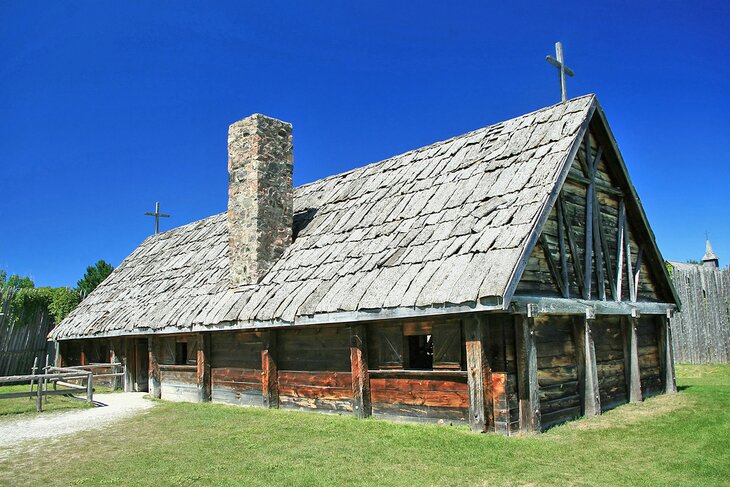
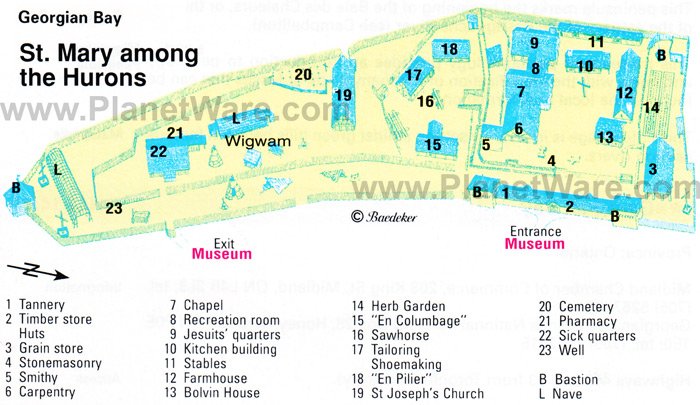
The reconstruction of the mission station of Sainte-Marie among the Hurons is about five kilometers east of Midland on the Wye River. It was founded by the Jesuits in 1639 and served as a mainstay for 10 years for Europeans in "Wendat," the land of the Huron. As time went by, there was constant conflict with the Hurons, who were also decimated by diseases imported by the Europeans. In 1649, the Jesuits abandoned their settlement and returned to Québec.
The mission was reconstructed in the 1960s and was later designated a national monument. Today, it's open to visitors daily from May to October, and provides an excellent opportunity to learn about the history of the station and pioneer life in Canada.
Nearby and also worth visiting for more period history is Discovery Harbour. Here, you'll see two restored sailing ships: The H.M.S. Bee and the H.M.S. Tecumseth. In addition to the ships, historical maritime homes can be toured. These include the Sailor's Barracks, the Commander's Home, the Assistant Surgeon's House, the Surveyor's Home, the Keating House, and the Officer's Quarters.
19. Rideau Canal National Historic Site
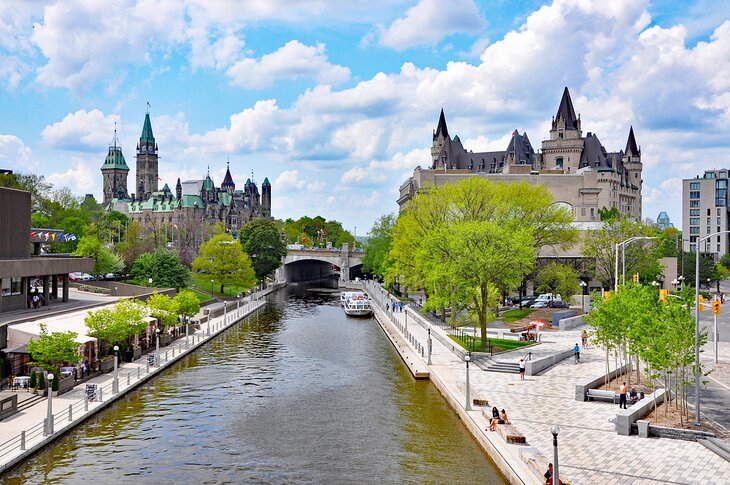
One of Canada's most famous man-made waterways, the Rideau Canal is a must-see when visiting Ottawa. This UNESCO World Heritage Site dates from the early 19th century and has been meticulously maintained over the years and appears much as it did when it was first built.
Stroll along the pathways on either side and watch the boats pass through the locks. A popular thing to do in Ottawa is to take a Rideau Canal cruise. This 90-minute tour takes place on a 100 percent electric-powered passenger vessel and passes all the city's top sights, including the Château Laurier, National Arts Centre, and the Canadian Museum of Nature.
If you find yourself in Ottawa in the winter, be sure to rent some skates and try out the world's largest skating rink. Each winter, in January, the Rideau Canal is transformed into a 7.8-kilometer-long skating route. Along the way are warming huts and food vendors selling the iconic (and super tasty!) Beavertails.
Map of Tourist Attractions in Ontario
More Related Articles on PlanetWare.com
Canada Adventures: Make Ontario part of your larger trip through Canada. For ideas on how to incorporate Ontario into your plans, see our Canadian itineraries. Another great resource is our list of best places to visit in Canada, which gives a good overview of cities and destinations across the country.