Attractions & Places to Visit in Egypt
Home of the ancient Pharaohs, Egypt is a destination full of dazzling temples and tombs that wow all who visit. It's not all historic treasures and tourist attractions, though. With vast tracts of desert for 4WD adventures, the Red Sea's world-class coral reefs and wrecks for divers, and cruising on the famed Nile River, there are plenty of things to do in Egypt for all types of travelers.
Beach lovers head to the Sinai or the Red Sea Coast to soak up the sun, while archaeology fans will have a field day in Luxor.
Cairo is the megalopolis that can't be beaten for city slickers, while Siwa oasis and the southern town of Aswan offer a slice of the slow pace of the countryside.
With so much to see and do, Egypt offers visitors a chance to create itineraries that combine culture, adventure, and relaxation all on one trip.
Plan your sightseeing with our list of the top attractions and places to visit in Egypt.
Pyramids of Giza
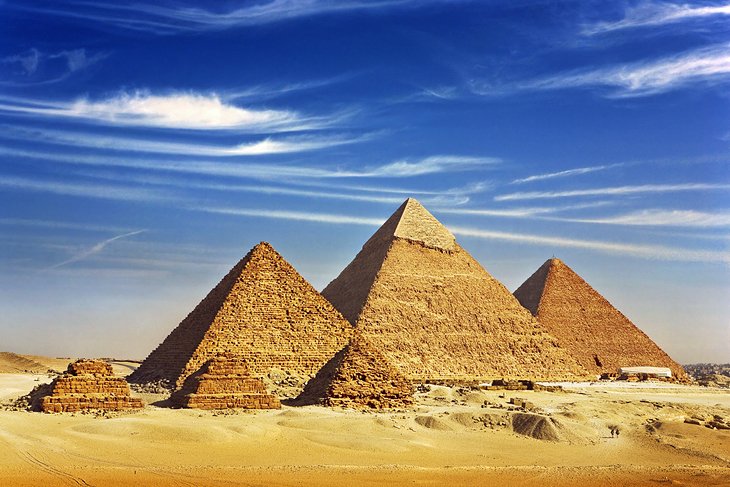
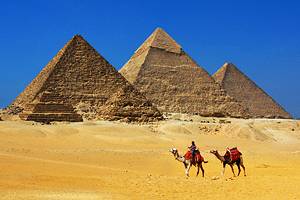
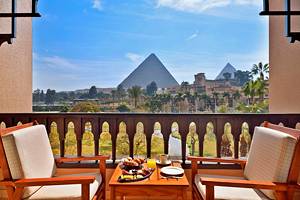
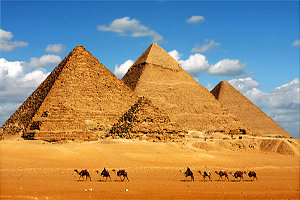
The last surviving wonder of the Seven Wonders of the Ancient World, the Pyramids of Giza are one of the world's most recognizable landmarks.
Having awed travelers down through the ages, these tombs of the Pharaohs Khufu (Cheops), Khafre (Chephren), and Menkaure (Mycerinus), guarded by the enigmatic Sphinx, are usually top of most visitor's lists of tourist attractions to see in Egypt and often the first sight they head to after landing.
Today, sitting on the desert edge of Cairo's sprawl, these megalithic memorials to dead pharaohs are still as wondrous a sight as they ever were and an undeniable highlight of any Egypt trip.
To beat the crowds, get here around 7:30am and enter through the main Pyramid of Khufu site entrance (rather than the Sphinx entrance). This means you can have finished exploring the interior tunnels and burial chambers of the Pyramid of Khufu by the time the tour buses start pulling in at 8:15am.
Most visitors limit their site visit to the three pyramids and the Sphinx, but there is plenty more to see on the Giza Plateau. If you can, reserve time to explore the funerary complexes of the eastern cemetery (on the east side of the Pyramid of Khufu). The tombs of 6th dynasty high officials Qar and Idu and the tomb of Meresankh III (who was one of Pharaoh Khafre's wives) are all open to the public.
- Read More: Pyramids of Giza: A Visitor's Guide
Luxor's Temples & Tombs
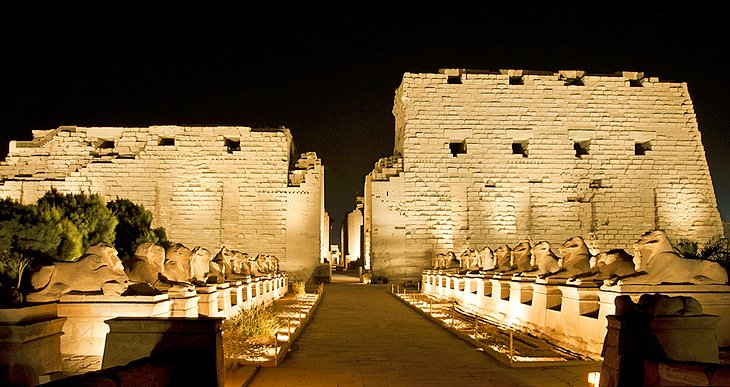
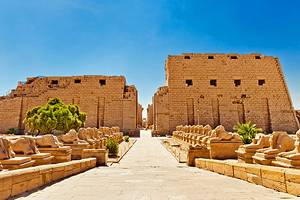
Famed for the Valley of the Kings, Karnak Temple, and the Memorial Temple of Hatshepsut, the Nile-side town of Luxor in Upper Egypt has a glut of tourist attractions.
This is ancient Thebes, the power base of the New Kingdom pharaohs, and home to more sights than most can see on one visit.
Luxor's east bank is home to the modern city, with its vibrant souq; the two temples of Karnak and Luxor; and the museum. The west bank's lush farmland and barren cliffs are where the vast majority of Luxor's tourist attractions sit, with so many tomb and temple sights that it has been called the biggest open-air museum in the world.
Spend a few days here exploring the colorful wall art of the tombs and gazing in awe at the colossal columns in the temples, and you'll see why Luxor continues to fascinate historians and archaeologists.
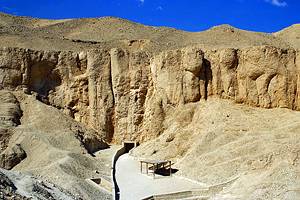
The Valley of the Kings is one of Egypt's most visited sites but, if you are willing to get up extra early, you can beat the crowds. All of Luxor's archaeological sites open at 6am, but hardly any visitors (and no large tour operators) take advantage of this.
Kick off your sightseeing with a 6am start at the Valley of the Kings, and you'll get to experience the interiors of Luxor's famed New Kingdom tombs with hardly anyone else (except the handful of other wily early risers) there.
Cruising the Nile
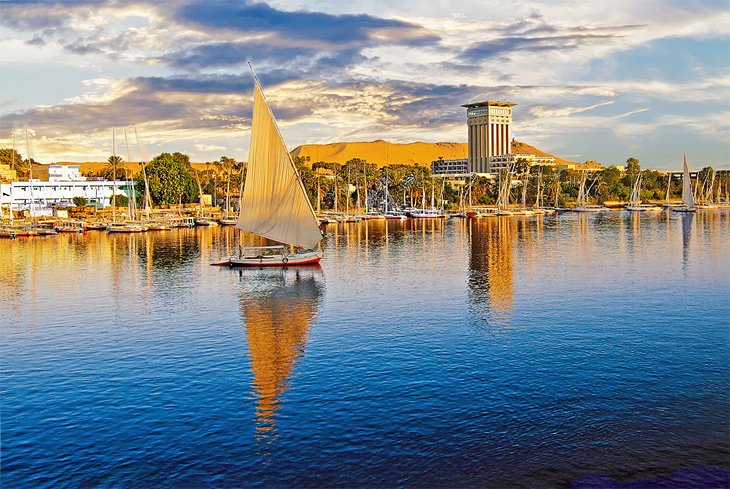
Egypt is defined by the Nile. For many visitors, a multi-day cruise upon this famed waterway that saw the rise of the Pharaonic era is a highlight of their Egypt trip.
Cruising the Nile is also the most relaxing way to see the temples that stud the banks of the river on the route between Luxor and Aswan, plus sunrise and sunset over the date-palm-studded river banks, backed by sand dunes, is one of Egypt's most tranquil vistas.
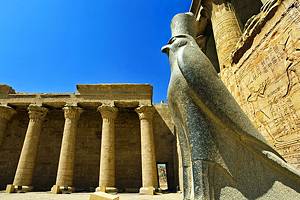
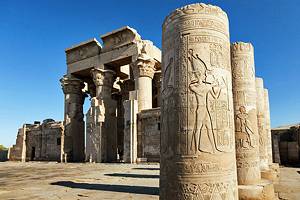
The two famous sights on a Nile Cruise are the Temple of Kom Ombo and Edfu's Temple of Horus, where all the big cruise boats stop.
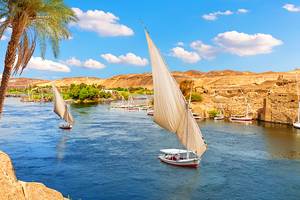
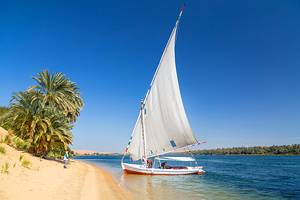
If you'd prefer a less crowded and slower experience, though, and don't mind "roughing it" a bit, you can also cruise the Nile by felucca (Egypt's traditional lateen-sailed wooden boats), which also allows you to create your own itinerary.
The vast amount of cruise boat itineraries depart from either Luxor or Aswan, but feluccas can only be chartered for multi-day trips from Aswan.
Aswan
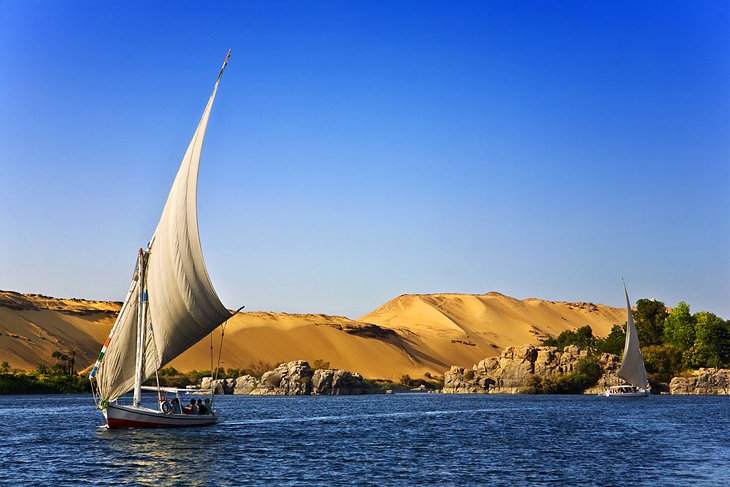
Egypt's most tranquil town is Aswan, set upon the winding curves of the Nile. Backed by orange-hued dunes, this is the perfect place to stop and unwind for a few days and soak up the chilled-out atmosphere.
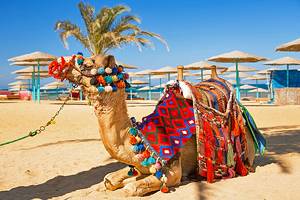
Take the river ferry across to Elephantine Island and stroll the colorful streets of the Nubian villages. Then ride a camel to the desert monastery of St. Simeon on Aswan's east bank. Afterwards, relax in one of the riverboat restaurants while watching the lateen-sailed feluccas drift past.
Make sure to jump aboard a felucca at sunset to sail around Aswan's islands. This is by far, Aswan's most popular activity and the most relaxing way to take in the local sights.
There are plenty of historic sites here and numerous temples nearby, including Philae Temple on its island, but one of Aswan's most popular things to do is simply kicking back and watching the river life go by.
Abu Simbel
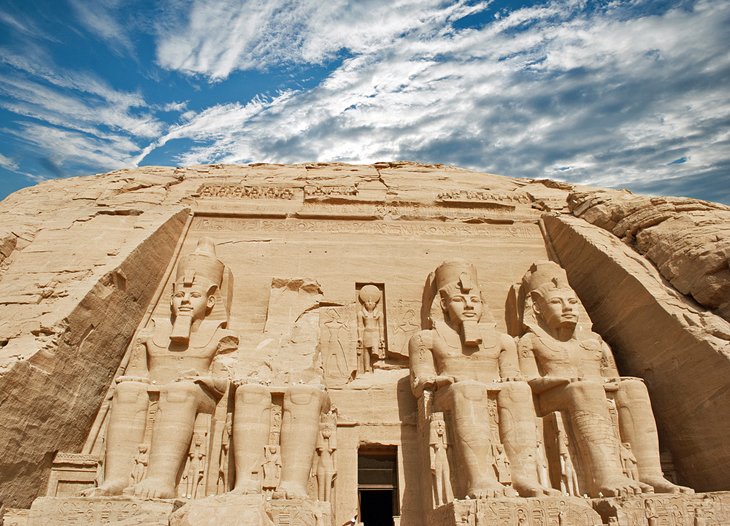
Even in a country festooned with temples, Abu Simbel is something special. This is Ramses II's great temple, adorned with colossal statuary standing guard outside, and with an interior sumptuously decorated with wall paintings.
Justly famous for its megalithic proportions, Abu Simbel is also known for the incredible engineering feat carried out by UNESCO in the 1960s, which saw the entire temple moved from its original setting to save it from disappearing under the rising water of the Aswan Dam.
Today, exploring Abu Simbel is just as much about admiring the triumph of this international effort to save the temple complex as it is about gaping in wonder at Ramses II's awe-inspiring building works, itself.
Most people arrive in Abu Simbel on organized day trips from Aswan, which all have an early morning start to get to the temple complex at 8am or 9am.
After 11am, nearly everyone has cleared out and headed back to Aswan. To wander through Ramses II's colossal monument without the crowds, overnight in Abu Simbel village itself and visit the temples after midday.
Diving the Red Sea
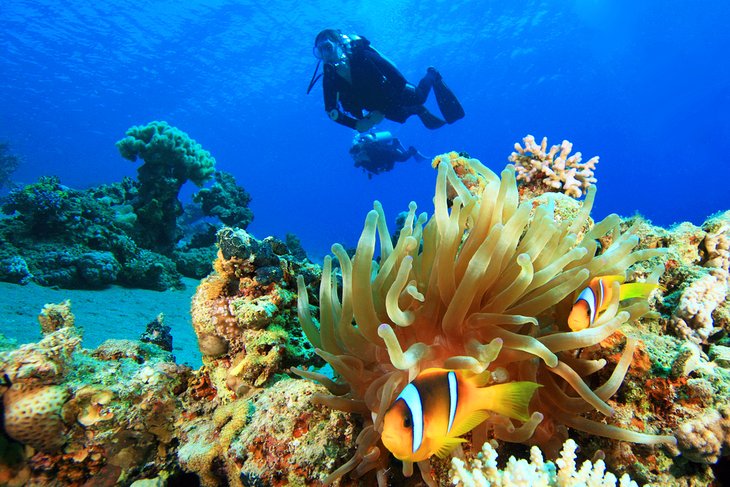
Below the Red Sea's surface is another world as fascinating as the temples and tombs on land.
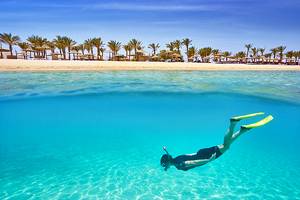
The coral reefs of the Red Sea are renowned among scuba divers for both the soft corals on display and the vast amount of sea life, ranging from colorful reef fish and nudibranchs to sharks, dolphins, turtles, rays, and even dugongs.
For divers, the most famous town to base yourself in is Sharm el-Sheikh on the Sinai Peninsula, closest to the reefs of Ras Mohammed National Park, as well as the reefs of the Straits of Tiran.
To dive the sites of the Straits of Gubal head to Hurghada or El Gouna on the Red Sea coast, while advanced divers should check out the resort of Marsa Alam, the nearest base for diving Egypt's "deep south" dive sites.
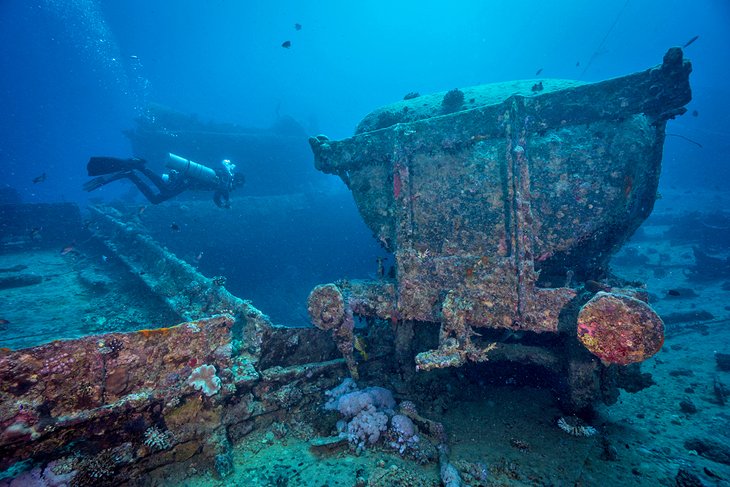
As well as fish life and coral, the Red Sea is a major wreck-diving destination. The most famous wreck is the Thistlegorm, a British WWII cargo ship that was on its way to resupply Allied troops when it was bombed by the Germans in 1941.
Today the site is regarded by divers as one of the top five wreck dives in the world due to the vast cargo of cars, motorbikes, and WWII memorabilia that can be seen both scattered on the sea bed around the wreck and inside the ship itself.
Dive boat trips to the wreck are organized from both Sharm el-Sheikh and Hurghada.
The Red Sea offers year-round diving but for the calmest sea conditions and best underwater visibility, July and August are the best months. This is high summer in Egypt though with its accompanying sweltering on-land temperatures. If your Egypt trip doesn't solely revolve around diving, it's still best to avoid these months.
Read More: Diving in the Red Sea: Dive Sites
Explore Historic Cairo
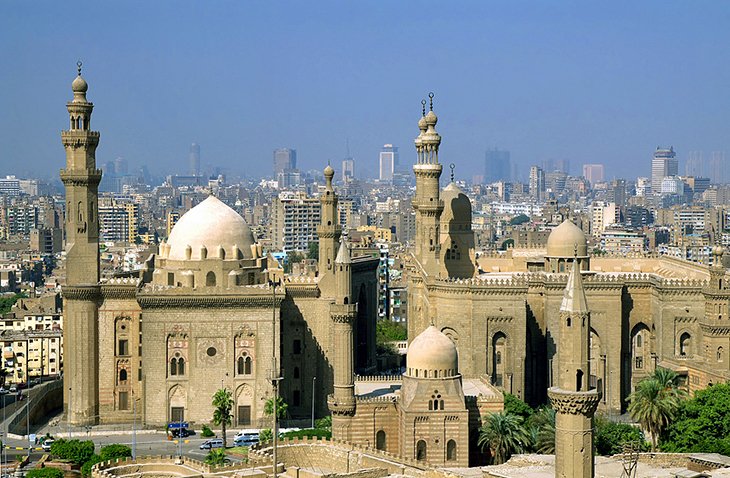
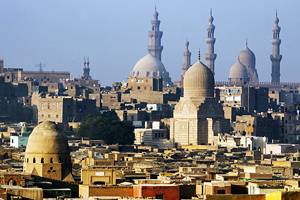
The atmospheric, narrow lanes of the capital's Historic Cairo district are crammed full of mosques, madrassas (Islamic schools of learning), and monuments dating from the Fatimid through to the Mameluke eras.
This is where you'll find the labyrinth shopping souq of Khan el-Khalili, where coppersmiths and artisans still have their tiny workshops, and stalls are laden with ceramics, textiles, spice, and perfume.
Surrounding the market is a muddle of roads, home to some of the most beautiful preserved architecture of the old Islamic empires.
There is a wealth of history here to explore. Visit Al-Azhar Mosque and the dazzling Sultan Hassan Mosque, and make sure to climb up to the roof of the ancient medieval gate of Bab Zuweila for the best minaret-speckled panoramas across the district.
Mornings are the best time to visit this district as the narrow lanes are at their quietest. If you're planning to visit the area's mosques though, avoid visiting on Fridays (the Muslim holy day). If you want to enter mosques as a tourist, dress conservatively (covering arms and legs) and bring along a scarf to throw over your head if you're female.
Keen shoppers should head to Khan el-Khalili in the evening: the shops here are all open until late and the souq is at its most vibrant after dark.
South Sinai's Beach Life
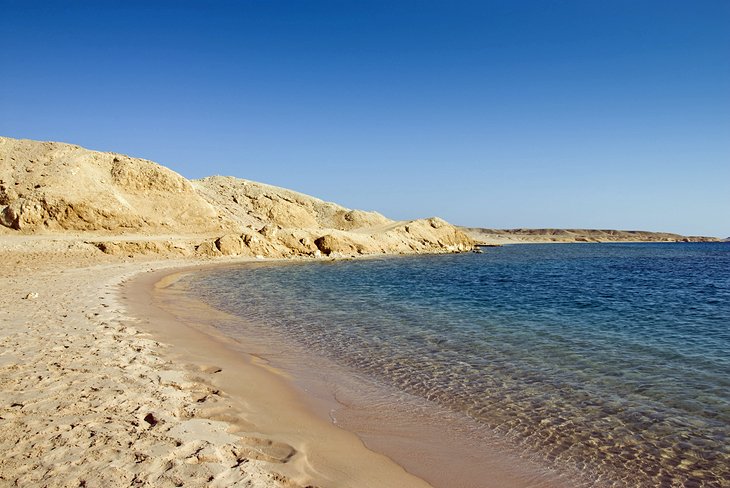
Egypt's South Sinai region, on the Sinai Peninsula, offers a beach for every type of traveler.
Sharm el-Sheikh is a European-style resort town packed full of luxury hotels, international restaurants, and bags of entertainment options. A favorite with Europeans on winter-sun vacations, many of the resorts here cater to families on one- or two-week sun-and-sand breaks.
Dahab is a low-key beach town with a budget-traveler heart, which is just as much about desert excursions and adventures as the sea. It's particularly known for its cheap dive-package deals and for its lagoon beach area where windsurfing and kitesurfing are the top activity.
Up the coast, between the port town of Nuweiba and the border town of Taba are the bamboo hut retreats that offer complete get-away-from-it-all respites from life and back-to-basics beach life.
Saqqara
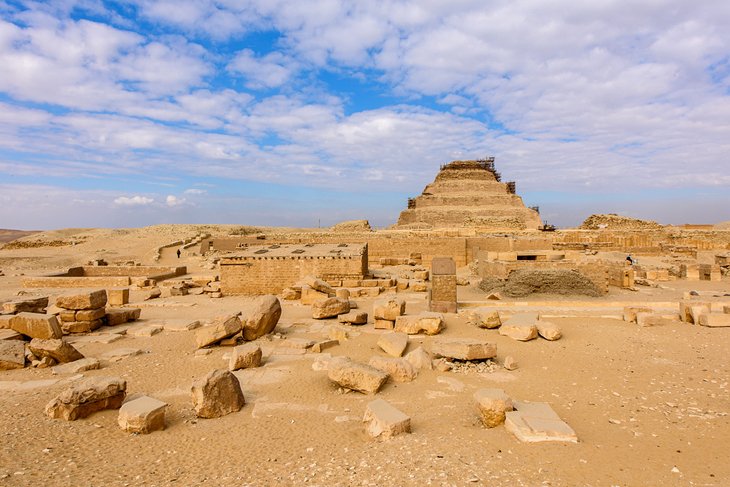
Everyone's heard of Giza's Pyramids, but they're not the only pyramids Egypt has up its sleeve. Day-tripping distance from Cairo, Saqqara is a vast necropolis of tombs and pyramids that was utilized during every era of Pharaonic rule.
It's best known for its Old Kingdom Step Pyramid, which shows how the architects of Ancient Egypt advanced their engineering knowledge to finally create a true pyramid shape.
There's much more to see beyond the Step Pyramid, though, with some of the surrounding tombs, such as the Mastaba of Ti, showcasing some of the finest tomb paintings you'll see in the country.
Nearby, the pyramid site of Dahshur is home to the Red Pyramid and Bent Pyramid, which should be included on any Saqqara visit.
- Read More: Exploring Saqqara: A Visitor's Guide
Egyptian Museum
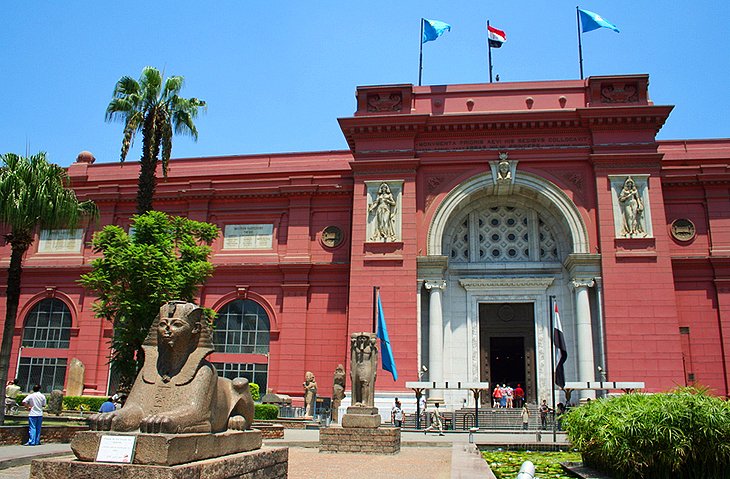
A treasure trove of the Pharaonic world, Cairo's Egyptian Museum is one of the world's great museum collections. The faded pink mansion in downtown Cairo is home to a dazzling amount of exhibits.
The museum's exhibits cover the breadth of the Pharaonic era with highlights including its artifacts from pre-dynastic Egypt, the Old Kingdom galleries displaying the fine statuary from Egypt's period of pyramid builders, and the displays of glittering funerary goods unearthed from the country's most famous tomb finds.
Make sure to reserve enough time at the museum to fully view the galleries devoted to the grave goods of Yuya and Thuya and the royal tombs of Tanis (both upstairs).
Until Giza's much-delayed Grand Egyptian Museum (GEM) opens, the Egyptian Museum is also where you come to see a selection of the riches from Tutankhamen's Valley of the Kings tomb. When the GEM finally does open, these will be moved there (and the entire Tutankhamen collection will be displayed in full for the first time).
Everything else though in the Egyptian Museum's collection will be staying in place.
White Desert
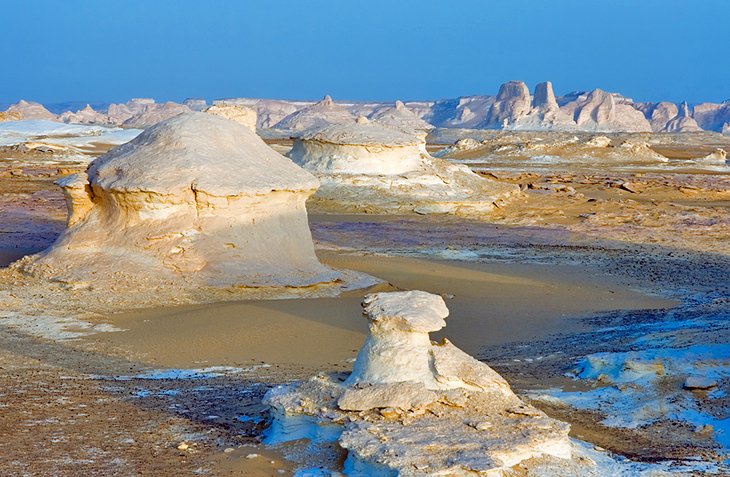
Egypt's kookiest natural wonder is White Desert National Park, out in the Western Desert, just south of Bahariya Oasis. Here, surreally shaped chalk pinnacles and huge boulders loom over the desert plateau, creating a scene that looks like icebergs have found themselves stranded amid a landscape of sand.
This highly scenic environment looks like something out of a science fiction movie and is a favorite destination for 4WD desert trips and overnight camping, which are both easiest organized in Bahariya Oasis.
For desert fans and adventurers, this is the ultimate weird playground, while anybody who's had their fill of temples and tombs will enjoy this spectacular natural scenery.
Alexandria
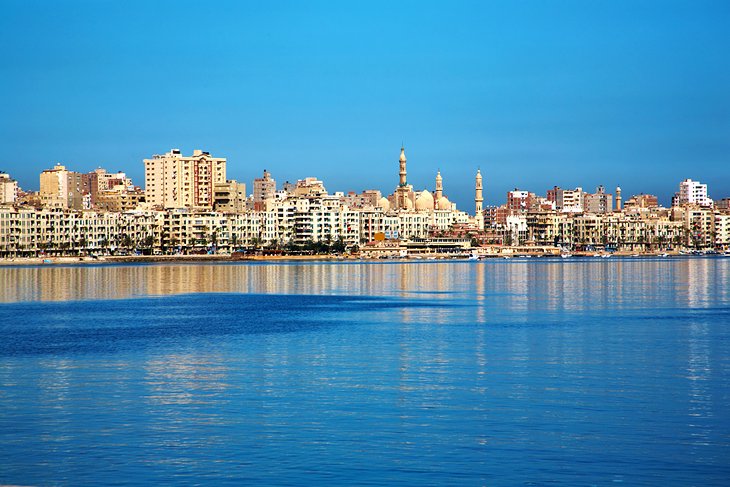
Alexandria has a history that not many others can match.
Founded by Alexander the Great, home of Cleopatra, and razzmatazz renegade city of the Mediterranean for much of its life, this seafront city has an appealing days-gone-by atmosphere that can't be beaten.
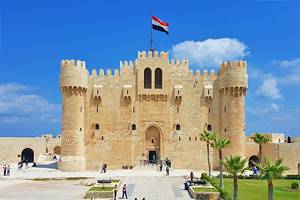
Although today, there are few historic remnants of its illustrious past left to see, Alexandria's long seafront Corniche road leading to its fort (sitting on the site where its famous ancient lighthouse once sat) remains a favorite summer destination to capture cooling sea breezes for Egyptians and foreign visitors alike.
Underwater archaeological projects here have imbued Alexandria's museums with interesting exhibits. The modern Bibliotheca Alexandrina is a contemporary interpretation of Alexandria's famed ancient library, and the handful of historic sights in town include an atmospheric catacombs site.
- Read More: Attractions & Things to Do in Alexandria
Abydos Temple
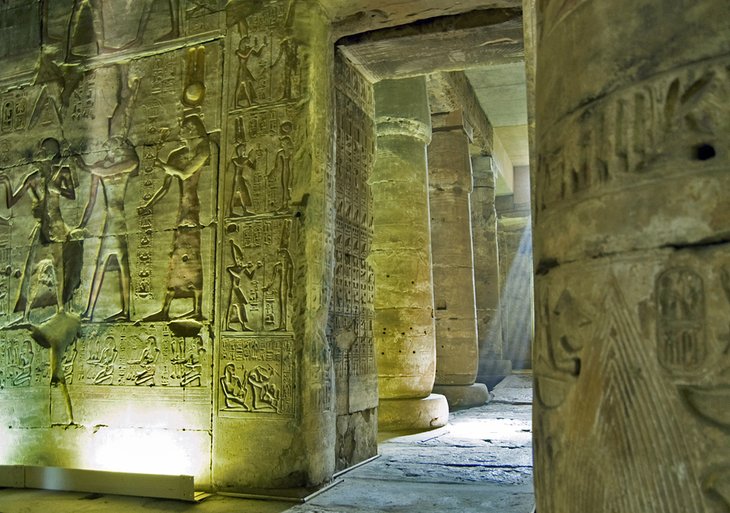
The Temple of Osiris in Abydos is one of Ancient Egypt's most fascinating artistic treasures.
The temple, begun by Seti I, sits amid a vast necropolis site where archaeological excavations are ongoing. There a various other temple remnants to see here but for most visitors, the Temple of Osiris is the main reason to visit.
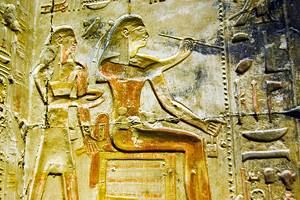
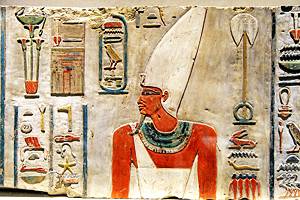
Its hypostyle halls, graced by papyrus-headed columns, contain some of the finest relief-work in Egypt, with various scenes portraying the pharaoh and the gods of Ancient Egypt.
As the temple lies north of Luxor, it isn't on the main Nile cruise ship route, so it receives much fewer visitors than the temple sites in Luxor itself and the Nile-side temples to the south. This means you are often lucky enough to wander through the temple's halls with only a few other visitors on site.
Siwa Oasis
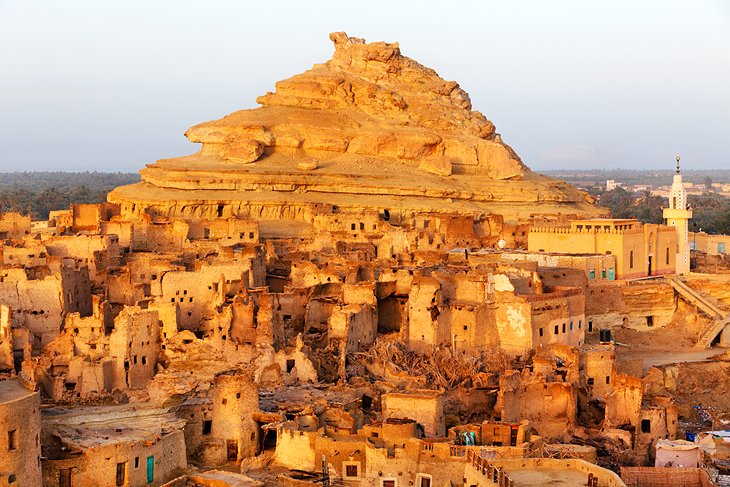
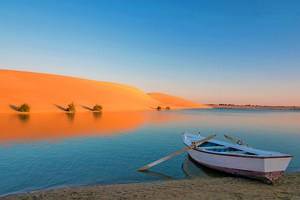
Sitting in isolation, in the western corner of the Western Desert, Siwa is the tranquil tonic to the hustle of Egypt's cities. This gorgeous little oasis, surrounded by date palm plantations and numerous hot-water springs, is one of the Western Desert's most picturesque spots.
Siwa town is centered around the ruins of a vast mud-brick citadel, known as the Fortress of Shali, which dominates the view, while various temple remnants, including the Temple of the Oracle where Alexander the Great is said to have come to receive advice, are scattered throughout the wider oasis area.
This is a top spot to wind down and go slow for a few days, as well as being an excellent base from which to plan adventures into the surrounding desert.
St. Catherine's Monastery
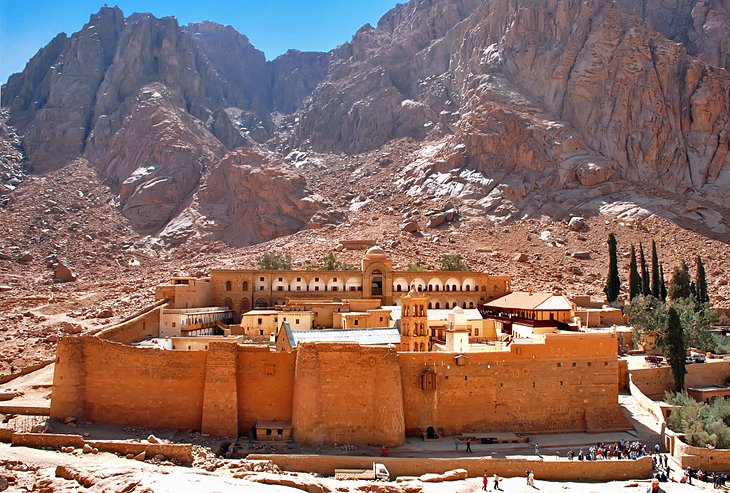
One of the oldest monasteries in the world, St. Catherine's stands at the foot of Mount Sinai, amid the desert mountains of the Sinai Peninsula, where Moses is said to have received the Ten Commandments.
This desert monastery is home to an incredible collection of religious iconography, art, and manuscripts (some of which can be seen in the on-site museum), as well as the burning bush.
For most visitors here, a trip to St. Catherine's also involves a hike up Mount Sinai to see sunrise or sunset. Take the camel path for the easy route, or climb the famous Steps of Repentance if you want better views.
Red Sea Beaches
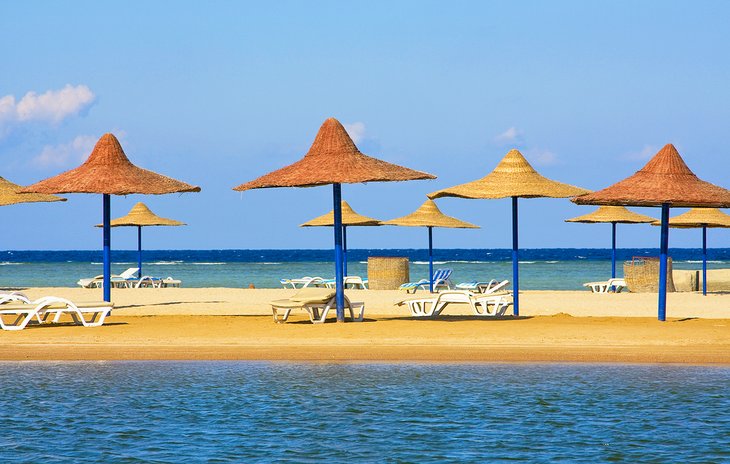
Egypt's Red Sea coastline offers swaths of sand for travelers who want a time-out from temple viewing.
During winter, the resorts scattered along the shore surrounding Hurghada jump into life as European families arrive on package tourism breaks.
The big bonus of choosing a resort on the Red Sea coast over one on the Sinai Peninsula is that you are within day-tripping distance to Luxor, so this is the best place to visit for beach life if you still want to easily see some of Egypt's most famous monuments.
Hurghada and El Gouna are the two main resort towns, while the smaller, and still being-developed, town of Marsa Alam is much farther south.
Read More: Tourist Attractions in the Red Sea Region
Coptic Cairo
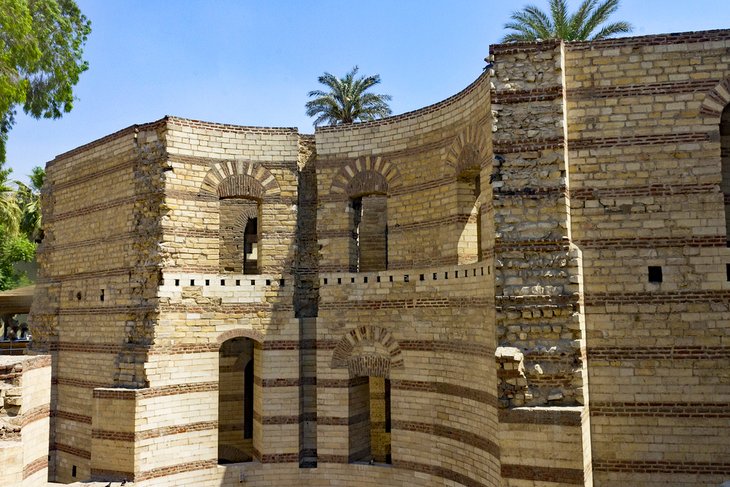
The Cairo district known as Coptic Cairo is one of the most important Christian sites in the country.
Originally the Fortress of Babylon, dating back to the Achaemenid Empire's conquest of Egypt in 525 BCE, this district is home to Cairo's oldest surviving church, synagogue, and mosque, as well as the excellent Coptic Museum, which holds the world's largest collection of Coptic Christian art and antiquities.
A section of the Fortress of Babylon's walls, which were repaired and expanded under Roman rule, are also still standing and are the entrance into the district.
Make sure to visit the Hanging Church, which holds a fine collection of icons and was built half over the Roman-era water wheel (hence the church's name). Then thread your way down the narrow alley to the Church of St. Sergius and Bacchus which, according to local tradition, was built atop the site where the Holy Family with the infant Jesus lived in refuge after fleeing King Herod.
Nearby, the Ben Ezra Synagogue is famous for being the site where the Geniza documents cache were discovered.
A short walk away is the Mosque of Amr Ibn Al As, built by the Arab Muslim army commander (and later, first governor of Egypt) after conquering Egypt.
Wadi Al-Hitan
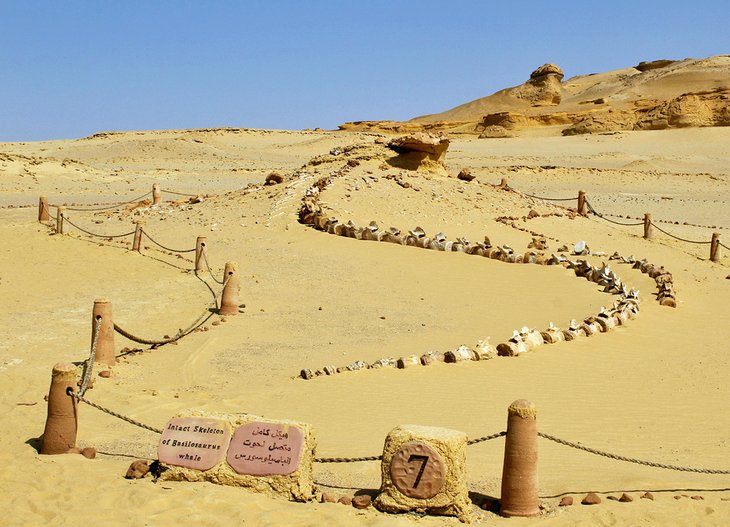
Wadi Al-Hitan is in the Fayoum area, a lush and fertile depression fed by ancient canals and surrounded by desert.
The Fayoum itself, with Lake Quran, the pottery village of Tunis, and Pharaonic ruins scattered across the hinterland, is an interesting place to visit, but the main tourist attraction here, in the nearby desert, is the UNESCO World Heritage site of Wadi Al-Hitan.
Amid the orange dunes and jagged rocks of this desert valley, a vast fossil cache of the oldest prehistoric whales (the basilosaurus and dorodontus) were discovered, hugely aiding human understanding of the evolution of whales.
Some of the finds have been kept in situ, with walking tracks radiating out from the visitor's center to skeleton sites sitting amid the sand.
In the visitor center itself, a museum dedicated to the site does an excellent job of explaining Wadi Al-Hitan's importance, and displays many of the site's other finds, including a skeleton of a basilosaurus whale that measures 18 meters long.
Temple of Hathor
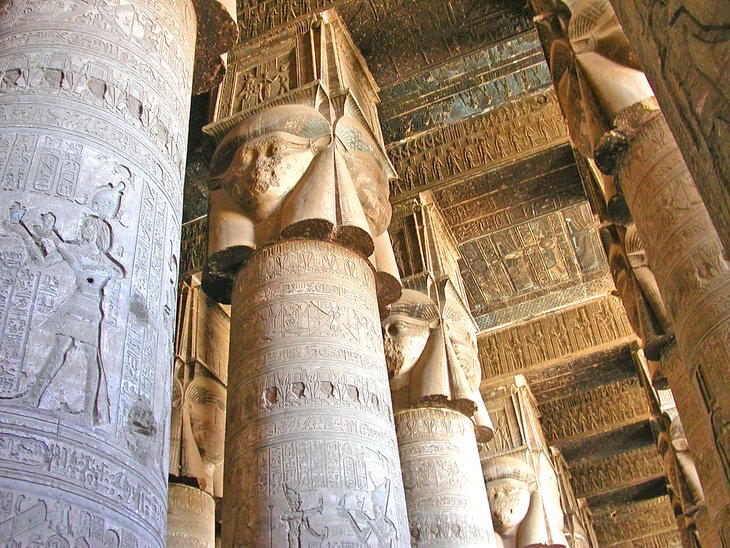
The Temple of Hathor at Dendara was built in the late Pharaonic era and extended during the Roman period, though Dendara itself was an important cult center from early on in the period of Ancient Egypt.
A trip here is well worth a day trip from Luxor, as the temple's youth (in comparison to other Pharaonic temples) means that it is one of the most complete surviving temples in Egypt.
The reliefs and decoration here are in an excellently preserved state. In particular, while in the hypostyle hall, which was built by the Roman Emperor Tiberius, note the columns topped by heads of the Egyptian god Hathor, and the wall reliefs of the emperor paying tribute to the Egyptian gods.
Dendara is just outside the city of Qena, 80 kilometers north from Luxor.
Monastery of St. Anthony
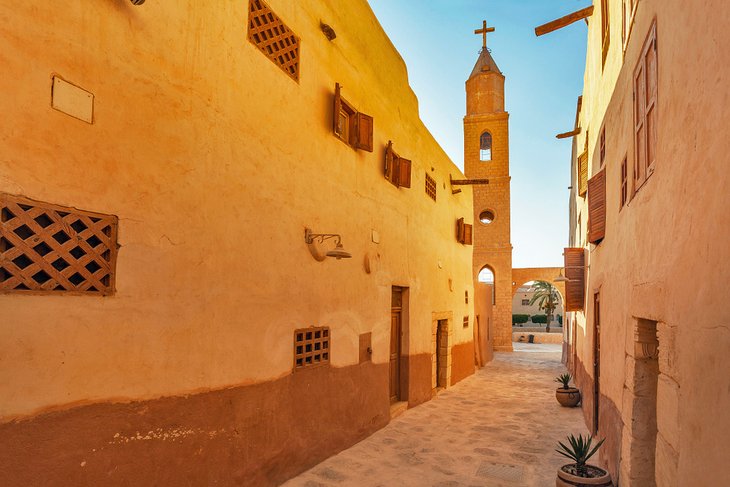
Secreted within the jagged northern mountains of the Red Sea coast, the Monastery of St. Anthony has been a working monastery since the 4th century, and today is still home to around 120 monks.
The Church of St. Anthony, within the fortress-like compound, has an interior of secco wall paintings that are considered one of the most important collections of Egyptian Coptic art in the world and date from around the 11th and 12th centuries. The church is also home to the tomb of St. Anthony (the father of monasticism) and is a major pilgrimage destination for Egyptian Coptic Christians.
Monks run tours of the monastery that include visiting the church and some of the monastery's gardens, as well as allowing you to head up and walk on top of the monastery's walls.
St. Anthony's Monastery is very isolated. If you don't have your own transport, the easiest way to get here is to hire a driver from Cairo or Hurghada.