Places to Visit in Catalonia
Bordered by the mountains and the Mediterranean Sea, Catalonia is a traditional region of Spain that is fiercely proud of its unique culture.
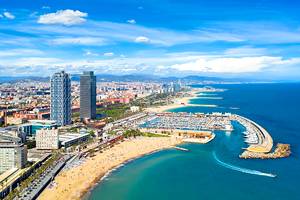
Barcelona is one of the most popular places to visit in Catalonia. This colorful seaside city brims with attractions and things to do. With a captivating Old Town, surprising Modernist architecture, beautiful beaches, and a vibrant urban culture, Barcelona has something for every type of traveler.
Rivaling Barcelona in historic importance are the medieval town of Girona and Tarragona, a former Roman capital. Further afield, in the idyllic countryside of verdant valleys and gently rolling hills, tourists can discover quaint historic towns; picturesque seaports; and quiet country villages, where chirping birds and church bells are the loudest noises.
The Catalan coast delights sun-worshippers with seaside destinations, such as the upscale resort of Sitges and the secluded coves of Cadaqués, on the Costa Brava, and the calm waters of the Costa Daurada.
Every stop along the way, the local gastronomy will tempt visitors with specialties like Bacallà a la Llauna, fried codfish in a paprika sauce sprinkled with fresh chopped parsley; Escalivada, roasted eggplant, bell peppers, and onions in olive oil; and Esqueixada, a salad of peppers, tomatoes, and salt cod.
Plan your travels through this captivating region with our list of the best places to visit in Catalonia.
Barcelona
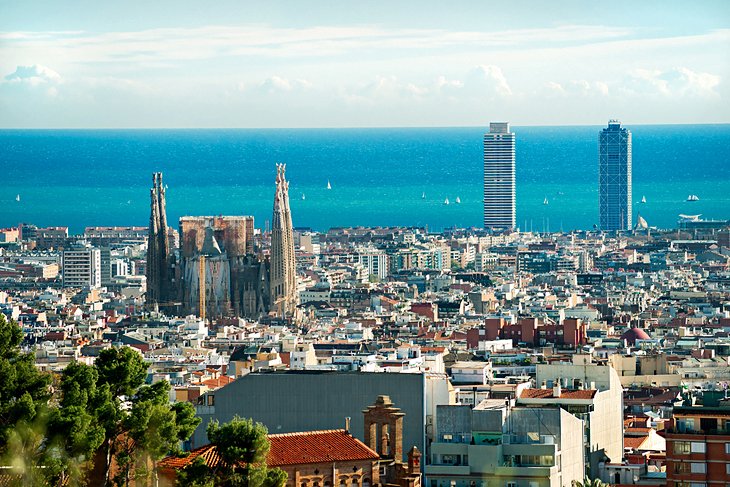
Sunny and happening Barcelona offers gorgeous Mediterranean scenery combined with bustling urban energy. Packed with cultural attractions, this sophisticated sun-drenched city is the capital of the Catalonia region.
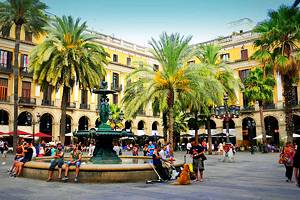
The Barri Gòtic (Gothic Quarter) is the most atmospheric area of the Old Town, a delightful area of impossibly narrow streets, ancient alleyways, and quiet squares where locals gather to socialize. Street musicians are often found in the quarter's hidden plazas playing classical Spanish guitar, adding to the magical ambience.
Barcelona's most lively thoroughfare is La Rambla, a tree-lined avenue with many shops and outdoor cafés, popular with tourists. La Rambla is at the center of the city's social life and buzzes with activity day and night.
While strolling La Rambla, admire the Güell Palace (Palau Güell), which is a masterpiece of avant-garde architecture by Antoni Gaudí. This UNESCO-listed Historic-Artistic Monument was designed as a private residence for the Güell family in the late 19th century.
Among the top attractions of Barcelona are the Basílica de la Sagrada Família, a surreal place of spiritual worship, and the UNESCO-listed Park Güell, a public park featuring fantastical benches and whimsical fountains decorated with colorful ceramic fragments. Both the Basílica de la Sagrada Família and the Park Güell are UNESCO World Heritage Sites created by Antoni Gaudí.
Barcelona is famous for its cultural attractions and boasts over 50 top-notch museums. Popular museums are the Museu Picasso, which displays an in-depth collection of Picasso's artworks from his early years, and the Museu Nacional d'Art de Catalunya, which presents a well-rounded collection of Romanesque art, Gothic art, Renaissance and Baroque paintings, Catalan modernist art, and photography.
Gastronomy is another draw for many visitors. Barcelona has 19 Michelin-starred restaurants. For a delectable Catalan gastronomic experience in between sightseeing, gourmands can treat themselves to a meal at the two-star Michelin-rated Moments restaurant on the elegant Passeig de Gràcia in the Mandarin Oriental hotel, a few steps away from Gaudi's Casa Batlló and a few blocks from the Casa Milà (La Pedrera), the most famous mansion designed by Gaudi.
The Costa Brava
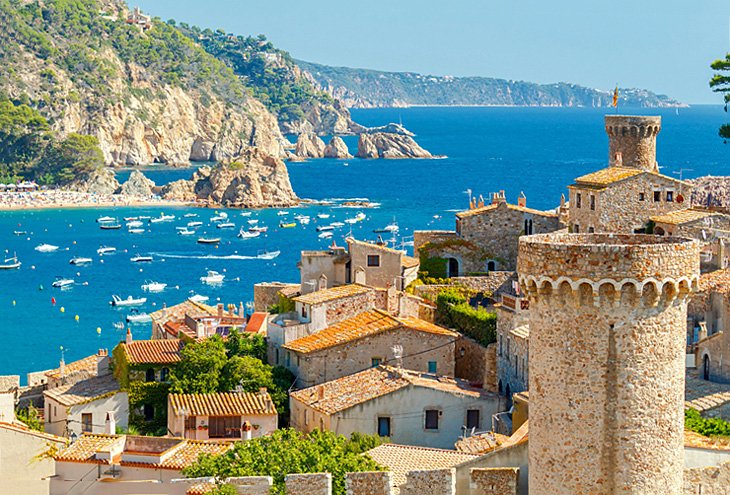
Stretching northeast from the seashore of Blanes to Catalonia's border with France, the Costa Brava is Spain's most scenic coastline. This 1,240-mile coast of ragged cliffs and idyllic beaches is one of Europe's favorite seaside playgrounds, and its pretty little whitewashed towns have lured artists including Dalí, Picasso, and Marc Chagall.
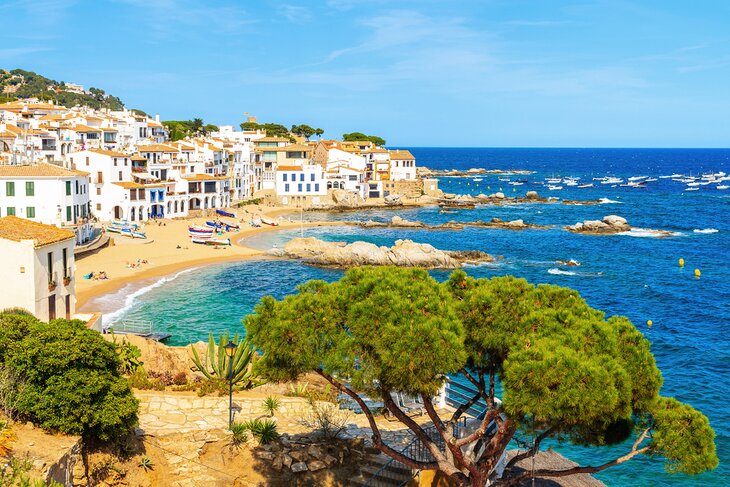
Sandy beaches, like the one at the colorful old fishing village of Calella de Palafrugell, are tucked into coves beneath the cliffs, and other towns, such as Santa Susanna, have a choice of several beaches, from busy strands filled with sunbathers and kiosks to quiet coves and beaches equipped for watersports and sailing.
Montserrat Monastery
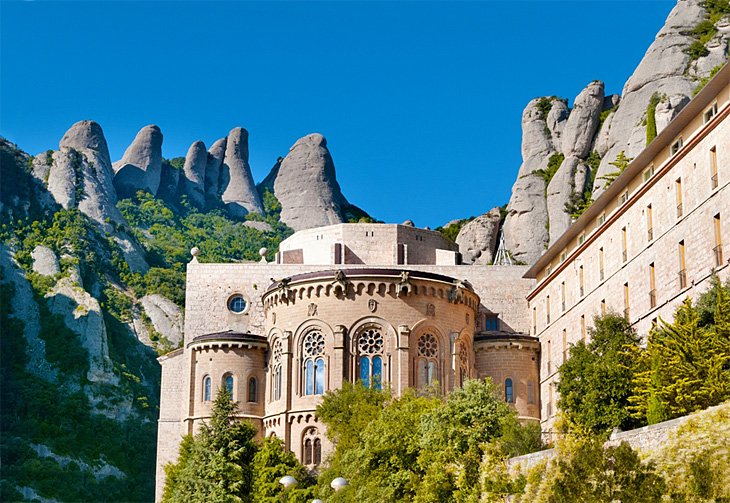
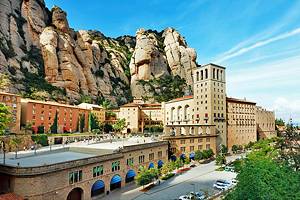
The magnificent Benedictine monastery of Montserrat sits atop a rocky crag, surrounded by fantastically eroded cliffs. This striking natural site has an otherworldly and soul-inspiring feel.
A cable car transports visitors up the mountain (over 500 meters in elevation) to the monastery. From its lofty vantage point, the views of the Catalonian countryside are breathtaking.
The monastery's history goes back to 1025, when it was founded at the site of the little mountain hermitage of Santa Maria de Montserrat. Soon, word spread of miracles performed here by the Virgin, and the monastery grew into an important place of pilgrimage.
The 12th-century carving of Our Lady of Montserrat, known as "La Moreneta" ("The Black Madonna"), is still venerated here by the faithful, and today Montserrat is one of Spain's biggest tourist attractions.
The monastery complex includes a Romanesque church, a library that dates to the 12th century, and a museum of fine arts and archaeology. Visitors will also appreciate the on-site shops, restaurants, food market, and cafeteria. Travelers spending the night can stay at the three-star Hotel Abat Cisneros, which occupies an updated monastery building that has served as a pilgrims' hostel since 1563.
Official site: https://abadiamontserrat.cat/en/
Girona
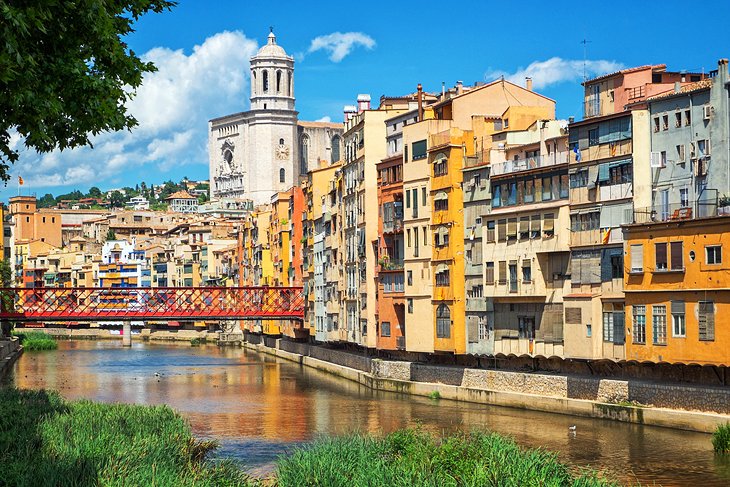
Girona is the sparkling crown jewel of Catalonia. This medieval walled city, 103 kilometers from Barcelona, has a rich cultural heritage with diverse influences from the ancient Romans, Moorish-era Arabs, and Jews.
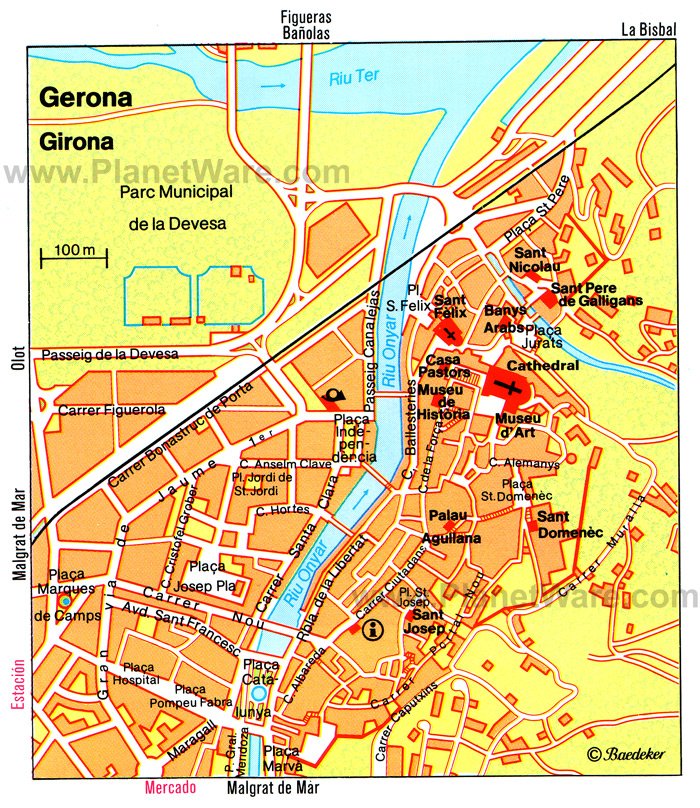
Built on the right bank of the Onyar River, the Old Town includes two areas enclosed within ancient ramparts: the Força Vella, which outlines the original Roman city founded more than 2,000 year ago, and the Medieval Quarter, which expanded the city in the 14th and 15th centuries. These atmospheric historic quarters are filled with narrow pedestrian streets and impressive medieval buildings.
In the Força Vella, the Catedral de Girona reveals an interesting blend of architectural elements: Romanesque cloister, Gothic interior, and Baroque facade. The vaulted nave is the second largest in the world, after Saint Peter's Basilica at the Vatican. The cathedral's Treasury displays a rare Romanesque tapestry, called the Tapestry of the Creation, along with medieval manuscripts.
Other important religious monuments are the 12th-century Benedictine Monastery of Sant Pere de Galligants; the Romanesque Chapel of Sant Nicolau, now used as an exhibition room; and the 13th-century Convent of Sant Domènec de Girona (a listed Historical-Artistic Monument), which is surrounded by beautiful gardens.
The main drag of the Old Town is La Rambla de la Llibertat, an arcaded pedestrian street lined with shops and pavement cafés. The squares of Plaça de l'Oli and the Plaça del Vi have maintained their original ambience.
Another interesting area to explore is the old Jewish quarter (El Call), one of the best preserved in Spain, which was home to a Jewish community from the 12th century until the 15th century. During the Middle Ages, this quarter had an important synagogue and centers of Kabbalist study. The Jewish History Museum (Museu d'Història dels Jueus) is found in a former synagogue in the Jewish quarter.
Near the Jewish quarter, visitors can uncover the cultural legacy of the Moors. The Arab Baths (Els Banys Àrabs de Girona), which date back to the 12th century and were rebuilt in the 13th century, feature a pavilion of Islamic-style columns topped with an octagonal cupola.
Tarragona
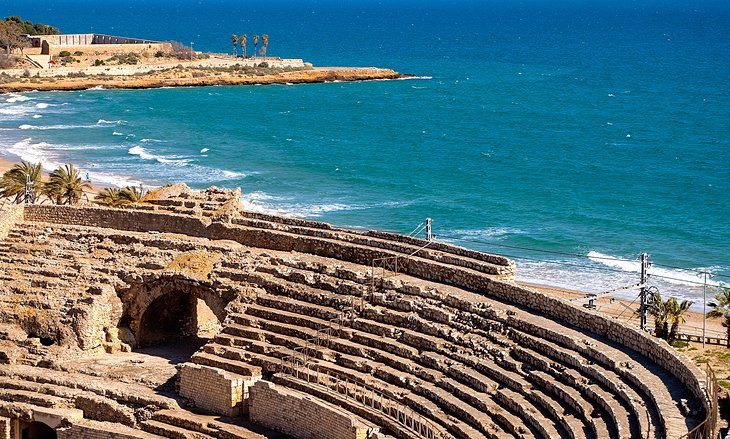
Tarragona is a bustling seaside city that seems to have it all: sunshine, beaches, great restaurants, and interesting historic monuments. About 100 kilometers from Barcelona, this port town on the Costa Daurada is a worthwhile excursion or an alternative base to explore Catalonia.
Beach lovers will be content spending a few days here. Most of the city overlooks the Mediterranean Sea, and the spectacular Milagro Beach is within walking distance from the historic center of town.
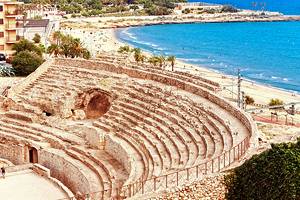
History buffs will be enthralled by Tarragona's UNESCO-listed ancient Roman buildings found all over Tarragona, especially the incredibly well-preserved Roman Amphitheater of the 2nd century. Also among the top attractions of Tarragona are a Romanesque-era cathedral and the city's medieval center, with its captivating maze of narrow pedestrian streets.
Not to be missed in Tarragona is the Barrio El Serrallo, a picturesque port neighborhood. El Serrallo is the old fishing village and still is a lively seaside district. At the harbor, a large fleet of fishing boats brings in fresh catches, which are sold at the neighborhood's fish market. Delicious seafood meals can be enjoyed at the neighborhood's waterfront restaurants.
Sitges
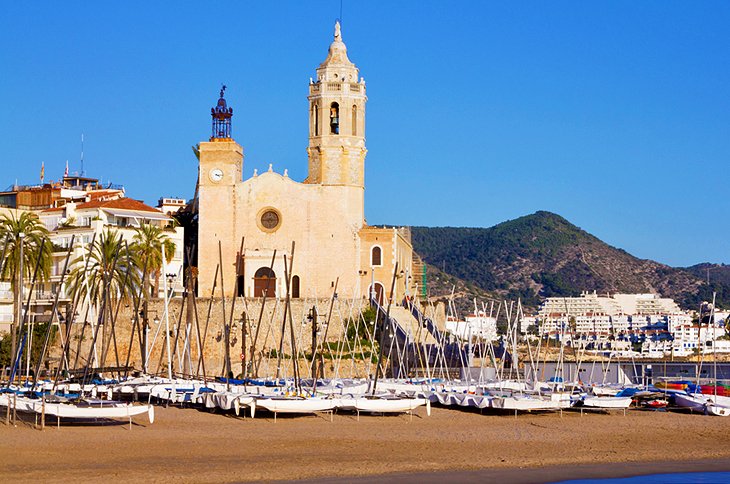
Along the Mediterranean Sea, just 42 kilometers from Barcelona, Sitges lures visitors in search of golden beaches and pampered seaside relaxation. The town has a "Blue Flag" beach with calm waters ideal for swimming. A yacht marina and golf courses add to the resort ambience.
Sitges also offers culture; its historic center has two lovely churches, the Església de Sant Bartomeu i Santa Tecla. During the late 19th and early 20th centuries, many Spanish Modernist monuments were built throughout the town.
An excellent example of this avant-garde Modernist architecture is the Cau Ferrat Museum where famous Spanish author and artist Santiago Rusiñol lived. His home and art studio became a gathering place that attracted many artists and intellectuals, giving the town a Bohemian atmosphere.
For those who appreciate gourmet cuisine, Sitges has much to offer. The town boasts an abundance of renowned restaurants that serve superb gastronomic cuisine, especially dishes of the Catalan region.
Dalí Theatre-Museum in Figueres
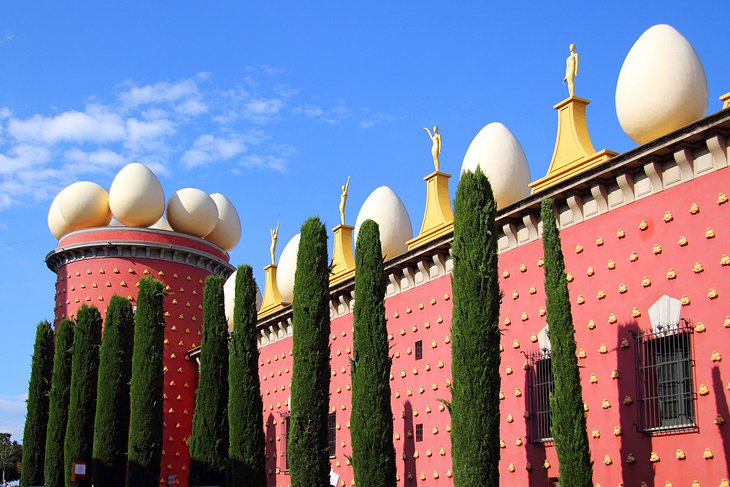
Famous for its association with Salvador Dalí, the traditional Catalan town of Figueres lies in a quiet river plain of the Girona province (140 kilometers from Barcelona). The town's main tourist attraction is the Salvador Dalí Theatre-Museum, which is devoted to the work of the Surrealist genius.
Housed in the 19th-century Municipal Theater, the museum presents all aspects of Dalí's art and displays some of his greatest masterpieces of painting. With its expansive assortment, the collection shows the artist's full range of creative expression.
The museum also has a film library, which contains a collection of audiovisual content that was created by Salvador Dalí. Throughout the year, the museum hosts temporary exhibitions.
Address: 5 Plaza Gala-Salvador Dalí, 17600 Figueres
Cadaqués and Cap de Creus Natural Park
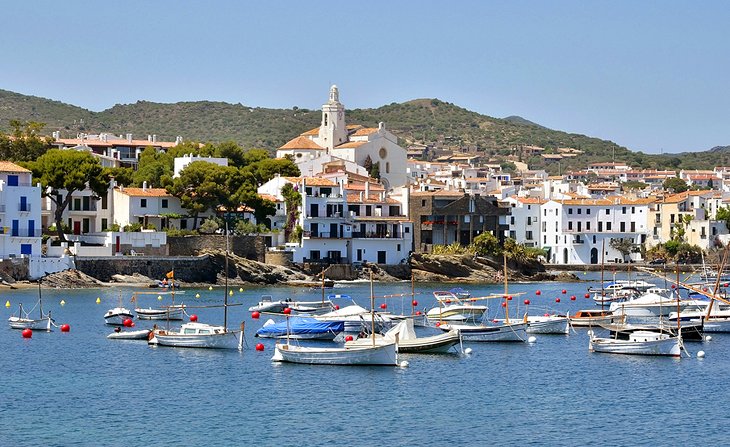
Near the Cap de Creus Natural Park, Cadaqués is an enchanting village on the Costa Brava coastline (170 kilometers from Barcelona). With its whitewashed houses hugging a sheltered bay, the Old Town of Cadaqués has the distinctive ambience of a Mediterranean seaport. The village has charmed artists for decades and still offers a vibrant cultural scene, with many art galleries and museums.
The Cap de Creus Natural Park is a nature reserve on the Creus Peninsula featuring an unspoiled coastline and crystal-clear turquoise waters. The rugged and rocky shoreline of Cap de Creus Natural Park offers opportunities for hiking and nature walks.
About a 30-minute drive from the Cap de Creus, the coastal town of Roses began as an ancient Greek colony. Roses has a monumental Renaissance citadel, La Ciudadela (listed as a Historical-Artistic Monument), which overlooks the Mediterranean Sea.
Real Monasterio de Santa María de Poblet
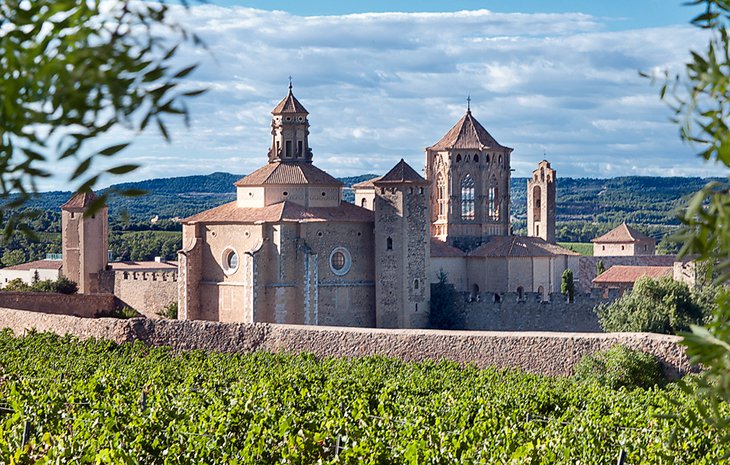
The Royal Monastery of Santa María de Poblet is 141 kilometers from Barcelona, nestled in the Parc Natural de Poblet nature preserve. The monastery complex is a majestic sight in a serene landscape of vine-covered rolling hills. Surrounded by crenelated defensive walls, it appears from afar to be a fortified citadel.
The monastery was founded in the 12th century for Cistercian monks. For centuries, the order has used this tranquil location for their spiritual worship. The complex of buildings is still a working monastery with a refectory and monks' dormitory quarters.
A treasure of Cistercian architecture, the monastery complex was mostly constructed during the 14th century, with the exception of the Romanesque-Gothic cloister, which dates to the 12th and 13th centuries, and a few architectural elements that were added in the 15th and 17th centuries. UNESCO has designated the monastery as a World Heritage Site.
The Monastery of Poblet has served as a royal pantheon since the 13th century. Inside the monastery's church, the Basílica de Santa María de Poblet, are the tombs of the Kings of Aragon.
Tourists are welcome to visit the Monastery of Poblet year-round, except on January 1st, February 27th, July 2nd, December 25th and December 26th. The monastery is open to visitors Monday through Saturday from 10am until 5:30pm and on Sundays from 10:30am until 5:30pm. There is a lunchtime closure from 12:30pm until 3pm daily. Visitors can see the basilica, cloister, and chapter house. The monastery complex also includes a museum and a library with an archive of historic documents.
Within the complex is a three-star hotel where a 13th-century pilgrims' hostel once stood. The Hostatgeria de Poblet appeals to tourists seeking a relaxing overnight experience in a nature preserve. Guest rooms feature minimalistic modern decor and splendid mountain views.
The hotel's Restaurant Bosseria serves Catalan cuisine prepared from local ingredients, including fruit from the monastery's orchard. Amenities include a concierge, café, breakfast buffet, complimentary newspapers, game room, and bicycle rentals.
Address: Monasterio de Poblet, 43448 Vimbodi
Medieval Vic
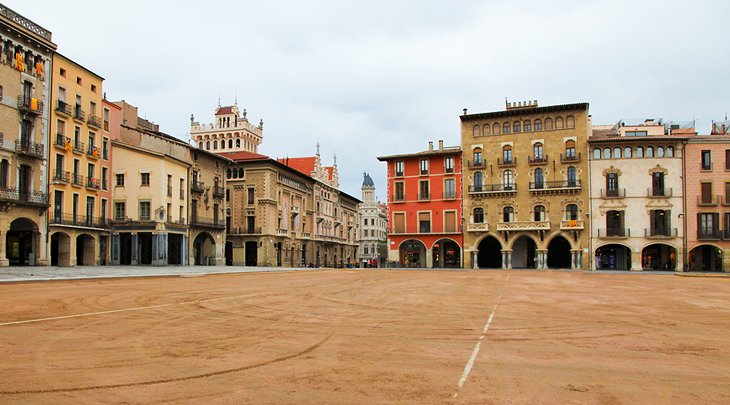
Known for its artistic heritage, Vic is a quaint medieval town in a peaceful setting along the banks of the Mèder River, about 72 kilometers from Barcelona. The town has two historic quarters: the area around Castillo de Montcada and around the cathedral.
A good place to begin sightseeing is at the Catedral de Sant Pere (open every day from 10am to 1pm and 4pm to 7pm). With a Romanesque bell tower, Gothic cloisters, and a neoclassical Baroque facade, the cathedral's blend of architectural styles reflect the renovations made over the centuries. The cathedral's interior is adorned with exquisite murals by Josep María Sert.
Another must-see cultural attraction is the Episcopal Museum of Vic (Museu Episcopal de Vic) on the Plaça Bisbe Oliba. Housed in a modern building located next to the cathedral's bell tower, the Episcopal Museum contains collections of fine arts, archaeology, textiles, furniture, decorative objects. Highlights include the ancient Roman coins, the Renaissance altarpieces, and the masterpieces of religious painting and sculpture from the Romanesque and medieval periods.
For those seeking a pampering overnight stay, the luxurious Parador de Vic-Sau is tucked away in a lush garden with views of the Guillerías Mountains and the Sau Reservoir. This upscale four-star hotel has an outdoor swimming pool and a fine-dining restaurant that serves traditional Catalan cuisine. The restaurant's menu features specialties of the Osana district (the area of the Catalonia region where the hotel is located).
Besalú
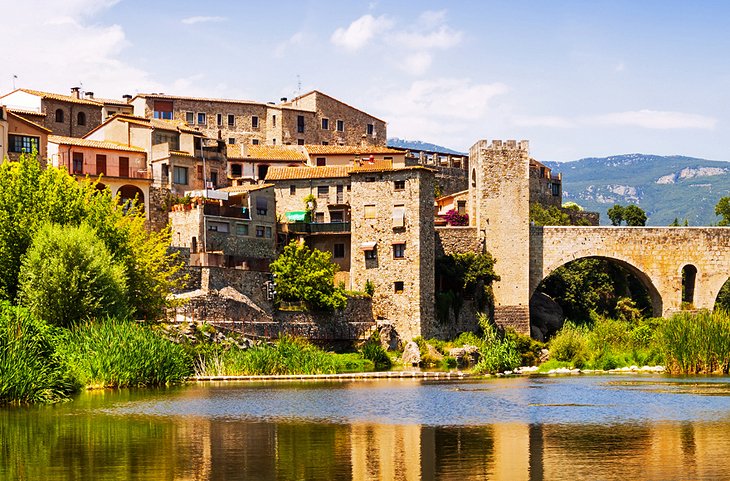
A picture-perfect medieval town, Besalú is a quaint jumble of cobblestone streets and quiet squares that reveal impressive historic buildings. The town has an atmospheric old Sephardic quarter with medieval Jewish baths that were used for ritual ablutions.
Several fascinating ancient Christian monuments are found in Besalú, including the 10th-century Benedictine monastery of Sant Pere, the 12th-century Collegiate Church of Santa María, the 13th-century Romanesque church of Sant Vicenç, and the 17th-century church of Sant Julià.
Another vestige of the town's past is the Viejo Bridge built in the 11th century and renovated in the 14th century.
Besalú is 133 kilometers from Barcelona in a lovely area of Catalonia, near La Garrotxa Nature Reserve in the rolling hills of the Pyrenees.
Olot and the Pyrenees Foothills
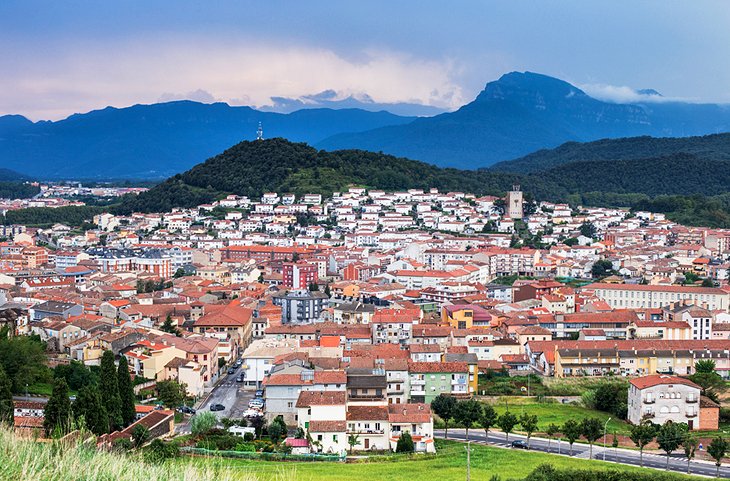
In the Pyrenees foothills (112 kilometers from Barcelona), Olot has a relaxed atmosphere and a vibrant cultural life. Pleasant tree-lined avenues, quaint outdoor cafés, and old aristocratic mansions give the town an elegant ambience.
Touristic highlights of Olot include a modern art museum; many galleries; and the 18th-century parish church, Parròquia de Sant Esteve, which features a marvelous Baroque altarpiece.
The Museu de la Garrotxa is devoted to the artistic and cultural history of the Garrotxa region. The museum has a gallery that displays works by artists of the Escola d'Art d'Olot (Art School of Olot) and another space dedicated to 20th-century and 21st-century art. For those who appreciate contemporary art, this museum is one of the best places to visit in the region.
Nature lovers will enjoy an excursion from Olot to the Parque Natural de la Zona Volcánica de la Garrotxa to discover an amazing rugged landscape formed by volcanoes.
La Seu d'Urgell
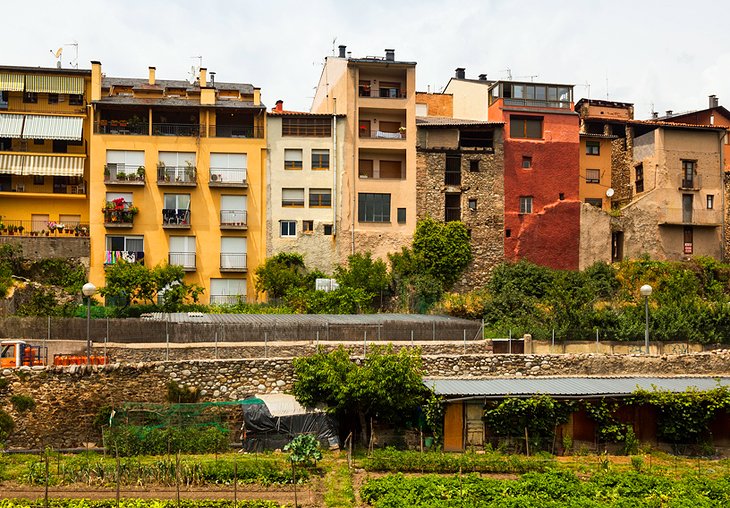
Travelers can enjoy a relaxing escape to a peaceful country town in La Seu d'Urgell. It lies in a stunning natural setting with the Catalonia mountains and Andorra Pyrenees as a backdrop. This picturesque historic town is in the Lleida province, 173 kilometers from Barcelona and 88 kilometers away from the Aigüestortes i Estany de Sant Maurici National Park.
The most interesting site is the Italian-influenced Romanesque cathedral, built in the 11th and 12th centuries. Other important monuments are the 11th-century Romanesque church of Sant Miquel, the 15th-century Ayuntamiento (City Hall) and the convent of Sant Domingo that has been converted into a Parador de Turismo hotel.
The Romanesque Monastery of Santa María de Ripoll
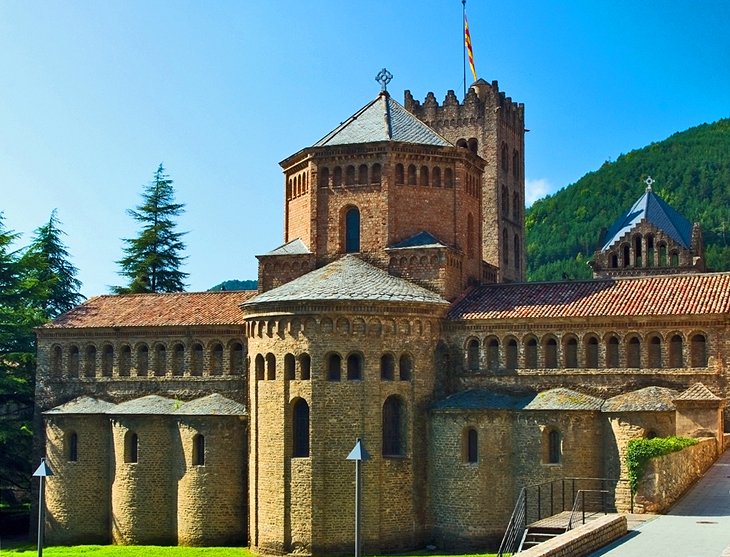
This Romanesque monastery was an important monastic center in Catalonia during the Middle Ages. Dating from the 12th century, the complex includes a church with an extraordinary portico depicting biblical scenes and a peaceful cloister designed to inspire spiritual contemplation.
Another noteworthy religious monument of Ripoll is the 12th-century Iglesia de Sant Pere featuring pre-Romanesque architectural elements. The church now houses the town's ethnographic museum. In the 19th century with the arrival of the railway, Ripoll (109 kilometers from Barcelona) became a bustling commercial town with a booming textile industry.
Banyoles
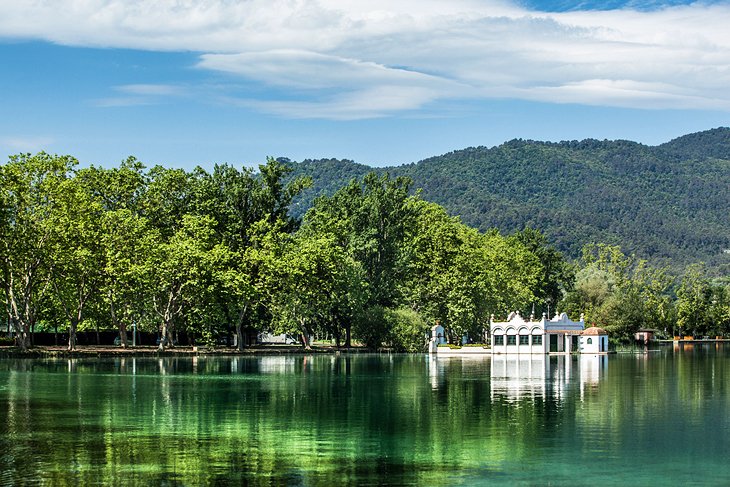
This idyllic retreat in nature is just 18 kilometers from Girona and 121 kilometers from Barcelona, near La Garrotxa Nature Reserve. Surrounded by the green rolling hills of the Sierra Rocacorba, the town is nestled between two rivers on the shores of Lake Banyoles.
Banyoles has an ancient history, with an important textile industry since the 13th century. In the town's quaint old center are several interesting religious monuments: the 14th-century church of Santa María del Turers and the Neoclassical monastery of Sant Esteve.
Other important landmarks are the Pia Almoina, a medieval mansion built in the 14th century that houses an Archaeology Museum, and the Llotja del Tint, a 15th-century building that was used for dyeing textiles.
A highlight of visiting Banyoles is the beautiful lake with a six-kilometer perimeter. It's a wonderful place to relax, take nature walks, cycle, or go boating. Tourists may rent small boats for rowing, kayaking, or canoeing. Fishing is another popular pastime, with rewarding catches to be found in the pristine waters.
Cathedral of Solsona
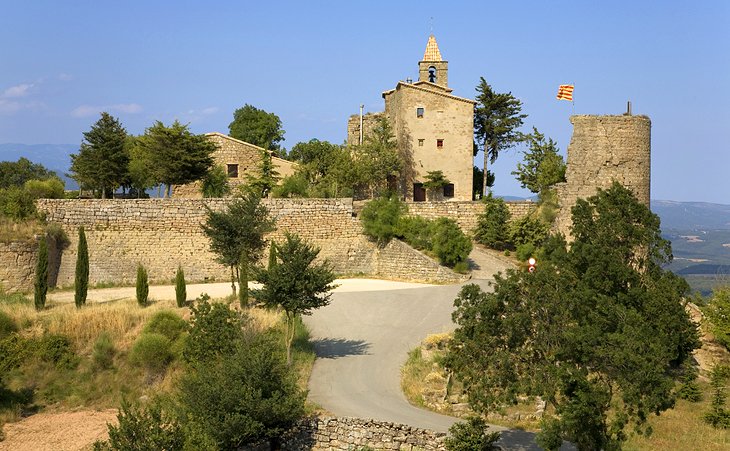
The splendid Cathedral of Solsona, 107 kilometers from Barcelona, was built in the 14th century in Gothic style but reveals the architectural elements of an earlier Romanesque church. Visitors are surprised by the spacious single-nave vaulted interior.
Typical of Romanesque style, the interior has three apses decorated with arcades. The bell tower is also from the original Romanesque structure.
The facade features Baroque adornment added in the 18th century, and the Neoclassical cloister displays a Romanesque stone icon of the Virgin of the Cloister.
Embalse de Talarn
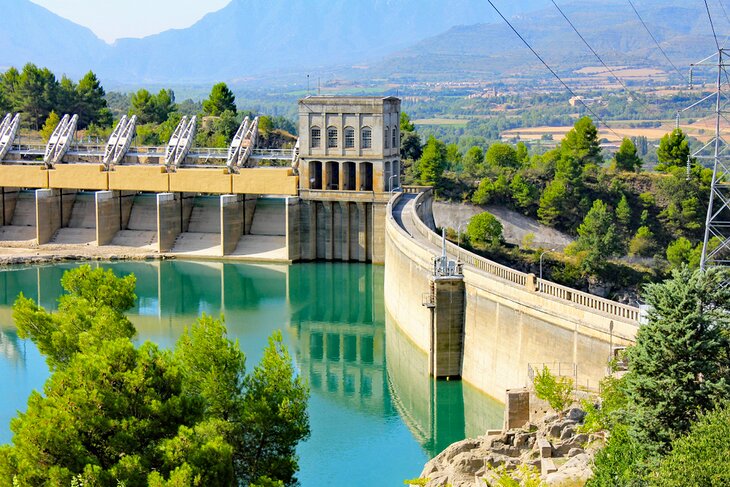
About eight kilometers to the north of Tremp is the Embalse de Talarn, a large lake formed by a dam that supplies a hydroelectric station. One of the largest bodies of freshwater in Catalonia, the lake is surrounded by beautiful scenery, with many pine trees and secluded coves.
Fishing, bird-watching, boating, sailing, and camping are all popular things to do here, and sign-posted hiking and 4x4 trails also weave through the rugged train.