Visiting Montjuic, Barcelona: 11 Top Attractions, Tours & Hotels
This scenic hilltop neighborhood of Barcelona boasts sensational views, beautiful gardens, and excellent museums. Named after the old Jewish cemetery that was once on this site, Montjuïc stands more than 200 meters above the sea, with its cliffs plunging into the stunning blue Mediterranean waters.
Many popular tourist sites are found in the Parc de Montjüic, an expansive parkland with the Castell de Montjuïc on its summit. Also in this park is the dazzling Montjuïc Magic Fountain, which features spectacular light shows, and the Museum of Catalan Art, focusing on artists of the Catalonia region.
After admiring the Montjüic Park and the museums, visitors can stroll through the bohemian neighborhood of Poble-Sec to see the work of local artists and munch on tapas.
Learn about the best places to visit and things to do in the Montjuïc neighborhood with our list of the top attractions.
- 1. Castell de Montjuïc
- 2. Museu Nacional d'Art de Catalunya
- 3. Font Màgica de Montjuïc
- 4. Fundació Joan Miró
- 5. Poble Espanyol (Spanish Village)
- 6. Plaça Espanya
- 7. Fundació Mies Van der Rohe
- 8. Olympic Stadium
- 9. CaixaForum Barcelona
- 10. Museu d'Arqueologia de Catalunya
- 11. Museu Etnològic
- Tips and Tours: How to Make the Most of Your Visit to Montjuïc
- Map of Montjuic, Barcelona: Top Attractions, Tours & Hotels
1. Castell de Montjuïc
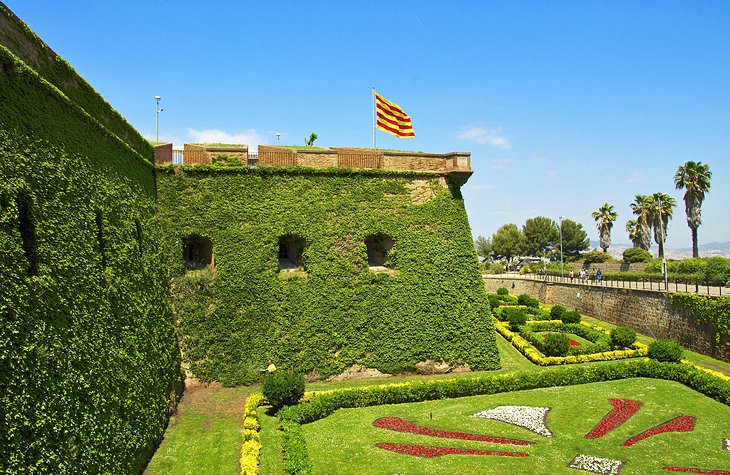
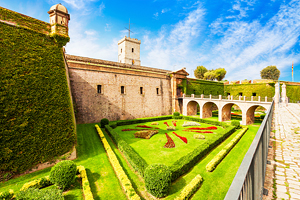
The entire summit area of Montjuïc is occupied by the extensive buildings and grounds of the Castell de Montjuïc, an imposing 17th-century citadel with massive ramparts. The fortress has several large-calibre guns that were used to defend the port area.
Perched 173 meters above the sea, the citadel affords unobstructed 360-degree views. Visitors can take a walk along the flat roof of the citadel and the corner bastions of its ramparts. From this marvelous vantage point, the panoramic outlooks include the cityscape of Barcelona, the mountains in the background, the harbor and coastline.
On the west side of the grounds is an ornate memorial to Francisco Franco, and inside the citadel is a military museum. The Castell de Montjuïc also presents temporary art exhibitions.
Location: Parc de Montjuïc, Barcelona

2. Museu Nacional d'Art de Catalunya
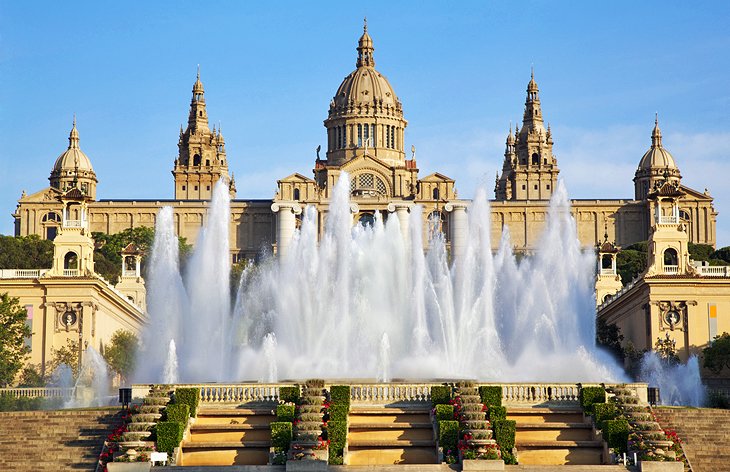
One of Barcelona's top cultural attractions, the Museu Nacional d'Art de Catalunya (National Art Museum of Catalonia) contains a prestigious collection of fine art. The museum occupies the Palau Nacional (National Palace), an emblematic 20th-century landmark within Montjüic Park. The building's elegant Neoclassical interior provides an inspiring space for viewing artworks.
The Museu Nacional d'Art de Catalunya displays an extensive collection, with pieces representing all periods of history. The collection begins with the medieval era (11th-13th centuries) and continues through the centuries to Modern Art and the Avant-garde Revival.
The assortment of Romanesque Art of the 11th to 13th centuries is particularly impressive. On display are remarkable examples of Romanesque sculpture, frescoes, and metalwork. The assortment includes the oldest and largest set of Romanesque panel paintings in Europe.
Other highlights of the museum are the paintings by Catalan artists and other Spanish masters including El Greco, Francisco de Zurbarán, Diego Velázquez, Mariano Fortuny, Antoni Gaudí, Ramon Casas, Joaquin Torres-García, Julio González, Salvador Dalí, and Pablo Picasso.
Location: Palau Nacional, Parc de Montjüic, Barcelona
Official site: https://www.museunacional.cat/en
3. Font Màgica de Montjuïc
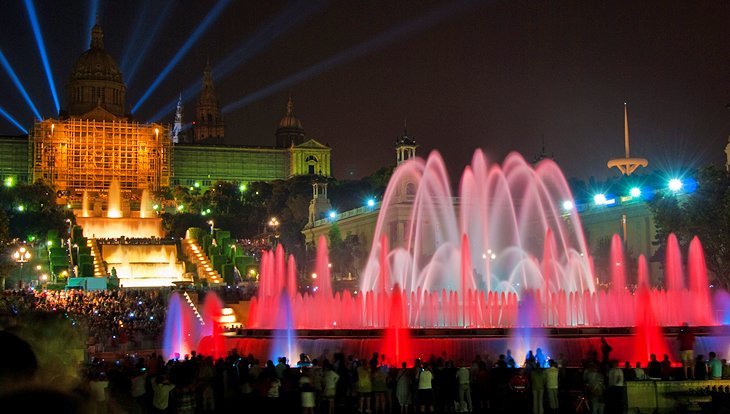
The monumental Magic Fountain of Montjuïc highlights the plaza in front of the Palau Nacional. The Magic Fountain was inaugurated on May 19, 1929 for the Great Universal Exhibition, for which occasion Carles Buigas was commissioned to create a "colossal" and "costly piece of work." To get a sense of the fountain's enormous size, consider that the pool of water is 50 meters by 65 meters.
The most innovative feature is the use of light. More than 100 hydraulic valves spout water and 4,000 lights illuminate the fountain for spectacular light shows and dancing water acrobatics accompanied by music.
The fountain light and music shows are held Wednesday through Sunday during the summer months; and Thursday, Friday, and Saturday in spring, autumn, and winter (closed early January through mid-February).
During La Mercè, a traditional Catalan festival held in September, a dazzling fireworks display is presented at the Magic Fountain of Montjuïc. Special lighting effects and music add to the excitement of this marvelous spectacle.
Address: Plaza Carles Buïgas, Barcelona
4. Fundació Joan Miró
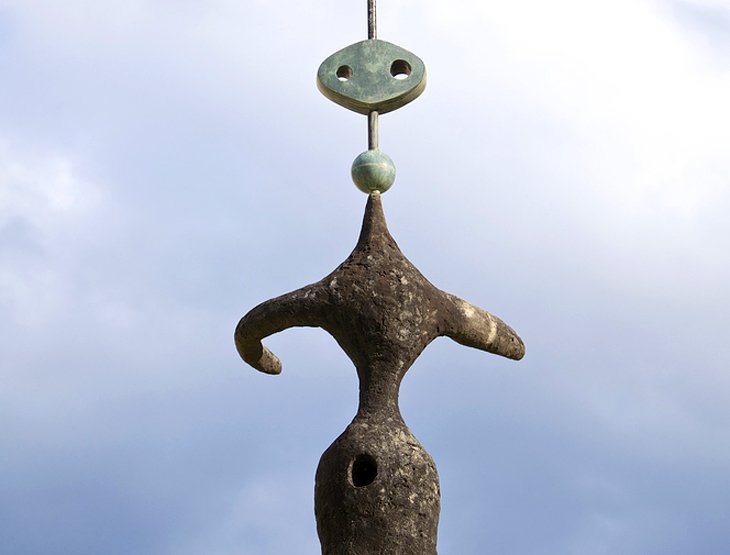
In a lovely section of the Parc de Montjuïc, the Fundació Joan Miró displays the work of the famous Surrealist-Abstract artist. Joan Miró created this center himself, and he provided works from his own collection.
The museum is housed in a sleek modern building designed by Josep Lluís Sert and illuminated with skylights. A courtyard and roof terrace add to the impression of spaciousness and brightness. The avant-garde architecture is the perfect backdrop for Miró's colorful and often playful works.
The museum's extensive collection contains around 14,000 items, delighting visitors of all ages with Miró's endless creativity. Highlights of the collection are the paintings (217 in total) and sculptures (178 in total).
The museum also presents the works of other contemporary artists (including Marcel Duchamp, Max Ernst, Fernand Léger, and Alexander Calder) and hosts temporary exhibitions of 20th- and 21st-century art.
Location: Parc de Montjuïc, Barcelona
Official site: http://www.fmirobcn.org
5. Poble Espanyol (Spanish Village)
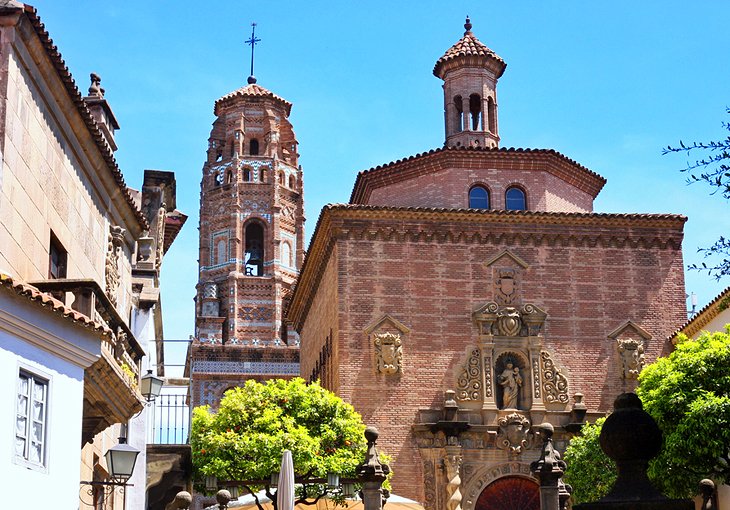
Like the Magic Fountain of Montjuïc, the Poble Espanyol was created for the 1929 International Exhibition. The model Spanish village represents full-scale replicas of over a hundred historic monuments from different regions of Spain.
The village features buildings in the architectural styles (Romanesque, Gothic, Mudéjar etc.) typical of different provinces in Spain, with picturesque pedestrian streets, alleyways, houses, and churches grouped around a main square (Plaza Mayor), as well as smaller squares. Visitors will also be enchanted by the village's monastery, gardens, fountains, and "medieval" walls.
Artisan workshops in the village give tourists a chance to see and buy traditional handicrafts: glass, ceramics, enamel-work, textiles, leather goods, and prints.
The Spanish Village is also used as a venue for cultural performances, music concerts, festivals, and children's activities. In addition, many craft workshops are held at the Poble Espanyol, such as jewelry making, basket weaving, engraving, and stained-glass design classes.
Address: Avda. Francesc Ferrer i Guardia, 13, Barcelona
Official site: www.poble-espanyol.com
6. Plaça Espanya
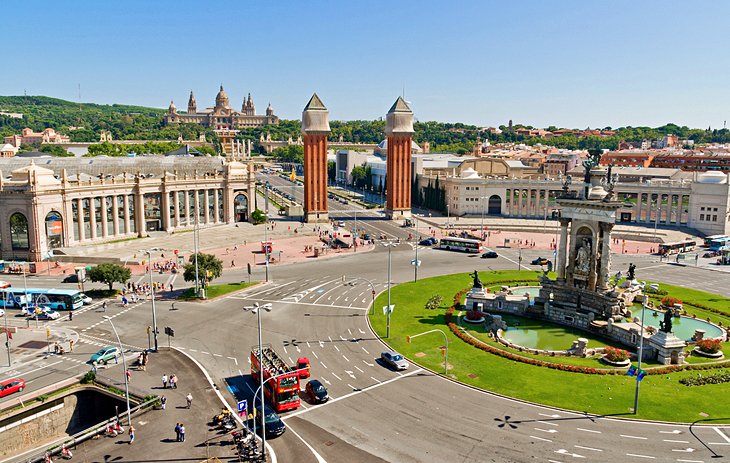
At the foot of the Montjuïc neighborhood a short walk from the Museu Nacional d'Art de Catalunya, the busy Plaça Espanya is the main traffic junction in the western half of the city. The thoroughfares of Gran Via de les Corts Catalanes (known as "Gran Via" for short) and the Avinguda del Parallel intersect here.
In the center of the square stands the lavish Neoclassical fountain España Ofrecida a Dios (Spain dedicated to God), which was created for the 1929 International Exhibition. Designed as an allegorical piece, the fountain represents the seas that surround Spain and the rivers that run through the country.
The fountain was crafted from marble on a monumental scale, with the main structure of Corinthian columns and statues reaching 33 meters in height. Wrought iron and bronze were used to create sculptural accents.
Opposite the fountain are two towers modeled on the bell tower of Saint Mark's Basilica in Venice. From there, the Avinguda de la Reina Maria Cristina leads to the Magic Fountain of Montjuïc and the Palau Nacional (Museu Nacional d'Art de Catalunya).
The Plaza de Toros (bullring) is on the northern side of the square.
7. Fundació Mies Van der Rohe
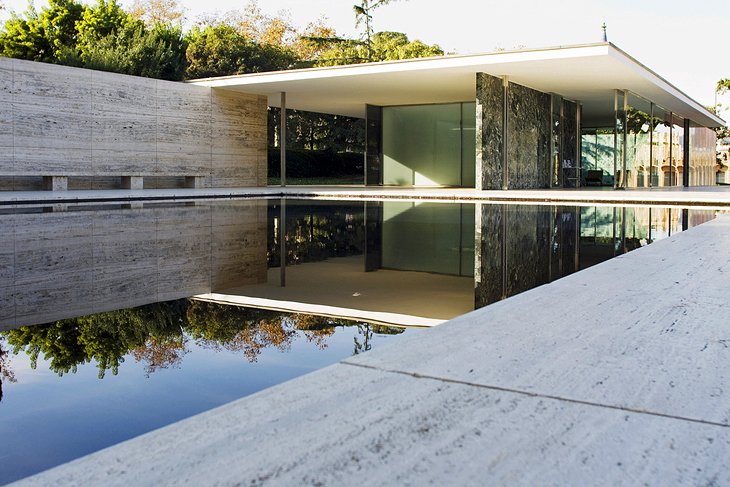
The Barcelona Pavilion in Montjuïc Park is a superb example of the Modern Movement expressed in architecture. It was designed by Ludwig Mies van der Rohe as the German National Pavilion for the 1929 International Exhibition. The sleek glass and marble pavilion was created as an official reception hall to receive King Alfonso XIII of Spain.
The Fundació Mies van der Rohe is now housed in the pavilion. This foundation promotes research on the architectural work of Ludwig Mies van der Rohe, as well as topics related to the Modern Movement, contemporary architecture, and urban planning. The foundation also offers conferences and workshops and presents temporary art exhibitions.
Address: 7 Avenue Francesc Ferrer i Guàrdia, Parc de Montjuïc, Barcelona
Official site: http://miesbcn.com/
8. Olympic Stadium
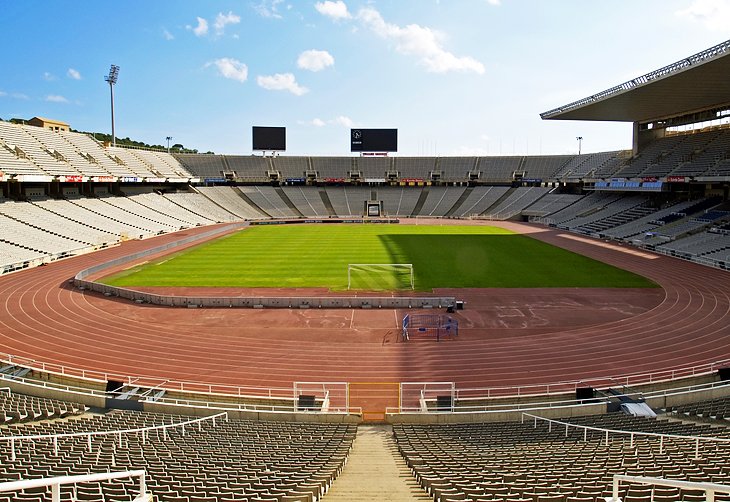
In the Parc de Montjuïc, visitors can see the venues where the 1992 Summer Olympics were held. The Anella Olimpíca (Olympic Ring) includes the Olympic Stadium (Estadi Olímpic Lluís Companys); the Olympic Esplanade, a 51,000-square-meter outdoor space; and the Palau Sant Jordi where gymnastic competitions and volleyball finals were held.
Tourists can visit the Olympic buildings (including the interior of the Olympic Stadium) year-round. The Palau Sant Jordi is used as a venue for music concerts; famous rock stars like Madonna, Bruce Springsteen, Rihanna, Lady Gaga, and Shakira have performed here.
Next to the Olympic Stadium is the Museu Olímpic I de l'Esport Joan Antoni Samaranch (Olympic and Sports Museum). This unique museum offers fascinating insights into the world of Olympic athletics and high-performance competitive sports. Through interactive exhibits and multimedia content, the museum educates visitors about the positive value of sports.
Address: Avinguda de l'Estadi, Parc de Montjuïc, Barcelona
Official site: http://www.fundaciobarcelonaolimpica.es
9. CaixaForum Barcelona
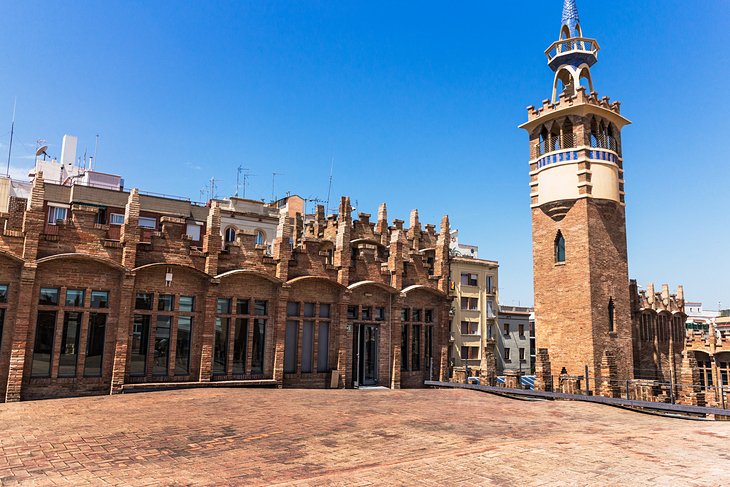
This unique contemporary arts and cultural center is housed in a Modernist building (formerly a textile factory) that was designed by architect Puig I Cadafalch. CaixaForum Barcelona offers diverse programming, from theater performances and music concerts to thematic art exhibitions and children's activities.
The center's calendar of performances includes an interesting mix of genres: dance, music, comedy. Families with young children also appreciate the CaixaForum Barcelona because of the frequent screenings of kids' movies.
Address: 6 - 8 Avinguda de Francesc Ferrer i Guàrdia, Barcelona
10. Museu d'Arqueologia de Catalunya
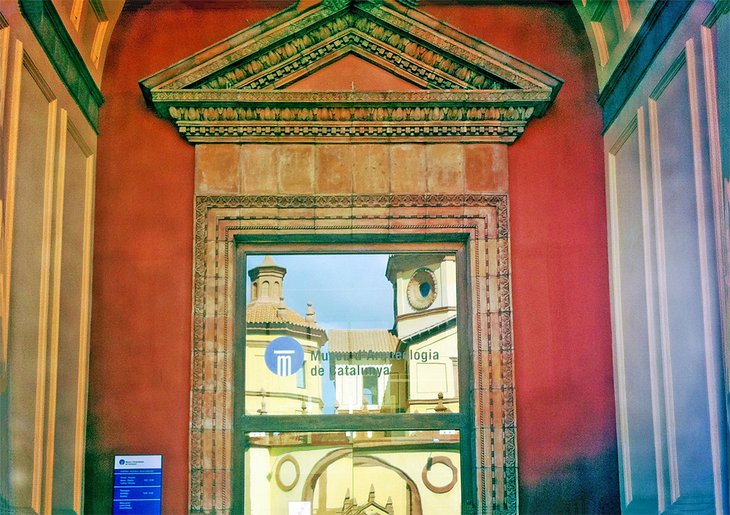
Near the Exhibition Grounds at the foot of Montjuïc is the Archaeological Museum of Catalonia. This Art Deco circular brick building was originally built as the Palau de les Arts Gràfiques for the 1929 International Exhibition. In 1932, the building was enlarged and converted to a museum.
This top-notch museum is the most prestigious archaeology collection in Catalonia. The exhibits cover the history of the Catalan region as it evolved from the Bronze Age (7th century BC). The collection reveals the origins of Iberian culture, including the influences of trade and invasion during the ancient Greek and Roman periods.
The museum exhibits also include artifacts from the Early Christian and medieval eras. Not to be missed are the 4th-century Paleo-Christian mosaic from Màlaga and the assortment of silver treasures from the town of Castellet de Banyoles.
Address: 39 - 41 Passeig de Santa Madrona, Parc de Montjuïc, Barcelona
Official site: http://www.mac.cat
11. Museu Etnològic
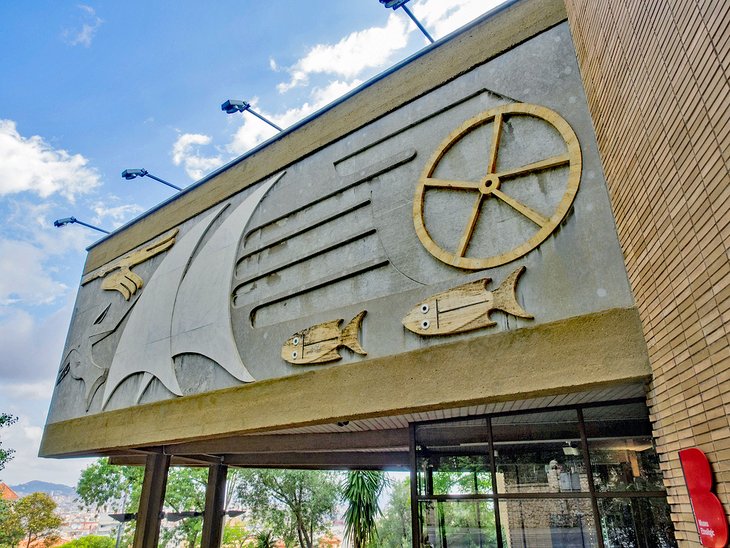
The Ethnology Museum is near the Exhibition Center in Montjuïc Park. Built in 1973 and specially designed for exhibitions, the building features large windows providing natural light that is ideal for exhibit displays.
This impressive ethnographical collection contains 5,000 items, which are displayed in rotating themed exhibitions that encourage visitors to consider both the individuality and the universality of human culture. For instance, everyday objects from the Catalonia region are compared with similar-purpose items from other cultures.
The museum collections represent the cultures of Asia, Africa, America, and Oceania, with a special focus on the social aspects of each region and their similarities and differences. Using a modern approach to social and cultural anthropology, the museum aims to help visitors understand "exotic" items.
Address: Passeig de Santa Madrona, Barcelona
Tips and Tours: How to Make the Most of Your Visit to Montjuïc
Tour with a Scenic Drive to Montjuïc:
- As one of the city's prime highlights, Montjuïc is featured in city tours, such as the Best of Barcelona Tour. This six-hour excursion includes a walking tour led by an expert guide, as well as a scenic drive to Montjuïc and visits to the Museu Nacional d'Art de Catalunya and Plaça Espanya.
Barcelona Sightseeing Bus Tour:
- The 4.5-hour Barcelona Highlights tour is a good introduction to the city's top sights. It includes a coach sightseeing excursion and an aerial cable-car ride, as well as visits to the Olympic Stadium and the Poble Espanyol.
Comfort and Safety:
Because Barcelona's streets are often paved with uneven stones, wear comfortable, low-heeled shoes for sightseeing. Although it is considered a safe city for travelers, as in any large city you should be alert for pickpockets, especially in crowded places.