Museums and Palaces in Rome
From the collections of ancient sarcophagi and statuary housed in portions of an ancient Roman bath complex to wall frescoes in their original sites that span from the time of Nero through the Baroque era, you'll find Rome's museums and palaces filled with unimaginable treasures.
Although many fine works of art can be admired as you visit the churches, when you see them in the museums, galleries, and palaces, you can compare styles and artists more easily and trace themes and artistic movements as they evolve. Remember when planning your visits that some of these museums are really complexes of several different museums.
The number of museums and palaces runs into the dozens and include more modern themes, such as those found in the Museum of the Liberation of Rome and the Museum of Contemporary Art. Others, including the lavishly decorated Palazzo Colonna, with its colored marble floors and lavish Baroque flourishes, are open only a few hours a week.
There are virtually no free museums in Rome, apart from the tiny Museum of the Holy Souls in Purgatory, certainly one of the most unusual places to visit in Rome. Many of Italy's finest collections of art and antiquities are in the city's museums, making them among Rome's top tourist attractions. Plan your sightseeing with our list of the top museums and palaces in Rome.
Villa Borghese
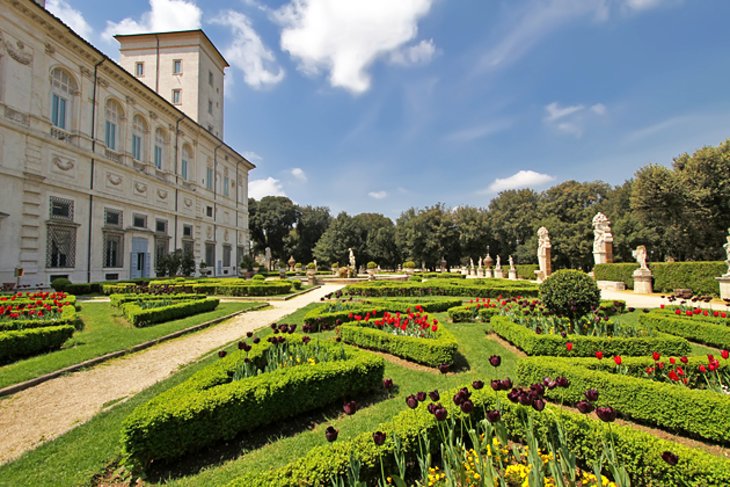
The Borghese family had this villa built on the outskirts of Rome for Cardinal Scipione Caffarelli Borghese in 1613-16. The villa, with extensive grounds that include artificial lakes and garden pavilions, now combines with the Pincio Gardens to form one of the largest parks in Rome.
The Museo e Galleria Borghese displays the collection of antiquities assembled by Cardinal Borghese, along with works he commissioned from contemporary artists. In the richly decorated entrance hall are five fragments of a mosaic from Torrenuova showing gladiator and hunting scenes, along with Baroque ceiling frescoes by Mariano Rossi.
Outstanding sculpture in the museum includes Canova's figure of Pauline Borghese as Venus (the most famous piece in the collections); Bernini's David with his Sling, Apollo and Daphne, and Truth Revealed by Time; and several other of his sculptures.
Some of the most famous art in Rome is housed here, in a painting collection that includes works by Raphael, Botticelli, Pinturicchio, Perugino, Dürer, Lotto, Caravaggio, Rubens, Correggio, Bernini, Bassano, Van Dyck, Titian, Bellini, Paolo Veronese, and Antonello da Messina. The number of masterpieces and the fame of the artists represented make this one of Europe's outstanding art museums.
Address: Piazzale del Museo Borghese 5, I-00197 Rome
Official site: http://www.galleriaborghese.it/default-en.htm
Vatican Museums
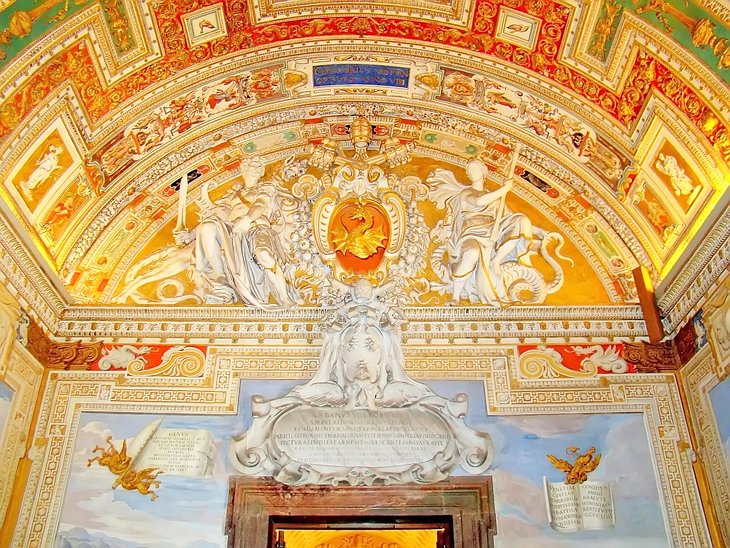
Filling much of the Vatican Palace, the Vatican Museums contain some of the world's greatest art collections, begun in 1506 by Pope Julius II. Following the Renaissance ideals, he began collecting ancient works of art, and over the centuries, Popes added artworks presented to them and items related to the work of the Roman Catholic Church.
Additional works were created specifically for the Vatican Palace, including Michelangelo's paintings in the Sistine Chapel and the rooms painted by Raphael. Four tours of the museums are marked with signs in different colors.
The Pinacoteca gives an excellent survey of the development of Western painting, with works by Fra Angelico, da Vinci, Raphael, and Caravaggio. Various other museums hold the world's largest collection of ancient sculpture; 18 rooms of Etruscan art and everyday objects; and entire collections of maps, tapestries, illuminated Gospels, coaches, and modern religious art that features works by Rodin, Matisse, Dali, Munch, Kandinsky, and Rouault.
The Vatican complex is one of the most popular places to visit in Rome, so ticket lines are usually long. A way to bypass the lines and make sure you see the highlights and most important attractions is on a skip-the-line tour.
Address: Viale Vaticano
- Read More: Tourist Attractions in the Vatican
Terme di Diocleziano (Baths of Diocletian National Museum)
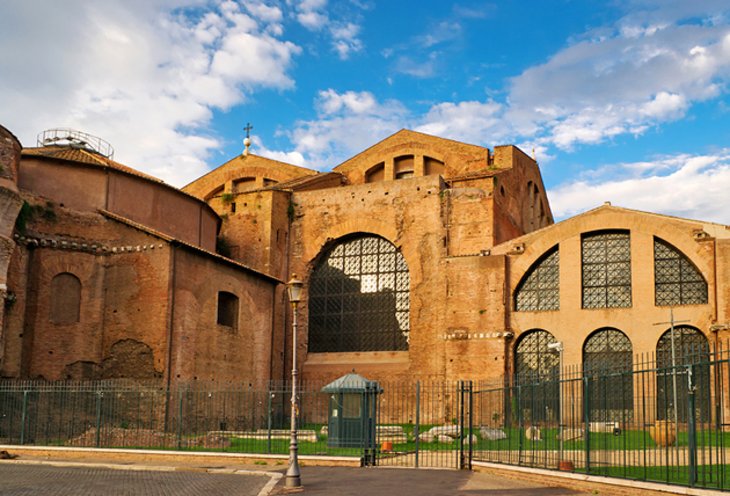
The baths built by Diocletian were even larger than the Baths of Caracalla, as you can appreciate by how widely separated the surviving parts are. Many of them are incorporated into later buildings — the National Museum, Michelangelo's church of Santa Maria degli Angeli, the round church of San Bernardo, the Planetarium, and the cloister of a Carthusian monastery. The baths fell into decay after their water supply was cut in 536.
The Museo Nazionale Romano, National Museum, housed in part of the Baths of Diocletian and a nineteenth-century palace, has the largest collection of ancient art in Rome after that of the Vatican museums. Particularly outstanding are the collection of mosaics, stucco work, frescoes, and wall paintings from the Villa of Livia.
Other highlights are Christian and earlier sarcophagi and Greek and Roman sculpture, including the Young Dancing Girl and The Discus Thrower from Porziano Castle and the fourth-century BC Venus of Cyrene. The Ludovisi Collection contains the fifth-century BC Ludovisi Throne and several excellent statues. The exhibition path follows history, myths, and everyday life in ancient Rome.
The central complex of the baths, including the 90-meter-long tepidarium, was preserved by being incorporated into the church of Santa Maria degli Angeli, designed by Michelangelo. Building continued after Michelangelo's death, and it was later restored and redecorated several times. Late in the 16th century, the church of San Bernardo alle Terme was built in a rotunda at the corner of the baths, with a dome similar to the Pantheon's but only half its size.
Address: Via le E. de Nicola 78, Rome
Castel Sant'Angelo
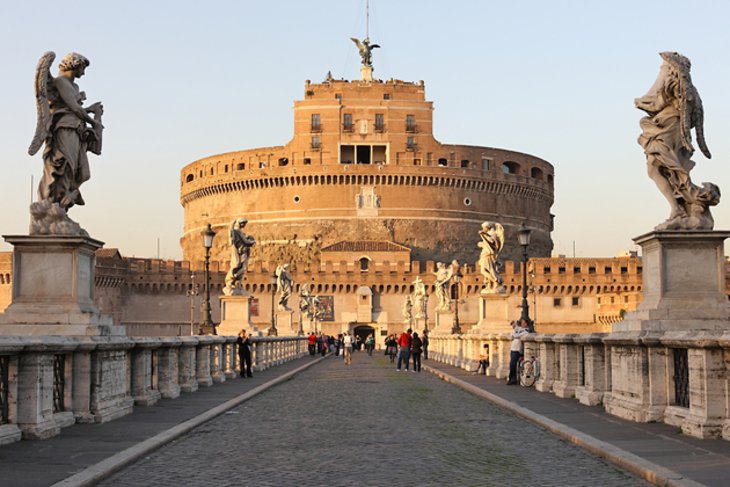
Built by the Emperor Hadrian in the second century as a mausoleum for himself and his successors, Castel Sant'Angelo is one of the most imposing buildings surviving from antiquity. When threatened by Germanic raiders, Rome was surrounded with a new circuit of walls, and the strategically located mausoleum was incorporated into the defenses, as the strongest fortress in Rome. In 1277, Pope Nicholas III linked the castle with the Vatican Palace by a covered passage known as the passetto.
Pope Alexander VI, the Borgia Pope whose policy of conquest made protection against attack quite necessary, fortified the passage and strengthened the castle with four corner bastions. Hadrian's original round structure was 64 meters in diameter and 20 meters high, with walls of dressed travertine and tufa and statues along their top.
In the course of 1,500 years, the building was altered by successive Popes for both defense and display, and finally became a museum. In its 58 rooms, some of which are decorated with impressive murals, are models of the history of the building, weapons collections, several chapels, and a treasury. From the upper platform there are magnificent views.
Access is across the finest of Rome's bridges, Ponte Sant'Angelo, also built by Hadrian in 136. The three central piers are original. Pope Clement IX commissioned Bernini, who was 70 at the time, to carve the 10 figures of angels, which line the bridge, and they were made by Bernini's students between 1660 and 1668 to Bernini's design.
Address: Lungotevere Castello 50, Rome
Capitoline Museum
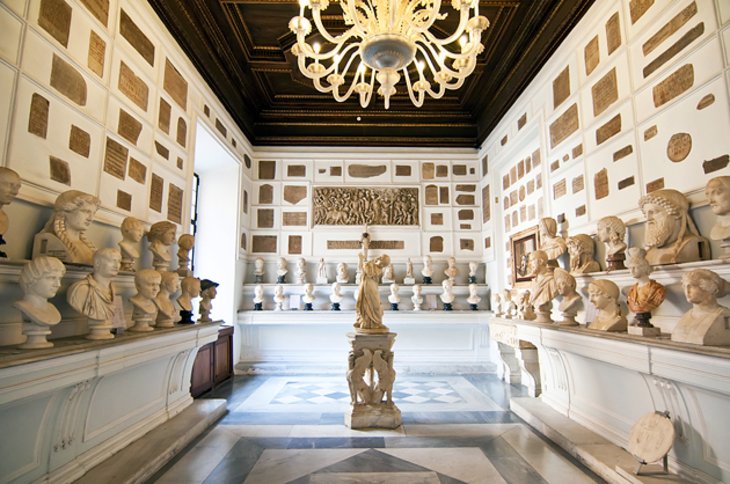
Founded by Pope Sixtus IV in 1471, the Capitoline Museum is the oldest public art collection in Europe and is best known for its rich collection of classical sculpture. Foremost among these are the Dying Gaul — a Roman copy of the figure from the victory monument erected by King Attalus of Pergamon in the third century BC; the Capitoline Venus; and two Hellenistic works, Amor and Psyche and the Drunken Old Woman.
The recently restored equestrian statue of Marcus Aurelius that was previously in front of the church of St. John Lateran and is one of the largest achievements of antique sculpture stands behind glass in the courtyard.
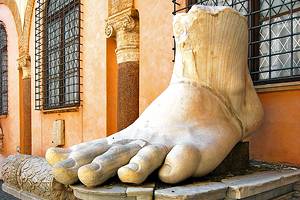
On the opposite side of the square, the Palazzo dei Conservatori, built by Giacomo della Porta in 1564-75 to the design of Michelangelo, also houses part of the Capitoline Museum. Notable exhibits include fragments of a colossal 12-meter statue of the Emperor Constantine, and the Capitoline She-Wolf, an Etruscan work of the sixth century BC.
Here, also, is the often-copied bronze Boy with a Thorn. The palace also contains the Capitoline Picture Gallery with Titian's Baptism of Christ, Caravaggio's John the Baptist, Veronese's Rape of Europa, and Romulus and Remus by Rubens.
Address: Piazza del Campidoglio, I-00186 Rome
Villa Farnesina
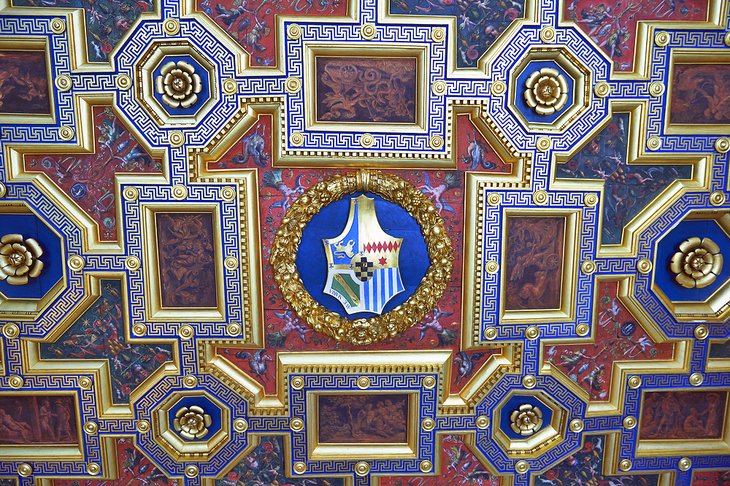
Dating back to the 16th century, Villa Farnesina displays all the lavishness and splendor of the Renaissance period. Designed by Baldassare Peruzzi, it was decorated by famous artists, including Raphael, Giulio Romano, Sebastiano del Piombo, and others, creating what is considered one of the most harmonious examples of an Italian Renaissance palace.
Popes, cardinals, princes, and diplomats were entertained here in princely fashion; illustrious guests were served on silver dishes bearing their own coat-of-arms, which they threw into the nearby Tiber after the banquet (though they were caught by a net for later retrieval).
On the walls and ceiling on the palace's garden loggia are scenes from the myth of Cupid and Psyche, painted by Raphael and his students Giulio Romano and Francesco Penni in 1517. The figures in the spandrels are by Raphael himself. His magnificent fresco of the nymph Galatea fleeing from the Cyclops decorates the Sale di Galatea.
The masterpiece of Renaissance painter Giovanni Antonio Bazzi (also known as Il Sodoma), The Marriage of Alexander and Roxana, is in the bedroom of Agostino Chigi.
Address: Via della Lungara, Rome
Official site: www.villafarnesina.it
Museo Nazionale Etrusco di Villa Giulia (National Etruscan Museum)
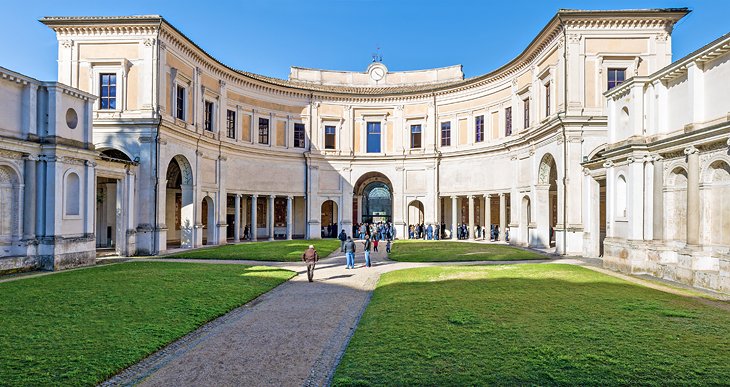
Long before the Romans came the Etruscans, but by the third century, The Roman Empire had conquered and absorbed them, literally burying Etruscan culture under their new cities. Slowly, however, this vast and highly developed ancient civilization has emerged from the shadows, and throughout Tuscany and elsewhere beautiful examples of their art and craftsmanship are still being discovered. A treasury of these is displayed in the Renaissance Villa Giulia, built by Pope Julius III in the mid-16th century.
Arranged by period and geography, the collection of sculptures, monuments, bronzes, ceramics, tools, weapons, and jewelry paints a fascinating — if tantalizingly incomplete -— picture of Etruscan life.
Highlights are the larger-than-life Apollo of Veii and the Sarcofago degli Sposi, a funeral monument picturing a life-sized couple at a table; both sculptures are of terra cotta and date from the sixth century BC. From the fifth century BC are the Pyrgi Tablets, inscribed with gold-leaf in Etruscan and Phoenician. The villa itself is quite lovely, as are its gardens.
Address: Piazzale di Villa Giulia 9, Rome
Galleria Doria Pamphilj
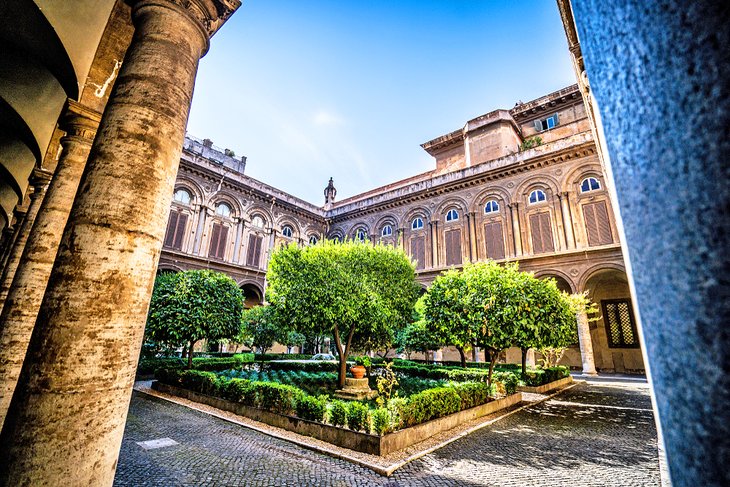
Begun by Pope Innocent X in 1644 and still the property of his family, the Palazzo Doria Pamphilj is considered the finest private collection in Rome. Its more than 400 paintings and sculptures date from the 15th through the 18th centuries and include works by artists as diverse as Caravaggio, Velàzquez, Lippi, Brueghel the Elder, Bernini, Correggio, Raphael, and Titian. Caravaggio's Rest in the Flight into Egypt, one of the artist's first major paintings, and Titian's Salome with the Head of John the Baptist are highlights.
The palace itself is stunning, with inlaid floors, frescoed ceilings, and lavish Baroque decoration throughout its halls and galleries. Musical concerts include tours of the palace, and visitors can often observe paintings in the process of restoration in the conservation workshop.
Address: Via del Corso, 305
Palazzo Barberini
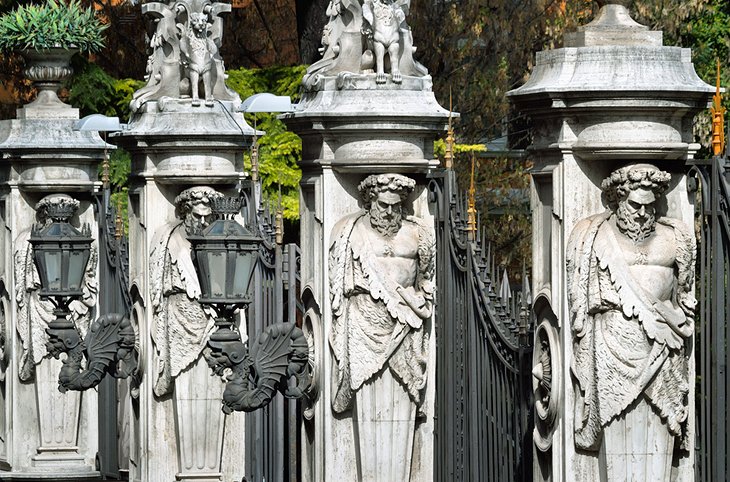
The great builder and art patron Pope Urban VIII (Maffeo Barberini) was fortunate in having the two greatest architects of the Baroque period, Borromini and Bernini, available to work for him during his reign, from 1623 to 1644. So many ancient buildings were leveled to make room for his new ones that the saying "Quod non fecerunt barbari, fecerunt Barberini" ("What the barbarians did not destroy the Barberini destroyed") was popular in Rome.
This palace was begun in 1625 by Carlo Maderna, with the help of Borromini, and completed by Bernini in 1633. The complex layout of rectangular and oval stairways, suites of rooms, and state apartments epitomizes the Italian High Baroque. The central feature of the palace is the two-story Salone, with a ceiling painting Triumph of Divine Providence by Pietro da Cortona, mainly designed to glorify the Papacy and the Barberini family.
The palazzo now houses the Galleria Nazionale d'Arte Antica (National Gallery of Ancient Art), with works by Fra Angelico, Piero della Francesca, Pietro Perugino, Sodoma, Tintoretto, Pietro da Cortona, and others. Among the highlights are Raphael's La Fornarina, Titian's Venus and Adonis, Caravaggio's Narcissus, Filippo Lippi's Madonna and Child, and three works by El Greco.
Address: Via delle Quattro Fontane 13, Rome
Domus Aurea (Nero's Golden House)
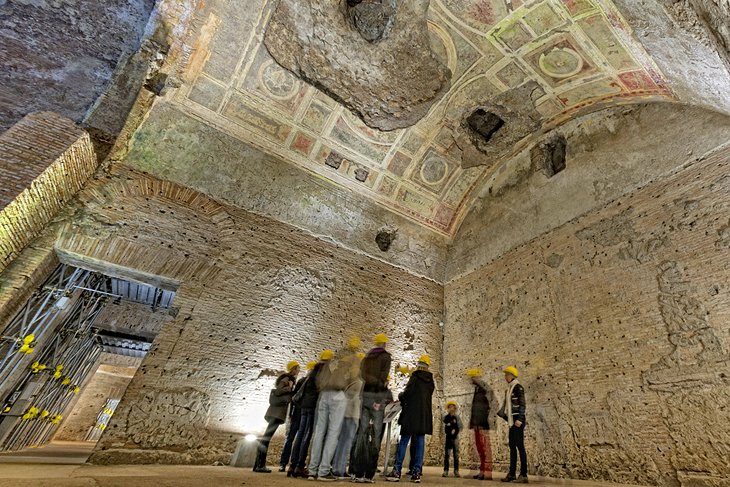
The burning of Rome in AD 64 (for which Nero was certainly not responsible, despite legends to the contrary) was very convenient for Nero's purposes. In the vast area the fire cleared, he planned to build a huge and sumptuous new palace covering an area greater than the present-day Vatican City.
While the ambitious project was never completed, excavations during the Renaissance brought to light large numbers of frescoes, marble statues, and other works of art that inspired Renaissance artists such as Pinturicchio, Ghirlandaio, and Raphael to copy the ornamental motifs painted in what were thought at the time to be caves.
Only recently have excavations revealed the extent of the rooms, whose walls were sheathed in fine marble and decorated with the gold and precious stones that earned it the name of Domus Aurea (Golden House). Ironically, it was the attempts of Nero's successors to bury his luxurious house that preserved it for two millennia.
Virtual reality technology brings the house to life, beginning with a projection of the original plans for the palace, then recreating an entire room and the atrium as they would have looked. Because this is an active excavation, the site is usually open only on weekends, and only portions of it are open at a time, but any part of the amazing house is well worth seeing.
Address: Via della Domus Aurea, Rome
Palazzo Venezia
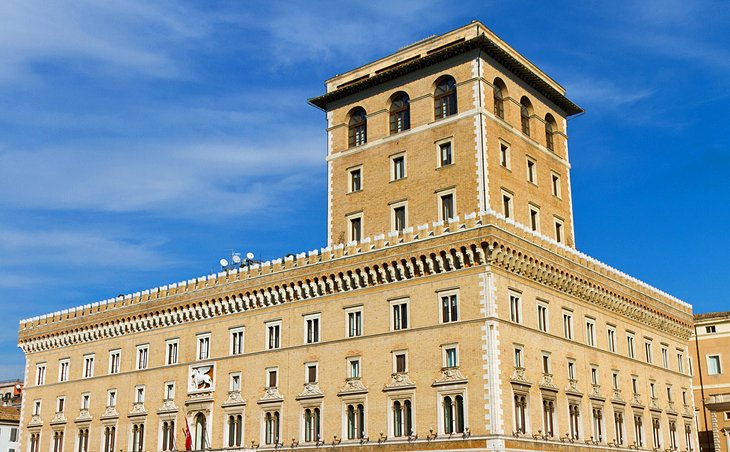
Although Palazzo Venezia, completed in 1491, is now home to two excellent museums, it is more familiar to most as the site of Mussolini's balcony, from which he harangued the crowds during the Fascist regime. It was the official residence of Mussolini until his fall toward the end of World War II. Between 1594 and 1797, the palace, with its massive facade and tower, belonged to the Republic of Venice — hence its name.
Now occupied by the Palazzo Venezia Museum and the National Institute of Archeology and Art History, it is also frequently used for temporary art exhibitions. The Palazzo Venezia Museum contains a varied group of collections that include wood and marble sculptures, weapons and textiles, tapestries, paintings, terra-cotta models, early printing, porcelains, and glass. These originate from many different periods and cultures. Perhaps the most surprising are the large collection of Coptic textiles and the map of the world in the Sala del Mappamondo.
Address: Via del Plebiscito 118, Rome
Galleria Nazionale d'Arte Moderna (Gallery of Modern Art)
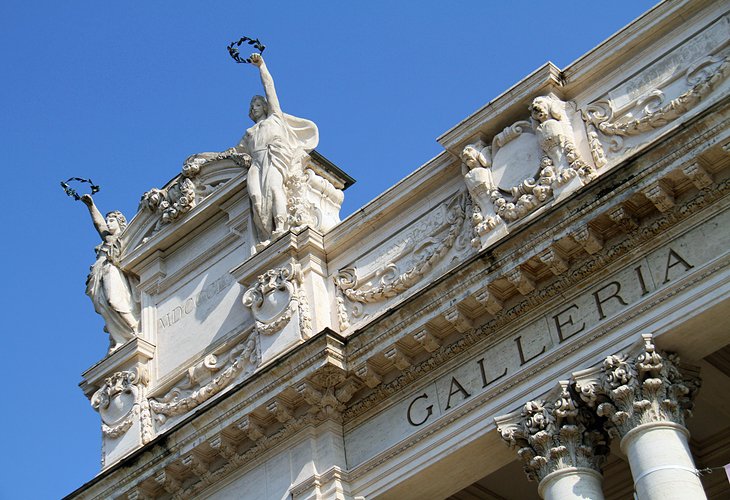
The 70 rooms of the massive National Gallery of Modern Art display the largest collection of works by Italian painters and sculptors of the 19th and 20th centuries. Although the works present a survey of Italian and foreign painting and sculpture since 1800, not all the leading figures are represented and not all are represented by their major works.
Nonetheless, it is an impressive collection and highlights some of the lesser-known but seminal artists, including those of Italy's Impressionist school, the Macchiaioli.
This group of open-air painters from Tuscany is represented by the sculptures of Marino Marini and Giacomo Manzù and paintings by Giorgio de Chirico. It is interesting to compare works by Italian artists with those of their contemporaries elsewhere.
Notable among the non-Italian artists shown here are Degas, Cézanne, Mondrian, and Van Gogh, represented by The Gardener. Be sure to see the lovely gallery courtyard, where Antoine Bourdelle's Bowman stands amid the ivy and roses.
Address: Viale delle Belle Arti 113, Rome
Tips: How to Make the Most of Your Visits to Rome's Museums & Palaces
Planning Your Time:
- While it is tempting to schedule two major museums in the same day, even if your time in Rome is short, this is exhausting. Unless you plan to rush through with just quick looks at the highlights, the Vatican Museums will take several hours and involve literally miles of walking. Instead of planning to see the Villa Borghese on the same day, visit one of the smaller, less crowded museums such as the Galleria Pamphilj.
Booking Ahead:
- To avoid wasting hours of your vacation standing in line, book skip-the-line tickets and tours for popular attractions in advance. This is especially important for the Vatican Museums and the Villa Borghese.
Dressing Appropriately:
- Many attractions in Rome, including all the Vatican sights, have dress codes. This means no bare shoulders, knees, or midriffs, and no deep-cut necklines.
More Related Articles on PlanetWare.com
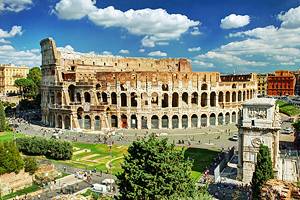
What to See in Rome: The top tourist attractions of Rome are easy to visit with our handy guides. You'll find pages here on Visiting the Colosseum, Visiting the Roman Forum, Visiting Palatine Hill, and the Churches in Rome.
Making Your Visit Easier: If you're traveling with children, our page on Rome with Kids: Things to Do will give you plenty of ideas.