15 Top-Rated Tourist Attractions in China
Ever since the world first discovered China through the writings of adventurer Marco Polo more than 700 years ago, this large Asian country has come to be regarded as the embodiment of all that is mysterious and exotic. Even now, after decades of economic growth, this vast country has lost none of its fascination. Indeed, the contrast between China's ancient customs and the new ultra-modern state that is developing has only increased the fascination with a culture that dates back many millennia.
It's a culture that is much celebrated by the Chinese themselves, as evidenced by the preservation of such important historic sites as the Forbidden City and the Summer Palace in Beijing, each recalling the days of China's emperors. And then, of course, there's the famous Great Wall, winding for 6,700 kilometers all the way from the Yellow Sea to Central Asia, while its countless shrines exude the spirit of age-old Eastern religions.
Thanks to its size, China as a tourist destination offers limitless scope for exploration. Whether you choose to travel aboard a luxury cruise ship through the picturesque Yangtze Gorges, visit a bustling city, or seek out the tranquillity of an ancient temple, this country is full of incredible experiences and sightseeing possibilities.
Discover fascinating, unusual, and adventurous things to do with our list of the top tourist attractions in China.
- 1. The Great Wall of China
- 2. The Forbidden City & the Imperial Palace, Beijing
- 3. The Terracotta Army, Xi'an
- 4. The Summer Palace, Beijing
- 5. Cruising the Li River, Guilin
- 6. Chengdu Research Base of Giant Panda Breeding, Sichuan
- 7. The Yangtze River and the Three Gorges
- 8. The Classical Gardens of Suzhou, Jiangsu
- 9. The Potala Palace, Tibet
- 10. Shanghai's Promenade: The Bund
- 11. Hangzhou's Historic West Lake
- 12. The Mausoleum of Light: The Northern Imperial Tomb, Shenyang
- 13. Leshan Giant Buddha, Sichuan
- 14. The Hong Kong Skyline
- 15. Zhangjiajie National Forest Park, Hunan
1. The Great Wall of China
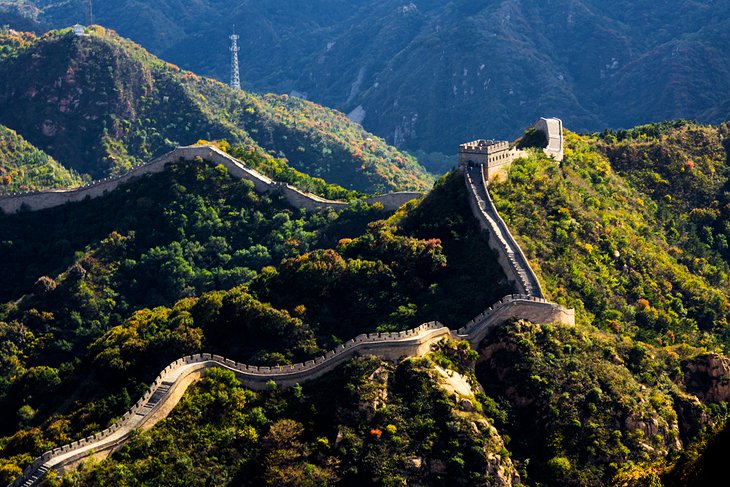
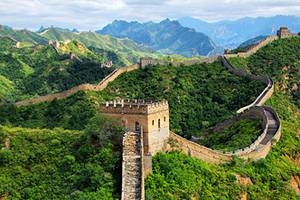
"Nobody can be a true hero unless he has been on the Great Wall" goes the popular Chinese saying, one that clearly demonstrates the importance placed upon this unique ancient monument.
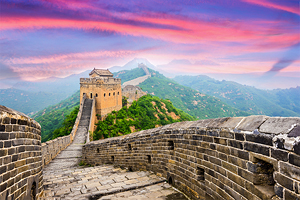
Known in Chinese as 'Changcheng', or the Long Wall, the magnificent Great Wall of China stretches more than 6,000 kilometers from the fortresses of Shanhaiguan in the east all the way to Jiayuguan in the west. Along the way, it passes through Hebei, Tientsin, and Beijing, where the best-preserved sections of the wall can be visited, as well as Inner Mongolia, Ningxia, and Gansu.
Averaging six to eight meters in height but rising as high as 16 meters and wide enough in places for five horses or 10 men to pass, the wall boasts numerous battlements and watchtowers. Some of the wall's oldest fortifications date back as far as the 7th century BC, with the best-known areas added around 210 BC when its various sections were joined together.
Today, the most visited section of the wall is near Badaling Pass northwest of Beijing, easily reached by public transport or organized tours. Other restored sections worth a visit include the section near Gubeikou, 130 kilometers from Beijing; and in Mutianyu, just 70 kilometers northeast of Beijing.
Location: Huairou District, China
2. The Forbidden City & the Imperial Palace, Beijing
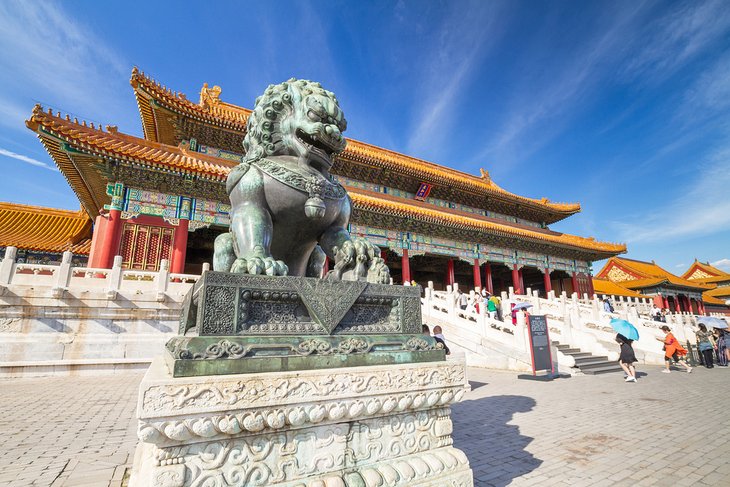
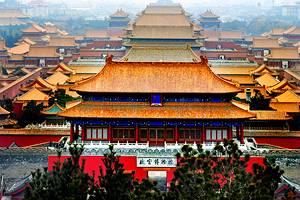
China's largest and most important building, also known as the Imperial Palace, is situated in the very heart of Beijing and is a must-see when visiting the country. Started during the Yuan Dynasty between 1271and 1368, much of the complex seen today was built between 1406 and 1420.
Really many splendid palaces in one, this sprawling complex was the residence of 24 Ming and Qing Emperors whose presence forbade the entry of anyone other than the imperial family and their courtesans. Covering some 720,000 square meters and protected by a 10-meter-high wall with watchtowers and a wide moat, this massive complex consists of areas set aside for ceremonial and administrative purposes, as well as a private residence used by the emperor.
While it can take many hours to see everything, highlights include the five white marble Golden River Bridges; the Hall of Supreme Harmony, a 35-meter-tall building housing the imperial throne; and the exquisite emperor's banquet hall (the Hall of Preserving Harmony).
The Palace Museum with its large collection of art and artifacts from the Ming and Qing dynasties is another must-see.
Spread across an area of more than 720,000 square meters, this impressive nearly 100-year-old museum contains historic buildings that themselves date back to the early 1400s. It takes a lot of time to explore, so be prepared to spend at least a day here. If you can, do a little advance research using the museum's official English-language website to pre-plan the exhibits you're most interested in visiting.
Highlights include fine examples of paintings and ceramics. The museum also houses the country's vast collection of important works of art made from jade and bronze. English language museum tours are available.
Other important attractions in the vicinity of the Imperial Palace include the famous Tiananmen Square, and the Temple of Heaven. One of the country's most important religious sites,this impressive temple dates back to the 15th century.
Address: 4 Jingshan Front St, Dongcheng, Beijing, China
3. The Terracotta Army, Xi'an
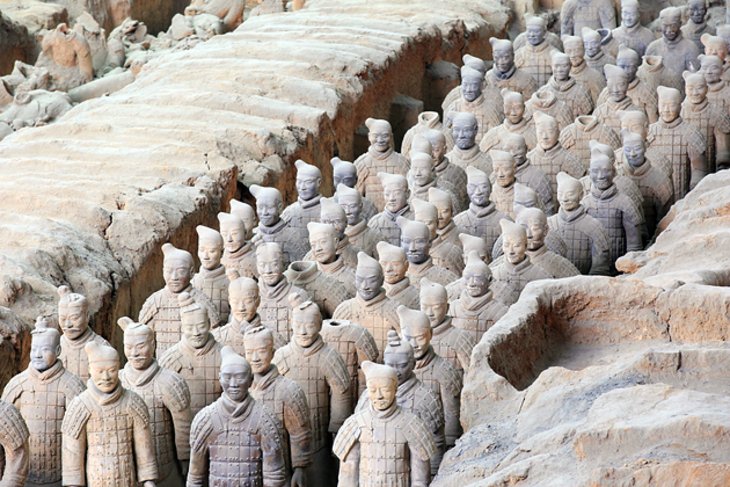
It was while digging wells on the outskirts of Xi'an in the 1970s that farmers stumbled across what was to be China's most important archeological find: the Terracotta Army.
Distributed over three large underground pits and built to guard the First Emperor's tomb, the find included more than 8,000 life-size warriors, some 520 horses, and more than 100 chariots, along with numerous other non-military characters dating from around 280 BC. Although some were severely damaged due to the passing of time, many of the statues unearthed have been painstakingly re-assembled and stand as a testament to the importance bestowed upon the emperor and the afterlife.
This remarkable find is part of Emperor Qin Shi Huang's Mausoleum Site Park and is one of China's most important tourist destinations. It offers the unforgettable experience of standing in front of this assembly of soldiers and horses as if inspecting a centuries-old parade. English-language guided tours are available.
Address: Lintong District, Xi'an, Shaanxi, China
4. The Summer Palace, Beijing
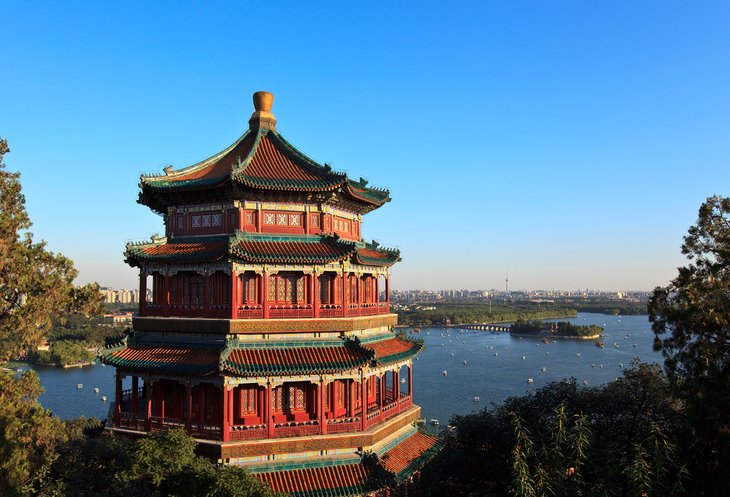
An easy 15-kilometer commute from Beijing, the sumptuous Imperial Summer Palace (Yíhé Yuán) is set amid more than 700 acres of beautiful parkland and is one of China's most visited attractions. While the palace itself was built in 1153, its large lake was added in the 14th century to enhance the Imperial Gardens.
Highlights include the magnificent Hall of Benevolence and Longevity (Renshou Dian), with its throne; and the beautiful Great Theatre, a private three-story structure built in 1891 to satisfy the imperial family's love of opera. This historic venue is still used for performances of traditional Chinese plays and musical events and is worth a visit for a performance or show.
Other highlights include the Hall of Happiness and Longevity (Le Shou Tang Hall) with its lovely gardens and courtyards, as well as many miles of picturesque pathways and walking trails.
If time allows, try to also take in the ruins of the Old Summer Palace in Yuanmingyuan Park. Said to have once been one of the country's most elaborate and architecturally attractive palaces, this once impressive structure was destroyed by colonial forces in the mid-1800s.
Address: 19 Xinjiangongmen Rd, Haidian District, China
5. Cruising the Li River, Guilin
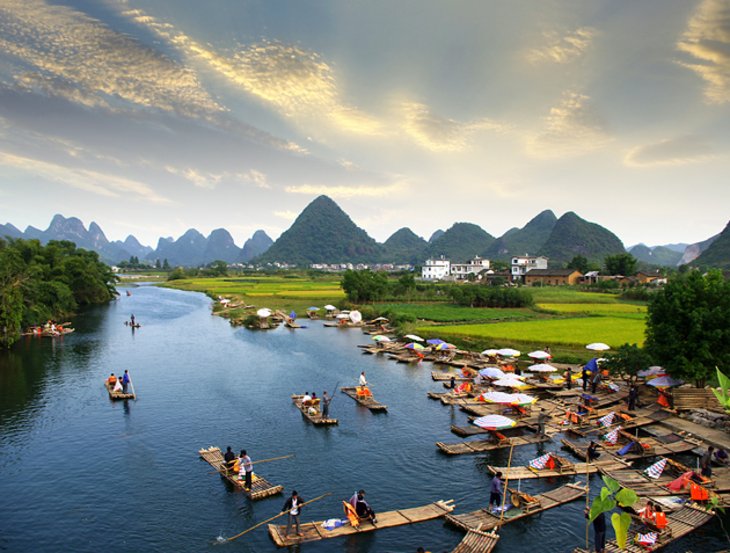
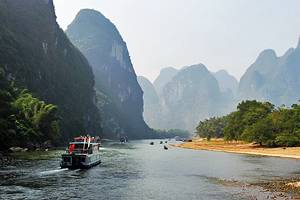
The town of Guilin in the northeast corner of Guangxi boasts some of China's most beautiful countryside. It's famous for the Li River which meanders through the town and surrounding karst mountains.
While for hundreds of years this unique scenery has attracted poets and artists and has been the subject of countless fairy tales and legends, these days, it's popular with tourists from around the world wanting to see this natural splendor up close.
The best way to enjoy the area is to take a cruise along the Li River. The most popular stretch is from Guilin to Yangshuo, where the river winds peacefully through some 80 kilometers of remarkable rock formations and caves with romantic names such as the Mount of Unique Beauty, Elephant Trunk Hill, and Reed Flute Cave.
You can choose from a tourist cruise ship to small bamboo punts, and depending upon the type of boat used, trips can take anywhere from a few hours to multiple days.
6. Chengdu Research Base of Giant Panda Breeding, Sichuan

No visit to China would be complete without at least one panda experience. While the country's top zoos boast many fine specimens of these fascinating creatures, the best place to see them in a close approximation to their natural habitat is at the excellent Research Base of Giant Panda Breeding in Chengdu in the province of Sichuan.
Here, you'll have the chance to watch as many as 80 pandas go about their daily routines, from foraging to playing in the facility's large park-like setting. In addition to viewing these splendid animals up close, you'll learn a great deal about them from the many permanent exhibits and displays detailing ongoing conservation efforts to safeguard their future.
If possible, try to time your visit for the morning feeding sessions. Not only are the pandas at their most active, it's also when you'll get some memorable photos. Better still, sign up for one of the unique experiential volunteer programs that will have you involved in the feeding and care of these cuddly creatures - and possibly even holding a baby panda. English language tours are available.
Address: 1375 Xiongmao Ave, Chenghua District, Chengdu, Sichuan, China
7. The Yangtze River and the Three Gorges
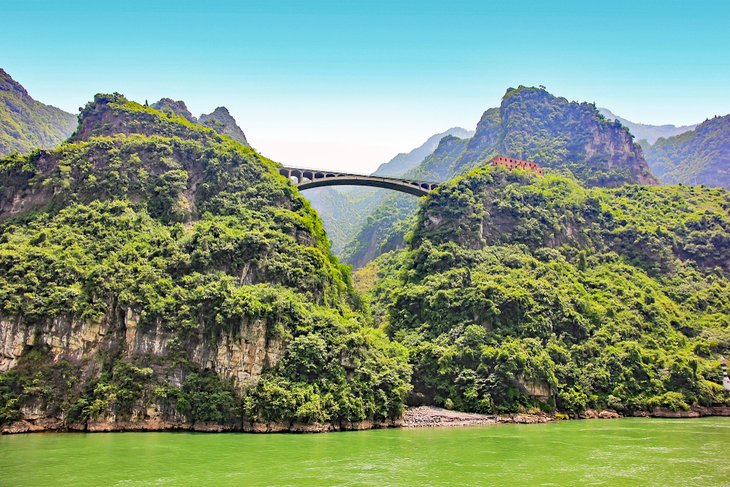
Known in China as Chang Jiang ("Long River"), the mighty Yangtze River extends more than 6,000 kilometers, making it the longest and most important river in China. It also has the distinction of being the third longest in the world after the Amazon and the Nile.
Flowing from Tibet in the west to Shanghai in the east through eight provinces, the Yangtze has, for more than 2,000 years, been China's major transportation route as some 2,700 kilometers are navigable. Its vast catchment area, with its 700 tributaries, covers about one-fifth of the total area of the country and encompasses a quarter of the country's agricultural land.
While its immense length ensures the river can be visited at numerous points in China, by far the most popular for tourists is the beautiful Three Gorges. Named Qutang, Wu, and Xiling, they cover a 200-kilometer stretch between the towns of Fengjie and Yichang. In places a mix of raging torrents and dangerous shallows, here the river winds its way through the gorges and their rugged cliffs and high mountain peaks in a stretch of scenery as dramatic as the Grand Canyon.
Numerous sightseeing options are available, from luxurious riverboat cruises focusing on the region's many historical attractions and places of scenic beauty to challenging adventure tours along the most dramatic sections of the river.
8. The Classical Gardens of Suzhou, Jiangsu
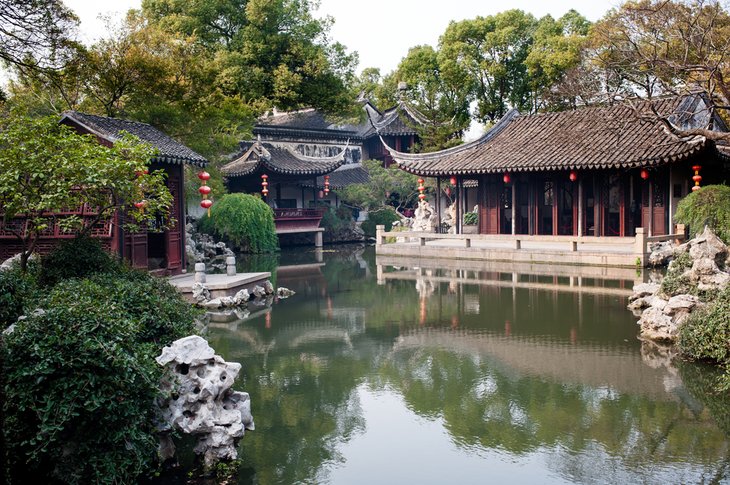
Considered one of the world's most important historic gardens and designated a UNESCO World Heritage Site, the Classical Gardens of Suzhou should rank highly on your China travel itinerary. Located in the historic city of Suzhou in Jiangsu province, these magnificent gardens were established in the 11th century, at a time when the city was experiencing unprecedented growth, and were among some 270 or more gardens planted here.
Of the surviving restored gardens, the most famous is the delightful Garden of Lingering. This seven-acre garden was laid out in 1800 on the site of a park originally created during the Ming Dynasty. One of the most famous garden complexes in China, it boasts a pool, several attractive buildings, a man-made hill, a grove of peach trees, and a lovely covered pathway on the walls of which hang more than three hundred stone tablets engraved with old Chinese characters.
Also worth visiting is the Garden of the Cang Lang Ting Pavilion. This two-acre garden offers many unique features, including a double arcade connecting the inner and outer sections.
Address: 178 Dongbei St, Gusu District, Suzhou, Jiangsu, China
9. The Potala Palace, Tibet
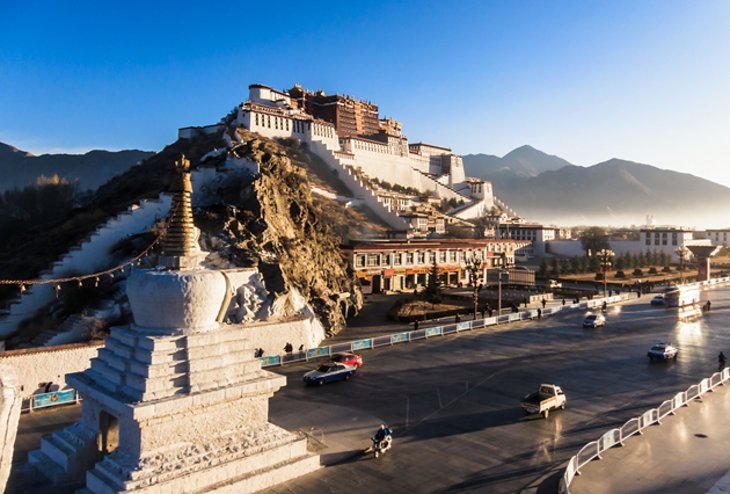
Another of China's most recognizable historic structures is the magnificent Potala Palace in the town of Lhasa, Tibet. Constructed as a fortress and residence for the Dalai Lama, it was for centuries a center of political and religious power and contains many of the religion's most important treasures.
The first of the two Potala Palaces, the Red Palace, was built in the 17th century and contains the complex's most important shrines. These are found in the Enthronement Hall, the walls of which are covered with murals depicting scenes from the lives of the Dalai Lamas and the Tibetan kings. Other highlights of the Red Palace are its many vast halls devoted to the religion's teachings and the elaborate tombs, known as "stupas," of a number of Dalai Lamas.
The equally impressive White Palace was completed in 1648 and includes the sleeping quarters, studies, and reception rooms, most untouched since 1959 when the Dalai Lama fled Tibet. While in Lhasa, be sure to visit the superb Jewel Gardens. Part of the Dalai Lama's summer residence, these 90-acre gardens were first started in the 1840s and encompass everything from grand palaces and pavilions to pleasant lakes.
Address: 35 Central Beijing Road, Lhasa, Tibet, China
10. Shanghai's Promenade: The Bund
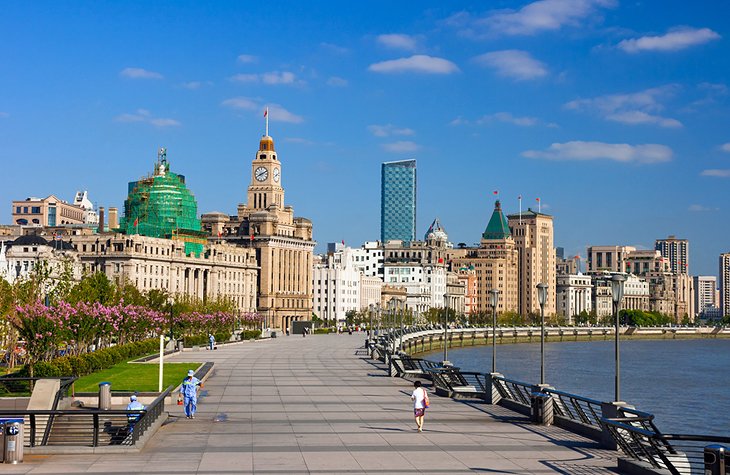
A remarkable act of smart city planning and preservation can be seen in Shanghai's splendid riverside promenade, the Zhongshan Lu, perhaps better known as the Bund (Wàitan). As you stroll this wide pedestrian zone along the Huangpu Jiang River, you'll almost forget you're bang-smack in the middle of China's largest city (Shanghai's population exceeds 24 million people).
Famous for its European feel, a fact owed to the district's past as the location of the city's International Settlement, the Bund is popular for its 52 preserved English- and French-influenced buildings, many now restaurants, cafés, stores, and art galleries. Representing a variety of influences from Gothic to Renaissance styles including a number of Art Deco buildings, the architecture includes highlights such as the old harbor customs office, with its bell tower, and the majestic Peace Hotel.
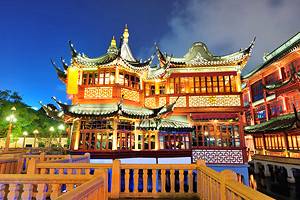
For the best views of the Bund, visit the 468-meter Oriental Pearl Tower on the opposite bank of the Huangpu Jiang River. If time allows, be sure to also visit the Yu Garden. Known affectionately as the "Garden of Happiness," this must-see garden can trace its roots back to 1559 when it was laid out. Many of the original structures survive to this day.
Address: Zhongshan East 1st Rd, Wai Tan, Huangpu, Shanghai, China
11. Hangzhou's Historic West Lake
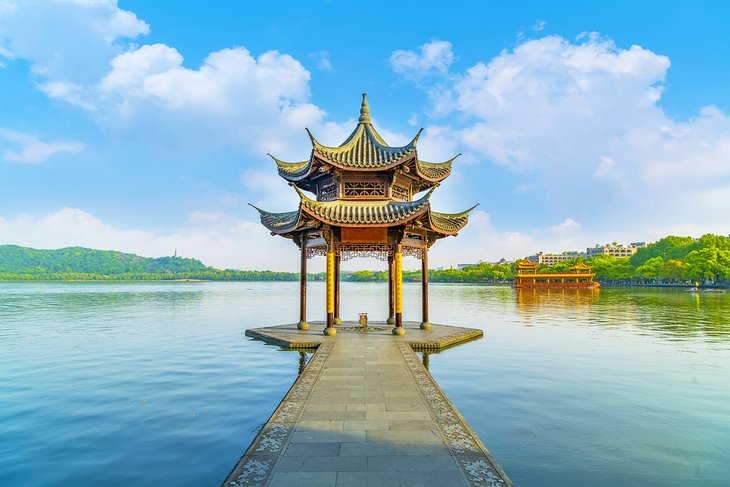
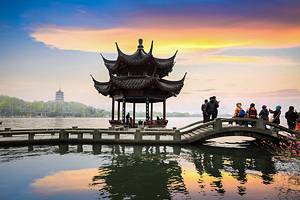
Few cities in China can boast quite the same concentration of splendid historic sites and ancient temples as the city of Hangzhou (Hangchow). Capital of Zhejiang province and located at the southernmost end of China's famous Grand Canal, much of this rich collection is gathered around lovely West Lake, a six-kilometer-square stretch of water in the heart of the old city which is surrounded by numerous hills, pagodas, and temples.
Divided into five distinct sections by man-made causeways dating back as far as the 11th century, it's a marvelous area to explore on foot as you cross from one stretch of water to the next, only to be met with another cluster of fine old buildings. It's particularly pleasant in spring when its many peach trees are blossoming.
Part of the fun is lingering on the lake's many fine old bridges, one of the best being the Broken Bridge (Duanqiao) linking the Baidi Causeway with the shore, and exploring Little Paradise Island with its four mini-lakes linked by the zigzagging Bridge of the Nine Arches.
Be sure to hop aboard one of the many tour boats and small pleasure craft available to whisk you around the lake. And if time permits, stick around for the fun musical fountain show held each evening.
- Read More: Top-Rated Tourist Attractions in Hangzhou
12. The Mausoleum of Light: The Northern Imperial Tomb, Shenyang
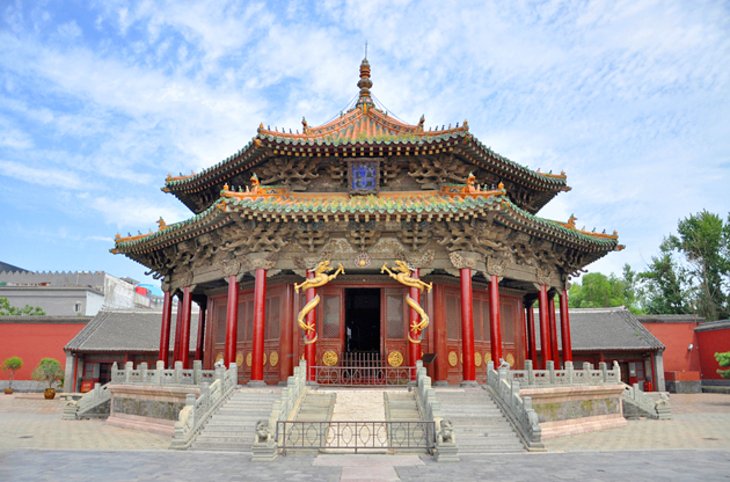
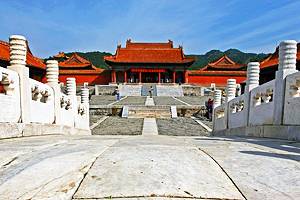
In China's mountainous northeastern region is the old city of Shenyang. This important center for trade and culture is home to the Mausoleum of Light (Zhaoling), also known as the Northern Imperial Tomb.
One of northeastern China's most important historic sites, it's included on the UNESCO World Heritage Site's list of Imperial Tombs of the Ming and Qing Dynasties and is noted for its unique architectural style: a combination of traditionally arranged Chinese burial sites and castle-like buildings of the early Qing period.
Buried here in a vast site covering more than 180,000 square meters that took eight years to complete is Emperor Huang Taiji, who reigned from 1626-35. The site is notable for its 'Path of Souls', a laneway lined with stone columns and sculptures of the emperor's favorite horses.
Another important site is the imposing Imperial Palace dating from the early Qing era, the second largest completely preserved palace complex in China after the Imperial Palace in Beijing. The complex served as a residence for the first Qing Emperors and includes several splendid courtyards around which are grouped numerous buildings, including the Hall of Exalted Government (Chongzheng Dian) housing the imperial throne.
Location: Huanggu District, Shenyang, China
13. Leshan Giant Buddha, Sichuan
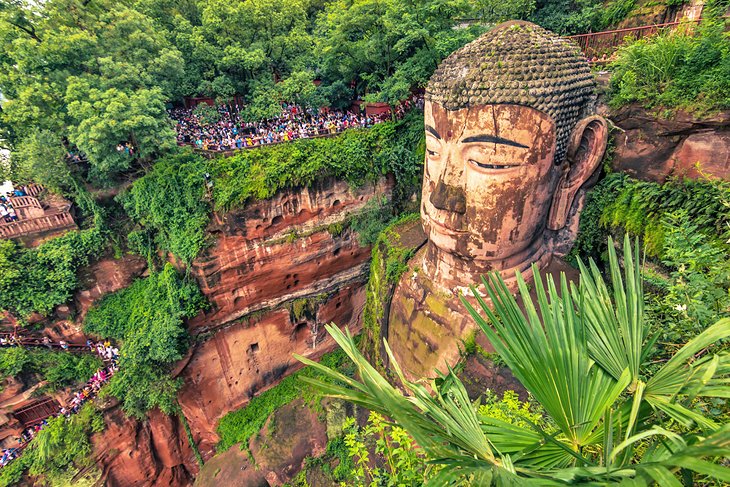
"The mountain is a Buddha and the Buddha is a mountain." So goes the famous Chinese saying, one that's attributed to the spectacular 71-meter-tall Leshan Giant Buddha. And it certainly makes sense as you stand at its feet as the colossal statue towers high above you.
Started in AD 713 by a Buddhist monk and completed 90 years later, this important religious icon is carved entirely from a stone cliff face and is the largest Buddha sculpture in the world. Representing the Buddha Maitreya, the statue is even more dramatic given its location overlooking the river that it was designed to appease which had often proven treacherous for shipping.
Designated a UNESCO World Heritage Site, the Giant Buddha continues to draw huge numbers of pilgrims from across the globe and is widely regarded as one of China's must-visit attractions. Easily accessible from the city of Chengdu, the Leshan Giant Buddha can be reached by a fun ferry trip from the public docks in Leshan. The scenic park in which the Buddha is set is also worth exploring, so be sure to allocate sufficient time to your itinerary.
Address: 2345 Lingyun Rd, Shizhong District, Leshan, Leshan, Sichuan, China
14. The Hong Kong Skyline
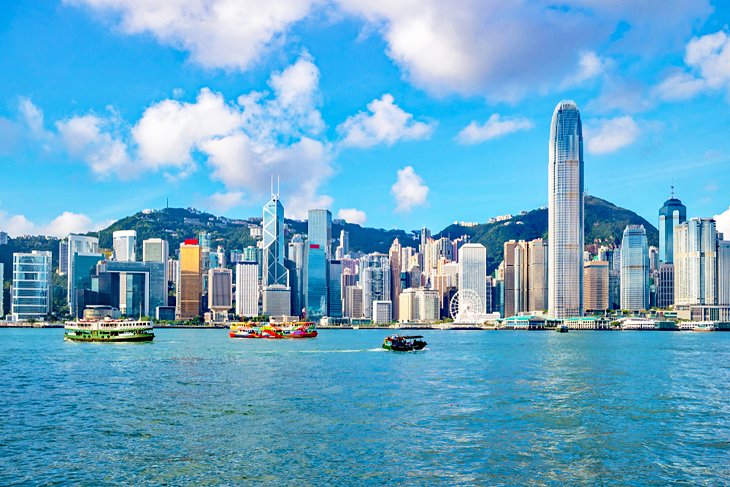
Widely considered one of the world's most dramatic city skylines - as much a result of its having one of the highest concentrations of skyscrapers as it is the presence of the tall hills that frame them - Hong Kong has for decades been the bustling capital of finance and commerce in this part of the Pacific. And it's a cityscape that can be enjoyed from a number of different vantages.
One of the best views is from Victoria Peak on Hong Kong Island, where the skyscrapers frame the city's huge harbor, a special treat after nightfall. Equally stunning is the view from Victoria Harbour itself. Here, you can also take one of Hong Kong's famous ferries. Operated by the Star Ferry company, you can hop aboard and head to various points to wander and explore, such as Kowloon. Or you can simply stay on board and enjoy the views.
If possible, try to time your trip to coincide with the nightly laser extravaganza, a stunning 360-degree laser-light show that uses the harbor's skyscrapers as a magical backdrop. For the best views, try to catch the show from the Kowloon side of Victoria Harbour.
Traveling with family? If so, you'll want to include Hong Kong Disneyland on your travel itinerary. China's first Disney theme park opened in 2005 and while visitors will notice many of the same rides as in the brand's other properties, careful attention was paid to China's cultural heritage. A highlight for fans of Disney's animated movies is the new in 2023 World of Frozen, while 2024 will see the opening of Stark Expo, an area dedicated to the characters of the Marvel universe.
- Read More: Top-Rated Tourist Attractions in Hong Kong
15. Zhangjiajie National Forest Park, Hunan
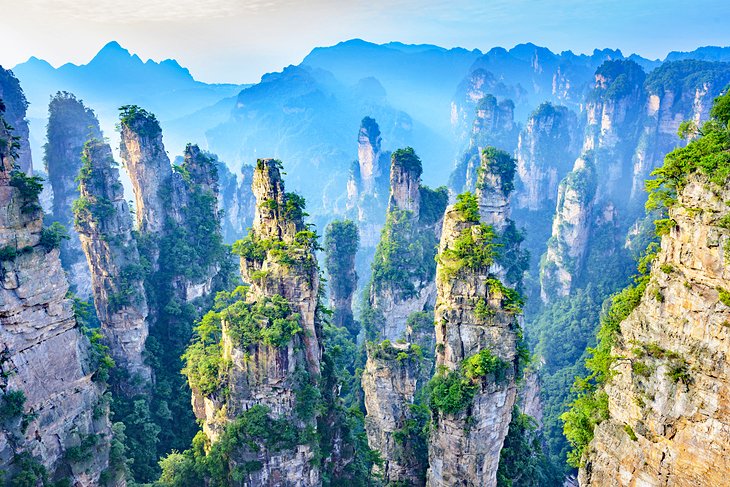
When you first set eyes on Zhangjiajie National Forest Park in Hunan province, it's certainly not difficult to see how filmmaker James Cameron was able to draw inspiration from it.
Cameron's box office hit Avatar, could well have been set in this area of stunning natural beauty, its many unique pillar-like rock formations looking like some incredible alien landscape right out of a sci-fi movie. One of the tallest pillars, standing at an impressive 1,080 meters, has been renamed "Avatar Hallelujah Mountain."
This is one of the lesser-known places to visit in China, but it's well worth the effort to get here. In addition to its many natural wonders, which can best be explored as part of an organized tour, the park boasts a number of new man-made attractions. The first to be built was the Bailong Elevator, aka the "Hundred Dragons Sky Lift." Elevating groups of up to 50 people 326 meters skyward in under two minutes, it's an impressive structure and one that offers dramatic views all the way.
Also notable is the Zhangjiajie Grand Canyon Glass Bridge. Opened in 2016, it's heralded as the world's highest and tallest pedestrian bridge. Standing 300 meters above the ground and extending 430 meters along a spectacular cliff face, it's an attraction that's definitely not recommended for the faint of heart but one of the best things to do if you are looking to add a little adventure to your day.
Location: Wulingyuan District, Zhangjiajie, Hunan, China