Belgium Travel Guide
The Kingdom of Belgium is rich in places of interest to the tourist, largely because it was here that two European cultural groups once met and overlapped. The interesting countryside and many cultural attractions make it well worth a visit at any time of the year.
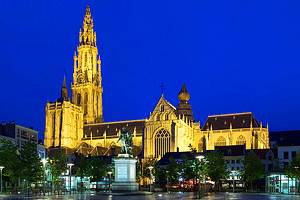
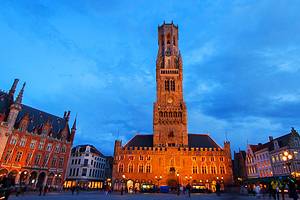
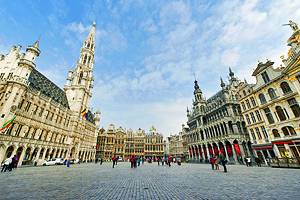
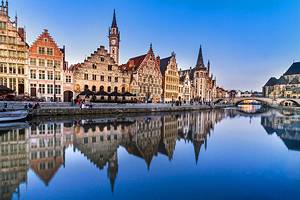
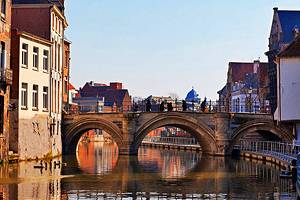
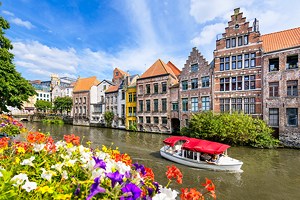
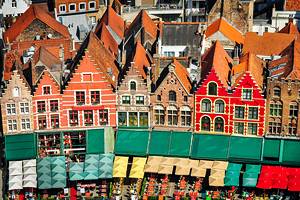
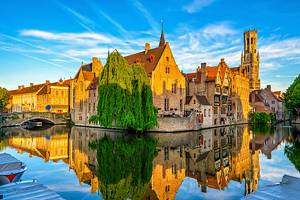
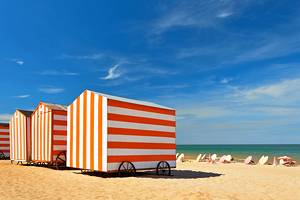
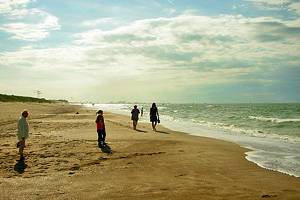
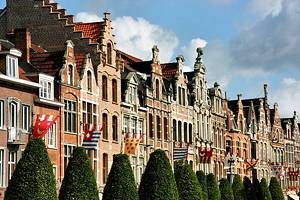
The summer holidaymaker will find extensive beaches and picturesque dunes in the resorts along the Belgian North Sea coast. Those interested in art will enthuse over the superb museums and collections as well as the historical town centers, many with rivers and other waterways and impressive secular and religious buildings, such as those in Gent and Bruges.
Read More
Tourists keen on technical achievements will be fascinated by the harbor installations in Antwerp and the bridges, sluices, canals or ship-lifting gear. Walkers and nature-lovers will be attracted by the woodland regions of the Ardennes, where they will find the largest dripstone cave in Europe and Spa, a spa town (hence the word) of high quality. Belgium is also famous for its gastronomic delights -- per head of population, no other European country can boast as many restaurants awarded stars or medals by international gourmets as can Belgium.
Belgium is also an important European bureaucratic center, and is host to the European Union headquarters.
Belgium covers an area of only 30,519sq. km/11,783sq. miles, making it one of the smallest of the European states. Its maximum length is 290km/180 miles, from Ostend to Arlon. From the capital Brussels all parts of the country can be reached by car in two hours at the most and by train in two and a half, so Belgium can genuinely be called a "country of short roads".
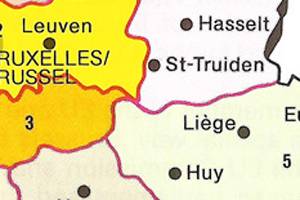
Belgium is divided into areas where either Germanic or Romance ethnic backgrounds and languages predominate. The Walloons live in the southern part and speak French, while Walloon, a French dialect differing from the Parisian dialect mainly in being less nasal, now lives on only in certain idiomatic expressions. The Flemings, speaking a Dutch dialect, live in the northern regions of the country. Strictly speaking, there are three dialects -- the Zeeland dialect spoken at the mouth of the Scheldt and in West Flanders, the Brabant and the Limburg.
The climate in Belgium is generally temperate and humid, the result of its position in the temperate latitudes. It is quite strongly influenced by the sea, as it lies very close to the coast and the predominant westerly winds come in off the sea.
In more detail, the country can be divided into three climatic zones, i.e. that immediately adjoining the coast, the interior lowlands and the Ardennes range of low mountains.